Coen Brothers’ 2000 odyssey, O Brother, Where Art Thou? On the surface, it’s a sun-drenched, dust-caked Southern romp. But underneath, it’s a massive technical achievement where every hue and shadow was fought for in the suite. Whether the Coens actually read the Odyssey or just absorbed it through “cultural osmosis” doesn’t really matter; the visual language they built with Roger Deakins feels like an ancient myth whispered through a hazy, 1930s lens.
Color Grading: The Big Bang of the DI

I’m jumping straight to the grade because, for me, this is where the movie changed everything. O Brother, Where Art Thou? was one of the first major features to be entirely digitally graded. Before this, you were stuck with what you could do in a chemistry lab. As a colorist, I find the story behind this look fascinating: Deakins shot in a lush, green Mississippi summer, but the Coens wanted it to look like a parched, “dust-bowl” autumn.
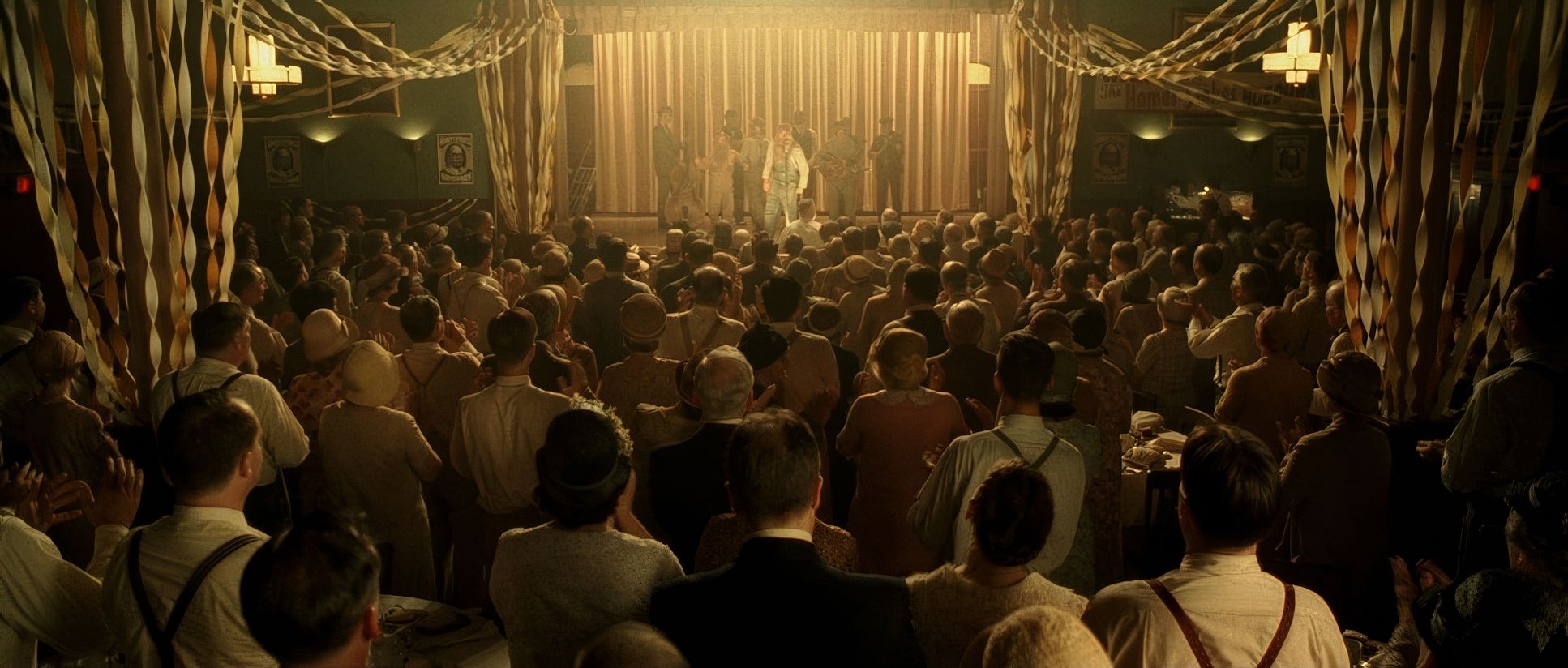
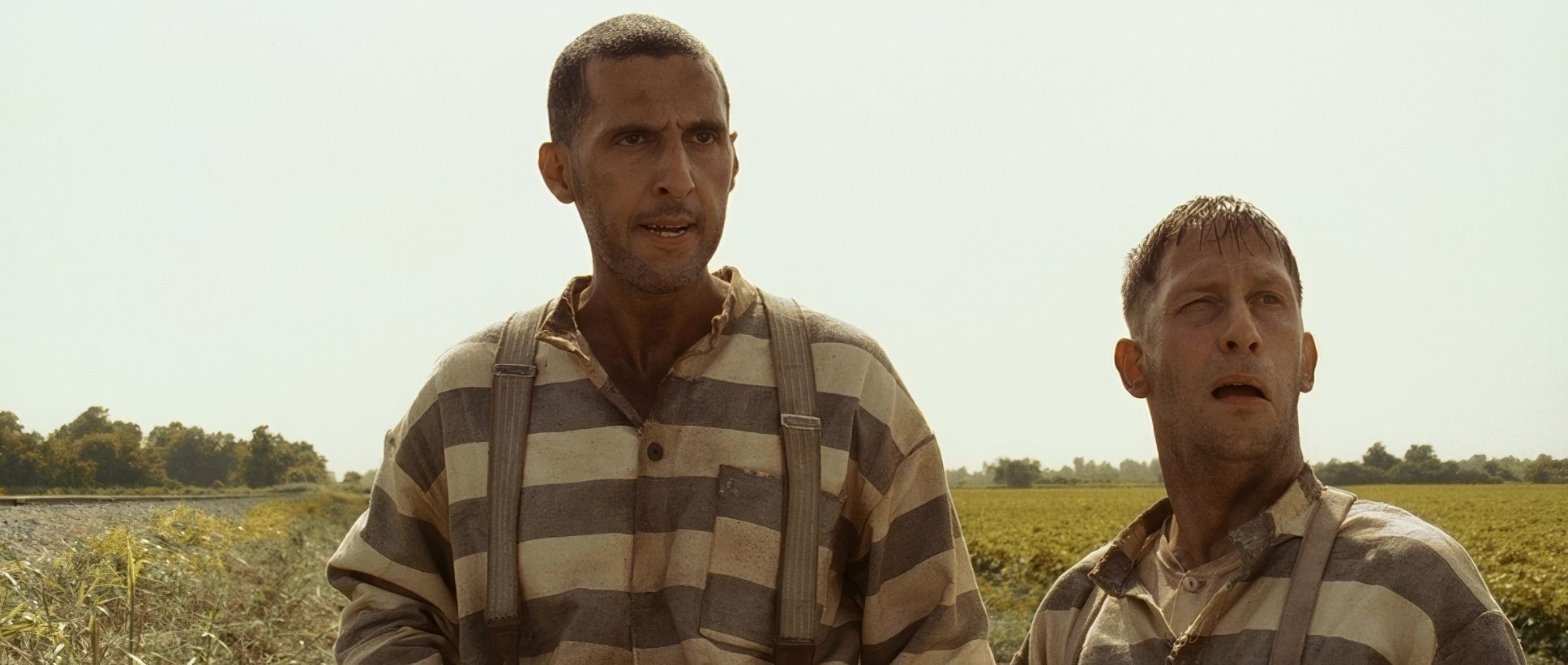
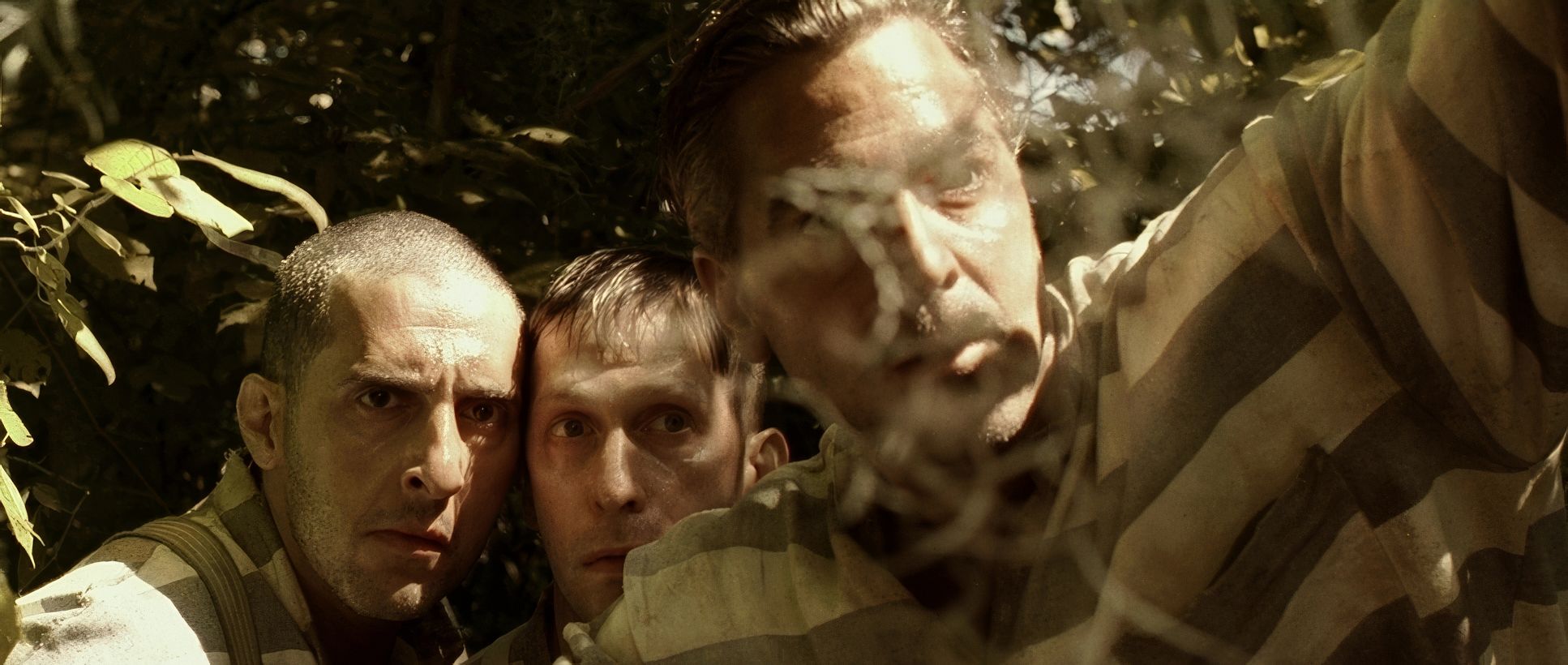
When I watch this, I’m looking at master-level tonal sculpting. They didn’t just throw a sepia filter over the top. They literally remapped the color spectrum. They pulled the blues out almost entirely and shifted the greens toward a desaturated olive. What kills me is the highlight roll-off; the sun feels blazing and hot, but it never feels “clipped” or digital. It has this creamy, painted quality that reminds me of vintage print film. It’s a perfect example of how color isn’t just an aesthetic choice it’s a thematic one that tells the audience exactly how to feel about the era.
About the Cinematographer: The Deakins Touch

You can’t talk about this film without talking about Roger Deakins. It’s hard to overstate how much he’s shaped the way we see modern movies. Deakins is a legend, but not because he’s flashy. He’s known for this kind of “luminous naturalism” a way of using light that feels totally honest to the scene, even when it’s meticulously crafted.
His work with the Coens is a total synergy. They know exactly what they want in the frame, and Deakins is the DP who can actually translate that into reality. He’s not interested in “cool” camera moves for the sake of it; he’s interested in what serves the story. O Brother is probably the most famous example of him pushing technical boundaries to get a specific look without losing the soul of the performances.
Inspiration Behind the Cinematography

The visual DNA here is this weird, beautiful mix of history and myth. Setting the story in Depression-era Mississippi, right as electricity was starting to change the South, gives the film a lot of its weight. You have this tension between the old world superstitions, biblical allegories, and “hellfire and brimstone” and the modern age coming down the tracks.
That Odyssey connection isn’t just a gimmick; it’s baked into the aesthetic. Characters like the blind prophet on the tracks or the sirens by the river don’t feel out of place because the film embraces a dreamlike, folkloric quality. This “faded yellow patina” we all talk about makes the movie feel like a discovered artifact, or an old postcard your grandfather kept in a drawer. It’s a visual filter for memory.
Camera Movements: The Power of Restraint

Deakins’ camera in O Brother is incredibly disciplined. He’s a master of restraint. He’d much rather let a scene breathe within a perfectly composed frame than chase the actors around with a handheld rig.
When the camera does move, it’s doing work. You’ll see these elegant, slow pans across the parched landscape that make the trio look tiny and isolated. Then, you’ll get a tracking shot like the one through the KKK rally. It’s steady, deliberate, and terrifying. It doesn’t need shaky-cam to feel tense; the “gliding” movement actually makes the spectacle feel more bizarre and unsettling. Every push-in is motivated by the character’s internal struggle, never just to make the shot “dynamic.”
Compositional Choices: Scale and Space

Deakins’ framing is a textbook for a reason. He uses expansive wide shots to show how oppressive the Southern landscape can be. The dusty roads and winding rivers aren’t just backgrounds; they’re characters that the trio has to fight against.
I love his use of “depth cues.” He’ll put a fence post or a tree branch in the foreground to anchor us in a real, 3D space, which helps ground the more “magical” parts of the story. He also uses negative space to make the characters feel vulnerable. When Everett, Pete, and Delmar are out in a field, the sheer amount of sky above them tells you exactly how far they are from home. Plus, notice how often they’re framed in doorways or windows—it’s a subtle reminder that they’re fugitives being watched.
Lighting Style: Motivated Magic

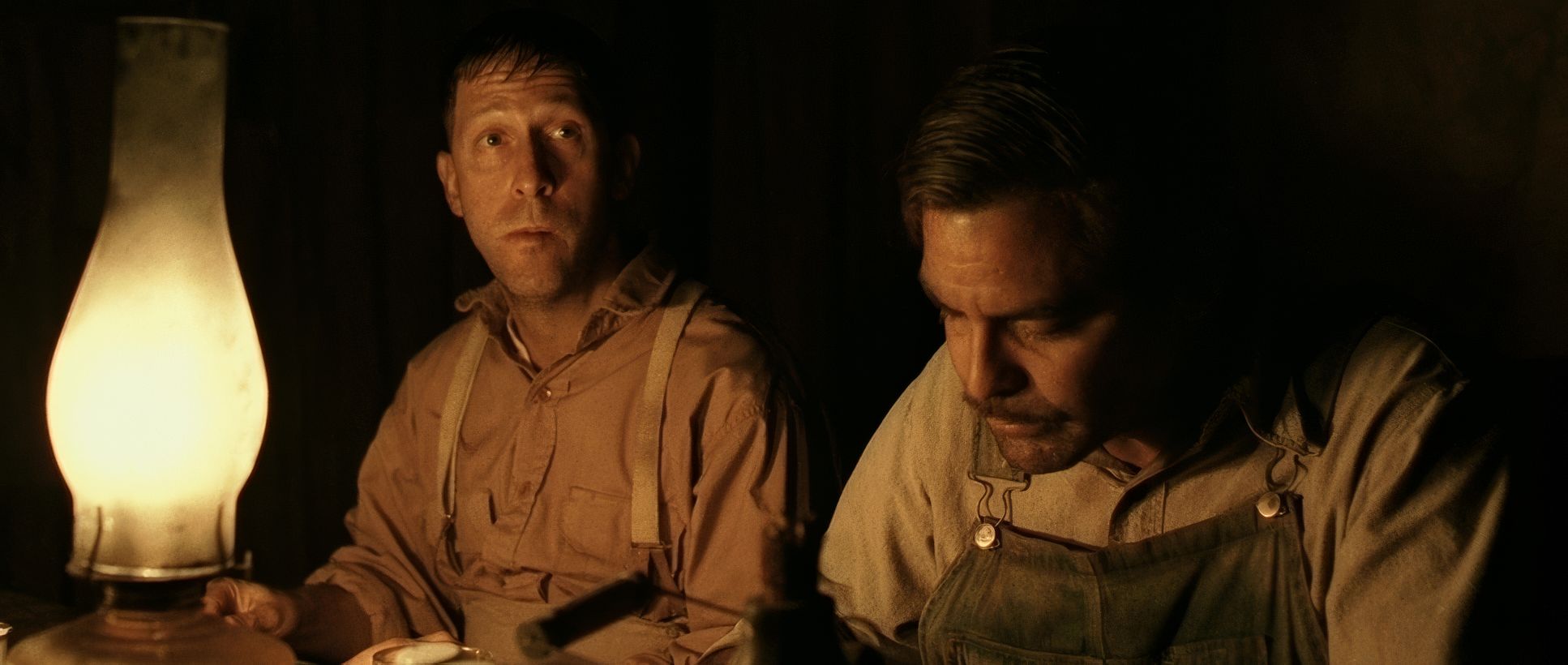
The lighting here is all about “motivated naturalism,” but with a sepia-toned warmth. Since this is the 1930s, Deakins relies on what would have been there: the sun, the moon, or a flickering campfire.
As a colorist, I know how hard it is to keep this look consistent. Deakins treats the sun like a lead actor. He lets the rays rake across the dust, creating these rich, deep shadows. Indoors, it’s all about the practicals. A lantern creates a small, intimate pool of light, while the rest of the room stays pitch black. It plays into that theme of “power and light” where true illumination is rare and usually comes from a campfire or a “divine” source rather than a lightbulb.
Lensing and Blocking: Keeping it Wide

Deakins is famous for using wider lenses, even for close-ups. Most people think you need a long lens to get a “cinematic” look, but Deakins uses wide glass because it keeps the character connected to the world. You see the dust and the heat behind them; they aren’t just floating in a blurry background.
The blocking is also incredibly smart. With three main leads, Deakins has to arrange them in the frame to show their dynamic. They might be walking in a single file line to show their collective journey, or separated by depth to show a moment of tension. Even in the big scenes, like the baptism, the way he positions the crowd feels architectural. It directs your eye exactly where it needs to go without needing a bunch of dialogue to explain it.
Technical Aspects & Tools: Breaking the Rules
O Brother, Where Art Thou? — Technical Specifications
| Genre | Action, Adventure, Comedy, Road Trip, Music, Musical, Western, Science-Fiction |
| Director | Joel Coen |
| Cinematographer | Roger Deakins |
| Production Designer | Dennis Gassner |
| Costume Designer | Mary Zophres |
| Editor | Joel Coen, Ethan Coen, Tricia Cooke |
| Colorist | Julius Friede |
| Time Period | 1930s |
| Color | Warm, White |
| Aspect Ratio | 2.35 – Super 35 |
| Format | Film – 35mm – Bleach Bypass |
| Lighting | Hard light |
| Lighting Type | Daylight |
| Story Location | United States > Mississippi |
| Filming Location | United States > Mississippi |
| Camera | Arri 535 / 535B |
| Lens | Cooke S4/ i |
| Film Stock / Resolution | 5248/7248 EXR 100T, 5279/7279 Vision 500T |
Technically, O Brother was a massive gamble. They shot on traditional 35mm film (using Arri 535s and Cooke S4 lenses), but the Digital Intermediate (DI) workflow was brand new. They scanned the film into a digital format and then graded it frame by frame.
This allowed them to do things that were physically impossible in a lab. You mentioned “Bleach Bypass” in the technical specs and while the film looks like it had that high-contrast, silver-retaining process, doing it digitally meant they could keep control over the shadows. They could desaturate the greens of a Mississippi summer and turn them into a parched autumn without making the whole image look “crunchy.” It was a watershed moment that proved digital post-production could be a legitimate artistic tool, not just a shortcut.
O Brother, Where Art Thou? (2000) Film Stills
A curated reference archive of cinematography stills from O BROTHER, WHERE ART THOU? (2000). Study the lighting, color grading, and composition.








- Also read: DONNIE BRASCO (1997) – CINEMATOGRAPHY ANALYSIS
- Also read: BEING JOHN MALKOVICH (1999) – CINEMATOGRAPHY ANALYSIS
Browse Our Cinematography Analysis Glossary
Explore directors, cinematographers, cameras, lenses, lighting styles, genres, and the visual techniques that shape iconic films.
Explore Glossary →