Film that usually gets praised for its soundtrack but deserves way more credit for its sophisticated visual grammar: Disney’s Mulan (1998). Twenty-six years later, this isn’t just a “Renaissance” era relic. It is a remarkably bold piece of cinema. It’s a film that frequently tries to feel “not Disney” in its somber moments, bridging heavy themes of war and identity with the inherent magic of animation. Re-watching it now, I’m struck by the deliberate craft on display.
About the Cinematographer

In animation, the “cinematographer” is actually a collective of layout artists, background supervisors, and visual directors. Mulan is a fascinating case because it was the first feature purely produced at Walt Disney World by the Florida Division.
This wasn’t just another project; it was an ultimate test for that studio. They had to prove they could produce a full-length feature independently of the main California branch. That pressure created a unique, harmonious artistic leadership. This “collective cinematographer” was tasked with creating a consistent, groundbreaking style that would define the Florida team’s legacy. Looking at their follow-ups Lilo & Stitch and Brother Bear it’s clear that the triumph of Mulan was no fluke.
Inspiration Behind the Cinematography

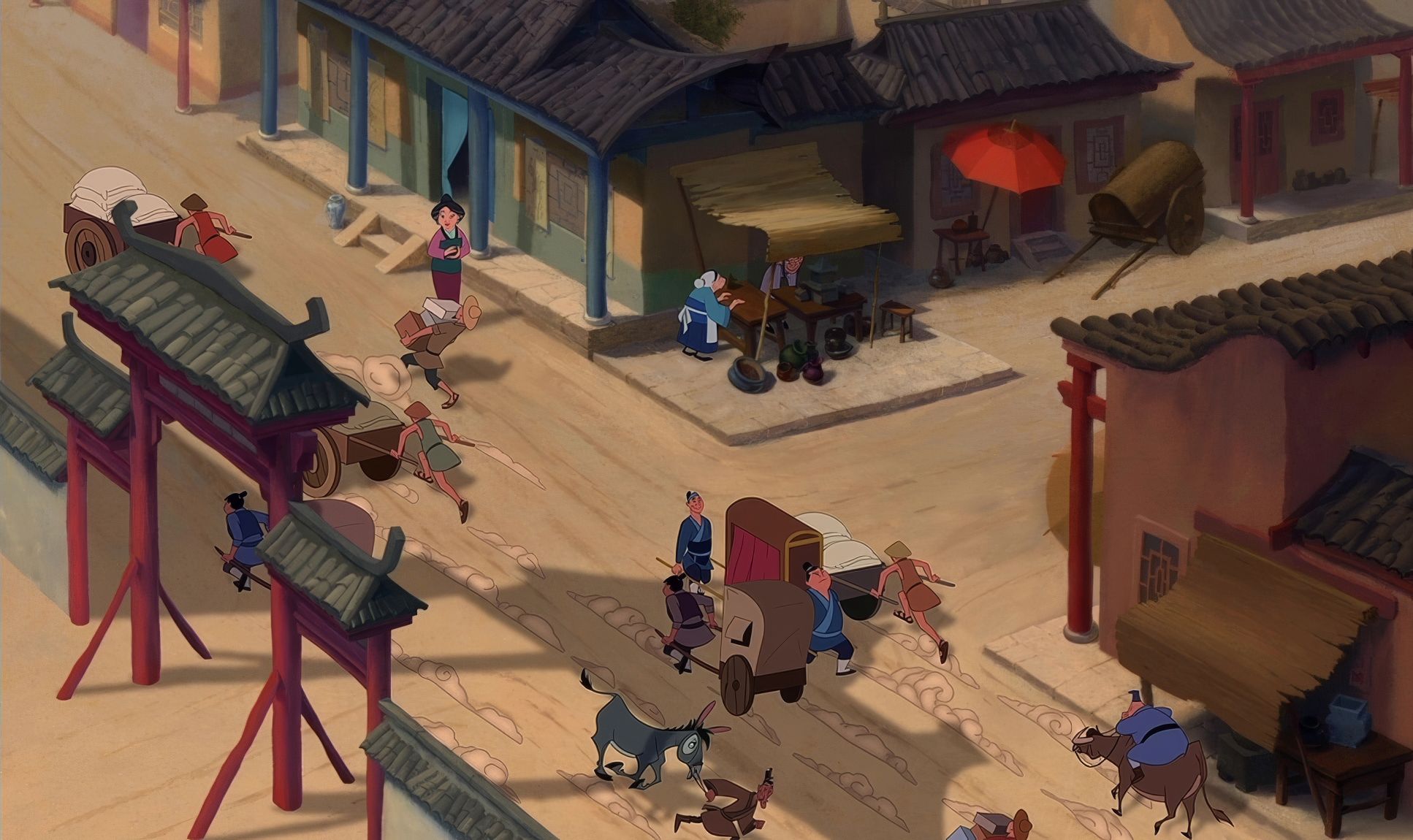
The visual backbone of this movie is rooted deeply in Chinese art from past dynasties. The filmmakers didn’t just go for a superficial aesthetic; they let it inform the entire visual grammar of the film.
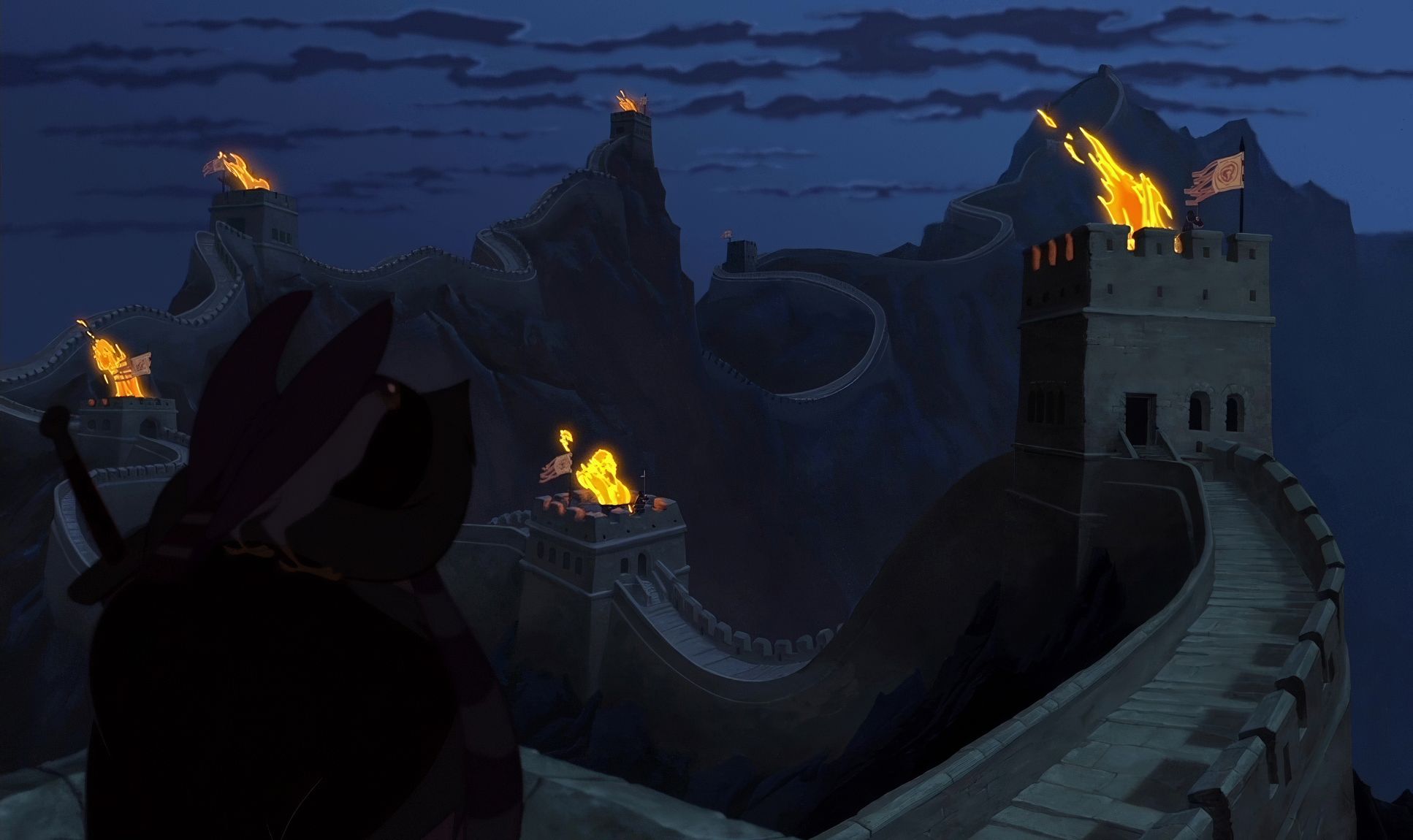
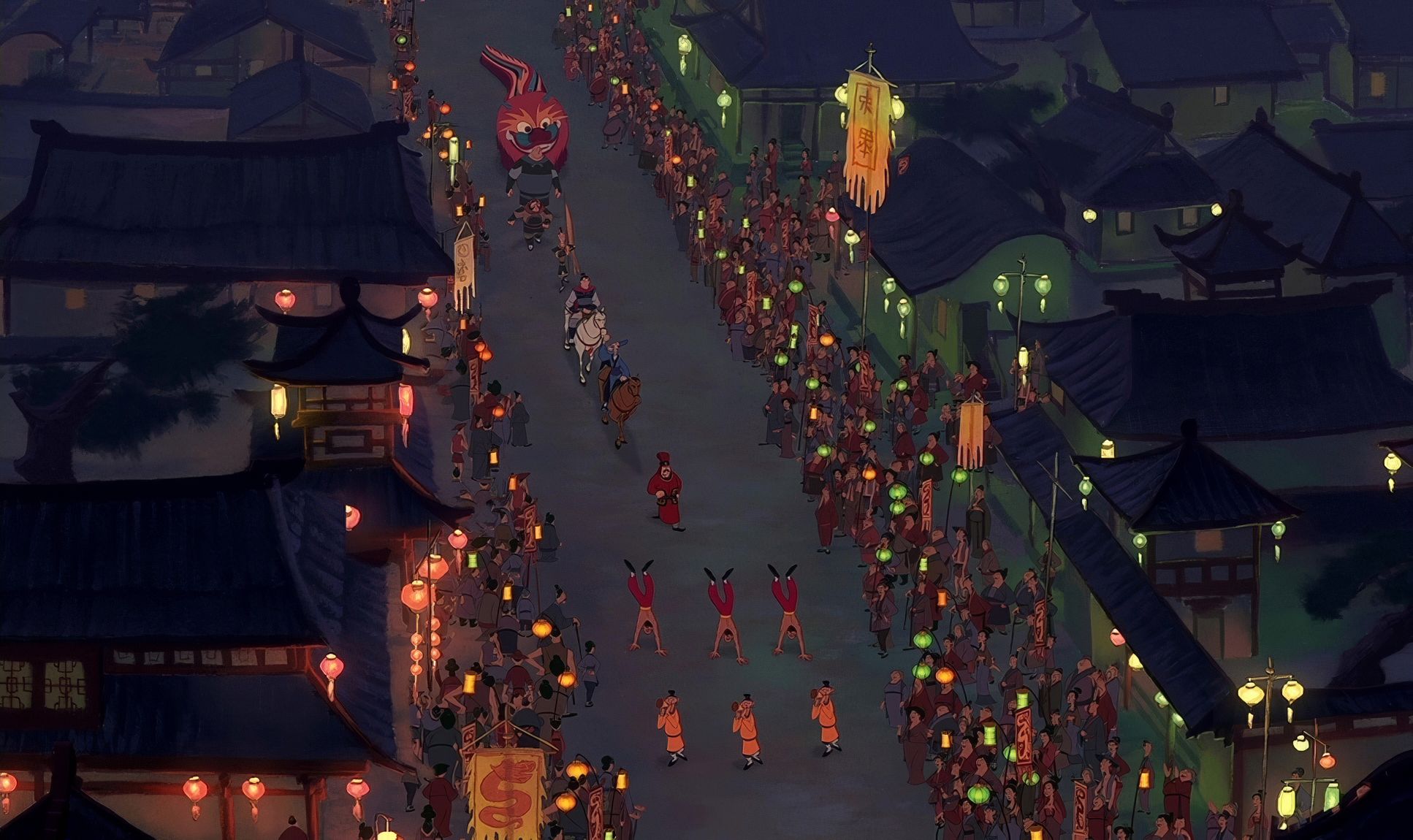
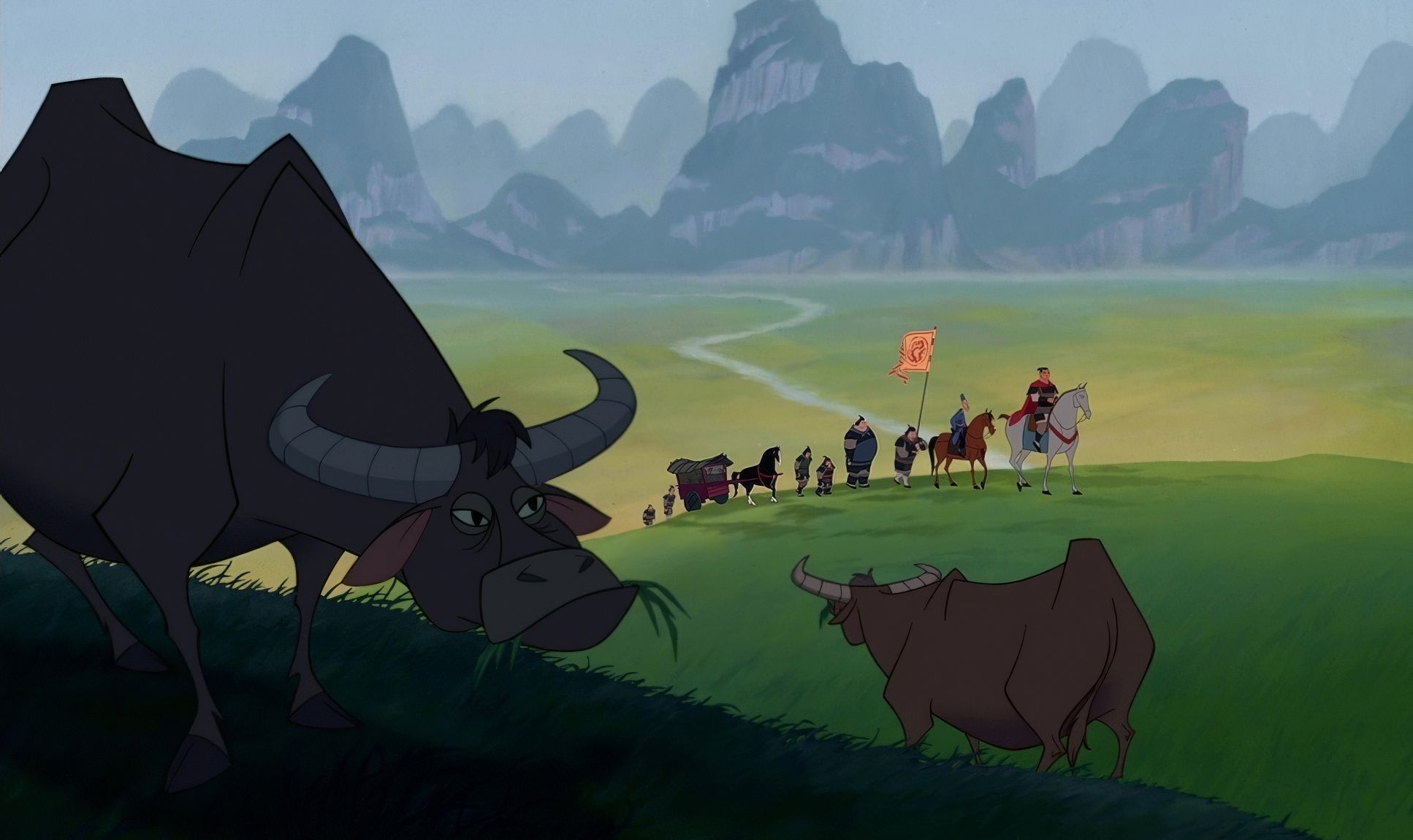
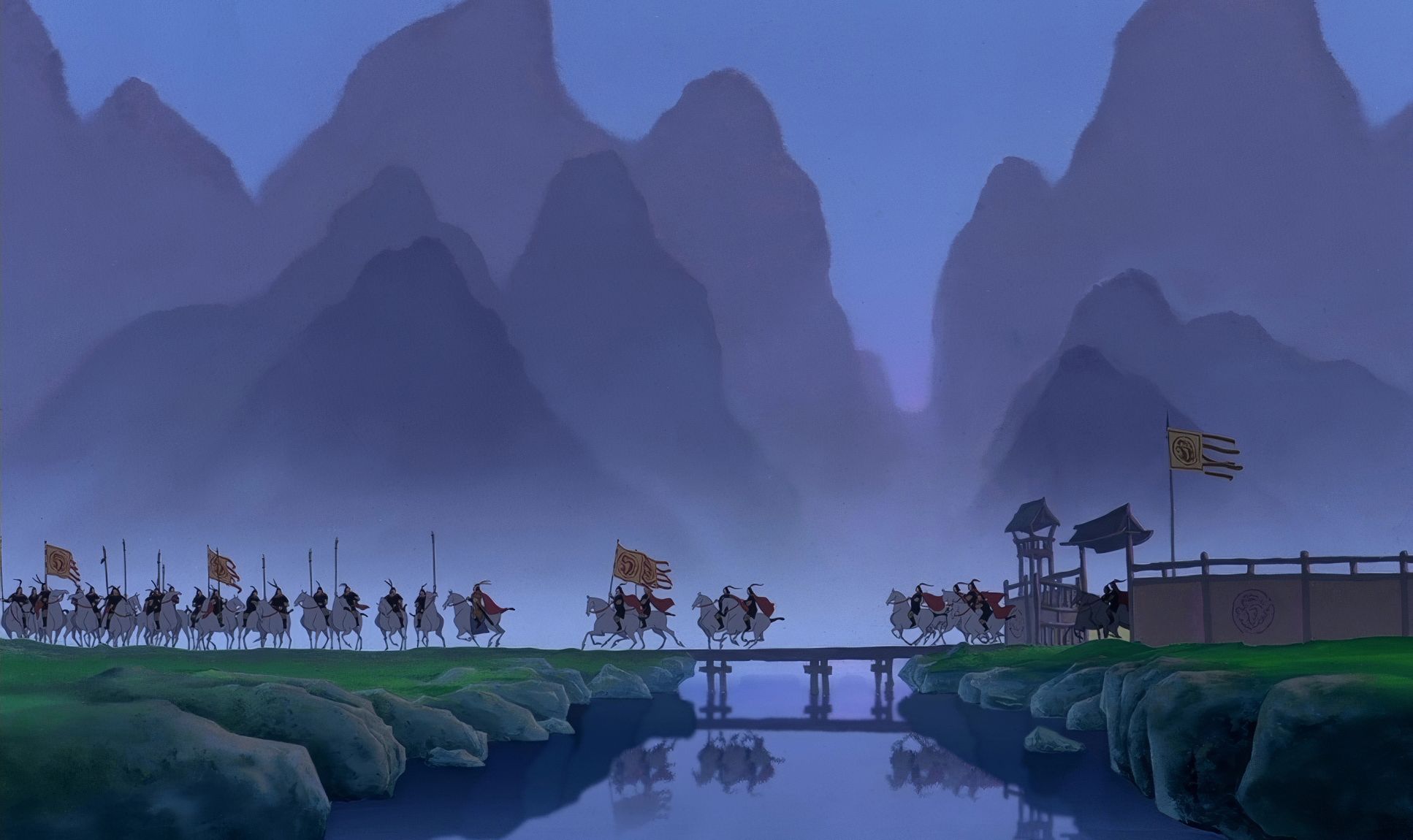
You see this most clearly in the backgrounds. They are exquisitely detailed and feel historically resonant, capturing a world where urbanization hasn’t yet touched the forests. Using watercolors for these elements was a masterstroke. It gives the film a painterly, authentic style that distinguishes it from its contemporaries. This commitment to authenticity ensures the movie doesn’t just say it’s set in China it feels like it. The art direction becomes a character itself, grounding the fantasy in a culturally rich world that is both epic and intimate.
Compositional Choices

Mulan excels at using framing to underscore character psychology. Early on, the film establishes that Mulan simply doesn’t fit. She’s often framed slightly apart from groups, her movements are less refined than those around her, and she’s constantly placed in opposition to strict, ordered lines especially during the Matchmaker sequence.
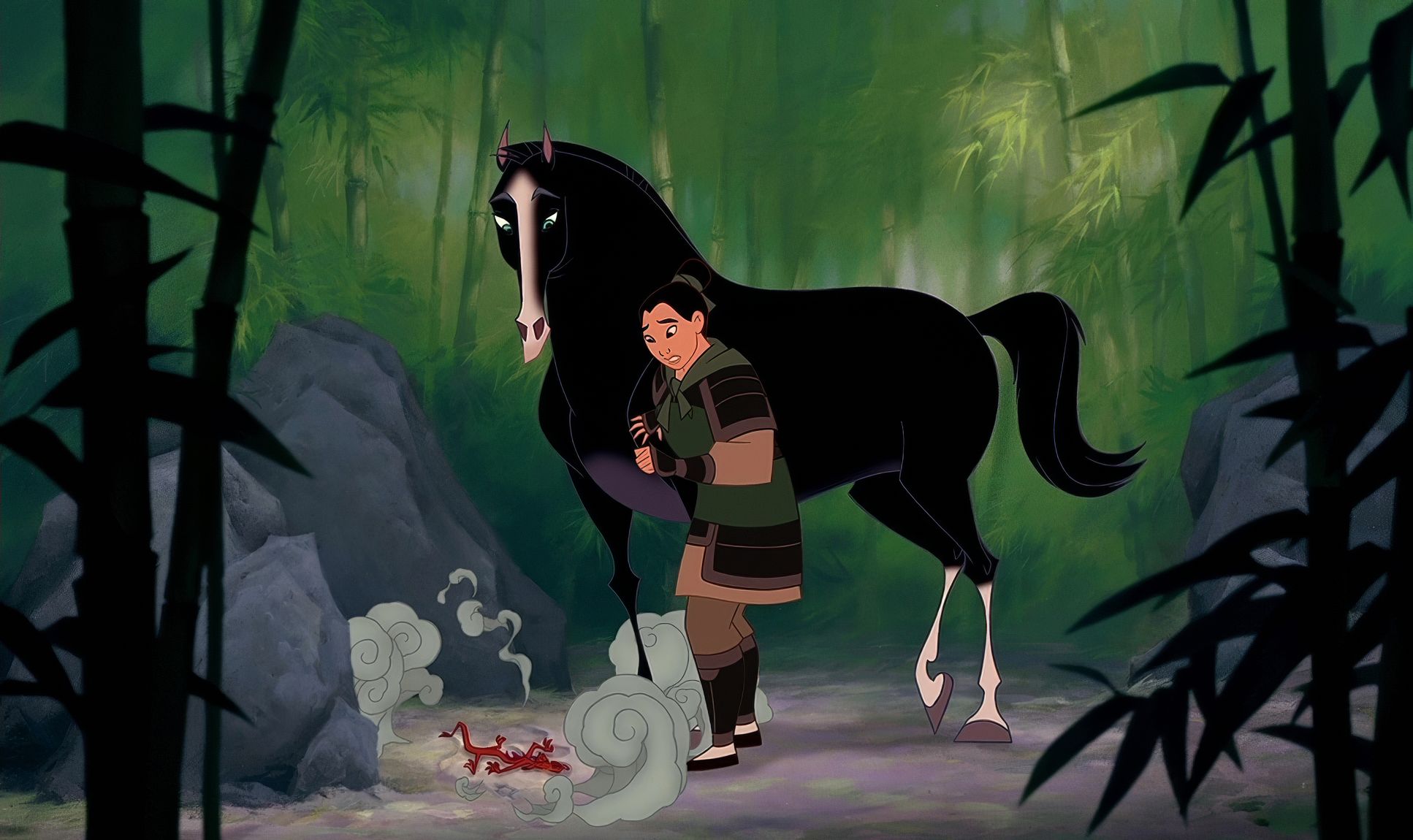
The animators clearly had a deep handle on classic compositional principles. Leading lines (like those sweeping mountain paths) and the strategic use of negative space guide the eye perfectly. I also love the character designs; they are “abstracted” enough to feel like art, yet “grounded” enough to feel human. A great example of dynamic blocking is the training montage. Having the men singing on the outside of the horses while Mulan is physically separated from the camp is a brilliant way to visually illustrate her outsider status even as she tries to integrate.
Camera Movements
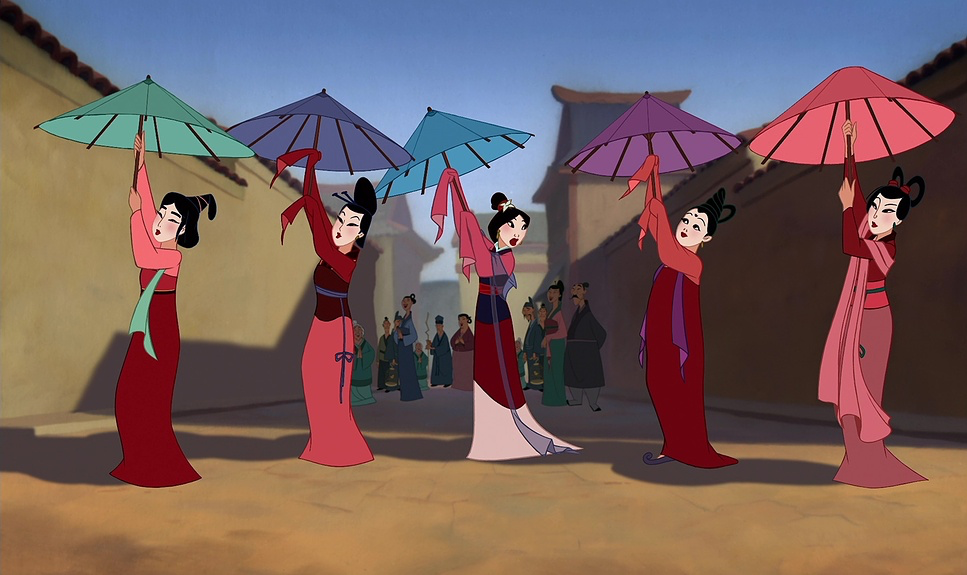
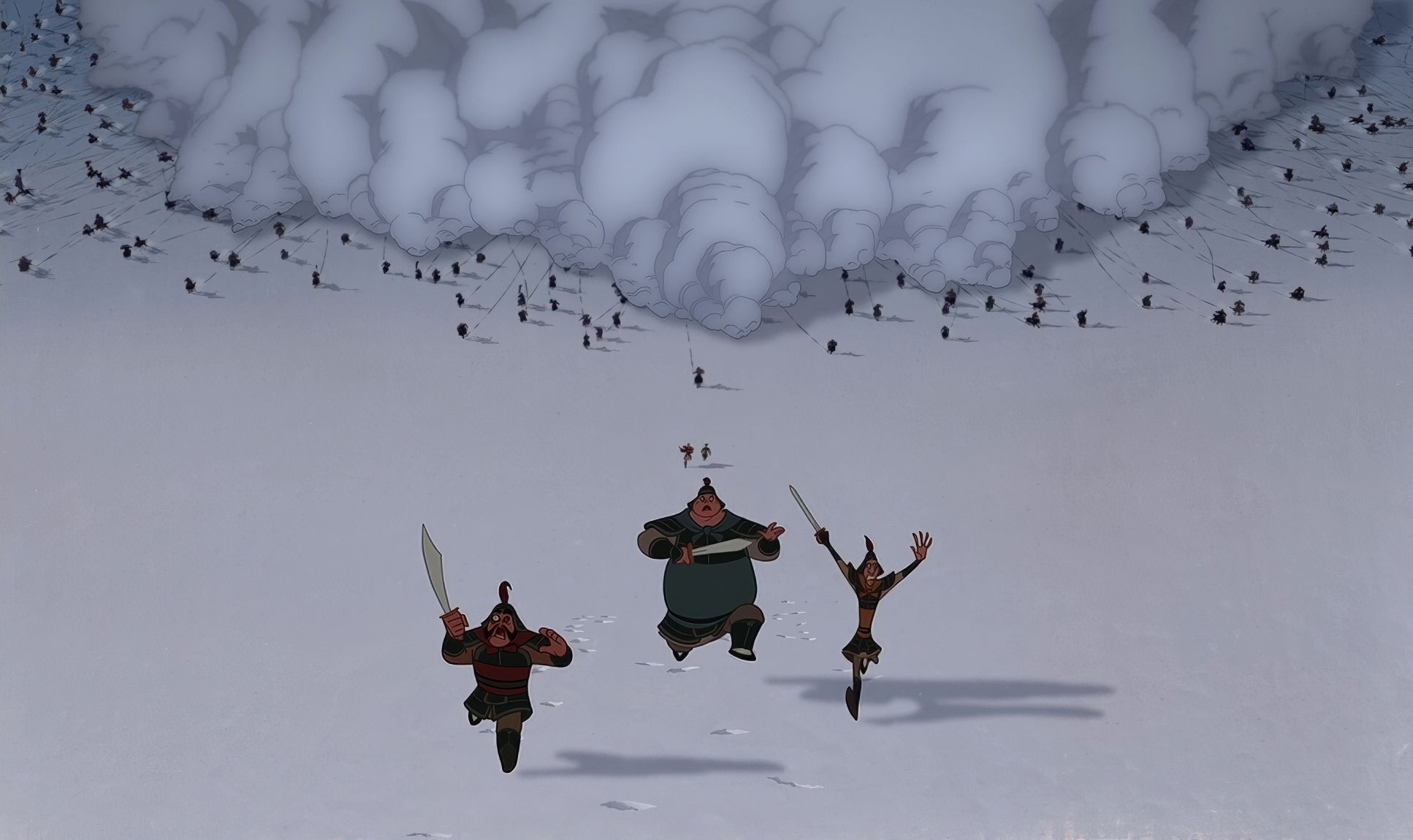
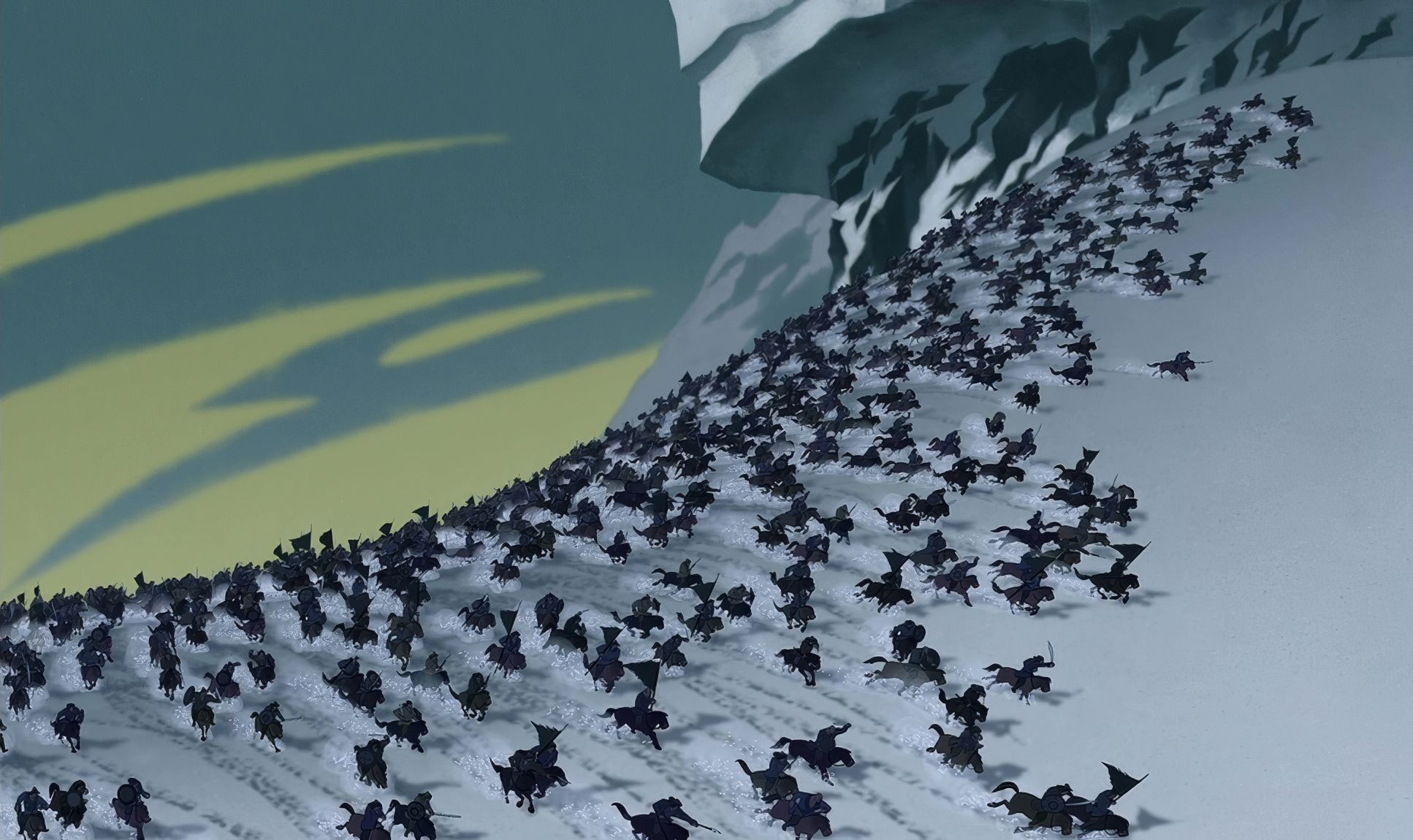
The camera work here though entirely virtual is incredibly sophisticated. In the big battle sequences, particularly the legendary snow-scape battle, the movements are expansive and reveal information with dramatic flair.
That shot of the Hun army materializing on the ridge is a masterclass in scale. It uses a sweeping crane-like movement to convey overwhelming dread. But the film is just as good in the quiet moments. It uses grounded, character-focused tracking shots as Mulan grapples with her identity.
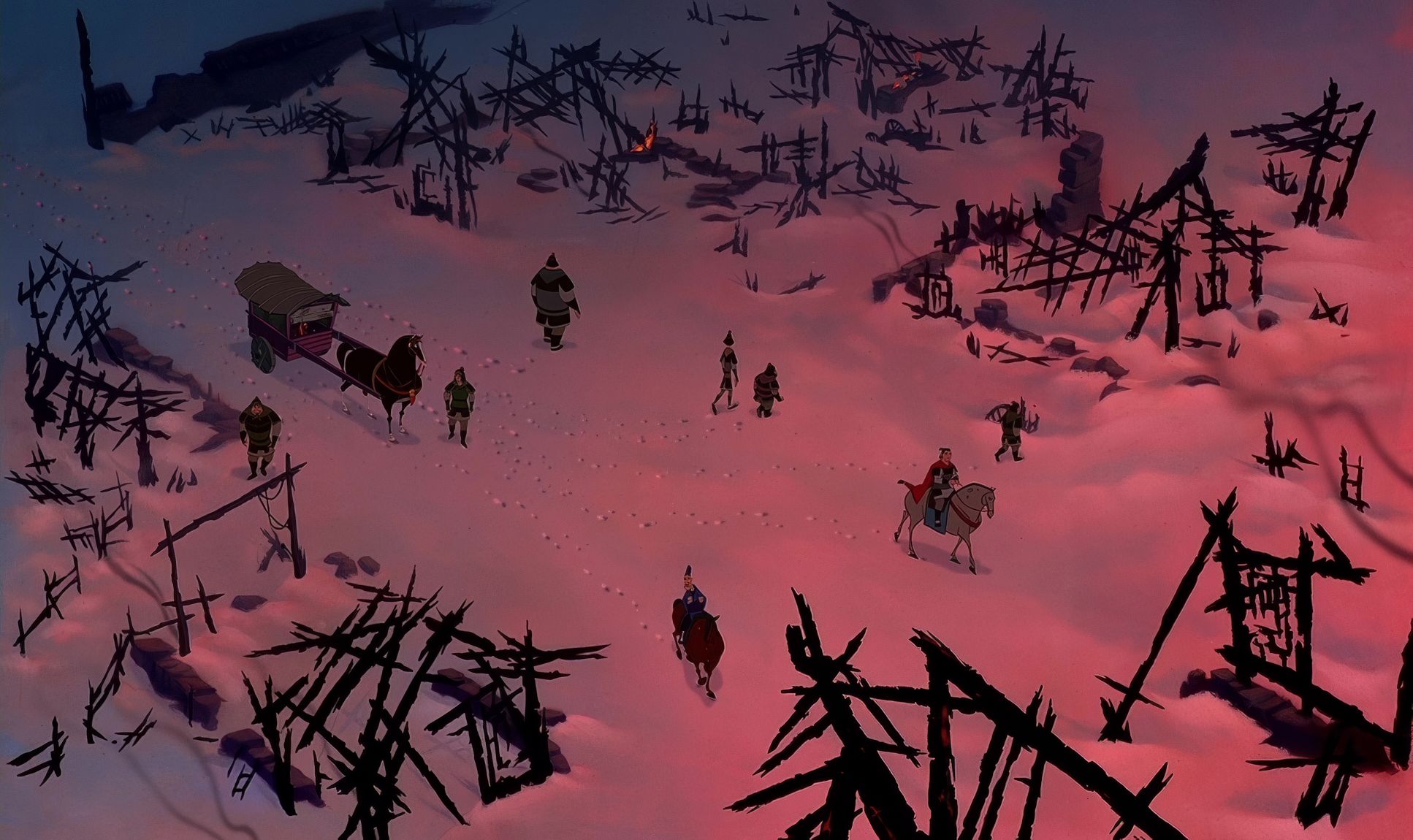
The most effective “move,” however, is a stop. The transition from the upbeat “A Girl Worth Fighting For” to the ravaged village is amplified by an abrupt halt in visual momentum. The camera, like the characters, just stops. It forces you to absorb the burnt homes and the silence. It’s a brutal visual cue that the “musical” part of this movie is over.
Lighting Style
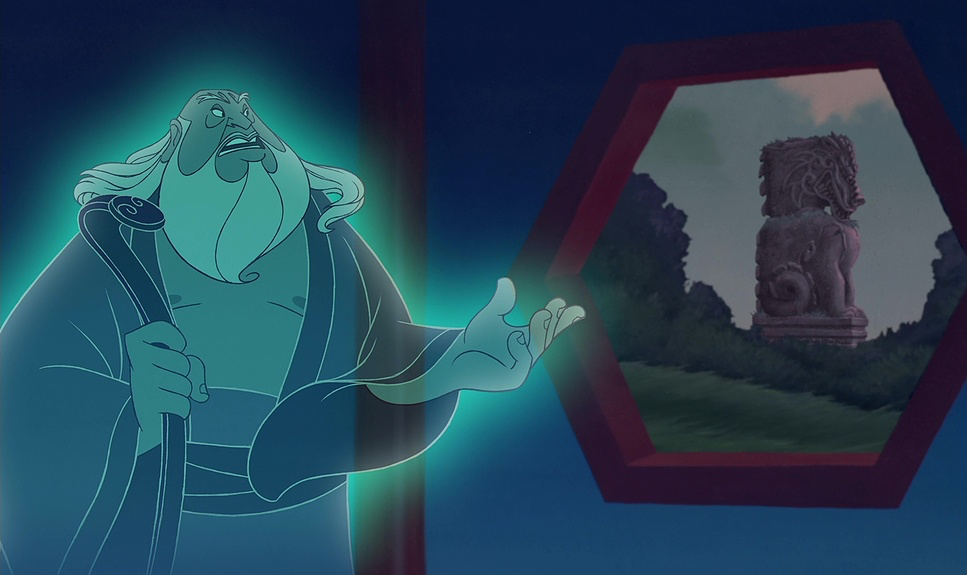
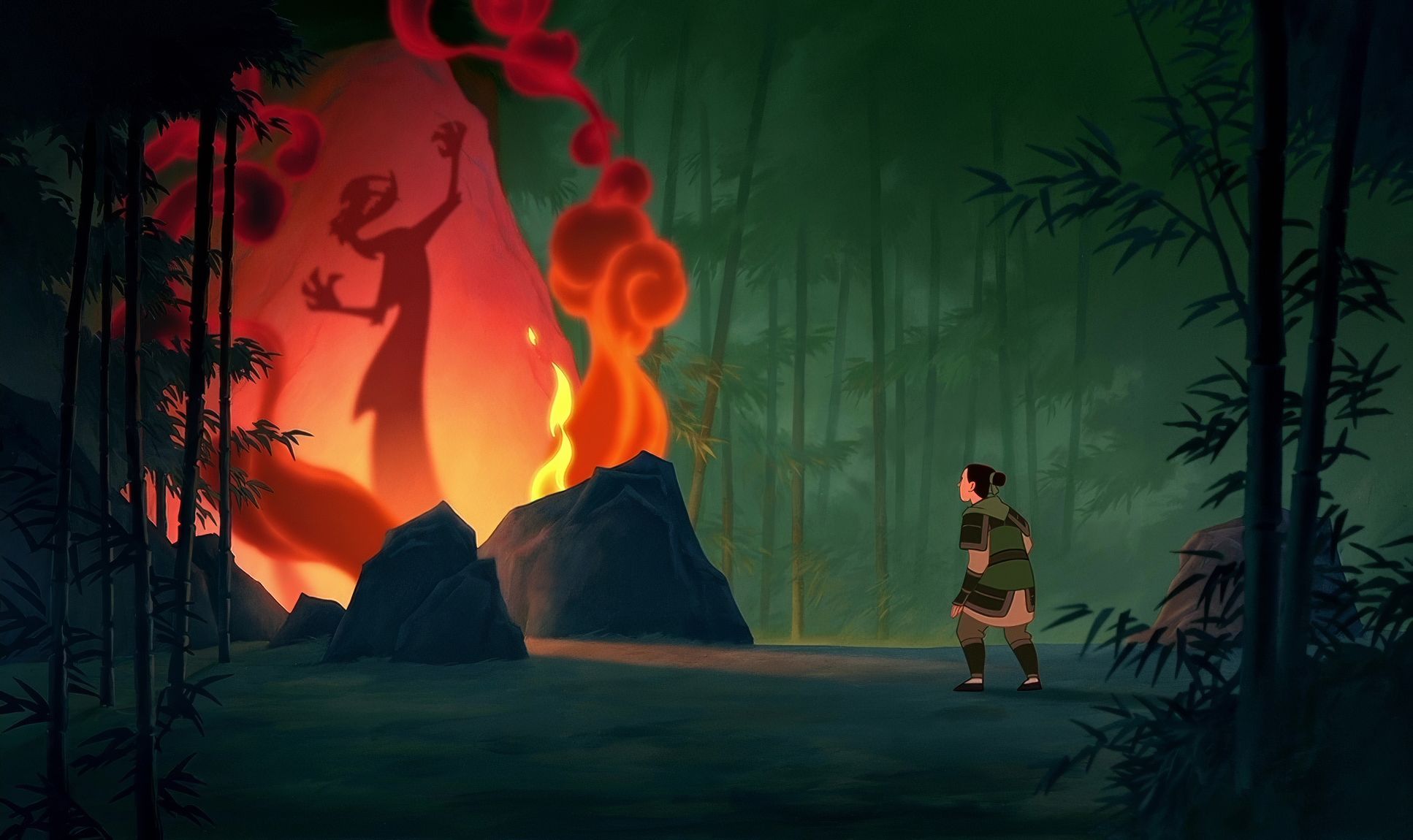
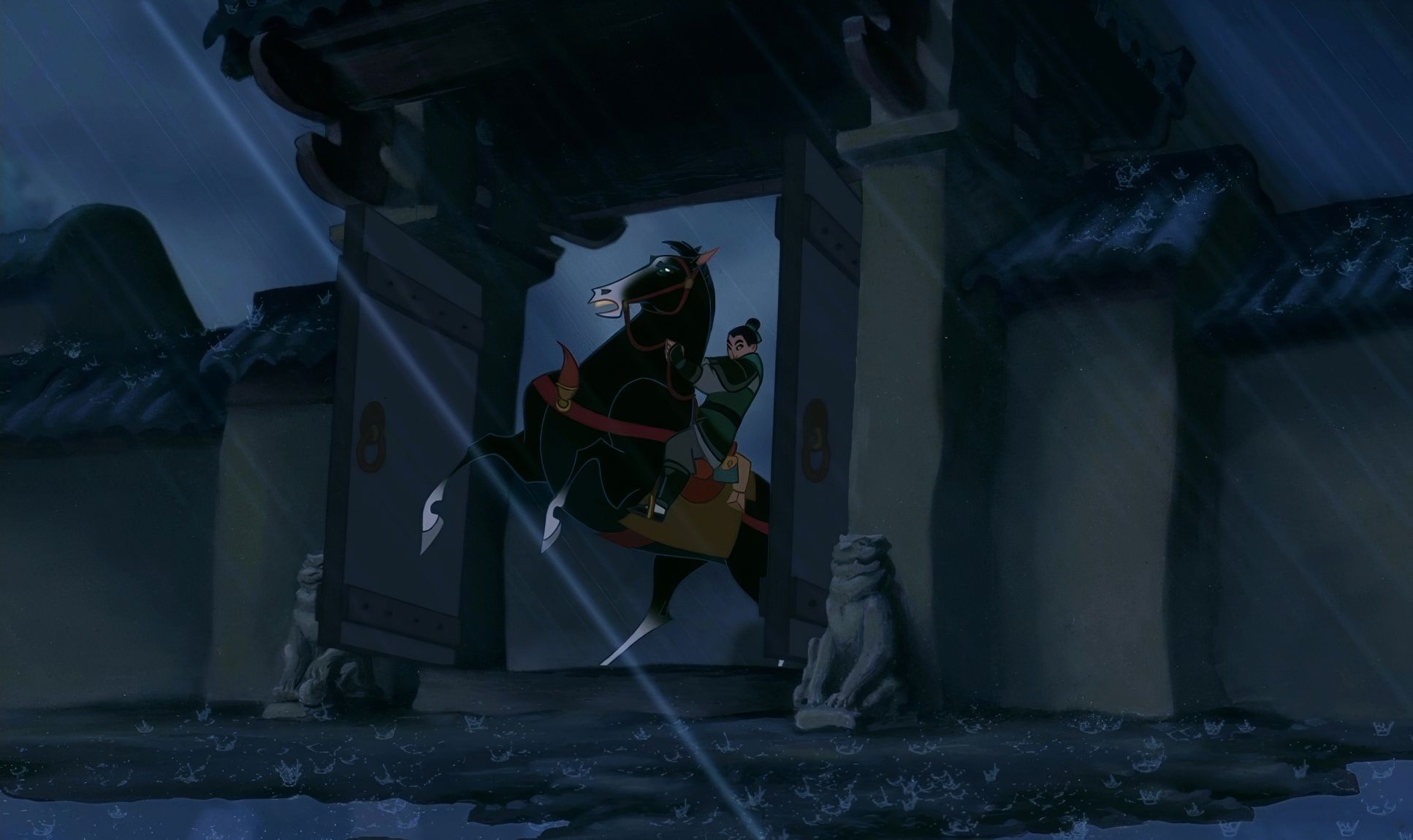
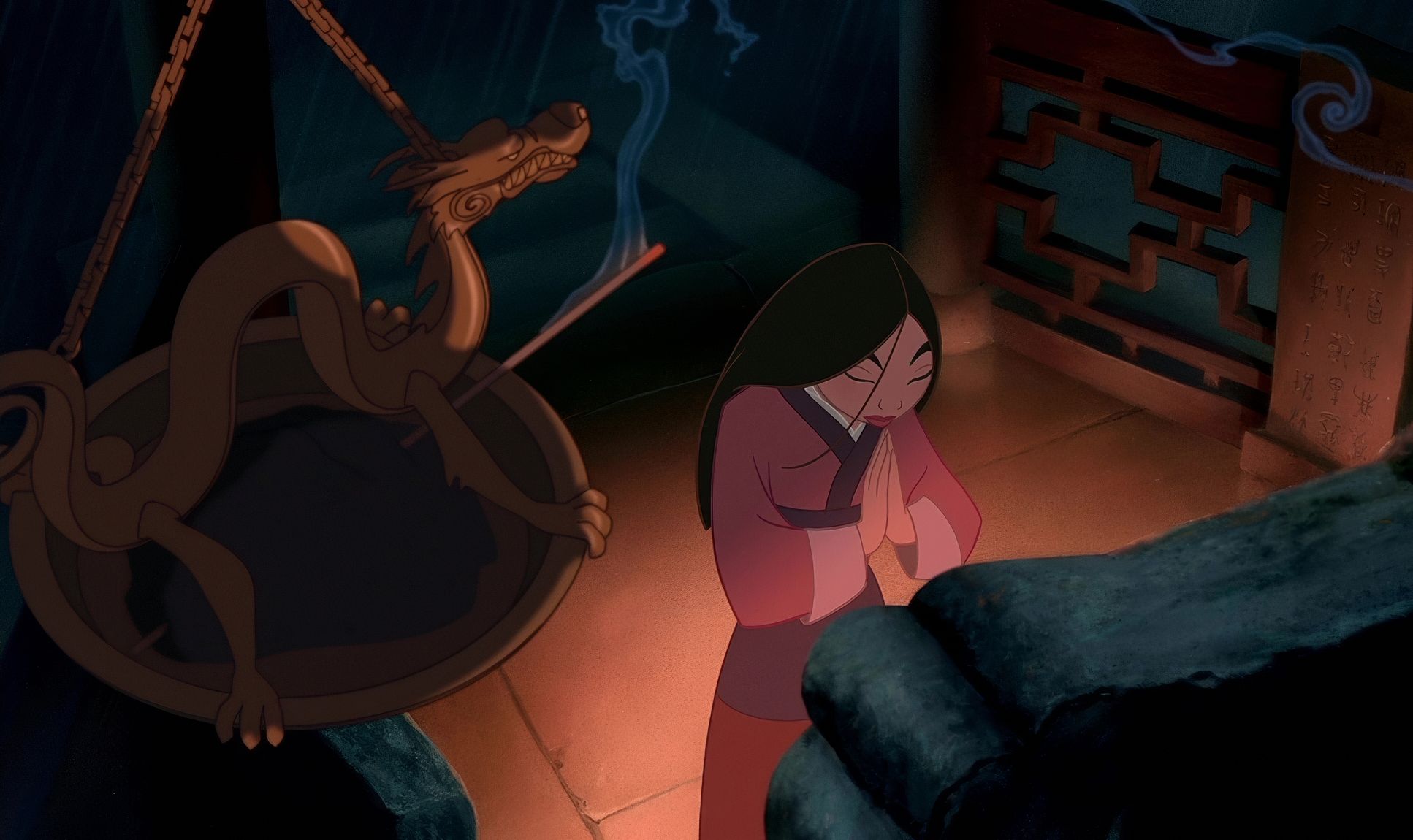
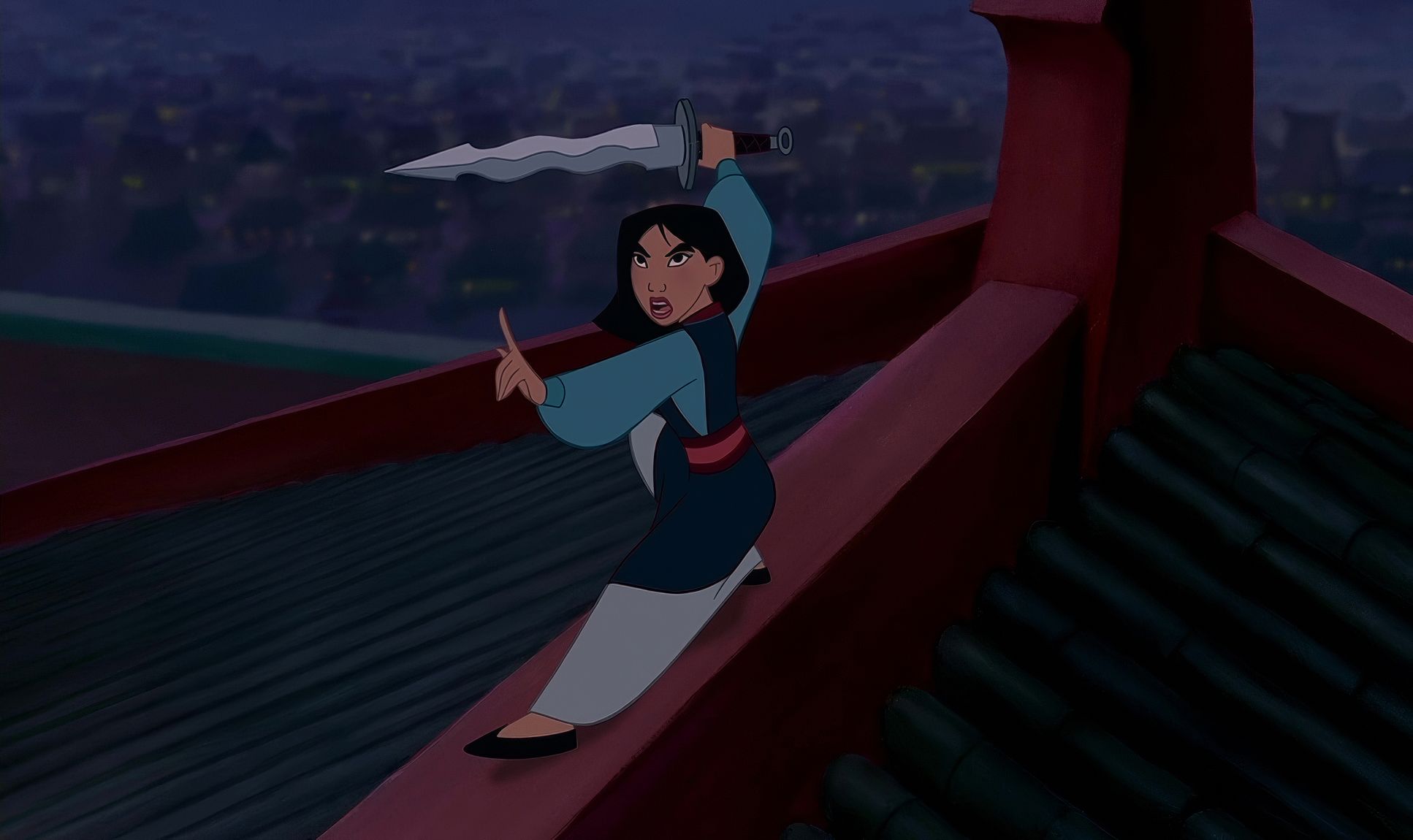
The lighting in Mulan operates on the same principles as live-action cinematography. We see motivated lighting everywhere strong directional light from a virtual sun or the warm, flickering glow of torchlight in the indoor scenes.
As a colorist, I have a specific take on the character lighting. At first glance, the lack of deep shadows on the characters might look like a technical shortcut. I’d argue it’s actually a deliberate aesthetic choice to keep the characters looking graphic and “flat” against the detailed backgrounds. Because they lose that 3D depth, the team had to compensate with vibrant colors and incredibly fluid animation to keep them alive.
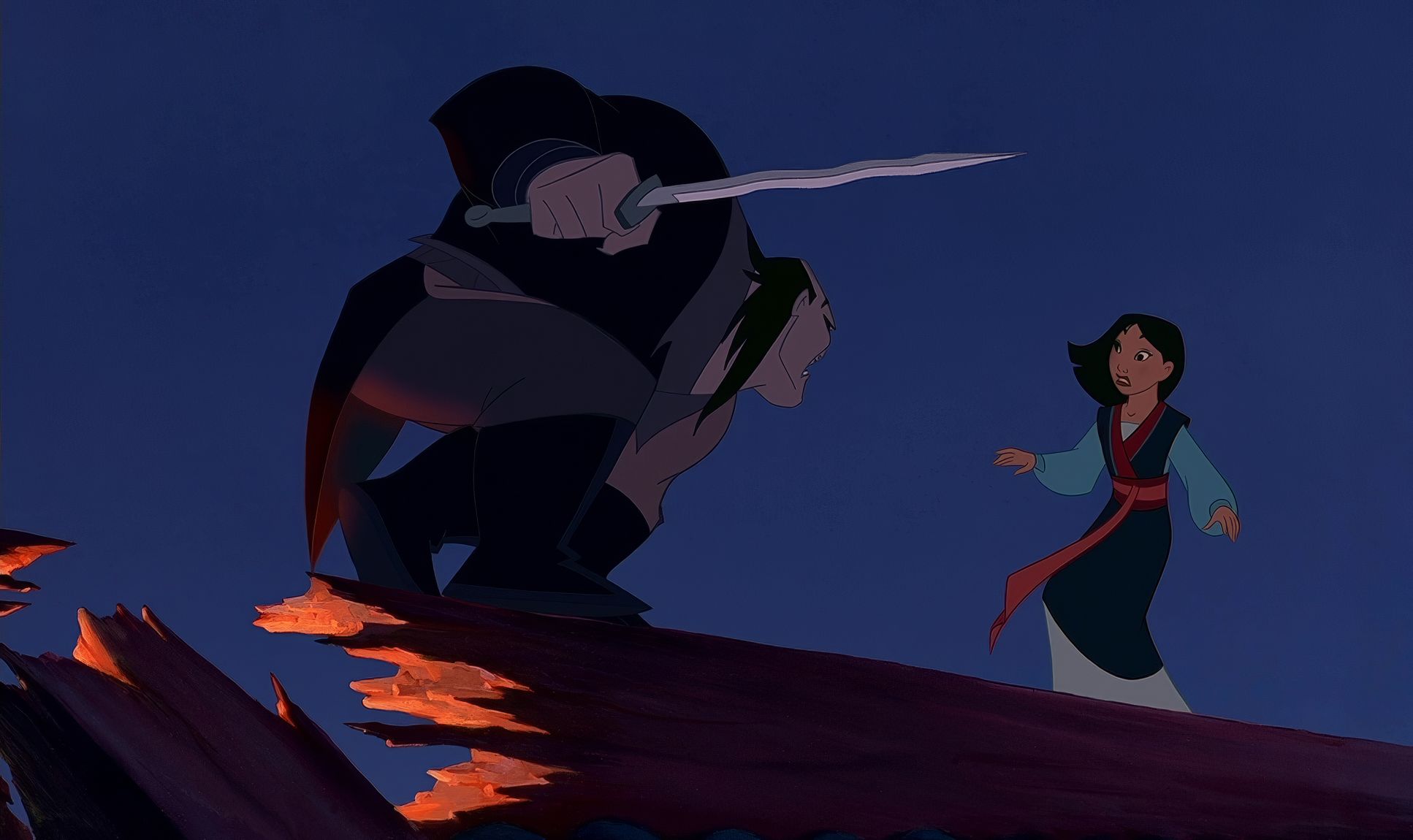
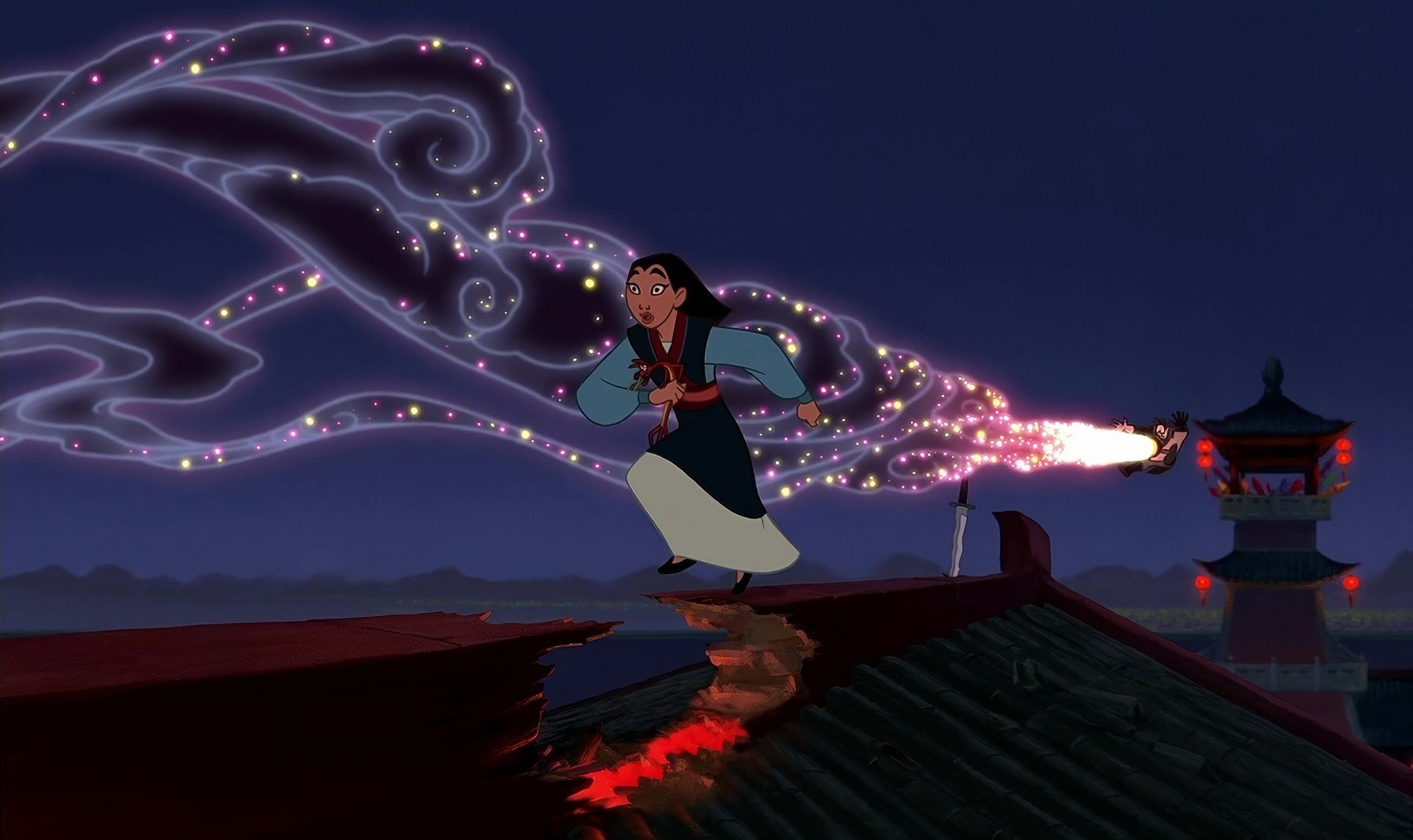
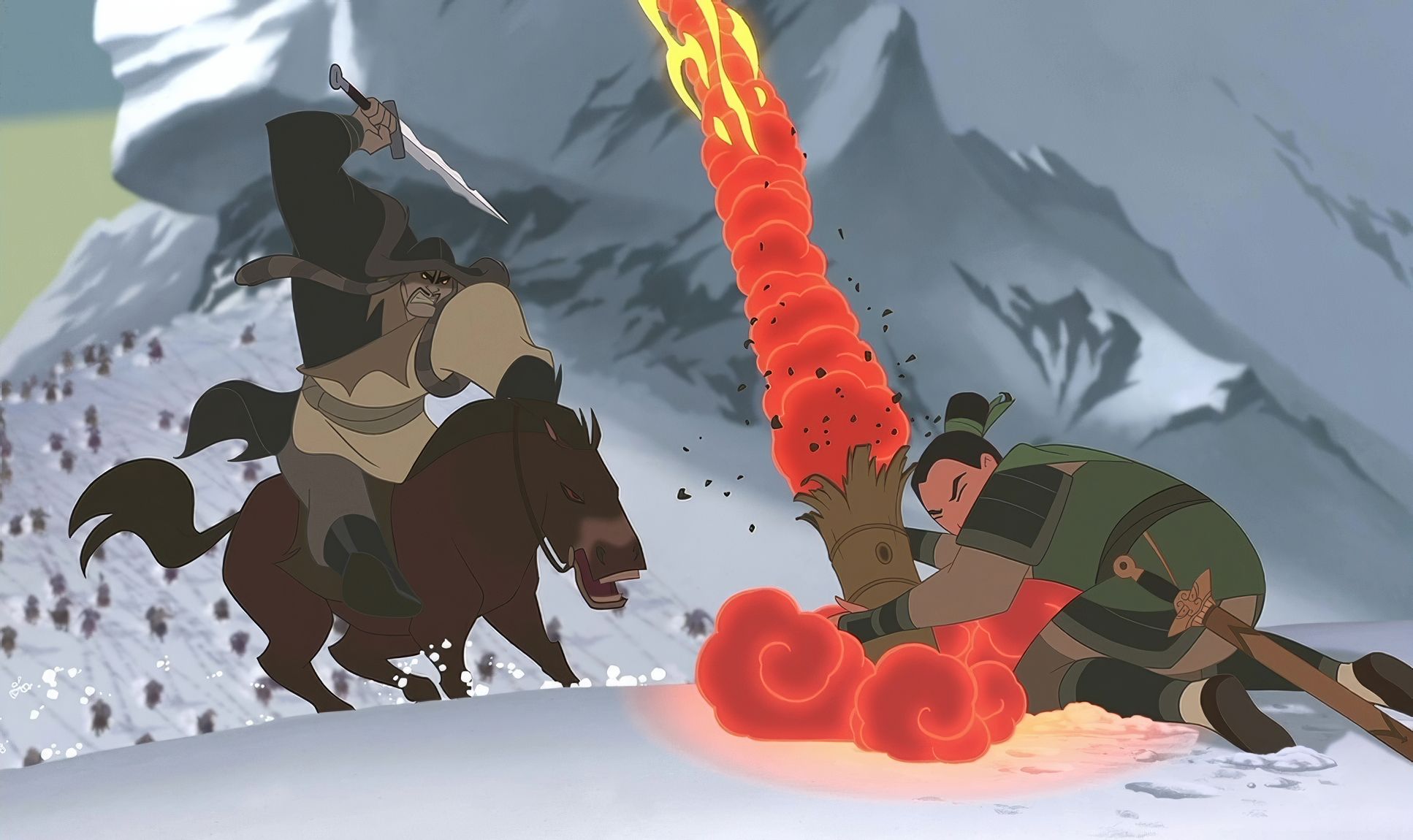
Then there’s the symbolic lighting. The transition to the desolate, shadow-drenched village is striking, but the sky during the Shan Yu encounter is the winner. The clouds are a bright, bloody pink before Mulan spares him, then it shifts to dusk once the threat is gone. It’s as if the sky itself is reflecting the narrative’s emotional logic.
Color Grading Approach

This is where I get really excited. The palette in Mulan is vibrant the colors pop more than almost any other Disney film of that era. But this wasn’t just about making it “pretty.” In 1998, working with traditional animation meant anticipating print-film sensibilities.
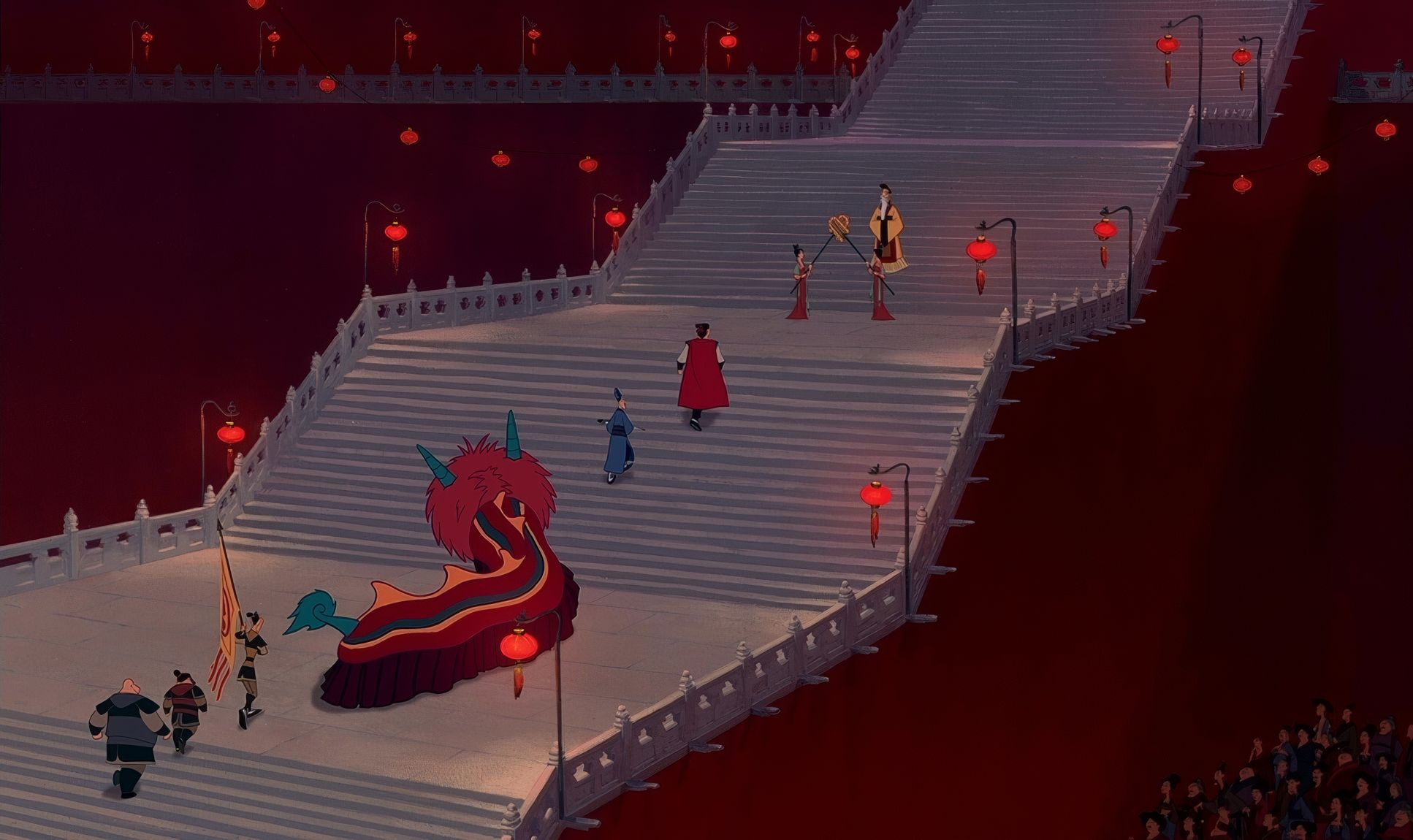
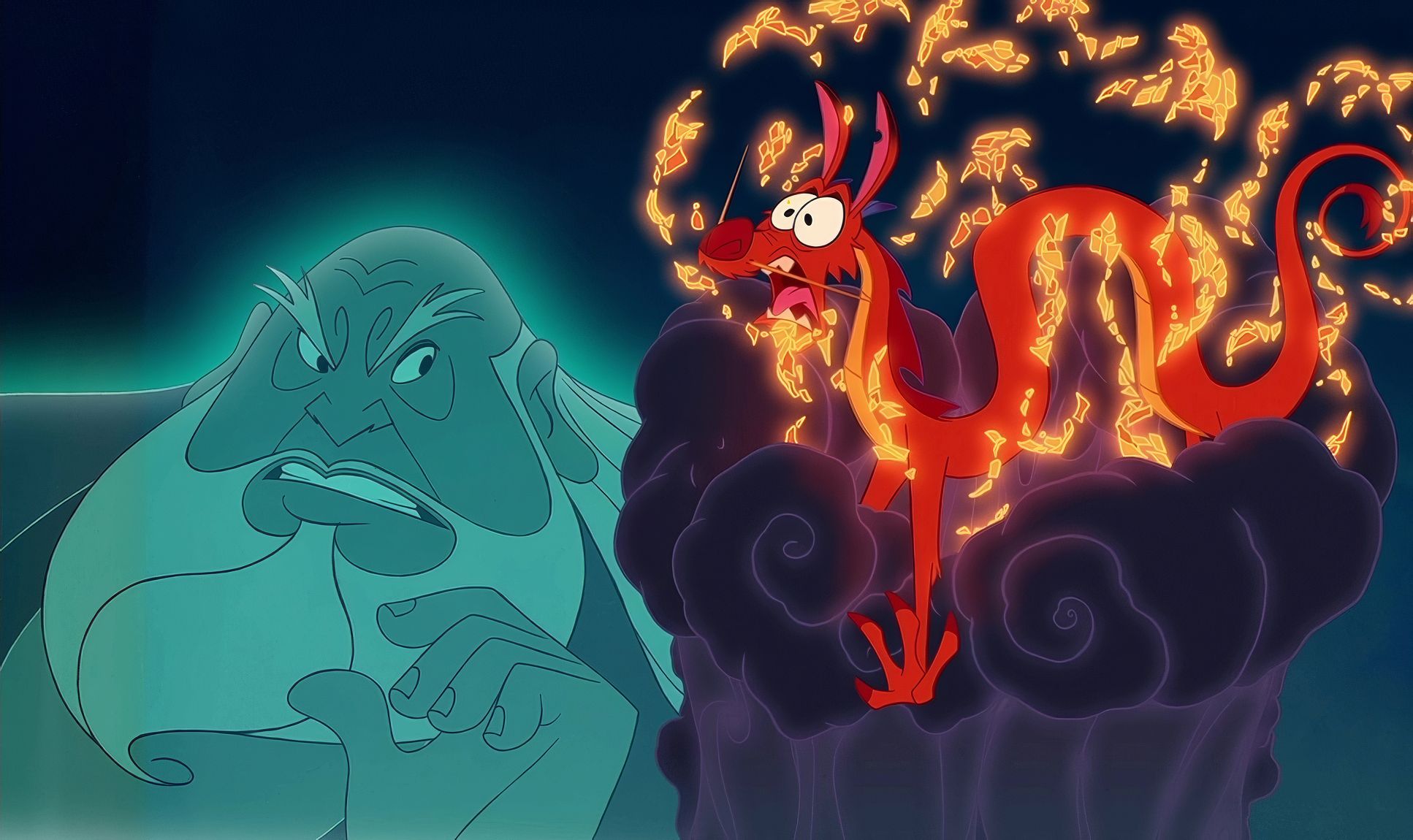
The team was effectively “pre-grading” for film stock. They had to account for how the colors would respond once transferred to film, considering things like highlight roll-off and tonal sculpting. They used aggressive hue separation to tell the story. Look at the deep reds and golds of the Imperial army compared to the desaturated, deathly blues and grays of the Huns.
The contrast shaping is equally impressive. Even with “flat” characters, they rely on bold color fields and subtle gradients rather than complex shadow maps to create focus. The shift in the sky from pink to dusk isn’t just a mood change; it’s a textbook example of using color for narrative punctuation.
Lensing and Blocking
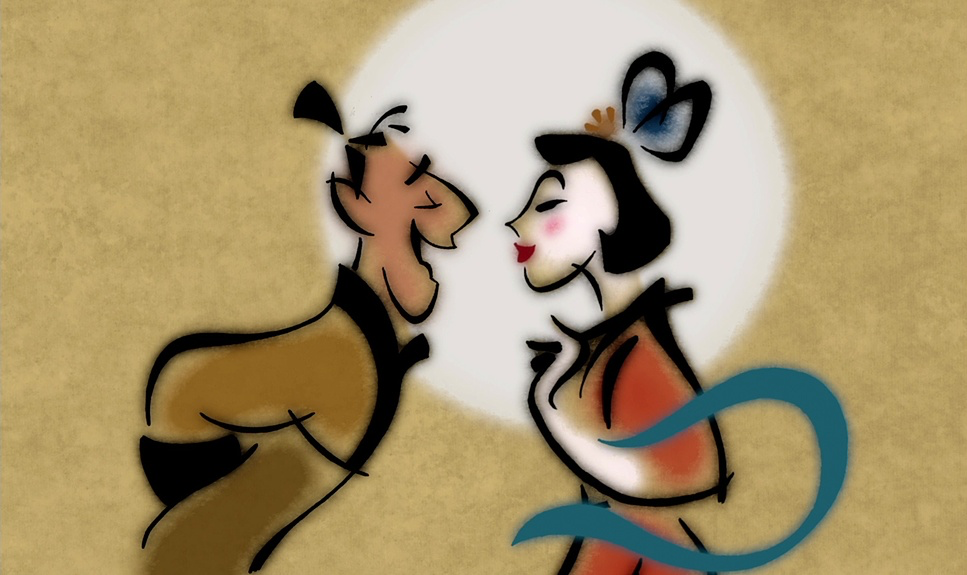
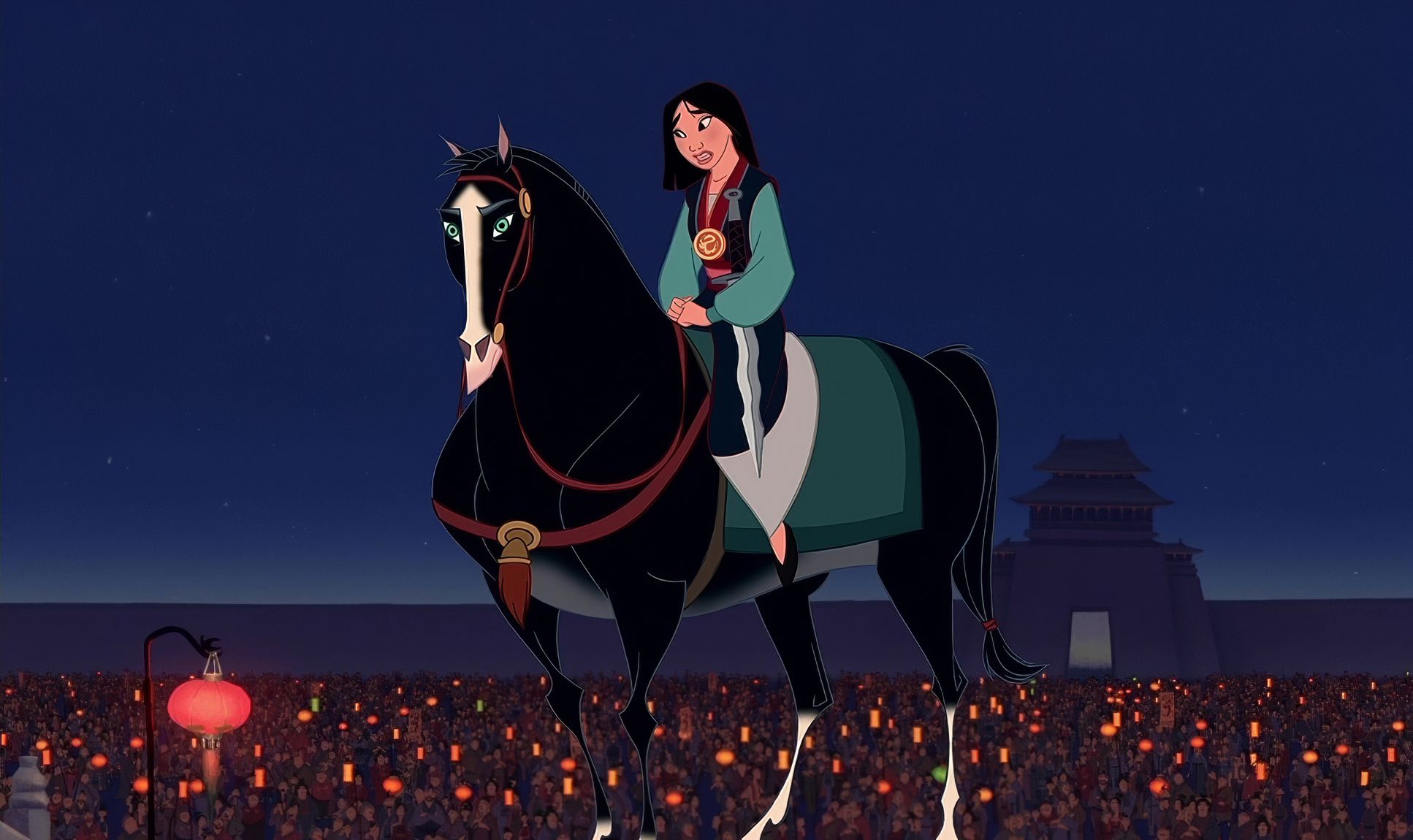
Even in a 2D world, “lensing” matters. Mulan uses a versatile virtual lens package. Wide-angle views establish the epic vastness of China and the scale of the Hun invasion. On the flip side, tighter, longer “lenses” are used for emotional close-ups, making Mulan’s personal struggles feel immediate.
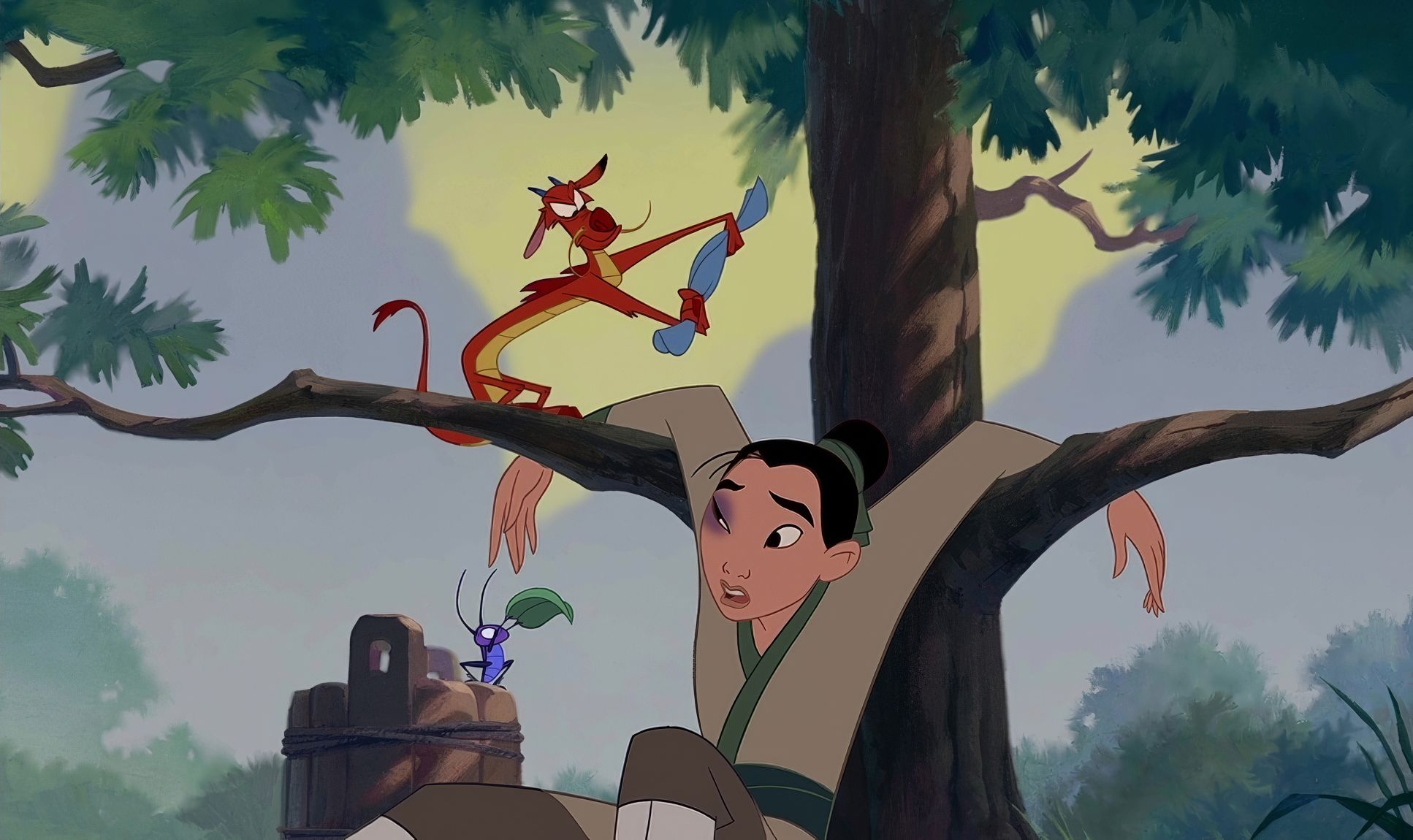
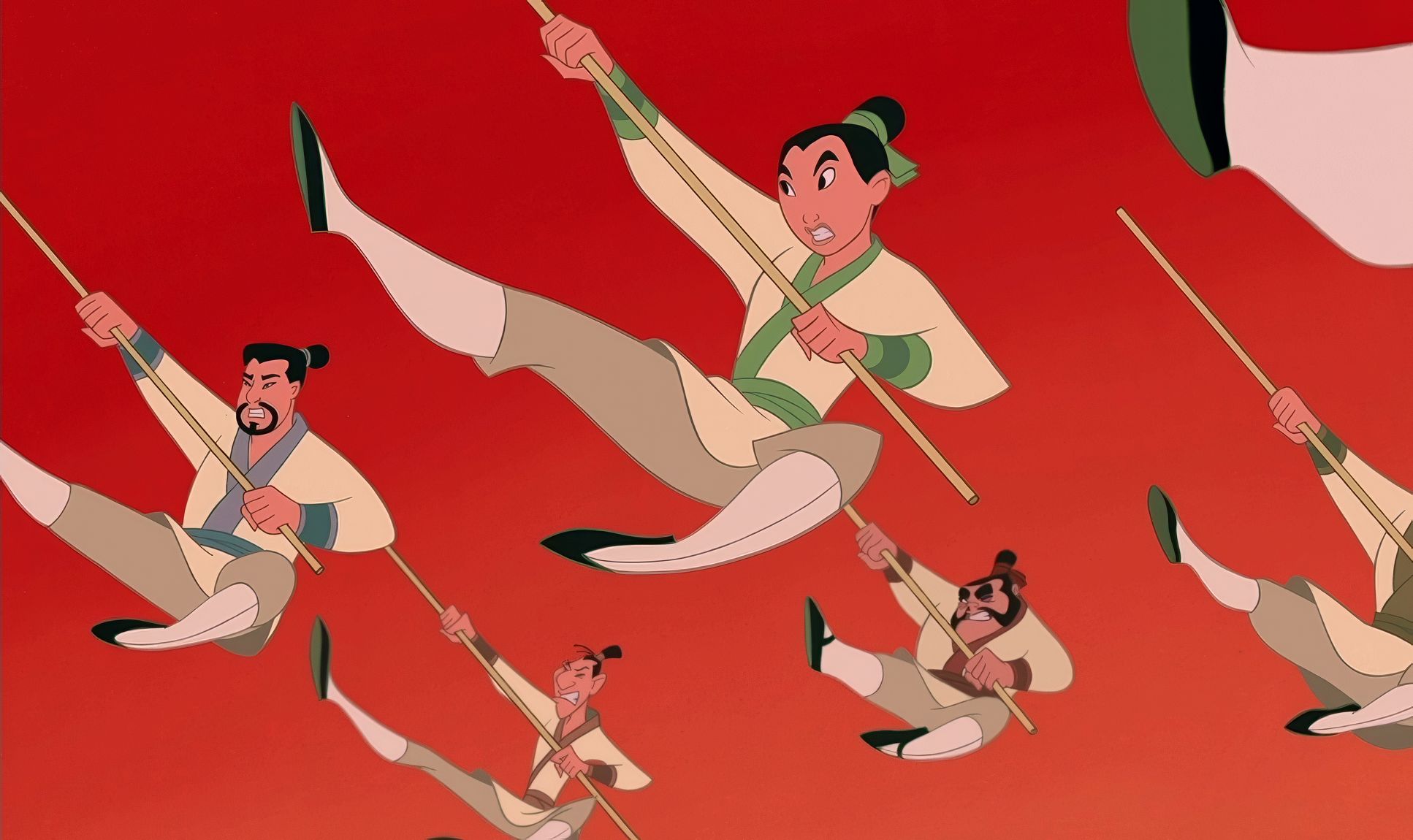
The blocking is just as smart. Mulan’s journey from isolation to integration is told through her physical position in the frame. During “I’ll Make a Man Out of You,” her evolution is shown through how she moves within the group. When she ties those weights to her arms to climb the pole, the blocking illustrates discipline and strength better than any dialogue could. Plus, the use of depth cues like layering tree branches in the foreground or using 2D heat waves to distort a soldier’s face gives the world a volume that 2D animation often lacks.
Technical Aspects & Tools
Mulan sits at a fascinating crossroads. Hand-drawn animation was still king, but early CG was starting to be woven in. The Florida studio used this “ultimate test” to blend digital ink and paint with traditional cel techniques.
Those sweeping CG shots of the avalanche were groundbreaking. They conveyed a scale that would have been impossible with purely traditional methods. Even the decision to use watercolors for the backgrounds was a technical hurdle that defined the texture of the movie. Everything from the “flat” character lighting to the subtle environmental effects shows a team trying to push the medium into a “pretty real for 1998” experience. It’s a perfect marriage of emerging digital tools and old-school mastery.
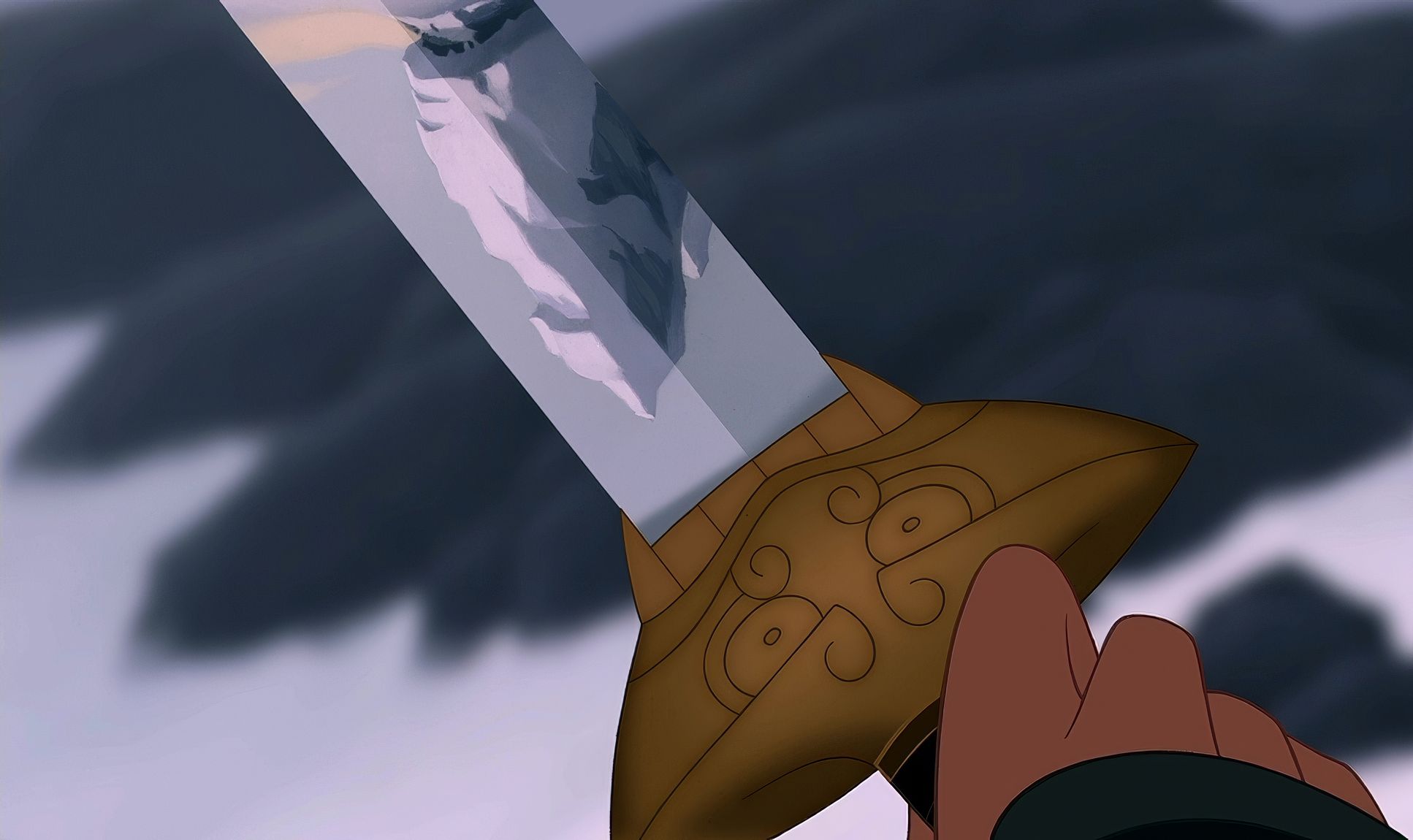
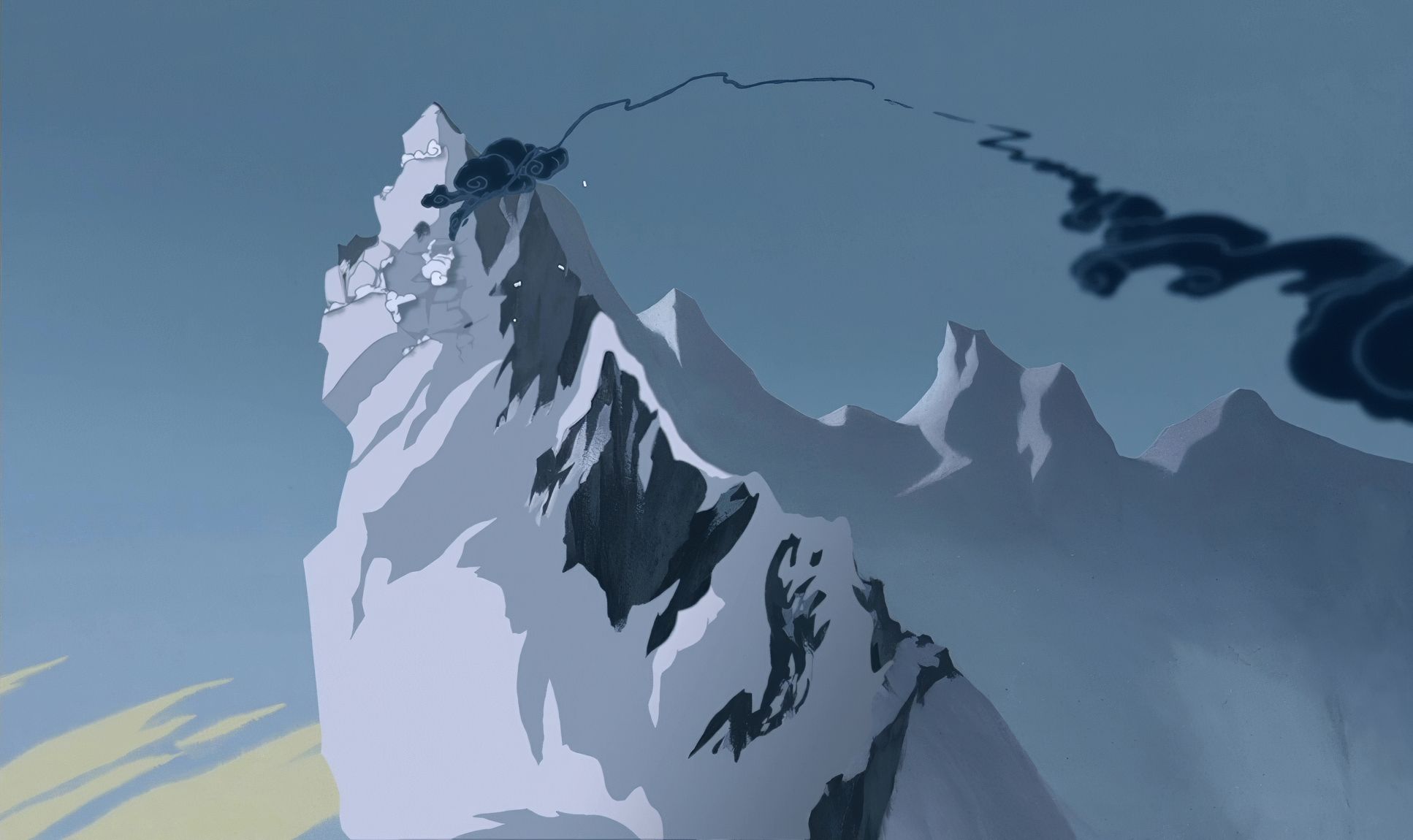
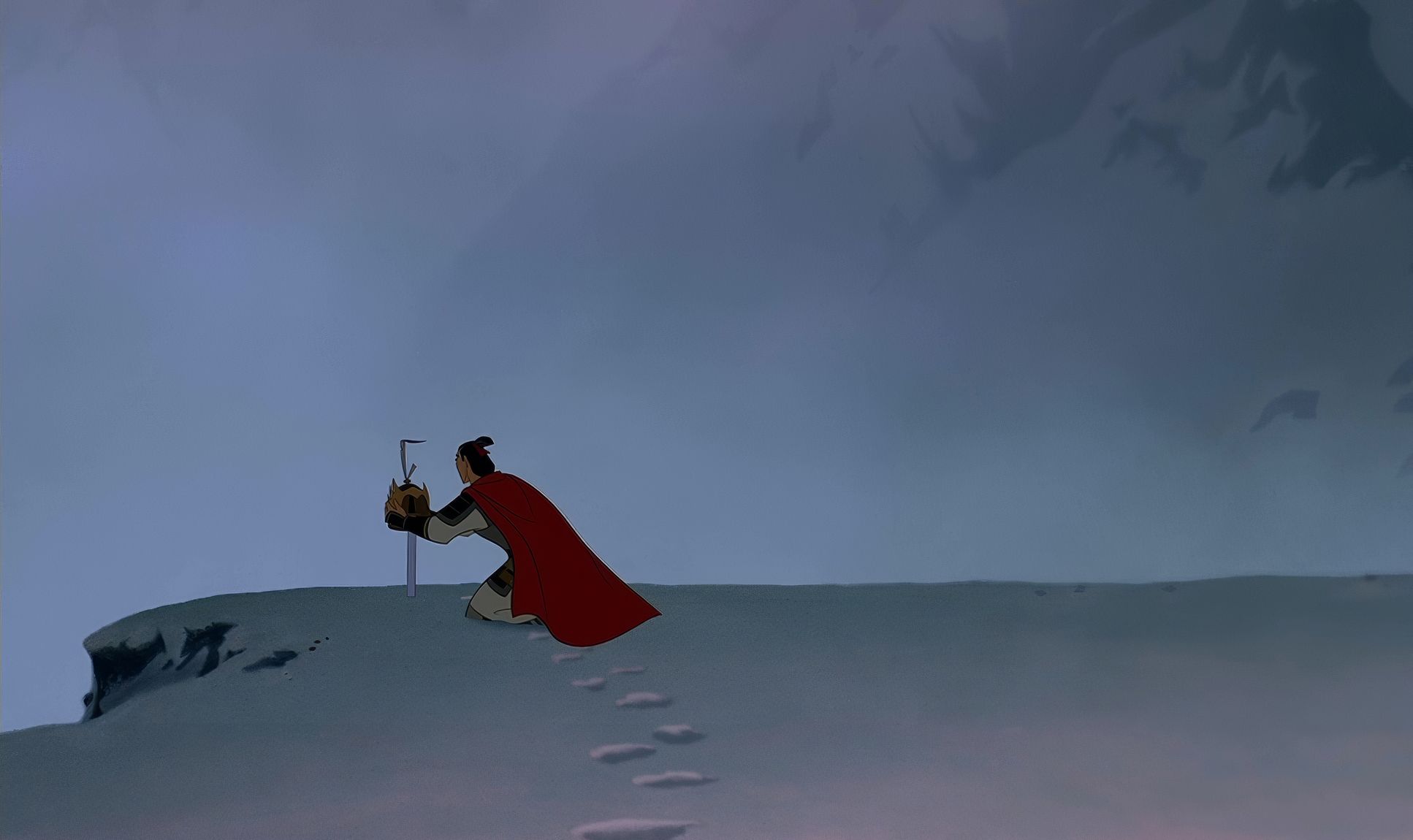
Mulan (1998) Film Stills
A curated reference archive of cinematography stills from MULAN (1998). Study the lighting, color grading, and composition.












































- Also read: GATTACA (1997) – CINEMATOGRAPHY ANALYSIS
- Also read: O BROTHER, WHERE ART THOU? (2000) – CINEMATOGRAPHY ANALYSIS
Browse Our Cinematography Analysis Glossary
Explore directors, cinematographers, cameras, lenses, lighting styles, genres, and the visual techniques that shape iconic films.
Explore Glossary →