When most people talk about Hot Fuzz (2007) they focus on the jokes. Edgar Wright didn’t just make a parody; he made a legitimate high-octane action film that happens to be set in a sleepy British village. It’s a “Valentine to action movies,” as Simon Pegg put it, and it treats the genre’s visual tropes with absolute reverence.
About the Cinematographer
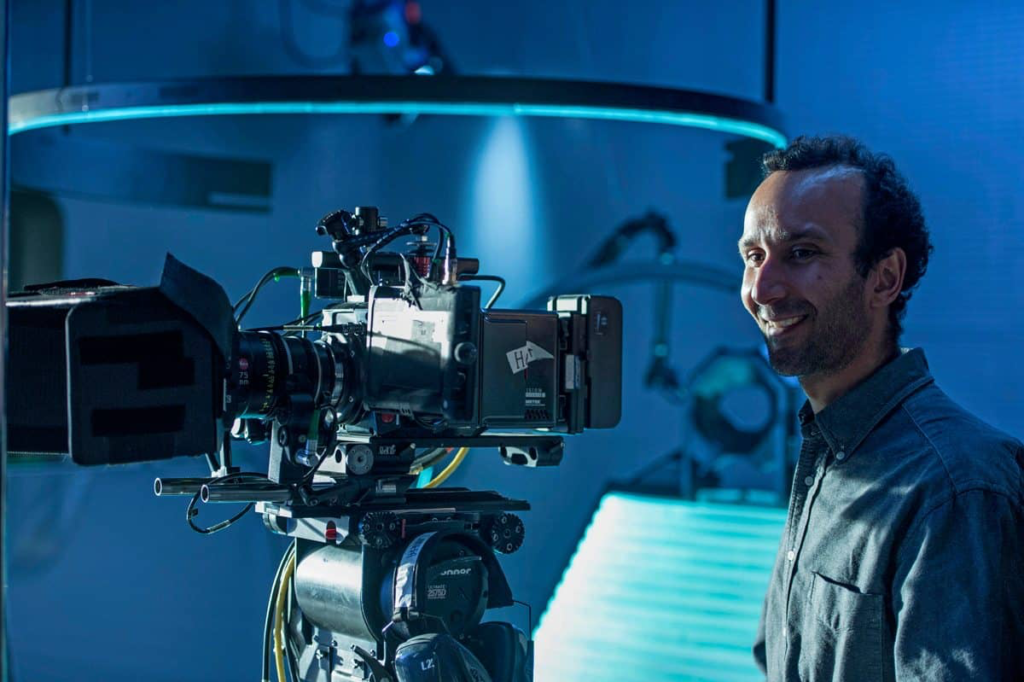
The visual architect here was Jess Hall. Working with Edgar Wright is a specific kind of challenge because the cinematography has to be frame-accurate to the millisecond to work with Wright’s rapid-fire editing style. Hall shot this on 35mm film (using the Arricam LT), which I think was the most critical decision they made. That organic texture is what separates Hot Fuzz from a standard comedy; it has a weight and a density that digital wouldn’t have captured in 2007. Hall and editor Chris Dickens had to navigate a massive script 18 months of writing and 9 months of revisions and translate that into a visual style that shifts from “village cozy” to “Tony Scott chaos” without losing the audience.
Inspiration Behind the Cinematography
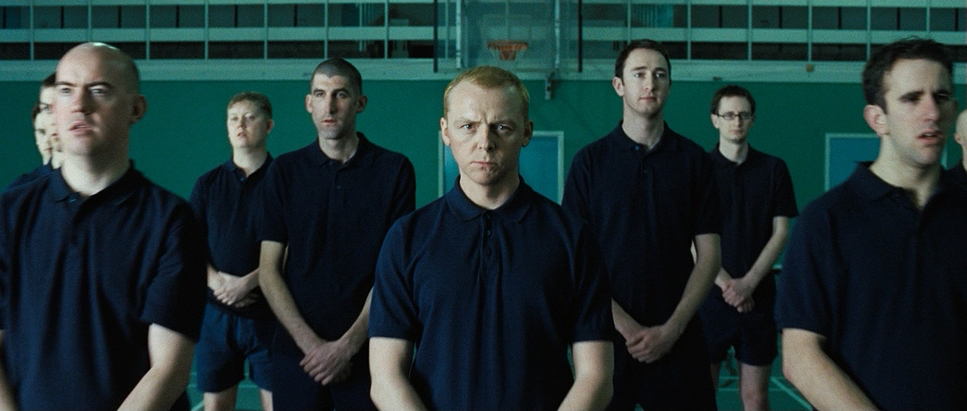
The DNA of this film is built on a massive 138-movie watchlist. Wright and Pegg weren’t just looking for plot points; they were studying the visual grammar of Point Break, Lethal Weapon, and the over-the-top maximalism of Bad Boys II.
What’s brilliant is how they applied American “big-budget” sensibilities to the town of Wells. They took the visual language of a $150 million Michael Bay film and squeezed it into a $15 million production. You see this most clearly in the paperwork sequences. Most directors would treat filling out forms as a throwaway moment, but Hall and Wright stylized them to look like something out of Tony Scott’s Domino. It’s a genre wink that tells the audience: even the mundane is epic in this world.
Lensing and Blocking
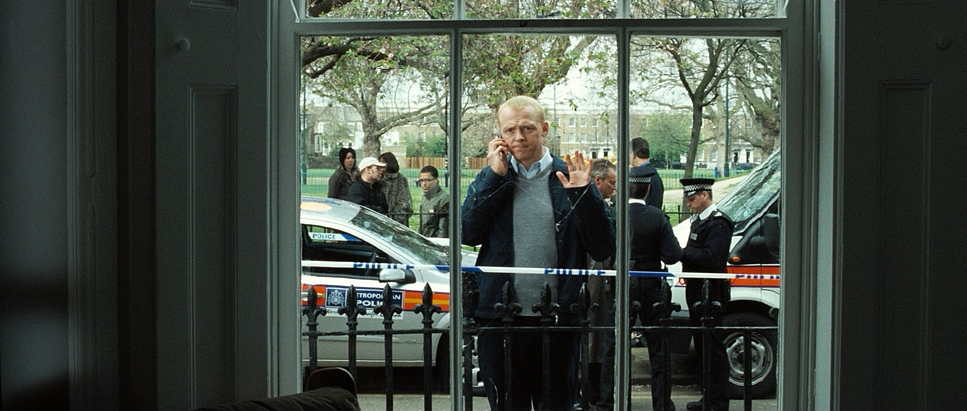
This is where the technical choices really shine. Hall opted for Cooke S4/i lenses and Angenieux Optimo Zooms. As a colorist, I love the “Cooke Look” it has a specific way of handling skin tones and a smooth highlight roll-off that feels “expensive.”
The blocking is incredibly precise. Characters are often positioned to enhance a comedic beat or to facilitate one of Wright’s signature in-camera transitions. You’ll notice the focal lengths change as Nicholas Angel’s world changes. In London, wider glass makes him look isolated and hyper-efficient. In Sandford, they move into more standard focal lengths to establish a “normalcy” before the third act brings in the long-lens compression and aggressive zooms typical of high-end action cinema.
Camera Movements
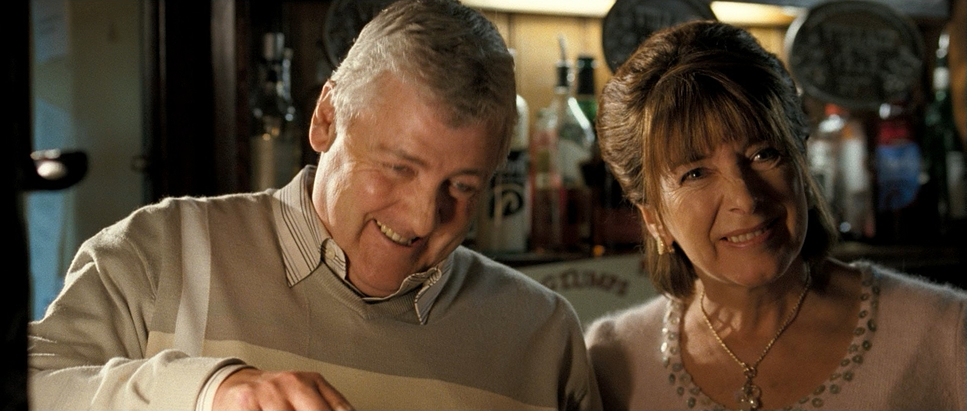
If you’re looking for a lesson in kinetic energy, this is it. The camera in Hot Fuzz is never just a spectator. In the beginning, the movements are surgical rapid-fire push-ins and whip pans that signal this isn’t a sleepy BBC drama.
As the mystery unspools, the camera mirrors Angel’s intensity. We get sweeping crane shots and aggressive dolly moves that plunge us into the investigation. One of the most impressive technical feats is the “in-camera” editing, where a whip pan resolves directly into a new shot. It demands your attention. Even when the pace becomes relentless during the final shootout, it never feels messy because the spatial relationships are so clearly defined by the camera’s path.
Compositional Choices
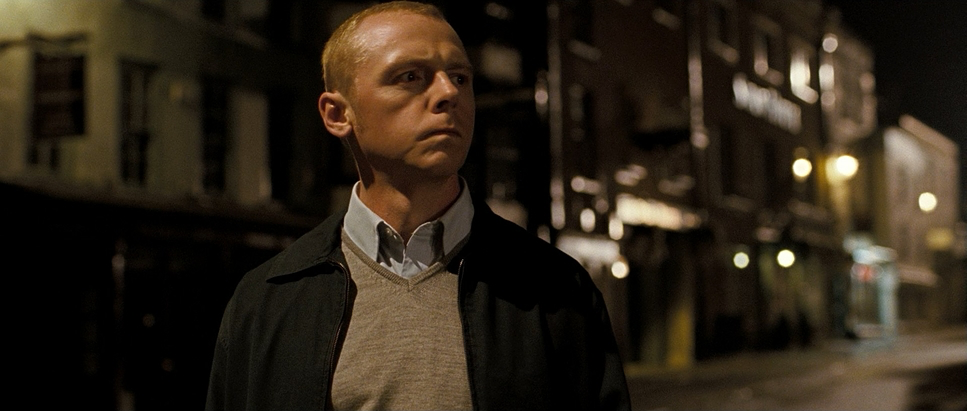
Composition in Hot Fuzz is all about controlling the viewer’s eye for maximum comic payoff. Wright and Hall utilize the 2.35:1 aspect ratio perfectly, often using symmetrical framing to show Angel’s obsession with order.
They also lean heavily into the “Dutch angle” and skewed perspectives for the bureaucratic tasks, which turns a simple signature into an action beat. The juxtaposition is the joke: seeing a high-ranking officer framed like a villain in a thriller while he’s just talking about a missing swan is peak visual comedy. Every frame is used to either build the mystery or land a punchline.
Lighting Style
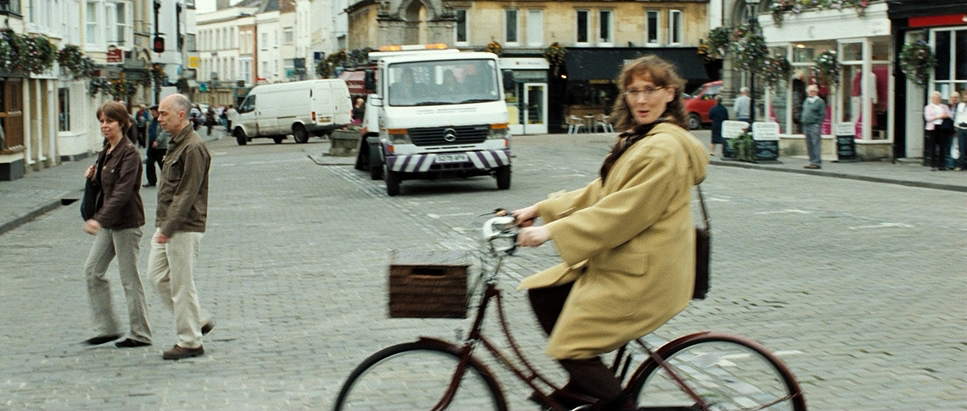
The lighting evolution in this film is a subtle but brilliant narrative tool. Initially, Sandford is bathed in soft, naturalistic British daylight. It’s diffused and unassuming, leaning into those “naturalistic greens” and warm, earthy tones. It feels safe.
But as the “accidents” stack up, Hall shifts the mood. The shadows get deeper, the contrast ramps up, and we see more neo-noir influences. By the final act, the lighting is aggressive. We’re talking hard backlighting to silhouette the characters and sharp, high-contrast kicks that make the action feel punchy. They weren’t afraid to let the blacks “crush” a bit or the highlights “clip” in the muzzle flashes to get that gritty, high-octane aesthetic.
Color Grading Approach
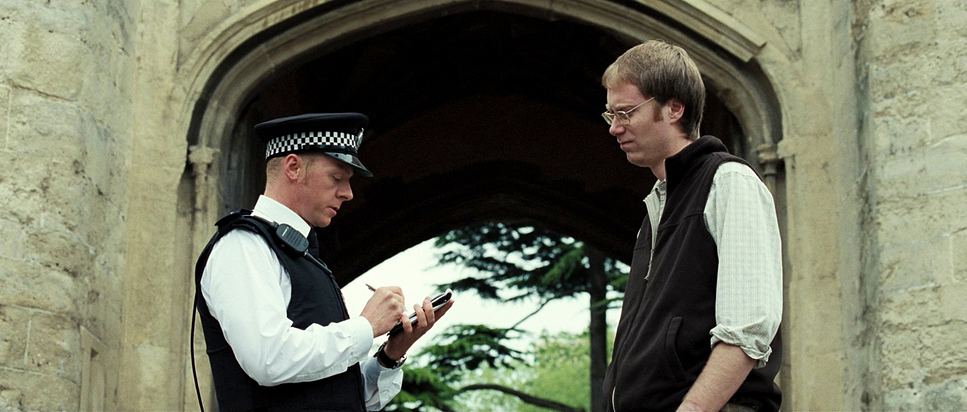
This is where I really have to tip my hat to colorist Brian Krijgsman. While the film starts with a desaturated, almost pastoral palette, the tonal sculpting becomes much more aggressive as the genre shifts.
In the first half, the grade preserves detail in the highlights and shadows, giving it an idyllic, nostalgic feel. But when the climax hits, the grade goes full “Action Spectacle.” You can see the hue separation becoming more pronounced vibrant reds for the gore standing out against a cooler, grittier background. Krijgsman likely pushed the contrast shaping to give the image more “pop” and “bite,” mirroring the shift from comedy to thriller. The way the skin tones stay grounded even when the surroundings get heavily stylized is a testament to a really disciplined grade.
Technical Aspects & Tools
Hot Fuzz (2007) — Technical Specifications
| Genre | Action, Comedy, Crime, Murder Mystery, Parody, Mystery, Thriller, Police |
| Director | Edgar Wright |
| Cinematographer | Jess Hall |
| Production Designer | Marcus Rowland |
| Costume Designer | Annie Hardinge |
| Editor | Chris Dickens |
| Colorist | Brian Krijgsman |
| Time Period | 2000s |
| Color | Mixed, Saturated, Yellow |
| Aspect Ratio | 2.35 – Spherical |
| Format | Film – 35mm |
| Lighting | Soft light, Side light, Edge light |
| Lighting Type | Daylight, Sunny |
| Story Location | England > London |
| Filming Location | England > London |
| Camera | Arricam LT |
| Lens | Cooke S4/ i, Angenieux Optimo Zooms |
Shooting on the Arricam LT with 35mm film was the right call for a $15 million budget. It gave them a texture that hid the limitations of their practical effects and made the village of Wells look cinematic. Because they couldn’t afford massive CGI, they relied on “smart” technical solutions like using real locations and perfecting those rapid-cut transitions in-camera. It’s a great reminder that creativity often thrives when you have clear constraints. They didn’t need Bad Boys II money to make a movie that felt like it belonged in that world.
- Also read: THE BOURNE IDENTITY (2002) – CINEMATOGRAPHY ANALYSIS
- Also read: BACK TO THE FUTURE PART II (1989) – CINEMATOGRAPHY ANALYSIS
Browse Our Cinematography Analysis Glossary
Explore directors, cinematographers, cameras, lenses, lighting styles, genres, and the visual techniques that shape iconic films.
Explore Glossary →