Zack Snyder’s Justice League (2021), I found myself analyzing something else entirely: a director’s uncompromised, messy, and massive vision. ZSJL isn’t just a longer movie; it’s a four-hour artifact that lets us see exactly how a director builds a world when no one is telling him “no.” It’s a study in visual persistence, and for those of us in the industry, it is a masterclass in using technical tools from aspect ratios to film stocks to enforce a singular authorial voice.
About the Cinematographer
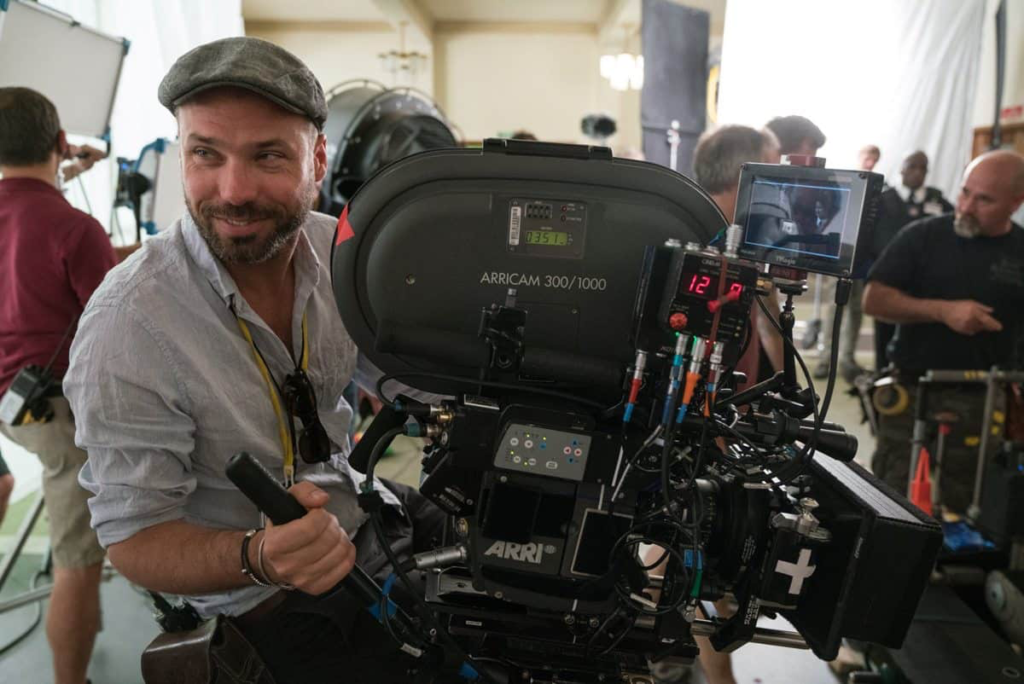
The visual architect here is Fabian Wagner (ASC, BVK). Wagner isn’t new to epic scales; his work on Game of Thronesproved he could handle massive logistical challenges while maintaining a distinct atmosphere. While he shot parts of the 2017 theatrical release, ZSJL gave him the runway to actually execute the plan. Wagner’s approach marries the naturalistic lighting of German expressionism with the hyper-stylized demands of a comic book movie. It’s a partnership that clearly relies on a shared language: high contrast, heavy mood, and an unwillingness to compromise shadows for the sake of a brighter, “safer” commercial image.
Inspiration Behind the Cinematography
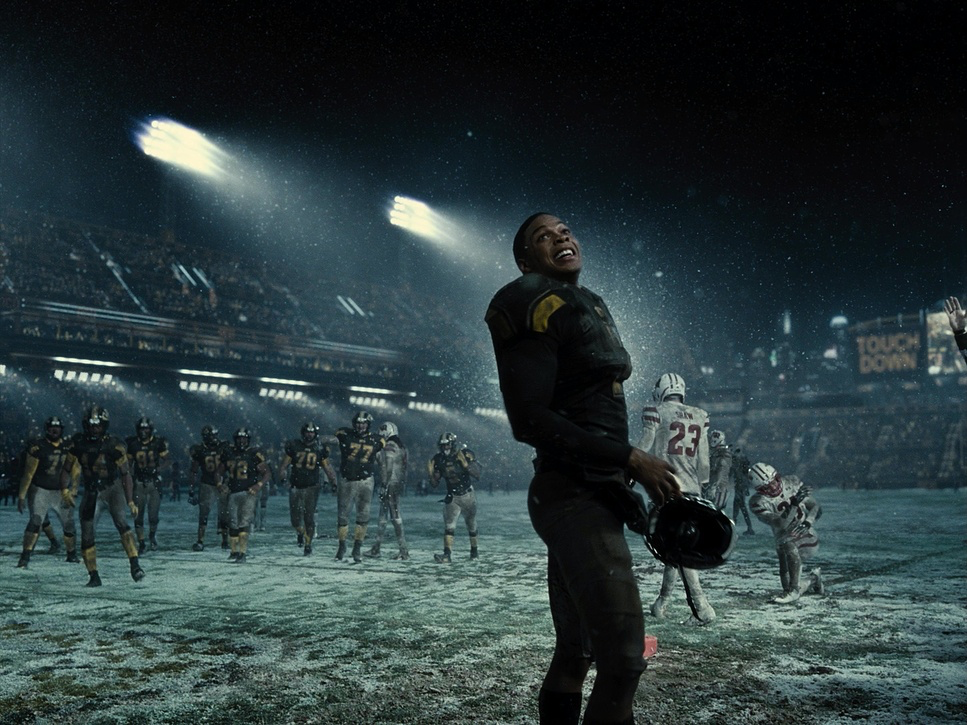
The most immediate talking point is the 1.33:1 (4:3) aspect ratio. While internet forums argued about black bars, the decision makes perfect cinematographic sense. Snyder wasn’t just trying to emulate an IMAX presentation; he was acknowledging the verticality of his subjects. Superheroes fly up, they land down, and they stand tall. The 1.33 ratio mimics the vertical orientation of a comic book panel.
Unlike the 2.39:1 widescreen standard, which forces you to crop the top and bottom of a hero’s physique, this taller frame lets the characters dominate the screen. It feels less like a movie and more like a series of splash pages coming to life. It’s a bold rejection of modern home-viewing habits, prioritizing the integrity of the composition over filling a 16:9 TV screen.
Camera Movements
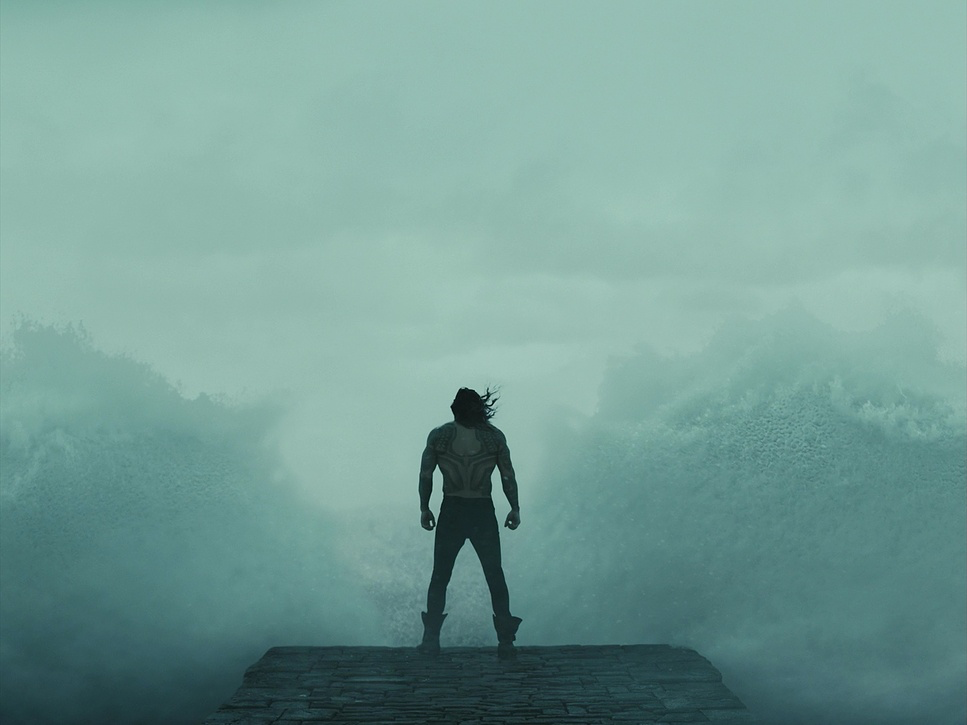
Snyder’s signature has always been the “speed ramp” that precise oscillation between kinetic action and balletic slow motion. In ZSJL, the camera work is highly intentional. We see a mix of stabilized, sweeping crane shots to establish the scale of locations like Themyscira, contrasted against controlled handheld work during close-quarters combat.
This isn’t the shaky-cam of the early 2000s; it’s a “breathing” handheld that puts the viewer inside the fight. The spacing of the slow-motion shots is sculptural. Instead of just looking cool, the frame rate manipulation isolates specific narrative beats a punch connecting, a realization dawning giving the audience time to process the “mythic” quality of the heroes.
Compositional Choices
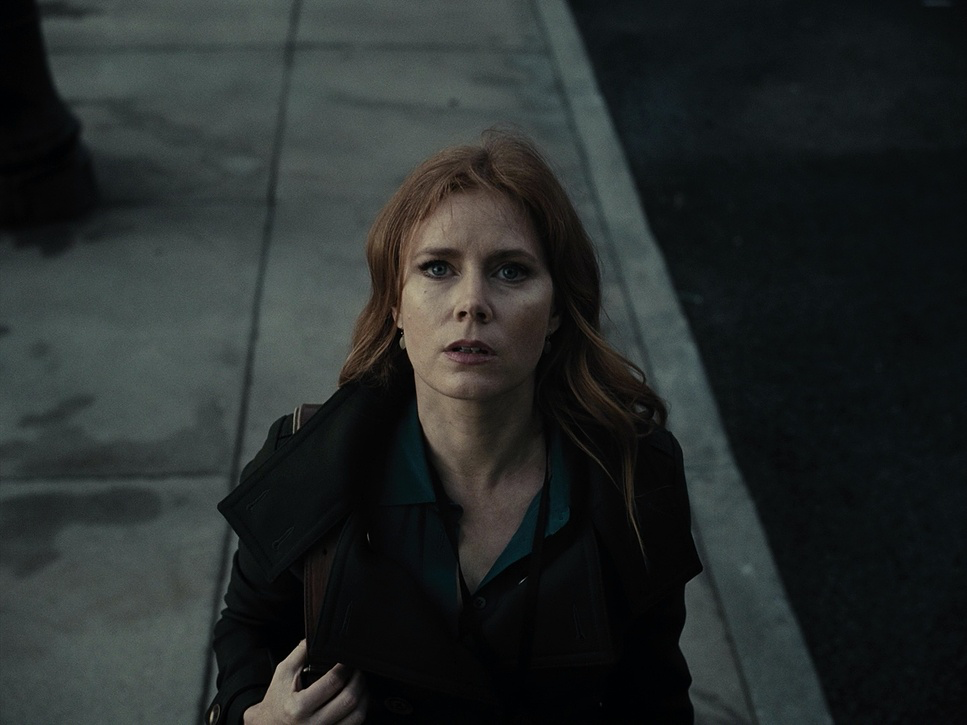
With the 1.33 aspect ratio as the foundation, the blocking changes entirely. You can’t rely on horizontal negative space; you have to use the vertical axis. Wagner frequently uses low-angle shots to emphasize power, creating triangular compositions that feel grounded and immovable.
I noticed a heavy reliance on “center-punching” the subject. Characters are often framed dead-center, almost posing. In a standard drama, this might feel stiff, but here it treats the characters as icons. The limited horizontal space forces the viewer to engage with the subject immediately, without the distraction of peripheral details. It’s a focused, almost claustrophobic way of framing that adds weight to every interaction.
Lighting Style
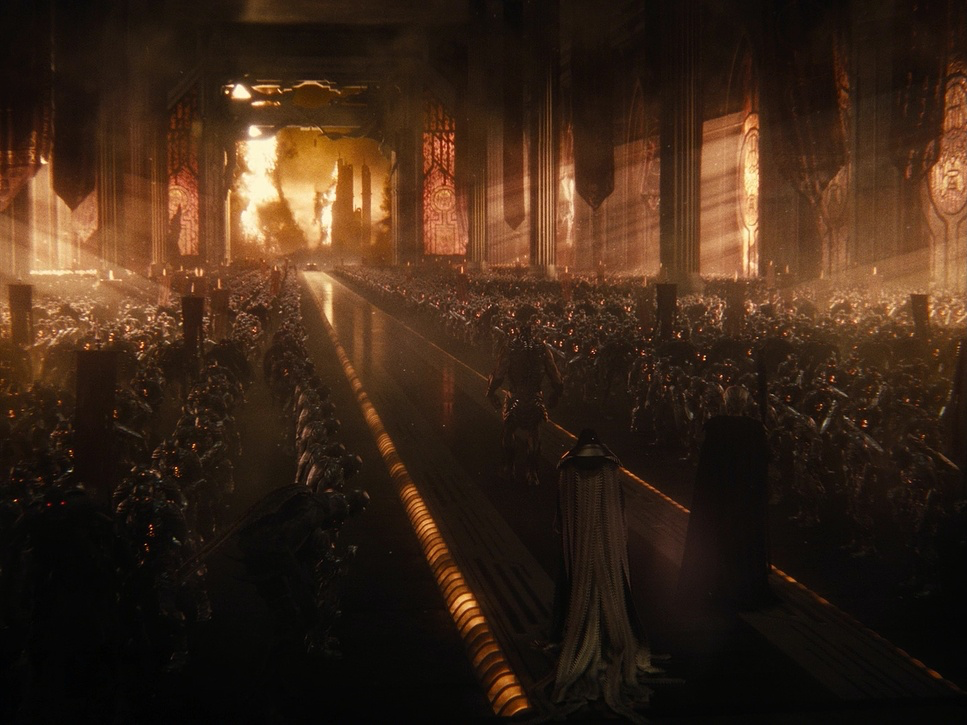
Snyder and Wagner lean heavily into a high-contrast, chiaroscuro lighting style. This film lives in the toes of the curve. It’s a low-key lighting scheme where shadows are treated as active elements, not just the absence of light.
They utilize a lot of hard backlighting and silhouetting, often motivating the light from practical sources the ethereal glow of a Mother Box, the harsh sodium vapor of a Gotham port, or the flicker of a fire. It creates a tactile texture. Unlike the flat, evenly lit visuals of many modern blockbusters, ZSJL isn’t afraid to let faces fall into darkness if it serves the mood. It’s moody, “dour” to some, but undeniably rich in atmosphere.
Lensing and Blocking
The team primarily utilized Leitz Summilux-C lenses. These are fascinating pieces of glass they are incredibly sharp but maintain a gentle fall-off that keeps the image from looking “video-ish.” Wagner generally stuck to medium focal lengths, avoiding the distortion of extreme wides unless absolutely necessary for scale.
Because of the square-ish frame, the blocking has to be tighter. You see characters arranged in clusters or stacked depth-wise foreground, mid-ground, background rather than spread across a wide horizontal plane. It creates a sense of depth that feels almost stereoscopic, drawing the eye deep into the set design rather than scanning across it.
Color Grading Approach
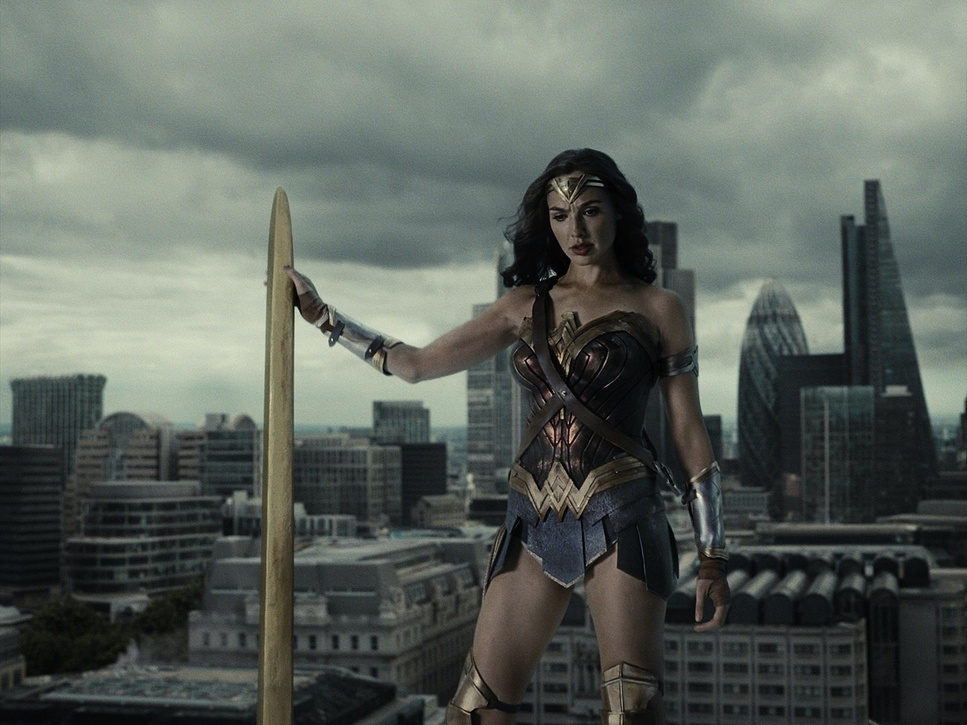
This is my comfort zone. The grade, executed by colorist Adam Nazarenko at Company 3, is a departure from the “teal and orange” blockbuster trend. The palette is decidedly cool, desaturated, and leans heavily into cyans and metallic tones.
From a technical standpoint, this looks like a heavy “Bleach Bypass” emulation. The saturation is stripped back, but the contrast is kept high. The density in the blacks is substantial they aren’t crushed to a flat zero, but they sit heavy in the waveform. The highlight roll-off is particularly impressive; despite the digital finish, the highlights bloom and fade with an organic smoothness, likely the result of a precise Print Film Emulation (PFE) LUT (Look Up Table). It gives the image a “thick” feeling, adding grit to the VFX and grounding the CGI characters in a unified, tangible world.
Technical Aspects & Tools
Zack Snyder’s Justice League — Technical Specifications
| Genre | Action, Superhero, Adventure, Fantasy, Science-Fiction |
| Director | Zack Snyder |
| Cinematographer | Fabian Wagner |
| Production Designer | Patrick Tatopoulos |
| Costume Designer | Michael Wilkinson |
| Editor | David Brenner |
| Colorist | Adam Nazarenko |
| Time Period | 2020s |
| Color Profile | Cool, Desaturated, Cyan |
| Aspect Ratio | 1.33 – Super 35 |
| Format | Film – 35mm |
| Lighting Style | Hard light, High contrast, Silhouette, Backlight |
| Lighting Type | Practical light |
| Story Location | … United States of America > Gotham |
| Camera System | Arricam LT, Arricam ST, Arriflex 235, Arriflex 435 |
| Lens | Leitz SUMMILUX-C |
| Film Stock | 5219/7219 Vision 3 500T, 5207/7207 Vision 3 250D, 5203/7203 Vision 3 50D |
The grit you see in ZSJL isn’t a digital plugin; it’s chemical. The film was shot on Super 35mm film using Arricam LT, Arricam ST, and Arriflex 435/235 cameras. They utilized Kodak Vision 3 stocks: 500T (5219) for the low-light and night scenes, which provides that heavy, beautiful grain structure, alongside 250D (5207) and 50D (5203) for day exteriors.
Shooting on Super 35 allowed them to crop to 4:3 without losing the integrity of the image. The $70 million investment from HBO Max was largely spent on the Digital Intermediate (DI) and VFX. This allowed Snyder to finish the film properly fixing the “shaved lip” issues of 2017 and redesigning Steppenwolf. The workflow involved scanning that 35mm negative at high resolution (likely 4K) and grading it to retain the analog characteristics of the Vision 3 stock while integrating modern digital effects.
- Also read: BIG FISH (2003) – CINEMATOGRAPHY ANALYSIS
- Also read: IN BRUGES (2008) – CINEMATOGRAPHY ANALYSIS
Browse Our Cinematography Analysis Glossary
Explore directors, cinematographers, cameras, lenses, lighting styles, genres, and the visual techniques that shape iconic films.
Explore Glossary →