This 2012 Disney gem is one of the best examples of world-building through visual adaptation I’ve ever seen. It’s not just a nostalgia trip; it’s a high-level exercise in how cinematography can define a narrative. I mean, that opening time-lapse arcade montage? It hits you right in the gut. It sets the tone for a film that knows exactly where it came from while carving out a totally new visual path.
Color Grading Approach

I’m moving this up because, let’s be real, this is where the movie lives or dies. The color grading in Wreck-It Ralph isn’t just “good” it’s strategically brilliant. In my studio, I’m always talking about “look dev,” and the look dev here is next-level. Each game world has its own dedicated grading pass that acts as an emotional anchor.
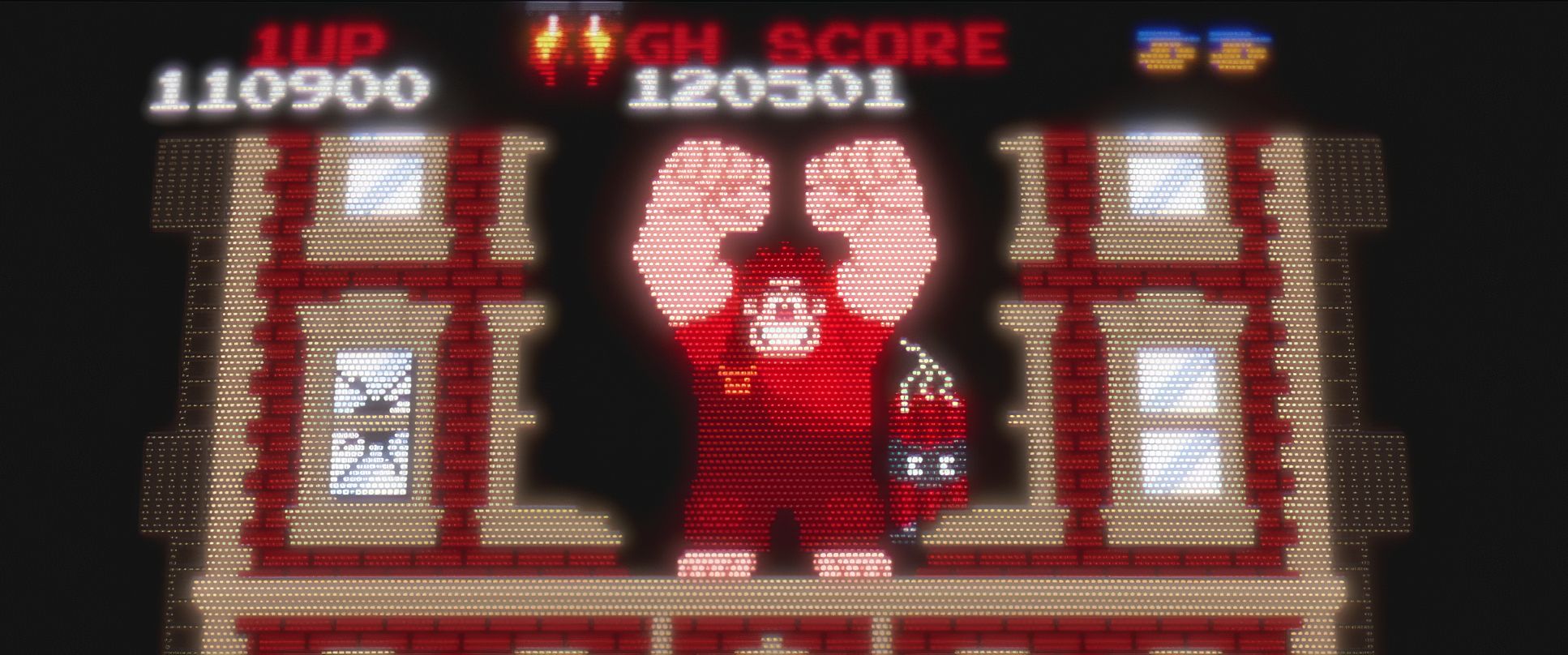
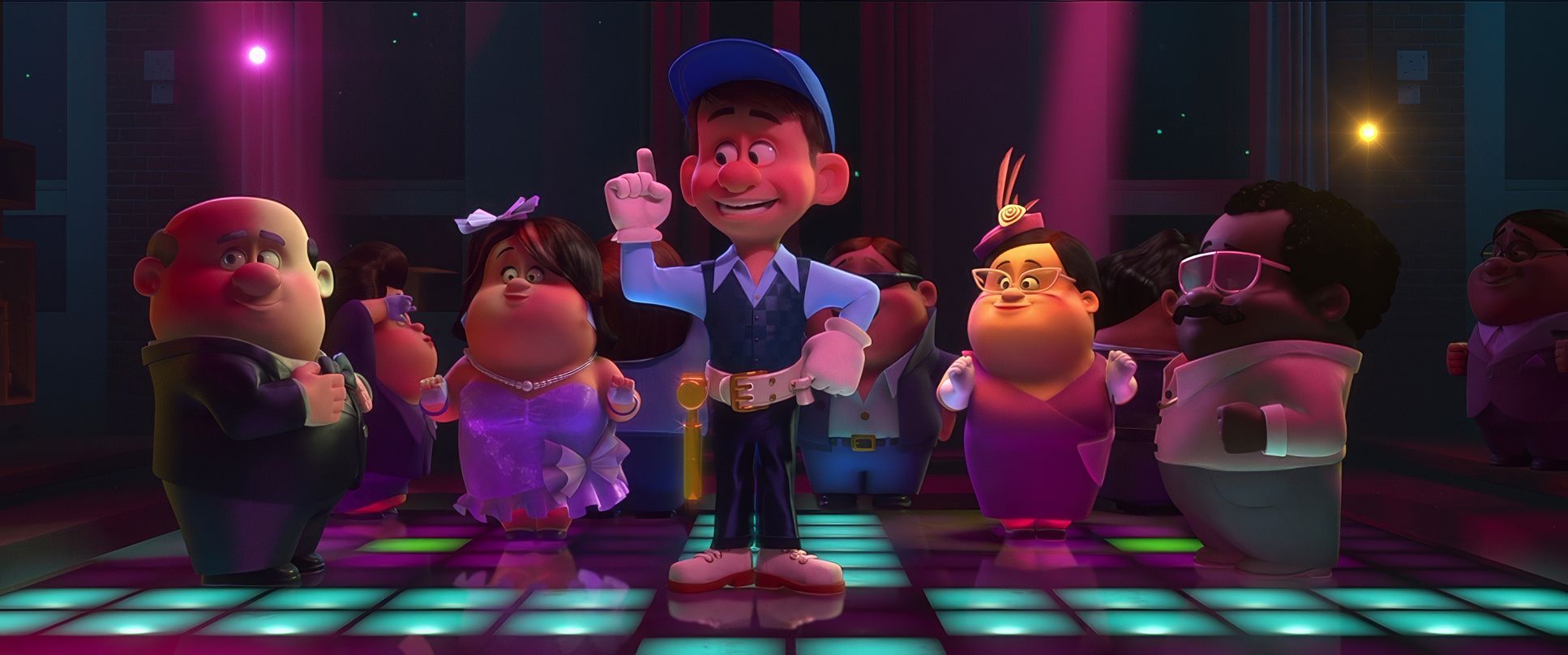
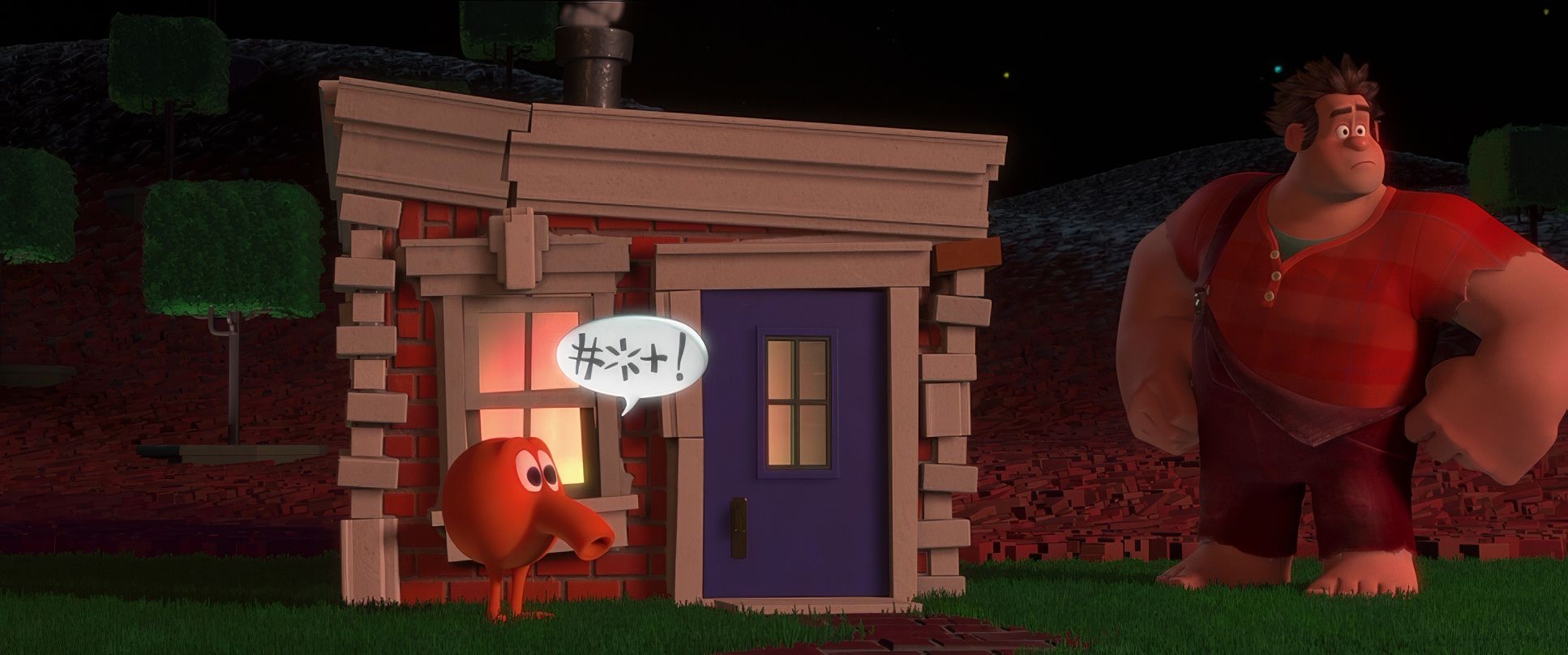
- Fix-It Felix Jr.: This is all about that 80s CRT aesthetic. The grade is vibrant but super controlled. We’re talking primary reds and yellows that pop without bleeding. I love the way they handled the contrast here it’s moderate, with a slight lift in the shadows that prevents the 8-bit characters from feeling too “heavy.” It feels like a perfectly preserved arcade cabinet.
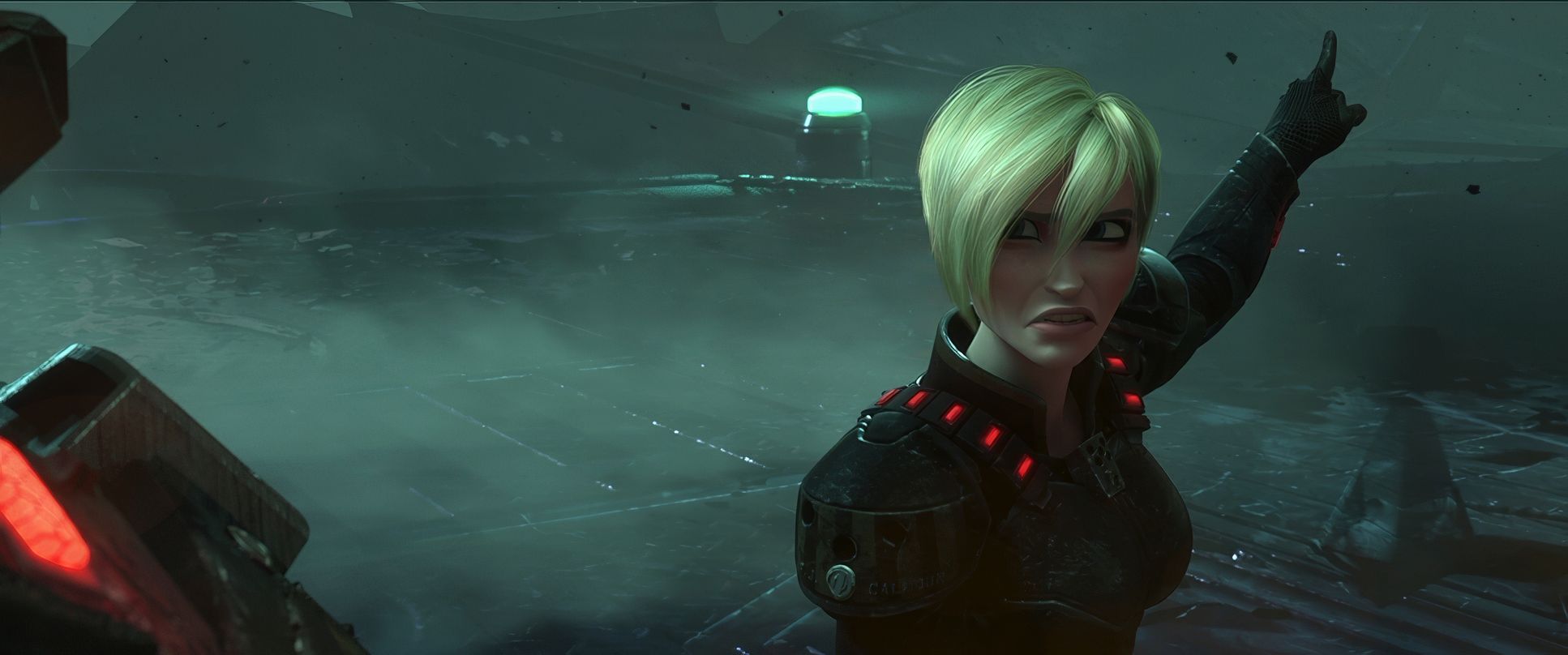
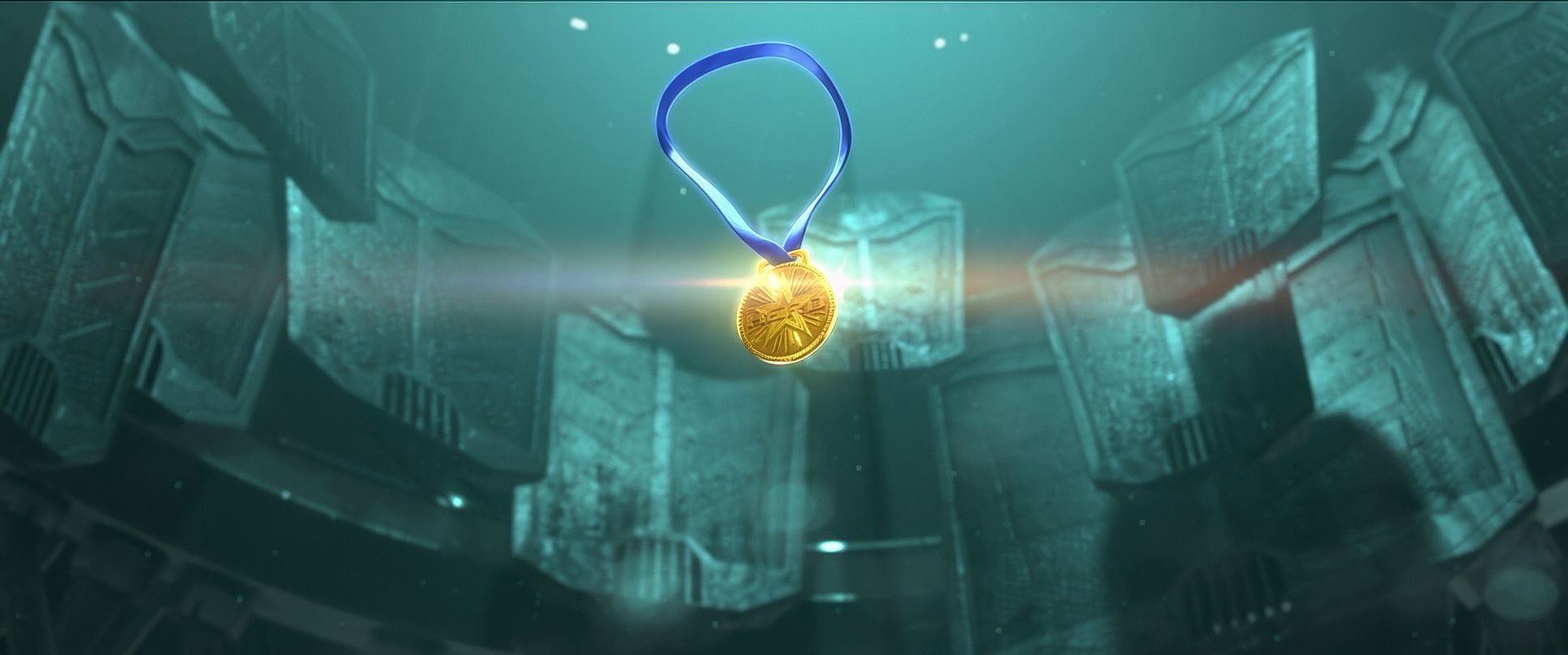
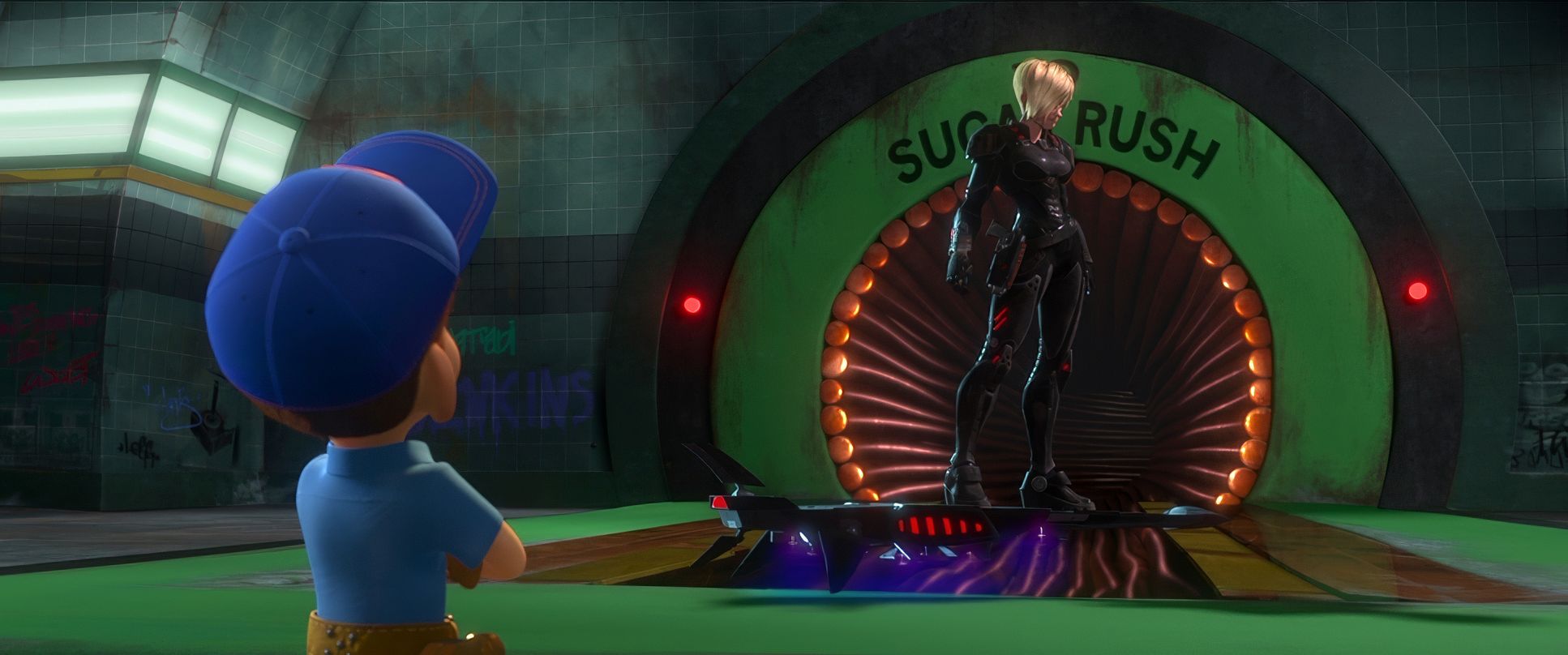
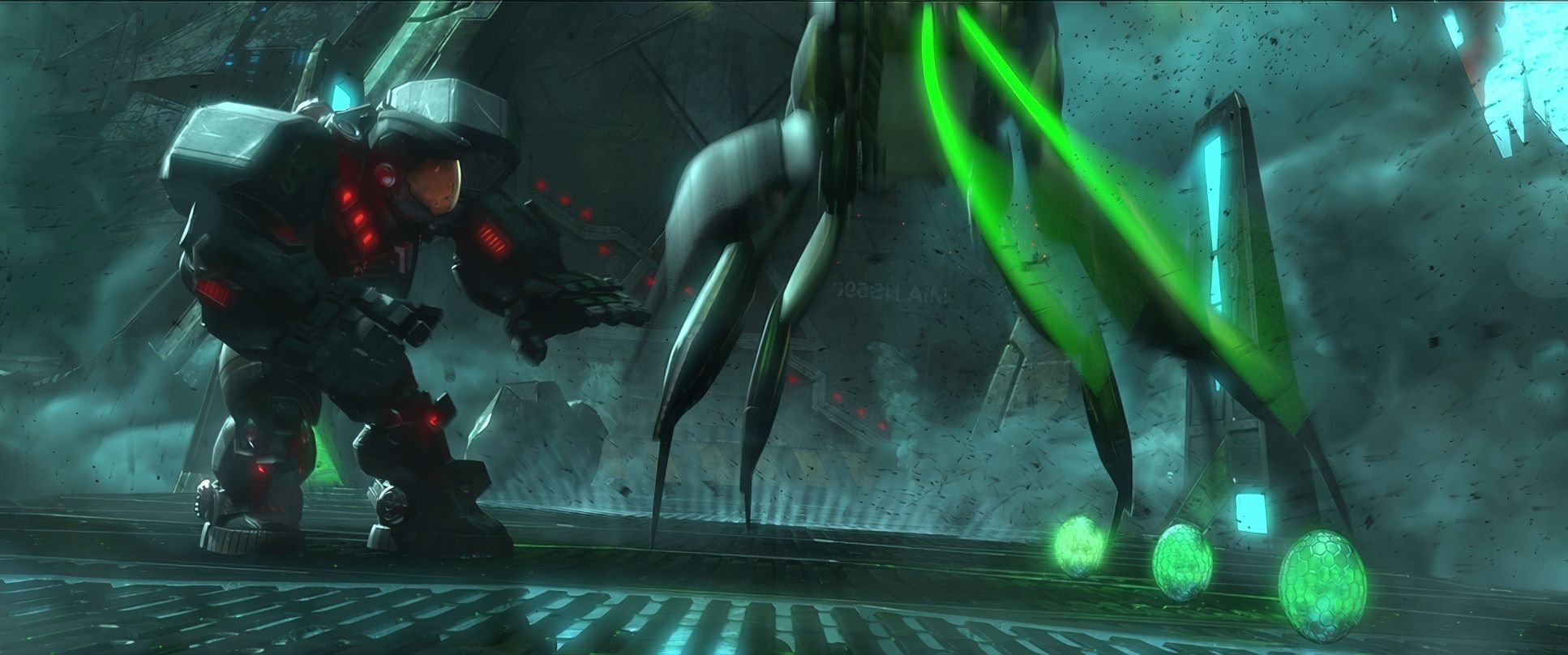
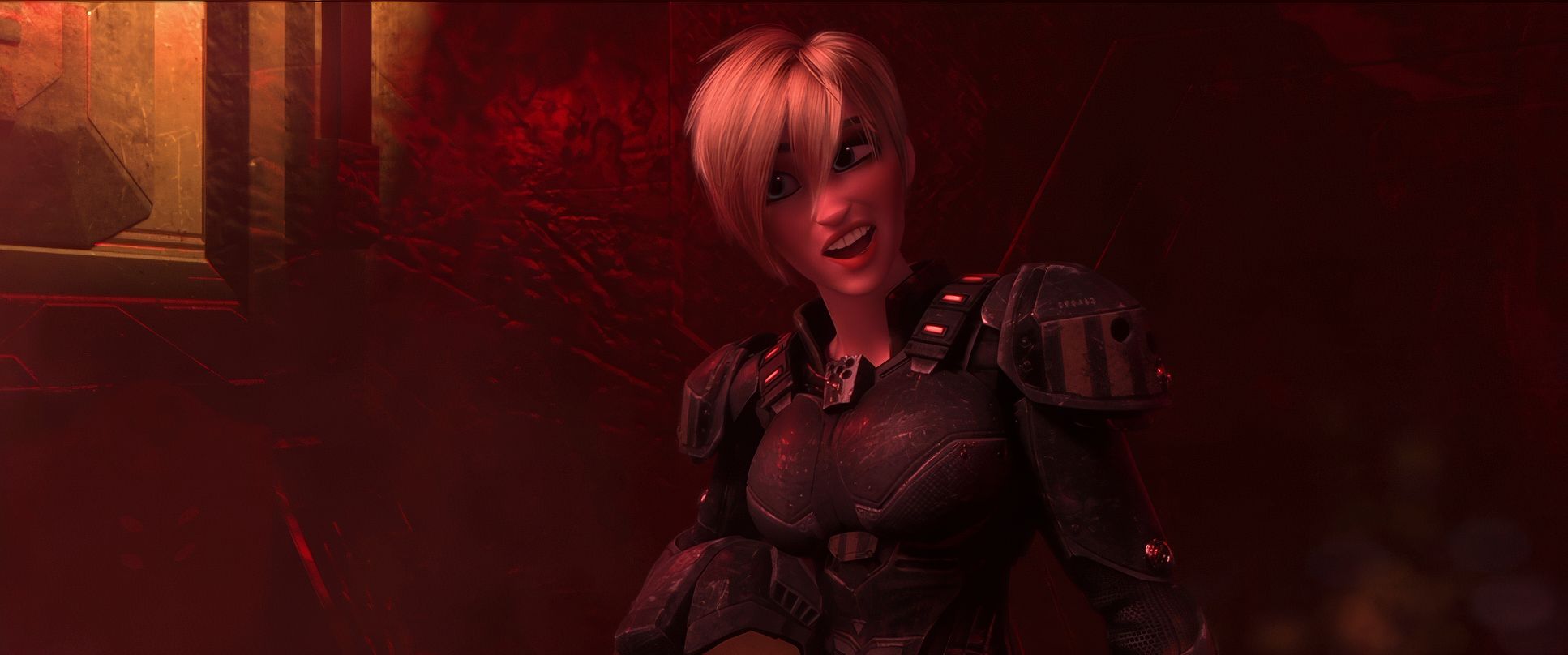
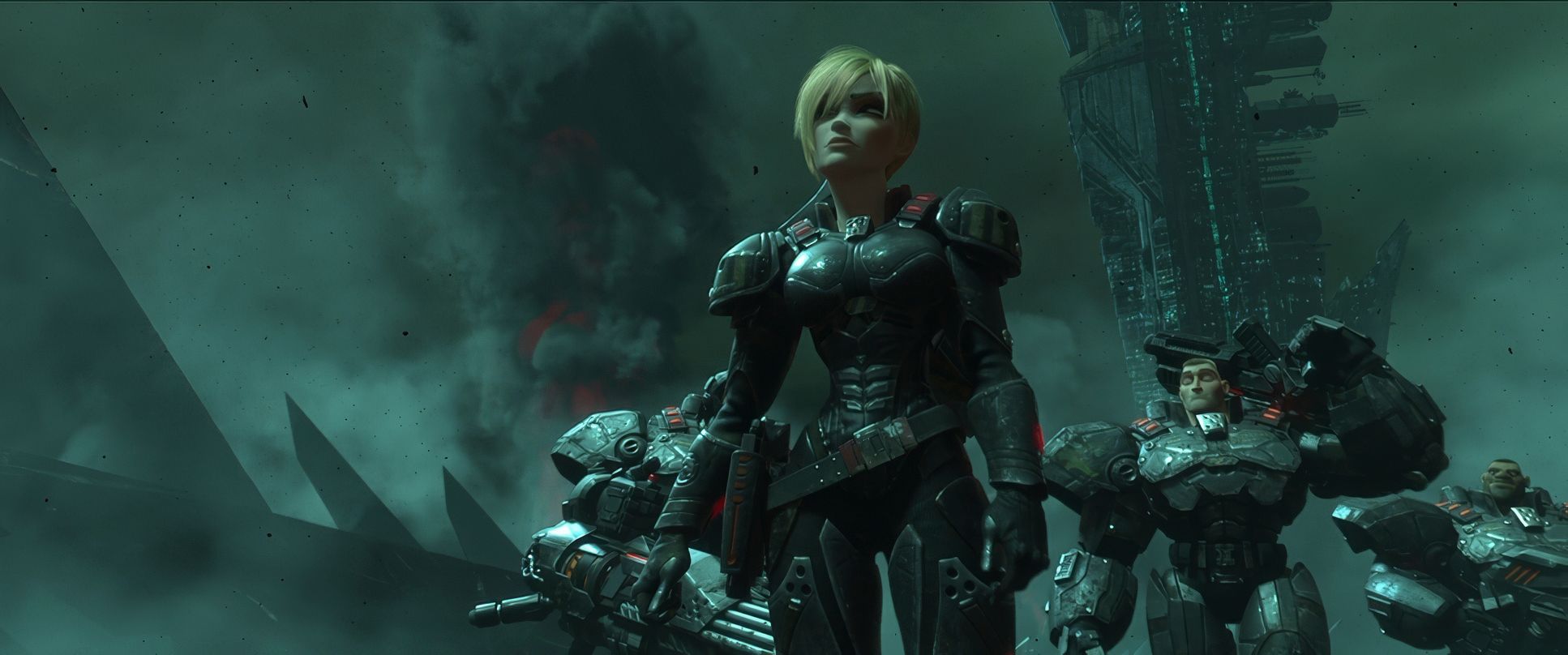
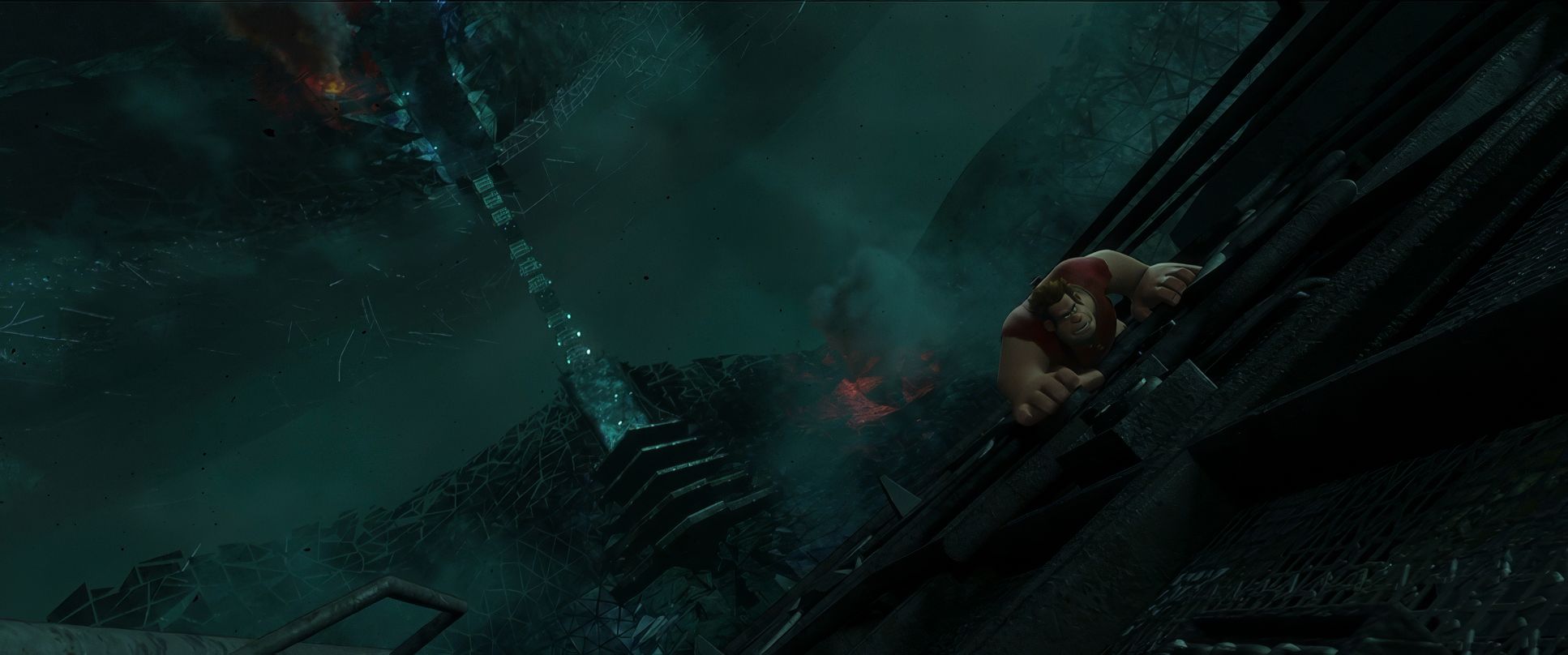
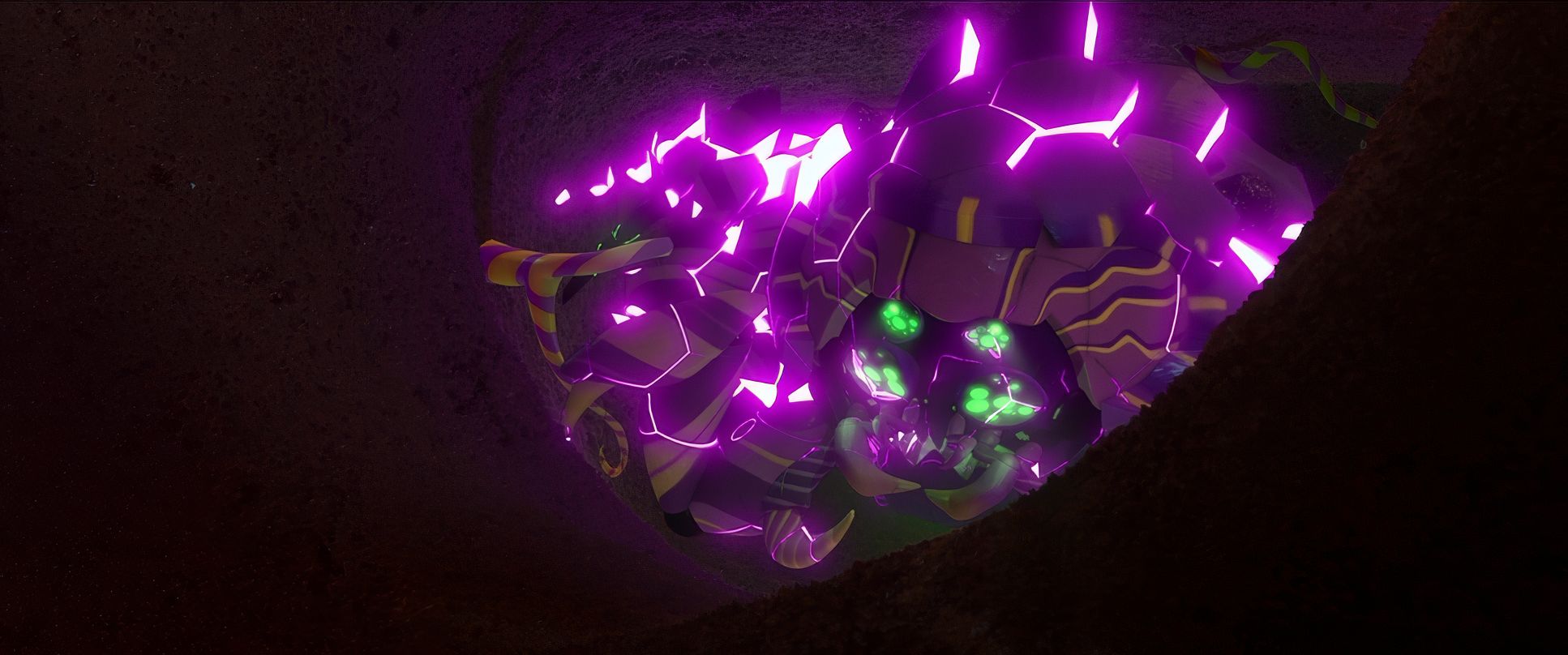
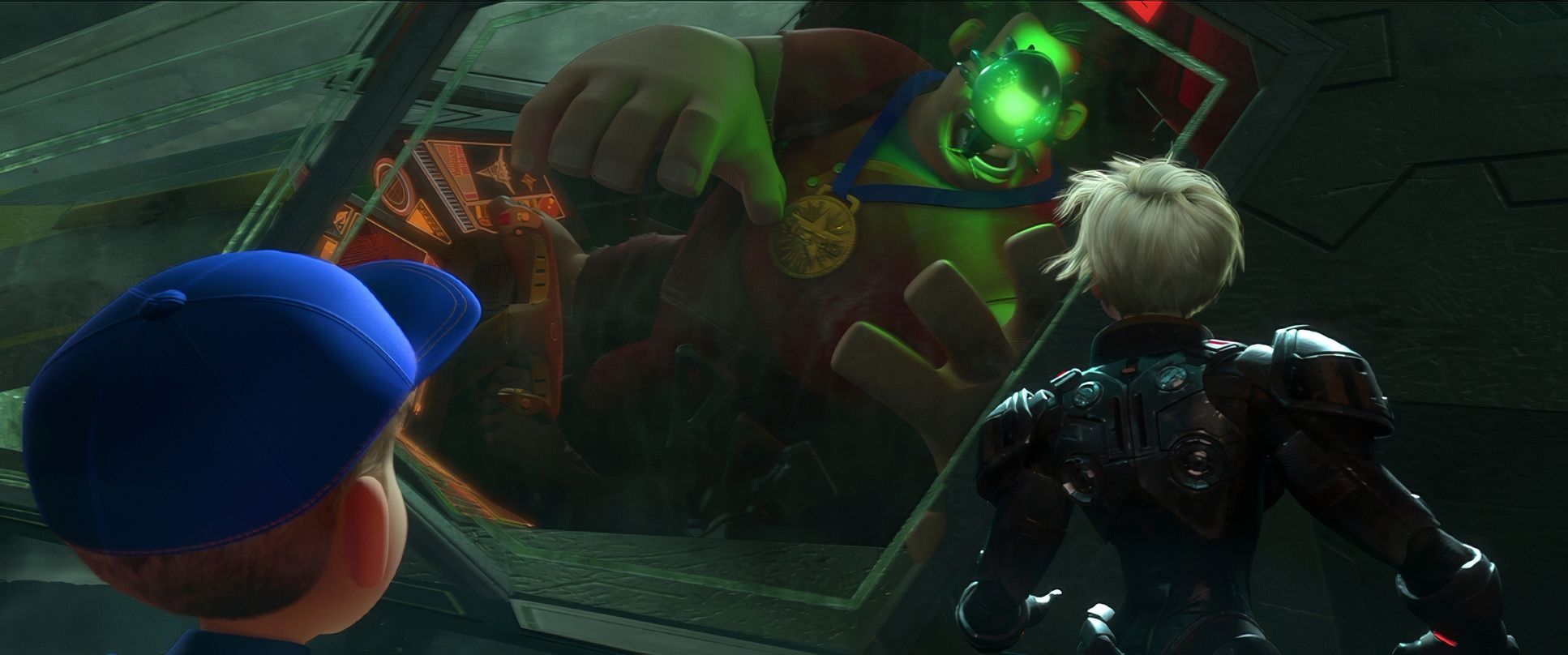
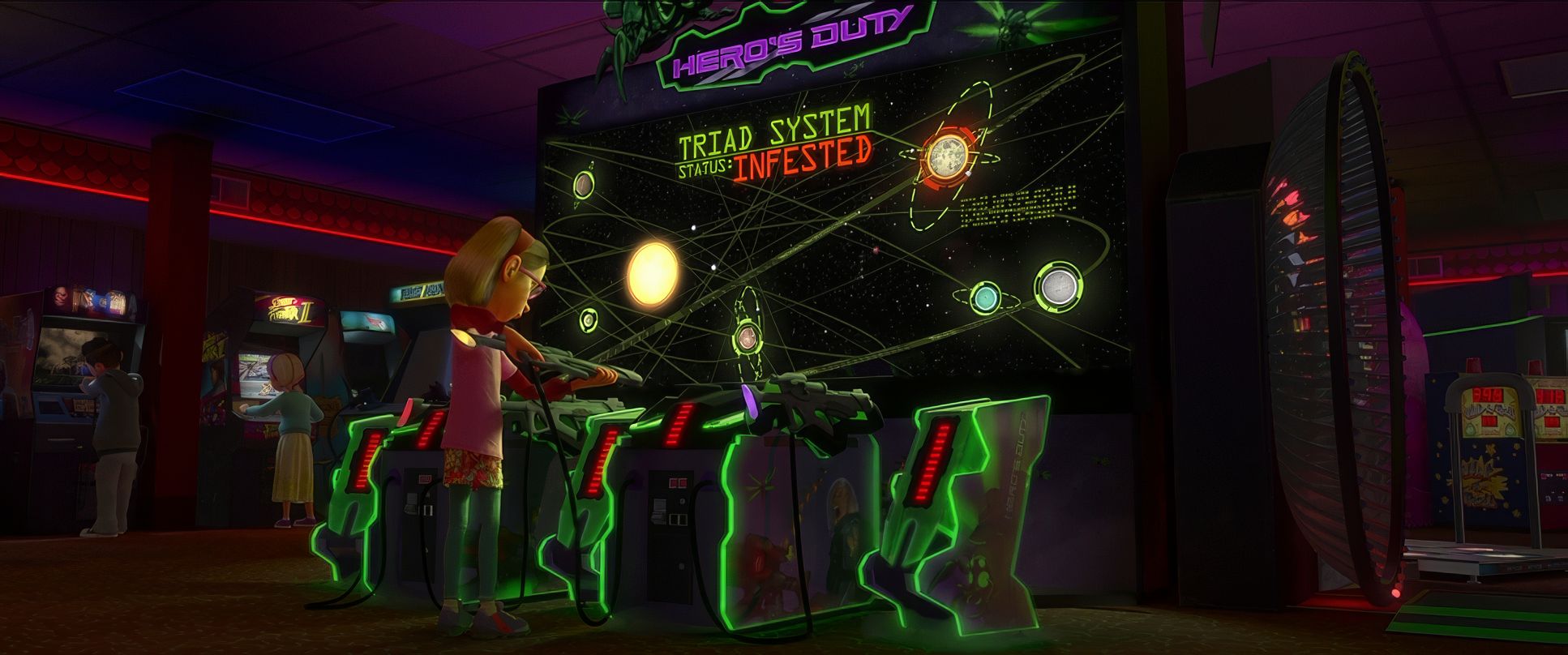
- Hero’s Duty: Talk about a pivot. The grade here is aggressive. We’re seeing desaturated, cooler tones heavy on the blues and metallic grays cut through by these hot, searing highlights from muzzle flashes and those glowing Cy-Bug eyes. The contrast is way higher here; the blacks are crushed just enough to create that sense of “modern military shooter” foreboding. It’s gritty, it’s theatrical, and it’s a colorist’s dream.
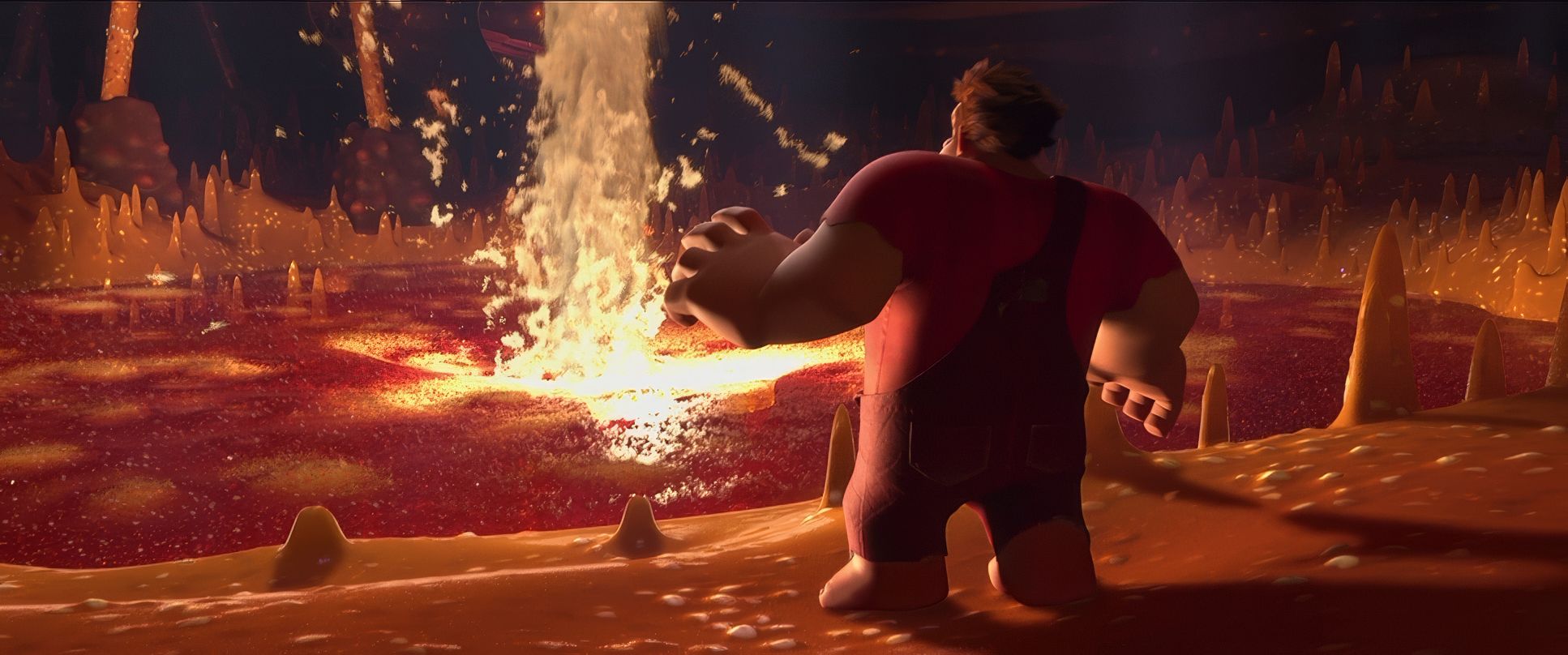
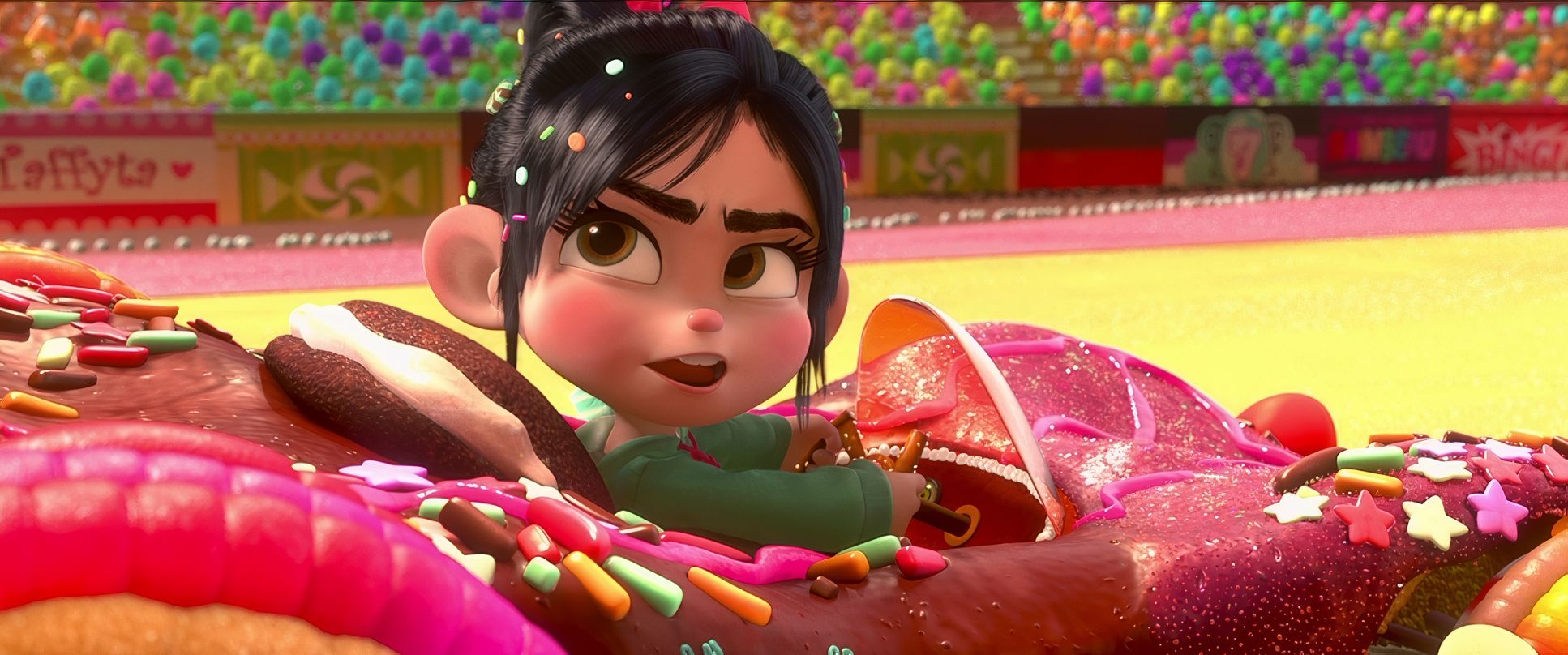
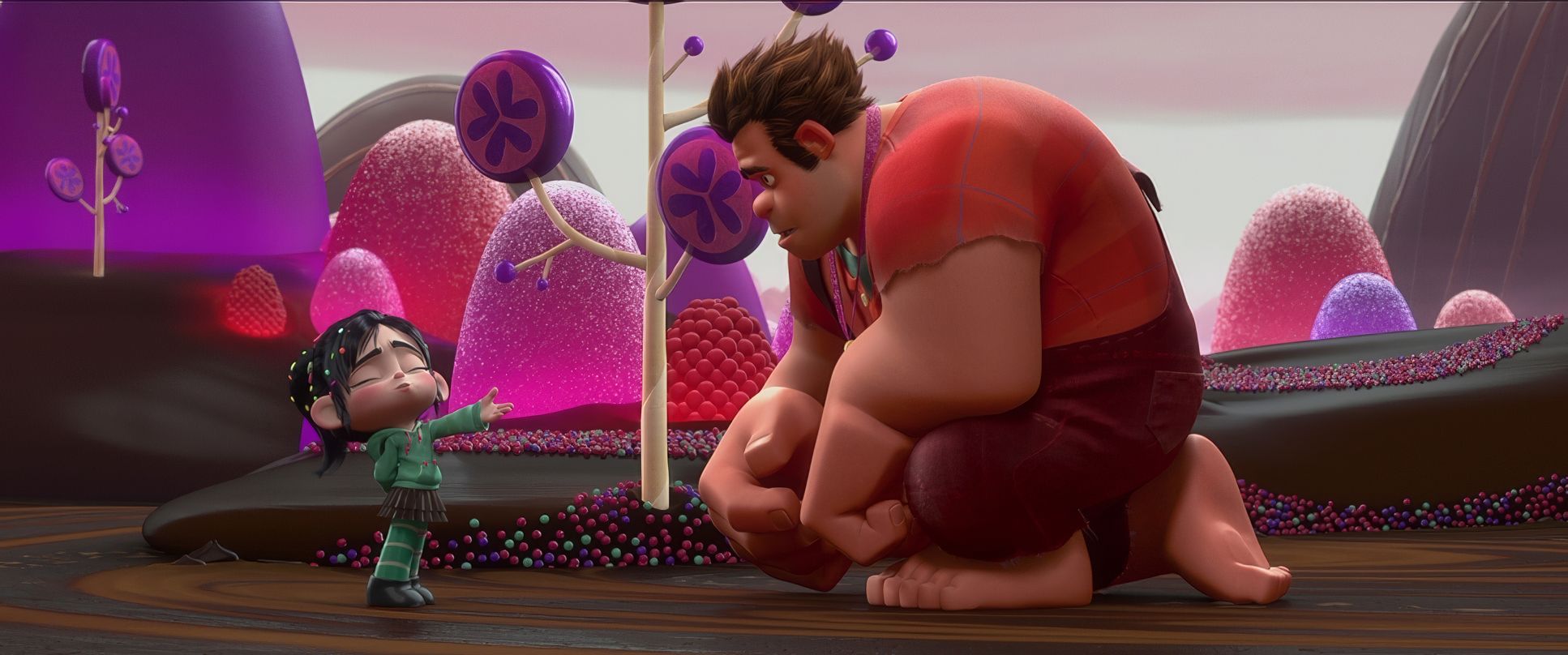
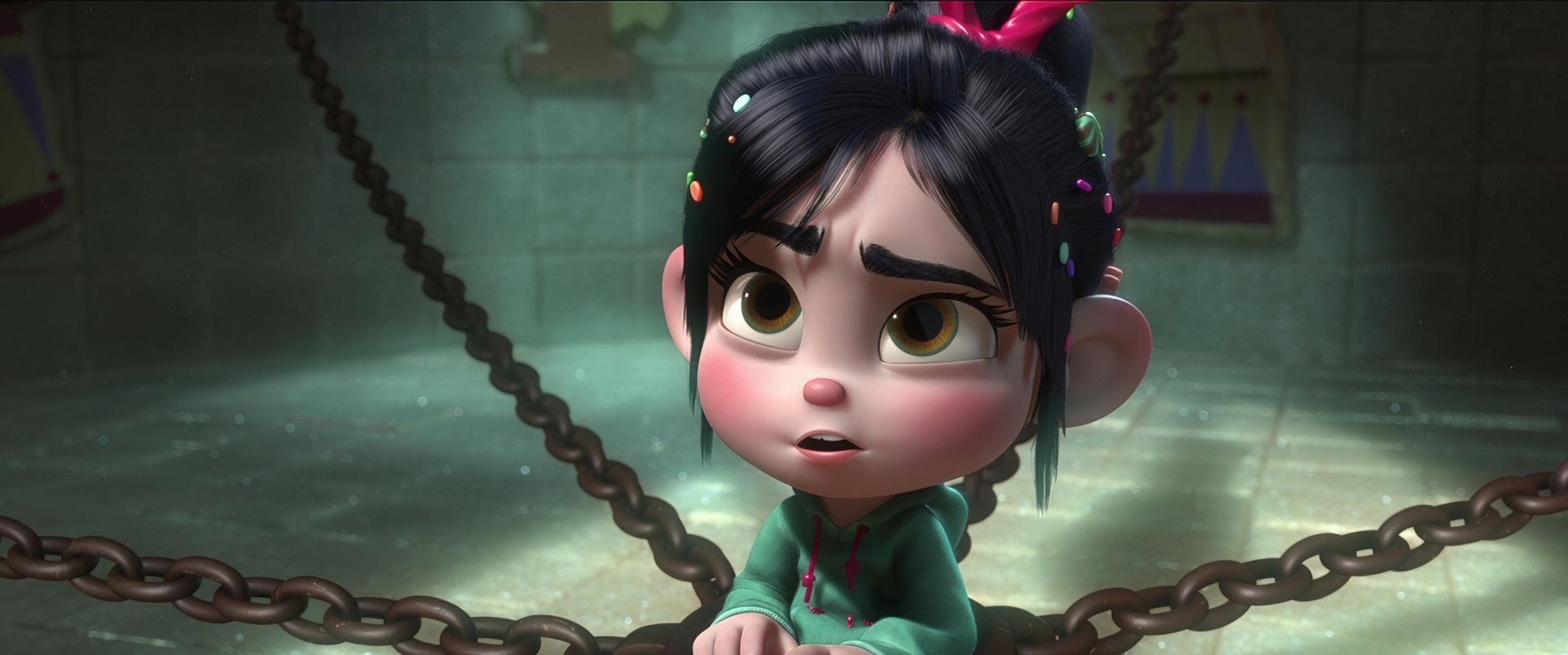
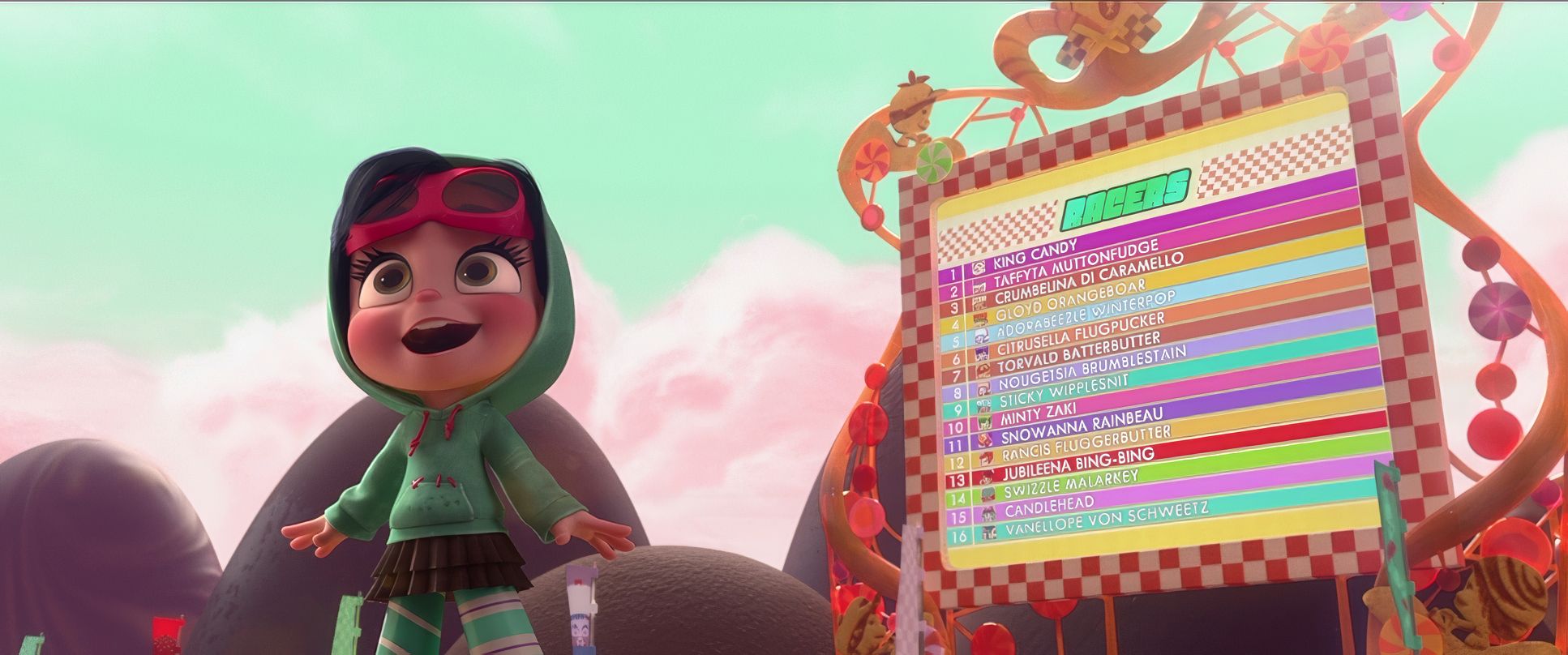
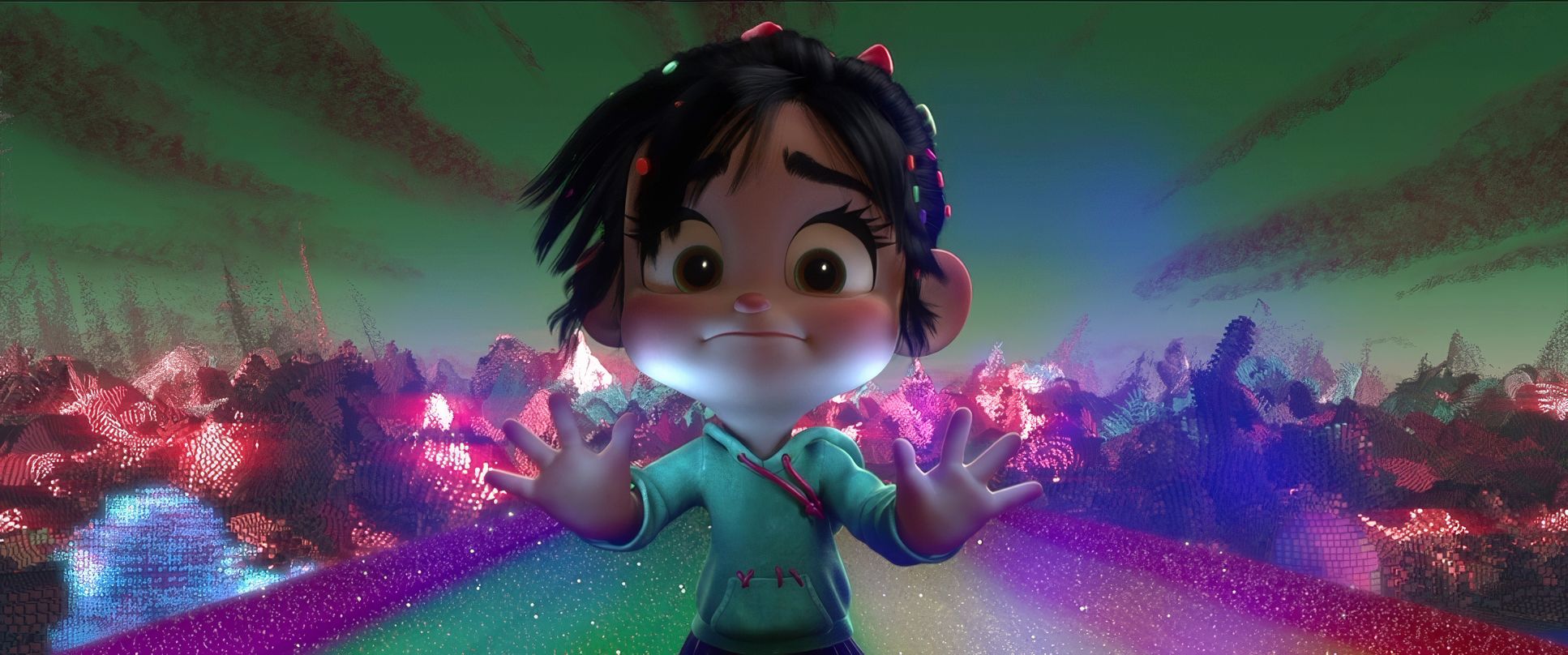
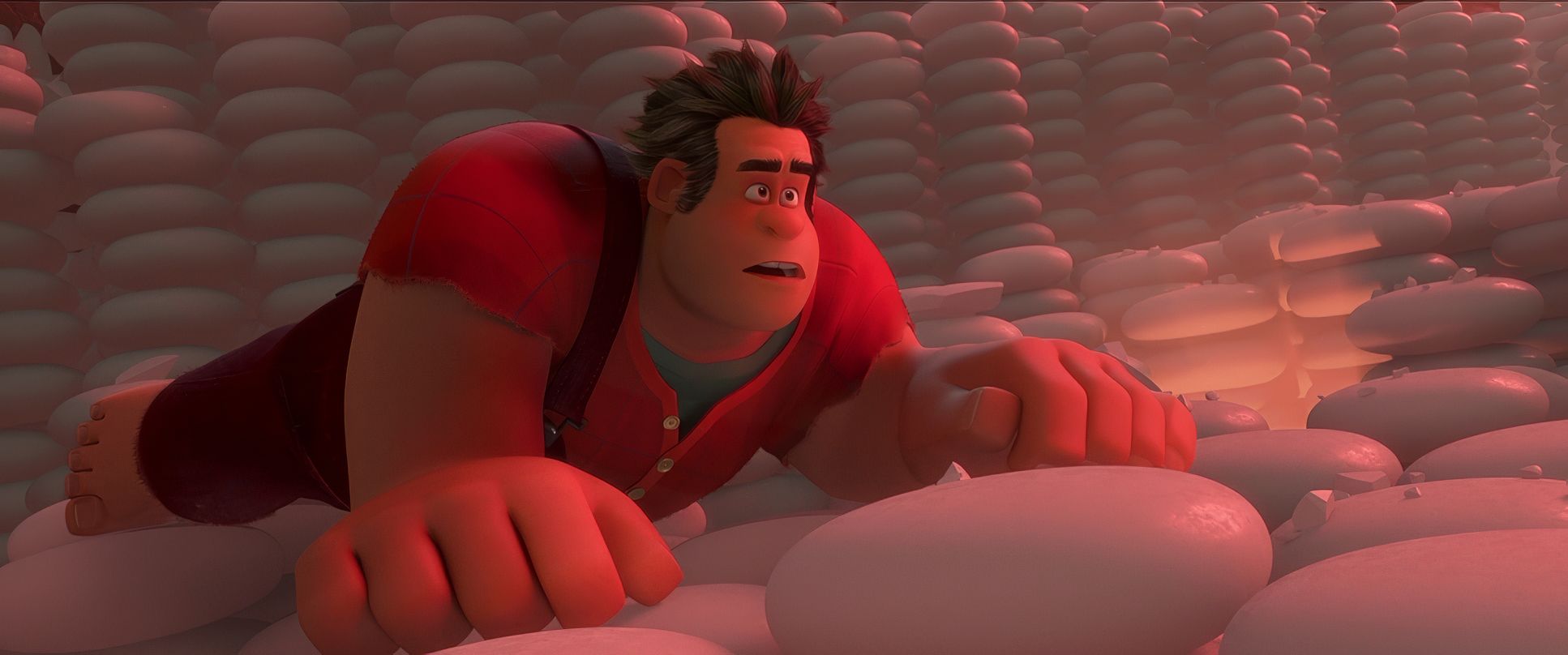
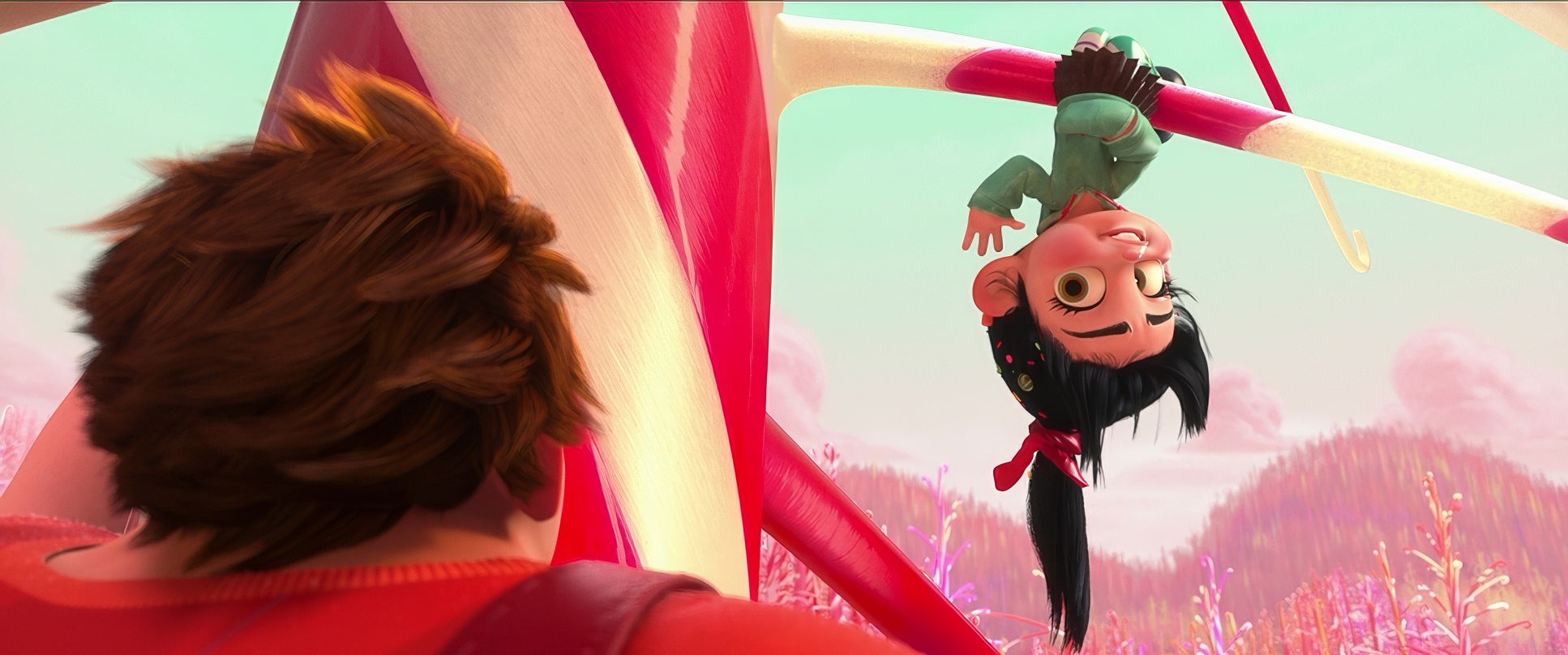
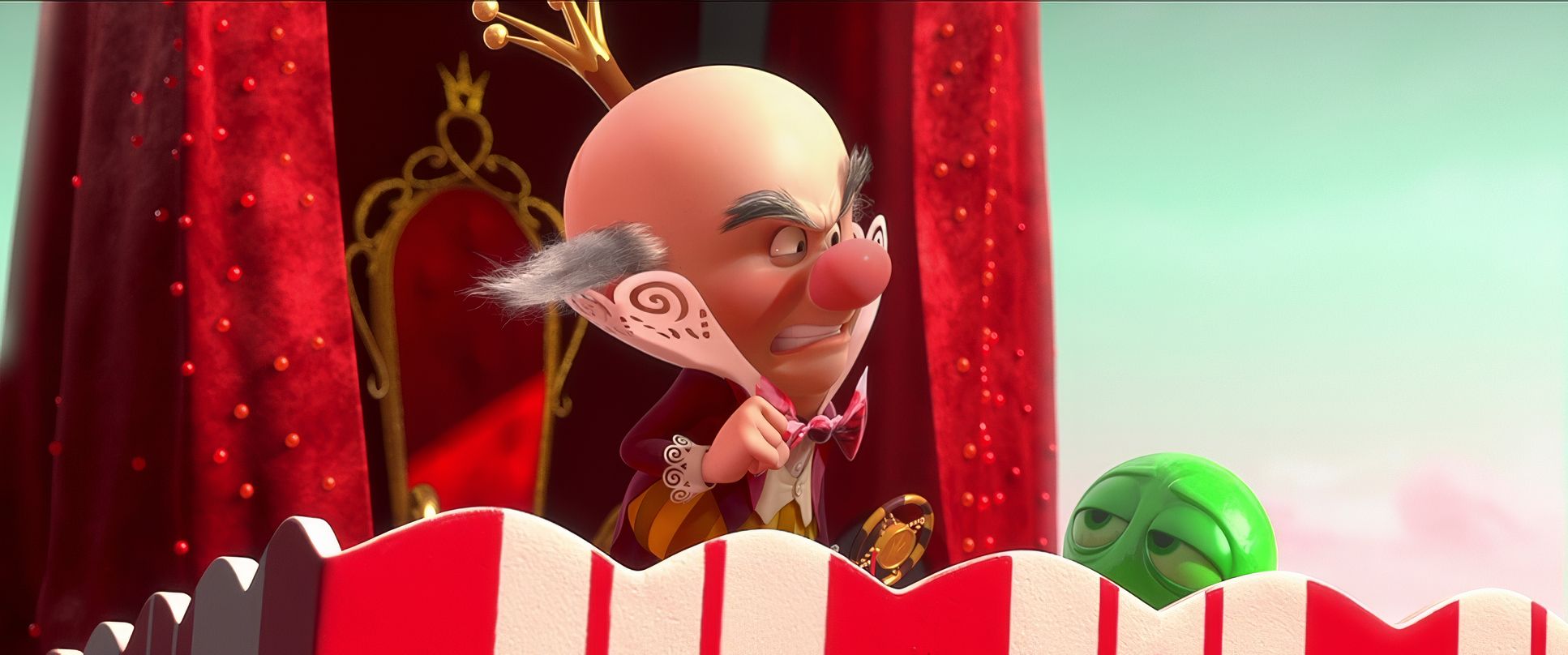
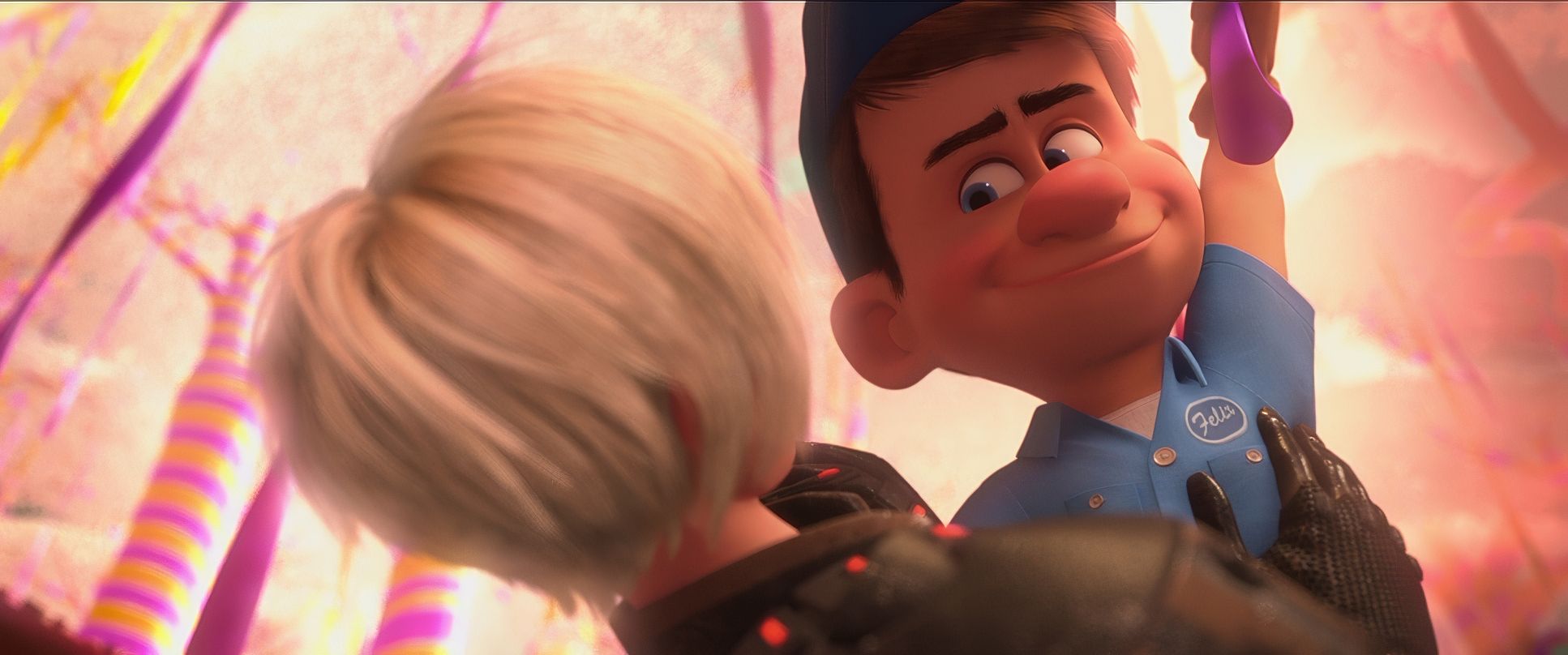
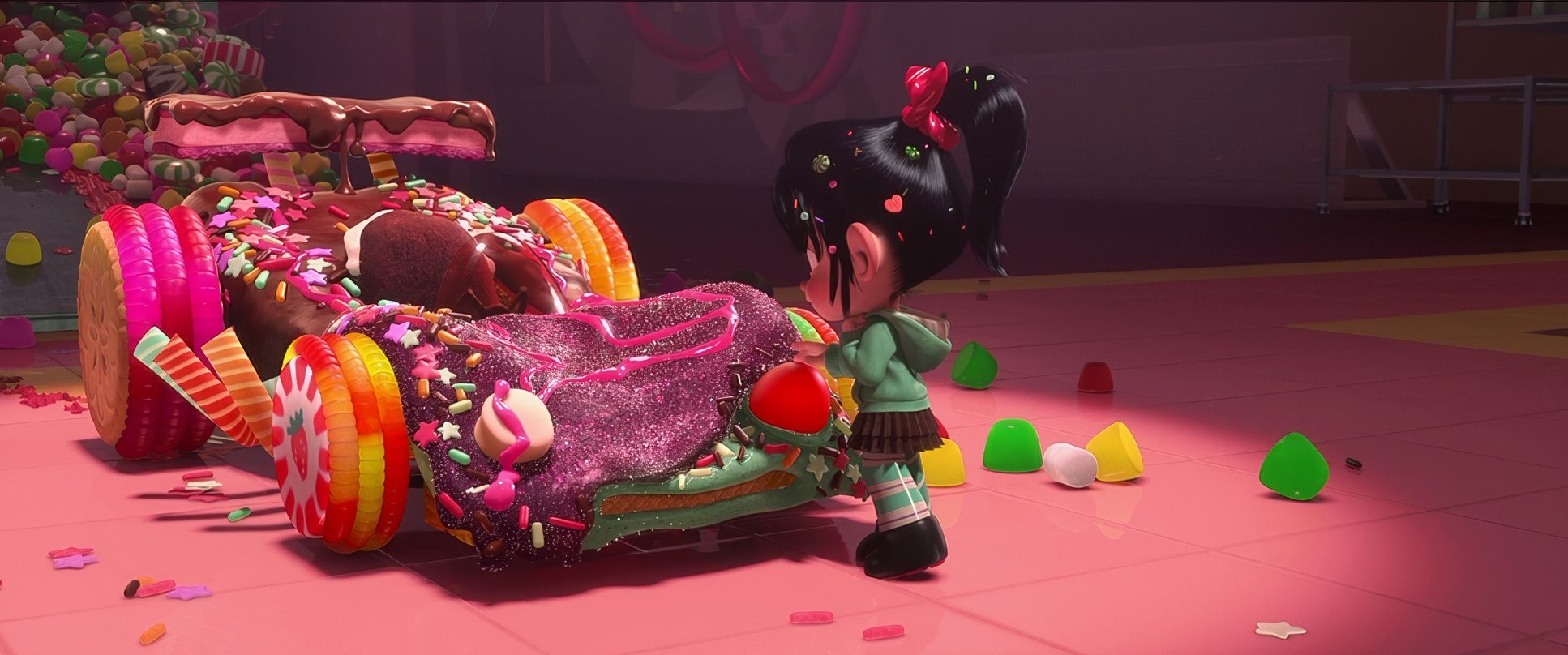
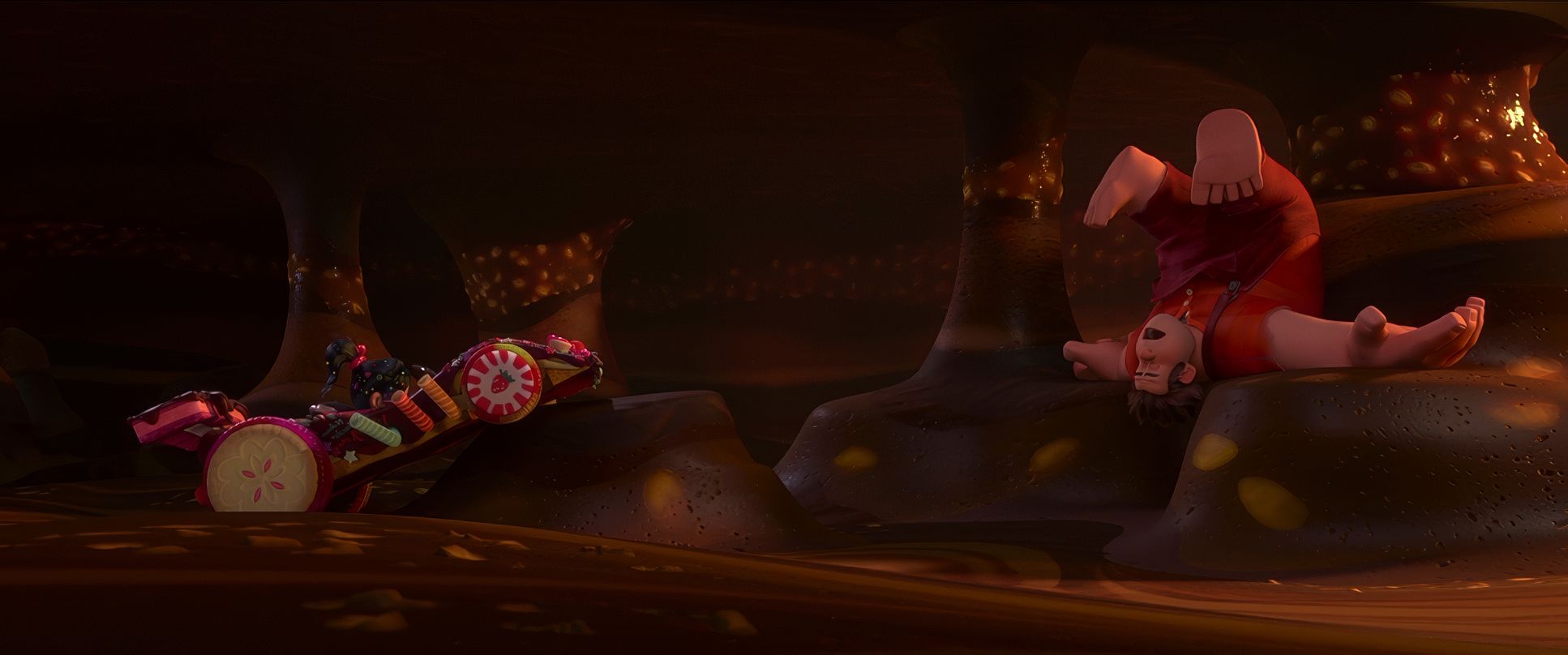
- Sugar Rush: This is basically a diabetic coma in digital form. It’s a high-key, high-saturation wonderland. Pinks, purples, and mint greens are pushed to their absolute limit. But here’s the pro move: even with all that saturation, the shadow areas stay warm and ambient. It never feels “muddy.” The highlight roll-off on the candy surfaces is soft and luminous, making everything look… well, delicious.
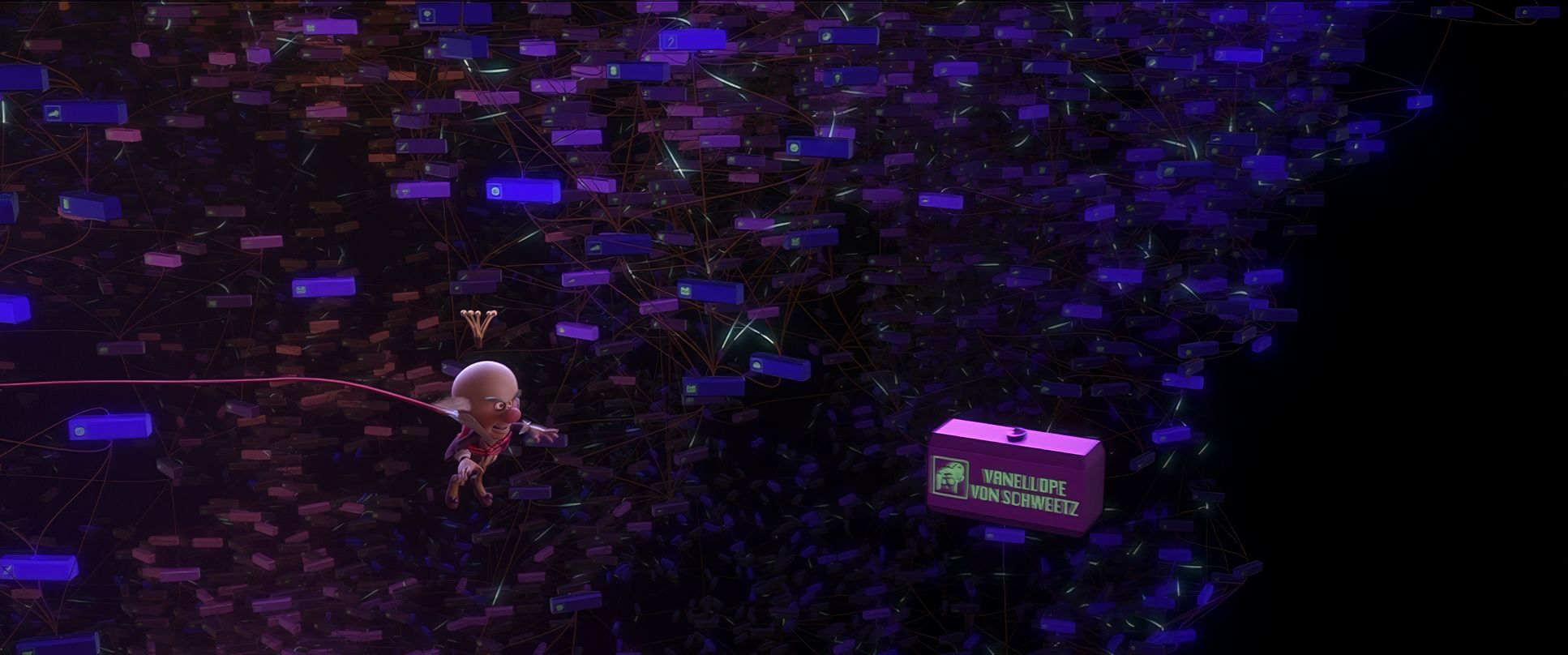
Then you have Game Central Station, which acts as this clinical, neutral bridge. It’s a visual palette cleanser with a cooler, utilitarian feel that grounds the whole journey.
About the Cinematographer
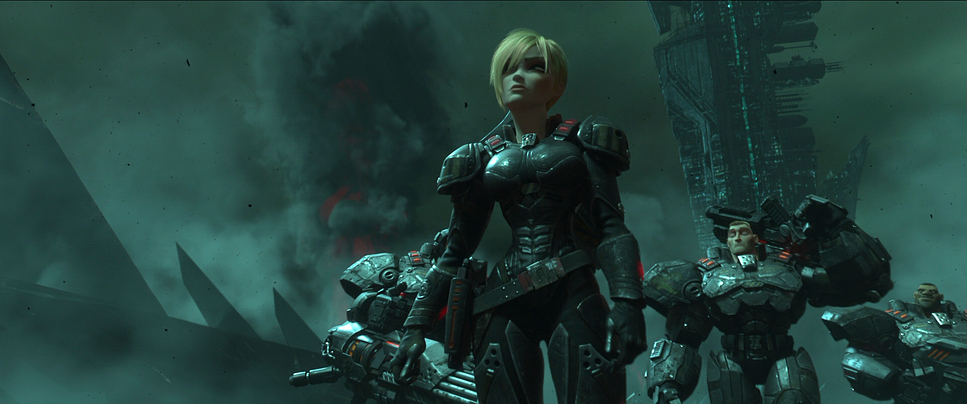
In the live-action world, we have a DP. In animation, it’s a different beast entirely. The “cinematographer” is really a collective mind. For Wreck-It Ralph, we have to give props to Mark Henley (Director of Cinematography, Lighting) and Adolph Lusinsky (who also led the lighting/cinematography charge). They worked under director Rich Moore, whose background on The Simpsons and Futurama clearly gave him a shorthand for “framing for comedy.”
It’s a highly collaborative ecosystem. You’ve got Layout Supervisors and Lighting Supervisors all working to ensure that even though we’re jumping between three wildly different “looks,” the emotional core stays consistent. The artistry is in that roadmap making sure the audience doesn’t get visual whiplash as they move through the power strip.
Lighting Style

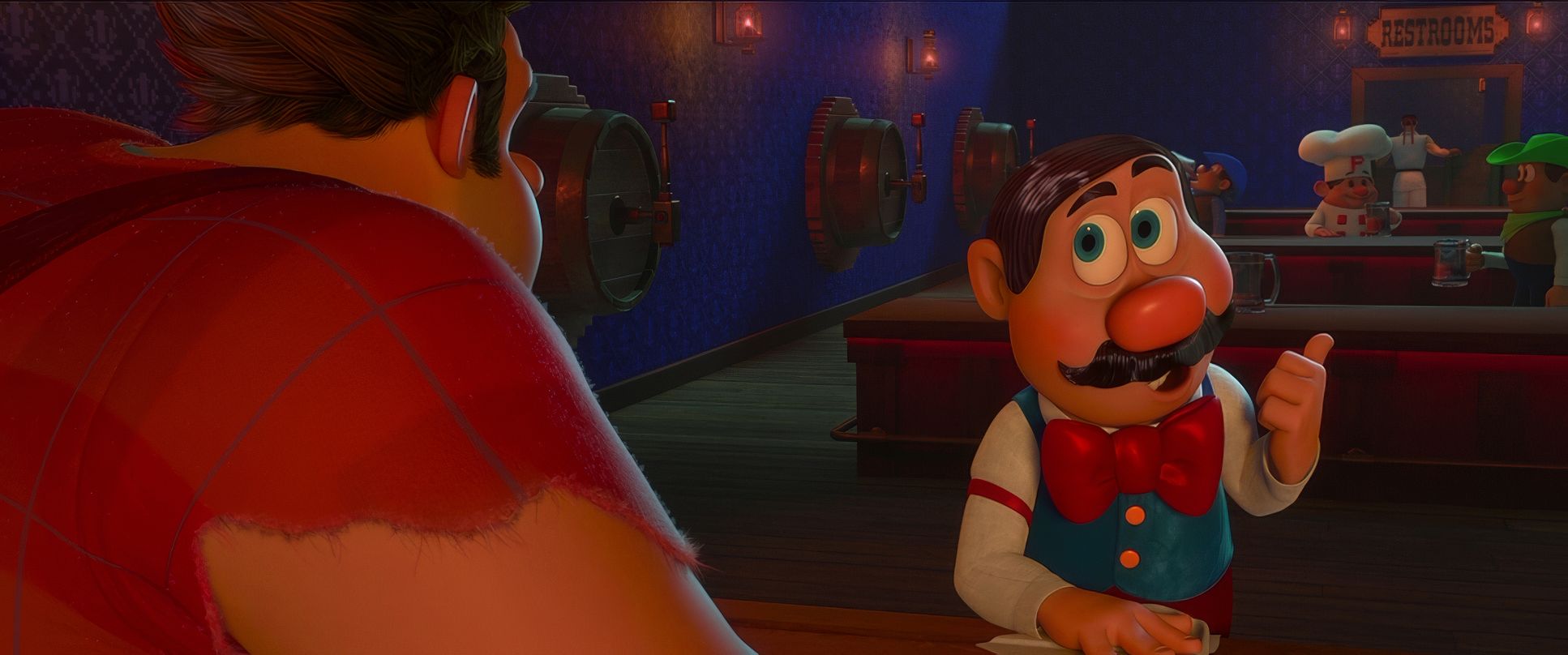
The lighting design here is doing some heavy lifting. In Fix-It Felix Jr., the lighting is flat and theatrical very “stage-like.” It’s designed for clarity, not mood. But then you jump into Hero’s Duty, and suddenly you’re in a world of low-key, high-contrast drama. The light is motivated by the tech laser beams, muzzle flashes, and that eerie alien flora.
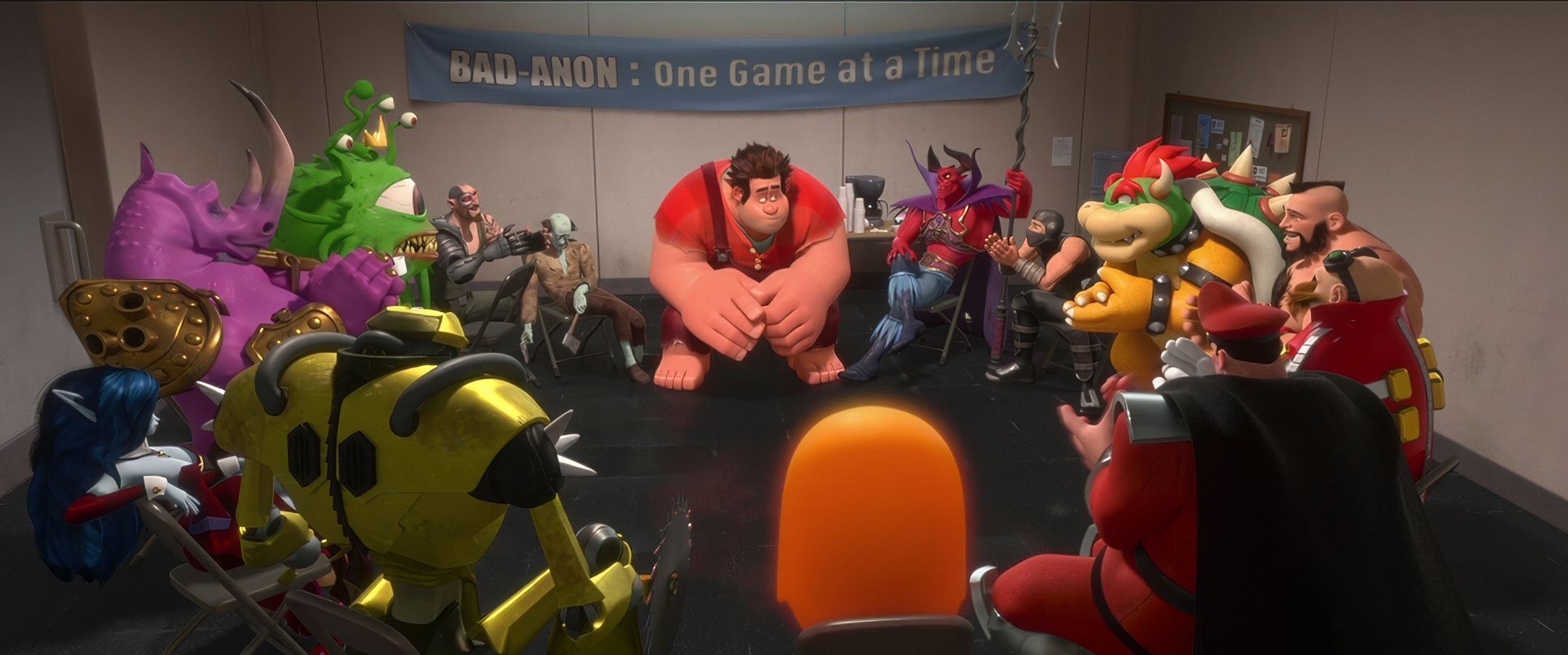
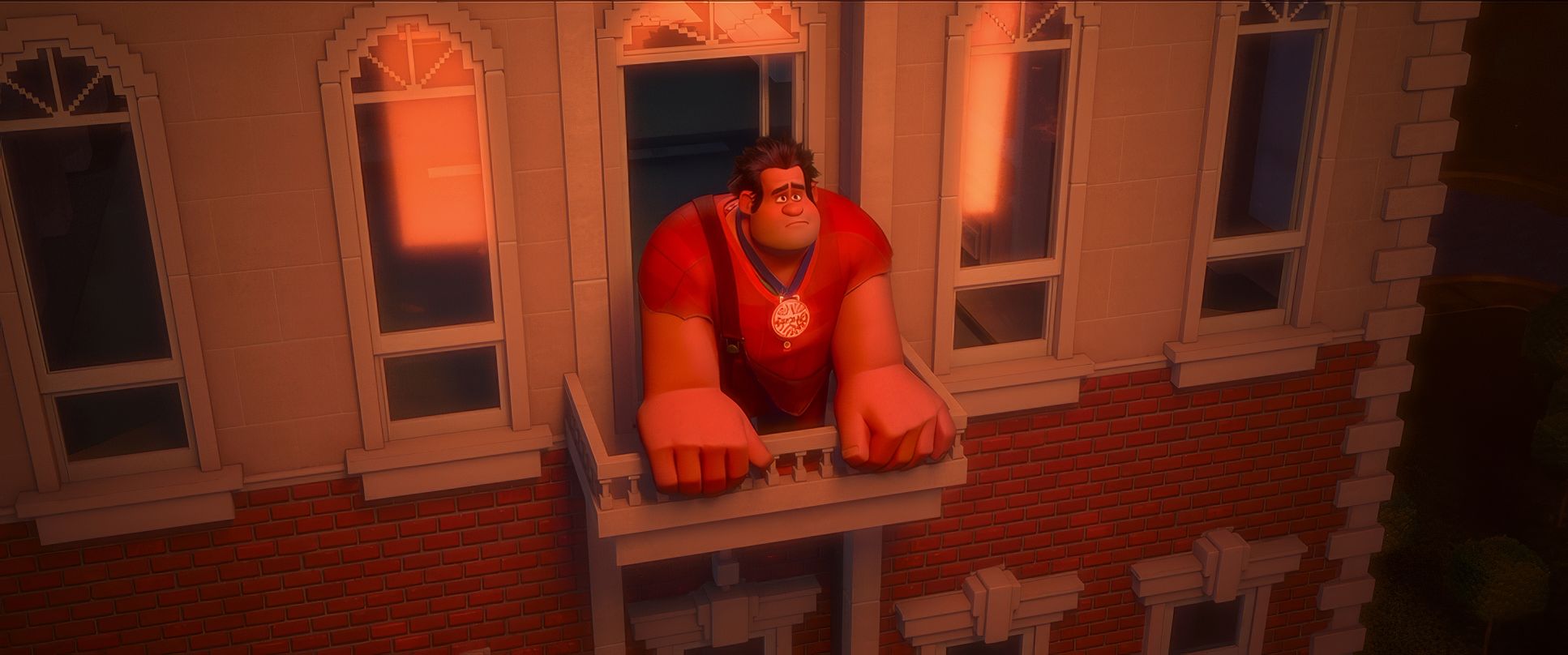
One detail that really kills me (in a good way) is the use of the orange “Out of Order” sign. It dilutes the light in the arcade to create this dusk-like feeling. It’s motivated lighting at its finest using a prop to signal that the world is literally facing its “end of days.” In Sugar Rush, the lighting shifts to a “honey glow” diffused, warm, and perpetually sunny. Even the Mentos volcano acts as a dynamic light source. It’s these subtle touches that separate a “cartoon” from a “film.”
Camera Movements
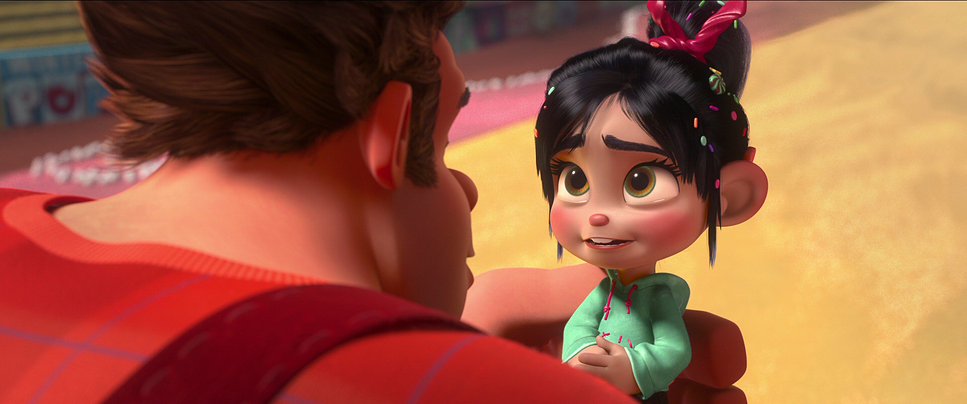
This is where the genre-bending gets fun. The camera doesn’t just move; it behaves like the game it’s in.
In the 8-bit world, the camera is basically a fixed theatrical perspective. It respects that 2D spatial logic, even though it’s a 3D space. But the moment we hit Hero’s Duty, the camera gets aggressive. We’re talking whip pans, quick cuts, and handheld-style movement that feels chaotic and urgent. It mimics an FPS perfectly.
Then you get to Sugar Rush, and the camera becomes fluid and exhilarating. We get these wide-angle tracking shots that follow the karts, emphasizing speed and scale. The learning-to-drive montage with Vanellope is a great example as she gets more confident, the camera movements get more nimble. It’s a perfect marriage of character arc and “lens” movement.
Compositional Choices
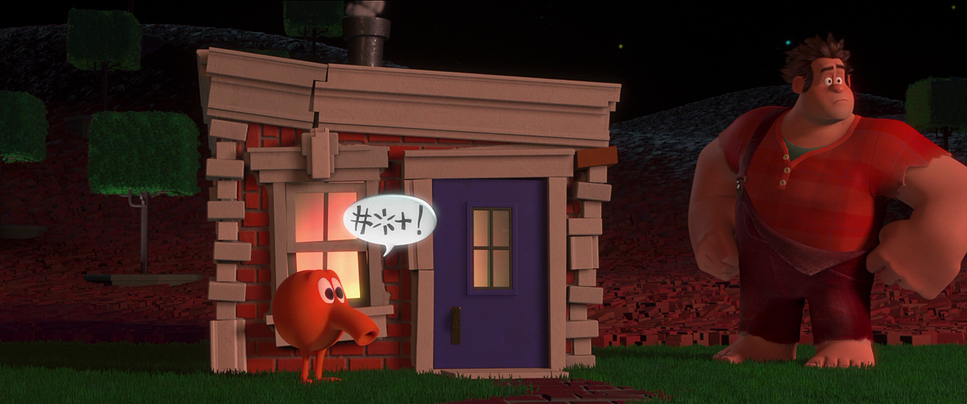
Compositionally, this movie is a dance between video game tropes and cinematic weight.
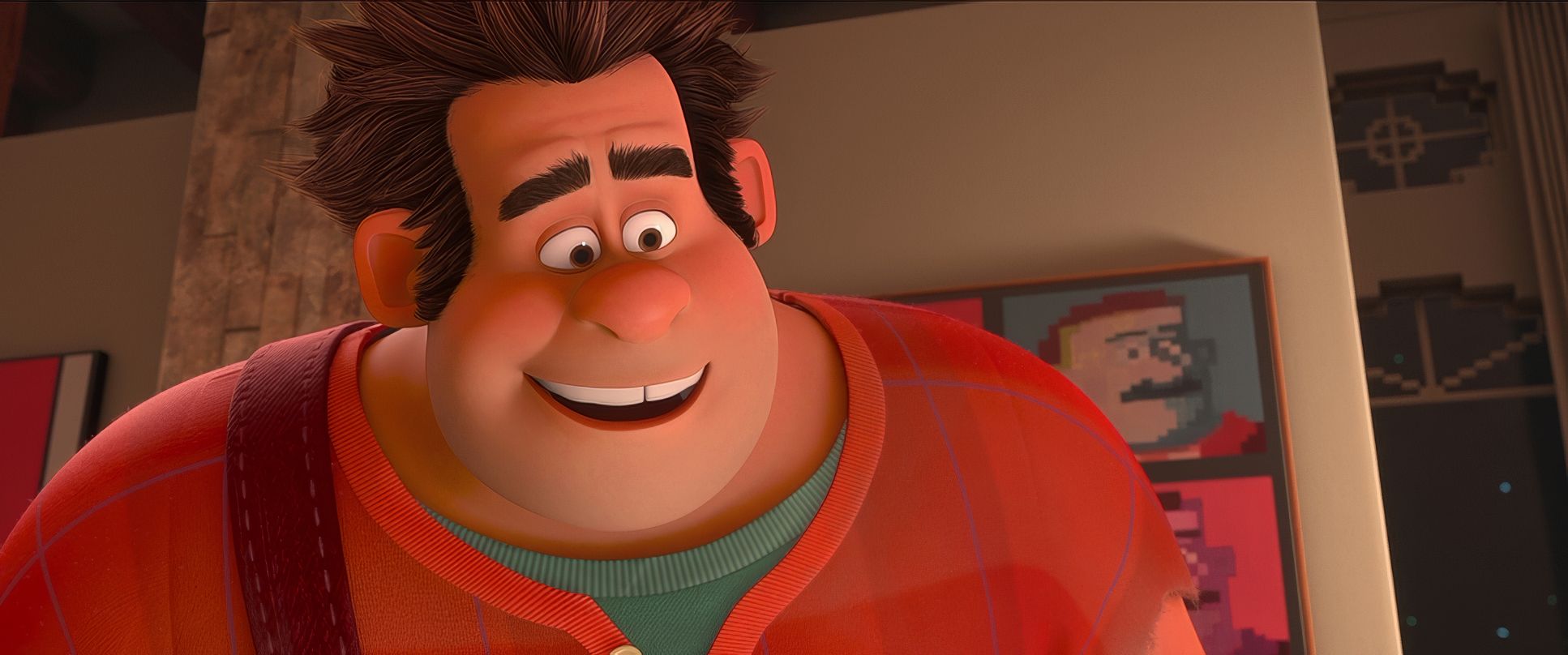
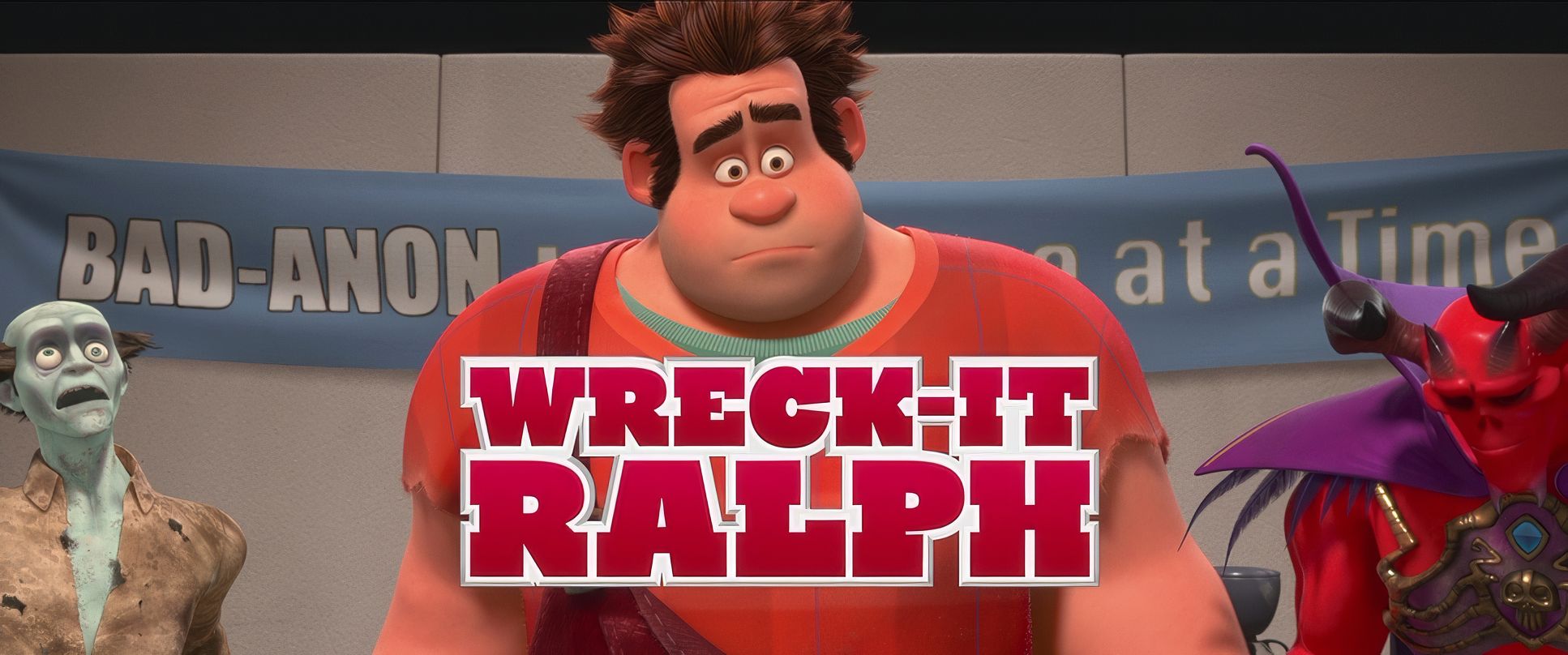
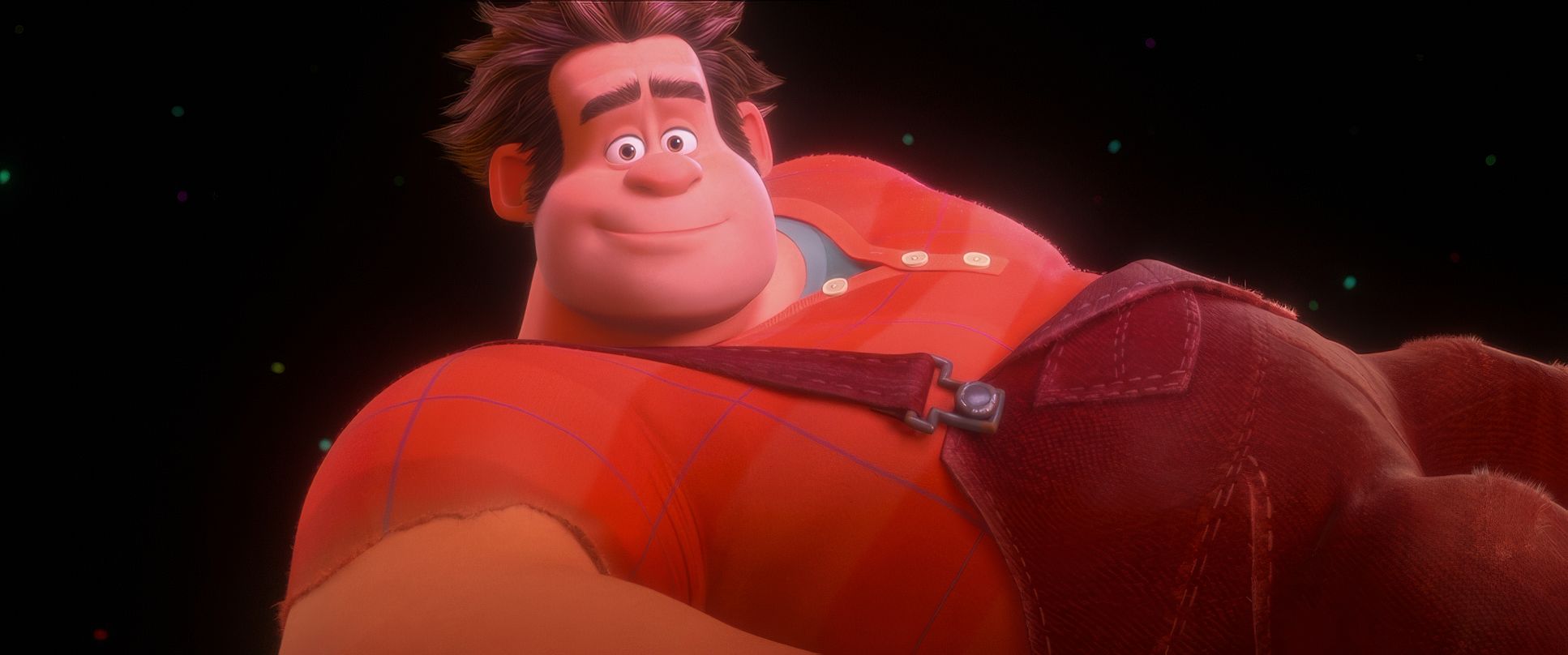
- Fix-It Felix Jr. uses a layered, diorama-like quality. Characters move on parallel planes, which reinforces that “game” feel. Ralph often fills the frame in close-ups, making him feel isolated and “too big” for his world.
- Hero’s Duty throws the rule book away. It uses off-center compositions and tight, intense close-ups to create tension.
- Sugar Rush is all about leading lines roads, lollipop trees, and candy structures that guide your eye through the frame.
One specific shot that always stands out to me is when Ralph has to wreck Vanellope’s kart. It’s shot like a “censored” scene, fragmenting the view to emphasize the heartbreak. It’s a bold choice that proves you don’t need to show everything to make the audience feel everything.
Lensing and Blocking
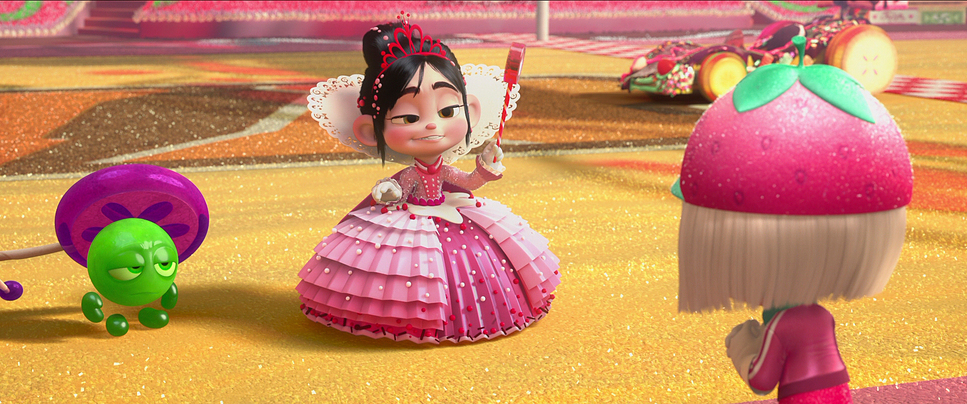
Even though there are no physical glass lenses, the rendering engine is doing a lot of “implied lensing.”
In the 8-bit world, it feels like a neutral 50mm no distortion, just reality. But in Hero’s Duty, they lean into wide-angle lenses to show the scale of the battlefield, occasionally adding subtle chromatic aberration or lens flares to make it feel “realer.” Sugar Rush uses longer focal lengths during the races to compress the perspective and make those karts look like they’re flying.
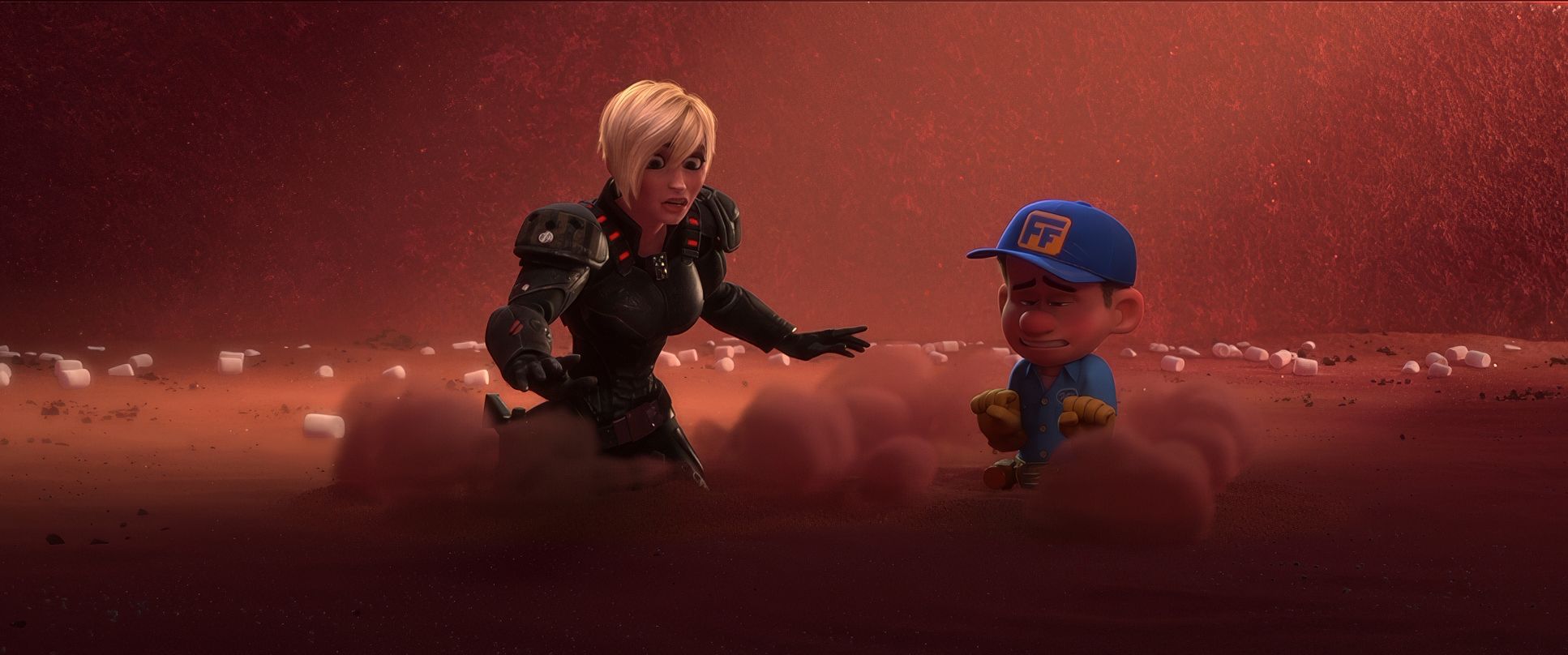
The blocking is just as intentional. Sergeant Calhoun is always blocked with authority she’s almost always leading the charge or holding the “power” position in the frame. Ralph’s blocking transitions from being isolated and “pigeon-holed” in his dump to a more peer-to-peer dynamic with Vanellope. It’s visual storytelling 101.
Technical Aspects & Tools
| Genre | Adventure, Animation, Comedy, Family |
| Director | Rich Moore |
| Cinematographer | Mark Henley |
| Production Designer | Mike Gabriel |
| Costume Designer | N/A |
| Editor | William J. Caparella |
| Color | Warm, Saturated, Red, Magenta, Pink |
| Aspect Ratio | 2.39 |
| Format | Animation |
| Lighting | Hard light, Top light |
Look, blending an 8-bit jerky aesthetic with high-fidelity 3D rendering is a technical nightmare. Disney had to build custom workflows to simulate the limitations of old hardware within a modern CGI environment. This meant messing with frame rates for specific characters and keeping hard edges on pixelated textures while the rest of the world has soft sub-surface scattering.
For Sugar Rush, the challenge was the shaders. How do you make a gummy bear look translucent but still “solid”? How do you get the sheen on a chocolate bar just right? It requires massive amounts of fluid and light simulation. The fact that all these different pipelines from low-res to hyper-detailed exist in one film without breaking the immersion is a testament to the technical prowess of the team.
Wreck-It Ralph (2012) Film Stills
A curated reference archive of cinematography stills from Wreck-It Ralph (2012). Study the lighting, color grading, and composition.








- Also read: THE THEORY OF EVERYTHING (2014) – CINEMATOGRAPHY ANALYSIS
- Also read: THE BOURNE SUPREMACY (2004) – CINEMATOGRAPHY ANALYSIS
Browse Our Cinematography Analysis Glossary
Explore directors, cinematographers, cameras, lenses, lighting styles, genres, and the visual techniques that shape iconic films.
Explore Glossary →