Walk the Line (2005) isn’t just another biopic, it’s a textbook example of how visual language can take a historical account and turn it into something that feels raw, sweaty, and emotionally heavy. Johnny Cash’s journey from the dirt of a childhood tragedy to the blinding lights of Folsom is told as much through the glass and the grade as it is through Joaquin Phoenix’s performance.
When you sit down with this film, you aren’t just watching scenes; you’re feeling the grit, the heartbreak, and that magnetic, almost dangerous pull between Johnny and June. There’s a reason people call it “respectful and incredibly well-made.” It treats the darker chapters the pills, the booze, the brokenness with a visual honesty that never feels like it’s exploiting the man. The camera work and the final grade walk a very tight line here, balancing the mess of a human downfall with the legacy of an icon. So, let’s pull back the curtain on how they actually pulled this off.
About the Cinematographer
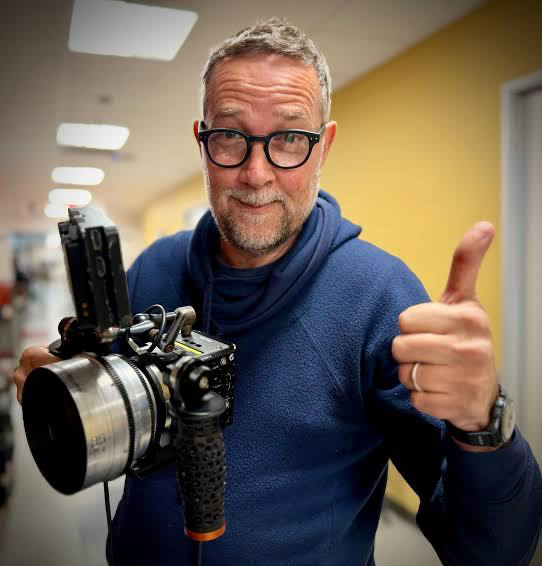
The man behind the lens is Phedon Papamichael, ASC. If you follow cinematography, you know Phedon is a master of character-driven atmosphere. Whether he’s shooting the stark, stripped-back world of Nebraska or the high-octane period detail of Ford v Ferrari, he has this uncanny ability to make a frame feel both immediate and timeless. His long-standing collaboration with director James Mangold is the secret sauce here.
What I love about Phedon’s style is that he isn’t “showy.” He’s a storyteller first. He understands that cinematography isn’t just about creating a pretty frame; it’s about the psychological impact guiding where the audience looks and, more importantly, how they feel. For a story as internal as Johnny Cash’s, you needed someone who could capture the “inner weather” of a character. Phedon brings a weight and an intimacy to the frame that allows us to get right under the skin of Phoenix’s performance.
Inspiration Behind the Cinematography
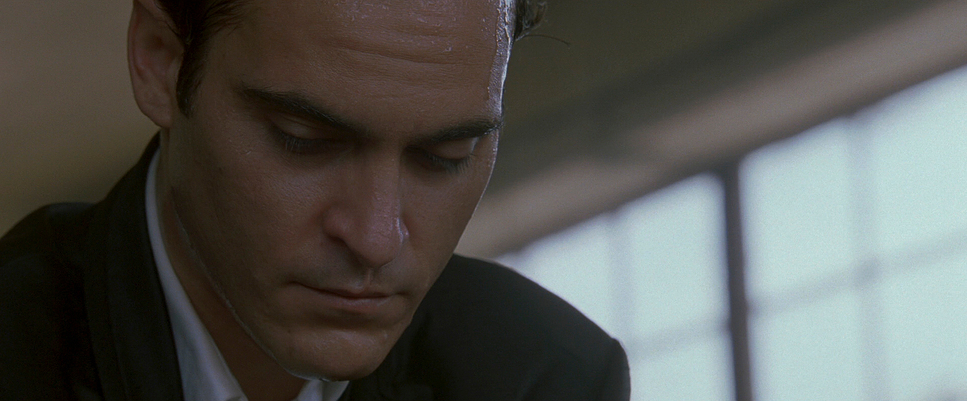
For a film set in the mid-20th century American South, the inspiration had to be rooted in authenticity. You couldn’t have this looking like a clean, polished museum piece. I’d imagine the conversations between Mangold and Papamichael were all about grit, texture, and the duality of Cash’s life.
They likely looked at the documentary photography of that era high-contrast, unvarnished images that defined the “real” South. We’re talking about a man who was both a musical pioneer and a man drowning in addiction. To capture that, the visuals had to transition seamlessly from the poetic desolation of his childhood to the chaotic, “dirty, gringy” backstage life of a touring musician. There’s a beautiful contrast at play here: the world looks lived-in and harsh until June enters the frame, and suddenly, it’s like the clouds part. It’s a visual metaphor for salvation, and it’s executed with total honesty.
Camera Movements
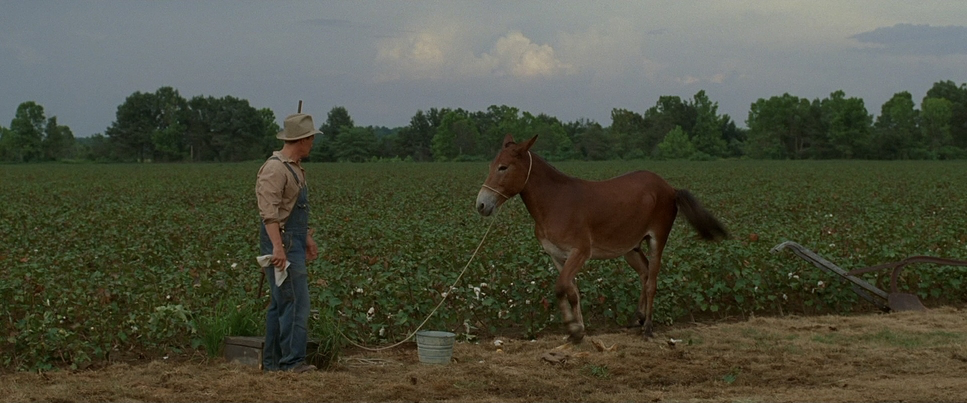
The camera in Walk the Line acts as a subtle emotional guide. You won’t see flashy, “look-at-me” kinetic moves. Instead, it’s controlled and fluid, mirroring Johnny’s own internal rhythm. During the concert sequences, Phedon often used the Panavision Lightweight camera to stay mobile. The camera might start at a distance, letting us soak in the room, before slowly drifting in or floating around Phoenix as he loses himself in the song.
Even when Johnny’s life is spiraling like the tractor accident where he goes “rolling back into the water” the camera movement feels motivated. It’s handheld, but it’s not “shaky cam” for the sake of it. It’s unstable enough to make you feel his inebriated state, but it never loses its grip on the narrative. It’s a delicate balance: making the audience feel the character’s unease without making them want to look away.
Compositional Choices
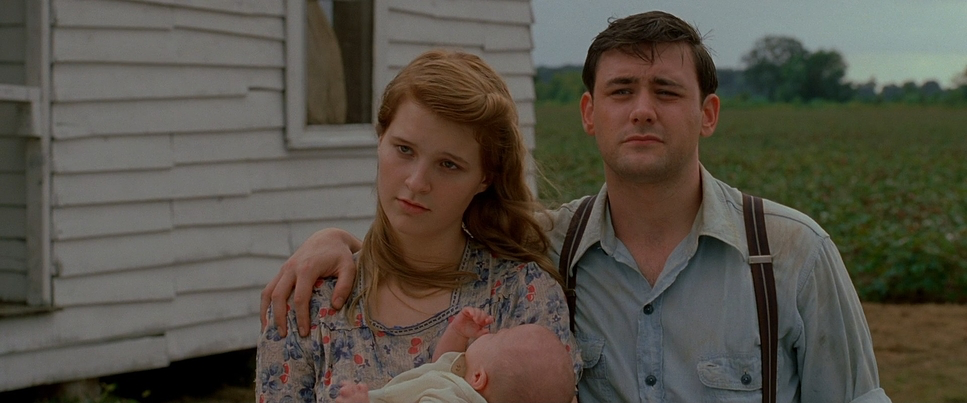
The framing in this film is incredibly smart, especially the use of the 2.39:1 anamorphic-style (Super 35) aspect ratio. There’s a frequent use of right-heavy composition that creates a sense of imbalance or tension. We often see Johnny isolated in wide shots on stage or in a sprawling landscape which really hammers home his solitude and the sheer weight of his ambition.
But everything changes when June appears. Suddenly, the blocking becomes tighter, more connected. They occupy the same space in the frame, reinforcing that “magnetic pull.” The performance scenes are another masterclass in sleight-of-hand. By using tight medium close-ups and clever 2-shots from behind, they convince you that Phoenix is playing that guitar without ever needing to show a technical close-up of his fingers on the frets. It keeps the focus on the emotion of the performance rather than the mechanics of the instrument.
Lighting Style
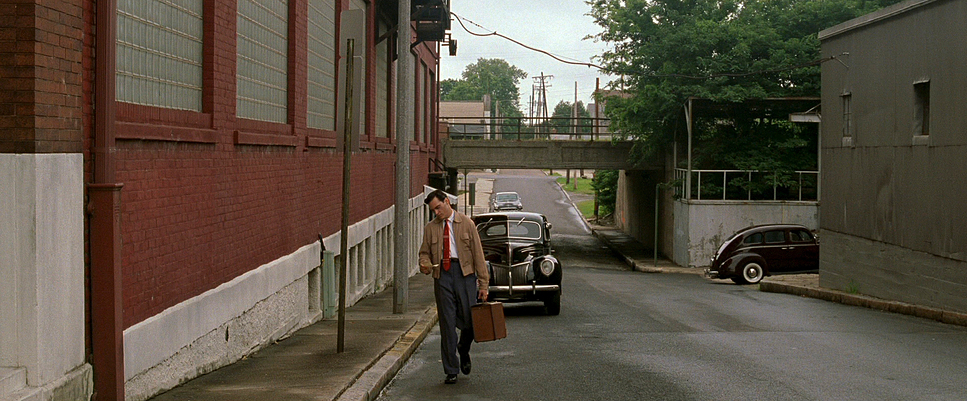
The lighting here is practically a character in its own right. It moves between the harsh, uncorrected realities of Johnny’s struggle and the soft, hopeful glow of his redemption. In those grungier backstage moments, the lighting is raw high-contrast, low-key, and often relying on “dirty” practicals that sculpt the faces with deep, inky shadows.
Then there are the “June” scenes. Here, the lighting shifts into a soft, overcast quality, often feeling like a warm sunbeam is hitting the frame. It’s not just “brighter”; the key-to-fill ratio softens up significantly. It creates a visual halo around their relationship that stands in stark contrast to the gloom of Johnny’s addiction. It’s motivated lighting that serves the emotional arc perfectly.
Lensing and Blocking
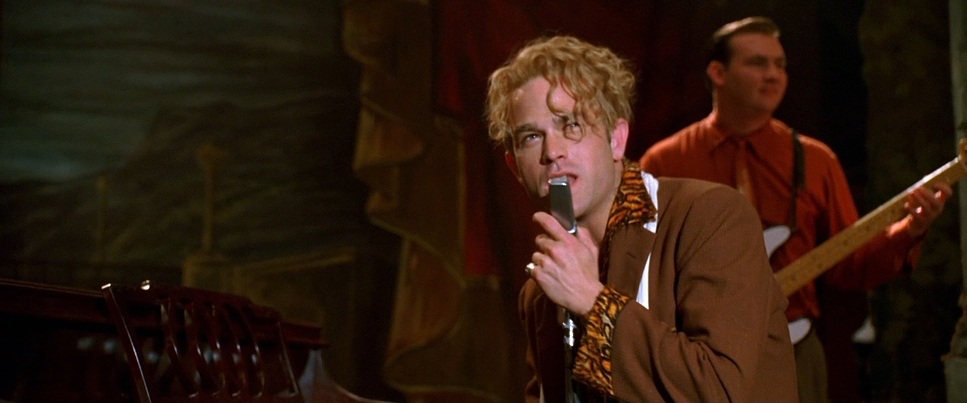
Phedon Papamichael stayed with glass that felt naturalistic, primarily using Panavision Primo Primes and Angenieux Optimo Zooms. The Primes give the film that classic cinematic soul sharp, but with a beautiful, creamy bokeh that doesn’t feel clinical.
In those intimate moments between Johnny and June, the lensing is everything. By using medium-to-long focal lengths, they compress the space, making the world around the couple fall away. It creates this shallow depth of field that strips away the distractions of a crowded room and forces us to focus entirely on their chemistry. It’s a powerful way to show that when they are together, nothing else exists.
Color Grading Approach

As a colorist, I have to tip my hat to Joe Finley, who handled the grade. This isn’t a “flashy” grade, but it is deeply sophisticated. The palette is earthy, warm, and slightly desaturated, giving us that period feel without the cliché sepia wash.
The highlight roll-off here is gorgeous very organic and reminiscent of a true print-film look. In the darker scenes, the shadows have a “weight” to them. They aren’t just crushed to zero; there’s a texture in the blacks that feels like real 35mm chemistry. When the “clouds part” for June, the grade subtly shifts yellows and oranges get a bit richer, and skin tones glow with a touch more warmth. It’s tonal sculpting at its best, guiding the audience’s heart through the color of the frame.
Technical Aspects & Tools
Walk the Line (2005)
Walk the Line was shot on 35mm film, which is why it has that unmistakable depth and grain. They used a sophisticated mix of stocks: Kodak Vision2 500T (5218) for those low-light interiors and 250D (5205) for the exteriors. Interestingly, they also mixed in Fuji Reala 500D (8592), which adds a specific color response that sets it apart from a pure Kodak show.
This was 2005, so the film went through a Digital Intermediate (DI) process. This hybrid approach shooting on celluloid and finishing digitally offered the best of both worlds. You get the organic highlight retention and skin tones of film, with the granular control of digital tools like Baselight or Resolve to fine-tune the contrast and hue separation. It’s that “print-film” sensibility married to modern precision.
- Also read: HIDDEN FIGURES (2016) – CINEMATOGRAPHY ANALYSIS
- Also read: ANNIE HALL (1977) – CINEMATOGRAPHY ANALYSIS
Browse Our Cinematography Analysis Glossary
Explore directors, cinematographers, cameras, lenses, lighting styles, genres, and the visual techniques that shape iconic films.
Explore Glossary →