Antoine Fuqua’s Training Day (2001) is high on that list. It’s a perfect example of how cinematography can do more than just “look good”; it can actually sculpt the mood and drive the narrative with a kind of primal force.
When we talk about the sun-drenched, shadow-heavy streets of Los Angeles, the visuals here are just as vital as Denzel Washington’s performance. They don’t just capture a city; they capture a moral collapse.
About the Cinematographer
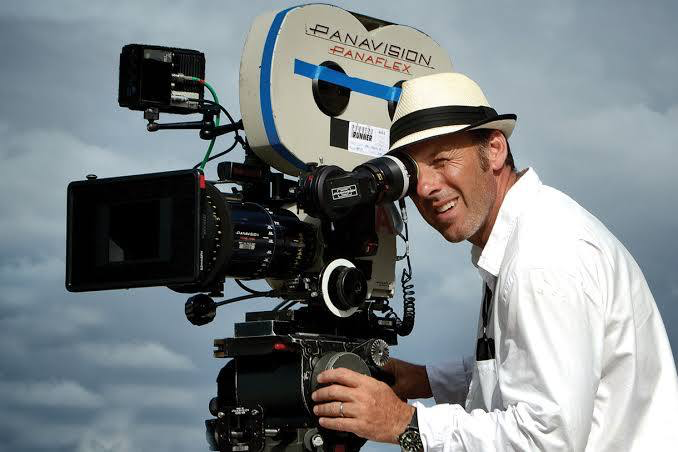
The man behind the lens was Mauro Fiore, ASC. This was relatively early in his career, but you can already see the trajectory he was on. Fiore has this incredible knack for delivering a grounded, immersive look, whether he’s working on the gritty urban reality of a crime thriller or the high-concept landscapes of Avatar.
In Training Day, Fiore’s signature is all over the frame: a total willingness to embrace harshness. He leans into a documentary-style authenticity, yet he never loses that dramatic, theatrical punch. It’s a tough balance to strike, but he makes it look effortless.
Color Grading Approach
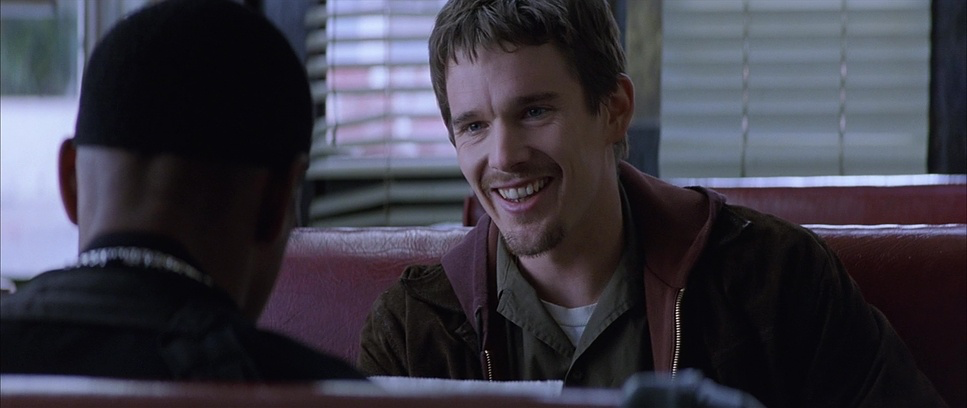
As a colorist, this is where my brain really starts working. At Color Culture, I’m always looking for how a grade communicates the “unspoken” parts of a script. Training Day is a fascinating study in contrast. While we often remember the heat of the L.A. sun, there’s a distinct “Cool, Blue” undertone running through the film’s DNA that anchors the crime and thriller elements.
The palette is a tug-of-war. You have these warm, earthy exteriors reflecting the relentless heat, but the grade often pushes into sickly greens or clinical blues in the shadows. It’s a visual representation of moral decay. I love the way the contrast is shaped here; the blacks are deep and inky, sometimes crushing detail entirely to create those pools of mystery. Because this was shot on 35mm in the early 2000s, it has that beautiful, organic “print-film” feel that we’re often trying to emulate today. It’s heavy, dense, and perfectly oppressive.
Inspiration Behind the Cinematography
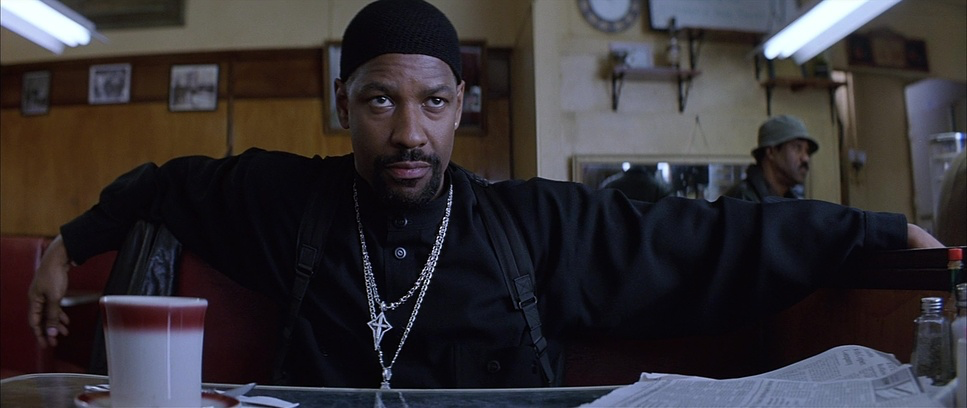
The core inspiration here is pretty clear: it’s a raw, unflinching look at undercover police work. The film plunges us into neighborhoods that rarely got this kind of cinematic treatment back then. The camera mirrors the environment it feels dangerous, unpredictable, and lived-in.
For Ethan Hawke’s character, Jake, the visuals have a specific job. They have to transition him from “young and naive” to completely broken. The city itself becomes a character a sprawling, unforgiving entity that slowly swallows his idealism. There’s no polish here. No Hollywood gloss. Just a visceral realism that makes you feel the tension of Jake’s “training day.”
Camera Movements
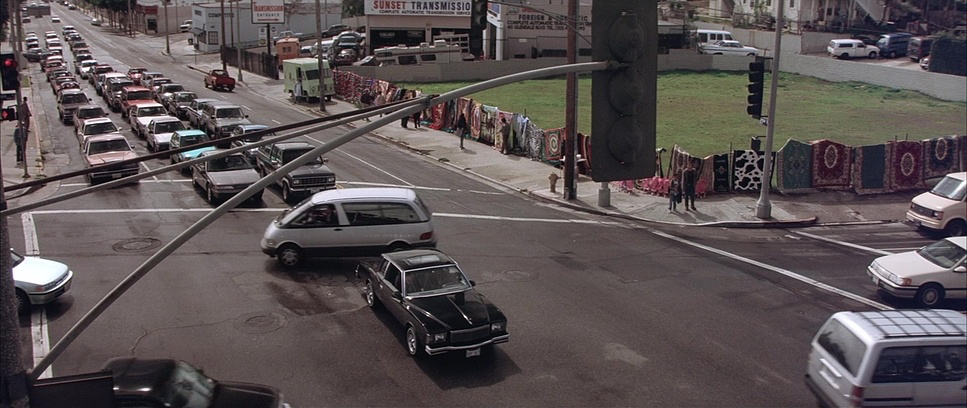
The camera movements in Training Day aren’t just about coverage; they’re about power dynamics. When Alonzo is in control, the camera is steadfast. Think about the scene where he walks across a busy street or stops his car in the middle of an intersection to point a gun at Jake. The camera doesn’t jitter. It watches him with a static authority, moving with his stride to show he owns every inch of the frame.
Then, things shift. Handheld work comes in to inject chaos, especially when Jake’s world starts spinning like the PCP scene. But for me, the most effective work happens in Smiley’s house. There are three distinct “push-ins” that act like a tightening noose.
First, the camera creeps in as Smiley talks about Alonzo’s violent past, amping up the gravity of the situation. Then, it pushes in again as Jake desperately pleads for his life. Finally, it closes in on Smiley’s cousin as she confirms Jake’s story. There’s no music, just the longest silence in the film. The camera’s slow advance does all the heavy lifting, turning the scene into a total pressure cooker.
Compositional Choices
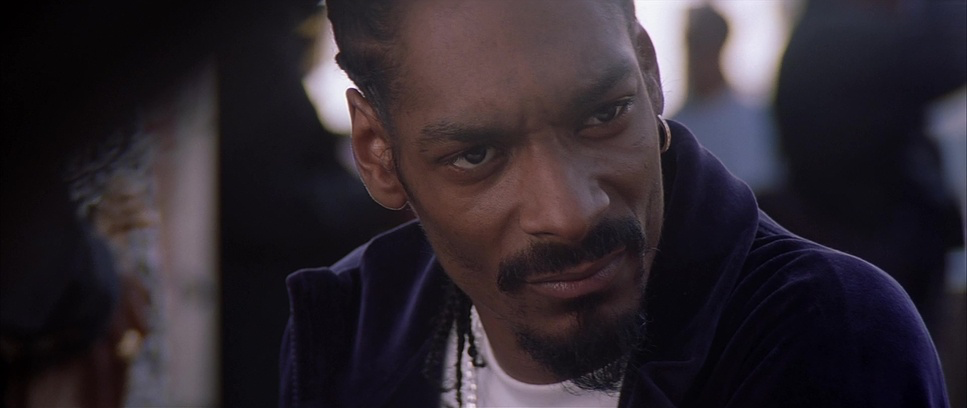
Nothing in these compositions is accidental. Jake is often visually trapped literally positioned between figures like Moreno and Sniper to underscore his isolation. The depth cues here fence him in; he has no visual escape, just like he has no physical out.
The “bathtub scene” is the peak of this. Jake is framed at the bottom of the screen, looking up at the three gangsters. It’s a stark image of powerlessness. Fiore uses a chilling overhead shot almost like a “God’s eye view” that feels completely dehumanizing. It’s immediately followed by a cut to Christian iconography, turning the scene into a twisted, ominous baptism. When Smiley’s cousin finally saves him, she’s framed from above, mirroring Jake’s earlier position. It’s brilliant visual symmetry.
Lighting Style
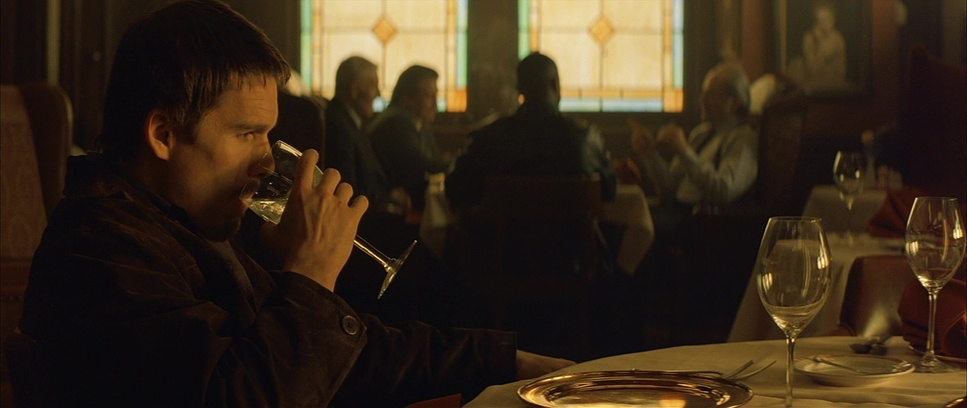
The lighting here favors realism over style every time. It’s not about soft, flattering lights; it’s about the harsh glow of the L.A. sun and the unapologetic glare of streetlights.
It’s all motivated. You see sunlight streaming through grimy windows or the neon buzz of a corner store. These sources ground the film. Alonzo often stands in hard, direct light, emphasizing his intimidating presence. He isn’t hiding in the shadows; he’s right there in front of you. Jake starts in softer, neutral light, but as the day goes on, he’s pulled into Alonzo’s high-contrast world. It’s a pragmatic, brutal approach to lighting that proves sometimes the boldest choice is to avoid “artifice” entirely.
This is where the choice of Hawk C-Series Anamorphics really shines. The 2.35 aspect ratio allows Fiore to capture the sprawl of the city, making Jake look small and overwhelmed. But as the tension builds, those anamorphic lenses compress the space, making the frames feel claustrophobic.
The blocking reinforces this. Alonzo dominates the foreground. He walks through gang territories like he owns the place, forcing everyone else to react to him. Jake usually starts on the periphery, a subordinate observer. The genius is in the final reversal. In the climax, Jake breaks free of these constraints, physically challenging Alonzo’s space. By the end, Alonzo is the one isolated in the street, surrounded but completely alone.
Technical Aspects & Tools
Training Day
35mm Film • Anamorphic 2.35:1
| Genre | Action, Crime, Drama, Thriller, Gangster, Police |
| Director | Antoine Fuqua |
| Cinematographer | Mauro Fiore |
| Production Designer | Naomi Shohan |
| Costume Designer | Michele Michel |
| Editor | Conrad Buff IV |
| Colorist | Dale E. Grahn |
| Time Period | 2000s |
| Color | Cool, Blue |
| Aspect Ratio | 2.35 – Anamorphic |
| Format | Film – 35mm |
| Lighting | Hard light |
| Lighting Type | Daylight, Sunny |
| Story Location | California, Los Angeles |
| Filming Location | California, Los Angeles |
| Camera | Moviecam Compact, Moviecam SL |
| Lens | Hawk C-series Anamorphics |
| Film Stock / Resolution | 5246/7246 Vision 250D |
Shooting on 35mm gave this film a texture that digital still struggles to hit. They used Moviecam Compact and SL cameras paired with those Hawk Anamorphics I mentioned. For the film geeks, I’d bet they were running Kodak Vision 250D for those sun-baked exteriors and 500T for the night work.
The grain structure of those stocks is a huge part of why the film feels so “raw.” The dynamic range of the 35mm film allowed them to hold detail in those bright L.A. skies while still letting the shadows stay heavy and weighted. It’s a reminder of how much the “chemistry” of film contributes to the final mood.
- Also read: CAPTAIN PHILLIPS (2013) – CINEMATOGRAPHY ANALYSIS
- Also read: THE GIRL WITH THE DRAGON TATTOO (2011) – CINEMATOGRAPHY ANALYSIS
Browse Our Cinematography Analysis Glossary
Explore directors, cinematographers, cameras, lenses, lighting styles, genres, and the visual techniques that shape iconic films.
Explore Glossary →