When Rob Reiner’s The Princess Bride hit screens in 1987, it wasn’t an instant blockbuster, yet today it stands as a pillar of modern fantasy. It manages to be a love story, a revenge tale, a comedy, and an adventure, all wrapped in a meta-narrative that celebrates storytelling itself.
What strikes me most when analyzing it now isn’t just the script; it’s the visual discipline. It’s the kind of film that reminds you how deliberate lighting, precise blocking, and the texture of 35mm film can elevate a “fairy tale” into cinema.
About the Cinematographer
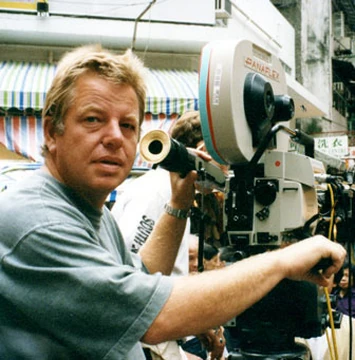
The visual architect behind The Princess Bride was the late, great Adrian Biddle (Aliens, The Mummy, V for Vendetta). While Rob Reiner had the comedic vision, it was Biddle who ensured the film didn’t look like a cheap television sketch. Coming off the gritty sci-fi world of Aliens (1986), Biddle brought a grounded, textural quality to the fantasy genre.
The collaboration between Reiner and Biddle resulted in an aesthetic that feels both grand and intimate. Biddle understood that for the comedy to land, the world had to look taken seriously. The cinematography doesn’t chase flashy flares or excessive stylization; instead, it evokes the feeling of classic storybook illustrations rich, slightly soft, and beautifully composed without ever slipping into artificiality.
Inspiration Behind the Cinematography
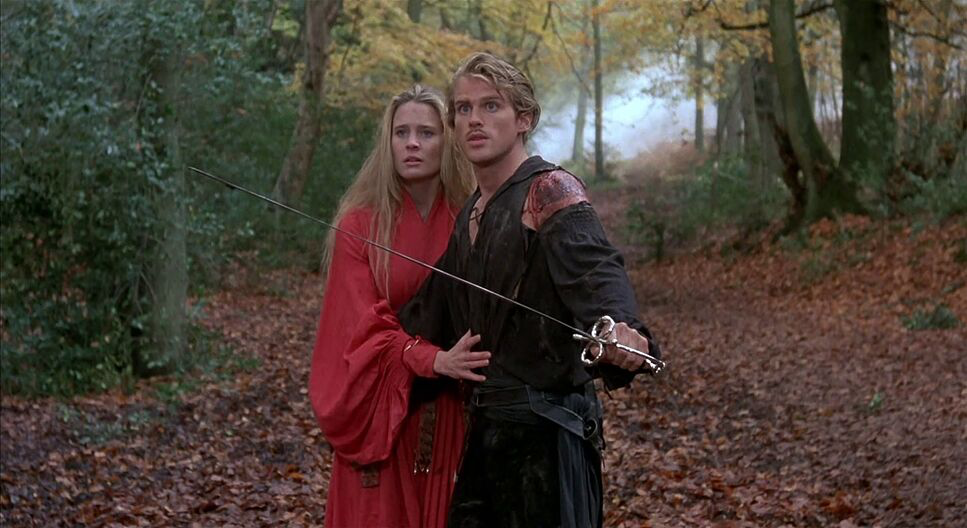
The primary visual challenge was structural: the film has to bridge the gap between the “real world” (a sick grandson’s bedroom in the 80s) and the “book world” (the epic of Florin and Guilder). Reiner was adamant about protecting the tone of William Goldman’s novel, and visually, this translated into two distinct looks.
The bedroom scenes are designed to feel safe. They are grounded in reality but wrapped in a layer of nostalgic warmth. In contrast, the fantasy world needed to feel expansive and, at times, genuinely dangerous. Biddle achieved this separation without it feeling jarring. There is a tangible sense of a story being told using sweeping landscapes for the journey and heightened realism for the magical elements. It’s a sophisticated approach that allows adults to appreciate the visual layers while children simply get lost in the adventure.
Camera Movements
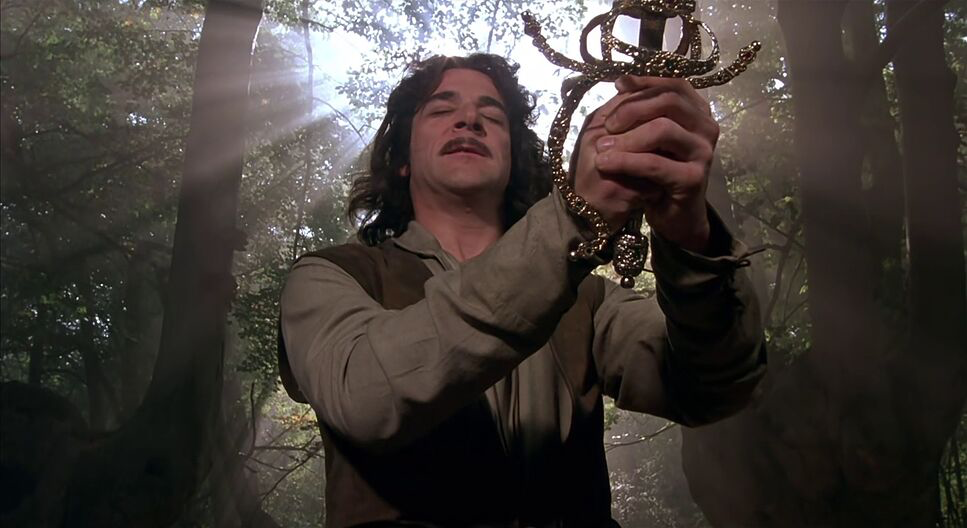
You won’t find a lot of gratuitous, shaky camera work here. The movement in The Princess Bride is classical and motivated, serving to either expand the world or tighten the emotional focus.
Take the iconic Cliffs of Insanity sequence. The camera initially frames the daunting scale of the cliffs with wide shots, emphasizing the impossibility of the climb. As Fezzik ascends, the camera tracks vertically, keeping pace with the effort. Later, during Westley’s climb, Biddle utilizes dramatic low-angle shots to make the character appear small against the rock face.
During the legendary sword fight between Inigo and Westley, the camera acts as a third dancer. It moves with the combatants but never disorients the viewer. We see a mix of fluid tracking shots and static wides that actually allow us to see the choreography. Unlike modern action films that hide poor fighting with rapid cuts, the camera here respects the actors’ skill. It captures the subtle shifts from left-handed to right-handed fighting with a dynamic precision that makes you feel the martial artistry.
Compositional Choices
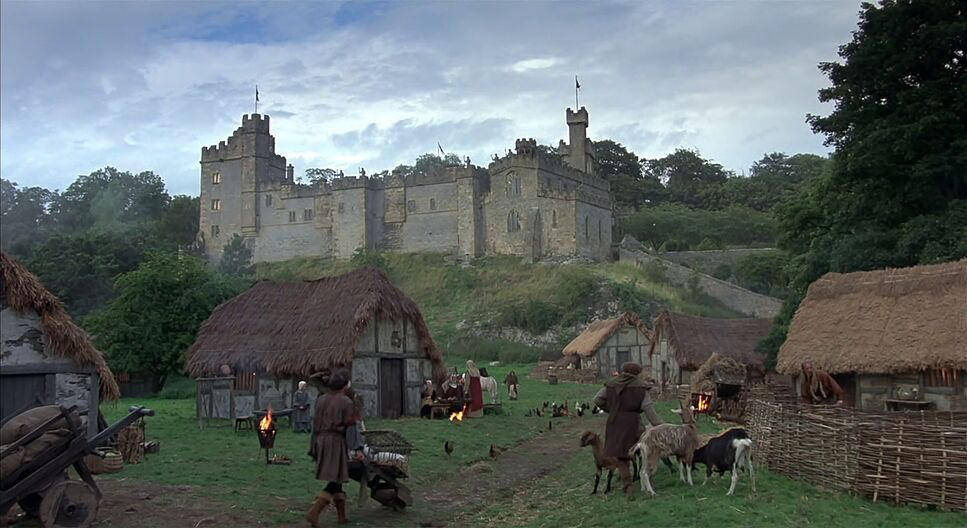
The framing in this film is a masterclass in visual storytelling. In the grandson’s bedroom, the compositions are cozy and cluttered. Peter Falk’s grandfather is often framed to emphasize his gentle authority, while Fred Savage is given slightly more restless compositions, befitting a sick kid stuck in bed.
Out in the fantasy world, Biddle leans into wide shots that evoke classic landscape paintings rolling hills, the treacherous Fire Swamp, and the imposing castle. But the composition also knows when to get out of the way of the comedy. During the “Battle of Wits,” despite the vast outdoor setting, the camera stays in a tight two-shot or medium close-up, focusing entirely on Vizzini’s frantic expressions and Westley’s calm demeanor. Even the placement of the picnic items creates a visual duel between the characters. The framing allows the performances, particularly Billy Crystal’s Miracle Max, the space to breathe and fill the screen.
Lighting Style
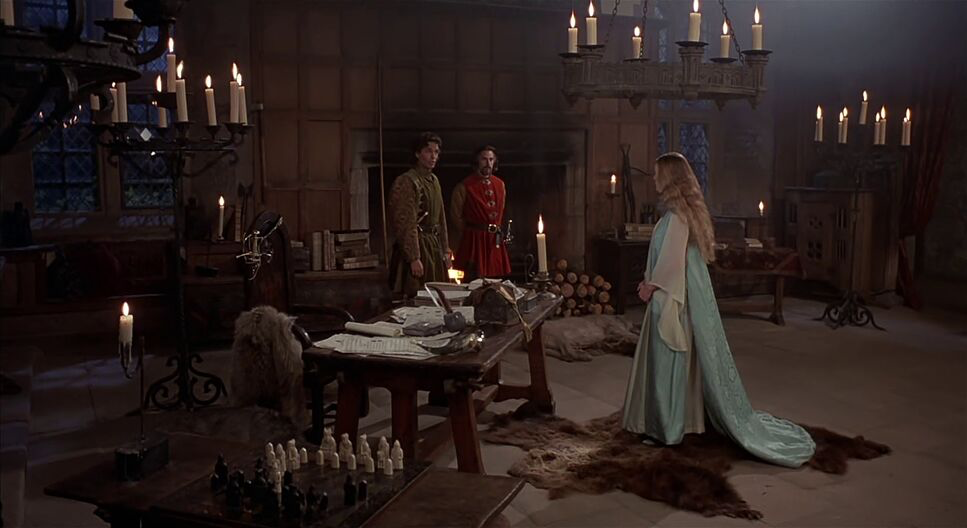
Lighting is where Biddle’s expertise really shines, particularly in how he differentiates the two worlds. The grandfather’s reading scenes are lit with a soft, tungsten warmth practical lamps provide a motivated glow that feels safe and inviting (likely in the 3200K range).
Contrast this with the fantastical realm. The pastoral scenes with Buttercup and Westley are bathed in natural, golden-hour light, giving the romance a soft, ethereal quality. But as the narrative darkens, the lighting turns hard and dramatic. The Cliffs of Insanity are lit with a stark, cool daylight to emphasize exposure.
The Fire Swamp is a standout technical achievement. It was a studio set, but Biddle lit it with strong reds and oranges to simulate fire, creating an infernal glow that makes the environment feel genuinely hostile. For the castle interiors and the Pit of Despair, the film shifts to a high-contrast chiaroscuro look, using deep shadows and pools of light to amplify the tension. It’s motivated lighting that subtly guides the audience’s emotional response from romance to peril.
Lensing and Blocking
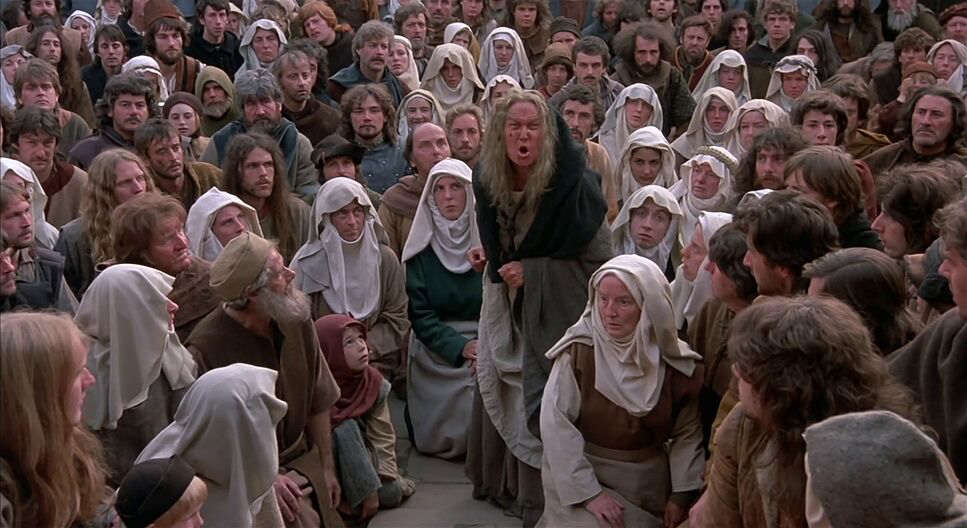
The film was shot on JDC cameras with spherical lenses, likely in the 35mm format. The choice of glass gives a clean image with a pleasing focus fall-off that keeps our attention on the characters while letting the backgrounds dissolve gently.
The blocking was also a massive technical hurdle, specifically regarding Andre the Giant. By the time of filming, Andre had severe back issues and couldn’t lift anything heavy. The solution wasn’t CGI; it was creative blocking. The crew used hidden cables, ramps, and forced perspective to sell Fezzik’s strength. They would position Robin Wright or Cary Elwes on risers or cut just before a “lift” occurred.
In the duels, Bob Anderson’s choreography dictated the blocking. The actors learned both right and left-handed fencing, allowing the camera to flow around them in a ballet of blades. The lens choices here are often mid-range, compressing the distance slightly to make the sword tips feel dangerously close to the lens.
Color Grading Approach
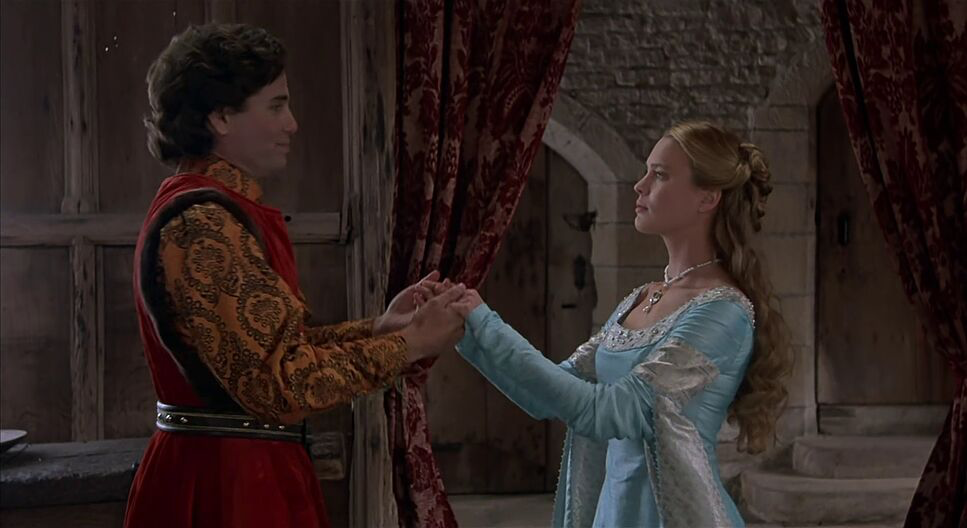
From my perspective as a colorist, the grade on The Princess Bride is beautiful because it embraces the limitations and strengths of 1980s film stock. There is a “print film” density to the image that digital cameras today struggle to replicate.
The palette is highly motivated. The framing device is dipped in golden yellows, soft oranges, and cozy browns a palette of security. When we transition to Florin, the gamut expands. The greens of the hills are lush and vibrant, and the blues of the sky are deep but natural, not the teal-and-orange push we see in modern blockbusters.
Crucially, the highlight roll-off is creamy. Bright areas like the sky or practical lamps don’t clip into a harsh digital white; they roll off gently, retaining detail. The contrast curves are strong, giving the image weight (good, healthy blacks), but the shadows retain texture. In scenes like the Fire Swamp, the separation of hues is precise—the reds of the fire bursts don’t bleed messily into the skin tones. It’s a masterly application of tonal sculpting, ensuring the viewer’s eye is exactly where it needs to be.
Technical Aspects & Tools
The Princess Bride – Technical Specs
| Genre | Romance, Adventure, Comedy, Family, Fantasy, Martial Arts, Rom-Com, High Fantasy, Sword & Sorcery |
| Director | Rob Reiner |
| Cinematographer | Adrian Biddle |
| Production Designer | Norman Garwood |
| Costume Designer | Phyllis Dalton |
| Editor | Robert Leighton |
| Colorist | Phil Downey |
| Color | Warm |
| Aspect Ratio | 1.85 – Spherical |
| Format | Film – 35mm |
| Lighting | Hard light, Top light |
| Lighting Type | Daylight |
| Story Location | … Florin |
| Filming Location | … England > Derbyshire |
| Camera | JDC Camera |
| Lens | JDC |
Shot in England in 1986, the production faced significant physical challenges that affected the final look. The “ROUS” (Rodents of Unusual Size) were stuntmen in suits, and the Fire Swamp set was a nightmare of controlled fires and fog machines a difficult environment to light consistently.
The cast’s physical condition also dictated technical choices. Cary Elwes broke his toe early in production, forcing the camera team to frame out his limp or block scenes so he could lean on props. The famous moment where Count Rugen knocks Westley out? That was a real blow. Cary told Christopher Guest to tap him for real, and he woke up in the hospital. The take in the movie is the one where he actually loses consciousness.
- Also read: BEAUTY AND THE BEAST (1991) – CINEMATOGRAPHY ANALYSIS
- Also read: RAIN MAN (1988) – CINEMATOGRAPHY ANALYSIS
Browse Our Cinematography Analysis Glossary
Explore directors, cinematographers, cameras, lenses, lighting styles, genres, and the visual techniques that shape iconic films.
Explore Glossary →