Every time I sit down to analyze a classic like The Hustler (1961), I’m reminded why I became a colorist in the first place. This isn’t just a movie about pool, Robert Rossen didn’t just film a script he captured the brutal education of a soul.
What sticks with me most is how the film refuses to look away. It doesn’t rely on flashy tricks. Instead, it uses sustained gazes and a black-and-white palette that feels less like a stylistic choice and more like a hard truth. Dissecting this film isn’t just an academic exercise it’s about getting to the heart of how we tell stories with light.
About the Cinematographer
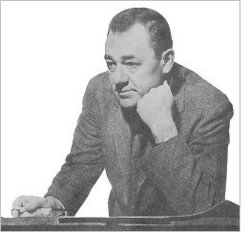
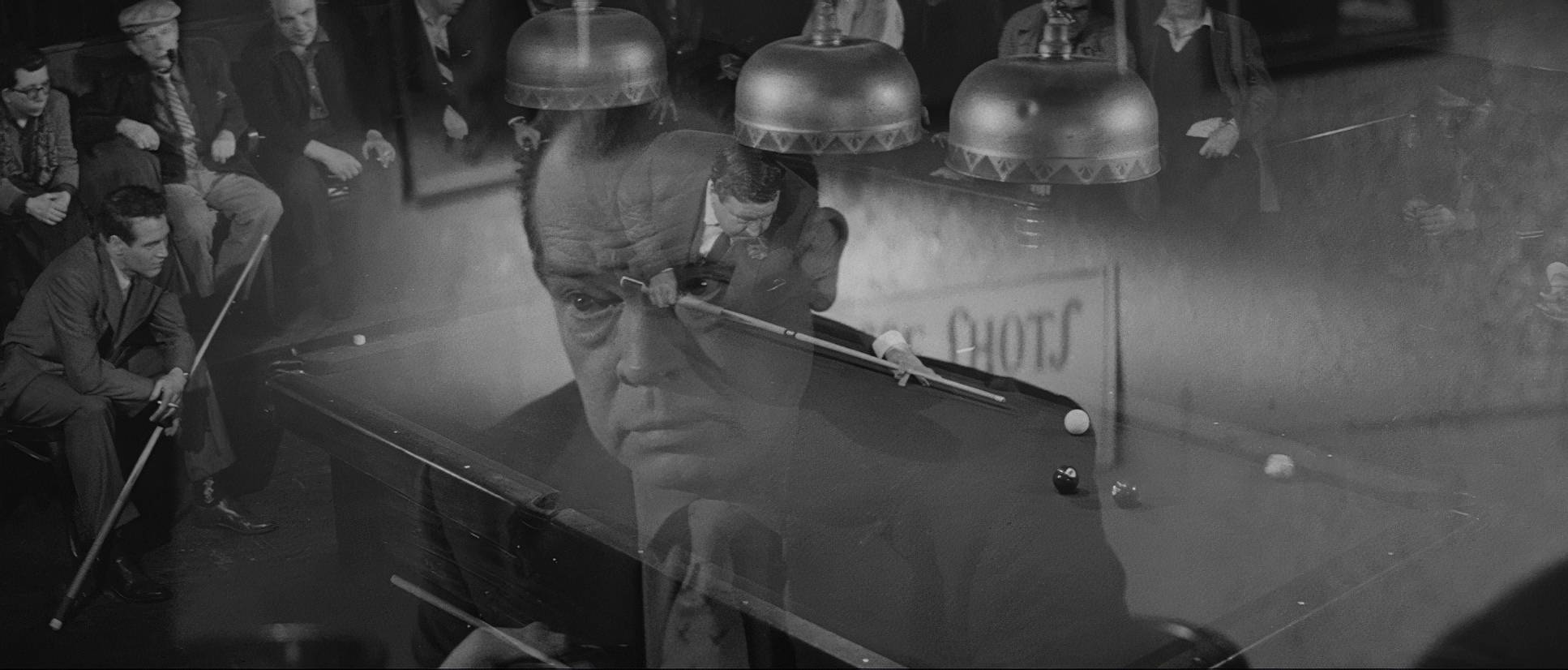
The man behind this visual grit was Eugen Schüfftan. He wasn’t just a guy with a camera; he was an innovator who lived through the evolution of cinema. Long before The Hustler, he was already a legend for the “Schüfftan process” that mirror-based optical trickery used in Metropolis.
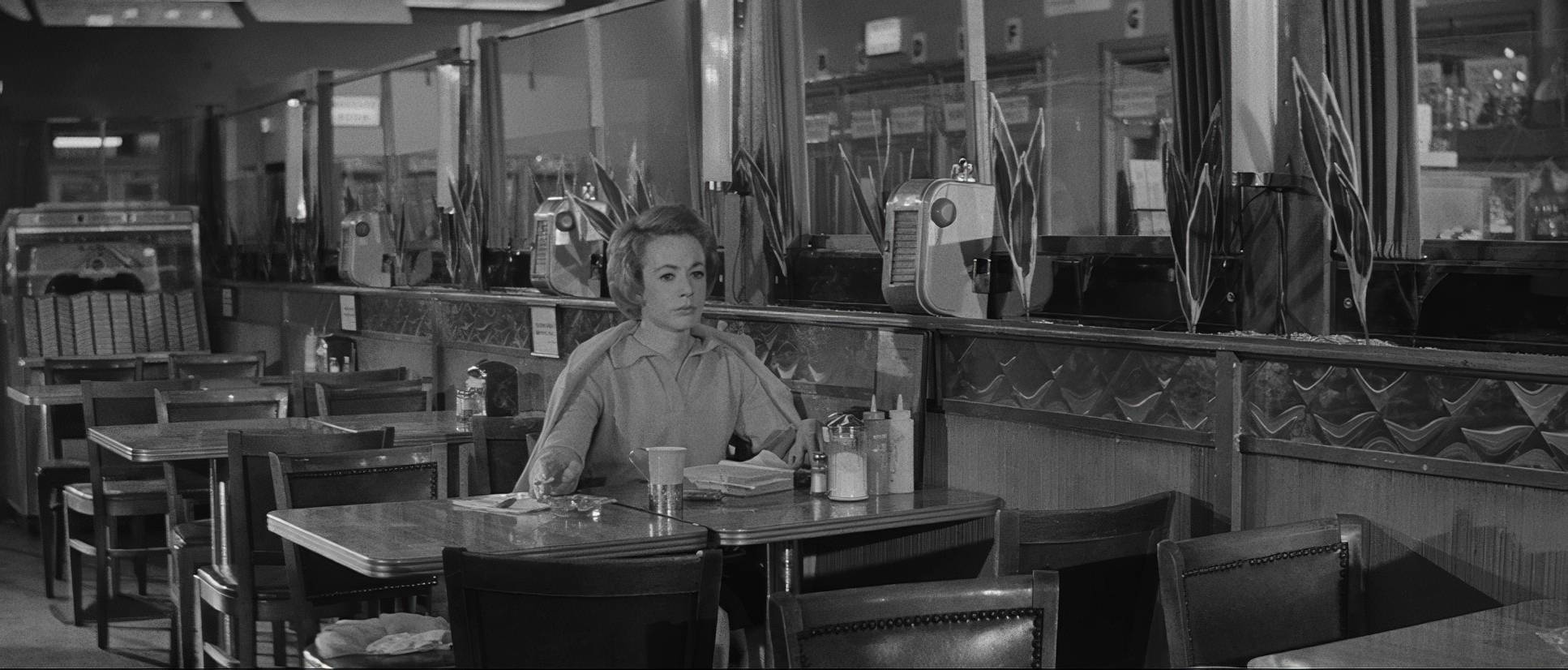
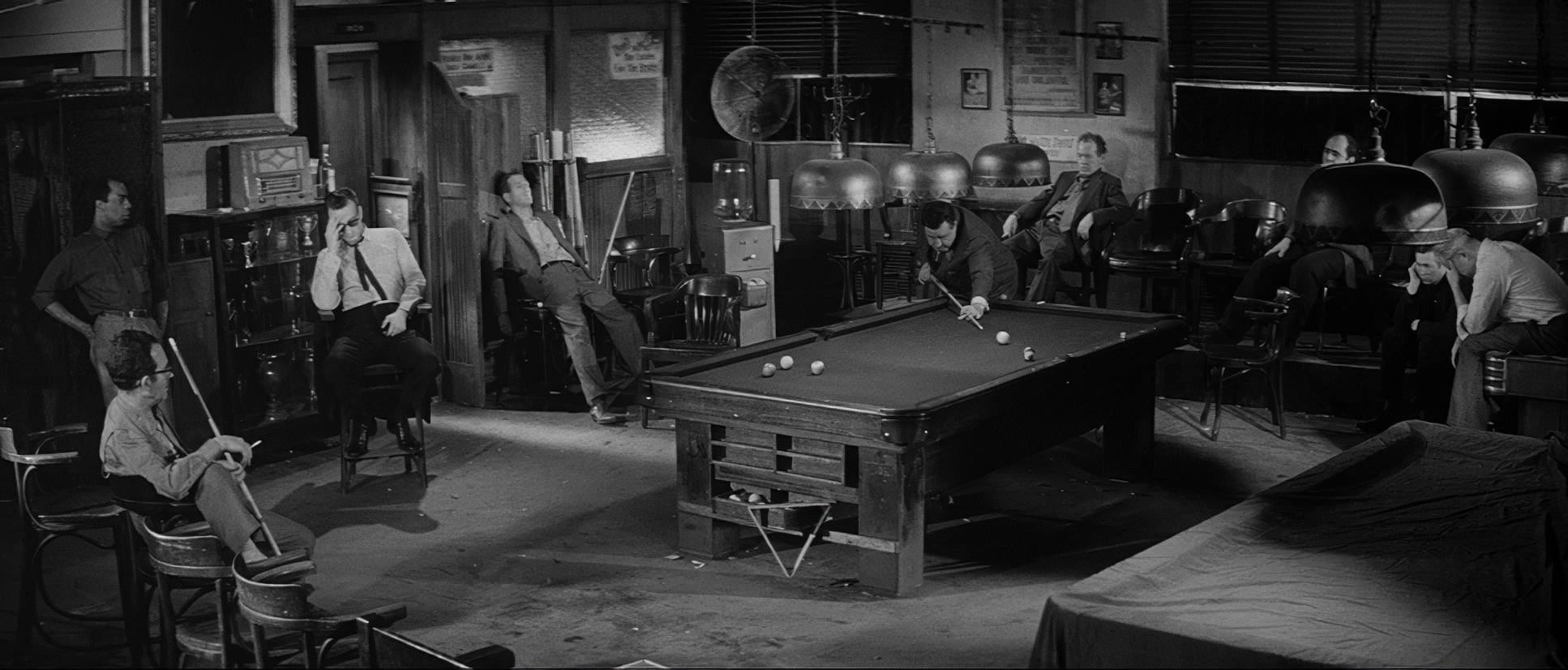
What’s fascinating is that even in 1961, he was still reaching into his bag of tricks, using mirror effects to build out the backgrounds of those cramped, iconic pool rooms. Working with the wide CinemaScope canvas, Schüfftan didn’t just fill space; he owned it. His Academy Award for this film wasn’t just a “career achievement” nod it was proof that he could take a 35mm frame and make it feel like a living, breathing world.
Inspiration Behind the Cinematography

The authenticity of The Hustler comes from a place you can’t fake. Director Robert Rossen was actually a hustler in his younger days. You can feel that lived experience in every frame. This isn’t a director guessing what a pool hall feels like; it’s a filmmaker pouring his own history into the lens.
The themes of pride and the razor-thin line between winning and losing aren’t just in the dialogue they’re baked into the atmosphere. The smoke-filled rooms and the wary eyes of the players aren’t just “set dressing.” They reflect Fast Eddie Felson’s journey from arrogance to the kind of wisdom that only comes from getting your heart broken. The cinematography doesn’t just show the story; it lives the struggle.
Lighting Style
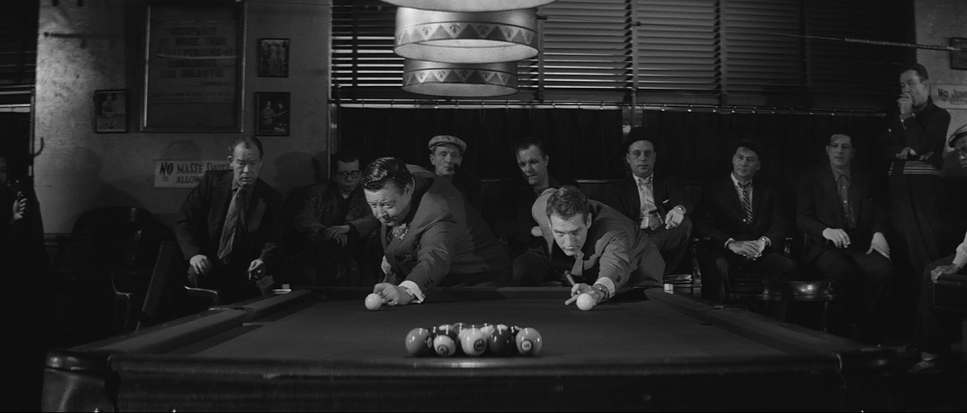
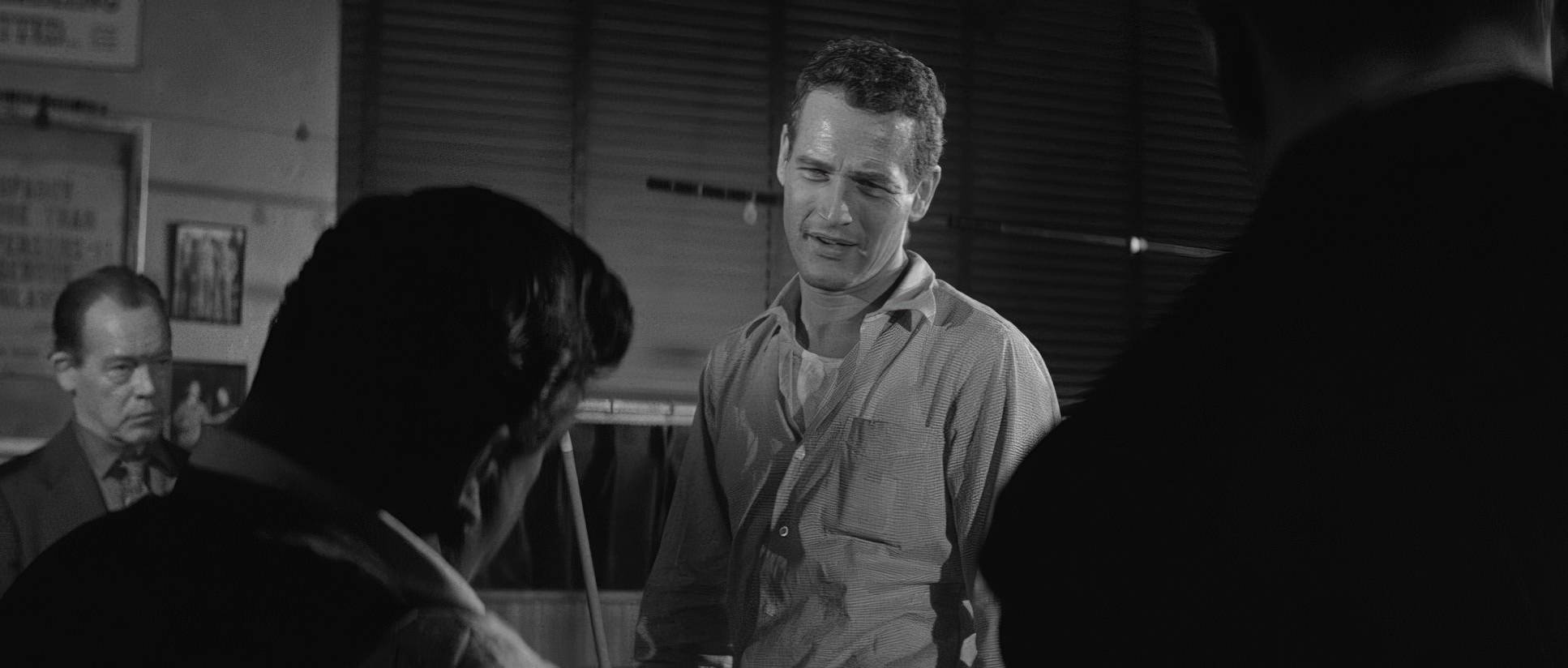
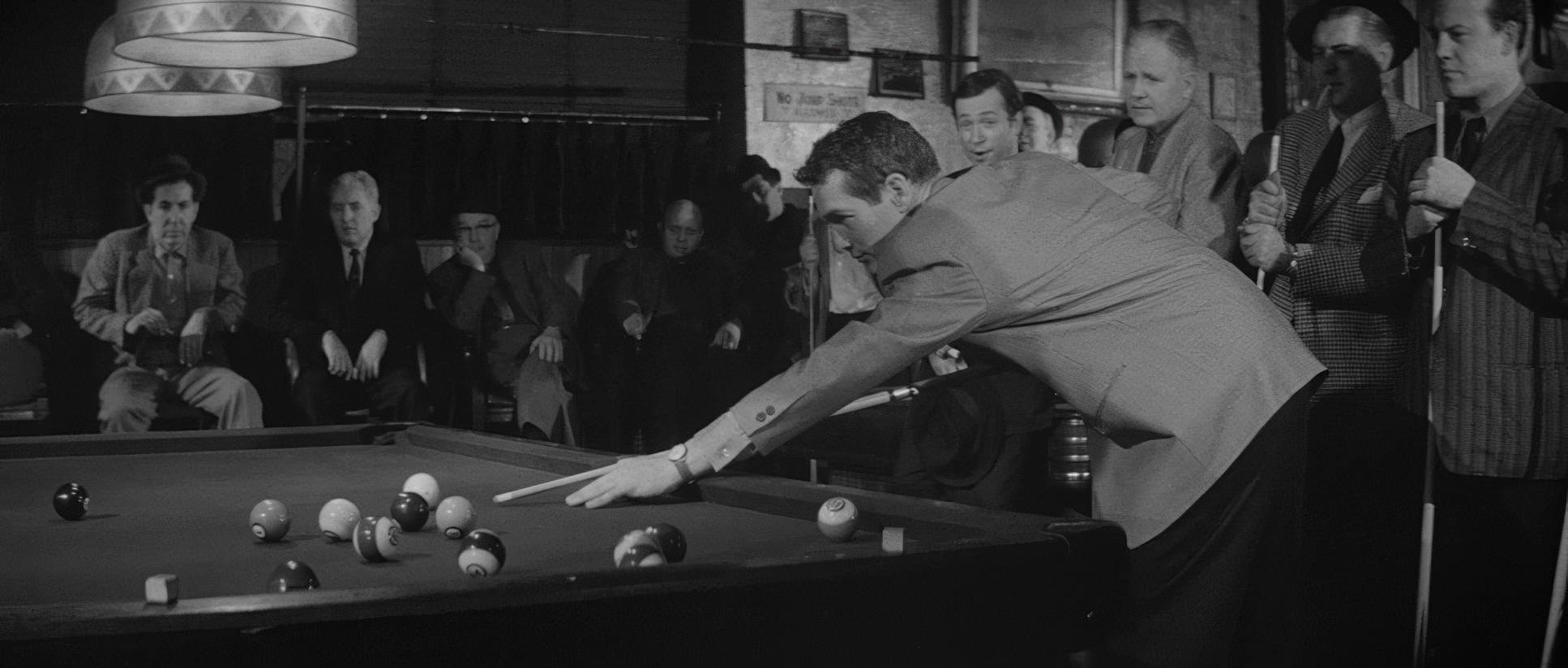
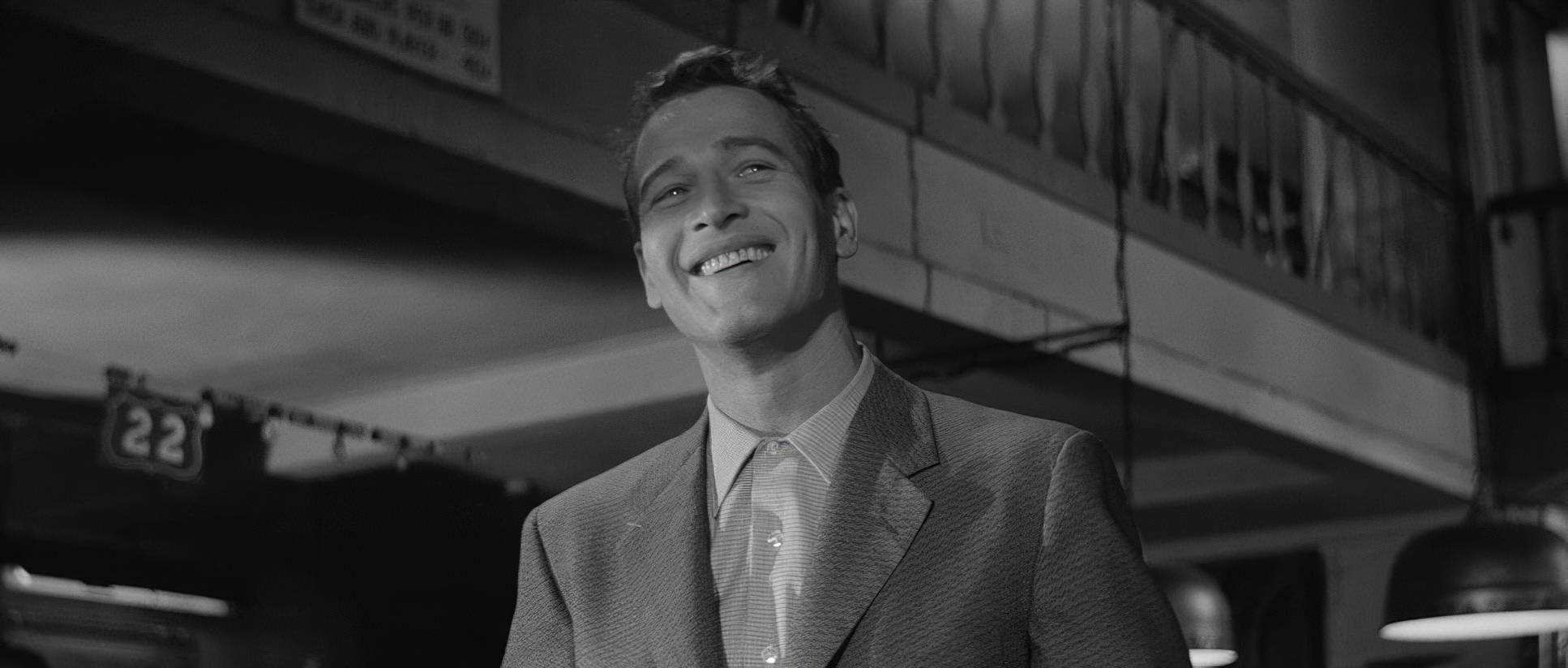
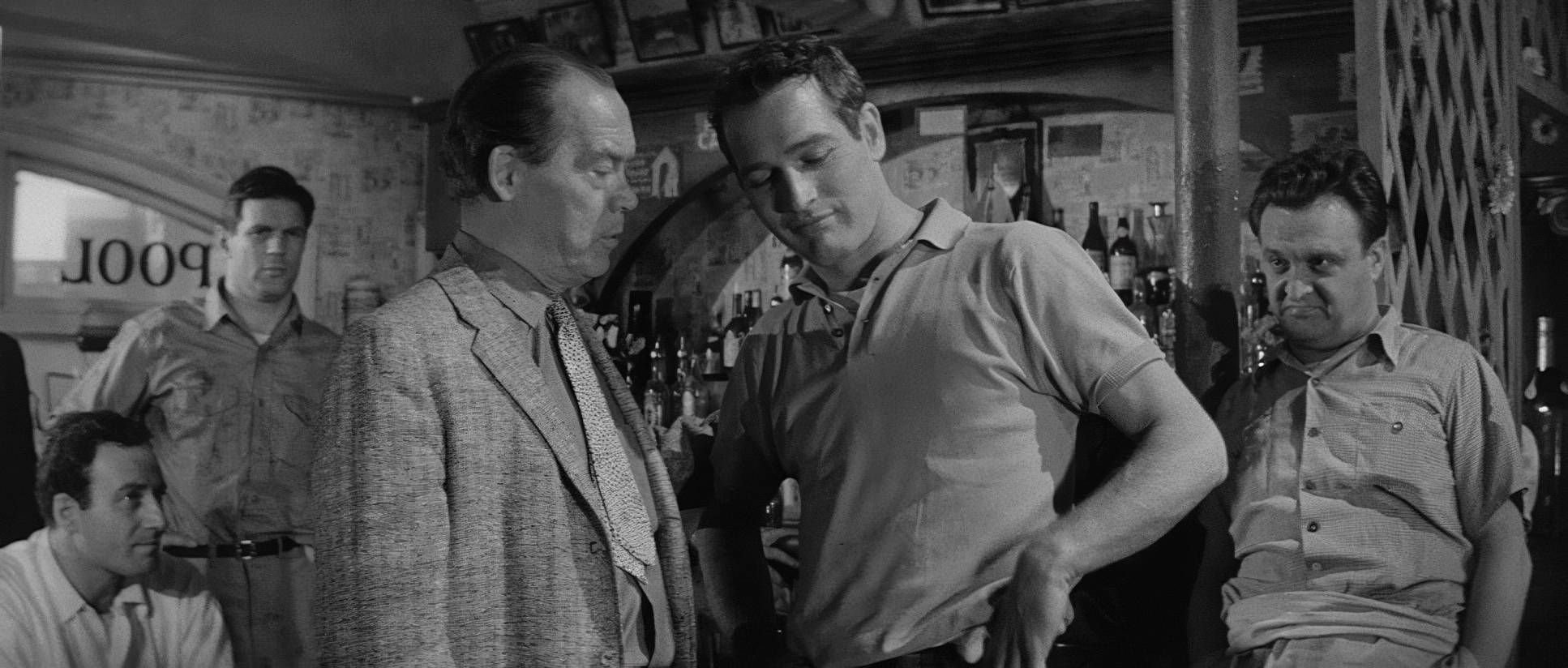
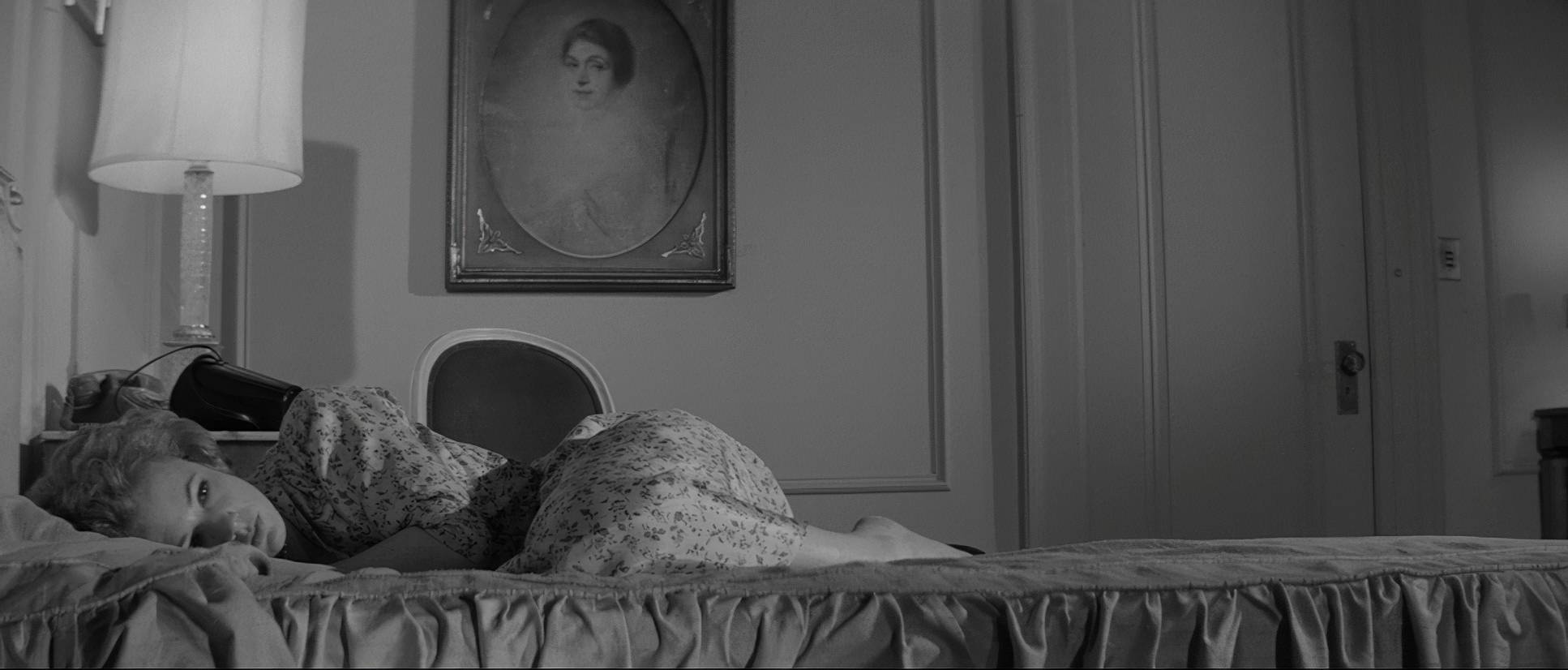
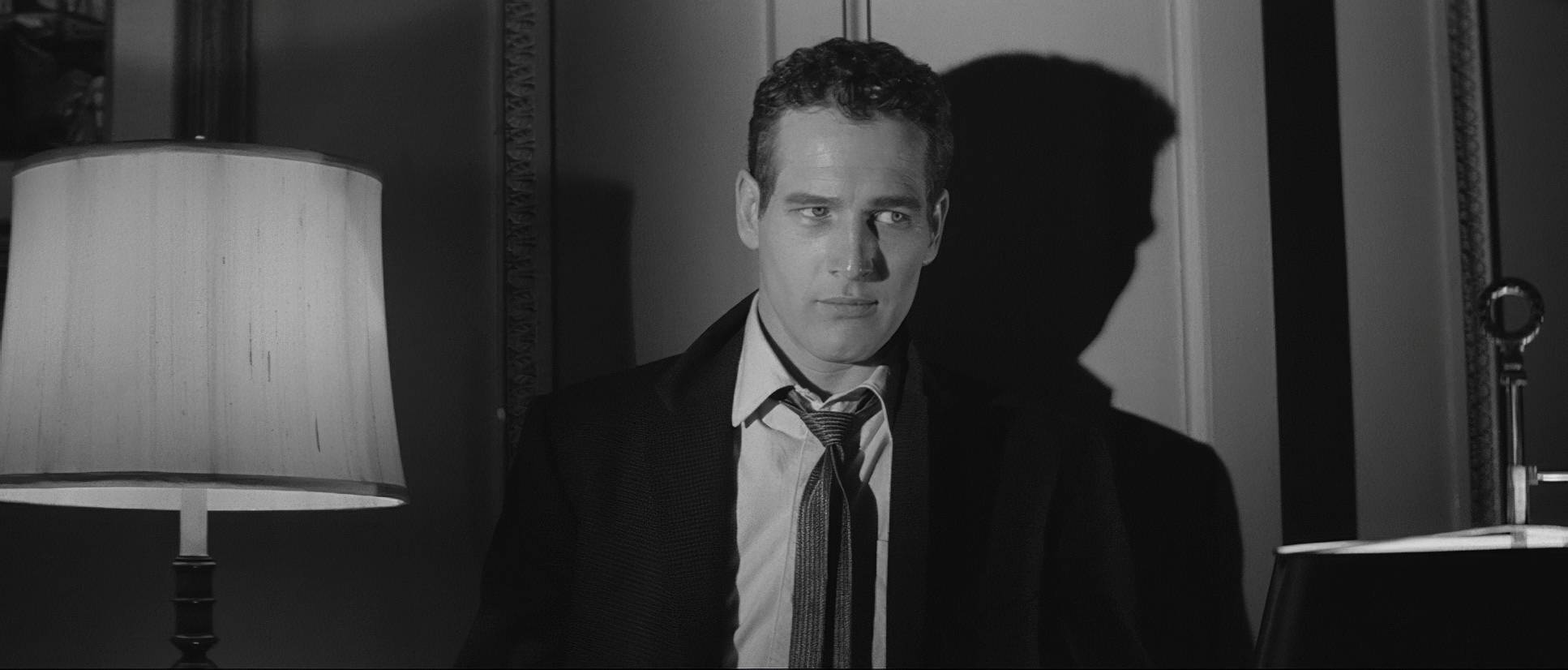
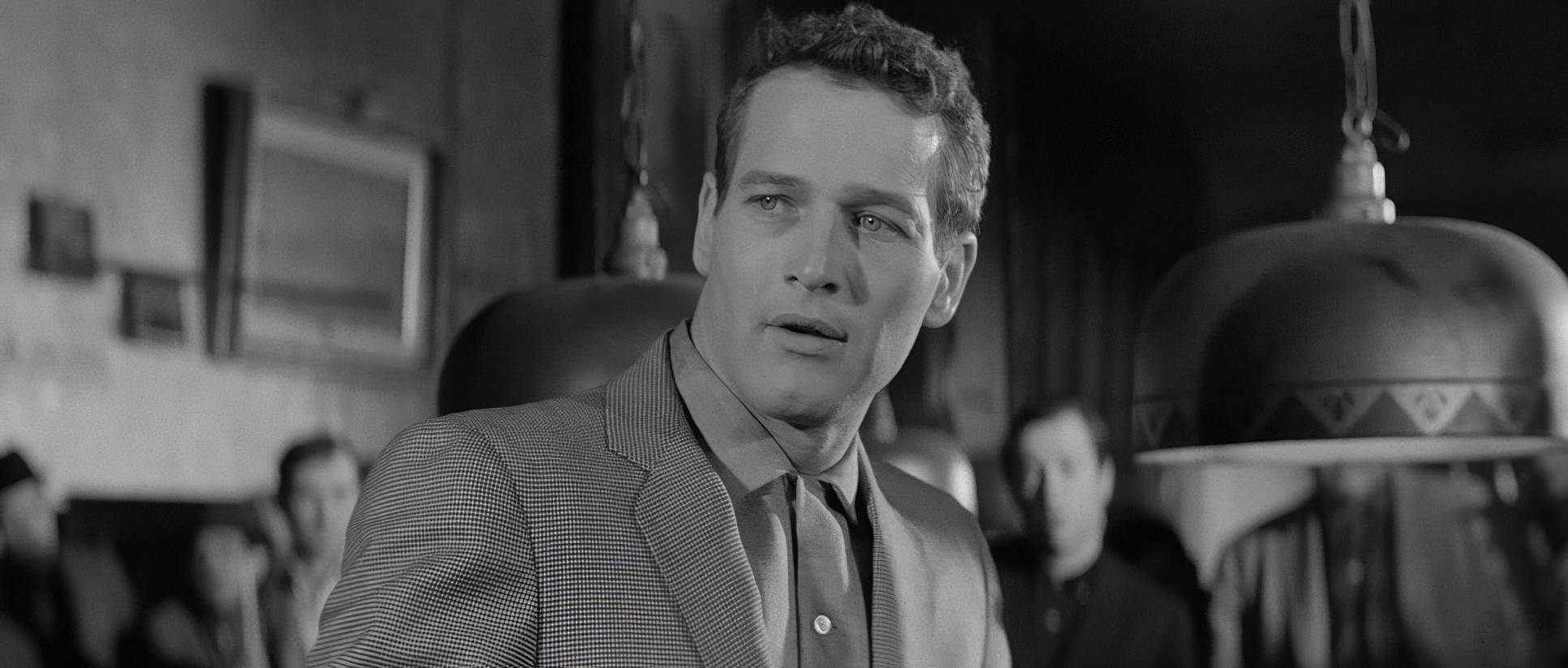
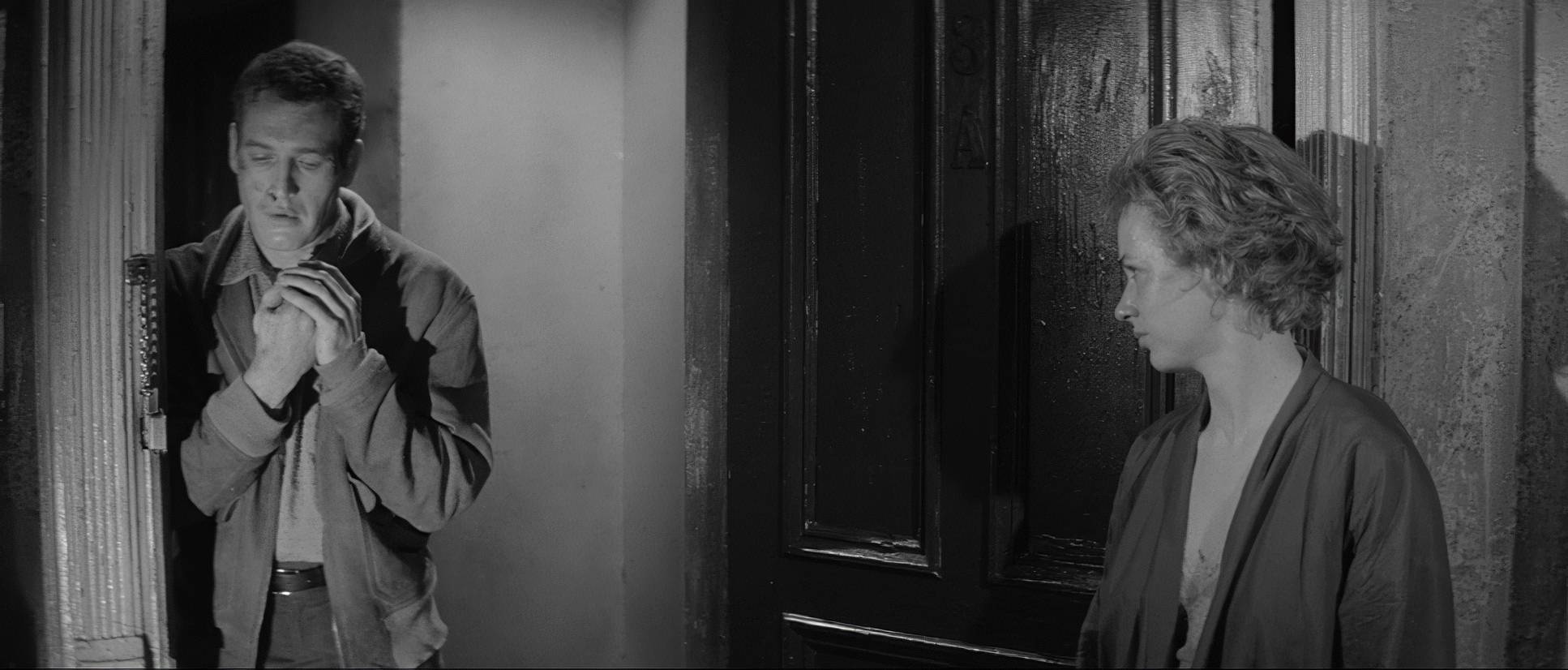
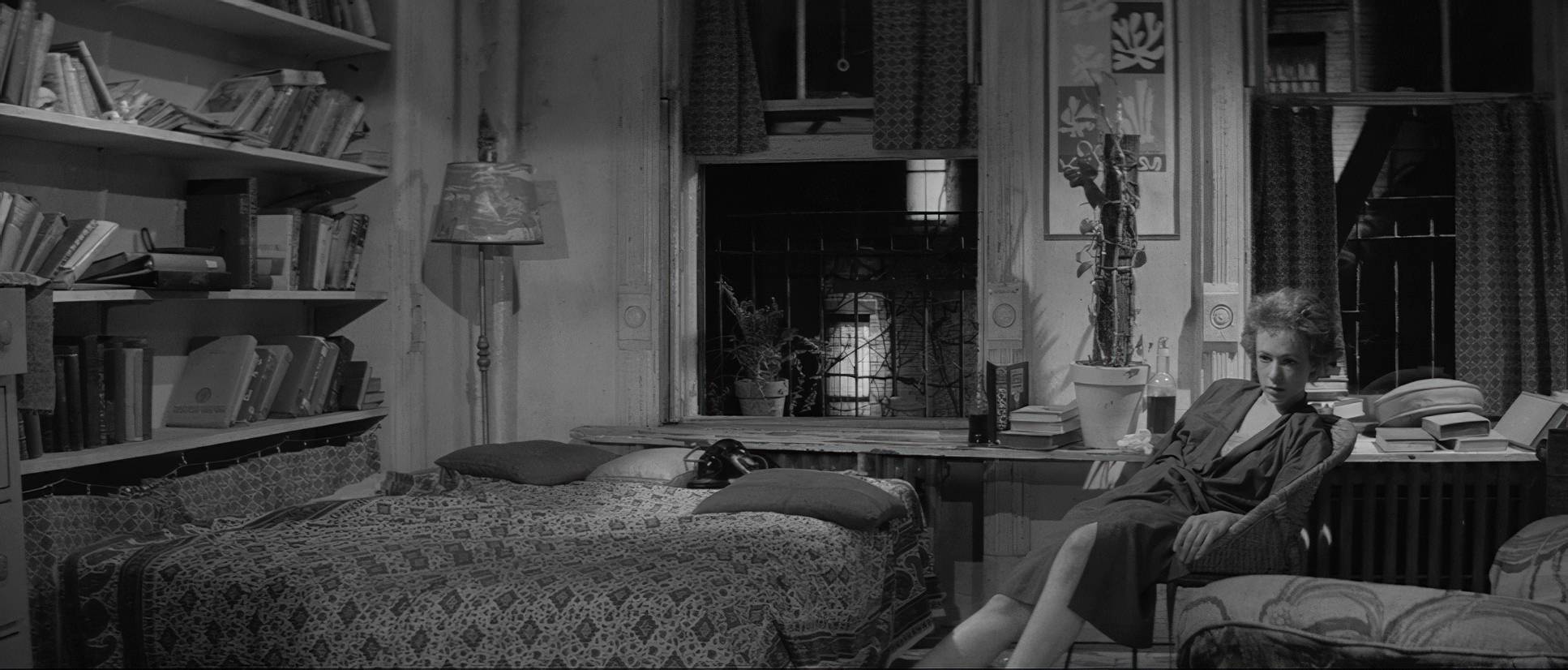
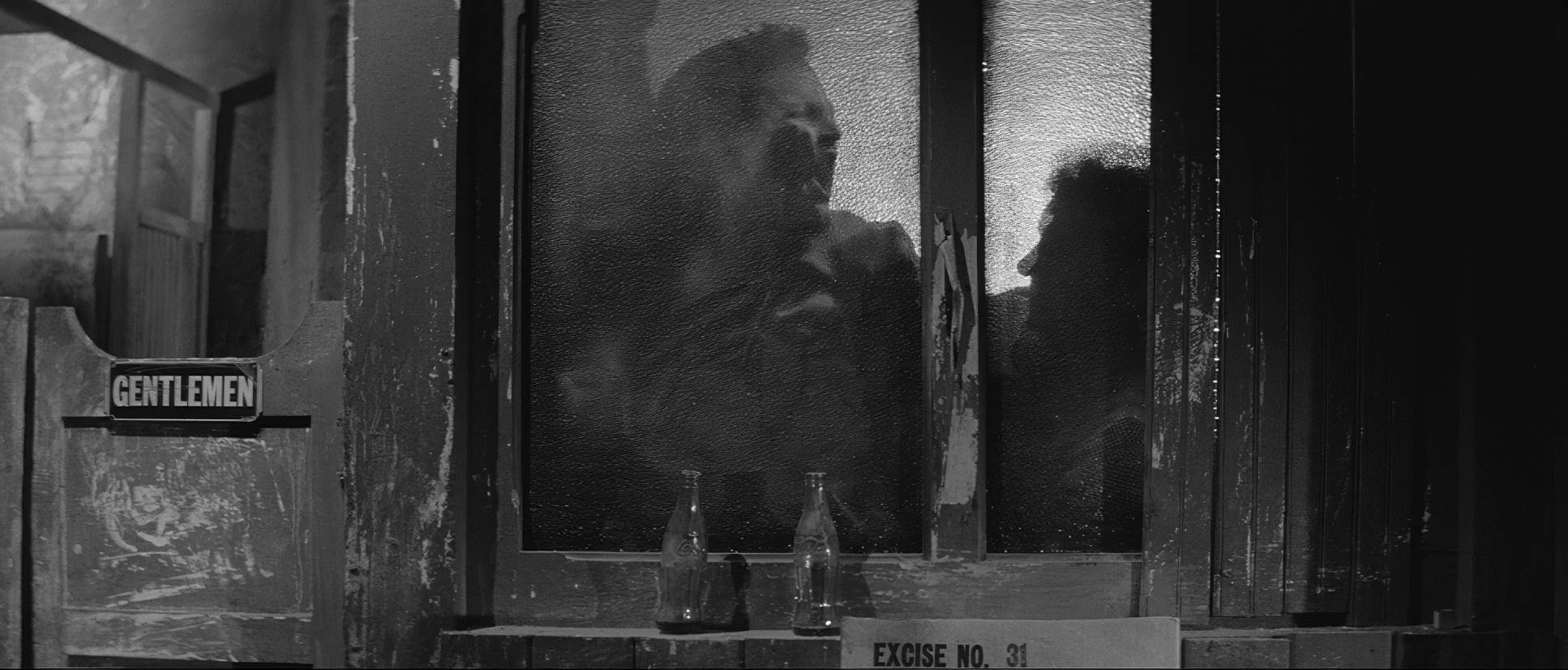
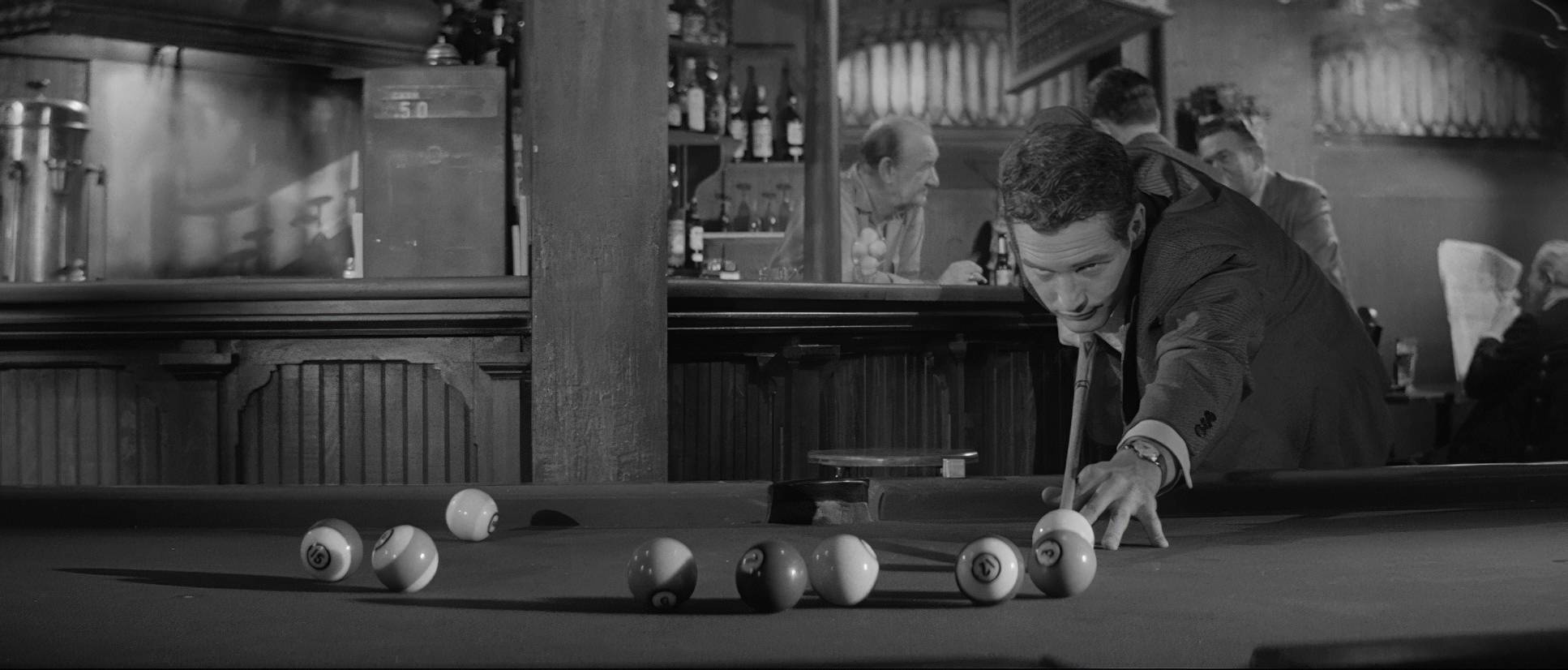
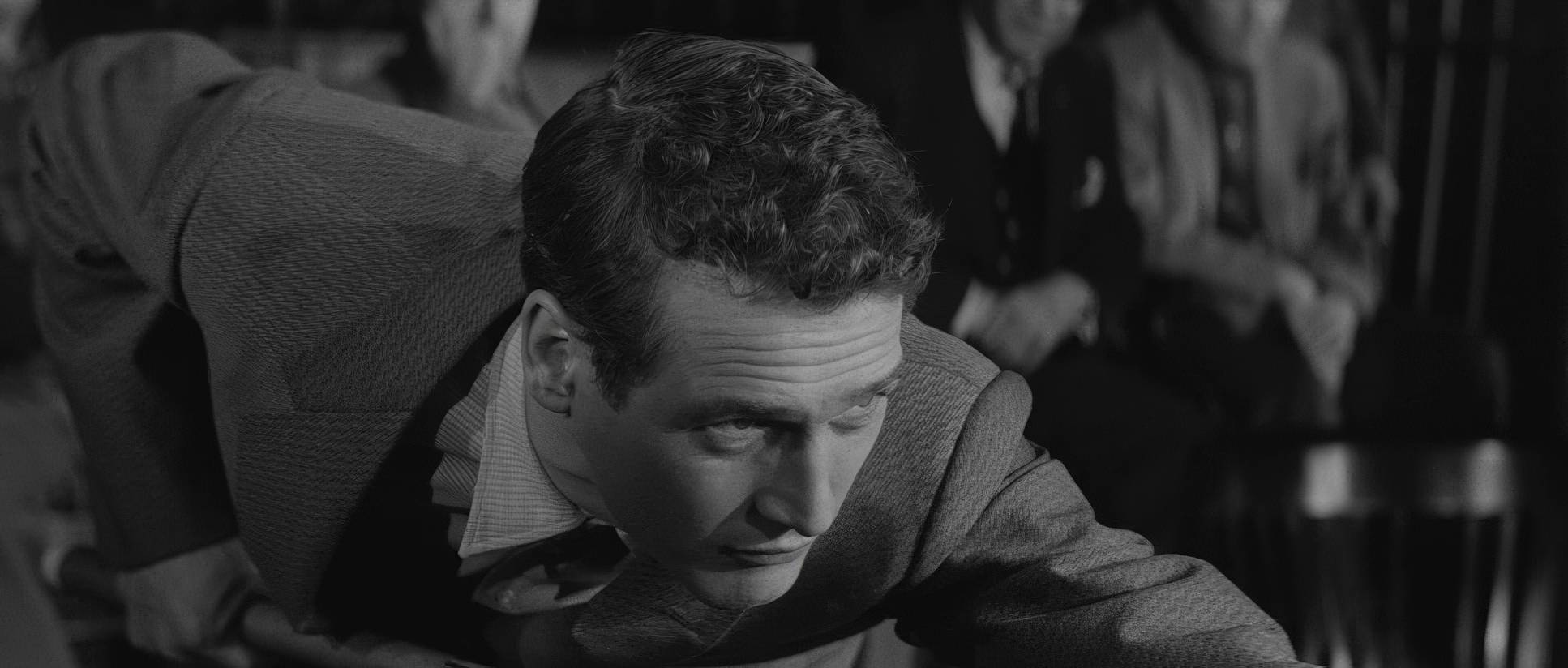
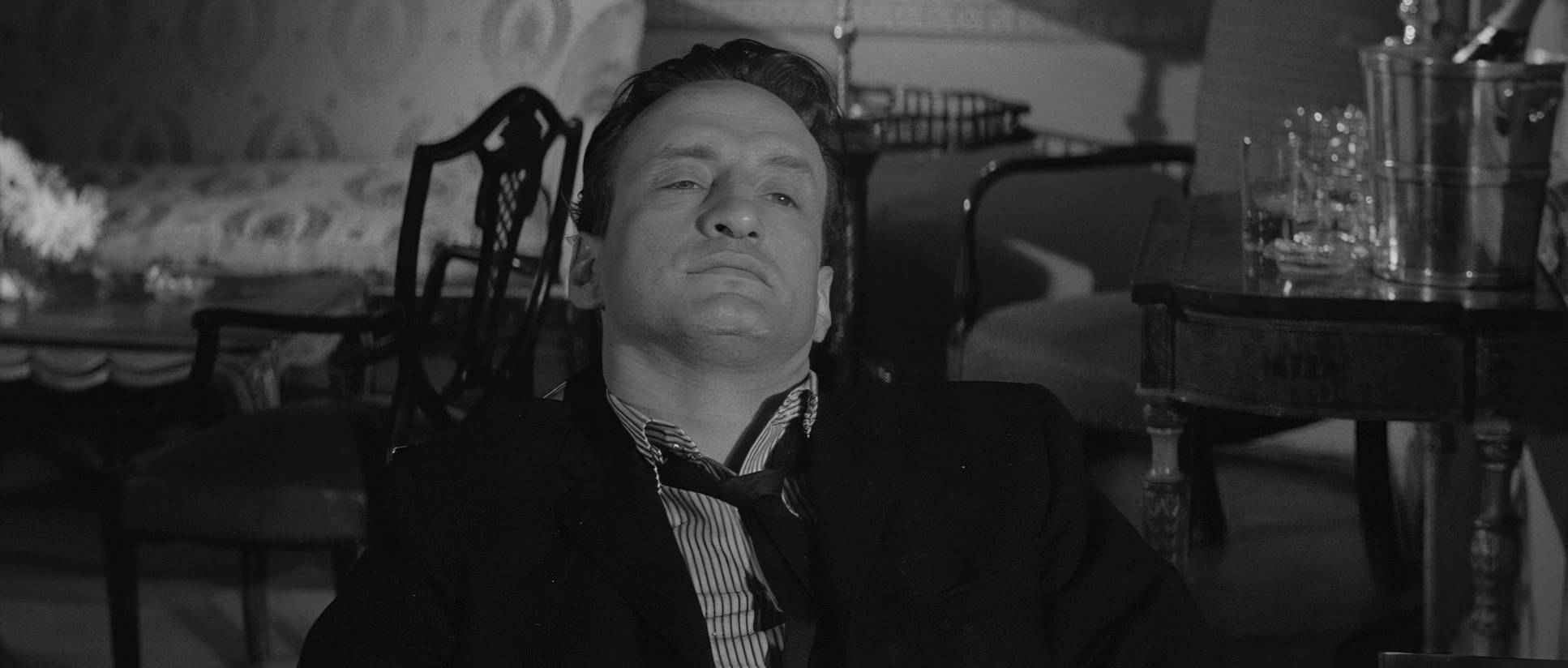
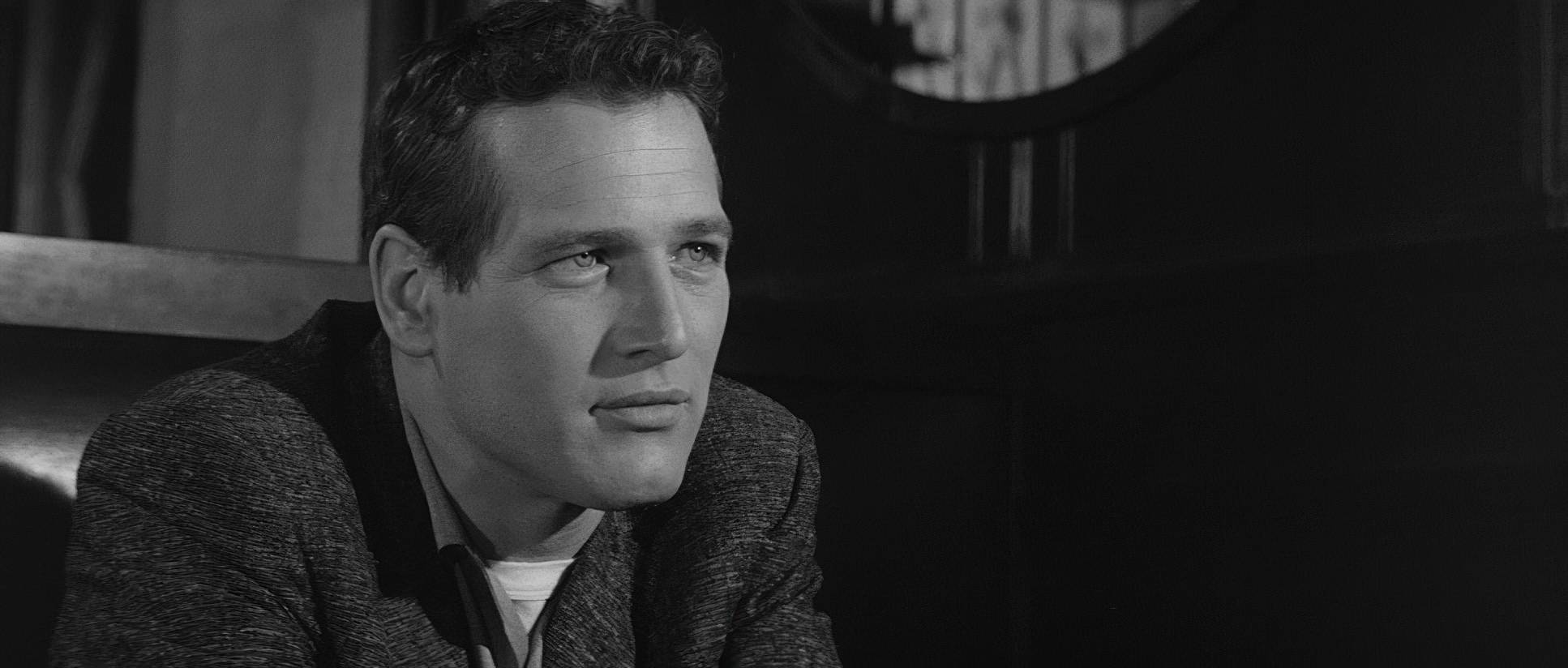
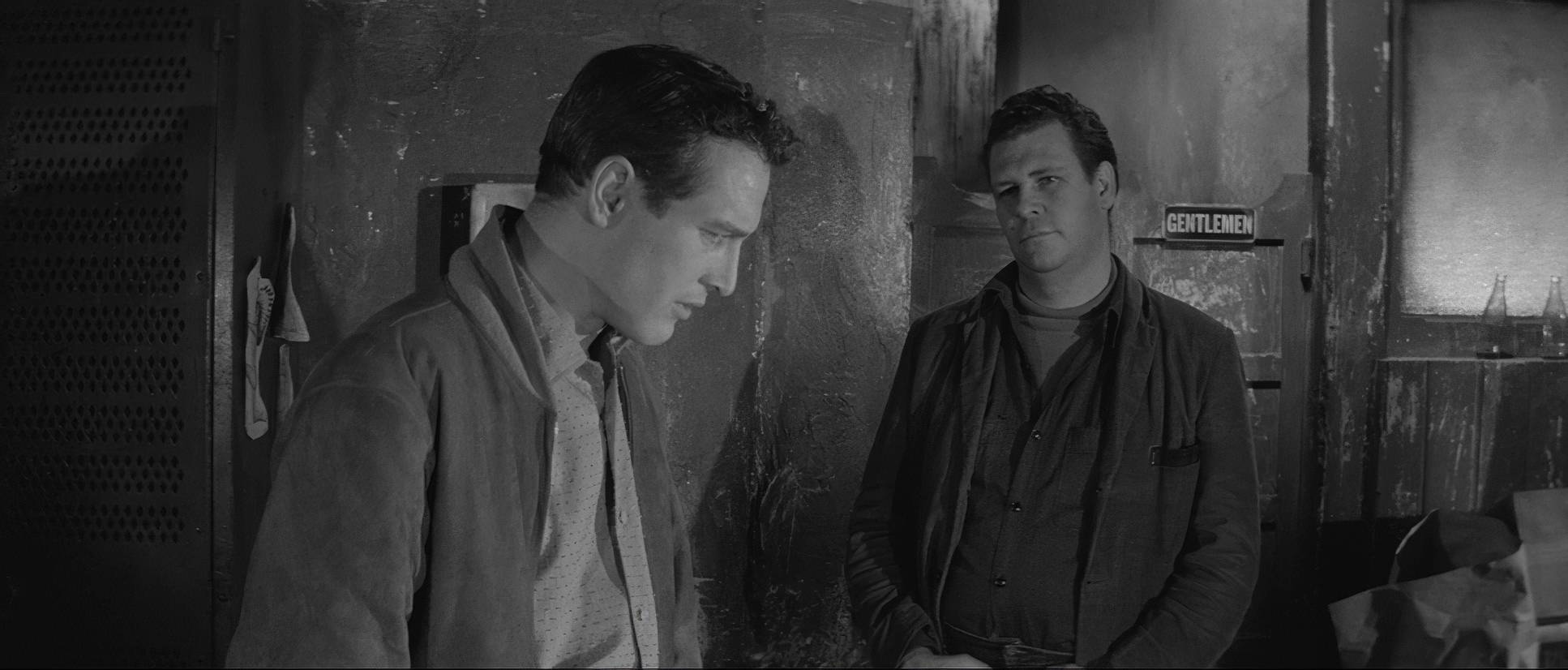
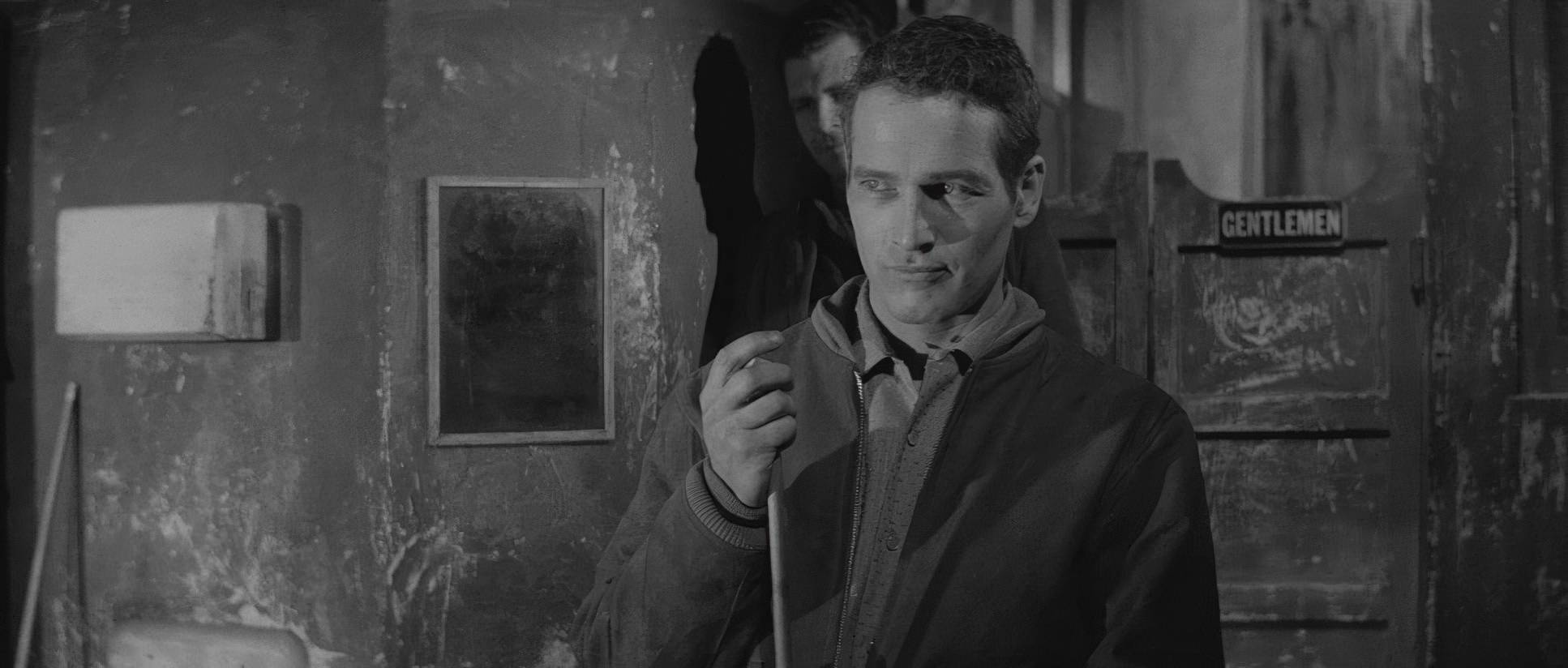
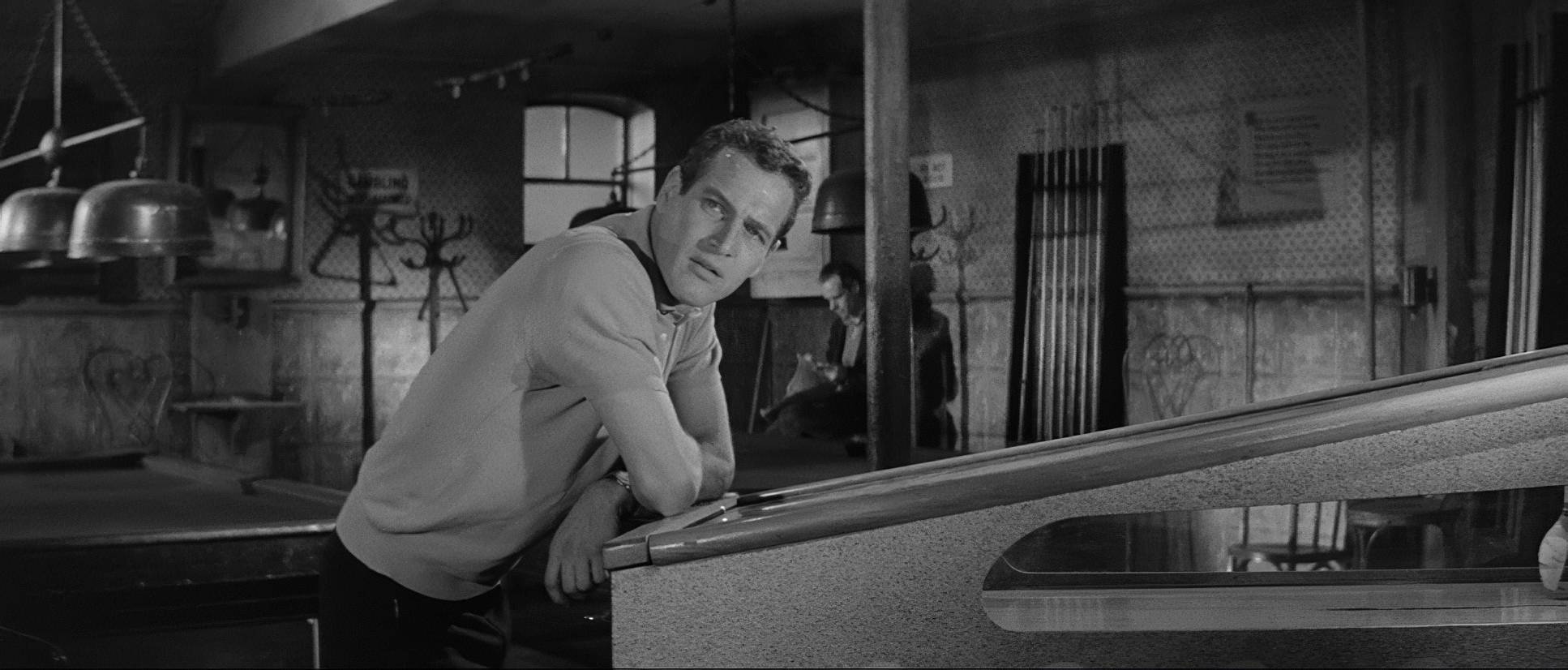
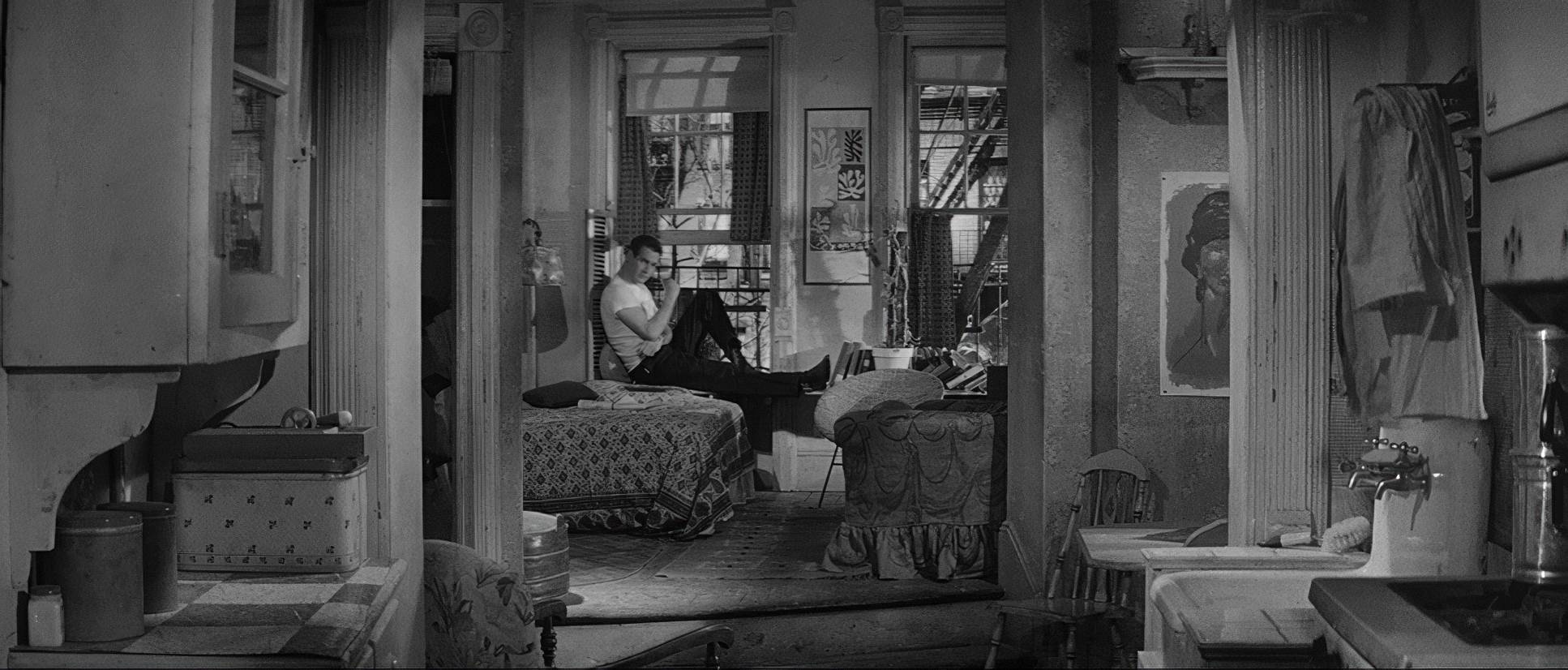
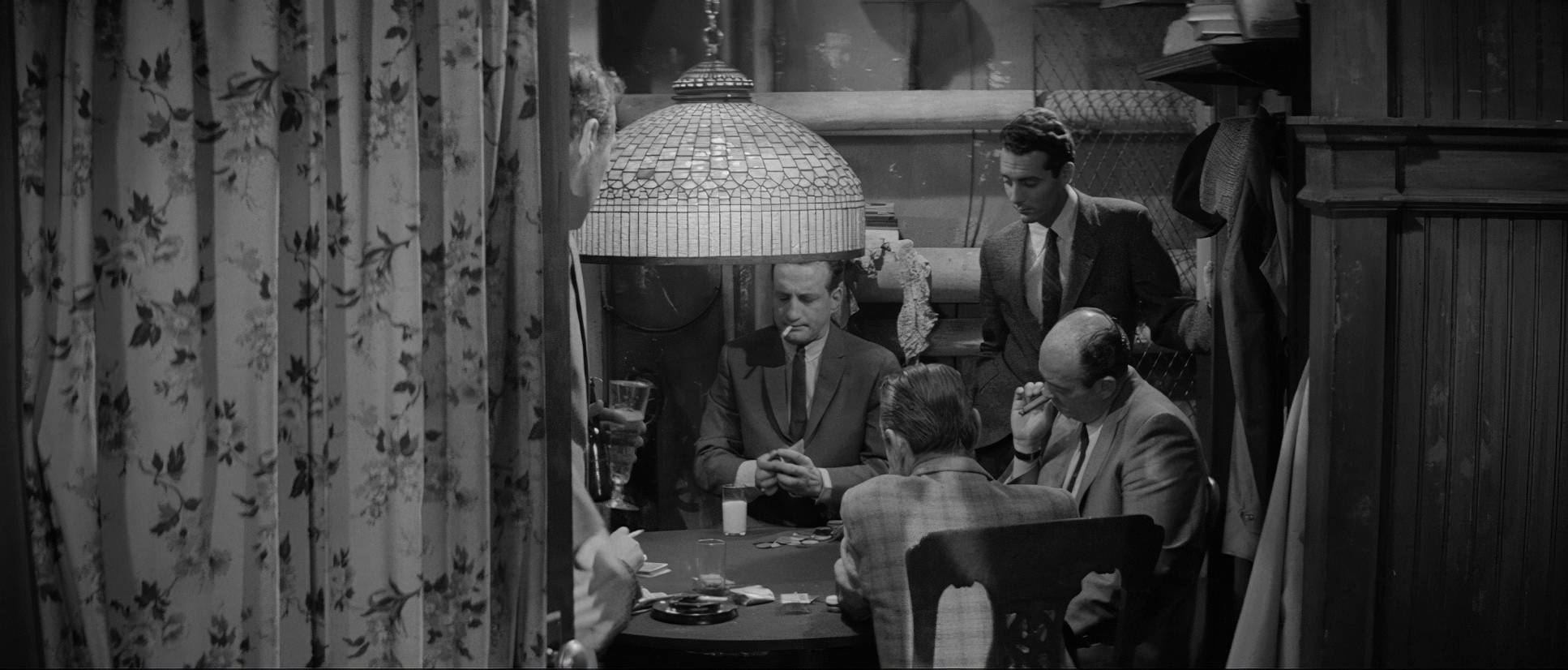
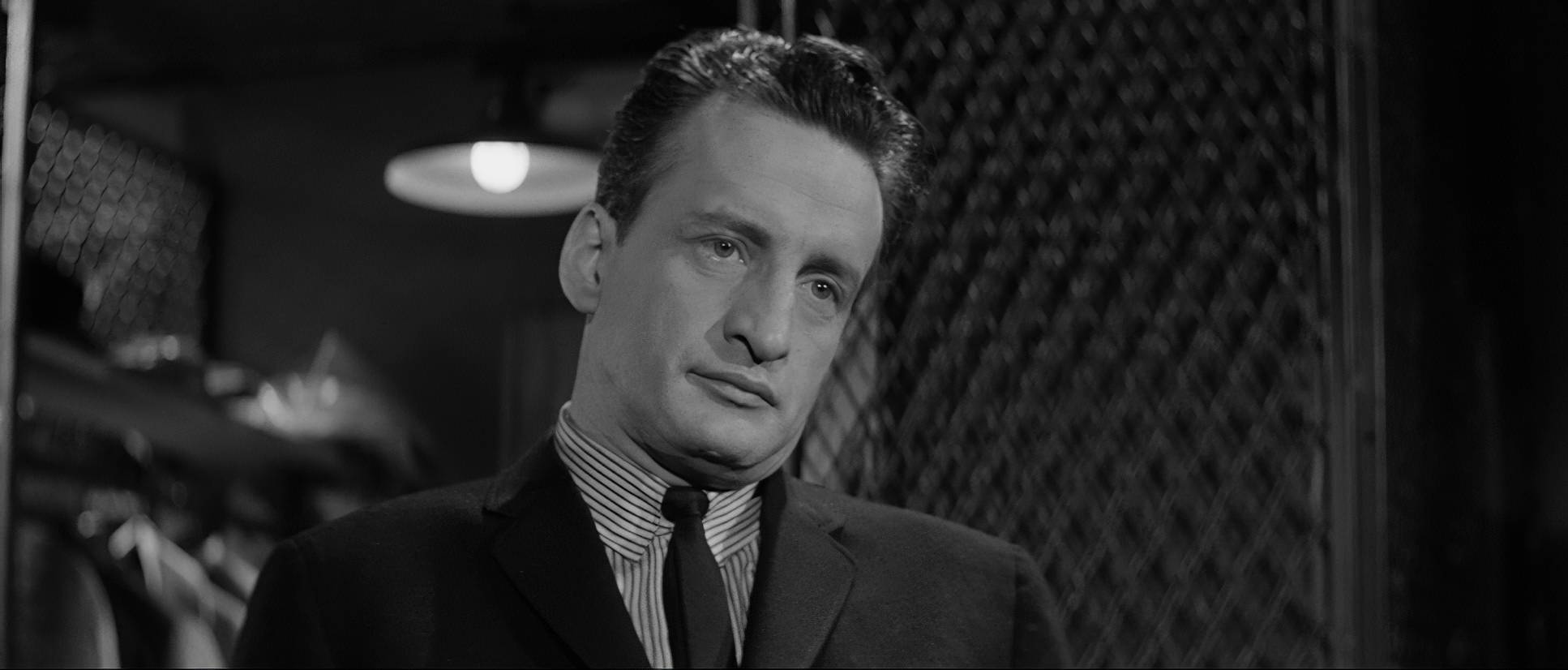
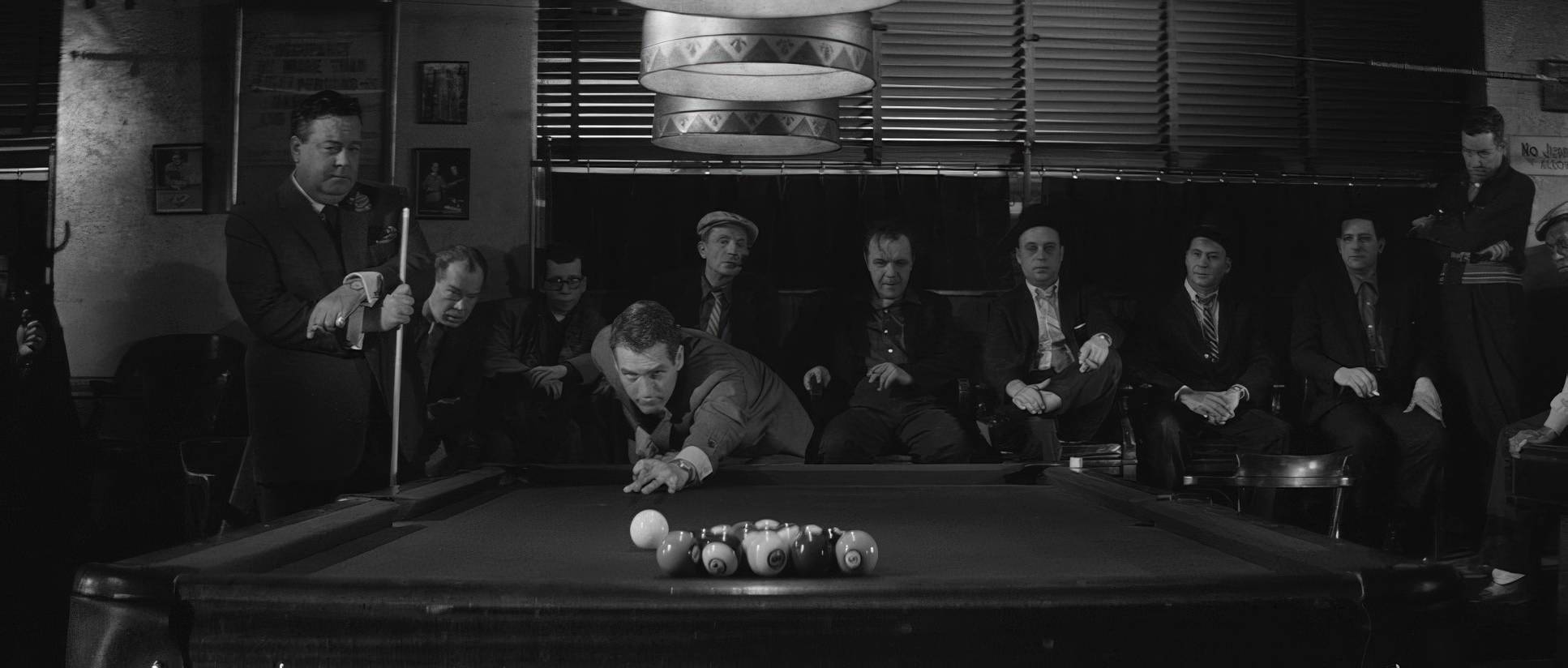
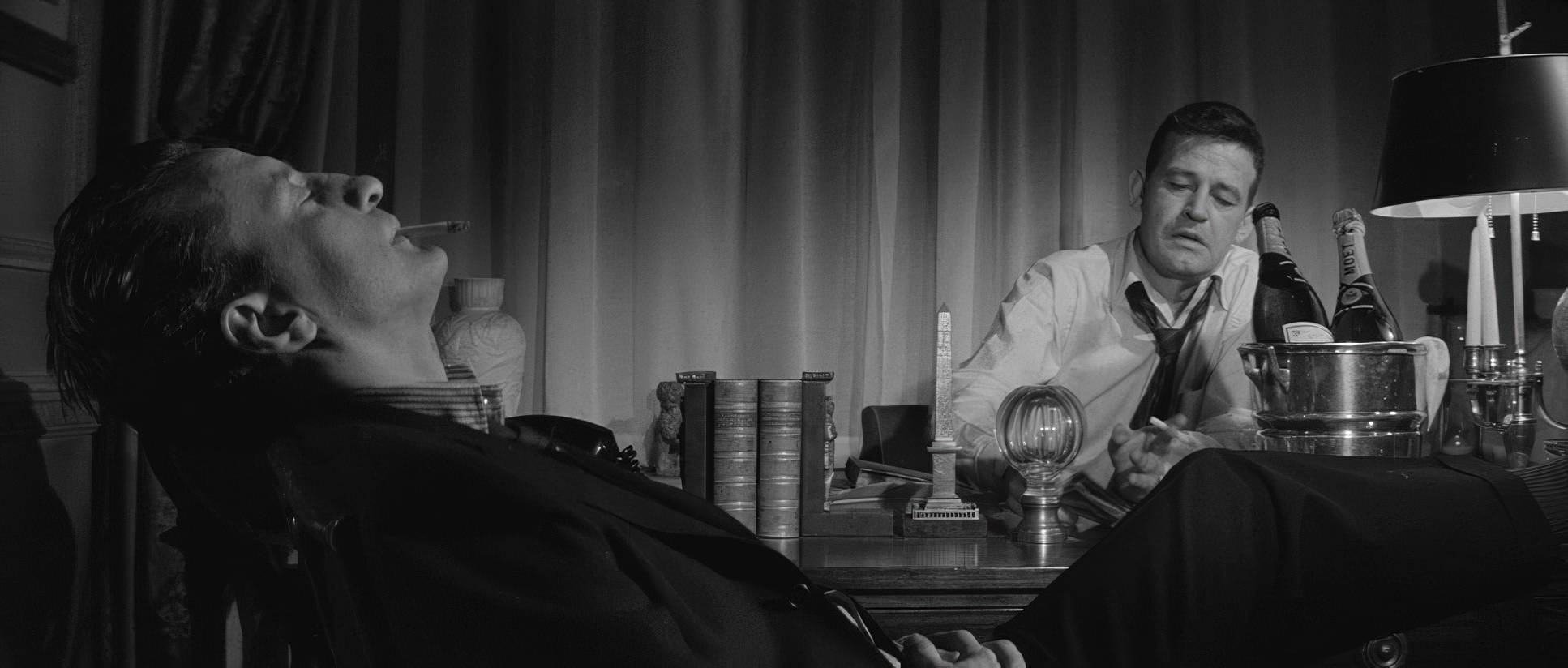
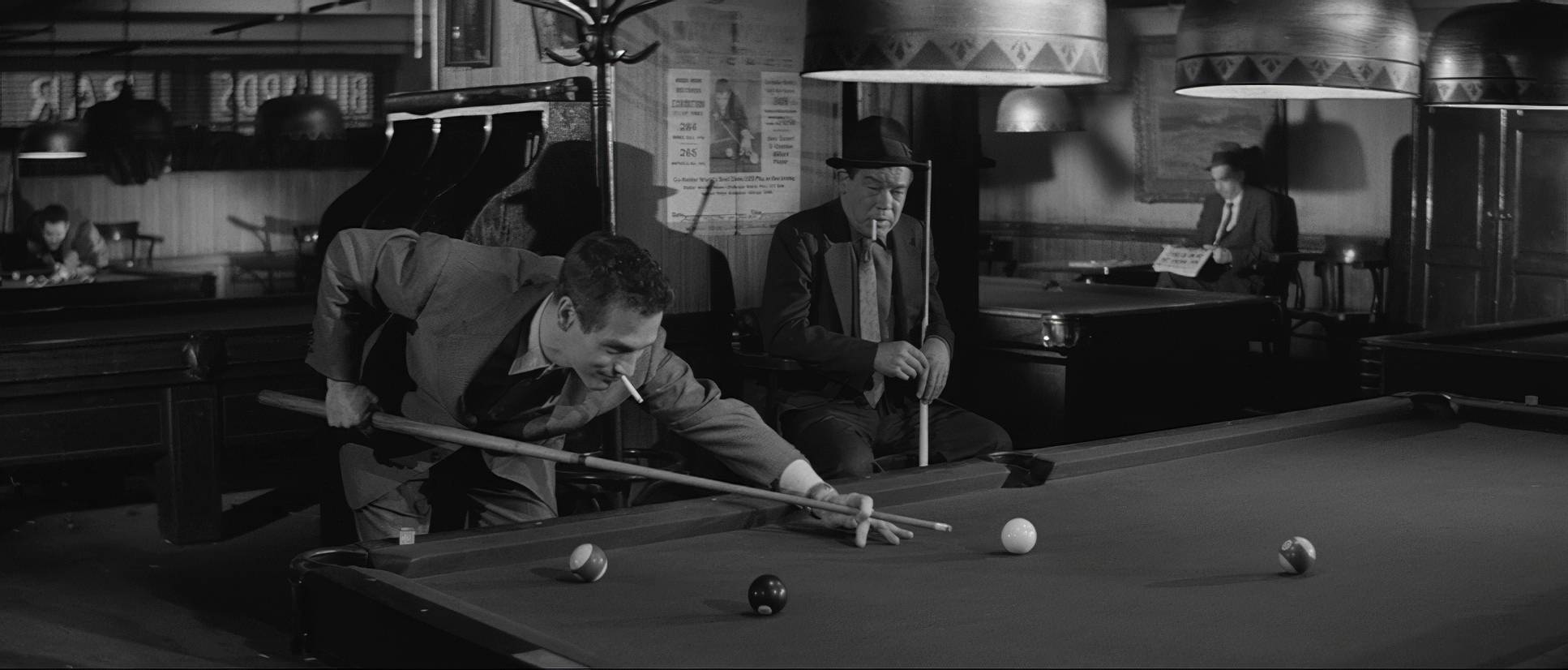
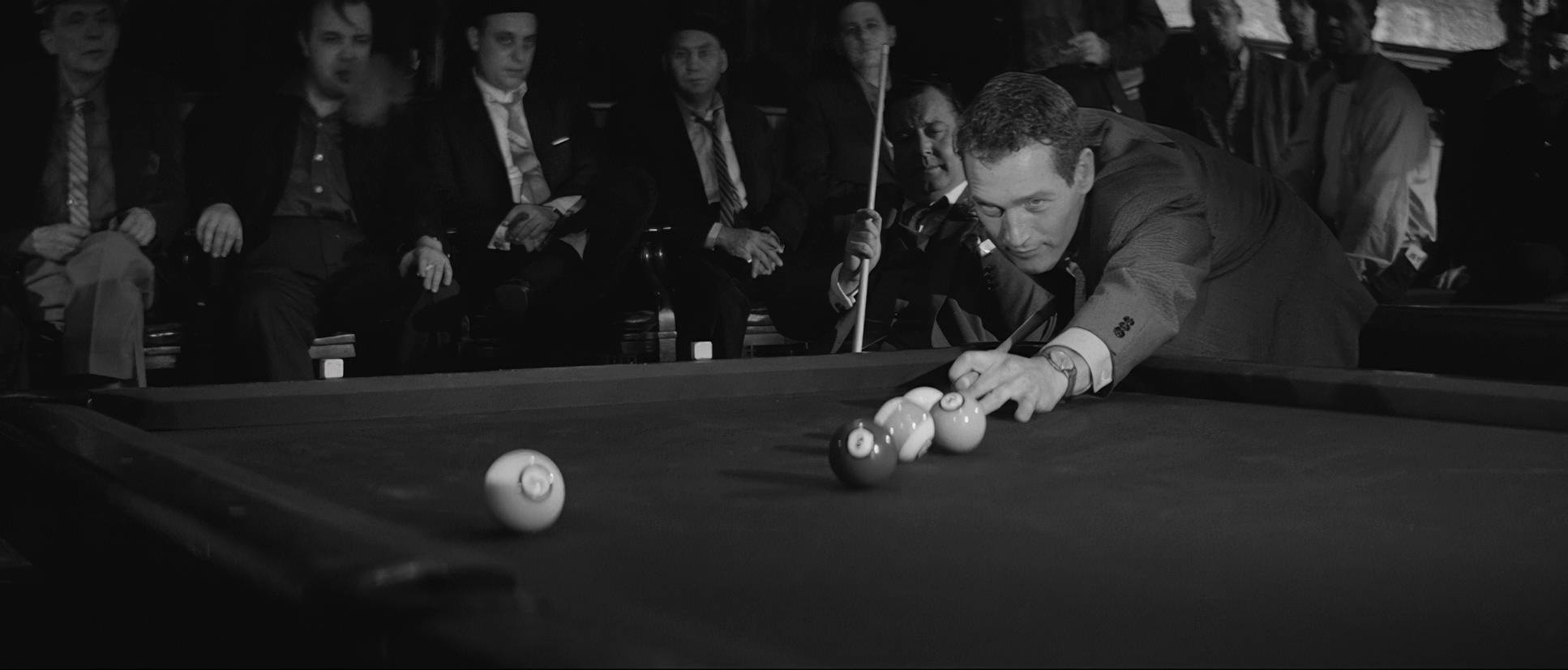
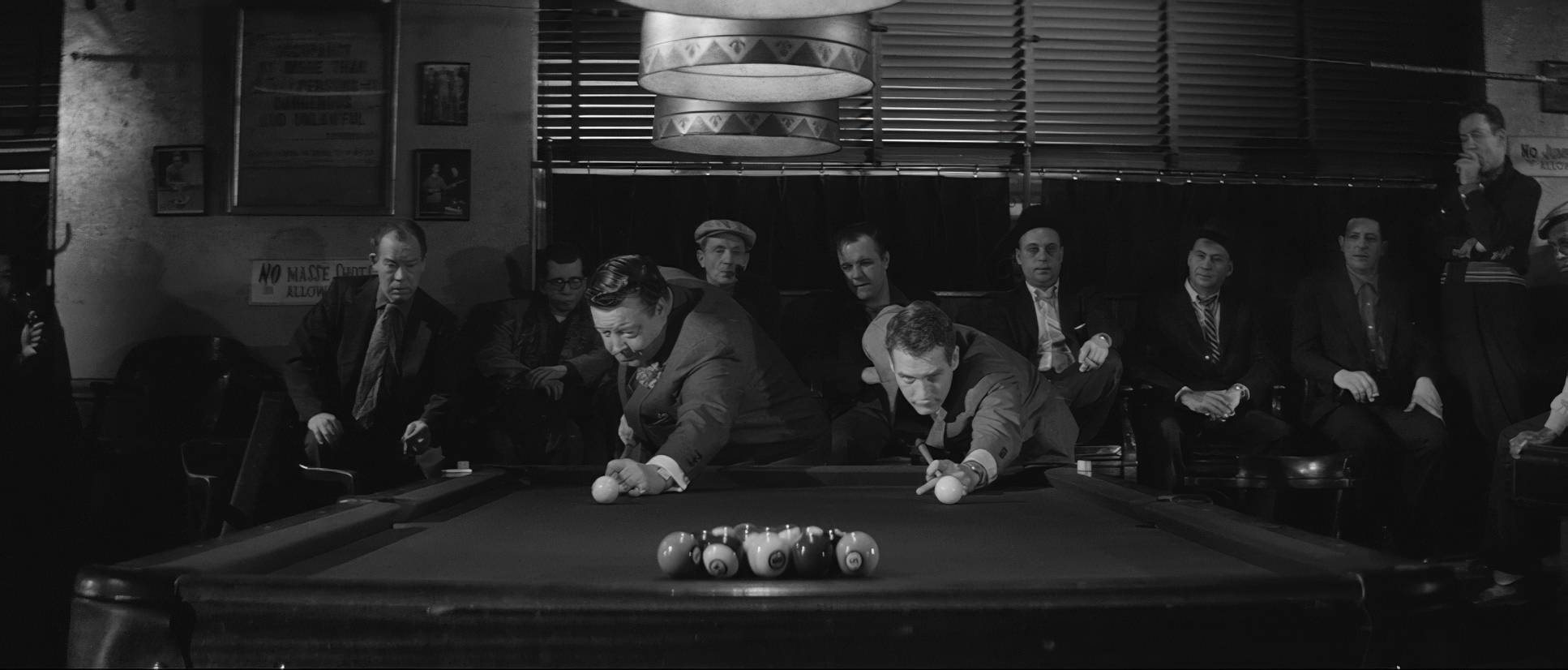
For a colorist, the black-and-white work here is the ultimate masterclass or rather, a manual on how to use light as a weapon. It’s neo-noir realism at its peak. Schüfftan uses “motivated” light the kind that feels like it belongs in the room. Think of those harsh, surgical lamps hanging over the pool tables. They create a world of extremes: brilliant whites on Paul Newman’s shirt and deep, inky blacks in the corners where the losers sit.
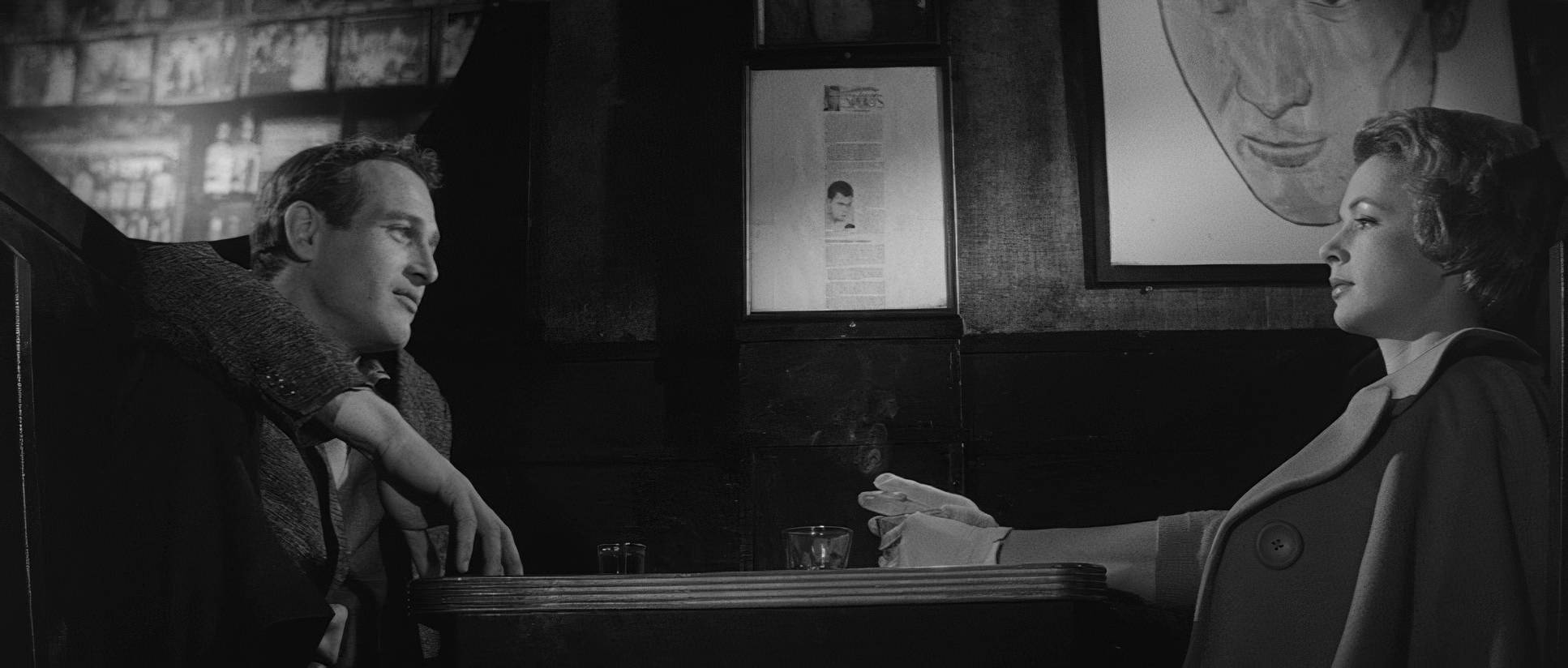
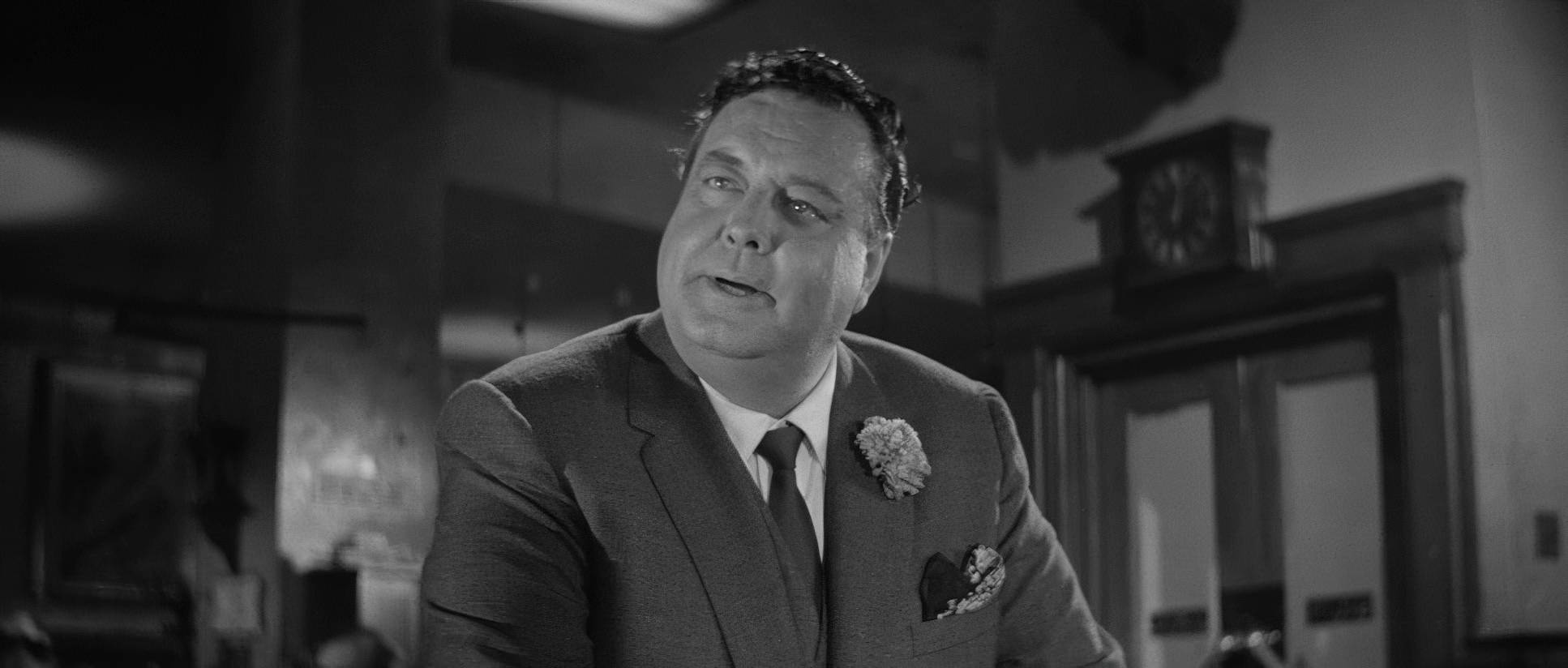
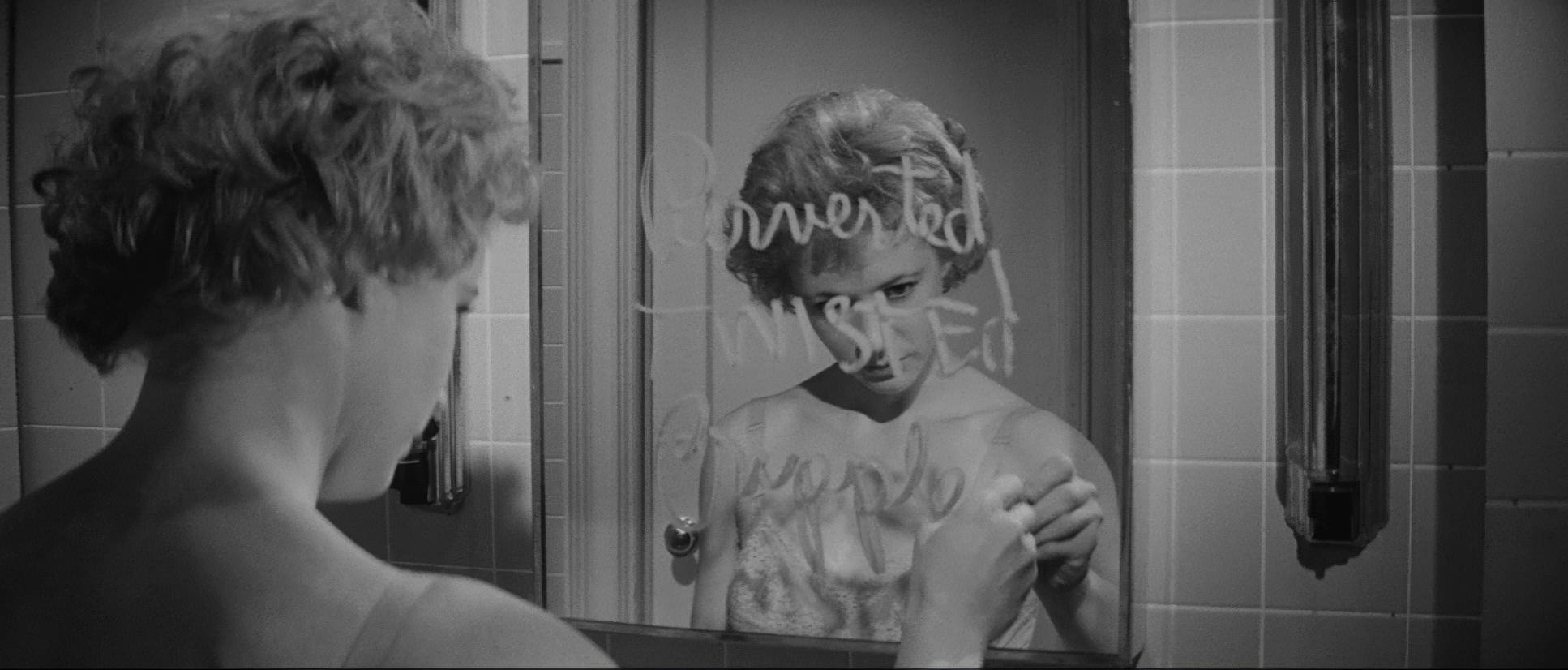
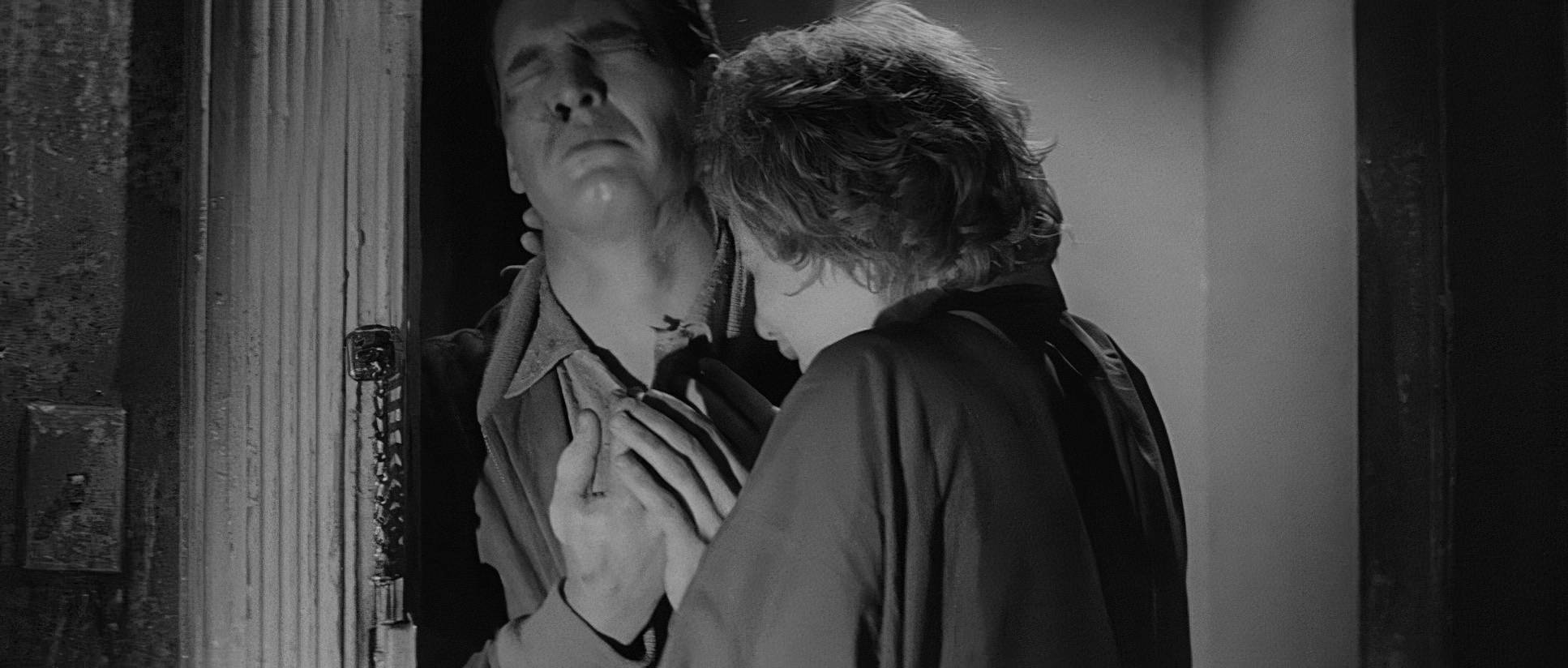
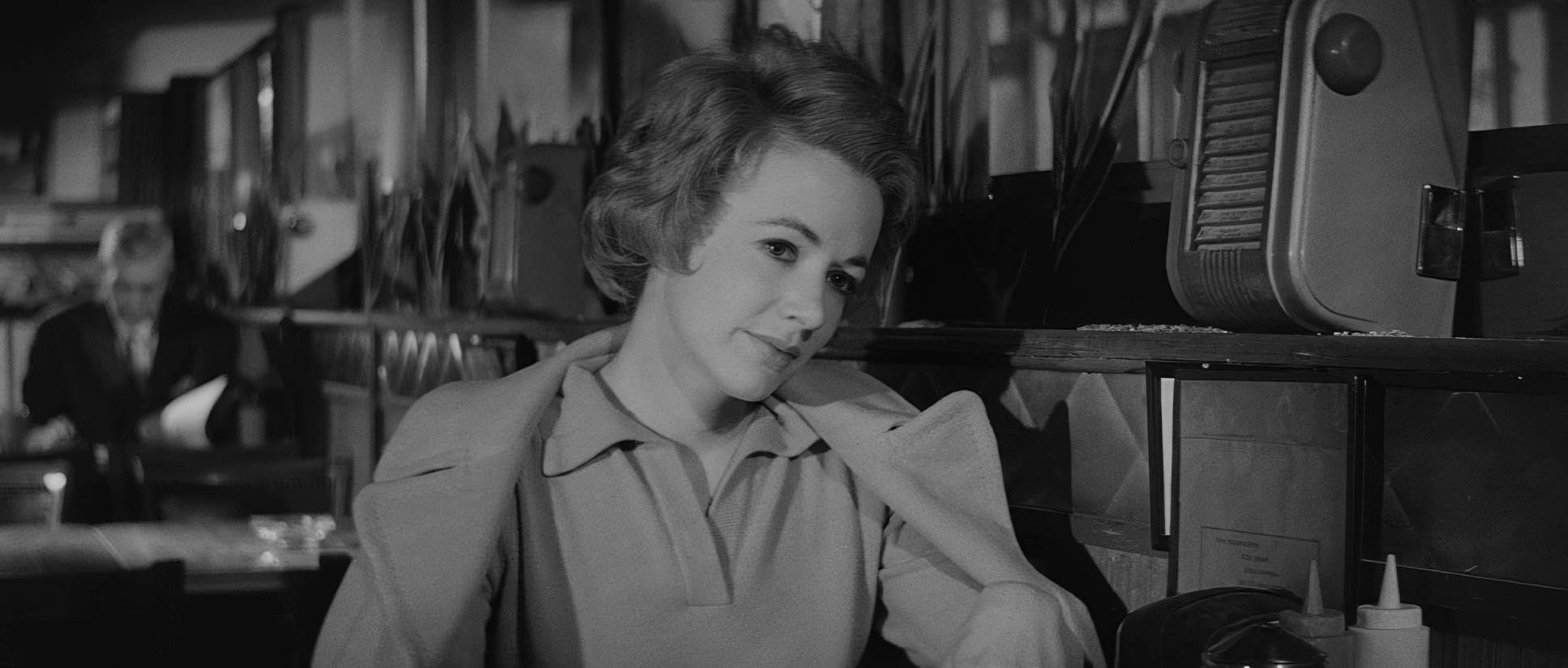
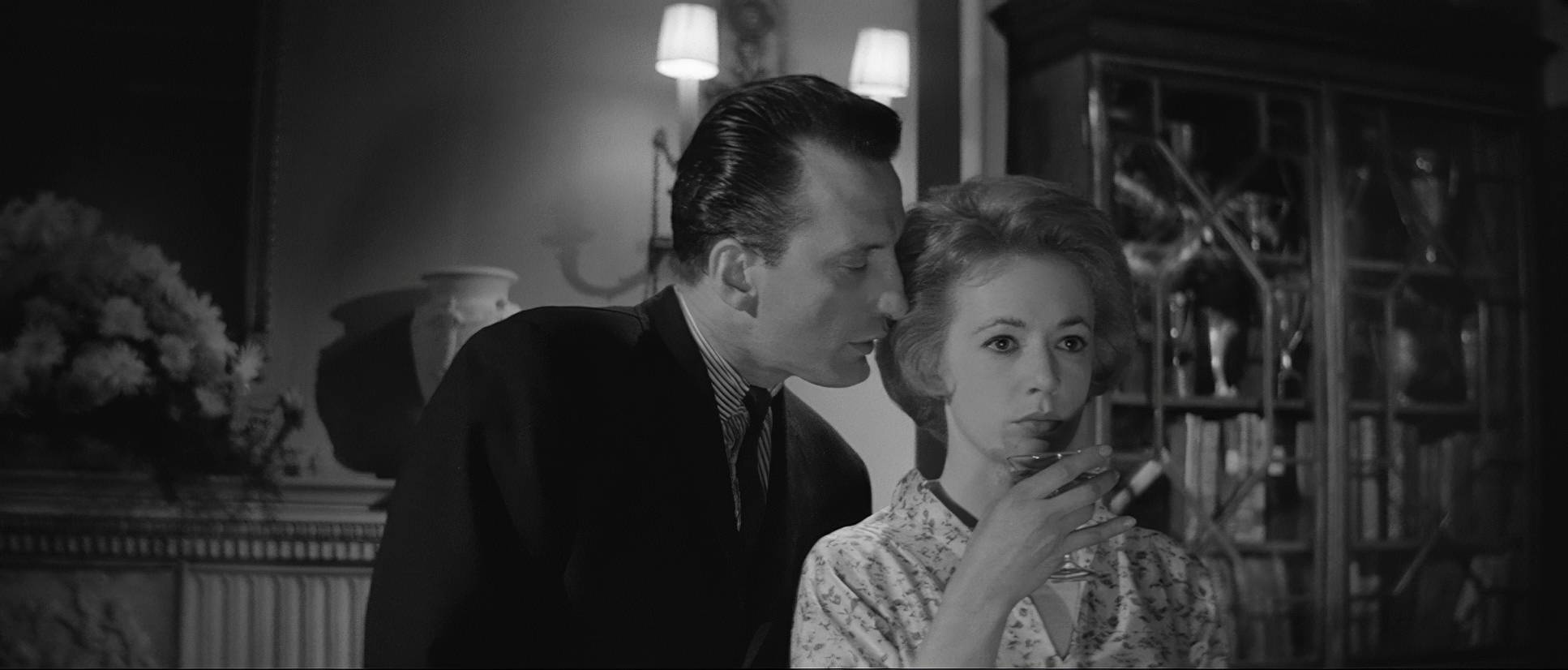
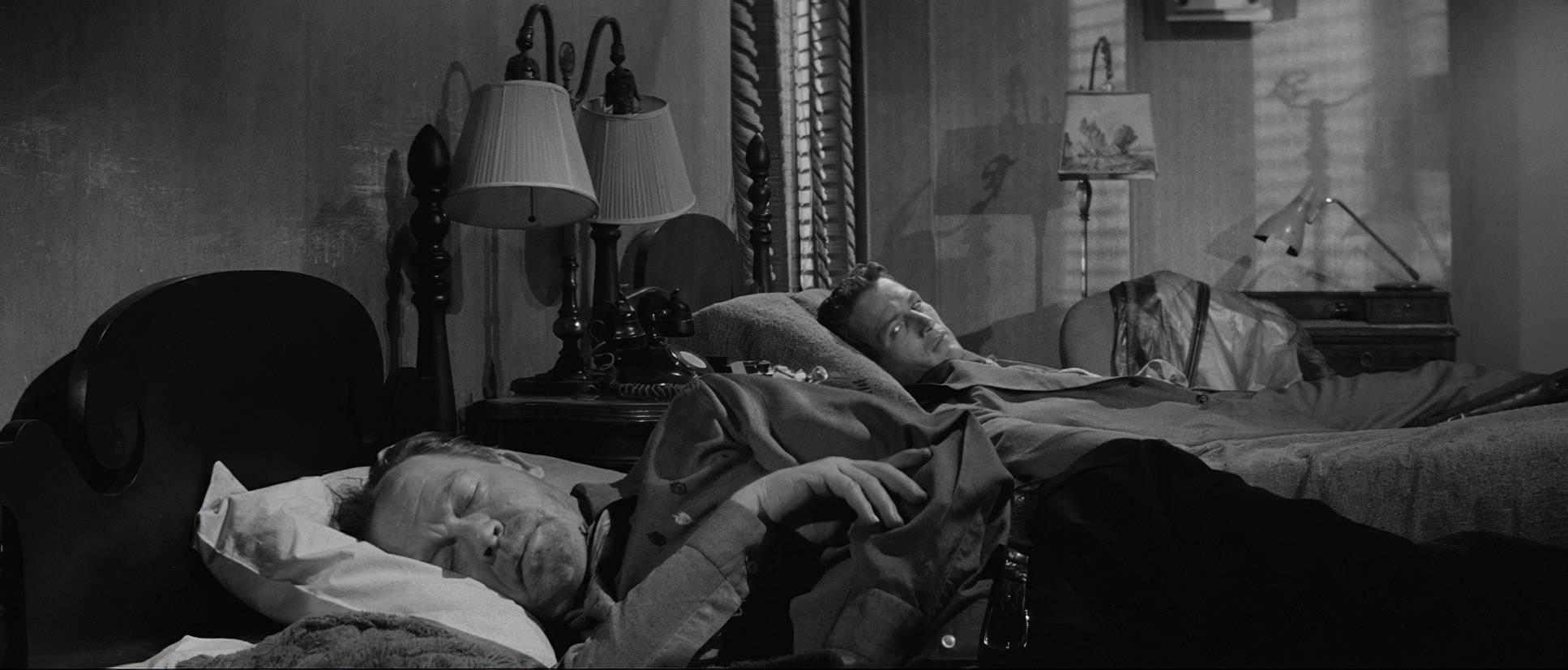
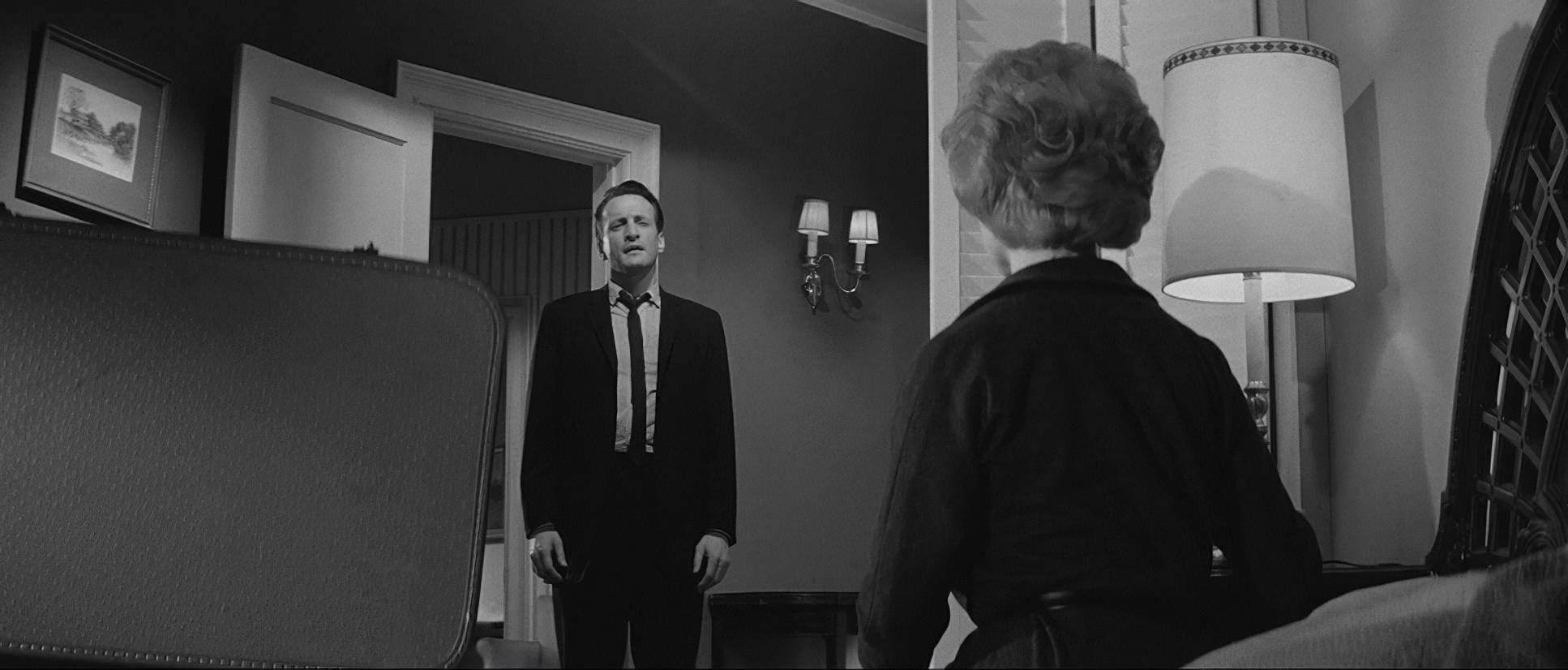
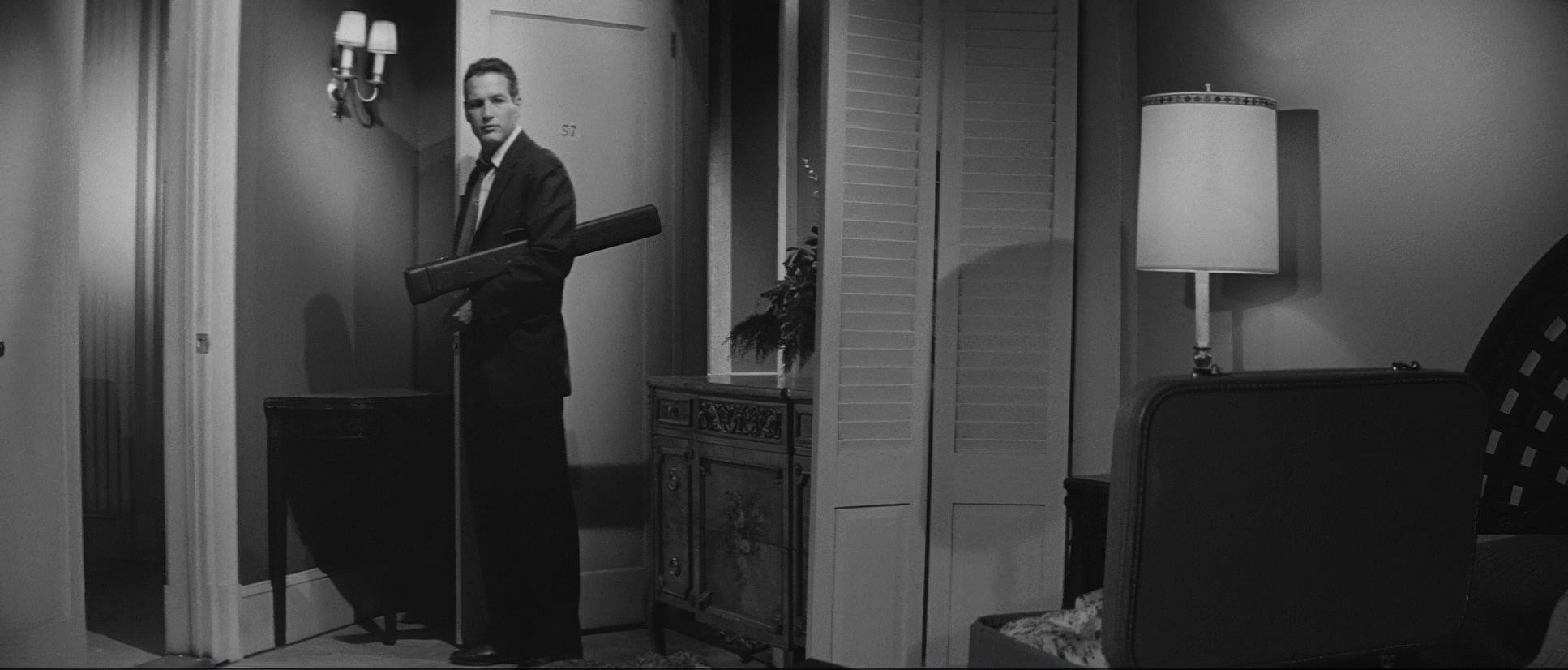
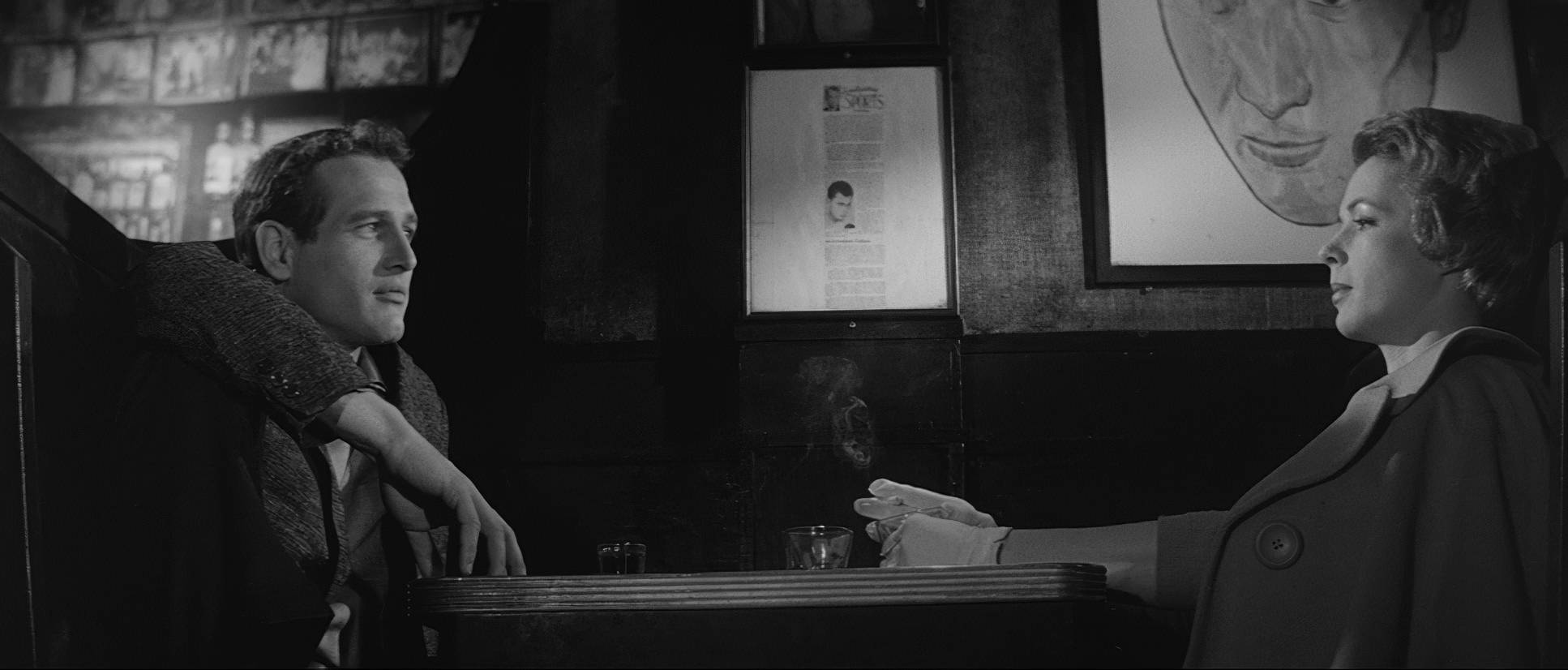
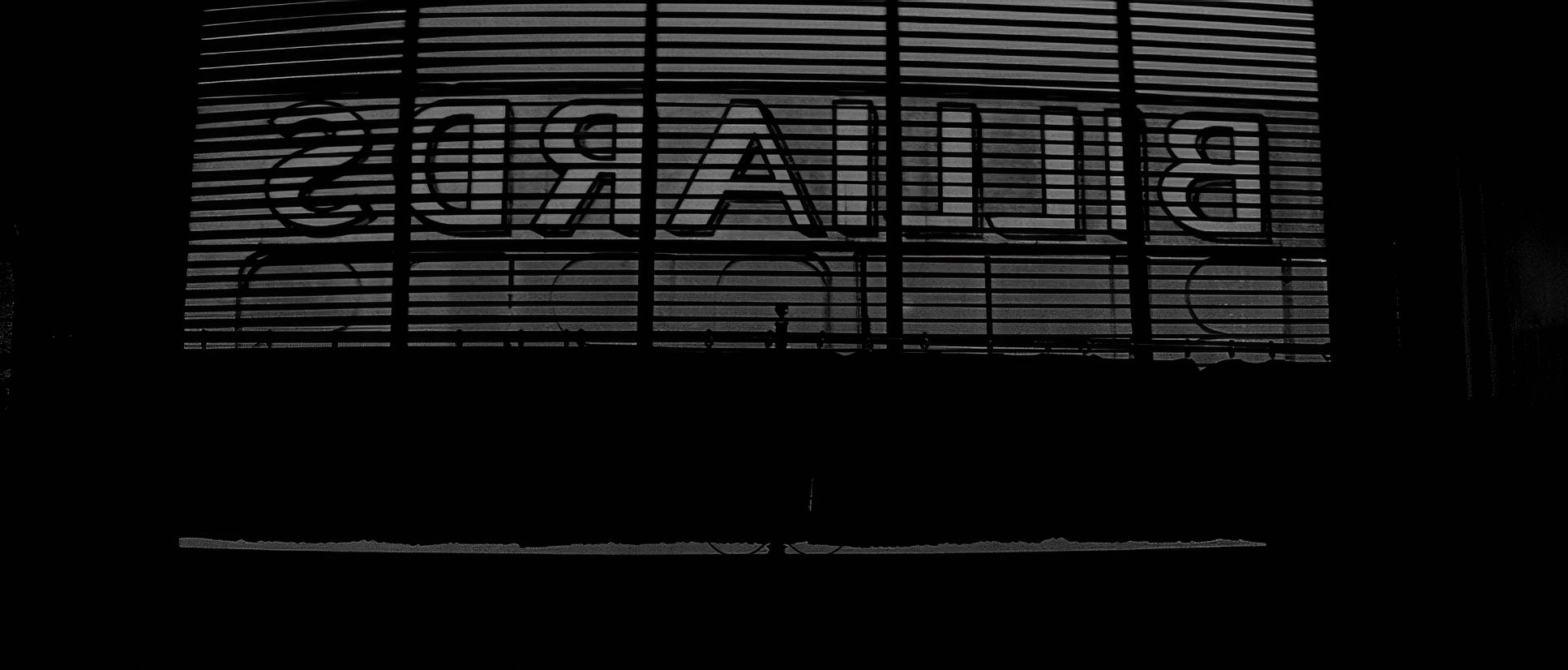
This high-contrast approach does more than look “cool.” It carves the characters out of their environment. In this film, shadows are just as important as the highlights. They hide motives, swallow up doubt, and wrap characters like Sarah in a sense of inevitable despair. It’s tonal sculpting at its finest.
Color Grading Approach
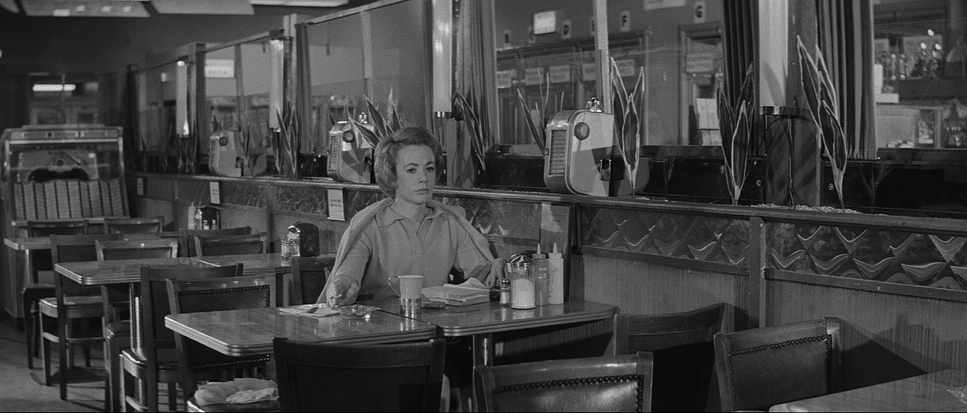
Even though this is a monochromatic film, I find myself “grading” it in my head as I watch. If I were bringing this into a modern suite, I wouldn’t touch the “look,” but I’d be obsessed with the tonal response.
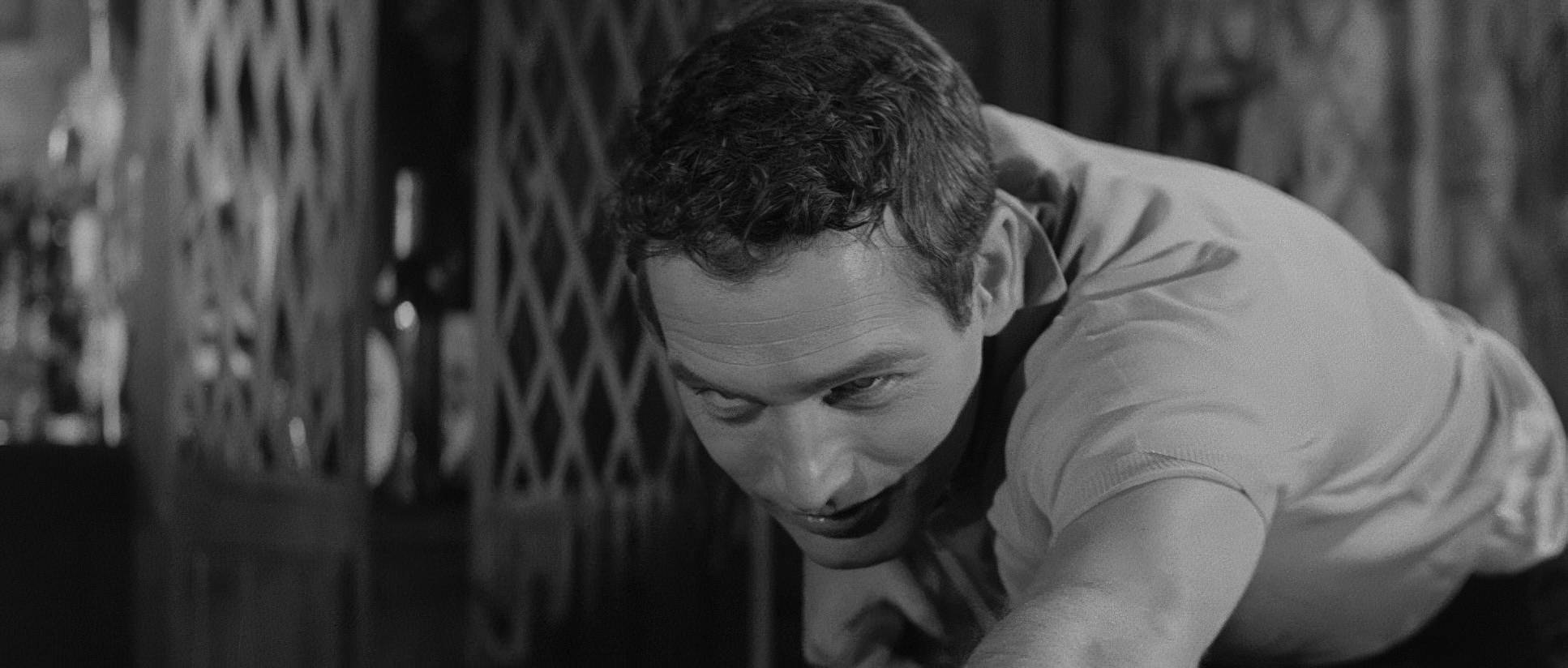
I’d focus on that highlight roll-off ensuring the pool table lamps have a soft, almost glowing quality without blowing out the detail. The goal wouldn’t be to make it “pretty.” It would be to keep that dense, rich mid-tone response that makes a face look like it has history. We’re talking about “print-film” sensibilities: embracing the grain and the organic texture of 35mm. The “depressing” and “relatable” vibes people get from this movie? That’s all in the contrast. It’s about stripping away color to find the raw truth of the human experience.
Compositional Choices
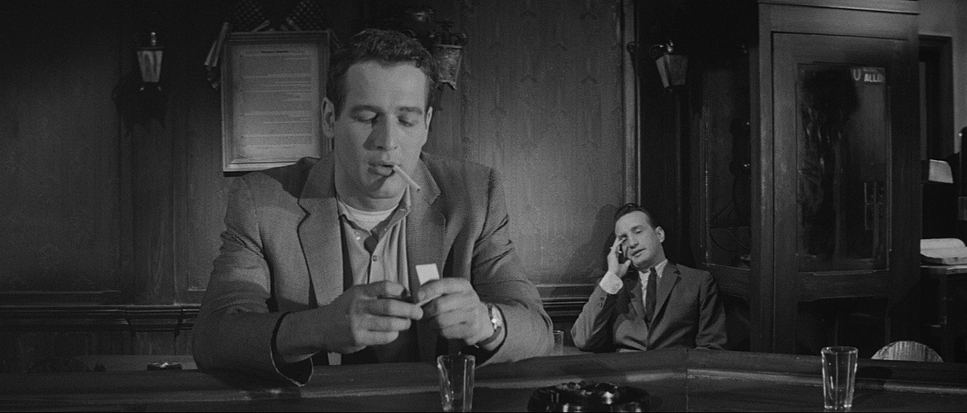
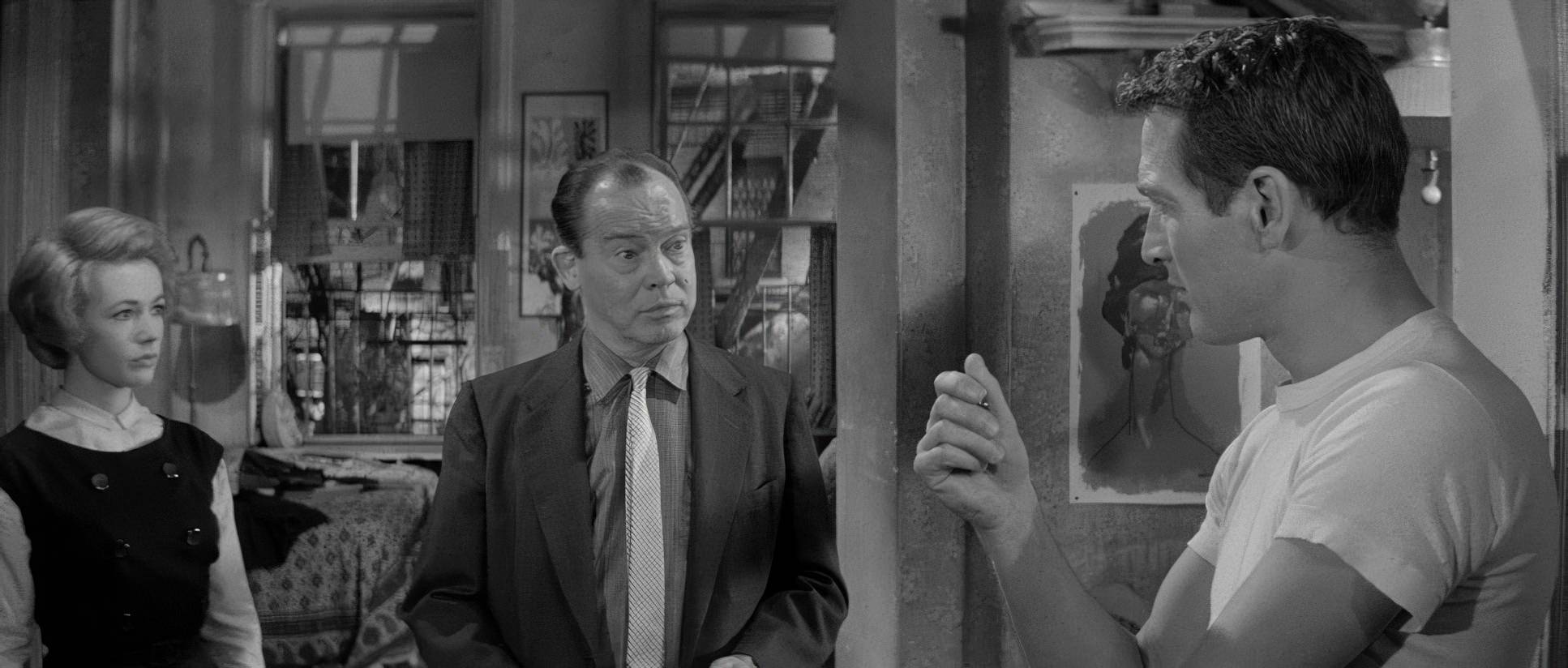
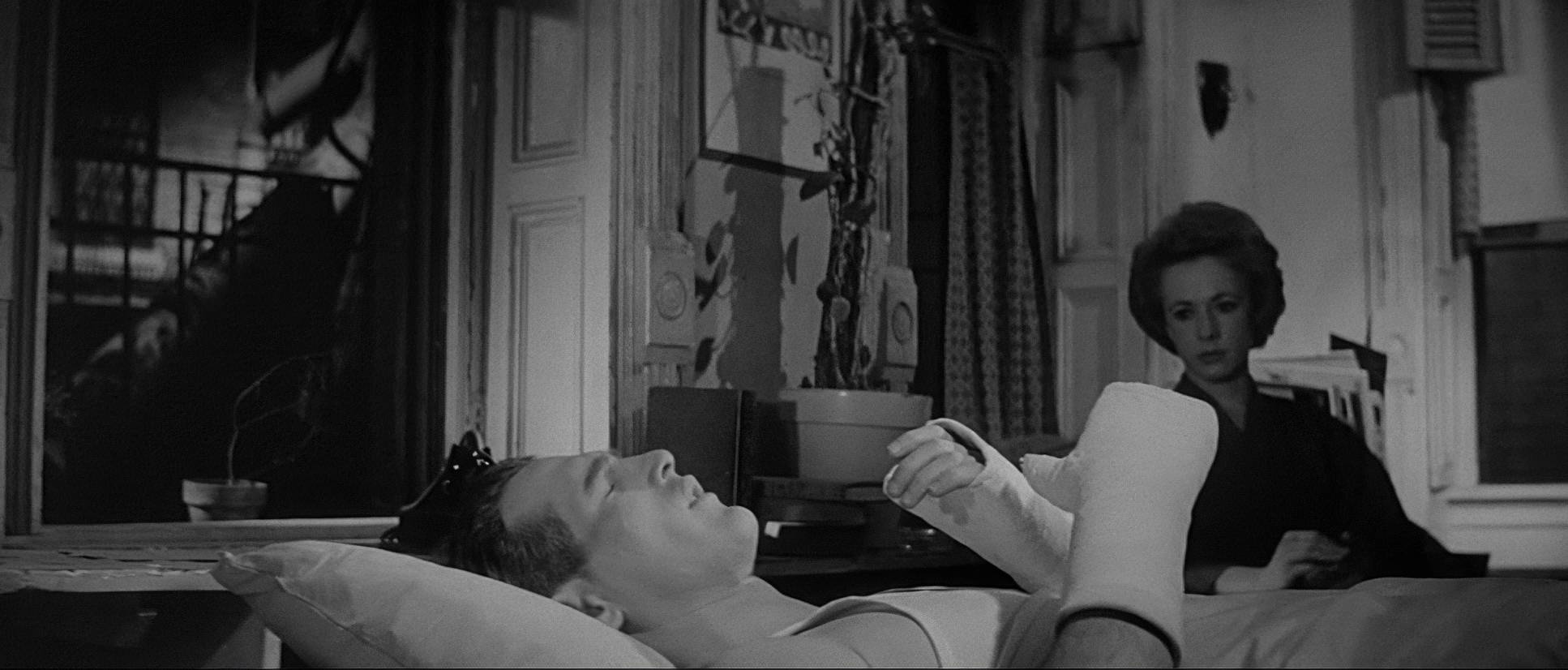
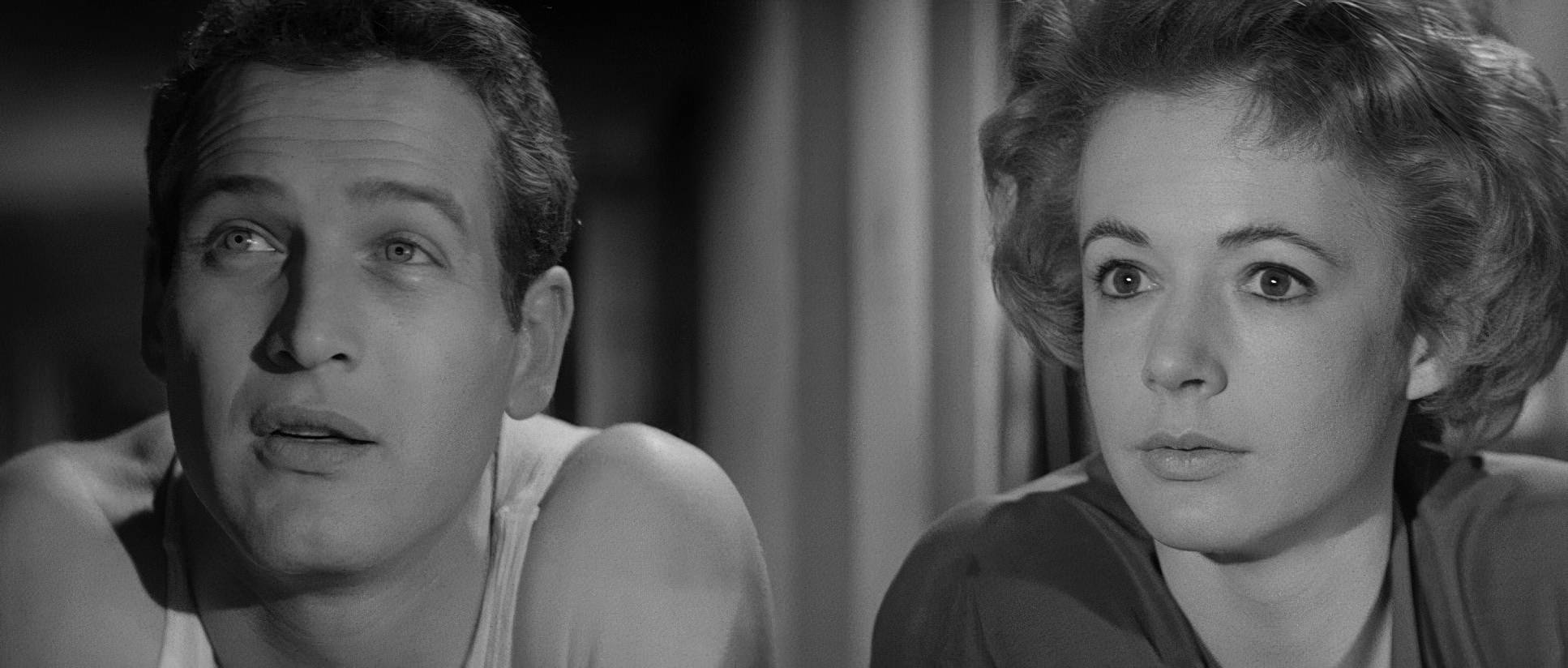
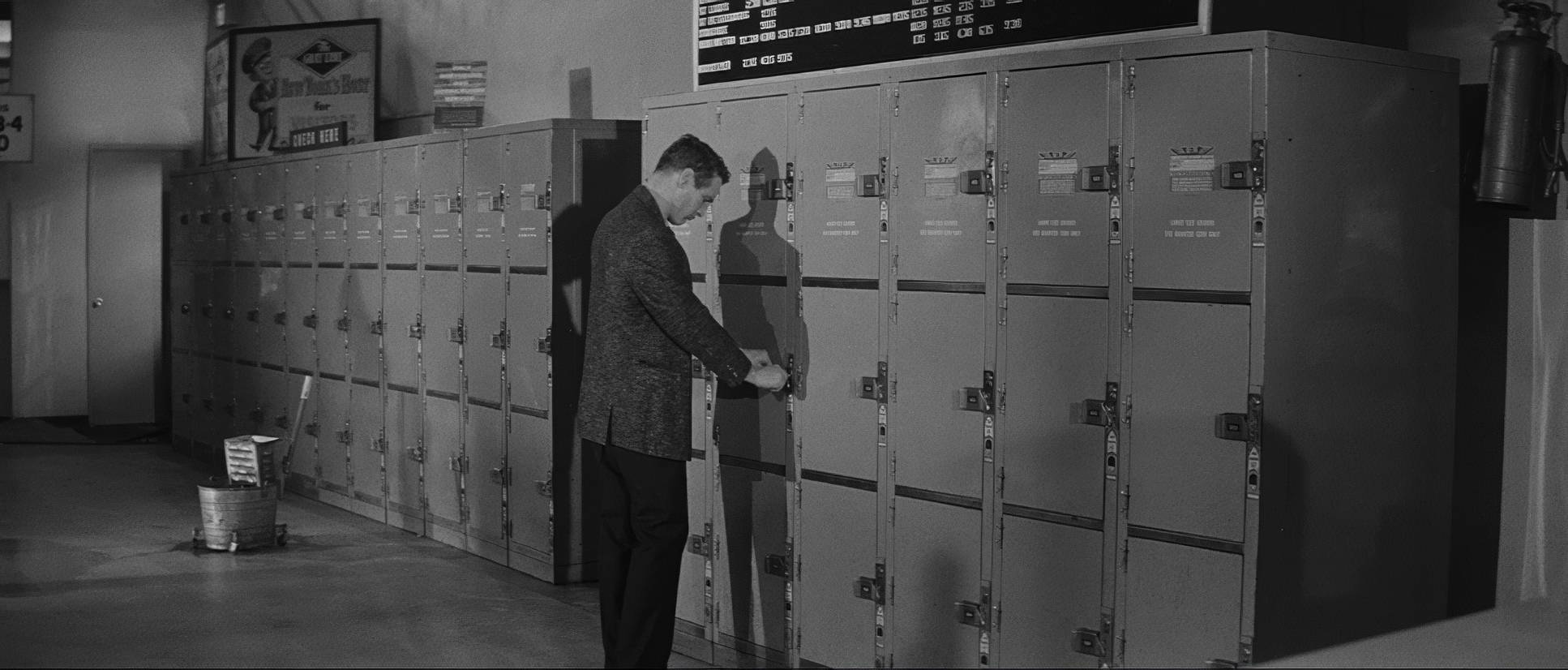
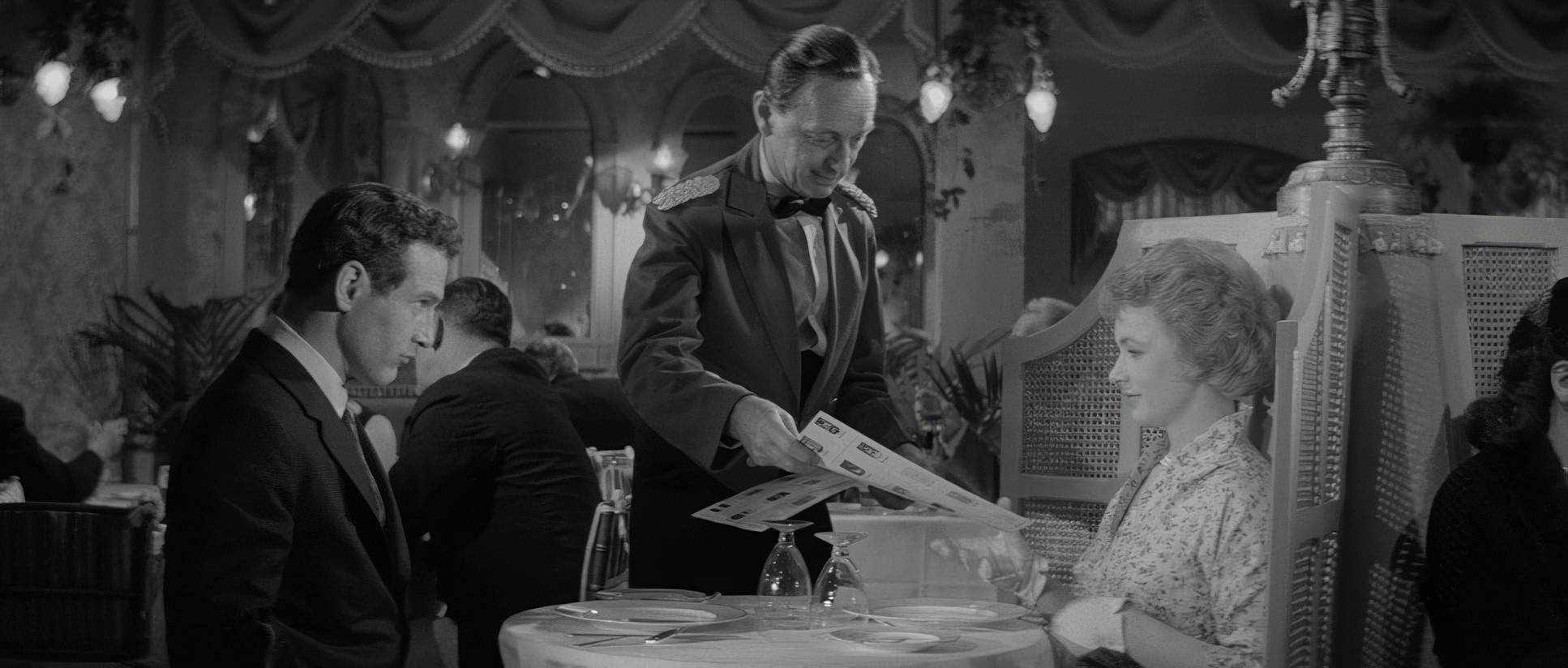
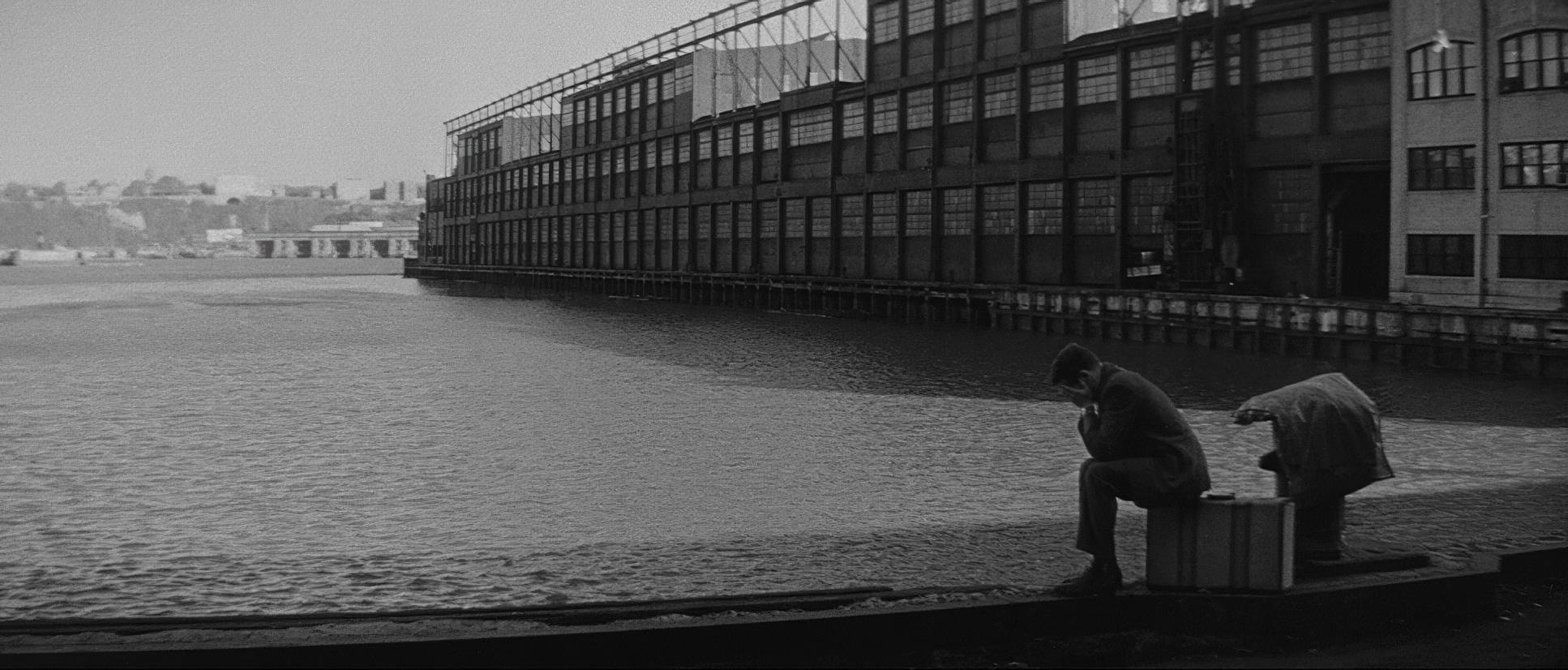
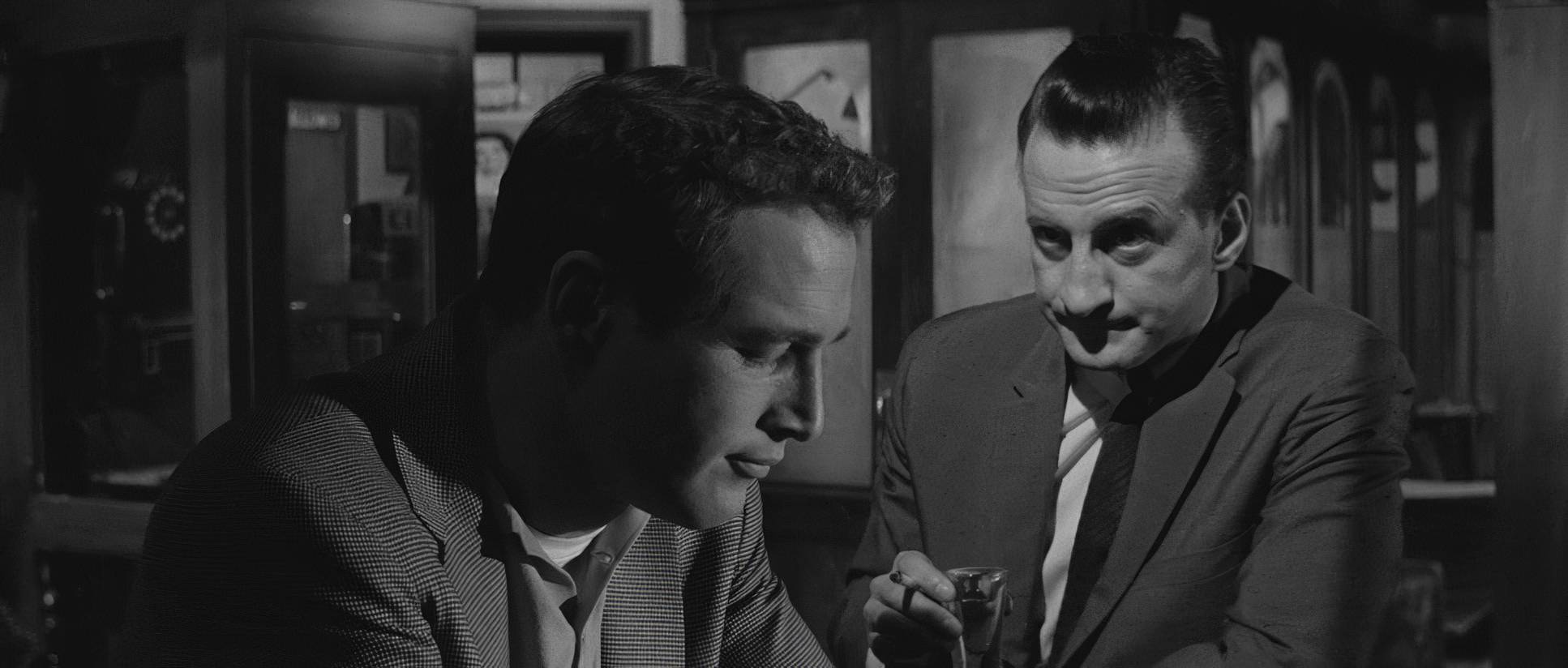
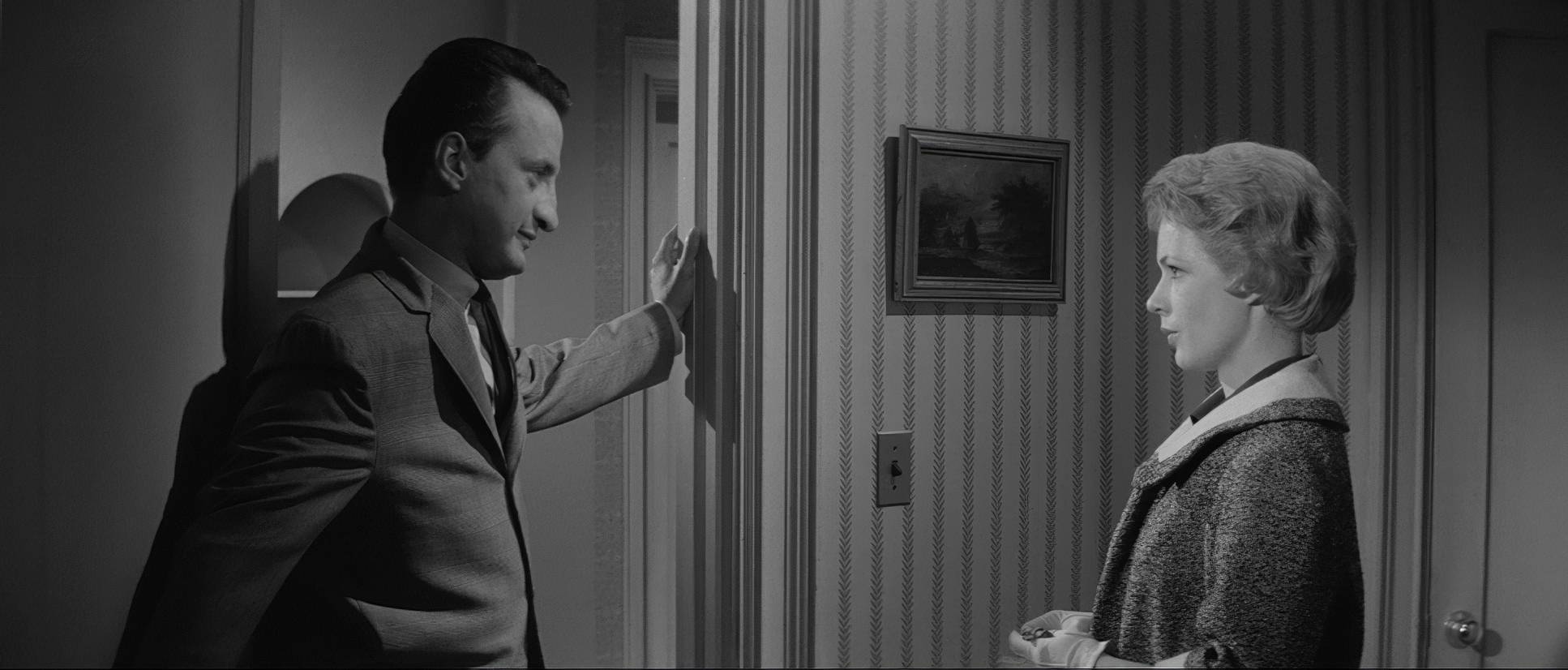
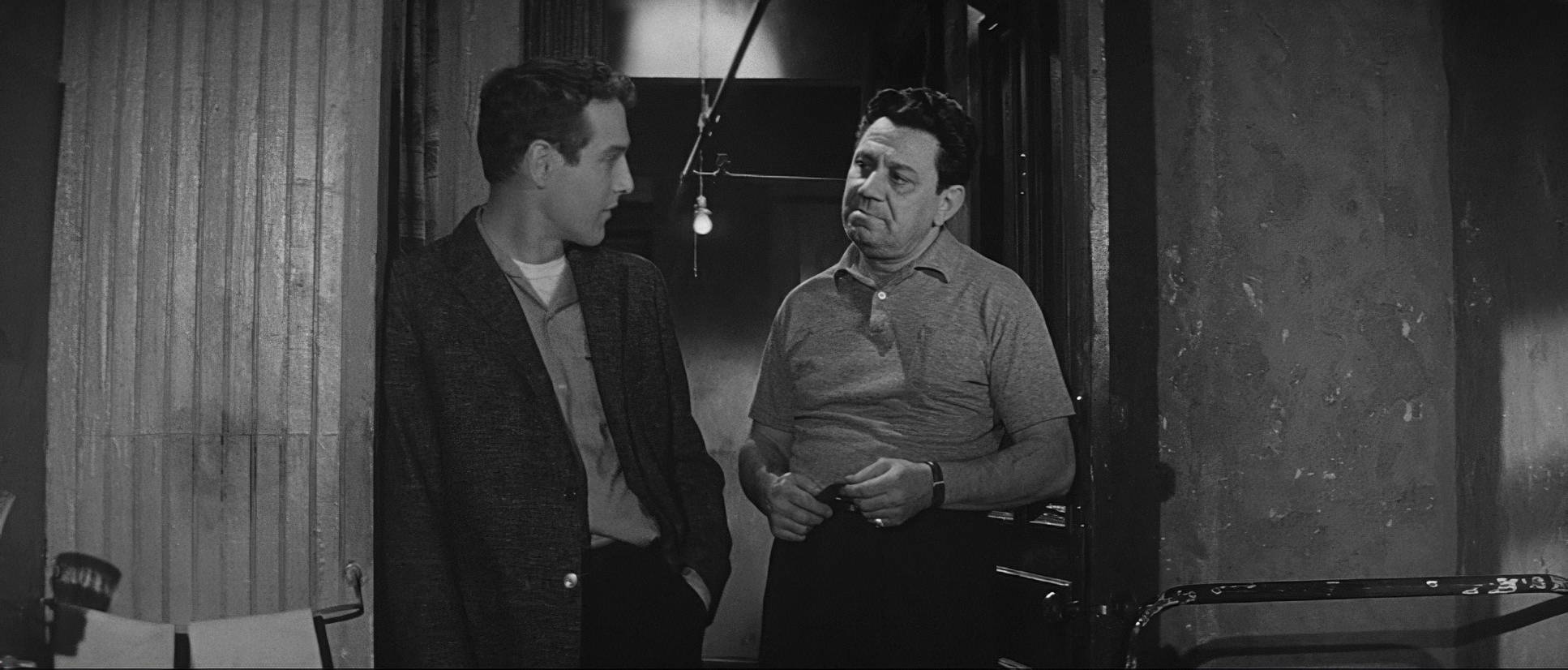
The frames in The Hustler often feel like high-end street photography stark, symmetrical, and incredibly precise. Using CinemaScope wasn’t about showing off grand vistas; it was about isolating people.
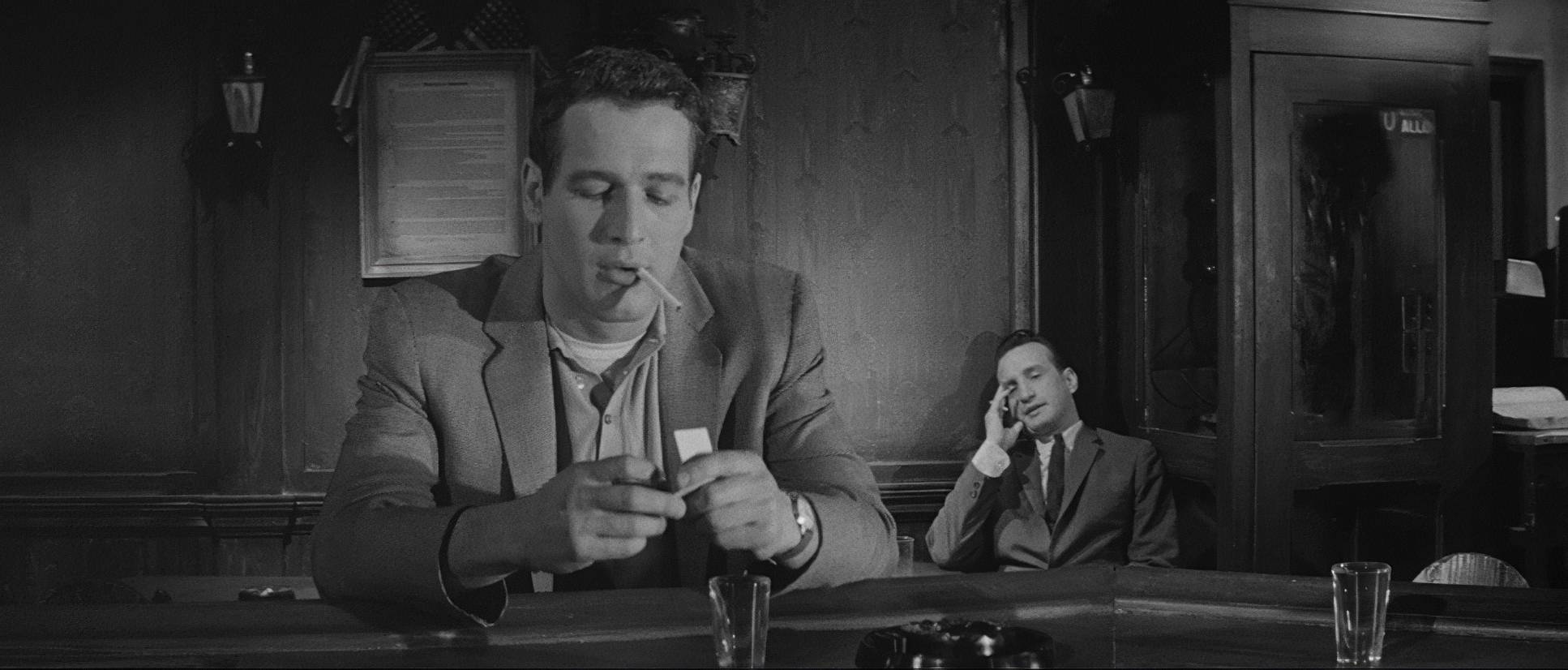
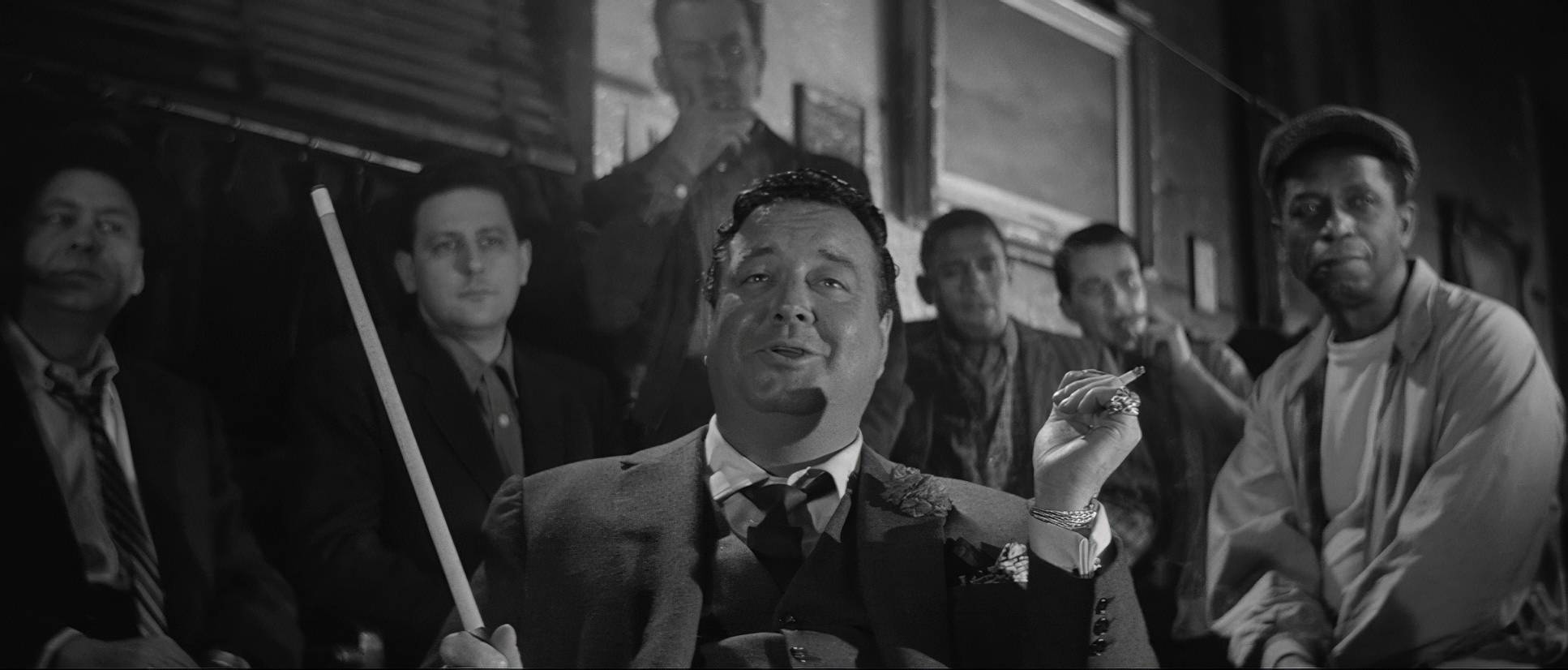
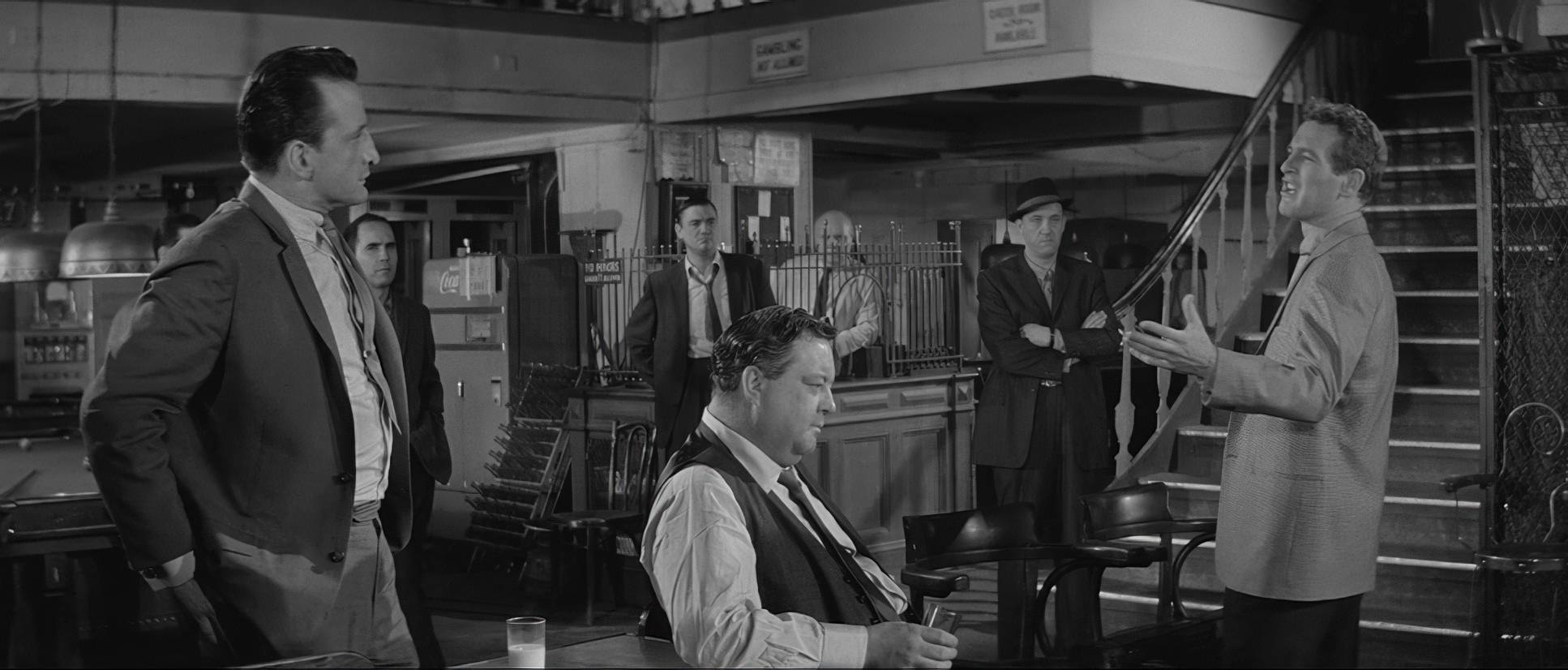
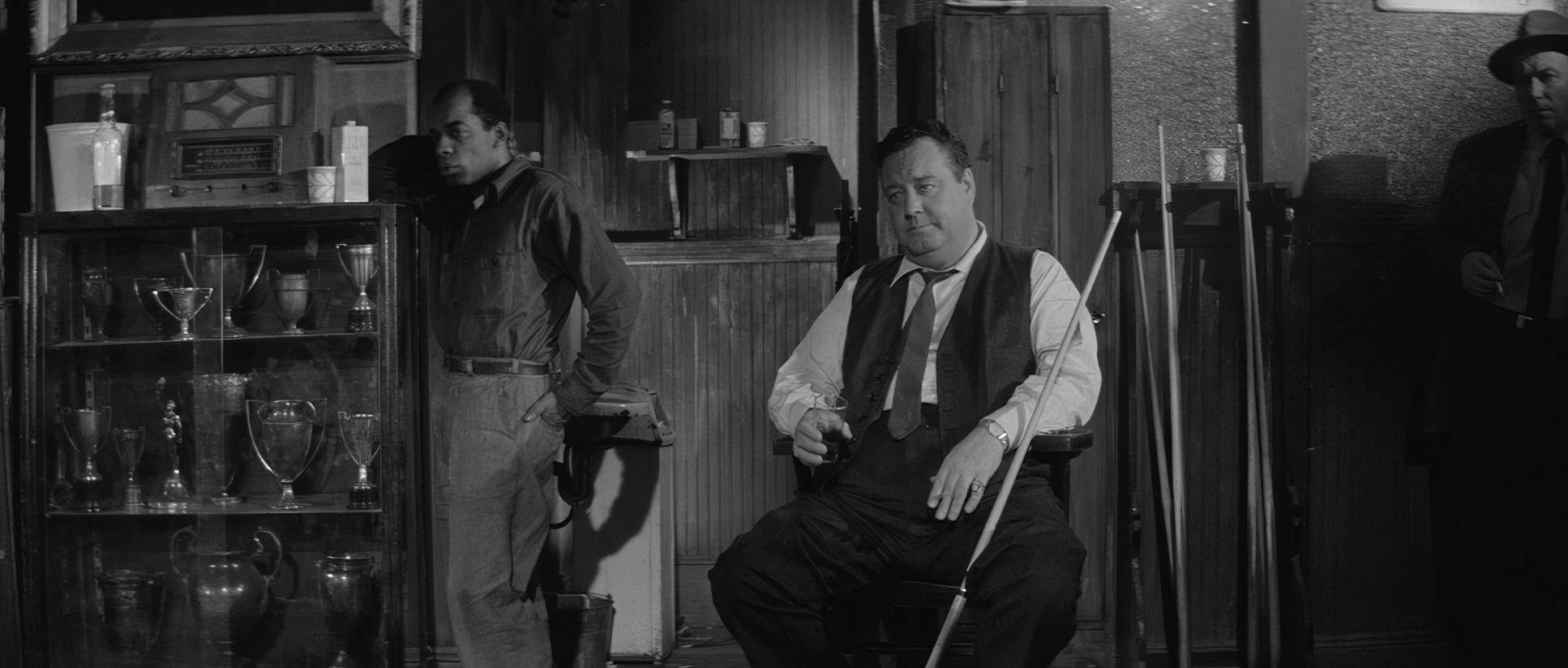
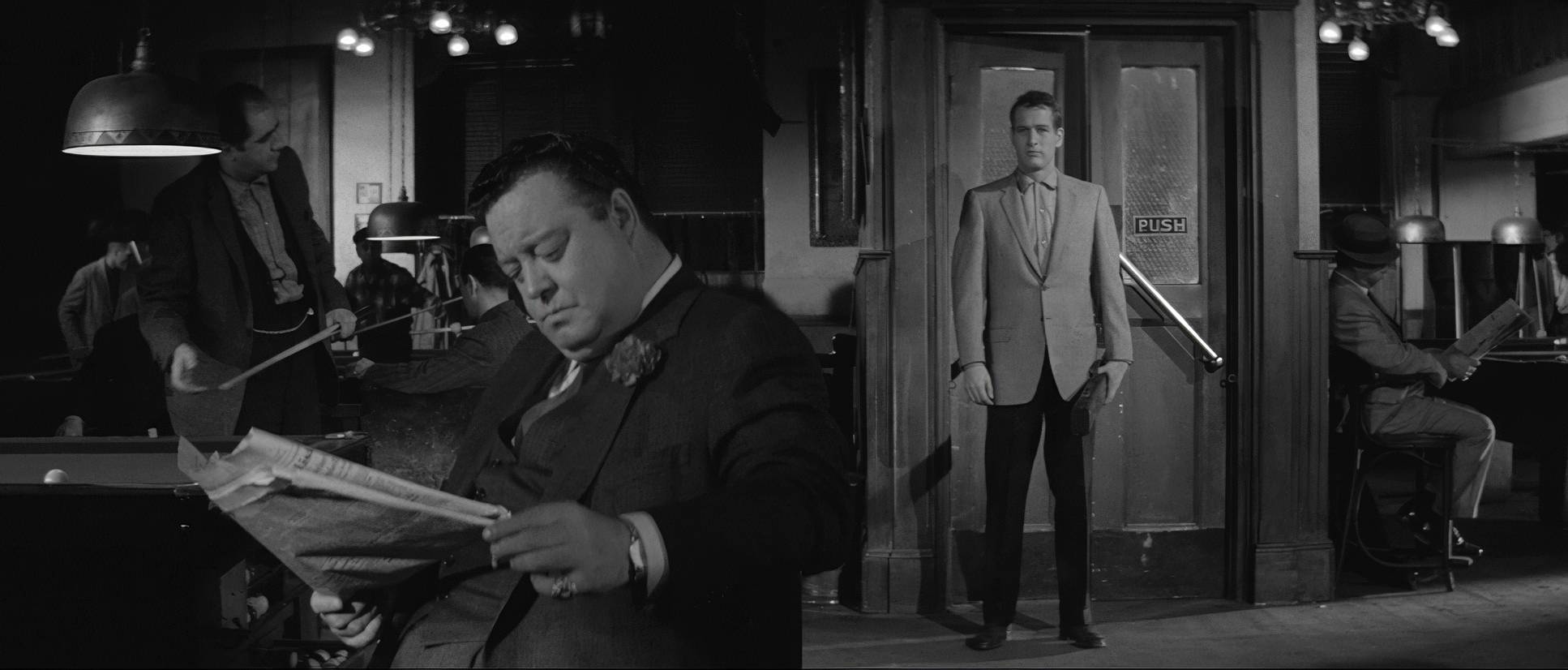
Notice how the camera uses height to dictate power. There’s a specific shot where Paul Newman is framed much lower than George C. Scott. Without a single word, you know exactly who holds the power in that room. It’s a visceral visual metaphor. Whether it’s Eddie dwarfed by a massive pool hall or a tight, suffocating close-up, the compositions are never accidental. They are psychological snapshots.
Camera Movements
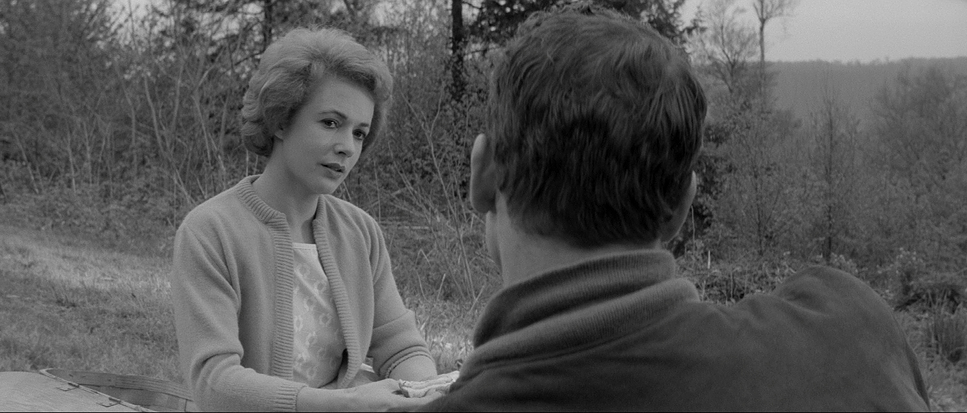
One thing I love about this film is its restraint. In an era where we see twenty cuts a minute, The Hustler trusts the frame. It lets the scenes breathe. The camera moves with a quiet, almost predatory grace a slow pan to follow a gaze, or a subtle push-in when a character is at their most vulnerable.
These aren’t “look at me” crane shots. They are motivated movements. When the camera finally does move, it carries weight. It forces you to read the body language and the unspoken tension in the room. It’s the difference between being a showman and being an empathetic observer.
Lensing and Blocking

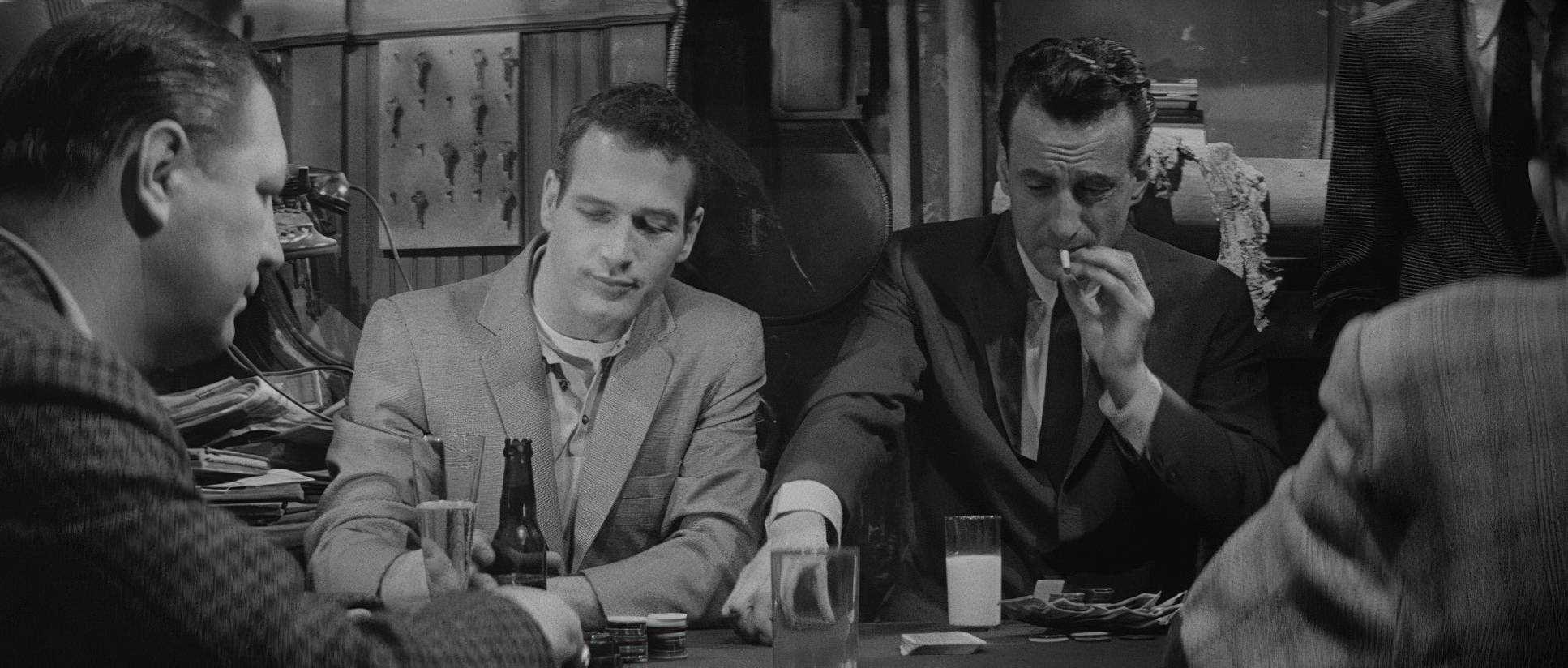
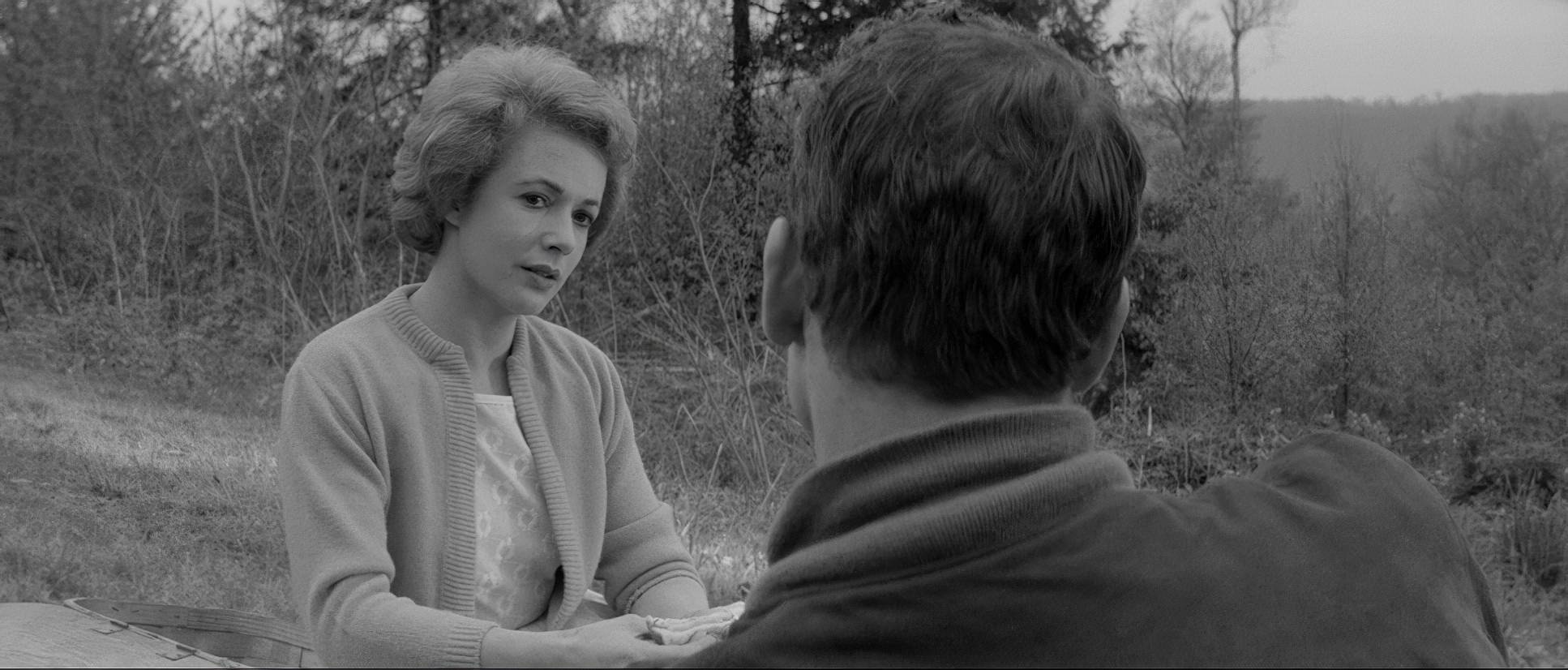
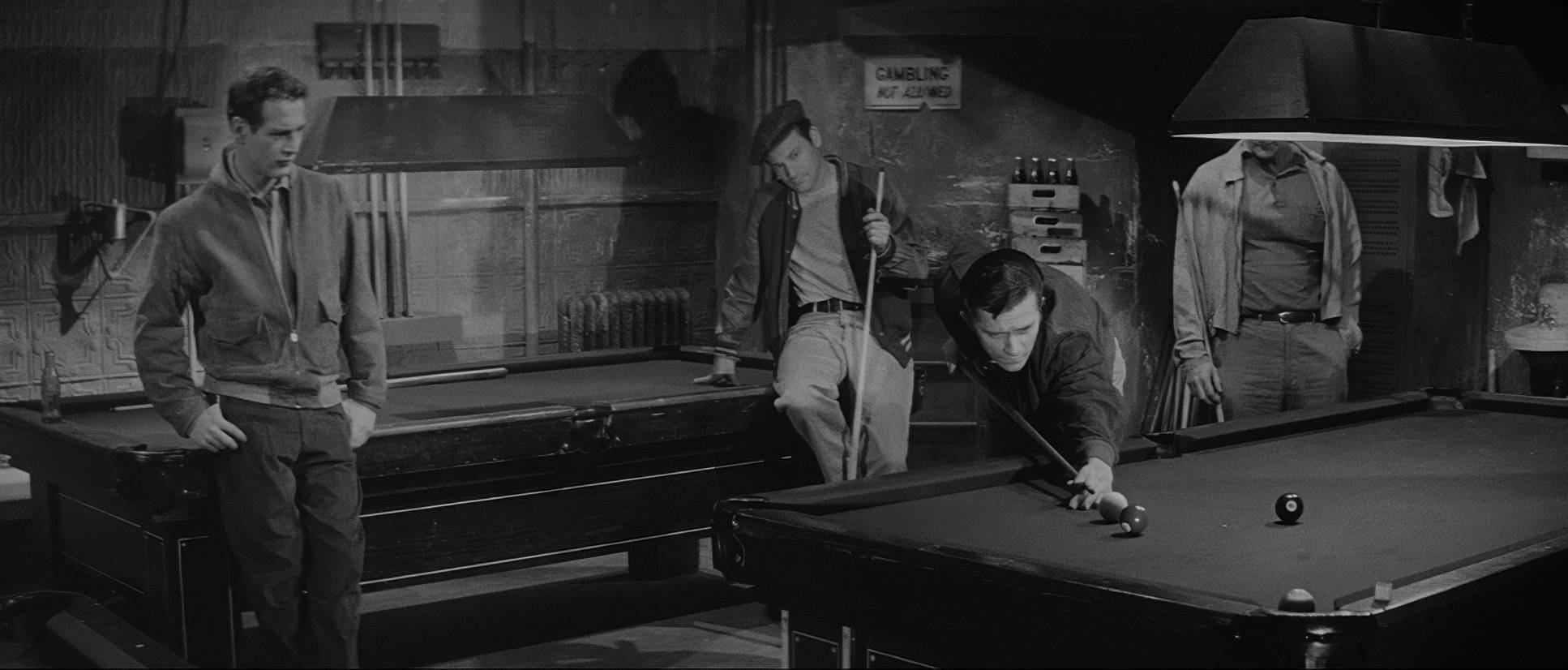
Schüfftan’s use of anamorphic lenses gives the film a unique “feel” that shallow depth of field and specific bokeh that separates the subject from the world behind them. It makes the gritty pool halls feel almost dreamlike. Because of the wide frame, Rossen could keep multiple characters in the shot at once, letting the tension build through blocking rather than editing.
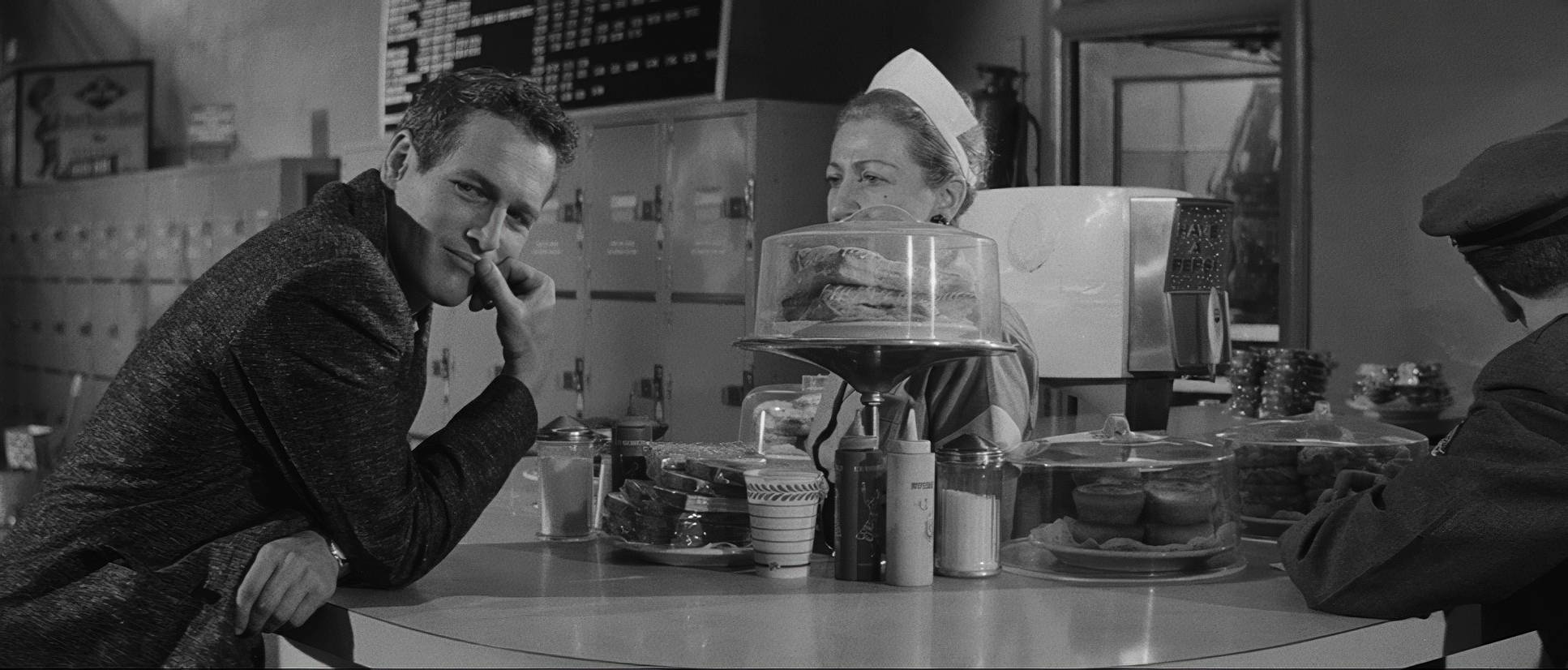
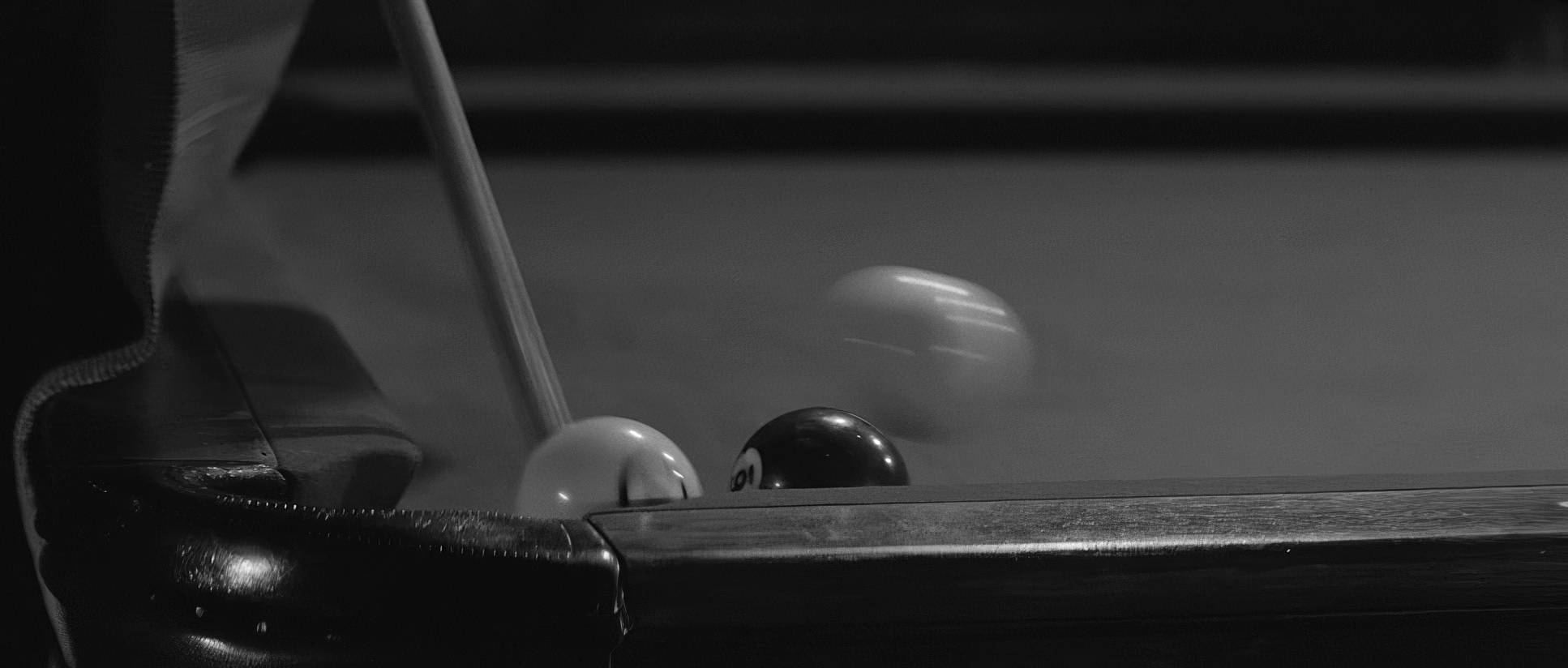
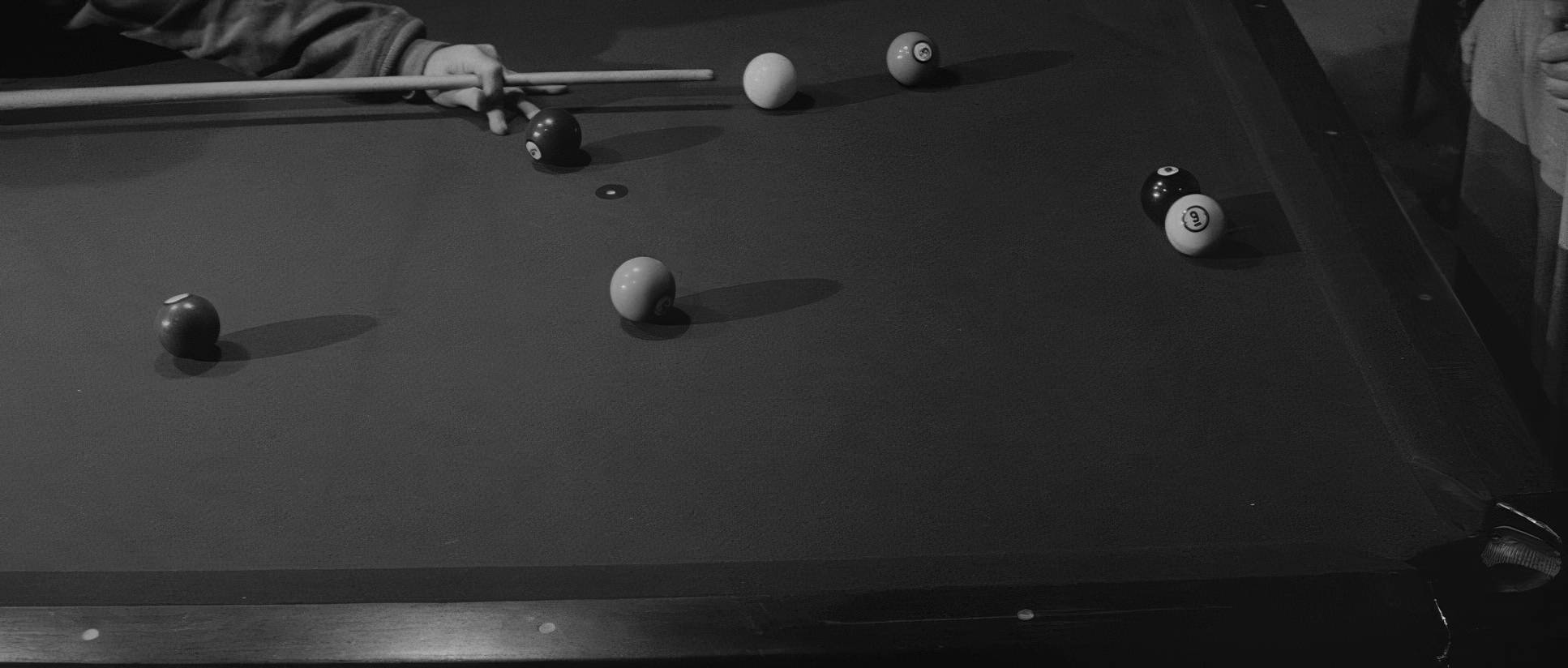
Bringing in Willie Mosconi as a technical advisor was a stroke of genius. The close-ups of the pool shots the crack of the break, the physics of the cue ball feel real because they are real. But look at Paul Newman’s posture. His “coolness” isn’t just in his face; it’s in how he leans against a table. The blocking lets us see everyone’s reaction in one shot, creating a theatrical but intimate experience that draws you right into the game.
Technical Aspects & Tools
The Hustler (1961) — Technical Specs
| Genre | Drama |
| Director | Robert Rossen |
| Cinematographer | Eugen Schüfftan |
| Production Designer | Harry Horner |
| Costume Designer | Ruth Morley |
| Editor | Dede Allen |
| Time Period | 1950s |
| Color | Desaturated, Black and White |
| Aspect Ratio | 2.35 – Anamorphic |
| Format | Film – 35mm |
| Lighting | Hard light, Top light |
| Lighting Type | Artificial light, Tungsten |
| Story Location | United States > New York |
| Filming Location | New York City > Edison Studio |
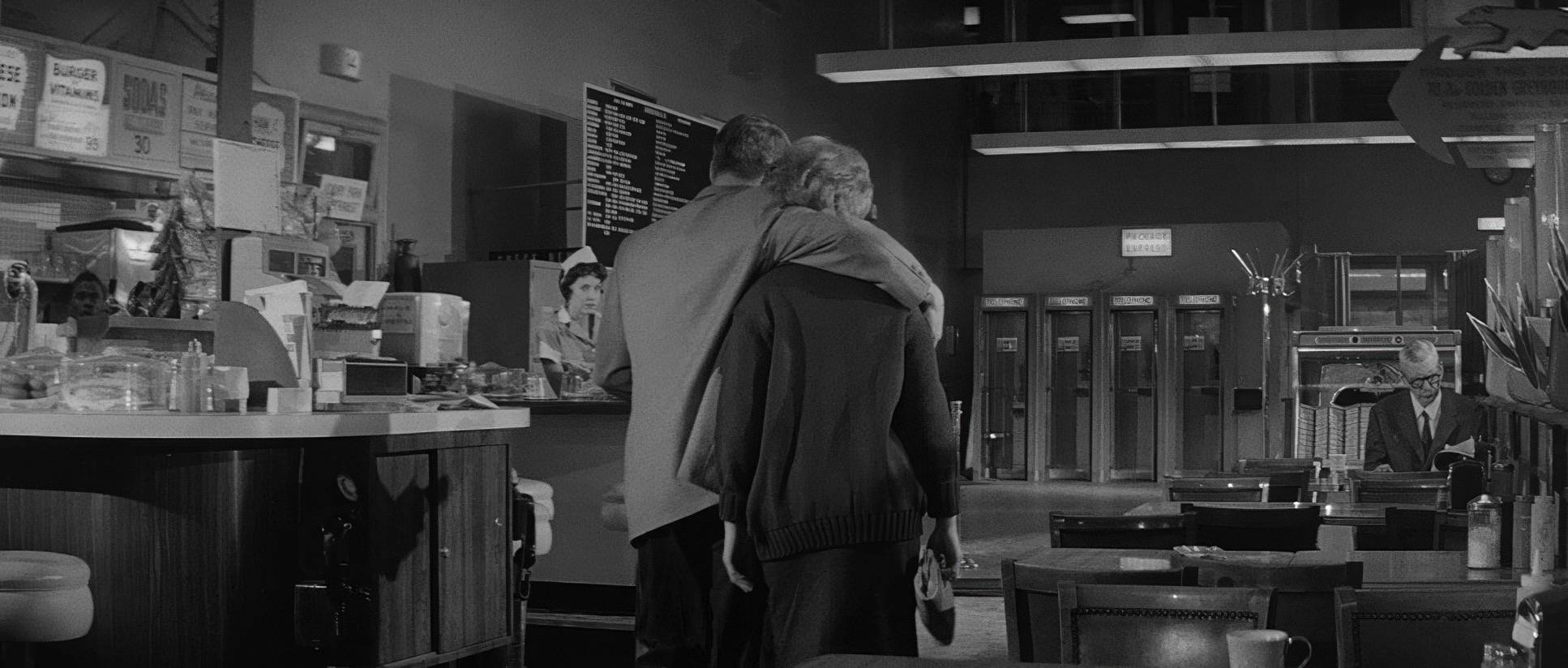
The technical side of The Hustler is a reminder of how much you can do with pure craft. Those sets were so convincing that people actually walked into the “bus stop diner” thinking it was a real business. That doesn’t happen by accident; it happens through a production philosophy that prioritizes time and planning.
Using mirrors to extend the pool hall sets was a brilliant “low-tech” solution to a high-concept visual problem. In a world before CGI, Schüfftan’s resourcefulness allowed for a level of scale and perspective that feels tangible. As Piper Laurie once noted, there was “time to do everything” time to think, to plan, and to get it right. That dedication to the bedrock of filmmaking is why the movie still hits so hard today.
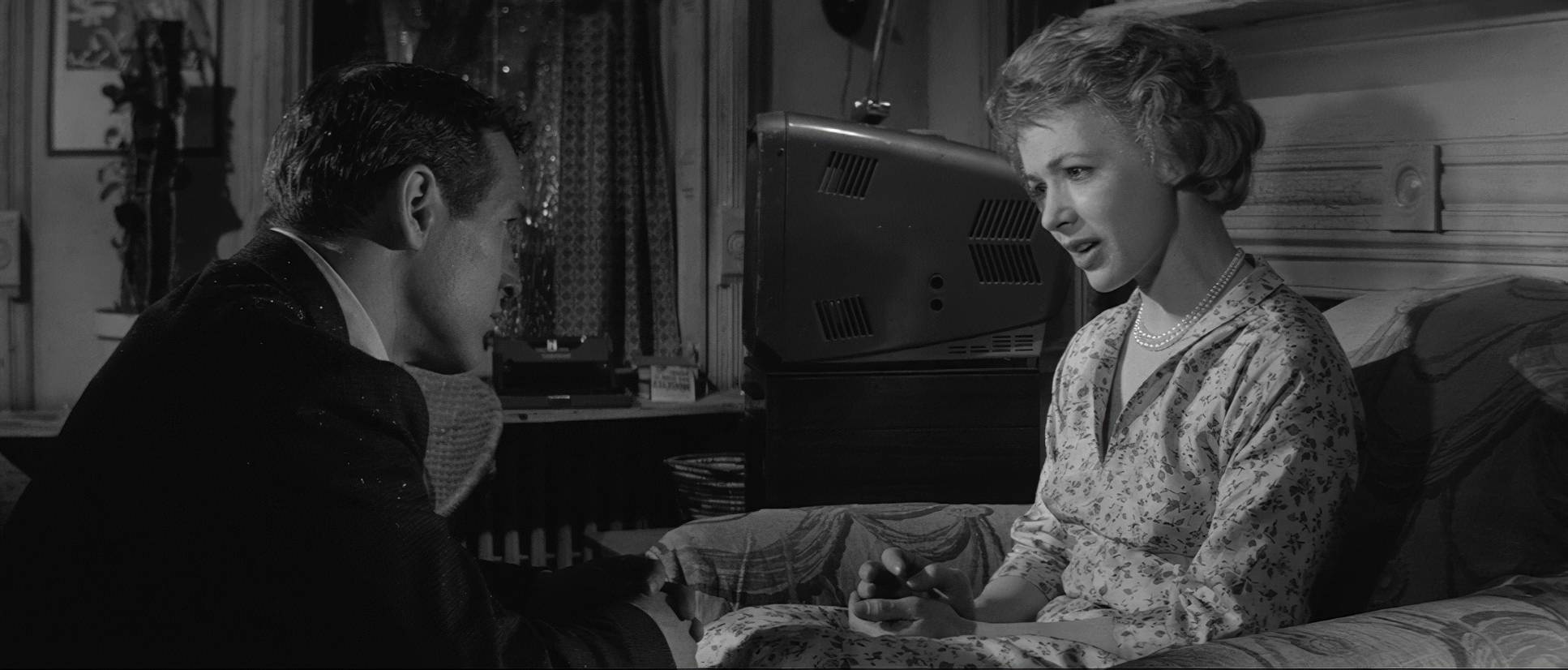
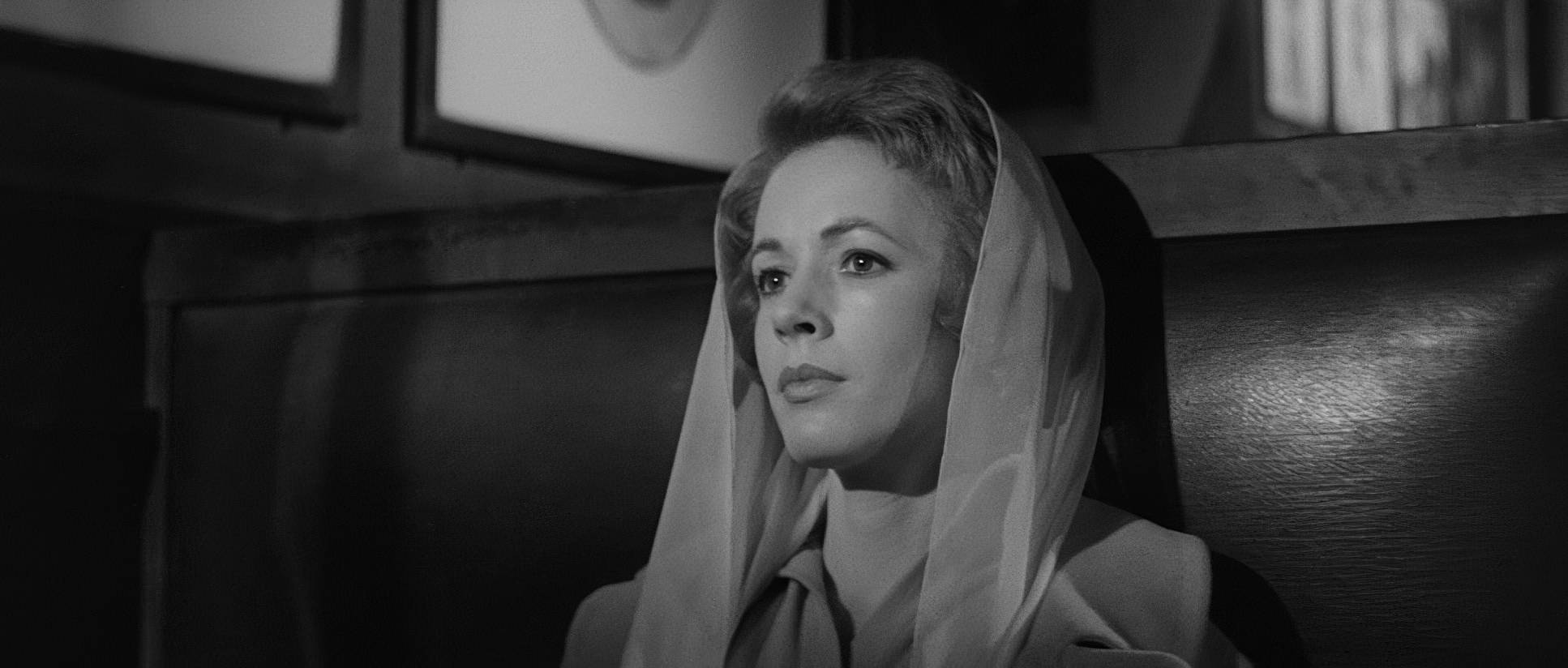
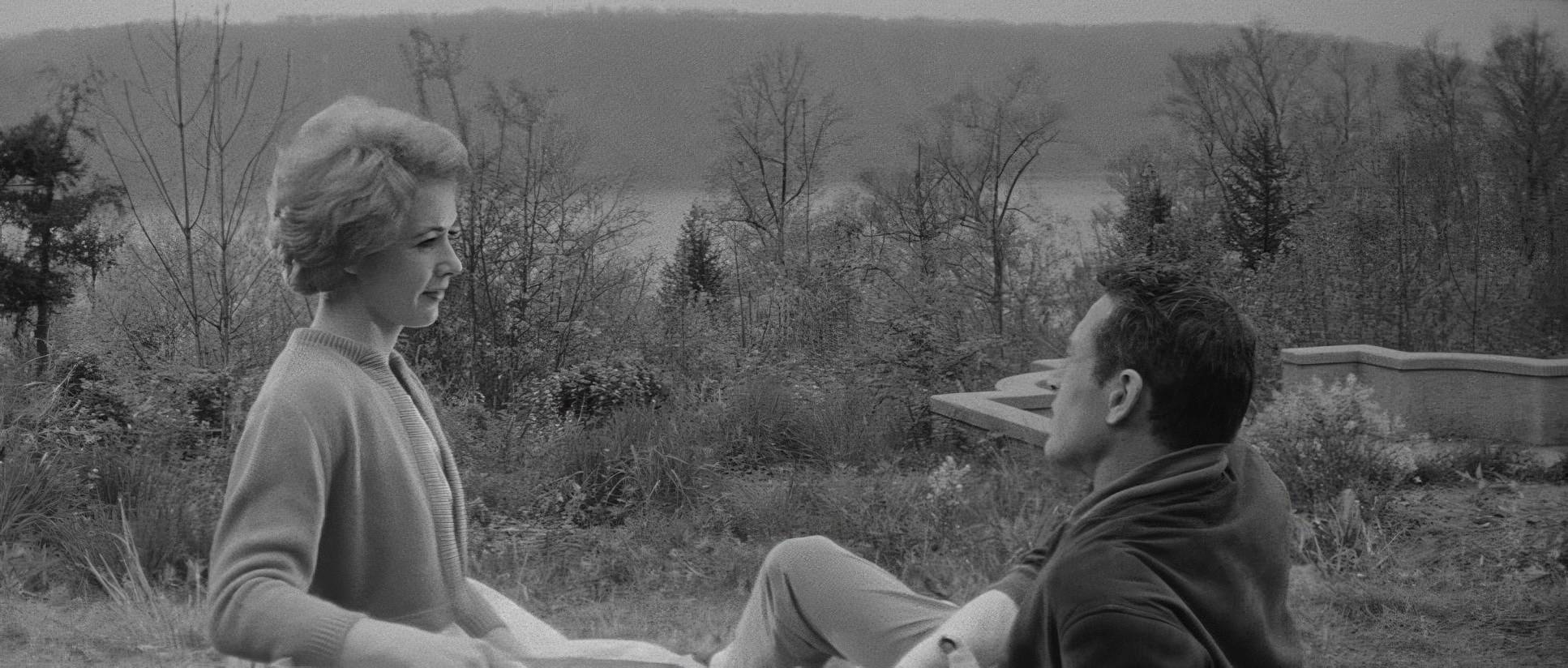
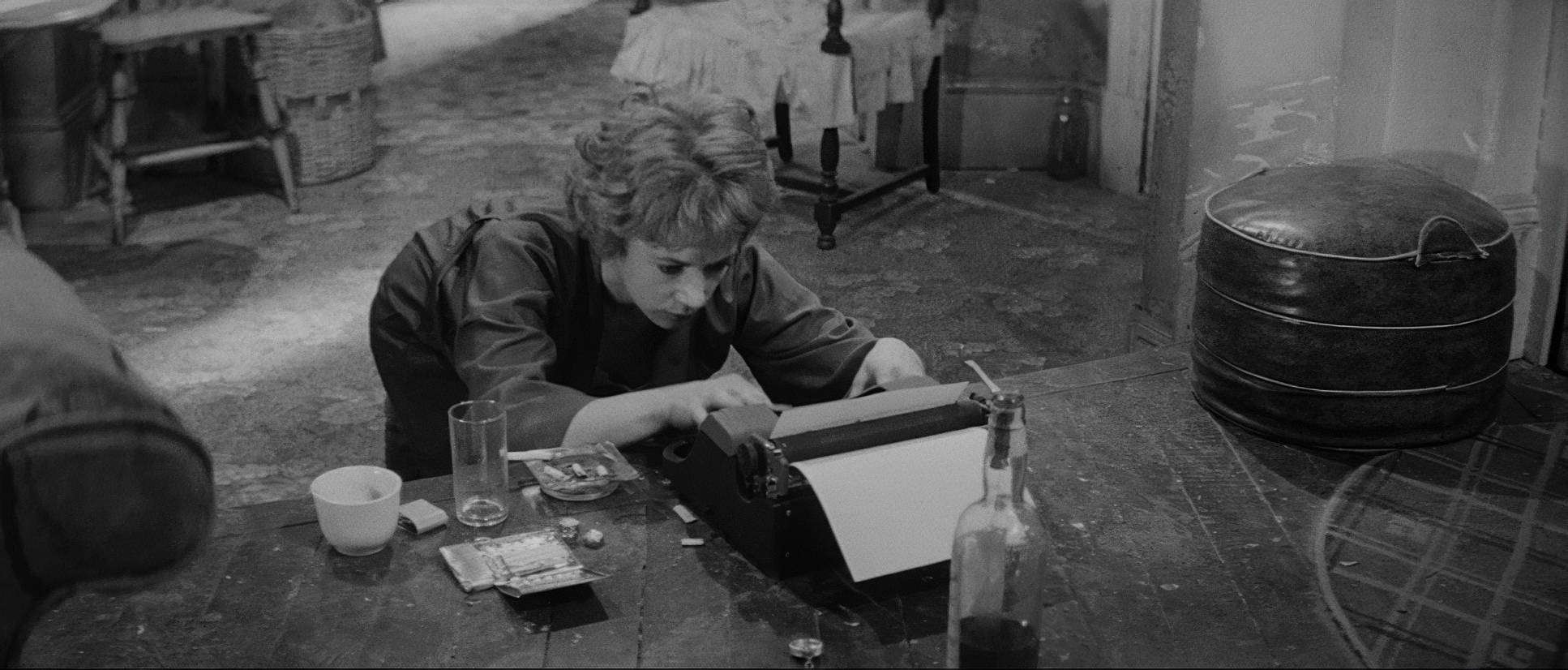
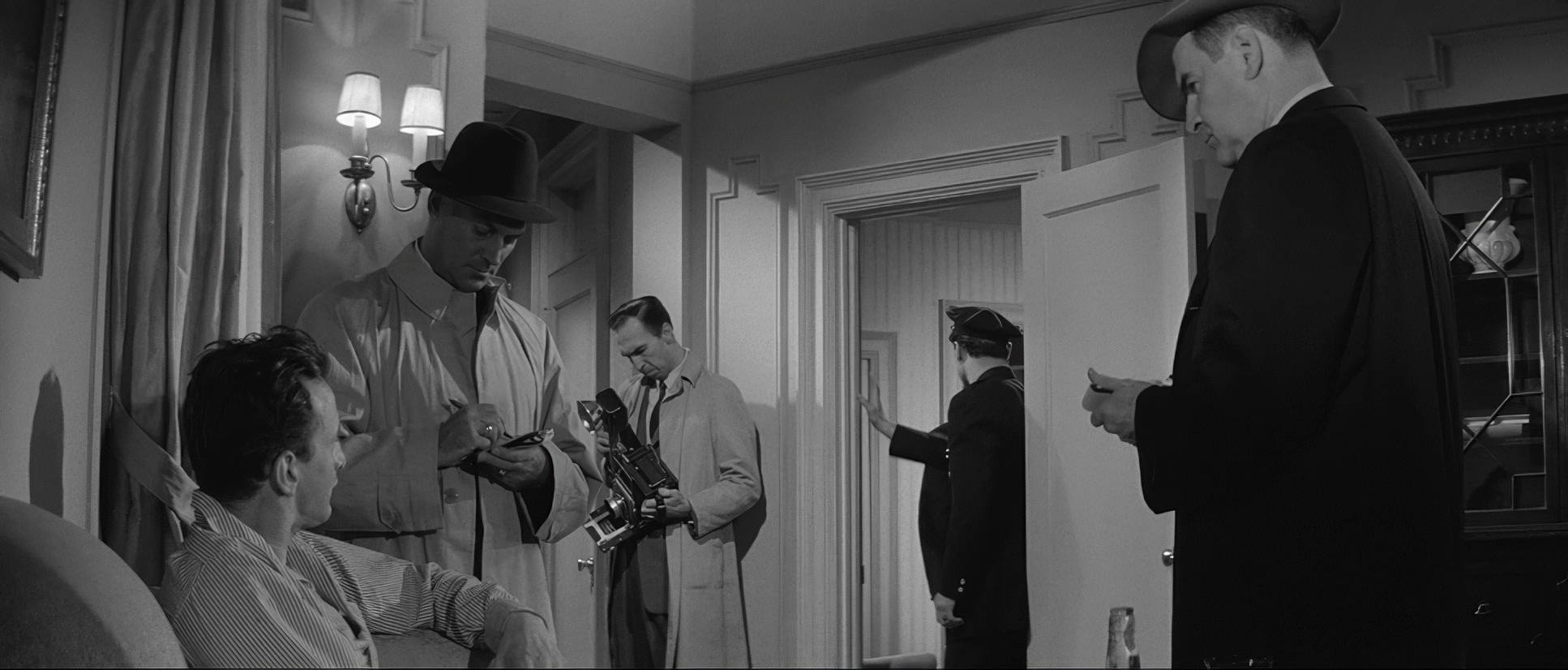
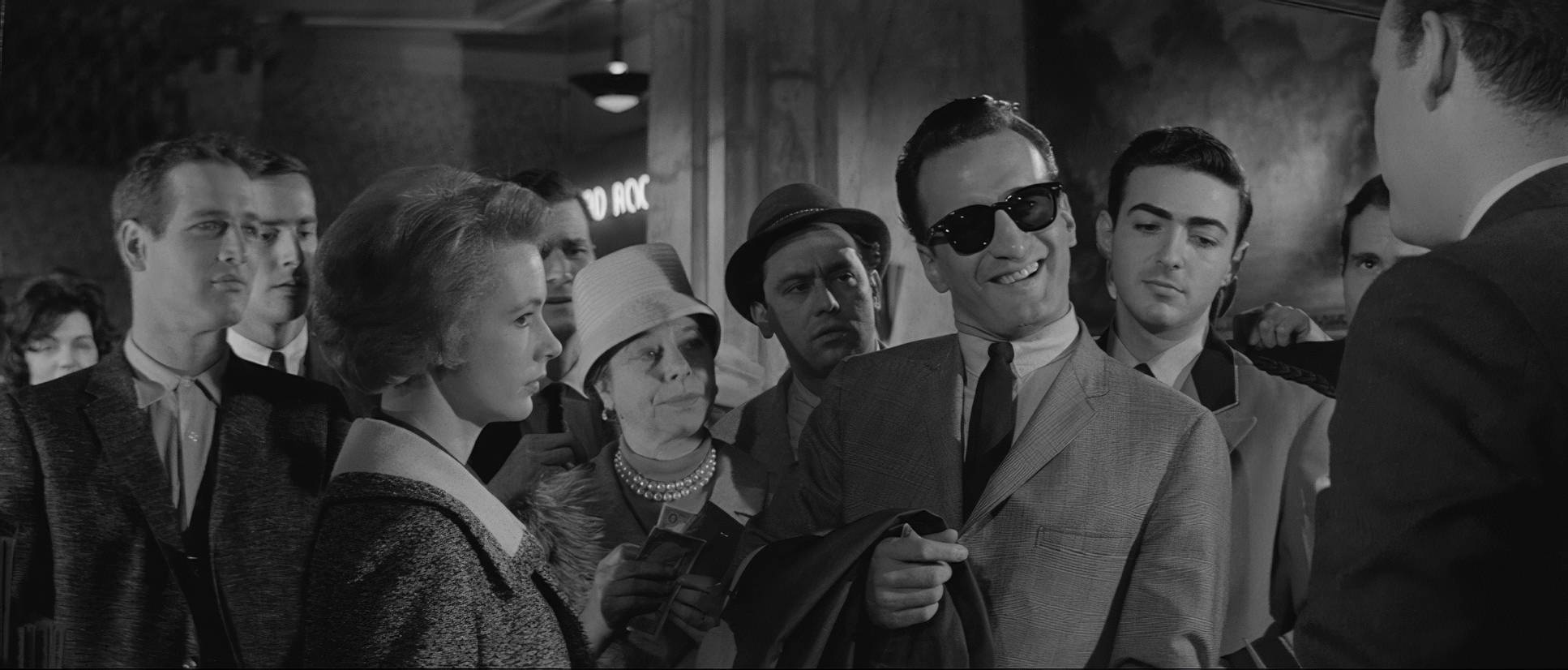
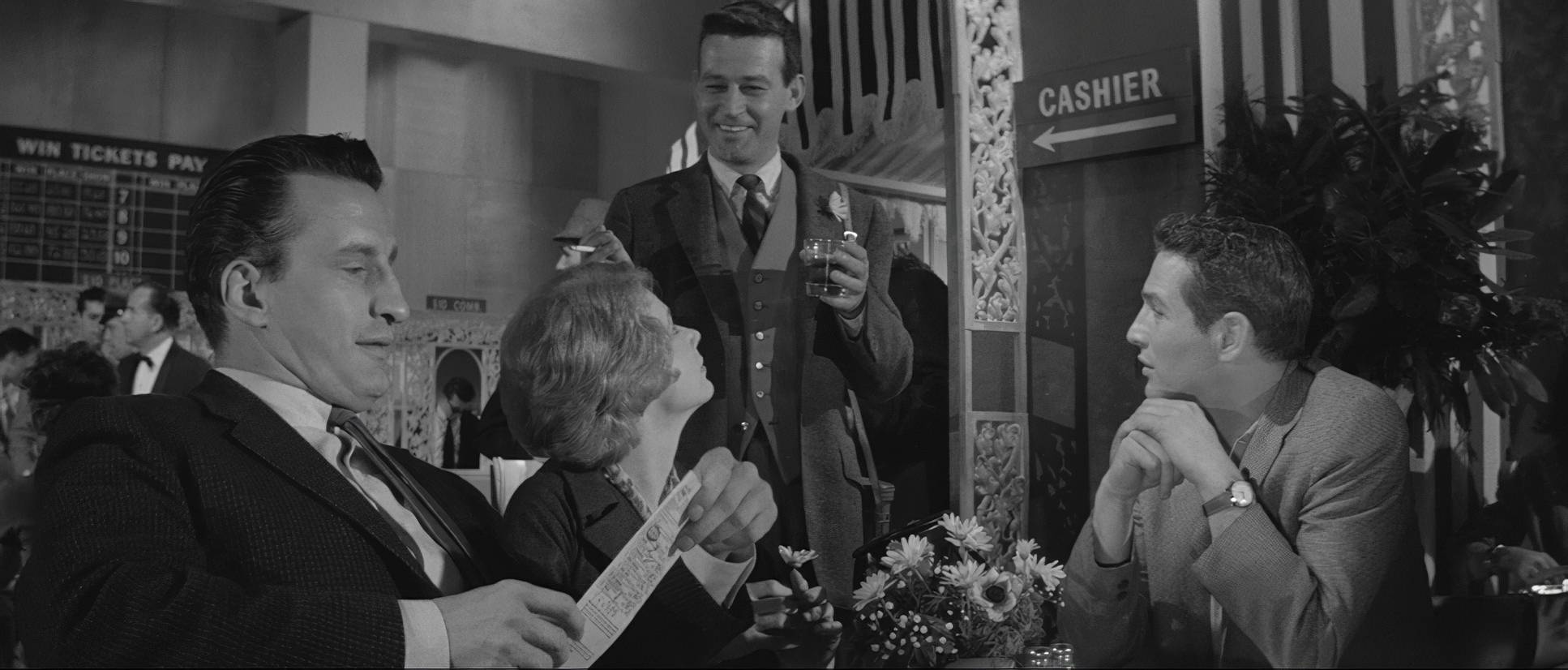
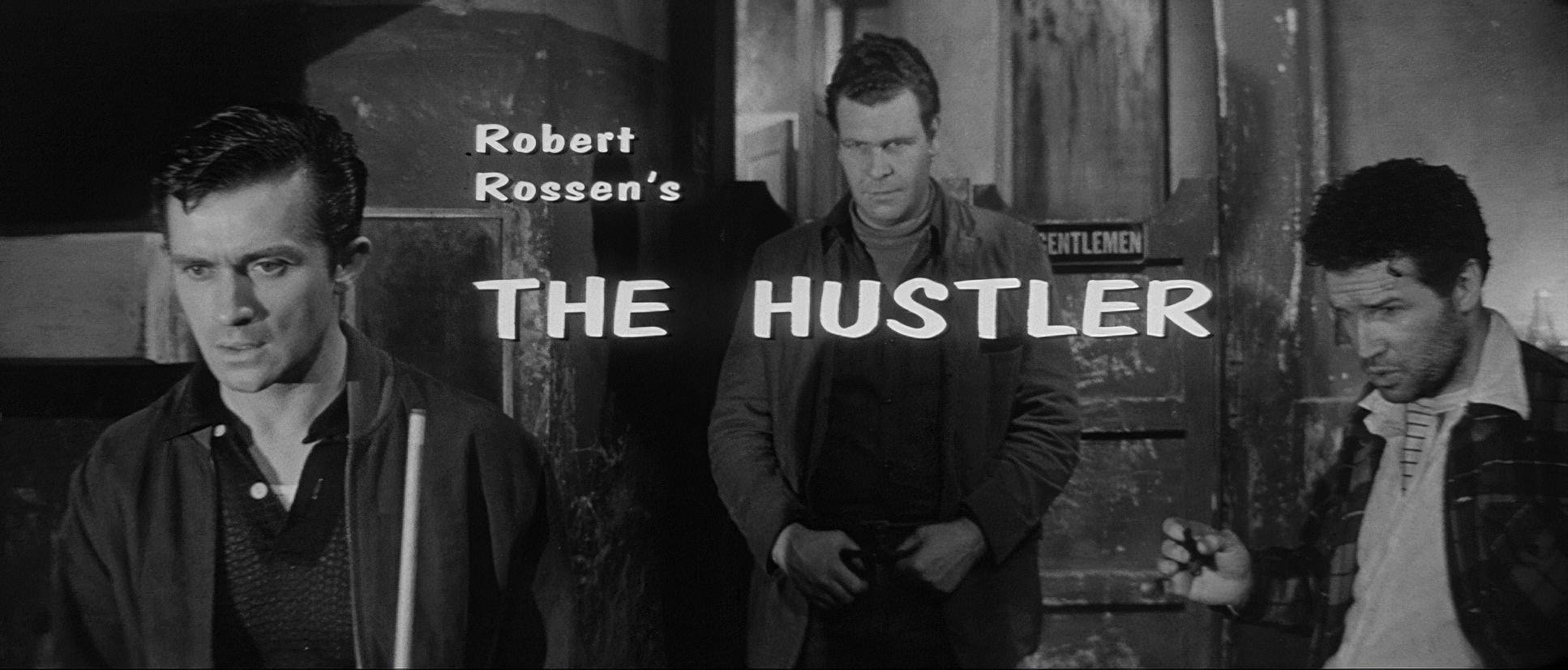
The Hustler (1961) Film Stills
A curated reference archive of cinematography stills from The Hustler (1961). Study the lighting, color grading, and composition.



- Also read: FARHA (2021) – CINEMATOGRAPHY ANALYSIS
- Also read: ELITE SQUAD 2: THE ENEMY WITHIN (2010) – CINEMATOGRAPHY ANALYSIS
Browse Our Cinematography Analysis Glossary
Explore directors, cinematographers, cameras, lenses, lighting styles, genres, and the visual techniques that shape iconic films.
Explore Glossary →