The Gentlemen (2019) is a messy, beautiful, labyrinthine beast. It’s an American ex-pat trying to sell off a marijuana empire in London, but the plot is almost secondary to the sheer swagger of the delivery. Right from the jump, you can feel the controlled chaos. It’s a high-wire act where the visual storytelling has to move as fast as the dialogue. It’s the kind of film that honestly requires a second viewing just to catch the visual cues you missed while laughing at a punchline. For someone like me who spends ten hours a day staring at a Scopes monitor, this film is a massive playground. It pushes against the “clean” aesthetic Hollywood is obsessed with right now, opting for something with much more bite.
Behind the Camera
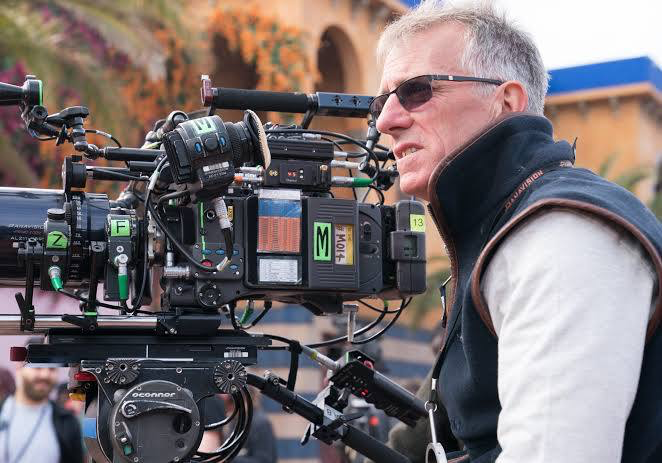
A lot of people focus on the director, but Alan Stewart’s work here as the DP is what really keeps the engine running. In The Gentlemen, the execution is a masterclass in modern-yet-classic sensibility. Stewart and Ritchie have developed a shorthand that allows the camera to act as a character in itself. It feels “unhinged” but never messy. There’s a relentless fluidness to the visual pacing that matches the script’s energy. It’s that perfect collaboration where the DP knows exactly when to let a “colourful character” dominate the frame and when to let the environment do the talking.
Inspiration Behind the Cinematography
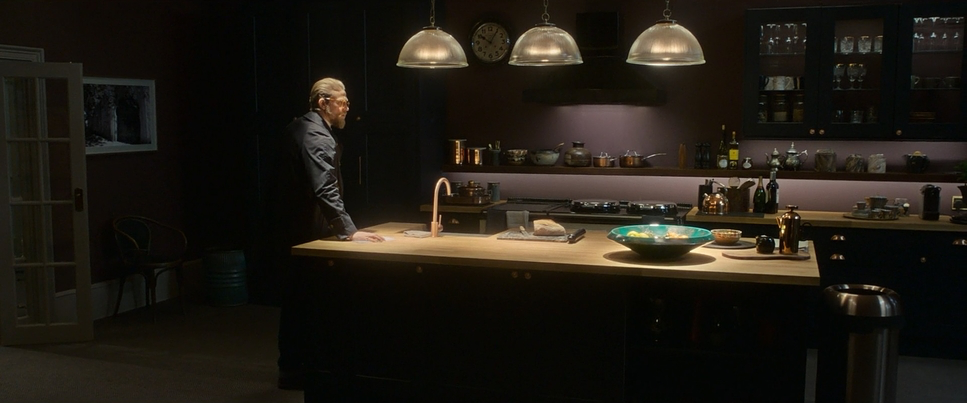
If you look at the DNA here, it’s a direct evolution of Lock, Stock and Snatch. It’s a return to form, but with more money and better tech. There’s a great meta-moment where Hugh Grant’s character, Fletcher, starts rambling about wanting his script shot in “anamorphic widescreen. None of this modern stuff.”
As a colorist, I love that line because it’s a total wink to the audience. Even though the film embraces a classic widescreen look (2.39:1), it wasn’t actually shot on anamorphic glass. But the vibe is there. Ritchie wanted to capture that tactile, cinematic grit that feels substantial. It’s an ideological stance pushing back against the sterile, plastic-wrap look of digital blockbusters. It’s the “last bastion” of this specific type of British crime filmmaking, and the visual texture proves it.
Lensing and Blocking

Here’s the “filmmaker’s secret” regarding those anamorphic dreams Fletcher had: they actually shot this on the ARRI Alexa XT using Panavision Primo Primes. That’s spherical glass. But because they cropped to a 2.39 aspect ratio, they got the scope without the technical headaches of anamorphic distortion.
What this does for the blocking is incredible. Because the Primes are so sharp and clean, Ritchie could pack the frame with his ensemble cast. You see characters arrayed across the screen engaging in these long, snappy dialogue exchanges without the edges of the frame turning into a blurry mess. Take Charlie Hunnam’s monologues he “controls the room” because the blocking uses the width of that 2.39 frame to position him as the anchor while everyone else orbits around him. It’s a delicate ballet of placement that makes the most of the digital sensor’s real estate.
Camera Movements
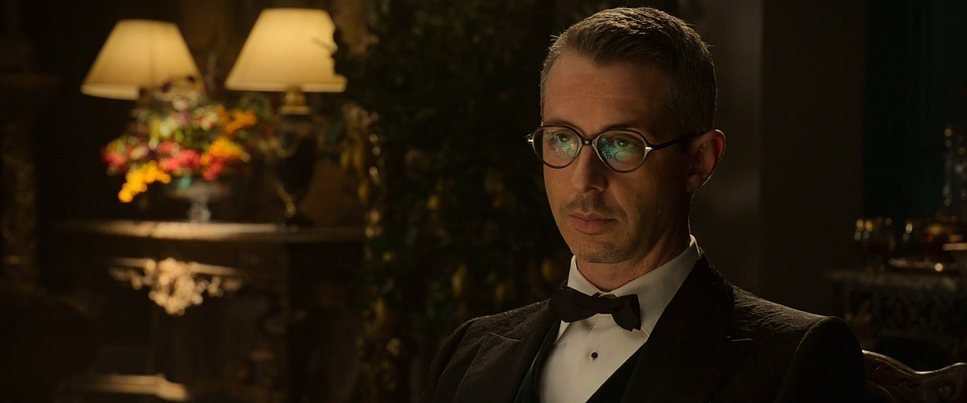
The camera in this movie is rarely bored. It mirrors the frenetic pace of the schemes, darting and weaving through scenes with a palpable energy. We’re talking swift pans and whip-transitions during the dialogue that act like visual exclamation points.
The tracking shots are where Stewart really shines. They aren’t just “follow shots”; they are choreographed sequences that feed you information. When Coach (Colin Farrell) enters a scene, the camera movement shifts it feels more grounded but equally dangerous. The movement isn’t just “cool” it’s dictated by the emotional rhythm of the scene. It forces you to get on the film’s wavelength immediately, or you’ll get left behind in the dust.
Compositional Choices
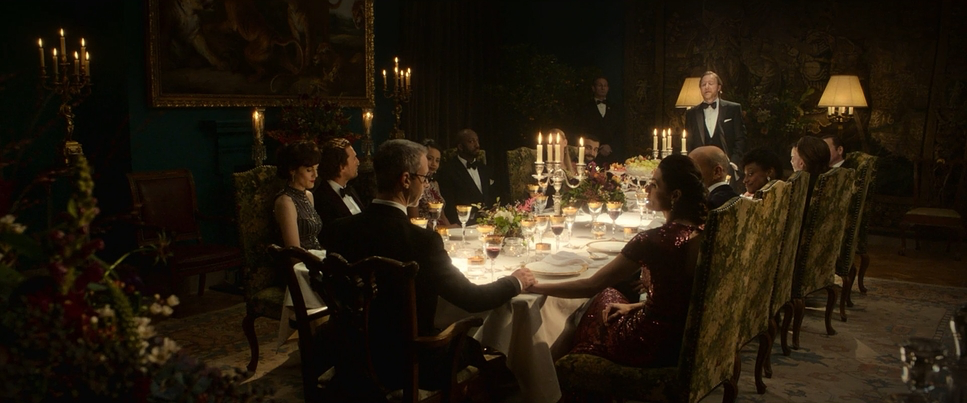
Despite the “unhinged” energy, the composition is remarkably disciplined. With so many “colorful characters” and double-crosses, you need visual clarity. The team uses the widescreen frame to manage the ensemble, often putting power dynamics on full display through simple placement.
I noticed a lot of “right-heavy” compositions, where the main action or the character with the upper hand holds the right side of the frame while the chaos unfolds on the left. They use depth cues brilliantly positioning Mickey Pearson (McConaughey) in the foreground while his rivals are relegated to the background. It’s a classic hierarchy trick. They also aren’t afraid of negative space. In moments where the dialogue stops, the frame opens up, giving the performances room to breathe before the next round of “uncontrolled” action kicks off.
Lighting Style
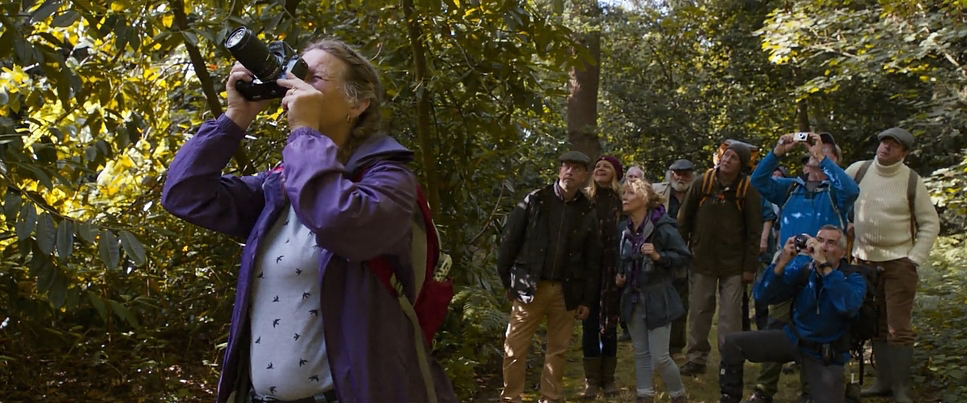
For a crime flick, the lighting is a beautiful blend of grounded realism and high-end drama. You’ve got these opulent London estates and then these dingy underground grow houses. The lighting had to bridge that gap.
It’s heavily motivated. You see practical lamps and windows doing the heavy lifting, which creates these gorgeous pools of light and deep, inky shadows. In the pub scenes or Mickey’s study, you’ve got that warm, soft backlight and daylight coming through windows that makes the skin tones feel rich. This kind of dynamic range gives a colorist so much to work with you can really play with the highlight roll-off and keep the shadows from feeling “dead.” It feels authentic to the location but looks like a million bucks.
Color Grading Approach
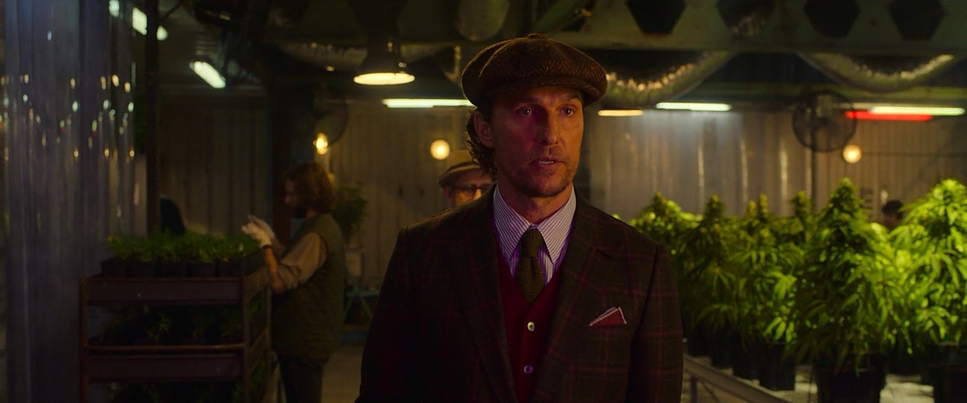
This is my favorite part of the discussion. The grade on The Gentlemen handled by the legendary Peter Doyle is a masterclass in film emulation. Even though it was shot digitally, it has a “print-film” soul.
The contrast is robust. The blacks are thick, but they aren’t “crushed” there’s still detail in the shadows of those sharp suits. The highlights have this organic, smooth roll-off that you just don’t get with a standard “out-of-the-box” LUT. I love the hue separation here; the rich ambers of the interiors and the industrial greens of the grow houses are distinct without looking like a cartoon. There’s a slight desaturation across the board that gives it gravitas, but the skin tones are protected and remain natural. It’s a “lived-in” grade. It doesn’t scream “look at me,” but it’s doing a ton of work to make the digital capture feel like a 35mm classic.
Technical Aspects & Tools
The Gentlemen — ARRI ALEXA XT | 3.2K ArriRaw
| Genre | Action, Comedy, Crime |
| Director | Guy Ritchie |
| Cinematographer | Alan Stewart |
| Production Designer | Gemma Jackson |
| Costume Designer | Michael Wilkinson |
| Editor | James Herbert, Paul Machliss |
| Colorist | Peter Doyle |
| Color | Cool |
| Aspect Ratio | 2.39 |
| Format | Digital |
| Lighting | Soft light, Backlight |
| Lighting Type | Daylight |
| Story Location | United Kingdom > London |
| Filming Location | United Kingdom > London |
| Camera | ARRI ALEXA XT / XTplus |
| Lens | Panavision Primo Primes, Angenieux Optimo Zooms |
| Film Stock / Resolution | 3.2K / 3.2K ArriRaw |
Under the hood, this was a high-performance machine. Shooting ArriRaw 3.2K on the Alexa XT gave Peter Doyle and the team the latitude they needed to push the grade. They used Angenieux Optimo Zooms for those quick reframes and Panavision Primos for the heavy lifting.
On the lighting side, you can tell they were using a mix of modern LEDs for control and traditional tungsten units for that warmth in the interiors. In a professional suite like Resolve or Baselight, a look like this is built layer by layer custom film-stock emulations, grain overlays, and meticulous tonal sculpting. It’s that complete pipeline, from the Alexa sensor to the final DCP, that delivers this specific “grit and polish” aesthetic.
- Also read: THE IRISHMAN (2019) – CINEMATOGRAPHY ANALYSIS
- Also read: THE BREAKFAST CLUB (1985) – CINEMATOGRAPHY ANALYSIS
Browse Our Cinematography Analysis Glossary
Explore directors, cinematographers, cameras, lenses, lighting styles, genres, and the visual techniques that shape iconic films.
Explore Glossary →