John Carney’s Sing Street (2016) I’m a fan of Carney’s other stuff like Once, but Sing Street hits differently. It’s set in 1980s Dublin, and while the music is the hook, the visual language is what keeps me glued to the screen. It’s not just “pretty”; it’s smart. It’s a masterclass in how you take a familiar coming-of-age story and give it actual, tactile soul through the lens.
About the Cinematographer

Yaron Orbach is the eye behind this one. He isn’t necessarily the first name people drop in DP circles, but his work here is incredibly gutsy. Orbach has this knack for shooting intimacy he’s done a lot of indie work and documentaries, and you can feel that “boots-on-the-ground” DNA in Sing Street.
He manages this tricky balance: the grim, “Tuesday afternoon in Dublin” reality versus the neon-soaked fever dreams of a kid who wants to be a rockstar. Orbach isn’t trying to show off with flashy, unearned style. He’s just serving the story, moving between that gritty Christian Brothers school and the hyper-vibrant music videos with a quiet kind of confidence that I really admire.
Lighting Style
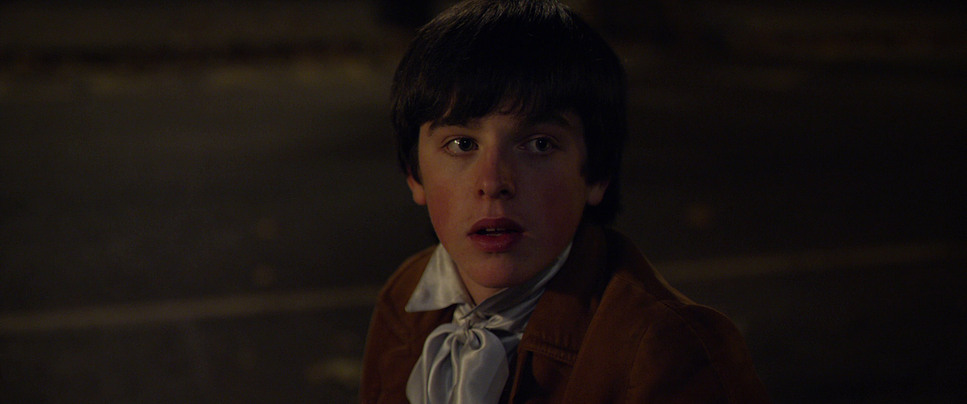
The lighting in this film is where the “kitchen sink realism” really lives. For the school scenes and Connor’s home life, Orbach keeps it remarkably grounded. We’re talking soft, desaturated top-light that feels like a permanent Irish overcast. It’s moody, but not “movie moody” it just feels damp and a bit hopeless. He’s not afraid of shadows here; he lets the low-key stuff sit heavy in the room, which makes the characters’ struggle feel real.
Then, the music starts.
Suddenly, we’re playing with theatricality. When the band “films” their videos, we get these wonderful, slightly “wrong” pops of hard light and colored gels. It perfectly captures that 80s DIY aesthetic like a kid found a work lamp and a piece of cellophane and tried to recreate a Duran Duran video. It’s charming as hell because the lighting tells you exactly what the characters are feeling: they’re trying to find light in a very grey city.
Camera Movements
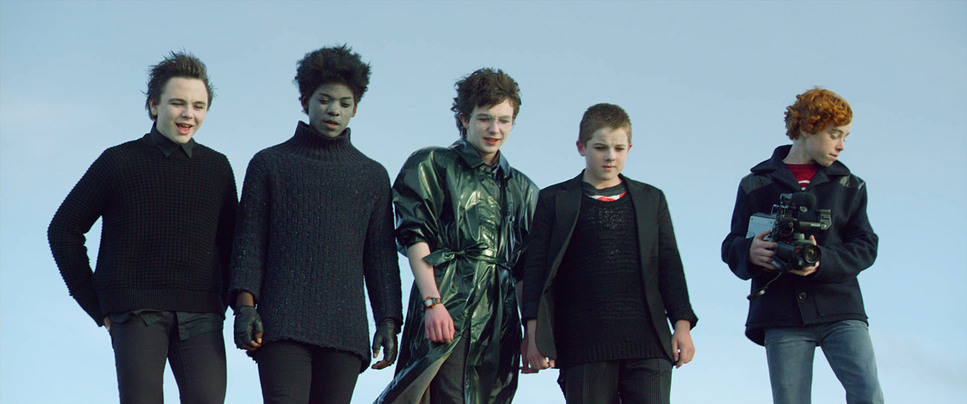
Orbach is very disciplined with the camera. In the “real world” scenes, the camera is mostly restrained. You get these slow, deliberate push-ins that make the walls of that school feel like they’re closing in. There’s a slight handheld energy, but it never goes into “shaky-cam” territory it just feels like we’re standing there in the room with them.
But when the band hits their stride, the camera starts to dance. We see these sweeping dolly shots that match the rhythm of the tracks. There’s one shot in an alleyway where Raphina is walking, and the camera tracks her in a way that turns a grimy Dublin backstreet into a high-fashion runway. It’s subtle, but it signals to the audience that through Connor’s eyes, the world is changing. The camera isn’t just a recording device here; it’s an extension of the music.
Lensing and Blocking
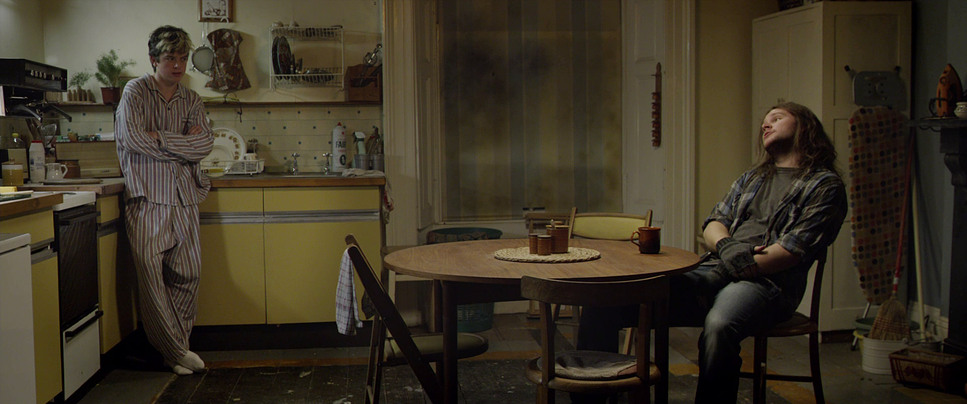
I love the glass choices here. They stayed with spherical primes, which keeps the image feeling honest. For the wide shots of Dublin, they probably leaned on 28mm or 35mm glass you get that slight distortion that makes the city feel a bit bigger and more imposing than it actually is. It feels like a memory.
When things get personal, though, they go long. The 50mm and 85mm shots during the intimate moments between Connor and Raphina (or his brother Brendan) are beautiful. The depth of field is shallow enough to pull them out of their surroundings, but not so creamy that it feels fake.
The blocking is equally smart. Look at how they position the Headmaster he’s always physically towering over Connor, or framed in a way that makes him feel like a brick wall. Compare that to the band practices, where everyone is huddled in a circle, scrappy and kinetic. The physical space between characters tells you more about their relationship than the dialogue does half the time.
Inspiration Behind the Cinematography
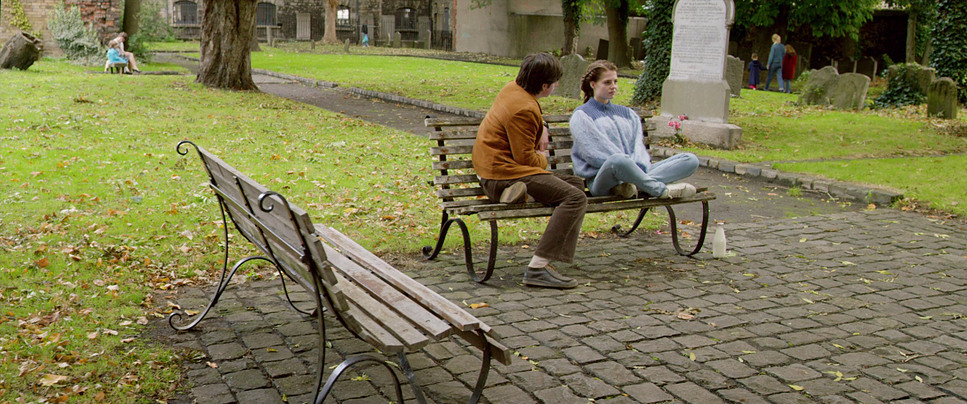
You can’t talk about Sing Street without talking about MTV. The 80s wasn’t just a time period for these kids; it was a visual Bible. Mark Kermode often talks about the band “aping the glossy production value of Duran Duran,” and you can see that reflected in the cinematography.
The inspiration here is the emotional “vibe shift.” Orbach had to bridge the gap between “Dublin is bleak” and “Dreams are colorful.” The inspiration is clearly that intersection of British kitchen-sink drama (think Ken Loach) and the glossy, over-the-top fantasy of early music videos. It’s a weird mix on paper, but on screen, it works because it’s rooted in the character’s imagination.
Compositional Choices
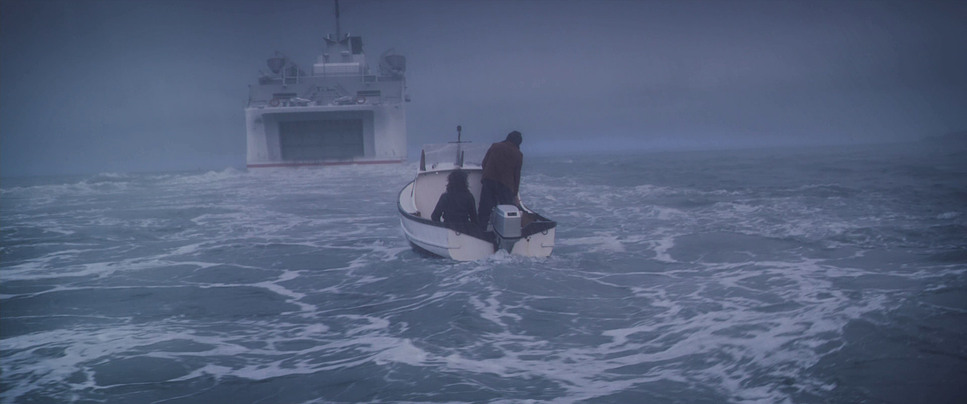
The framing starts off feeling very trapped. In the beginning, Connor is often “boxed in” by doorways or tight windows. He feels small. Even the wide shots of the city make the characters look like ants against a grey urban backdrop.
As the band evolves, the frames open up. We get more negative space, especially when Connor looks out at the sea. It’s a classic visual metaphor, but Orbach executes it so well. By the end of the film, the compositions feel expansive. They stop being about where the characters are and start being about where they are going.
Technical Aspects & Tools
Sing Street (2016) — Technical Specifications
| Genre | Drama, Music, Romance |
| Director | John Carney |
| Cinematographer | Yaron Orbach |
| Production Designer | Alan MacDonald |
| Costume Designer | Tiziana Corvisieri |
| Editor | Julian Ulrichs, Andrew Marcus |
| Time Period | 1980s |
| Color | Cool, Desaturated, Blue |
| Aspect Ratio | 2.39 |
| Format | Digital |
| Story Location | Ireland > Dublin |
| Filming Location | Ireland > Dublin |
| Film Stock / Resolution | 5K / Redcode raw 5K |
Alright, let’s get into the gear. If you’d asked me while watching, I would’ve bet my career this was shot on an ARRI Alexa. The skin tones are just so organic and the highlight roll-off is incredibly smooth. But, looking at the technical specs, it turns out they shot this on a RED at 5K.
As a colorist, that actually makes me respect the post-production team even more. To get that “filmic,” thick-negative look out of a RED especially with the 5K sensor takes some serious work in the grade. They likely used some heavy film grain emulation and really massaged the “toe” of the curve to keep the shadows from feeling too “digital” and clinical. They definitely shot in a high-bitrate RAW format to give themselves the latitude to push those 80s color primaries without the image falling apart. It just goes to show: it’s not the camera, it’s how you handle the data.
Color Grading Approach
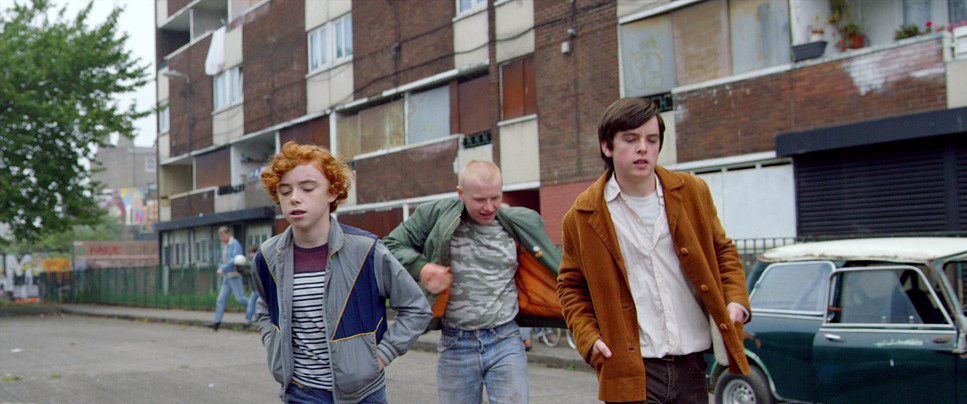
This is my favorite part. The grade on Sing Street is a masterclass in hue separation. In the “real world,” the palette is almost entirely cool blues, damp greys, and muted greens. It’s got that “print-film” density, where the blacks feel a bit “crushed” but still have texture. It feels nostalgic, like an old photograph you found in a drawer.
But when the music videos kick in, the saturation gets a punch in the arm. We see rich oranges, golds, and those aggressive 80s reds. As a colorist, I love how they handled the highlights in the dreamier sequences—they let them “bloom” just a little bit more, giving the image a soft, aspirational glow. It’s not a “one-size-fits-all” LUT; it’s a living, breathing grade that shifts based on Connor’s emotional state. It’s exactly the kind of work I strive for at Color Culture.
- Also read: AMOUR (2012) – CINEMATOGRAPHY ANALYSIS
- Also read: NOTORIOUS (1946) – CINEMATOGRAPHY ANALYSIS
Browse Our Cinematography Analysis Glossary
Explore directors, cinematographers, cameras, lenses, lighting styles, genres, and the visual techniques that shape iconic films.
Explore Glossary →