Room (2015) is one of them. It is a film that, despite its harrowing premise, captivates me because of how strictly it adheres to its own visual rules. You walk out of it analyzing how the filmmakers managed to make a 10×10 shed feel like an entire universe. It’s the kind of movie that demands dissection from Emma Donoghue’s adapted screenplay to Lenny Abrahamson’s direction, and especially the cinematography that translates a psychological state into a physical space.
The story, viewed through the innocent yet profound eyes of five-year-old Jack, is an exercise in perspective. It challenges the audience to experience extreme confinement followed by overwhelming liberation. This concept that “Room” is the entire world isn’t just a plot point; it is the foundation of the film’s visual grammar.
About the Cinematographer
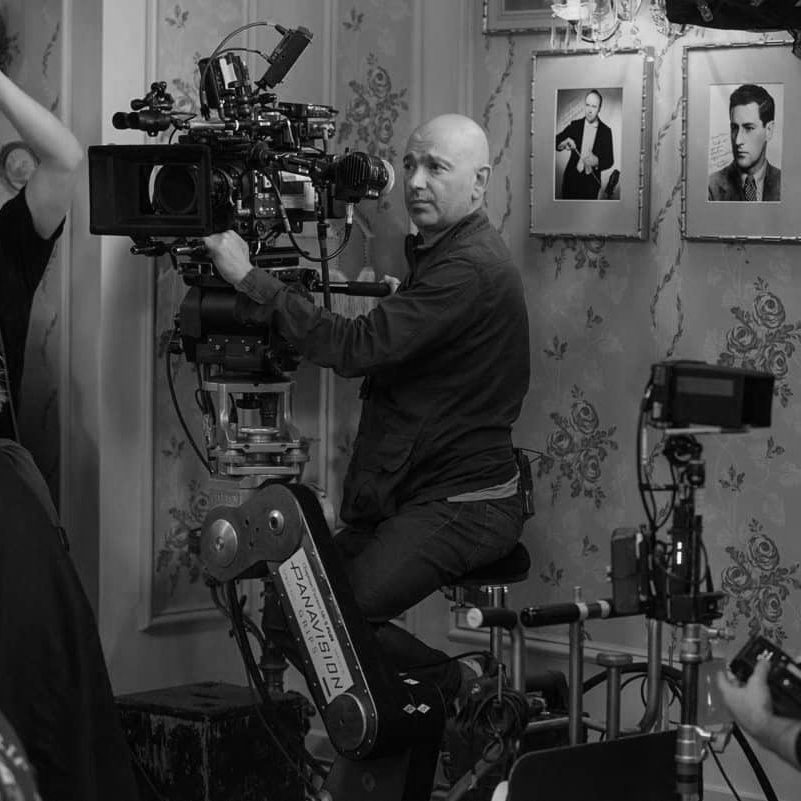
The cinematographer tasked with visualizing this claustrophobia was Danny Cohen. Cohen is known for character-driven work that prioritizes emotional authenticity over stylized gloss, seen in his collaborations on The King’s Speechand Les Misérables. However, in Room, his work is particularly disciplined.
Cohen’s strength here is his refusal to “cheat” the space. He doesn’t light the scene to look pretty; he lights it to feel true. For Room, this meant translating abstract concepts confinement, innocence, and the blinding sensory overload of the outside world into a cohesive visual language. Making four walls feel like a diverse ecosystem for the first half of the film, and then making the real world feel alien in the second half, is a difficult balance that he hits perfectly.
Inspiration Behind the Cinematography
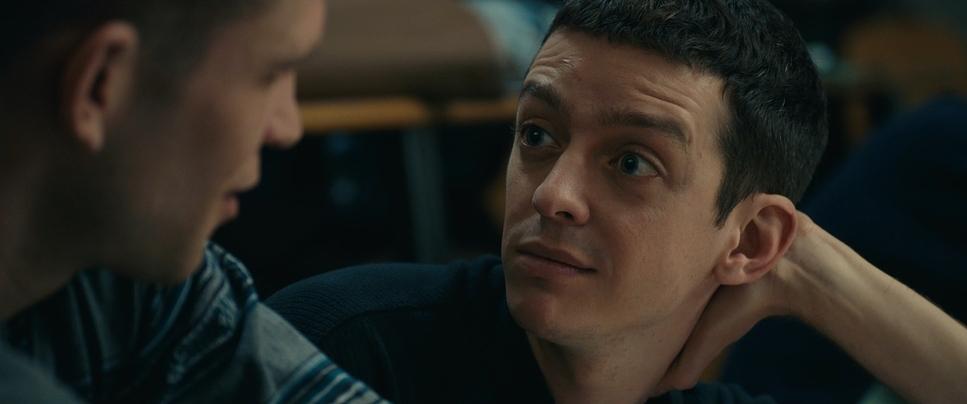
The core inspiration for the visual approach is strictly Jack’s perspective. We are dealing with a five-year-old whose entire existence is a 10-foot square box. As filmmakers, the question is: how do you visualize that without boring the audience? The answer lies in how Jack sees the objects around him.
The camera language personifies the inanimate. Objects like the skylight, the wardrobe, and the plant aren’t just props; they are characters. Cohen’s cinematography treats them with the same weight as the actors. By shooting from Jack’s eye level, the film grounds us in his reality. It transforms a static, depressing setting into a living, breathing ecosystem. The initial claustrophobia is paramount we need to feel the walls invading the frame. It’s not just about tight shots; it’s about the emotional resonance of that tightness, forcing the viewer to share the air with Ma (Brie Larson) and Jack.
Camera Movements
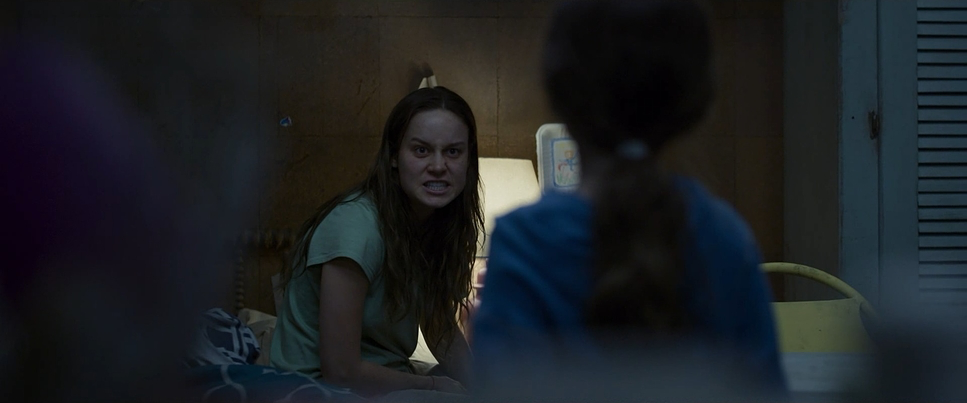
Inside the shed, the camera movements are constrained and deliberate, mirroring the physical limitations of the set. We see a lot of low-angle tracking shots, following Jack as he navigates his small world. These movements aren’t sweeping; they are short and often hesitate, reinforcing the insular nature of their existence. When Jack plays or interacts with “Rug,” the camera acts as a quiet observer within the box.
Once they escape, the camera behavior shifts drastically. The movements become expansive and disorienting. A great example is when Jack first sees the sky from the back of the truck. The camera doesn’t just cut to a wide shot; it embraces the movement of the sky, creating a sense of dizzying discovery. Later, panning shots across landscapes feel fluid and floating, contrasting sharply with the grounded, tripod-heavy or handheld feel of the Room. This shift is a powerful visual metaphor for the journey from imprisonment to a world without boundaries.
Compositional Choices
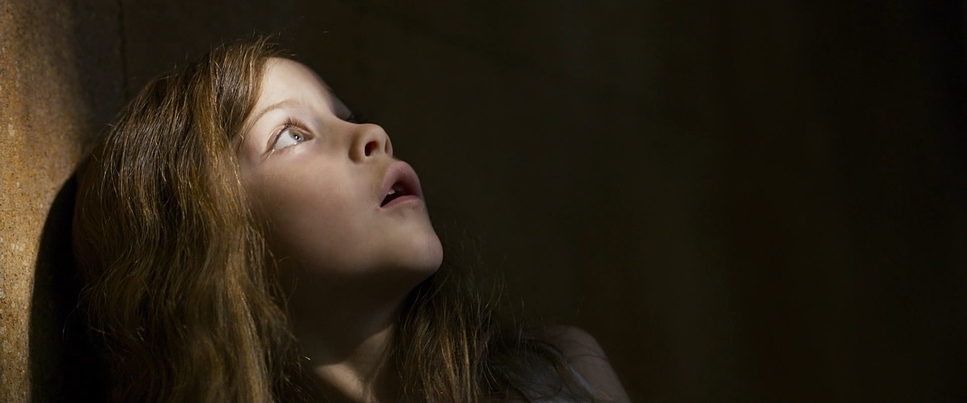
Composition in Room is a lesson in framing within a frame. Inside, Cohen frequently uses the geometry of the set—the wardrobe, the bed, the sink to slice up the 2.39:1 aspect ratio. This creates a “frame within a frame” effect, trapping Ma and Jack visually even when they are the focus of the shot. The choice to shoot 2.39 (widescreen) in such a small, square room is interesting; it forces the composition to be horizontal, often cutting off the ceiling or floor, which enhances the feeling that the walls are closing in horizontally.
Depth cues are sparingly used inside. There is no atmospheric haze to suggest distance; everything is immediate and sharp. This makes the introduction of depth later on feel significant. When they finally step outside, the compositions explode into deep focus. Extreme wide shots dwarf Jack, portraying his sensory overload. The scale of a tree or a street seems impossibly large because, for the first hour of the film, our eyes have adjusted to seeing nothing further than ten feet away.
Lighting Style
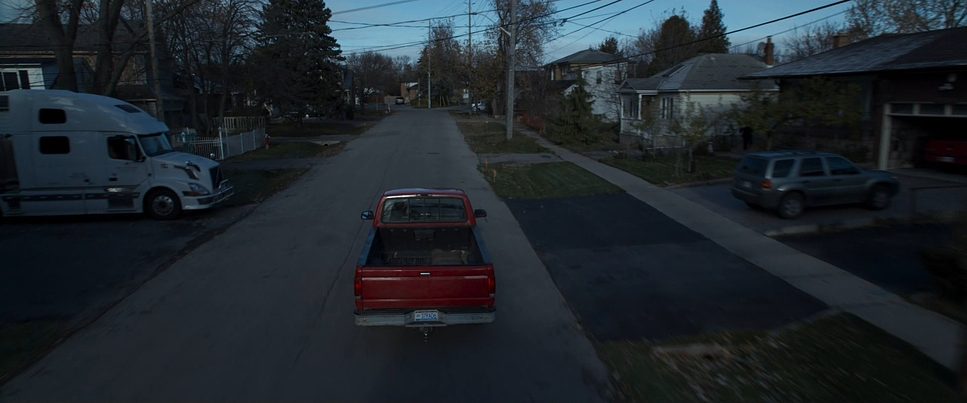
The lighting is deeply rooted in naturalism, relying heavily on motivated sources. Inside the shed, the primary source is the skylight and a single tungsten bulb. Cohen uses this limited palette to convey time and mood. The daylight entering from above is often soft and low-contrast, bouncing around the small room to create a flat, shadowless look that feels clinically isolated. It’s not moody in a theatrical sense; it’s moody because it’s monotonous.
When they escape, the lighting strategy flips. The outside world is aggressive. It is flooded with direct sunlight, harsh specular highlights, and the mixed color temperatures of the city at night. It’s not just brighter; the quality of light is different. The highlights have a harshness to them that suggests Jack’s eyes are struggling to adjust. There is a specific shot of Jack looking at a park where the light feels almost overwhelming in its abundance a sharp contrast to the soft, safe gloom of the Room.
Lensing and Blocking
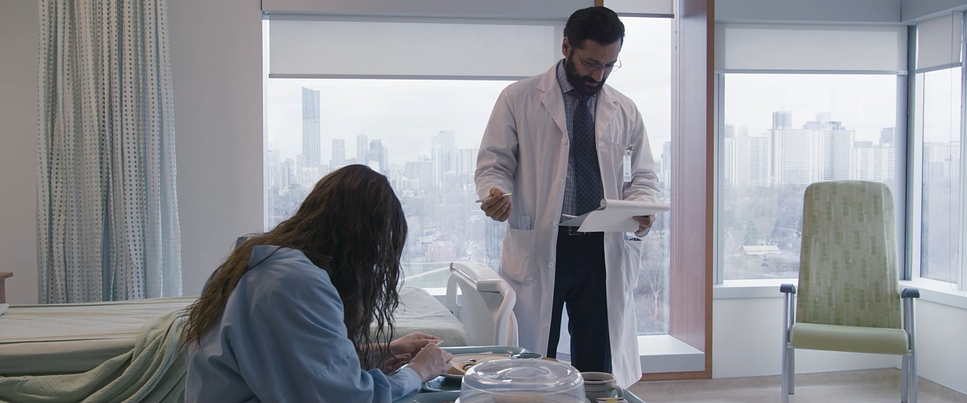
The choice of glass was critical here. Cohen utilized Panavision Primo Primes, which are known for their high contrast and sharpness. Inside the room, he likely leaned on wider focal lengths to capture the geography of the small space without removing the walls (which would cheat the reality). This creates a slight distortion on the edges, subtly communicating the unnatural confinement. Despite the wide lenses, the camera is physically close to the actors, creating an intimacy that feels intrusive.
Blocking the arrangement of actors is incredibly tight. Ma and Jack constantly occupy overlapping spaces. When Ma is agitated, her pacing is confined to a small loop, accentuating her entrapment. When Jack hides, he shrinks into corners. Outside, the blocking opens up. Characters move through open space, often appearing small in the frame. The contrast between the restricted, overlapping blocking in the first half and the isolated, open blocking in the second half visually narrates the emotional arc of the film.
Color Grading Approach
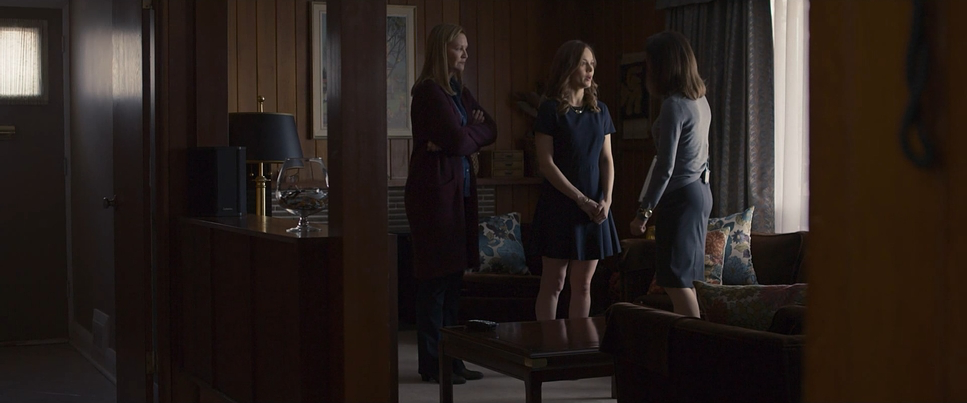
From a colorist’s perspective, the grade in Room is fascinating because of its restraint. The interior scenes rely on a cool, desaturated palette. It’s not crushed or high-contrast; rather, the blacks are lifted, and the mid-tones feel a bit flat, leaning into cool blues and cyans. This creates a “stale air” look it feels like an environment that hasn’t seen fresh air in years. The skin tones inside are kept slightly pale, lacking the blood-flow vibrancy of a healthy outdoor life.
Upon escape, the digital intermediate (DI) shifts gears. We introduce a richer, warmer color temperature. The greens of the grass and the blues of the sky are separated and saturated. The image gains dynamic range the blacks get deeper, and the highlights are allowed to roll off naturally rather than clipping into a flat white. The color shift isn’t just about making things “pretty”; it’s about sensory overload. The saturation feels intense because our eyes, like Jack’s, have adjusted to the muted grey-blue of the shed.
Technical Aspects & Tools
Room (2015)
RED Epic Dragon • Panavision Primo Primes • 2.39:1| Genre | Drama, Thriller, Psychological Horror, Horror, Family, Motherhood |
| Director | Lenny Abrahamson |
| Cinematographer | Danny Cohen |
| Production Designer | Ethan Tobman |
| Costume Designer | Lea Carlson |
| Editor | Nathan Nugent |
| Time Period | 2010s |
| Color Palette | Cool |
| Aspect Ratio | 2.39 – Anamorphic |
| Format | Digital |
| Lighting | Soft light, Top light |
| Lighting Type | Daylight, Artificial light, Fluorescent |
| Story Location | … North Amercia > United States |
| Filming Location | … Ontario > Toronto |
| Camera | RED Epic Dragon |
| Lens | Panavision Primo Primes |
| Film Stock / Resolution | Redcode raw 5K |
Technically, the choice to shoot on the RED Epic Dragon rather than an ARRI Alexa was a distinct one. The RED sensor, especially the Dragon, has a very specific way of handling texture and resolution (shooting at 5K Redcode RAW). It tends to have a slightly sharper, more clinical “bite” than the Alexa, which works perfectly for the gritty, unromanticized texture of the shed.
Pairing the RED sensor with Panavision Primo Primes ensures that despite the digital sharpness, the image retains a cinematic quality. The Primes are excellent at resolving detail without feeling sterile. The production also had to be inventive with the 2.39 aspect ratio. Capturing a square room in a wide format meant they had to be very precise with camera placement. The team likely used modular set walls to physically fit the camera body into corners to get those wide, establishing angles, but the visual result trapping the characters in a wide strip of reality validates the technical struggle.
- Also read: STAND BY ME (1986) – CINEMATOGRAPHY ANALYSIS
- Also read: THE EXORCIST (1973) – CINEMATOGRAPHY ANALYSIS
Browse Our Cinematography Analysis Glossary
Explore directors, cinematographers, cameras, lenses, lighting styles, genres, and the visual techniques that shape iconic films.
Explore Glossary →