It’s been over two decades since Park Chan-wook unleashed Oldboy, and frankly, it still schools most modern productions on how visual language should work. I’ve been staring at scopes and grading monitors for years, but every time I revisit this film, I feel like a student again. It doesn’t just stick with you; it burrows deep.
While the twist ending gets all the glory, the real masterpiece here is the meticulous craft. It’s a film that demands close attention—not just to the narrative, but to the specific decisions made in the color suite and on set that turn a revenge thriller into a psychological nightmare. As a colorist, I look at Oldboy and see a blueprint for how to use darkness, texture, and saturation to tell a story without saying a word.
About the Cinematographer
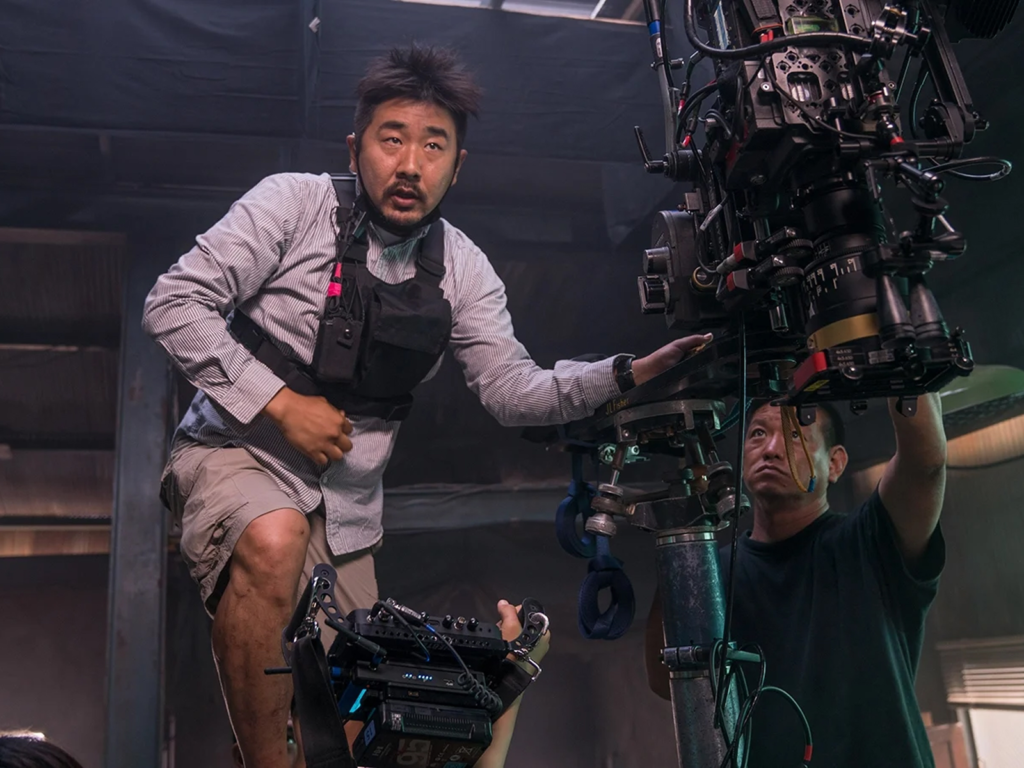
The visual architect behind this distinctive look is Chung Chung-hoon. If you follow Korean cinema, you know he isn’t just a technician; he’s a storyteller who paints with dirty light and hard shadows. While he’s gone on to shoot massive Hollywood projects, his work here with Park Chan-wook is raw and hungry.
Chung didn’t just set up an Arri 435 and hit record; he created a synergy where the cinematography is an active, aggressive character. He blends a documentary-like energy with highly stylized, almost operatic framing. He’s not afraid to let things go ugly or dark if it serves the emotion. In Oldboy, that approach is vital. The cinematography doesn’t just show us Desu’s pain; it forces us to inhabit it.
Inspiration Behind the Cinematography
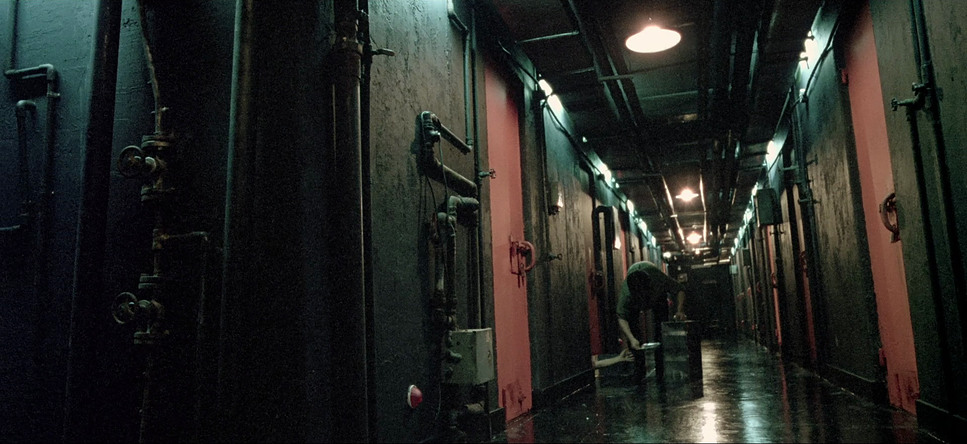
Oldboy draws its visual DNA directly from its themes: captivity, fragmentation, and the primal drive for vengeance. The visual language had to reflect Desu’s descent into a personal hell. The initial premise—a man imprisoned for 15 years and inexplicably released—immediately demanded a palette of confinement.
Park Chan-wook leaned into the manga origins but stripped away the polish to find something more animalistic. The film oscillates between claustrophobic intensity, like the grim green hues of Desu’s cell, and jarring, agoraphobic expanses when he hits the city streets. The visual grammar mirrors Desu’s fractured memory. It’s not just about “looking cool”; the aesthetic choices are designed to put the viewer into a fractured headspace, making us feel as disoriented and desperate as the protagonist.
Camera Movements
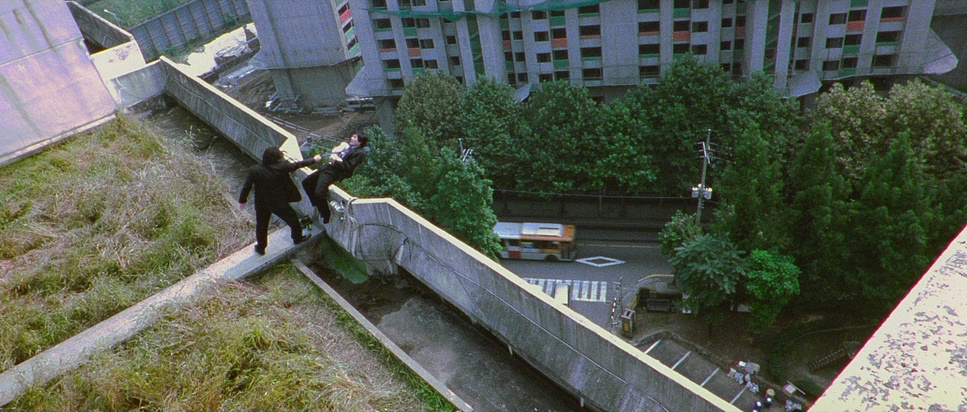
The camera work in Oldboy is a masterclass in motivation. Every pan, tilt, and track feels like it’s reacting to the character’s psychology. The most famous example is, of course, the hallway fight—a single take that has become legendary.
From a technical perspective, this “oner” isn’t just a flex; it’s a storytelling necessity. By tracking laterally and refusing to cut, the camera forces us to endure the exhaustion of the fight alongside Desu. We witness every stumble and desperate hammer swing. As a colorist, I have a massive appreciation for shots like this because they are a nightmare to grade. You can’t hide exposure shifts behind a cut. You have to ride the levels dynamically, keyframing the contrast as the camera whips from dark corners to the elevator light, ensuring the visual arc remains unbroken.
Compositional Choices

Chung Chung-hoon’s compositions are surgical. He leverages the 2.20 aspect ratio to trap characters in the frame using negative space and stark geometry. The prison cell scenes are boxed in, emphasizing entrapment, but even after Desu is released, the cityscapes often frame him within doorways or alleys—subtly suggesting he is still in a prison, just a larger one.
A recurring motif is the use of mirrors and reflections, symbolizing the fragmentation of the self. When Desu sees his reflection, or during the final hypnotism sequence, these aren’t just cool shots; they are visual cues for his identity crisis. When I’m grading scenes with this many reflective surfaces, I have to be incredibly careful with secondary isolations to ensure the reflection carries the right tonal weight without distracting from the subject. The way characters are often framed off-center or obscured forces the audience to actively lean in, searching for the truth just like Desu.
Lighting Style
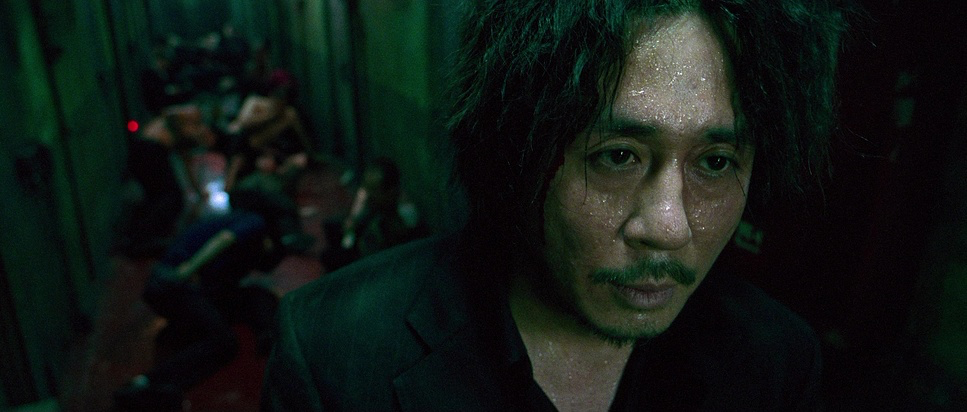
The lighting here is a rejection of the soft, flattering light we see in so much modern content. It is hard, high-contrast, and often sourced from motivated practicals—neon signs, harsh overhead fluorescents, and gritty streetlamps.
Chung utilized Zeiss Super Speeds, likely shooting wide open to dig into the shadows of those dark sets. The result is a shallow depth of field that feels suffocating. The lighting creates deep, crushing shadows—a “toe” in the curve that drops off rapidly into black. It mirrors Desu’s ignorance and moral darkness. When he is released, the light isn’t welcoming; it’s artificial and abrasive. For me, this lighting is a roadmap in the grade. The highlight roll-off is often abrupt, not gentle. It demands punchy contrast in post-production. You don’t try to lift the shadows here; you let them die, because that darkness is where the fear lives.
Lensing and Blocking
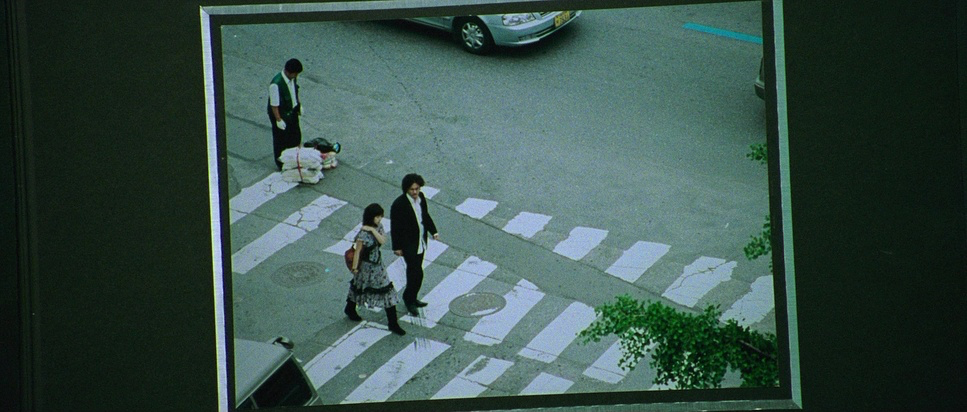
The lensing choices alternate between two extremes: wide angles that distort facial features to heighten the grotesque reality of Desu’s captivity, and telephoto compression that isolates him in a crowd. The distortion on the close-ups isn’t a mistake; it’s a texture that adds to the unease.
The blocking is equally precise. Characters are arranged to emphasize power dynamics—Woo-jin is often framed above or distant, dominating the space, while Desu is physically contained by the architecture or the mass of enemies he faces. The choreography of the hallway fight is specifically blocked for the side-scrolling camera perspective, turning a brawl into a dance of violence. It’s a perfect example of how blocking and camera department have to be in total sync.
Color Grading Approach
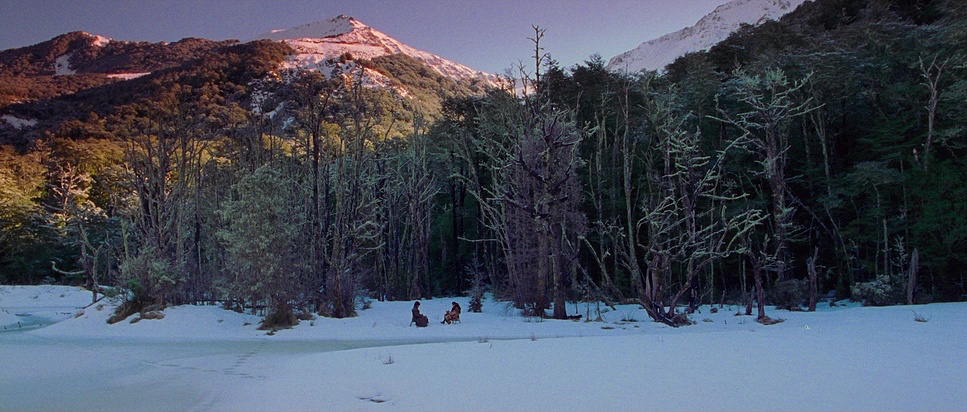
This is where my world truly intersects with the film. The colorist, Yong-gi Lee, did something fascinating here. The palette is undeniably dark, leaning into desaturated greens, sick teals, and muted earth tones, particularly in the prison scenes. It creates a foundation of biological rot.
However, it’s not a monochrome wash. There is distinct hue separation. Strategic pops of deep red (blood, passion) or warm practical lights cut through the cool, dirty cyan cast. This separation keeps the image from feeling flat or muddy. The skin tones are often largely desaturated but retain enough density to feel alive, albeit barely.
I suspect the original 35mm negative provided a beautiful, organic highlight roll-off that the digital grade respected. Even in the 4K remaster, you can sense that print-film density. The grade accentuates the grime—the sweat on Desu’s face, the texture of the wallpaper. It’s a tactile grade. It’s not about making things look “pretty”; it’s about making them feel abrasive. It teaches us that the best grading doesn’t just fix colors; it sets the emotional temperature of the room.
Technical Aspects & Tools
| Oldboy — Technical Specifications | |
|---|---|
| Genre | Action, Drama, Mystery, Thriller, Psychological Horror, Horror, Crime, Prison, Coming-of-Age, Revenge, Neo-Noir |
| Director | Park Chan-wook |
| Cinematographer | Chung Chung-hoon |
| Production Designer | Seong-hie Ryu |
| Costume Designer | Cho Sang-kyung |
| Editor | Kim Sang-beom |
| Colorist | Yong-gi Lee |
| Time Period | 2000s |
| Color Palette | Cool, Green, Blue |
| Aspect Ratio | 2.35 – Spherical |
| Format | Film – 35mm |
| Lighting | Hard light, High contrast, Side light |
| Lighting Type | Daylight, Sunny |
| Story Location | … Asia > South Korea |
| Filming Location | … Asia > South Korea |
| Lens | Zeiss Ultra Prime |
| Film Stock / Resolution | 4K |
Considering this was 2003, the technical execution is profound. Shooting on 35mm film with the Arri 435 gave the image a grain structure and latitude that digital sensors of that era couldn’t touch. That organic grain is crucial—it softens the digital edges and marries the CGI elements (like the ant hallucination) with the live action.
The dynamic range of the film stock was essential for preserving detail in those high-contrast lighting setups. It allowed them to expose for the shadows without blowing out the practical lights in the background. In post-production, working with film scans offers a density of color that is a joy to grade. You can push the contrast heavily without the image falling apart, which is exactly what gives Oldboy its weighty, substantial feel.
Enduring Resonance
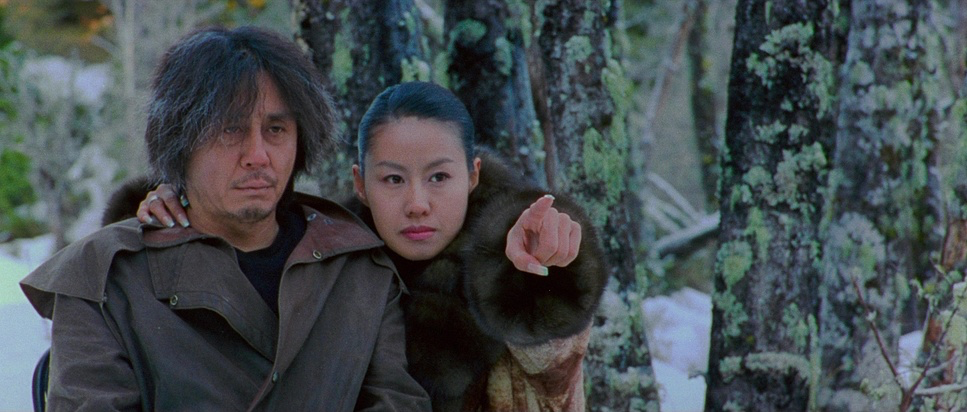
Looking back, Oldboy proves that “cinematography” isn’t just about pretty wallpapers; it’s about emotional logic. As a filmmaker, I’m always hunting for that perfect alignment where the lens choice, the lighting, and the grade all point in the same direction. Oldboy achieves this with ferocity.
Chung Chung-hoon and Park Chan-wook didn’t just make a movie; they created a texture. The film makes you feel “extremely messed up” not just because of the taboo narrative, but because the visuals are engineered to unsettle you. It reminds me that our job isn’t to create perfection. It’s to create feeling. And for that reason, Oldboy remains one of the most important reference points in my library.
- Also read: BRAVEHEART (1995) – CINEMATOGRAPHY ANALYSIS
- Also read: ETERNAL SUNSHINE OF THE SPOTLESS MIND- CINEMATOGRAPHY ANALYSIS
Browse Our Cinematography Analysis Glossary
Explore directors, cinematographers, cameras, lenses, lighting styles, genres, and the visual techniques that shape iconic films.
Explore Glossary →