Most films impress you with technical muscle, but every so often, one comes along that feels less like a movie and more like a late-night conversation with an old friend. My Octopus Teacher (2020) is that film. It didn’t need a $200 million CGI budget or an A-list star to get under our skin; it just needed raw, almost uncomfortably intimate footage of a relationship no one saw coming.
From the first frame, the simplicity of it floored me. It’s a masterclass in empathy. We aren’t just watching a nature doc; we’re watching a guy use a camera to heal his own burnout. Diving into the visual craft of this film doesn’t feel like work it feels like a reminder of why we tell stories in the first place.
About the Cinematographer

We need to get one thing straight about the credits here. Technically, Roger Horrocks is the cinematographer, and his professional eye provides the film’s polished backbone. But you can’t talk about the “look” of this film without talking about Craig Foster. Craig wasn’t a “hired gun” DP; he was a man underwater for 300 days straight with a RED Dragon, trying to save his own soul.
He started by setting his camera at the mouth of a cave and just… waiting. On day 30, the octopus finally accepted him. That’s not just cinematography; that’s an endurance test. The result is a visual narrative born from total immersion. When you see those shots, you aren’t seeing a crew of twenty people behind a monitor. You’re seeing one guy, holding his breath, translating his direct experience into a 6K image. It’s a singular, unwavering devotion that you just can’t manufacture on a traditional set.
Inspiration Behind the Cinematography
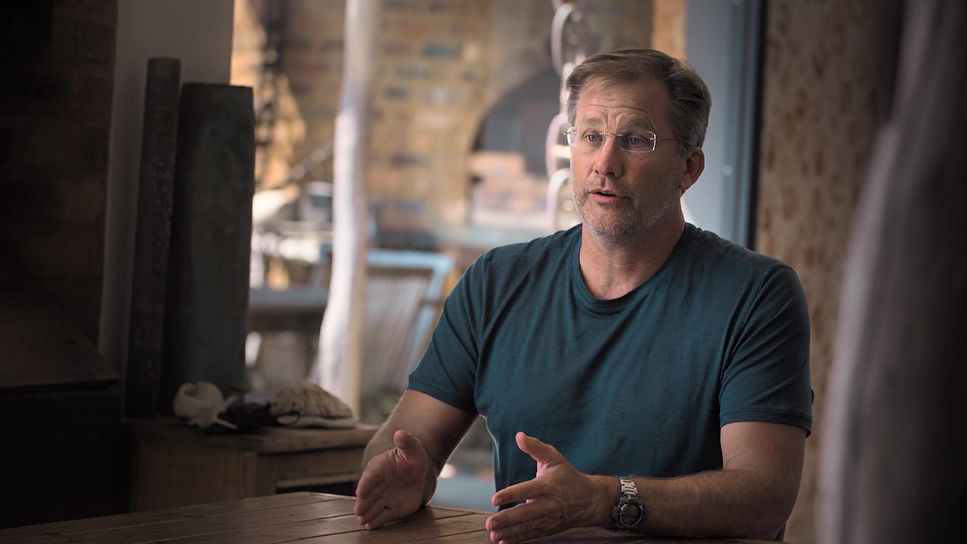
This wasn’t a pre-planned shoot. There were no storyboards for most of these sequences. The inspiration was the octopus herself. She essentially became the director, showing Craig behaviors that humans had rarely, if ever, seen before.
Pippa Erlich, one of the directors, described it as a film about the impact of nature on a human being. You feel that in every frame. The “visual style” wasn’t about being flashy; it was about vulnerability. The camera doesn’t act like an objective observer. It acts like a conduit. As Harry Srinivasan noted, it makes you feel like you’re part of something secret. It’s a “masterclass every day,” taught by a mollusk and captured by a man who was willing to listen.
Camera Movements
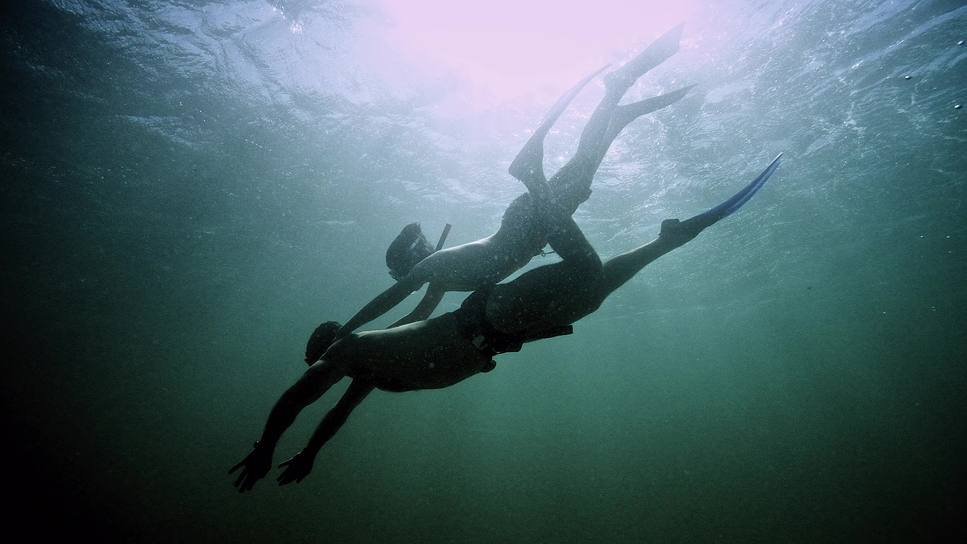
The camera work here is a lesson in “understated elegance.” Because Craig was free-diving, the movement is organic and fluid. The camera breathes with the ocean. It doesn’t feel like a heavy piece of gear; it feels like another creature drifting through the kelp forest.
There’s this beautiful tension between holding steady and letting go. When she’s camouflaged, the camera stays dead still, forcing us to hunt for her just like Craig had to. When she moves, the camera becomes her shadow. These aren’t rigid dolly moves they’re buoyant, balletic glides. Whether she’s “walking” on two tentacles or using jet propulsion to vanish, the camera follows with a weightlessness that feels ethereal. Even when the pajama shark starts its “death roll,” the camera stays disciplined. It’s visceral, but it never turns into shaky-cam chaos. That patience is exactly why we feel so connected to the screen.
Compositional Choices
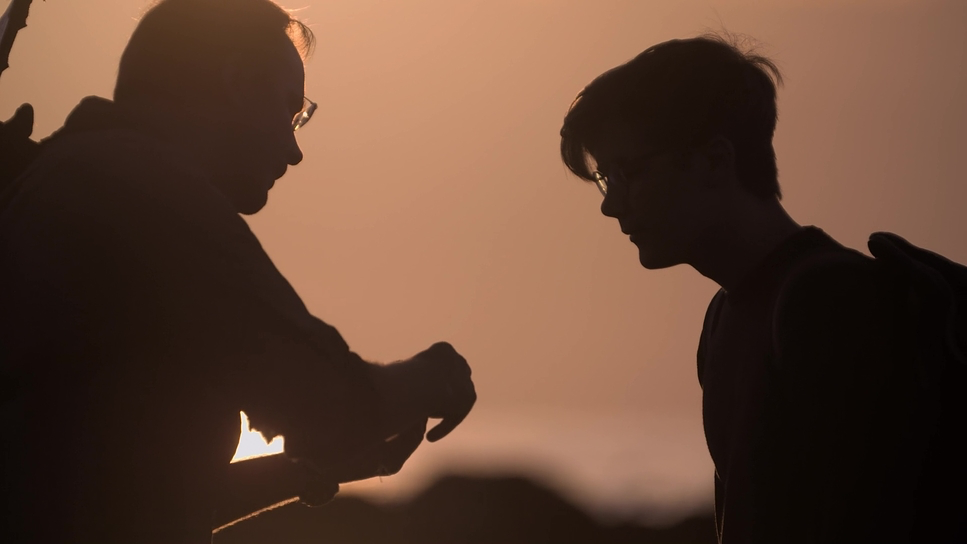
The framing here is brilliant because it’s so deliberate despite the chaos of the wild. We get these massive wide shots of the “great African sea forest” that establish the scale the towering kelp acting as natural vertical lines that pull your eye through the frame.
But then, the filmmakers hit you with the tight close-ups. That’s where the emotional heavy lifting happens. We’re staring into an alien eye or watching the skin patterns shift as she “grows horns.” When she finally rests a tentacle on Craig’s hand, the framing makes it feel like a holy moment. It’s not just a “wildlife shot”; it’s a portrait of a friend. They also use negative space perfectly like when she’s weak and panting in the cave after the shark attack. You feel her isolation because of where she’s placed in that frame.
Lighting Style
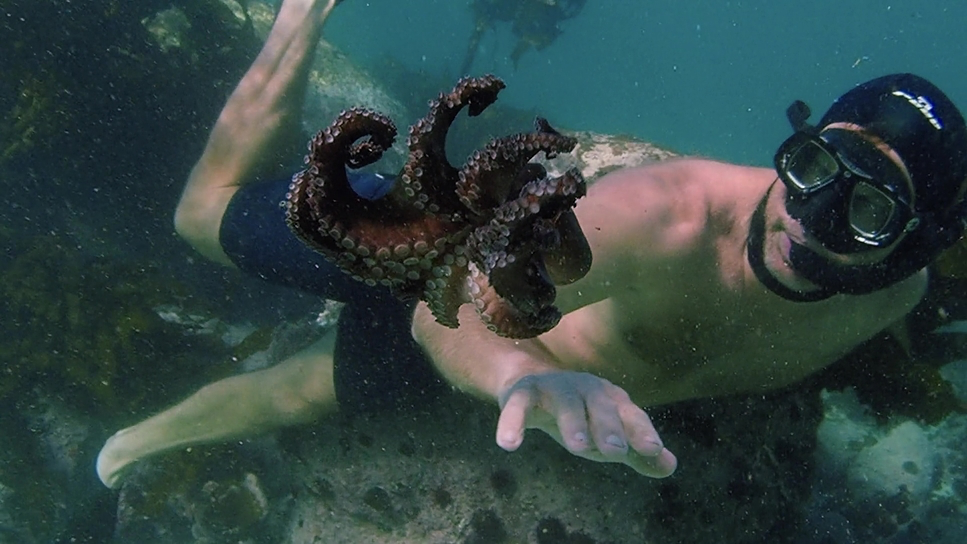
As a colorist, I love the lighting here because it’s 100% honest. No artificial lights, no bounce boards. Just the sun fighting its way through the water column.
The “god rays” are the stars of the show. Those shafts of light piercing the surface aren’t just pretty; they sculpt the kelp and give the octopus three-dimensional form. The water acts as a massive natural diffuser, giving the images a soft, dreamlike highlight roll-off that avoids the harsh “digital” look we all hate. It’s motivated, naturalistic lighting at its absolute best. The interplay of shadow and light makes her skin textures pop in a way that feels tactile. You can almost feel the cold water just by looking at the screen.
Lensing and Blocking
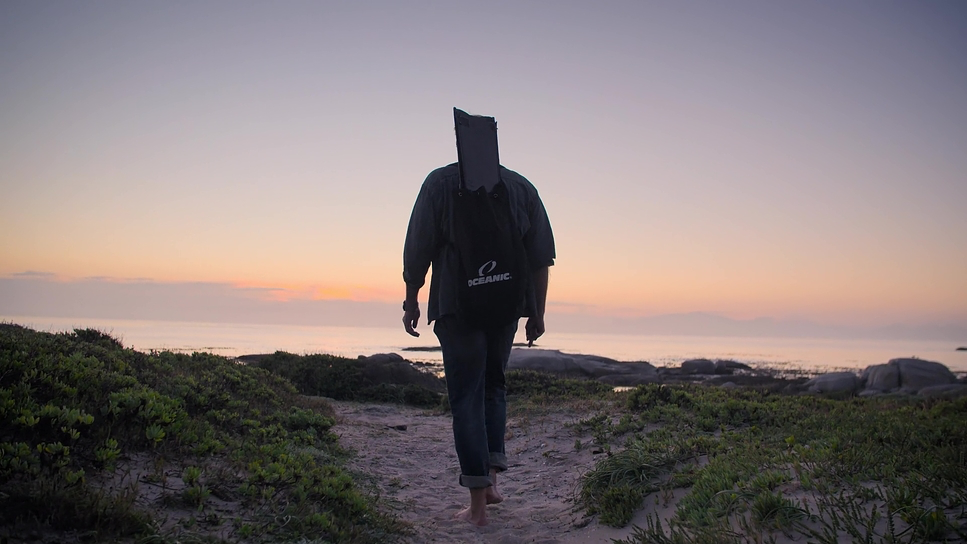
Craig’s dual role as subject and cameraman dictated the lensing. For the environmental stuff, they clearly went wide to capture the “cathedral” feel of the kelp forest. It gives you depth and context.
But for the intimate stuff? You’re looking at longer focal lengths or macro lenses. You have to be able to see the “tiny tentacle” growing back from a wound without shoving a lens in the creature’s face. The “blocking” wasn’t about marks on a floor; it was about trust. Craig visited her every day until she “hunkered down on his arm.” The relationship is the blocking. When she uses him as a shield while hunting, that’s not a staged shot that’s a result of months of patient positioning.
Color Grading Approach
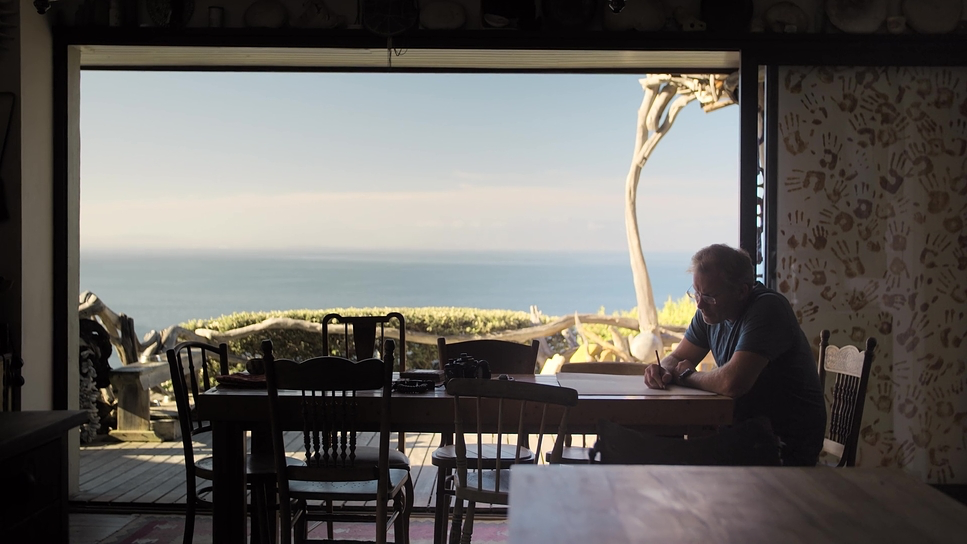
Here’s where I get really nerdy. Underwater footage is a nightmare everything turns into a muddy blue-green wash because you lose your reds and yellows almost instantly. The grade on this film, handled by Hakan Dag and Kyle Stroebel, is spectacular. It feels organic, almost like it was shot on film stock rather than a digital sensor.
The contrast shaping is key. They didn’t just “crush the blacks” to make it look moody. They lifted the shadows to keep the detail in the kelp, maintaining a mid-tone clarity that lets you see the octopus’s camouflage patterns perfectly.
Then there’s the hue separation. Despite the ocean being a “blue” world, the octopus’s reds and browns never get lost. They pop against the teal and indigo of the water. The tonal sculpting is subtle no aggressive vignettes just a thoughtful use of light to make sure your eye always knows where to land. It’s a grade that respects nature while making it look like a dream.
Technical Aspects & Tools
My Octopus Teacher | 6K RED Dragon
| Genre | Documentary, Drama, Nature Documentary, Wildlife, Science-Fiction |
| Director | Philippa Ehrlich, James Reed |
| Cinematographer | Roger Horrocks |
| Editor | Philippa Ehrlich, Dan Schwalm |
| Colorist | Hakan Dag, Kyle Stroebel |
| Color | Blue |
| Aspect Ratio | 1.78 – Spherical |
| Format | Digital |
| Lighting | Side light |
| Lighting Type | Daylight |
| Story Location | South Africa > Western Cape |
| Filming Location | South Africa > Western Cape |
| Camera | RED Dragon |
| Film Stock / Resolution | 6K |
Even though the film feels “raw,” the tech behind it was serious. Shooting 6K on a RED Dragon gave them the resolution they needed to crop in or stabilize if things got messy.
Crucially, they used high frame rates. An octopus moves fast especially when changing color or fleeing a predator. Slowing that down allows us to actually process their intelligence. The shark attack scene wouldn’t have half the impact if it wasn’t captured with that level of technical precision. The long production timeline also meant a massive post-production job, cleaning up noise in low-light shots and stitching years of footage into one cohesive arc. The tech serves the story here; it never distracts from it.
- Also read: FANNY AND ALEXANDER (1982) – CINEMATOGRAPHY ANALYSIS
- Also read: ALL QUIET ON THE WESTERN FRONT (1930) – CINEMATOGRAPHY ANALYSIS
Browse Our Cinematography Analysis Glossary
Explore directors, cinematographers, cameras, lenses, lighting styles, genres, and the visual techniques that shape iconic films.
Explore Glossary →