If you’ve seen the 2019 Turkish version of Miracle in Cell No. 7 on Netflix, you already know it’s designed to wreck you emotionally. But with this film, the technical choices are so tightly wound into the story that you can’t help but look at how it pulls off that emotional punch. It’s an adaptation of the South Korean hit, but the Turkish team used a very specific visual language to sell this story of innocence and a broken justice system. Let’s look at how they did it.
About the Cinematographer

Director Mehmet Ada Öztekin worked with cinematographer Hasan Kozan to build a look that switches between being incredibly tight and then suddenly massive. Kozan’s work here isn’t just about “pretty” shots; it’s about doing the heavy lifting for the script. His camera acts as an observer that actually cares about the characters. You can tell there was a real effort to keep the camera at eye level with Memo and Ova, ensuring we aren’t just watching them, but feeling the weight of the prison system alongside them. It takes a certain level of restraint to let the performance lead the camera rather than the other way around.
Inspiration Behind the Cinematography

The visual heart of this film is the contrast between Memo’s innocence and the 1983 Turkish legal system. Setting a film in the early 80s especially when the death penalty was still being actively carried out dictates the “texture” of the movie. It couldn’t be a clean, polished digital look. It needed to feel grounded and tactile.
The “one-eyed monster” (the fort) is a perfect example of how they used a location as a visual motif. It’s framed to look looming and silent, almost like a witness to the tragedy. The inspiration here seems to be about filtering a harsh reality through a child’s perspective oscillating between the wonder of a candy apple and the cold, gray walls of a cell.
Lensing and Blocking
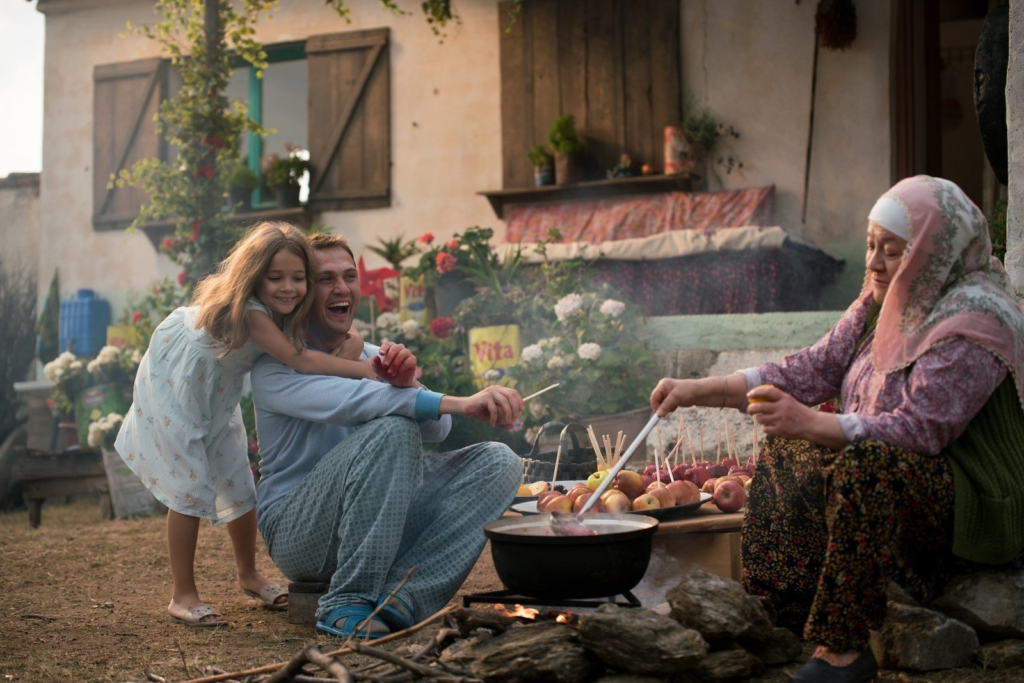
I’d bet they used a mix of spherical lenses here. In the prison scenes, you’ll notice they often go for wider glass. This does two things: it makes the cell feel cramped, but it also isolates Memo by showing just how much empty, cold space is around him.
When it comes to Memo and Ova, the lens choice usually shifts. They likely pulled out the telephoto lenses to compress the background. By throwing the background out of focus, they create a private “bubble” for the father and daughter. The blocking tells the same story. Early on, Memo is pushed to the edges of the frame in the cell he’s an outsider. But as the movie progresses, the other prisoners literally start to “shield” him with their bodies, moving into a protective circle that tells the story of their changing hearts without a single line of dialogue.
Camera Movements
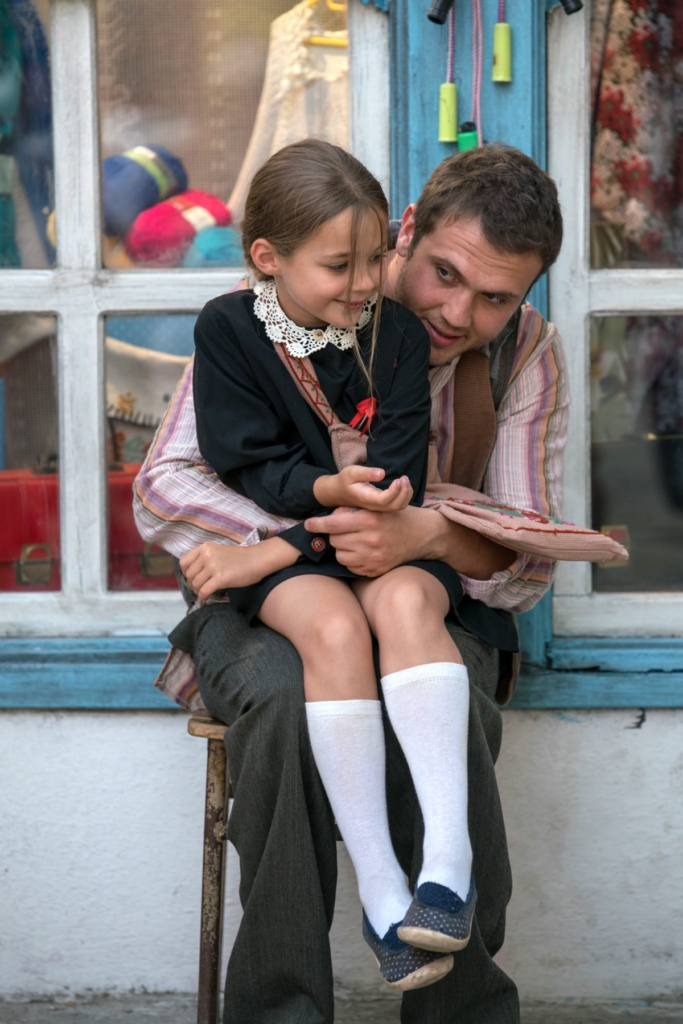
The camera in this film doesn’t move just for the sake of moving. In the village, it’s often handheld and low to the ground, matching Ova’s energy. It feels “alive” and breathing.
But look at what happens in the courtroom or the prison offices. The camera goes dead-still or moves on very slow, deliberate dollies. This creates a feeling of helplessness. It’s as if the “system” is this rigid, immovable object. Even in the cell, the camera only starts to “loosen up” and feel more handheld once the cellmates start to accept Memo. It’s a subtle shift from being a cold observer to being part of the family.
Compositional Choices
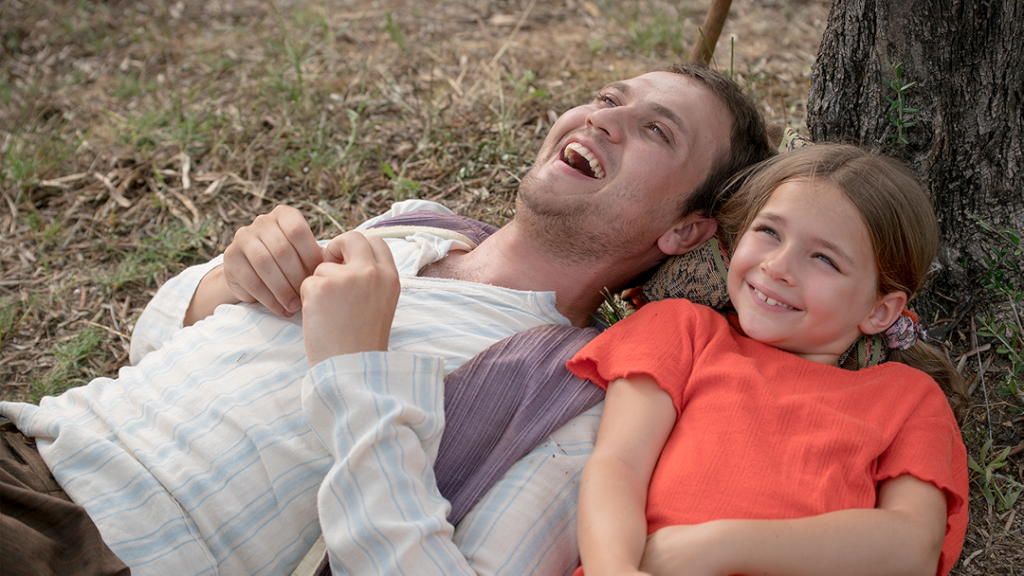
Composition is used as an emotional tool throughout. They frequently use framing to make Memo look small. Even when he’s the center of attention, the way he’s positioned against those massive prison walls emphasizes how much the system is crushing him.
In the cell, the composition is surprisingly layered. Take Yusuf, for example. He’s often framed against that crack in the wall he calls a tree. It’s a great bit of blocking that keeps his internal world in the frame even when the external world is a disaster. The filmmakers use leading lines like the long prison corridors to pull your eyes toward a sense of dread, while the village scenes are much more open and natural.
Lighting Style
This is where the emotional “temperature” is set. The village scenes are high-key and bathed in soft, natural light. It feels nostalgic and warm, almost like a memory.
The prison is the complete opposite. It’s all about high contrast and “motivated” lighting from small bulbs or high, narrow windows. As a colorist, I noticed how they let the shadows go deep they aren’t afraid of the black levels. There’s a “crunchiness” to the prison light that makes the concrete feel colder. But even in the dark, they always keep a strong key light on the faces during the emotional peaks. They make sure you can see every bit of raw emotion in the eyes, even if the rest of the room is falling into shadow.
Color Grading Approach
As a colorist, the grade is where I see the most intent. There are two distinct looks here. The “past” sequences (1983) have a slightly desaturated palette, leaning into warm, earthy tones. It’s not a “filter,” but a careful shift in the greens and blues to make the world feel a bit more faded.
In the prison, I’d have pushed for that aggressive contrast we see on screen. The blacks are “crushed” to add density and a sense of weight. I also noticed a slight cyan or “institutional” shift in the highlights of the prison scenes. It’s just enough to make the air feel cold without making the skin tones look sickly. We call this hue separation—keeping the warmth of the characters’ skin while the environment around them turns cold. I suspect they also added a layer of organic film grain to give it that lived-in, period-accurate feel.
Technical Aspects & Tools
Based on the dynamic range and the way the highlights roll off, this was likely shot on an ARRI Alexa or a similar high-end digital cinema camera. These sensors are great for these kinds of “heavy” grades because they hold onto the detail in the shadows even when you’re pushing the contrast.
The 2.39:1 aspect ratio is perfect for this. It allows for those wide compositions in the cell that show all the prisoners at once, emphasizing the lack of privacy. While some viewers might notice streaming artifacts like “blurry subs,” the actual image underneath is incredibly high-quality. The technical side never gets in the way of the story; it just provides the canvas for the performance to land.
- Also read: SHERLOCK JR. (1924) – CINEMATOGRAPHY ANALYSIS
- Also read: NEON GENESIS EVANGELION: THE END OF EVANGELION (1997) – CINEMATOGRAPHY ANALYSIS
Browse Our Cinematography Analysis Glossary
Explore directors, cinematographers, cameras, lenses, lighting styles, genres, and the visual techniques that shape iconic films.
Explore Glossary →