When I re-watched Garth Davis’s Lion (2016) recently, the narrative punch of Saroo Brierley’s true story was still there, but what really hooked me was the technical precision. It is a masterclass in duality.
Lion is effectively two films stitched together: the visceral, chaotic survival story of five-year-old Saroo in India, and the introspective, cooler-toned journey of his adult self in Tasmania. My job as a colorist is often to bridge disparate worlds like these, ensuring they feel part of the same universe while maintaining their distinct identities. Lion’s cinematography, led by Greig Fraser, manages this balance with an execution that is technically flawless and emotionally heavy.
About the Cinematographer
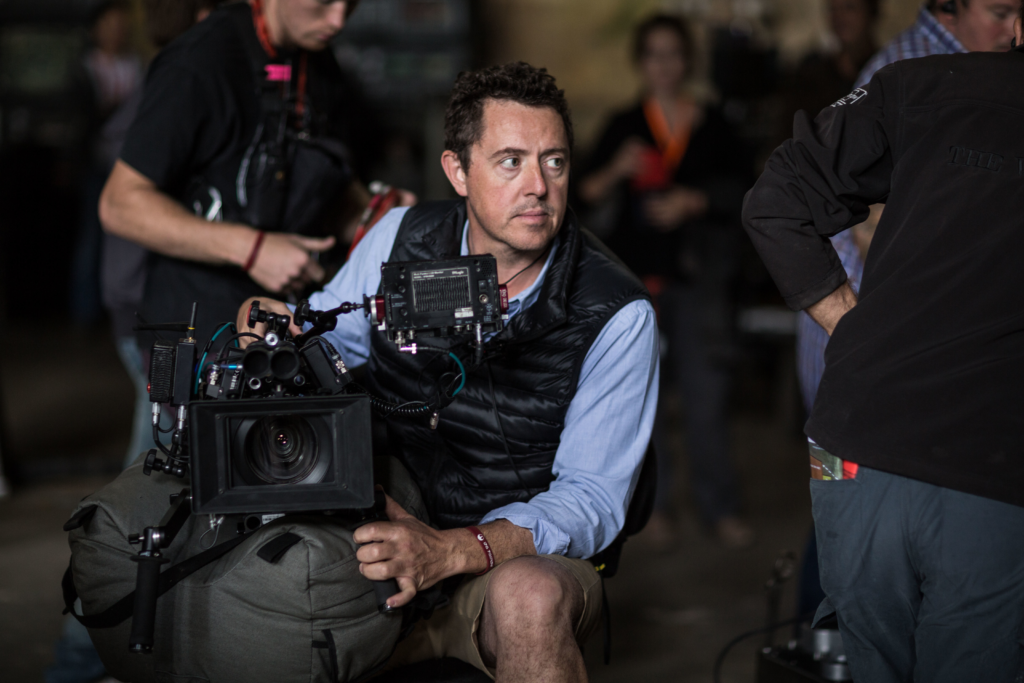
To understand the look of Lion, you have to understand Greig Fraser. While general audiences might know him now for the massive scale of Dune or The Batman, his work has always been grounded in a distinct kind of naturalism. Before Lion, he shot Zero Dark Thirty and Foxcatcher, films that relied on an almost documentary-like authenticity. He is a DP who understands that lighting doesn’t need to be perfect; it needs to feel motivated.
In Lion, Fraser’s commitment to “source-heavy” lighting is evident. He doesn’t just light the actor; he lights the environment and lets the actor exist within it. This was crucial for navigating the visual jump between the heat of Calcutta and the coastal cool of Melbourne. It’s not just about pretty shots; it’s about a cohesive visual psychology that connects Saroo’s trauma to his eventual healing.
Inspiration Behind the Cinematography
The core visual strategy here seems to be “scale.” The film constantly emphasizes the sheer size of the world against the smallness of the protagonist. Mark Kermode famously described the early scenes as having a “Spielbergian element,” and he’s right but it’s a dark, hostile Spielberg. Fraser and Davis frame little Saroo as a speck against towering water towers, endless rail yards, and crushing crowds.
This isn’t just an aesthetic choice; it’s a narrative necessity. The visual information overload of the Calcutta train station creates a sense of claustrophobia that mirrors the child’s confusion. The inspiration feels rooted in the idea of a “labyrinth” making the physical world feel formidable and dangerous. It transforms the location from a backdrop into an antagonist.
Camera Movements
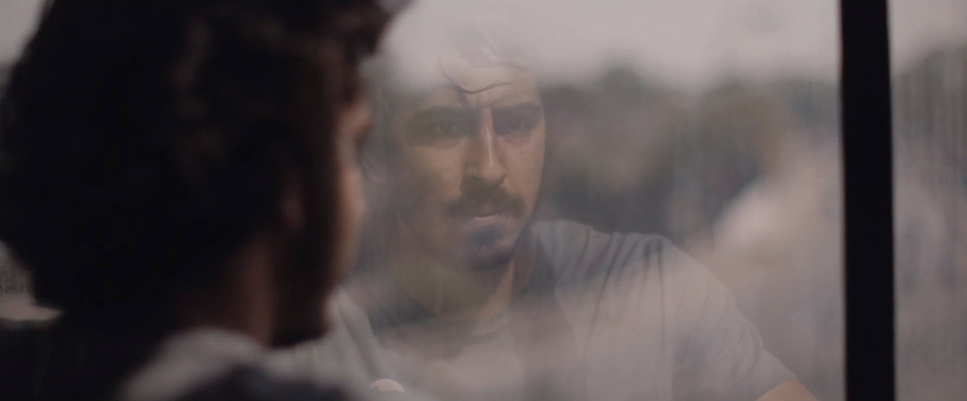
The camera work in Lion is a tale of two rigs. In the early India sequences, particularly with young Saroo and his brother, the camera is handheld, low to the ground, and energetic. It sits at a child’s eye level. There is a specific “wobble” to the handheld work here it isn’t the shaky-cam of an action movie, but an unsteady drift that mimics the instability of Saroo’s situation.
Once he is trapped on the train, the language shifts. We get relentless, locked-off shots or smooth tracking movements that emphasize the mechanical indifference of the machine taking him away. Later, for adult Saroo in Australia, the camera settles down. We see elegant dollies and crane shots sweeping over the Tasmanian coast. However, as his obsession with finding his home takes over, the camera becomes static, often locking him in the frame, creating a visual stagnation that contrasts with the movement of his childhood.
Compositional Choices
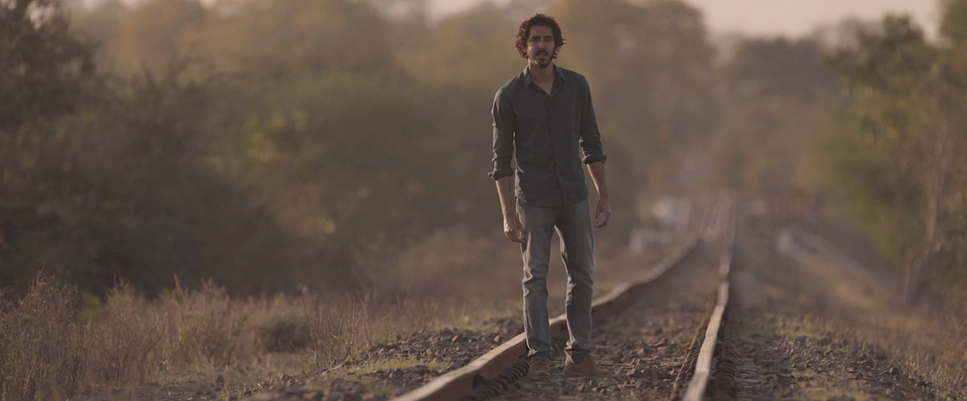
Fraser’s framing does a lot of the heavy lifting for the story. In the first half, the composition is dominated by negative space. We frequently see wide shots where Saroo is pushed to the bottom or corner of the frame minimized by the architecture of the dam or the train platform. Deep depth of field is often used here, keeping the terrifying scale of the background sharp and imposing.
As Saroo grows into Dev Patel, the compositions become more “short-sided.” Even when he is with his adoptive parents or girlfriend, he is often framed with the open space behind him rather than in front of him, subconsciously suggesting he is looking backward or disconnected from his present. The “war room” scenes, where he is pinning maps to the wall, are framed tightly, almost suffocatingly, turning his modern apartment into a cage until the digital window of Google Earth offers a way out.
Lighting Style
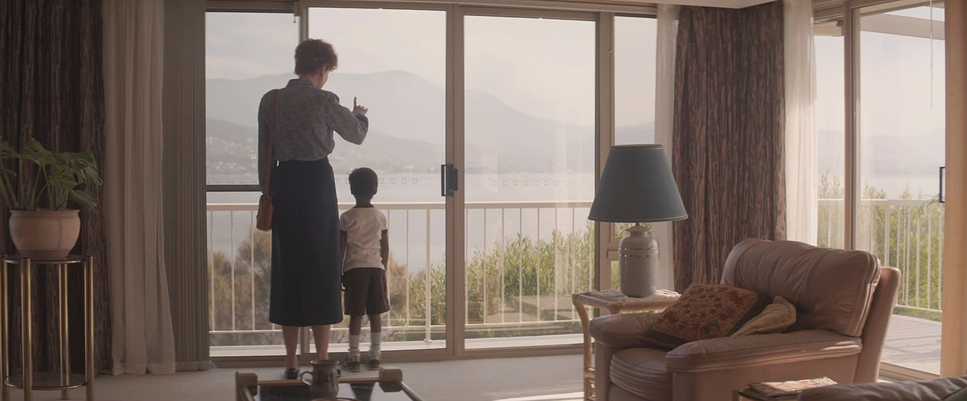
The lighting strategy is aggressive in its separation of the two worlds. For the India sequences, Fraser and his gaffer lean into high-contrast daylight. It feels hot. The highlights are often blown out, mirroring the harsh Indian sun, while the nights are lit by practicals tungsten bulbs, street fires, and train station floodlights. It creates a “dirty” mixed-temperature look that feels raw and unpolished.
In contrast, the Australian segments are softer, utilizing cooler daylight and diffusion. The light wraps around the characters more gently, reflecting the safety of his adopted life. However, the most interesting lighting choice happens in the third act: the “Google Earth” phase. Here, Saroo is often lit solely by the cool, blue-ish output of his laptop screen. It creates a localized, artificial environment that separates him from the warm tungsten practicals of the rest of his house (and his family). It’s a simple lighting setup, but it perfectly visualizes his isolation.
Lensing and Blocking
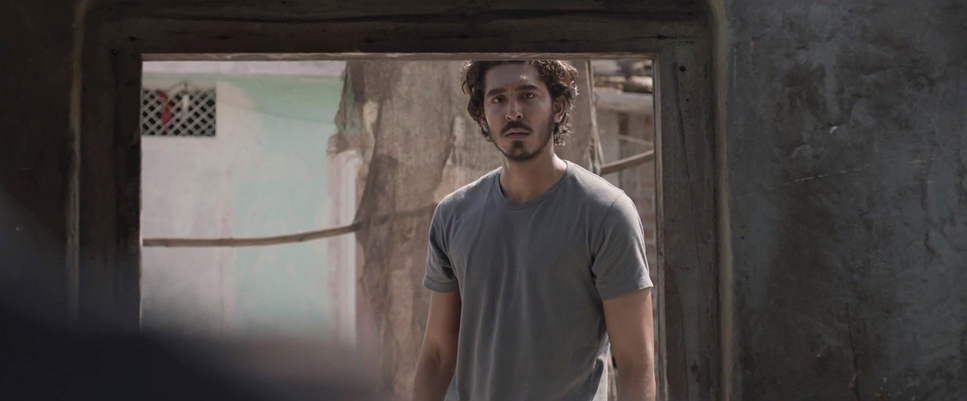
While the film feels expansive, the lens choices are intimate. Fraser often uses anamorphic glass to get that cinematic width (2.39:1 aspect ratio), but he pushes in close. In India, wide-angle lenses close to the subject exaggerate the distance between Saroo and the background. It makes the world feel like it’s stretching away from him.
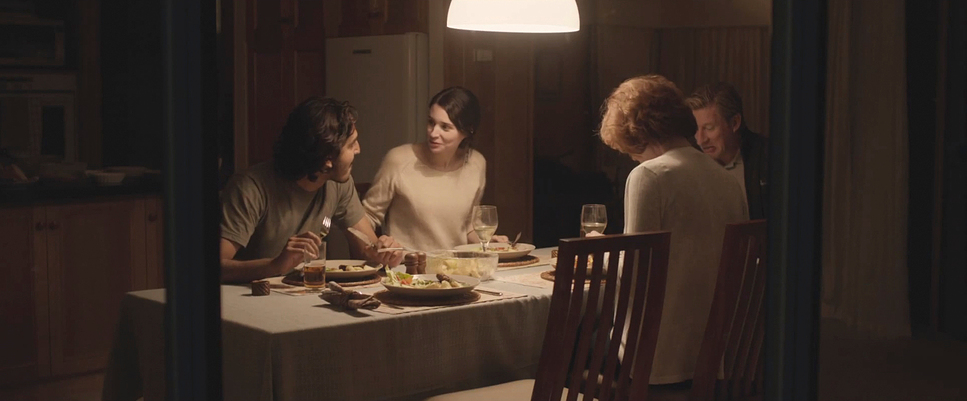
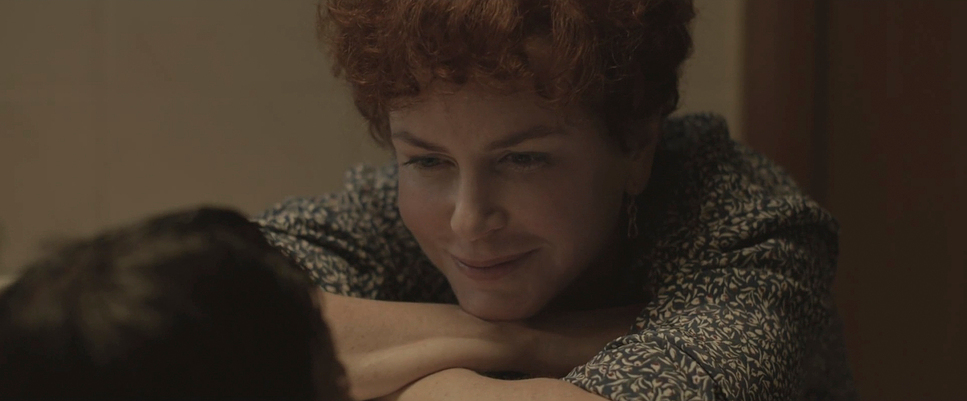
For adult Saroo, the focal lengths tighten up. We see more use of 50mm and 85mm equivalents, isolating Dev Patel from the background elements. This shallow depth of field forces the audience to focus entirely on his internal performance. The blocking reinforces this: young Saroo is constantly blocked as a small object moving through a large frame, while adult Saroo is often blocked in stasis, sitting, staring, or standing still while the world moves around him.
Color Grading Approach
As a colorist, this is where I geek out. The grade, executed by Olivier Fontenay, is a textbook example of a “Print Film Emulation” (PFE) workflow done right.
The India timeline isn’t just “yellow” that’s the amateur way to do warm. Instead, it has a dense, earthy palette. The blacks are lifted slightly but retain a heavy, filmic density. The greens are skewed toward olives and browns, and the skin tones are rich and golden. It mimics the response of a Kodak vision stock, handling the high-contrast lighting with a smooth highlight roll-off that prevents the digital image from looking “video-y.”
The Australian timeline flips the script. It is decidedly cooler and more desaturated. The greens here are cyan-leaning, and the skin tones are paler, stripping away the warmth of the first half. It’s a “cleaner” look, but it feels emotionally colder. Fontenay manages to separate these hues without breaking the image the transition between the two looks feels like a memory fading, rather than a jarring filter change.
Technical Aspects & Tools
Lion (2016)
Technical Specifications| Genre | Drama |
| Director | Garth Davis |
| Cinematographer | Greig Fraser |
| Production Designer | Chris Kennedy |
| Costume Designer | Cappi Ireland |
| Editor | Alexandre de Franceschi |
| Colorist | Olivier Fontenay |
| Time Period | 2000s |
| Color | Cool, Desaturated |
| Aspect Ratio | 2.39 – Spherical |
| Format | Digital |
| Lighting | Soft light, Side light |
| Lighting Type | Daylight |
| Story Location | … Victoria > Melbourne |
| Filming Location | … Victoria > Melbourne |
| Camera | ARRI ALEXA XT / XTplus, RED Epic Dragon |
| Film Stock / Resolution | 3.2K / 3.2K ArriRaw |
We don’t need to guess about the gear; the specs confirm the visual choices. Fraser shot Lion primarily on the ARRI ALEXA XT and XT Plus, with some RED Epic Dragon used for specific setups (likely drone or gimbal work). He captured in 3.2K ARRIRAW.
The Alexa is famous for its dynamic range, which explains how they held detail in those bright Indian exteriors while still seeing into the shadows of the train carriages. The digital format was essential for the VFX workflow, specifically the Google Earth sequences. The challenge there wasn’t the camera work, but the compositing making a low-res satellite interface look cinematic. They likely used screen replacements and careful glow diffusion in post to make the computer screen feel like a light source rather than just a flat graphic.
- Also read: AMORES PERROS (2000) – CINEMATOGRAPHY ANALYSIS
- Also read: DOG DAY AFTERNOON (1975) – CINEMATOGRAPHY ANALYSIS
Browse Our Cinematography Analysis Glossary
Explore directors, cinematographers, cameras, lenses, lighting styles, genres, and the visual techniques that shape iconic films.
Explore Glossary →