Let’s talk about Ip Man (2008), it’s not just for Donnie Yen’s incredible performance or the legendary Wing Chun it’s for how the film is seen. It is a textbook example of visual storytelling, specifically in how it transitions from tranquil domesticity to the grim realities of war. For me, dissecting its visual DNA is fascinating because every frame feels intentional.
Stepping into Ip Man is like looking at a vibrant painting that slowly, painfully bleeds out into a charcoal sketch. The film doesn’t just chronicle the life of the Wing Chun grandmaster; it uses the camera to drag us through his psychological shift. We start in the prosperous days of Foshan lush, golden, stable and descend into the harrowing Japanese occupation. This visual dichotomy serves as the emotional anchor of the movie. The filmmaking team didn’t rely solely on dialogue to tell you Ip Man was suffering; they used compositional choices, dynamic lighting, and a bifurcated color grade to make you feel the drop in temperature. I’m constantly impressed by how they managed to make the action sequences feel both brutally real and balletically beautiful without losing the grit of the period.
About the Cinematographer
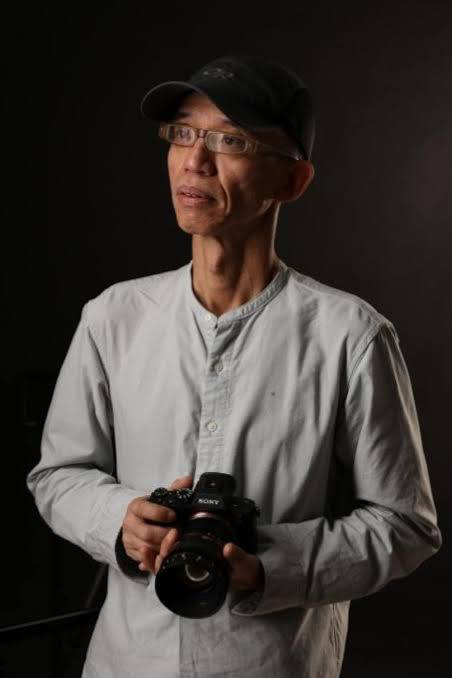
The visual fingerprint on Ip Man belongs to O Sing-Pui, a veteran cinematographer who knows exactly how to capture the kinetic energy of Hong Kong action. His collaboration with director Wilson Yip here is seamless. O Sing-Pui doesn’t just shoot coverage; he creates an atmosphere. The consistency in the visual language suggests a DP who was deeply in sync with the production design and the historical weight of the narrative. It feels like the camera is an active participant sometimes an observer in the corner of a tea house, other times a frantic witness in a coal mine. For a colorist like myself, looking at the final image, it’s clear there was a strong partnership between the camera department and post-production to ensure the transition between the film’s two “worlds” was cohesive yet distinct.
Inspiration Behind the Cinematography
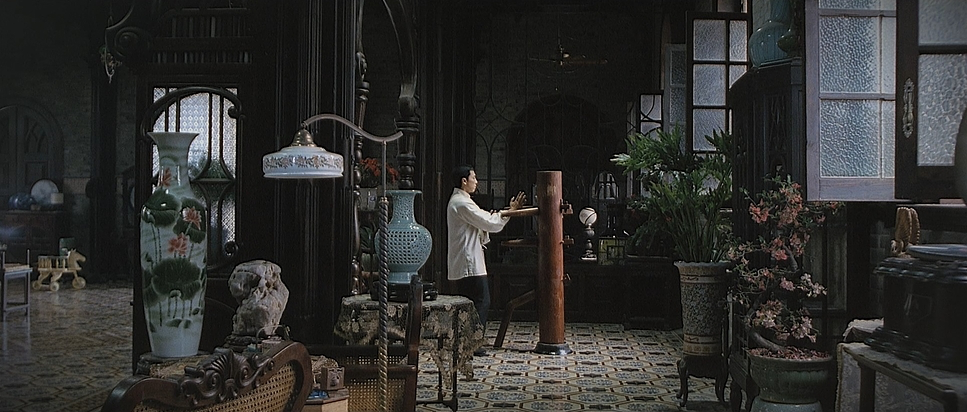
The primary inspiration behind the look seems to stem directly from the “Two Worlds” concept of the script. The film opens in 1935, where Foshan is the center of the martial arts world. Ip Man is wealthy, respected, and comfortable. The visual inspiration here pulls from classical Chinese art balanced, harmonious, and rich. It’s a visual language of abundance.
Then, the timeline jumps to 1937 and the Japanese invasion. The inspiration pivots immediately to a grittier, almost documentary-style realism. The filmmakers needed to convey hunger, destruction, and the loss of dignity. This isn’t just about showing poverty; it’s about reflecting the internal struggle. The visual style underscores Ip Man’s transformation from a shy, quiet master to a man who, when pushed, possesses a “merciless” intensity. The contrast from quiet elegance to stark brutality is the driving force behind the aesthetic.
Camera Movements
The camera movements in Ip Man are disciplined, mirroring the protagonist’s martial art. In the early Foshan scenes, we see controlled, deliberate movements. Smooth dolly shots and subtle tracking follow Ip Man through his mansion, emphasizing his composed demeanor and the stability of his life.
However, once the occupation begins, the camera becomes restless. We start seeing more handheld work during scenes of chaos or displacement, lending a raw, immediate quality to the struggle. But it’s in the fight sequences where the camera work truly shines. O Sing-Pui utilizes dynamic tracking shots that move with the action, keeping Ip Man at the center of the frame even as he navigates multiple opponents. In the pivotal “10 men” fight, the camera swirls around the action, maintaining spatial awareness while capturing the “rapid-fire punches” Wing Chun is famous for. The pans and tilts are whip-fast to keep up with Donnie Yen’s speed, but they rarely feel gratuitously shaky. It’s motivated chaos.
Compositional Choices
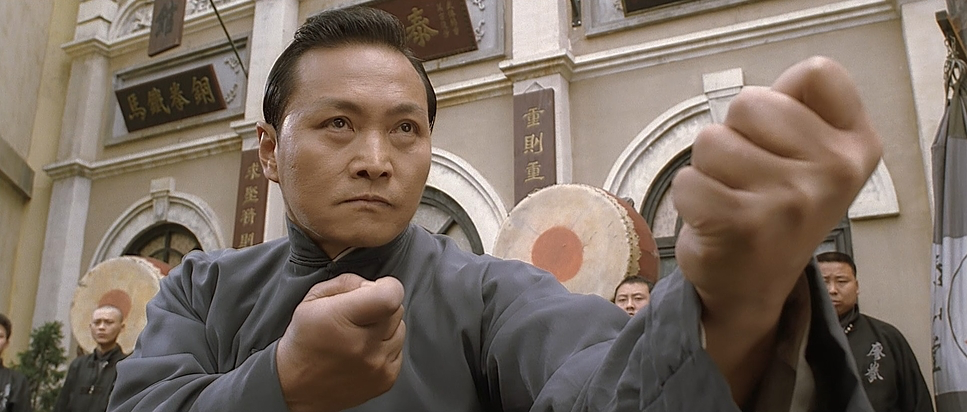
The framing in this film is incredibly deliberate. In the first act, compositions are open and balanced. Wide shots establish the grandeur of Ip Man’s home, and internal framing often places him in the center symmetrical and ordered. There are beautiful medium shots of him with his wife, Wing Sing, where depth cues in the background emphasize their connection and comfort.
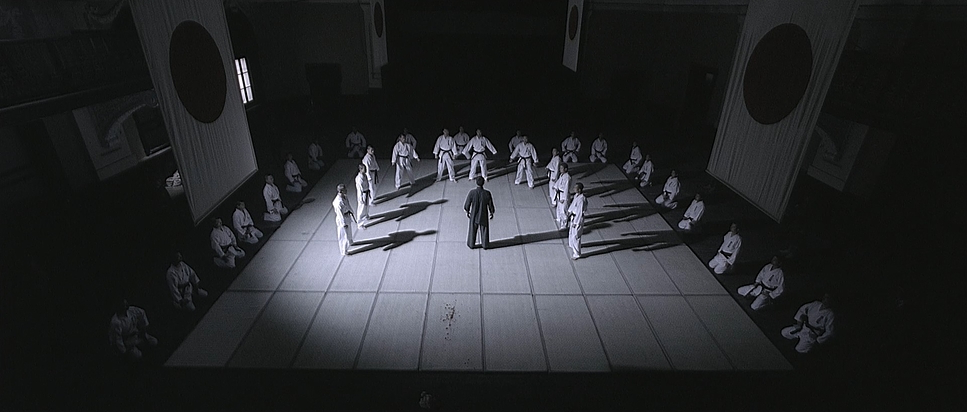
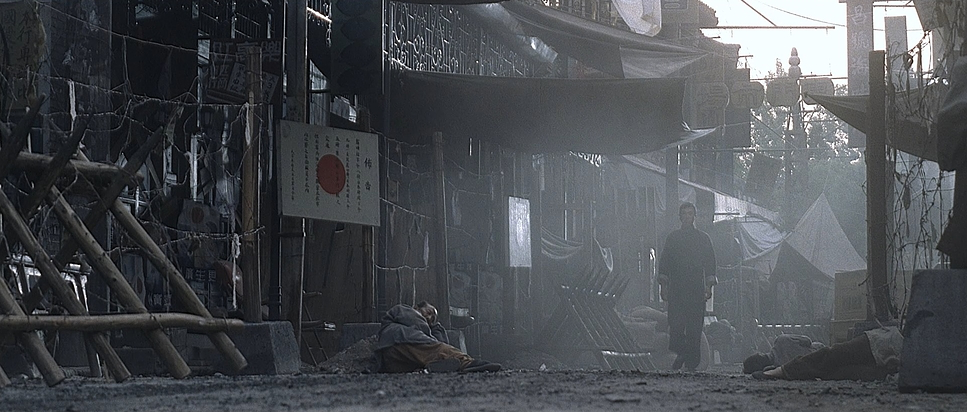
As the narrative descends into wartime, the frame literally tightens. We see constricted compositions and tighter close-ups that emphasize despair and hunger. Ip Man is often placed off-center, pushed to the edge of the frame by the oppressive Japanese presence. In the “10 men” sequence, the blocking is masterful. Ip Man is frequently positioned in the mid-ground, surrounded by enemies, creating a visual representation of the overwhelming odds. The use of the 2.35:1 aspect ratio allows for dynamic triangles and lines in these wide action shots, guiding the eye through the flurry of limbs.
Lighting Style
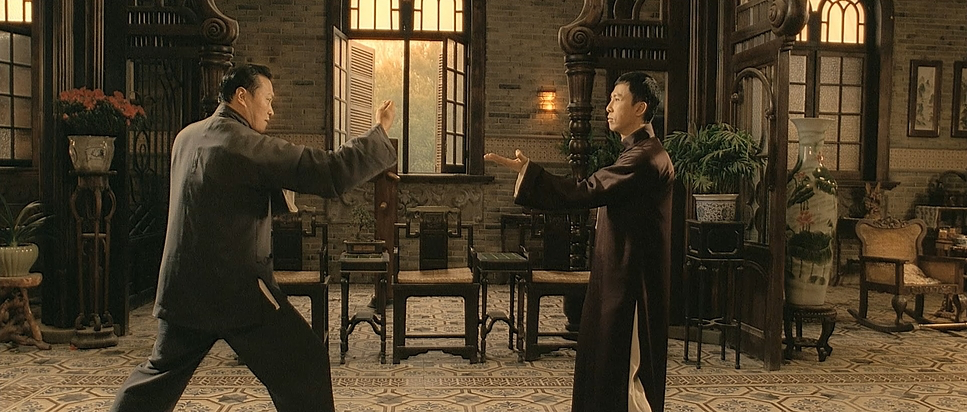
The lighting is where the mood shift is most palpable. In the early scenes, the lighting is predominantly high-key, warm, and soft. O Sing-Pui uses large sources to create a “golden hour” feel inside the mansion, with sunlight streaming through windows to create a sense of safety.
With the occupation, the lighting turns hard and high-contrast. The film leans into chiaroscuro heavy shadows and side-lighting. The coal mine scenes are lit with harsh, utilitarian sources that feel industrial and cold. Natural light loses its warmth, becoming desaturated and unforgiving. The final fight with General Miura is a great example of this: the arena lighting is stark, casting hard shadows that highlight the raw physicality of the actors. It’s a move away from the “beauty lighting” of the intro into something much more visceral.
Lensing and Blocking
The lens choices here are critical to the period feel. The production utilized Zeiss Ultra Prime lenses, which are known for their sharpness and contrast, but they lack the clinical sterility of some modern glass. In the calmer moments, mid-range focal lengths give a naturalistic field of view, allowing us to observe the environment without distortion.
For the close-quarters combat, however, they push wider. Wide-angle lenses used close to the actors exaggerate the speed of the strikes and the distance between combatants. When Ip Man is dismantling opponents, that wide glass makes the punches feel like they are coming out of the screen. The blocking complements this perfectly; Donnie Yen uses the environment (the wooden dummy, the bamboo pole) as extensions of his body. The relationship between the lens choice and the choreography ensures the hits feel heavy and the impacts real.
Color Grading Approach
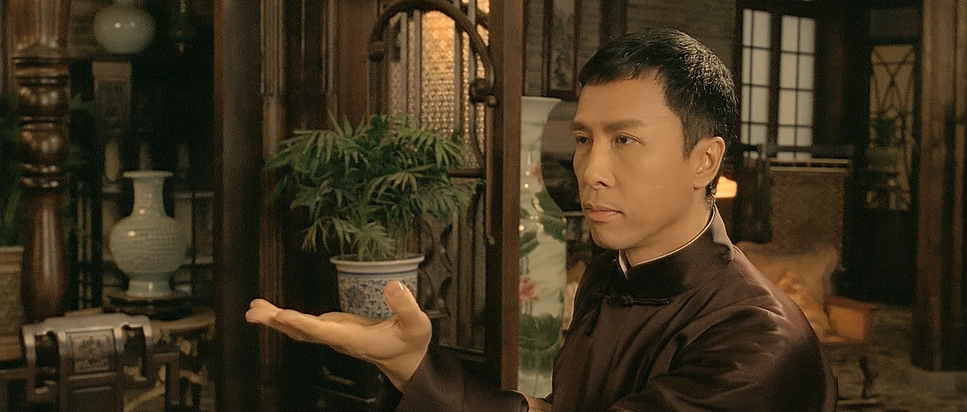
Now, this is where I geek out. The color grade in Ip Man is the storyteller.
In the Foshan chapter, the palette is rich, warm, and saturated. We see vibrant golds, deep reds in the wood, and lush greens. The contrast is softer, preserving detail in the shadows and allowing for a creamy highlight roll-off. Skin tones are healthy and rosy, reflecting the characters’ well-being.
Then, the invasion hits, and the grade essentially executes a “bleach bypass” look. The palette is stripped of saturation, leaning into desaturated blues, teals, and grays. The vibrant reds are gone. The contrast is cranked up blacks are crushed, and highlights are harsher. Skin tones become pale and sickly, emphasizing the hunger and fatigue. This isn’t just “turning down the color slider”; it’s a specific tonal sculpting where the mid-tones are pulled down to create a sense of heaviness. It’s a grade that makes you feel the cold and the dust of the coal mine.
Technical Aspects & Tools
Ip Man (2008) – Technical Specifications
| Genre | Action, Drama, History, Martial Arts, Biopic |
|---|---|
| Director | Wilson Yip |
| Cinematographer | O Sing-Pui |
| Production Designer | Kenneth Mak |
| Costume Designer | Pik Kwan Lee |
| Editor | Nick Cheung |
| Time Period | 1930s |
| Color | Desaturated, Black and White |
| Aspect Ratio | 2.35 – Spherical |
| Format | Film – 35mm |
| Lighting | Hard light, High contrast, Side light |
| Lighting Type | Artificial light |
| Story Location | Guangdong > Foshan |
| Filming Location | Guangdong > Foshan |
| Camera | Arricam LT, Arriflex 35 BL4, Arriflex 435, Arriflex 535B |
| Lens | Zeiss Ultra Prime, Angenieux Optimo |
| Film Stock / Resolution | 8573/8673 Eterna 500T |
Looking at the image texture, it’s refreshing to see the organic grain structure of actual film. Ip Man was shot on 35mm film, specifically using Fujifilm Eterna 500T stock. Eterna 500T is known for having a naturally lower contrast and softer color palette compared to Kodak stocks, which makes the aggressive, high-contrast grade in the second half even more impressive they really had to push the image to get that grit.
The camera package included the Arricam LT for sync sound and likely the Arriflex 435 for those high-speed, slow-motion impact shots. Using Zeiss Ultra Primes on 35mm gives the film a classic cinematic texture that digital cameras in 2008 struggled to replicate. The lighting package would have been extensive large HMIs for the day exteriors and likely tungsten units for the warm interiors, later swapped for cooler sources to match the desaturated wartime look.
- Also read: ROSEMARY’S BABY (1968) – CINEMATOGRAPHY ANALYSIS
- Also read: LION (2016) – CINEMATOGRAPHY ANALYSIS
Browse Our Cinematography Analysis Glossary
Explore directors, cinematographers, cameras, lenses, lighting styles, genres, and the visual techniques that shape iconic films.
Explore Glossary →