There are certain films that rewire how you see light. Into the Wild is one of those for me. Sean Penn’s 2007 adaptation of Christopher McCandless’s journey isn’t just a survival story; it is a masterclass in visual texture. Cinematography often risks becoming too polished, effectively putting a barrier between the audience and the subject. But here, the image feels permeable. For me, the film stands out because it refuses to romanticize nature in the traditional Hollywood sense. Instead, it uses visual language to articulate a deeply personal narrative the yearning for freedom and the brutal reality of isolation. I keep coming back to it not just for the story, but to study how the craft from the lens choice to the specific film stock serves that narrative.
About the Cinematographer
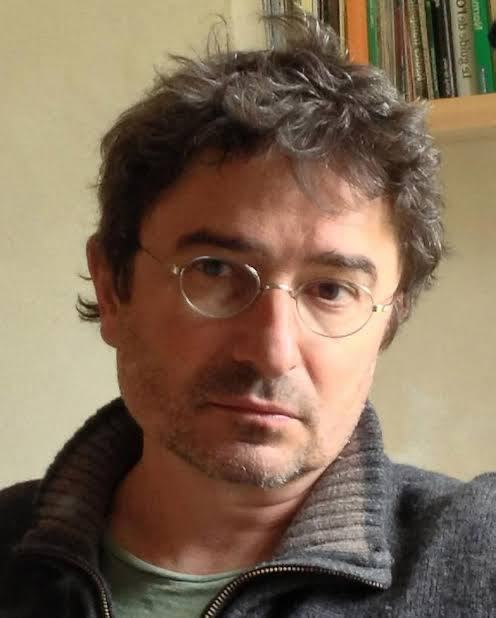
The eye behind Into the Wild is Eric Gautier, AFC. If you’ve seen The Motorcycle Diaries, you know Gautier isn’t interested in rigid, static perfection. He brings a loose, documentary-style sensibility that was essential for this project. Gautier favors a “humanistic” camera one that reacts to the actors rather than forcing them to hit a mark. His collaboration with Penn here is profound because it feels unscripted. He avoids the trap of making the wilderness look like a postcard; instead, he captures it as an environment that is indifferent to human presence. It’s a raw, reactive style that mirrors McCandless’s own shedding of societal structure.
Inspiration Behind the Cinematography
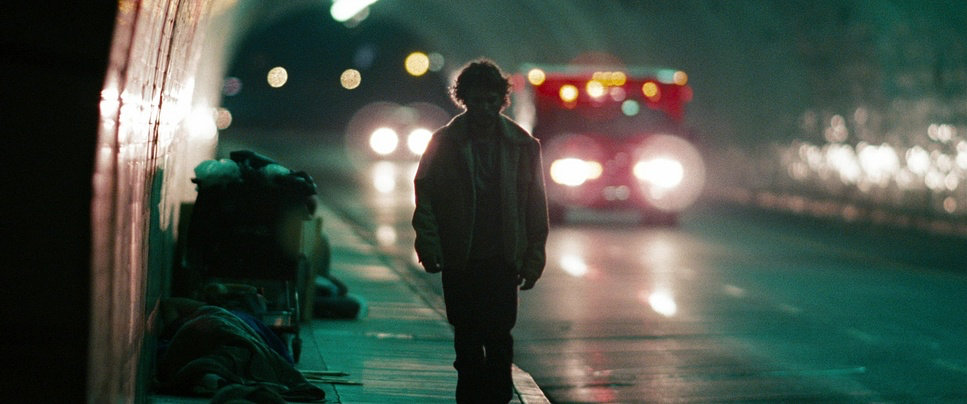
The visual language needed to bridge two opposing worlds: the suffocating comfort of suburban Atlanta and the vast, untamed expanse of the Alaskan backcountry. The cinematography doesn’t just record these locations; it emphasizes the stark difference in atmosphere. We move from the warm, stifling interiors of his parents’ home to the dry, hard light of the Mojave Desert where Chris abandons his Datsun and finally to the “magic bus” in Healy.
The approach mirrors Chris’s internal state. When he is “Alexander Supertramp,” hitchhiking and meeting people like Jan and Rainey, the camera feels alive and fluid. It captures the spirit of the road. But as he pushes further north, “depending solely upon his luck,” the visuals shift to capture his insignificance. The filmmakers weren’t just showing us a landscape; they were manifesting the feeling of escaping “everything” the materialism and the “violent arguments” of his past. The imagery had to be as untamed as Chris himself, celebrating his freedom while subtly foreshadowing the indifference of the nature he idolized.
Camera Movements
Gautier’s camera work oscillates between intimate, handheld curiosity and detached, epic observation. For the road trip segments encounters with Wayne Westerberg in the grain elevator or the campfire scenes at Slab City the camera is handheld, likely on an EasyRig or shoulder mount. It puts us right in the circle of conversation, making the viewer a silent companion. The movement is reactive and imperfect, which grounds these fleeting connections in reality.
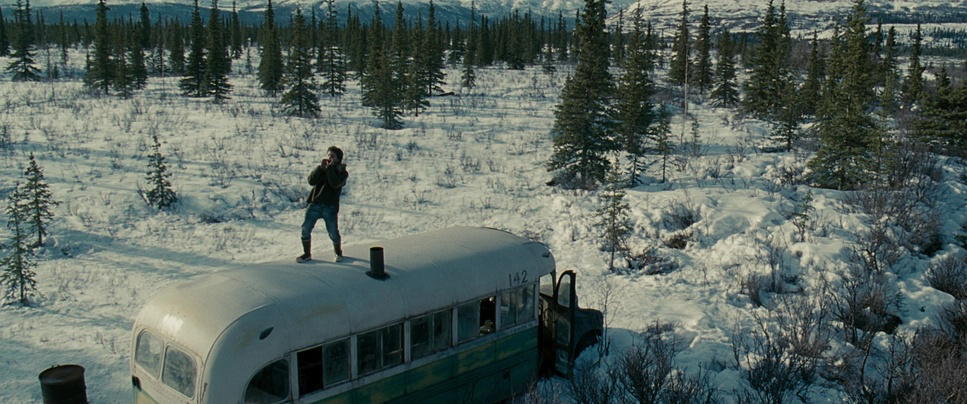
Conversely, when Chris is alone, the camera pulls back. We get these sweeping, stable shots sometimes aerials that emphasize scale. Watching Chris kayak down the Colorado River or trudge through the snow, he is reduced to a speck in the frame. There is a specific shot early in his Alaskan arrival where the camera floats above him as he hikes toward the bus. It’s not just an establishing shot; it’s a psychological one. It highlights the “marveling at Mother Nature’s beauty” while simultaneously underscoring his terrifying isolation. This interplay between the shaky, warm close-ups and the stable, cold wide shots creates a rhythm that mimics Chris’s oscillating emotions.
Compositional Choices
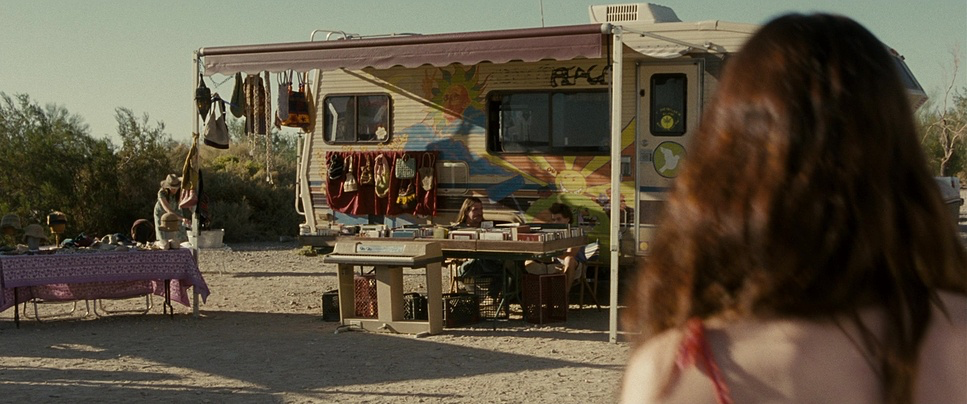
Compositionally, the film is a study in negative space. Gautier frequently frames Chris in the bottom third or corner of the frame, allowing the landscape be it the “rugged mountains” or the desert sky to dominate the rest of the image. This isn’t just for aesthetics; it establishes the power dynamic. Nature is the protagonist; Chris is the guest.
Depth is also used masterfully. Foreground elements branches, river water, snow often obscure Chris slightly, creating a sense of voyeurism, as if we are tracking him through the brush. The framing of the bus is particularly interesting; it shifts from being shot as a welcoming sanctuary to a claustrophobic tomb. I also appreciate the use of close-ups on his hands and his journal. In a film with so much silence, these macro shots of him working on his leather belt or writing his manifesto act as the dialogue, bringing us into his interior world.
Lighting Style
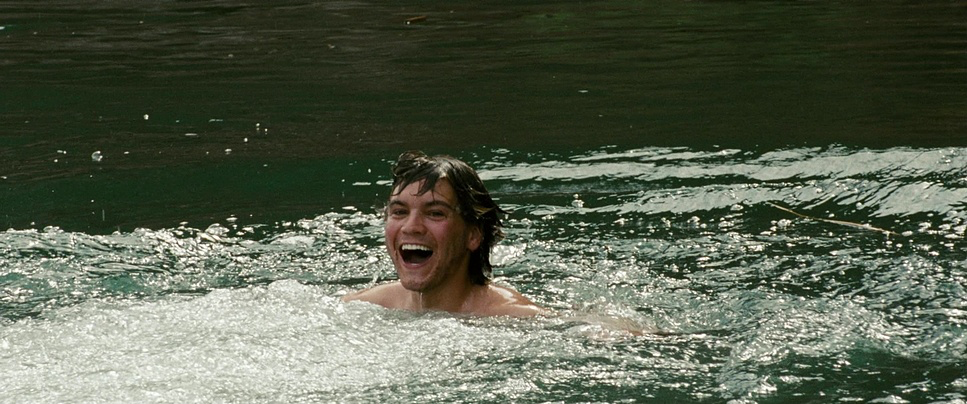
Lighting Into the Wild was clearly a challenge of exposure management. Gautier relies heavily on available natural light, harnessing the harsh, top-down sunlight of the desert and the soft, diffused cool light of the Alaskan winter. He isn’t afraid of hard shadows or blown-out skies, which adds to the documentary authenticity.
The “Magic Hour” is utilized extensively, but it feels earned rather than cosmetic. The sun flares are harsh and anamorphic-looking (even though achieved on sphericals), cutting across the frame. As the story turns tragic, the lighting loses its warmth. The interiors of the bus become dimmer, lit by the practicals of a lantern or the dying light of a window. The contrast ratio increases the shadows fall off into deep darkness, reflecting Chris’s fading hope. It’s a lighting strategy that refuses to use artificial fill to “save” the actor’s face; if Chris is in the dark physically and metaphorically, the cinematographer lets him stay there.
Lensing and Blocking
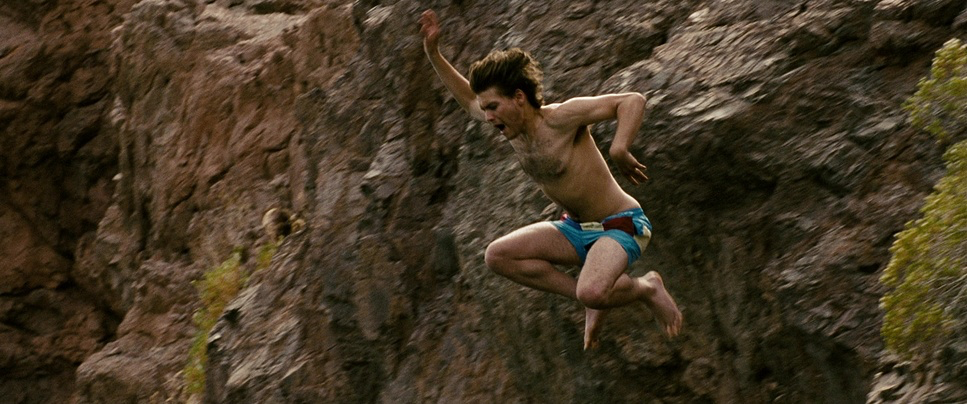
While the aspect ratio is a wide 2.39:1, the data suggests the use of spherical lenses specifically Zeiss Ultra Primesand the Angenieux Optimo zooms. This is a smart choice. Spherical lenses (likely cropped to the 2.39 ratio) avoid the heavy distortion of true anamorphic glass, keeping the image geometric and honest. The Angenieux zooms would have been crucial for the run-and-gun nature of the shoot, allowing Gautier to snap from a wide to a tight shot without cutting, preserving the flow of the actors’ performances.
Blocking is equally significant. Chris is rarely placed in the “hero” center of the frame unless he is having a moment of realization. Usually, he is blocked deep in the background or off to the side, integrating him into the environment. In scenes with Mr. France or Jan, the blocking is tight and physical, emphasizing the human touch Chris claims to reject but secretly craves.
Color Grading Approach
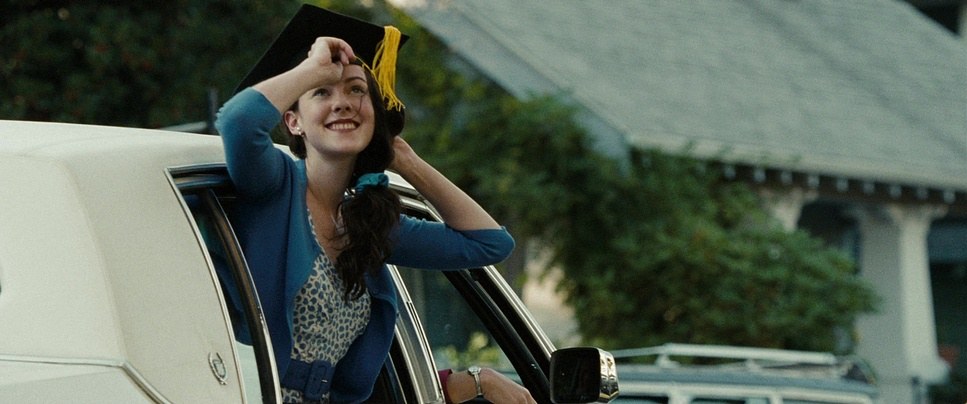
From a colorist’s perspective, this film is a testament to the Fujifilm Eterna stock. Unlike the punchy, high-contrast look of Kodak Vision3, Fuji Eterna (specifically the 250D 8563 and 500T 8573 used here) has a distinctively lower saturation and a softer, pastel-like contrast curve. This is crucial for the film’s look.
The grade, executed by Stefan Sonnenfeld, leans into the stock’s natural bias. You can see the characteristic cyan-green dominance in the shadows, particularly in the forest and snow scenes. It gives the film a cold, organic feel rather than a cinematic teal-and-orange push. The skin tones are kept natural but fall off quickly into the environment’s color cast. In the desert, the highlights are allowed to roll off gently a strength of the film negative retaining detail even in the blazing sun. As Chris weakens, the palette desaturates. The vibrant greens of his arrival in Alaska fade into monochromatic blues and greys. The grade essentially dies along with him, shifting from the “golden” hope of the road to the cold, blue reality of the bus.
Technical Aspects & Tools
Into the Wild
35mm Film • 2.39 Anamorphic| Genre | Adventure, Drama, Survival, Nature, Political, Road Trip, Travel, Wildlife |
|---|---|
| Director | Sean Penn |
| Cinematographer | Eric Gautier |
| Production Designer | Derek R. Hill |
| Costume Designer | Mary Claire Hannan |
| Editor | Jay Cassidy |
| Colorist | Stefan Sonnenfeld |
| Time Period | 1990s |
| Color | Mixed, Cyan |
| Aspect Ratio | 2.39 – Anamorphic |
| Format | Film – 35mm |
| Lighting | Hard light, Edge light |
| Lighting Type | Daylight, Sunny |
| Story Location | … California > Slab City |
| Filming Location | … California > Slab City |
| Camera | Aaton 35-III, Arricam LT, Arriflex 435 |
| Lens | Angenieux Optimo, Zeiss Ultra Prime |
| Film Stock / Resolution | 8563/8663 Eterna 250D, 8573/8673 Eterna 500T, 8583/8683 Eterna 400T |
The technical decisions behind Into the Wild were perfectly tailored to the logistical nightmare of the shoot. Gautier utilized the Aaton 35-III and Arricam LT. The Aaton is a legendary documentary camera lightweight, compact, and balanced for the shoulder. It allowed the operator to hike into locations that would be impossible with heavier studio rigs.
Shooting on 35mm film was non-negotiable for the dynamic range required. The Fujifilm Eterna 250D would have been the workhorse for the day exteriors, handling the high contrast of the snow and sun, while the Eterna 500Thandled the low-light interiors and campfire scenes. This combination provided a fine grain structure that added texture without being distracting. In post-production, the DI (Digital Intermediate) process allowed Sonnenfeld to refine the exposure of the negative, but the “soul” of the image comes from that specific pairing of French glass (Angenieux) and Japanese film stock (Fuji).
- Also read: HER (2013) – CINEMATOGRAPHY ANALYSIS
- Also read: THE KING’S SPEECH (2010) – CINEMATOGRAPHY ANALYSIS
Browse Our Cinematography Analysis Glossary
Explore directors, cinematographers, cameras, lenses, lighting styles, genres, and the visual techniques that shape iconic films.
Explore Glossary →