Andrew Lau and Alan Mak’s 2002 Hong Kong crime epic, Infernal Affairs, is exactly that kind of film. It’s a masterclass in visual storytelling a lean, mean psychological thriller that trades flashy theatrics for a slow-burn emotional resonance.
In the West, it’s often overshadowed by Scorsese’s remake, The Departed. But let’s be clear: Infernal Affairs stands entirely on its own. It took the tired “undercover cop” trope and gave it an irresistible double-twist: a cop infiltrating the triads, and a gangster embedded in the police force. When both sides realize there’s a mole, the movie turns into a deadly game of cat and mouse. For a colorist, this is a dream canvas. My goal here isn’t just to gush over the aesthetics; I want to pull apart how the visual grammar builds that heavy, melancholic vibe and explores the weight of spiritual guilt.
About the Cinematographers
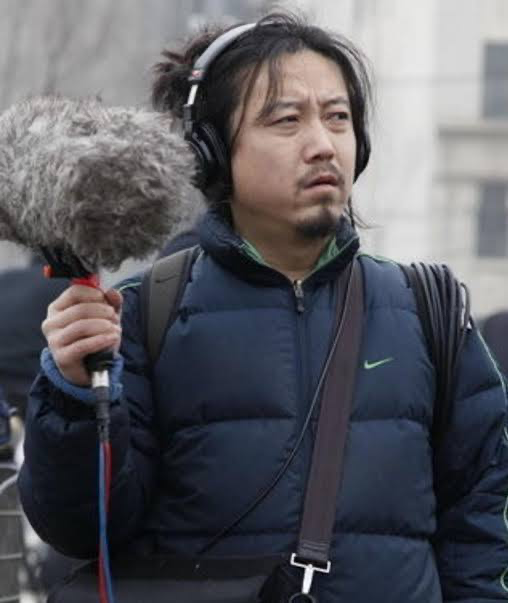
What’s fascinating about the cinematography here is the “double-threat” leadership. Andrew Lau didn’t just co-direct; he stepped behind the lens as a cinematographer alongside Yiu-Fai Lai. This kind of dual role usually results in an incredibly tight vision. There’s no “lost in translation” moment between the director’s intent and the DP’s execution. It’s a unified voice.
Lau and Lai brought a specific sensibility forged in the high-pressure world of Hong Kong cinema. But while the industry there is famous for “turbocharged editing” and kinetic chaos, Infernal Affairs makes a deliberate pivot. It prioritizes character psychology over shootouts. As DPs, Lau and Lai aren’t just capturing action; they’re documenting the internal lives of men in purgatory. By controlling both the direction and the image, they created a seamless integration of performance and frame.
Inspiration Behind the Cinematography
The DNA of this film’s look is rooted in its title. The original Chinese title, Mo Gando, refers to “Avici” the lowest level of Buddhist hell, a place of unceasing suffering. This theological undercurrent isn’t just a fun fact; it’s the North Star for the cinematography. The characters are trapped in a “continuous emotional hell,” and the camera needs to make the audience feel that heat.
The filmmakers chose to skip the “cool” factor of the triad lifestyle. There’s no glamorization here. Instead, the cinematography is reflective and introspective. It uses space and light to show the moral quagmire of a double life. Unlike the bombastic energy you see in a lot of crime thrillers, this film relies on drawn-out shots and a serious, almost meditative tone. It forces you to dwell on the psychological impact of the narrative. You aren’t just watching a plot unfold; you’re feeling the weight of the predicament.
Camera Movements
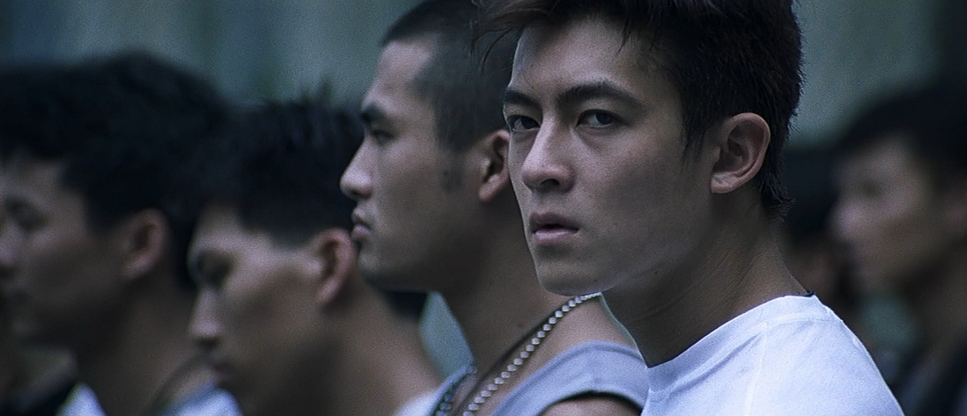
The camera work in Infernal Affairs is surgically precise. While it pays homage to the kinetic energy of Hong Kong action, it uses that heritage with massive restraint. It’s about intentionality, not showing off.
We see a lot of controlled, steady movements. When the camera dollies or tracks, it’s usually observing the characters within these oppressive, urban environments almost like fate is watching them. These smooth moves create a sense of inescapable momentum. But then, during moments of high stress, the camera shifts. You’ll notice a subtle, agitated handheld aesthetic. It’s never “shaky cam” for the sake of it; it’s a slight waver that injects a raw, organic realism. It pulls us into the character’s anxiety. The use of slow motion in key moments isn’t for “cool” points, either; it’s there to let the gravity of a realization really sink in.
Compositional Choices
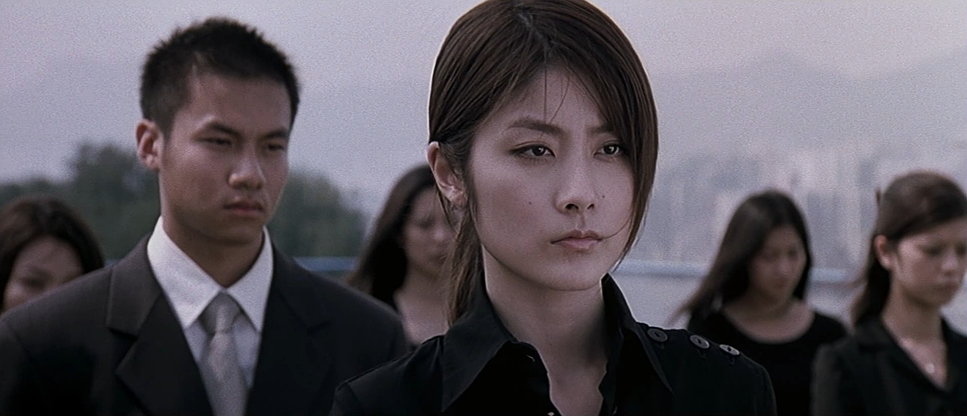
This is where the film really shines in articulating duality and isolation. The narrative is about fractured lives, and the framing reinforces that constantly.
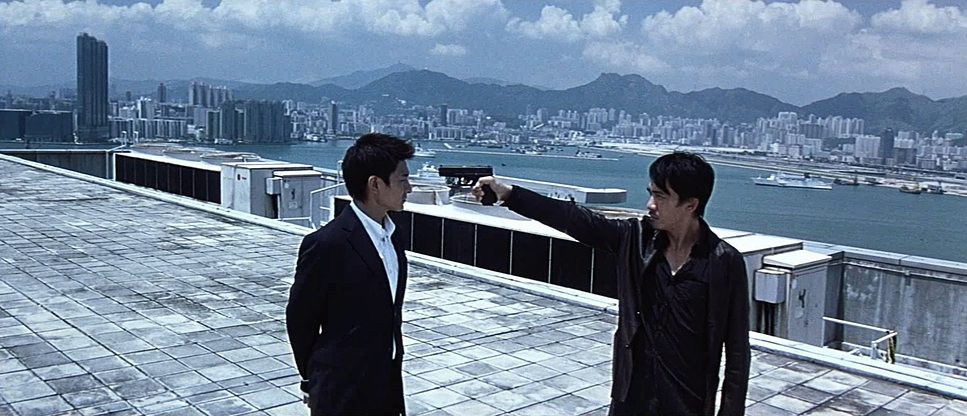
Lau and Lai frequently box characters in framing them through doorways, windows, or tight architectural gaps. It’s a literal visual metaphor for their entrapment. Look at the iconic rooftop scenes. You have the massive, open Hong Kong sky, but the characters are still pinned against confined structures. It’s that contrast between the infinite horizon and the reality of their “box” that makes the tension work.
The close-ups are just as vital. They’re used sparingly but effectively to capture the “cold-blooded” mask on Andy Lau’s face or the pure weariness in Tony Leung’s eyes. Even in the audio store scene where the two leads finally meet the blocking is genius. They’re physically close, sharing a “peaceful” moment, but the placement of the gear between them creates a symbolic wall. They are in the same frame, but worlds apart.
Lighting Style
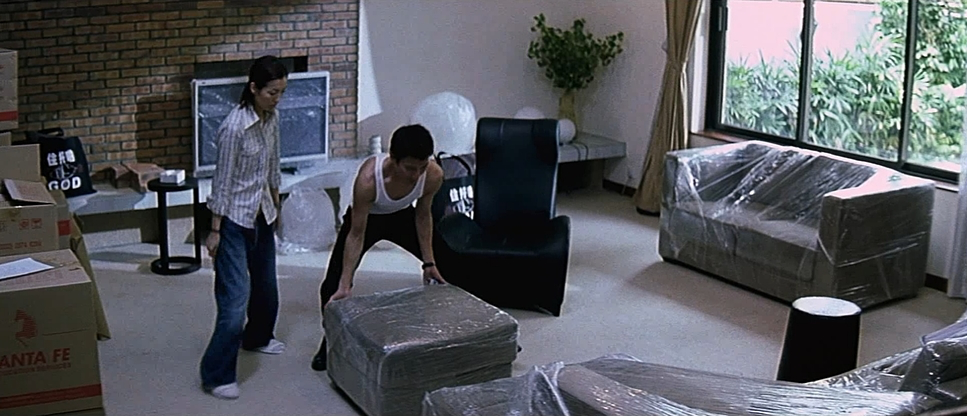
The lighting is the backbone of the film’s “melancholic vibe.” We aren’t looking at theatrical or high-key setups; it’s a naturalistic, muted aesthetic that leans into the gritty reality of the city.
The lighting feels “motivated” meaning it looks like it’s coming from the practical sources in the room. You have the harsh, utilitarian fluorescent flicker of the police stations and the dim, single-source shadows of the triad hangouts. This contrast shaping is a direct commentary on their shadowy existence. As a colorist, I love the use of soft, diffused key lights. It creates subtle modeling on the faces rather than harsh shadows, which makes the characters harder to “read” perfect for a movie about hidden identities. It’s all about those moral gray areas.
Lensing and Blocking
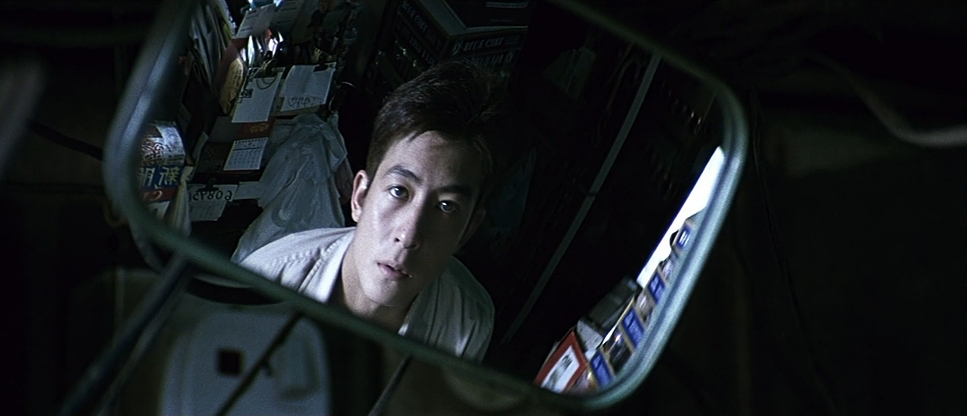
Technically, the film leans on the clarity of prime lenses, likely in the 35mm to 85mm range. This gives us a balanced perspective that doesn’t distort the world too much but still allows for that beautiful shallow depth of field.
Occasionally, they’ll break out a wider lens to show the scale of the city, hinting at how small these men are in the grand scheme of the system. But the real magic is in the blocking. Characters are often positioned to feel isolated even in a crowd. By using negative space or foreground elements to cut them off from the rest of the world, the filmmakers visually scream that these men are alone. They might be physically present, but spiritually, they’re already on that “unceasing path.”
Color Grading Approach
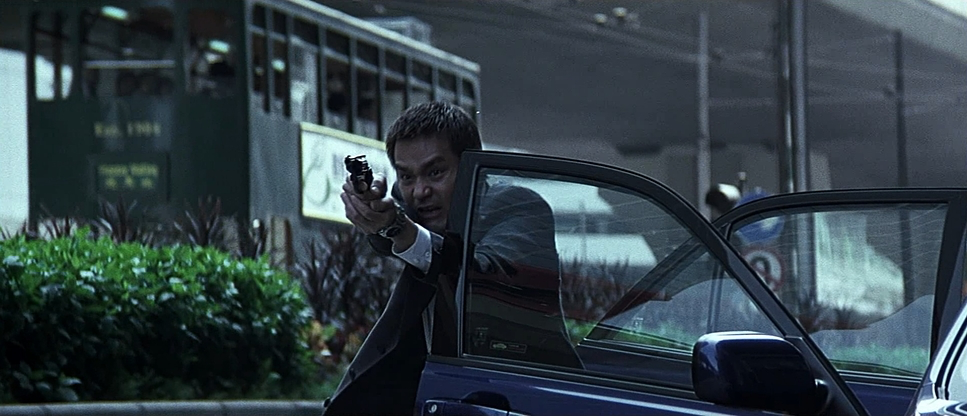
Now, this is my territory. If a client brought Infernal Affairs into Color Culture today, my first instinct would be to protect that iconic “cool, desaturated” palette while heightening the emotional stakes.
I’d start with the shadows. For a story about a life riddled with lies, I wouldn’t want “crushed” blacks. I’d lift the shadows slightly give them a bit of air to represent that lack of absolute black-and-white morality. I’d lean into a film-print sensibility with a gentle highlight roll-off to keep that 2002 texture.
Hue separation would be my best friend here. I’d desaturate the secondary colors but keep those steely blues and the warm pops of practical lights. I’d push some subtle cyans into the shadows for that institutional, “sickly” feel in the police stations, but I’d make sure the skin tones stayed grounded and believable. The goal would be a grade that feels like a constant chill a visual echo of “spiritual anguish” without ever distracting from the actors’ eyes.
Technical Aspects & Tools
Infernal Affairs (2002) — Technical Specifications
| Genre | Action, Crime, Drama, Mystery, Thriller, Detective, Gangster, Mafia, Police, Neo-Noir |
| Director | Andrew Lau, Alan Mak |
| Cinematographer | Yiu-Fai Lai, Andrew Lau |
| Production Designer | Sung Pong Choo, Ching-Ching Wong |
| Costume Designer | Pik Kwan Lee |
| Editor | Danny Pang |
| Colorist | Royce Smith |
| Time Period | 2000s |
| Color | Cool, Desaturated, Blue |
| Aspect Ratio | 2.35 – Anamorphic |
| Format | Film – 35mm |
| Lighting | Hard light, Top light |
| Lighting Type | Daylight, Sunny |
| Story Location | China > Hong Kong |
| Filming Location | China > Hong Kong |
| Camera | Arri 535 / 535B |
| Lens | Angenieux Optimo Zooms |
| Film Stock / Resolution | 5246/7246 Vision 250D |
Since this was 2002, we’re talking 35mm film. They shot on the Arri 535 and 535B, using Angenieux Optimo zooms and Kodak Vision 250D stock. You can feel that in the image. There’s an organic grain and a tactile texture that digital sensors still struggle to replicate.
The dynamic range of the 250D stock allowed for that moody highlight roll-off and the nuance in the shadows. It’s what gives the film its grit. Back then, the post-workflow would’ve involved a telecine transfer to systems like DaVinci or Spirit Datacine. Every choice down to the sound design in that audio store was about immersion. It’s a reminder that cinematography isn’t just about a pretty picture; it’s about a holistic sensory experience.
- Also read: PERSONA (1966) – CINEMATOGRAPHY ANALYSIS
- Also read: PAPILLON (1973) – CINEMATOGRAPHY ANALYSIS
Browse Our Cinematography Analysis Glossary
Explore directors, cinematographers, cameras, lenses, lighting styles, genres, and the visual techniques that shape iconic films.
Explore Glossary →