I still remember sitting in a theater back in 2004 when Hero finally hit the US. I was just a kid then, but the atmosphere in that room changed the second the first color sequence washed over the screen. As a filmmaker and a full-time colorist today, I find myself constantly pulled back to Zhang Yimou’s 2002 masterpiece. It isn’t just a movie; it’s a performance. It’s a 35mm masterclass in how visuals can perform the heavy lifting of a narrative, transcending “cool shots” to reach something more like visual philosophy.
About the Cinematographer: The Experimental Eye

Christopher Doyle is a bit of a wild card. If you know his work with Wong Kar-wai, you know he thrives in the chaotic, neon-drenched streets of Hong Kong. But with Hero, he shifted gears entirely. He traded that frenetic handheld energy for a monumental, almost architectural formality.
What I love about Doyle’s work here is his painterly fearlessness. He isn’t just “capturing” a scene; he’s sculpting it with light and bending reality to fit the film’s emotional core. He moved from the intimate, sweaty energy of his earlier work to the vast, epic landscapes of ancient China without losing his soul. It’s a testament to his range—he can make a palace wall feel just as intimate and heavy with emotion as a cramped apartment.
Inspiration Behind the Cinematography: A Game of Truth
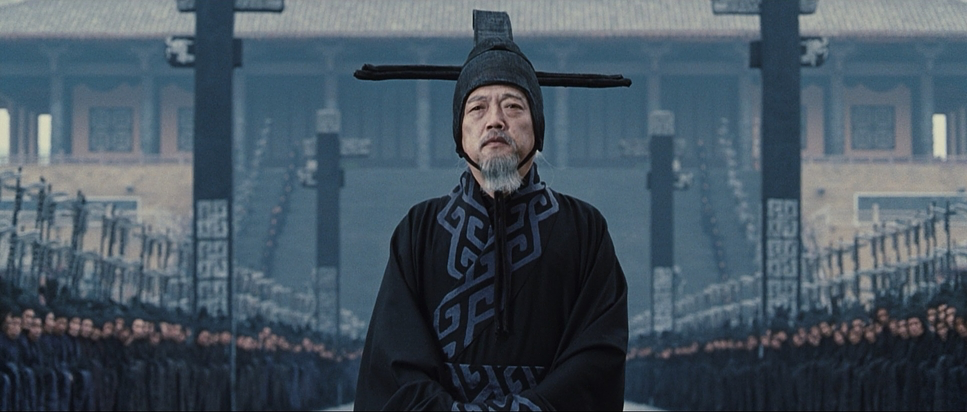
The visual engine of Hero is its narrative structure. It’s like a grand chess game played with unreliable narrators, much like Citizen Kane but told through the lens of Wuxia. The filmmakers needed a way to signal to the audience: “This is a version of the truth, not the truth.”
Their solution was a systematic, color-coded choreography. Red, blue, green, and an earthy “true” palette aren’t just decorative. They are narrative anchors. This isn’t just “pretty lighting” it’s a visual rhythm that connects fiction, viewpoint, and intent. It allows the audience to instantly feel the emotional temperature of the story being told, making a complex, layered script feel entirely legible.
Lensing and Blocking: The Dance of Wu Wei
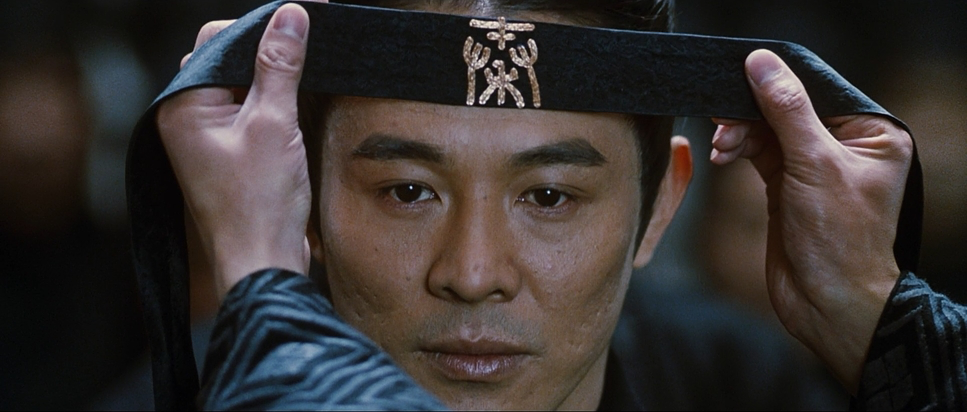
The technical choices here are incredibly specific. They shot on Arri 535 and 435 units using Cooke/I Anamorphicsand Angenieux Optimo Zooms, which gave the film that signature 2.35:1 widescreen epic feel.
The blocking is where the “visual dance” happens. Look at the duel over the lake between Nameless and Broken Sword. In the hands of a lesser director, it would be a flurry of cuts. Here, they use the wirework to let the combatants drift and jump lazily. It’s meditative. It’s a visual representation of Wu Wei action without action. The swords aren’t just weapons; they’re extensions of a philosophical argument. The wide-angle lenses dwarf the characters against the scale of China, reminding us that these “heroes” are small players in the massive gears of history.
Camera Movements: A Controlled Tempest
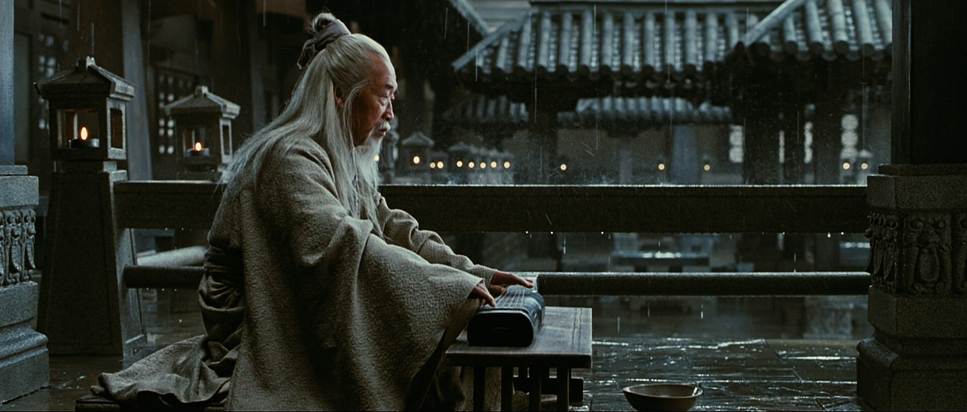
The camera in Hero breathes. It’s rarely static, but the movement is never aimless. During fight sequences, it’s balletic less about the raw impact of a punch and more about the grace of the pursuit.
Even in the massive establishing shots of the Qin Palace (filmed at the Hengdian World Studios), there’s a slow, contemplative drift. It invites you to absorb the scale rather than just glancing at it. When things do get frenetic like the opening fight with Sky the camera feels locked in a tempest. But even then, there’s an underlying control. Doyle and Yimou knew exactly when to let the camera fly and when to let it sit in a long, tense take.
Compositional Choices: Scale as a Weapon
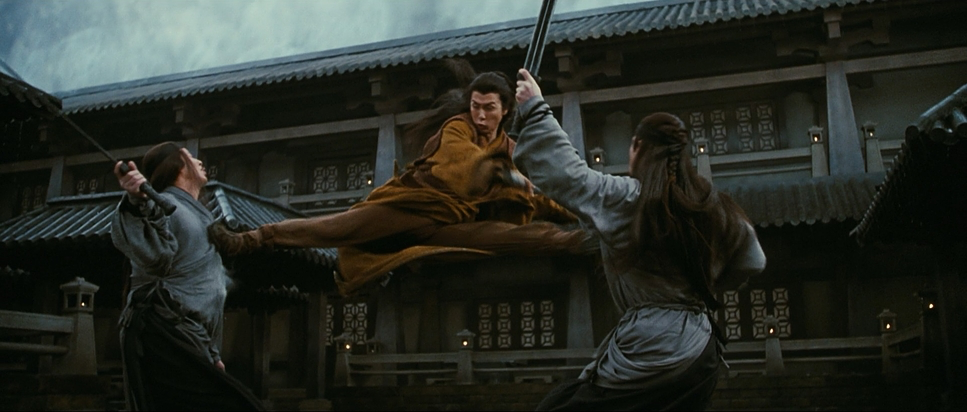
The compositions draw heavily from classical Chinese painting huge amounts of negative space and an obsession with balance. They leveraged the “monumental” by placing characters as tiny, significant specks against desert dunes or towering palace walls.
I’m particularly struck by the use of layers. They use architecture and nature to create depth cues that lead your eye exactly where it needs to be. The choice of locations across China provided “diverse ecosystems” that weren’t just backdrops they were active participants. Whether it’s the stark red of the library or the golden leaves of the forest, the frame feels meticulously built, never accidental.
Lighting Style: Sculpting with HMI and Shadow
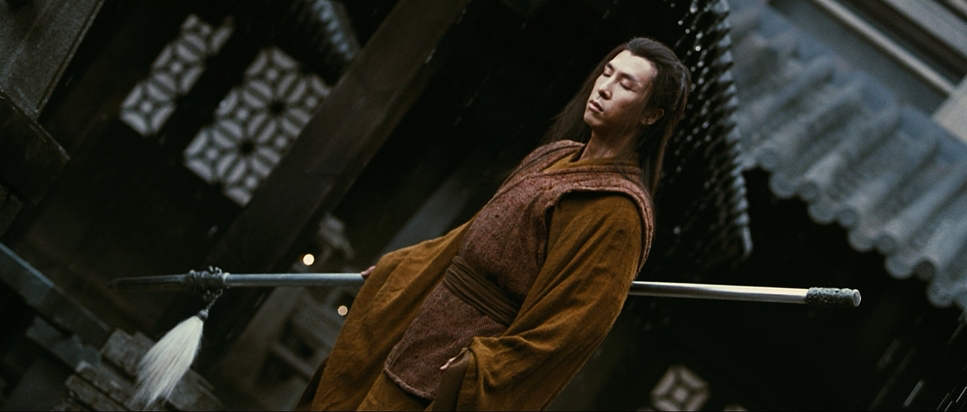
Doyle’s lighting here is motivated but heightened. For the red sequence, the lighting is aggressive. High contrast. Sharp highlights. It feels like revenge. Shadows fall deep, and the HMI sources provide a crispness that makes the fabric of the costumes pop.
Then you look at the blue sequence, and the light softens. It becomes diffused, almost somber, reflecting a different perspective of the King. The dynamic range is handled beautifully they aren’t afraid to let the highlights bloom or the blacks go “crushed” if it serves the mood. It’s a masterclass in using light to reinforce the psychological undercurrents of the script.
Technical Aspects & Tools: The 35mm Foundation
| Genre | Action, Adventure, Drama, History, Martial Arts, Epic, Costume Drama, Wuxia, Costume, Science-Fiction |
| Director | Zhang Yimou |
| Cinematographer | Christopher Doyle |
| Production Designer | Tingxiao Huo, Zhenzhou Yi |
| Costume Designer | Emi Wada |
| Editor | Angie Lam, Vincent Lee, Ru Zhai |
| Colorist | Al Hansen |
| Time Period | Ancient: 2000BC-500AD |
| Color | Desaturated |
| Aspect Ratio | 2.35 – Anamorphic |
| Format | Film – 35mm |
| Lighting | Soft light, Hard light, Side light, Edge light |
| Lighting Type | HMI |
| Story Location | Asia > China |
| Filming Location | Asia > China |
| Camera | Arri 535 / 535B, Arri 435 / 435ES |
| Lens | Angenieux Optimo Zooms, Cooke/I Anamorphics |
| Film Stock / Resolution | 5277/7277 Vision 320T, 8552/8652 F-250T |
To understand the look of Hero, you have to look at the stock. They shot on Kodak Vision 320T (5277) and Fuji F-250T (8552). Shooting film in the early 2000s gave them an organic texture and a latitude that digital was still struggling to touch.
The logistical nightmare of this shoot can’t be understated. They were dealing with massive sets and “unique natural features” across China that required serious planning. Achieving that level of color consistency on location, while shooting 35mm, requires a level of technical discipline that makes modern digital workflows look easy.
Colorist’s Perspective: The High-Wire Act of Grading
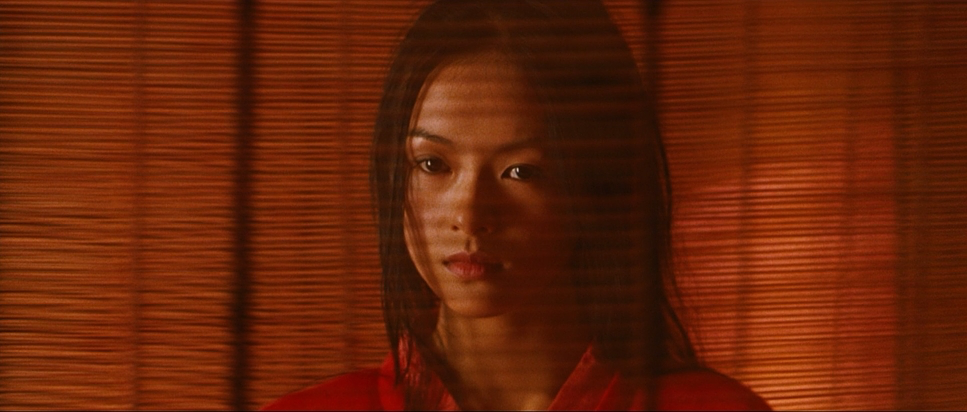
As a colorist, this is where I get really nerdy. This isn’t just about “dialing in a look.” The grading in Hero is a high-wire act of tonal sculpting.
Take the red sequence. In the grade (led by Al Hansen), they pushed the saturation to the limit. If you’ve ever tried to push a primary that hard, you know how easy it is to lose detail or have the color “break” and look plastic. But here, the reds have weight. They shift from blood crimson to fiery scarlet with rich tonal transitions.
In the blue and green sequences, the “hue separation” is key. They kept the blues from bleeding into skin tones, maintaining a cold, detached feeling. And then, the “truth” sequence grounds everything. The grade pulls back, opting for earthy, muted, and realistic tones. It’s a relief for the eyes a visual signal that the “performance” is over and we are seeing reality. The present-day black and silver grade is the final touch, representing the cold, unified power of the Qin Empire.
- Also read: WONDER (2017) – CINEMATOGRAPHY ANALYSIS
- Also read: THE HOLDOVERS (2023) – CINEMATOGRAPHY ANALYSIS
Browse Our Cinematography Analysis Glossary
Explore directors, cinematographers, cameras, lenses, lighting styles, genres, and the visual techniques that shape iconic films.
Explore Glossary →