Hamilton (2020) presented a different kind of puzzle. When it dropped on Disney+, the conversation naturally drifted toward the music and the cultural impact. But for me, the real story was the translation. How do you take a stage production relentless, kinetic, and designed for a proscenium arch and make it work on a screen without killing its soul?
It isn’t a “movie” in the traditional sense, but it’s certainly more than a point-and-shoot archival recording. It’s a “film stage production,” a hybrid format that promised the “best seat in the house.” As visual storytellers, we know that’s a deceptively simple goal. Achieving it required a mountain of nuanced cinematographic decisions that often go unnoticed by the average viewer.
About the Cinematographer
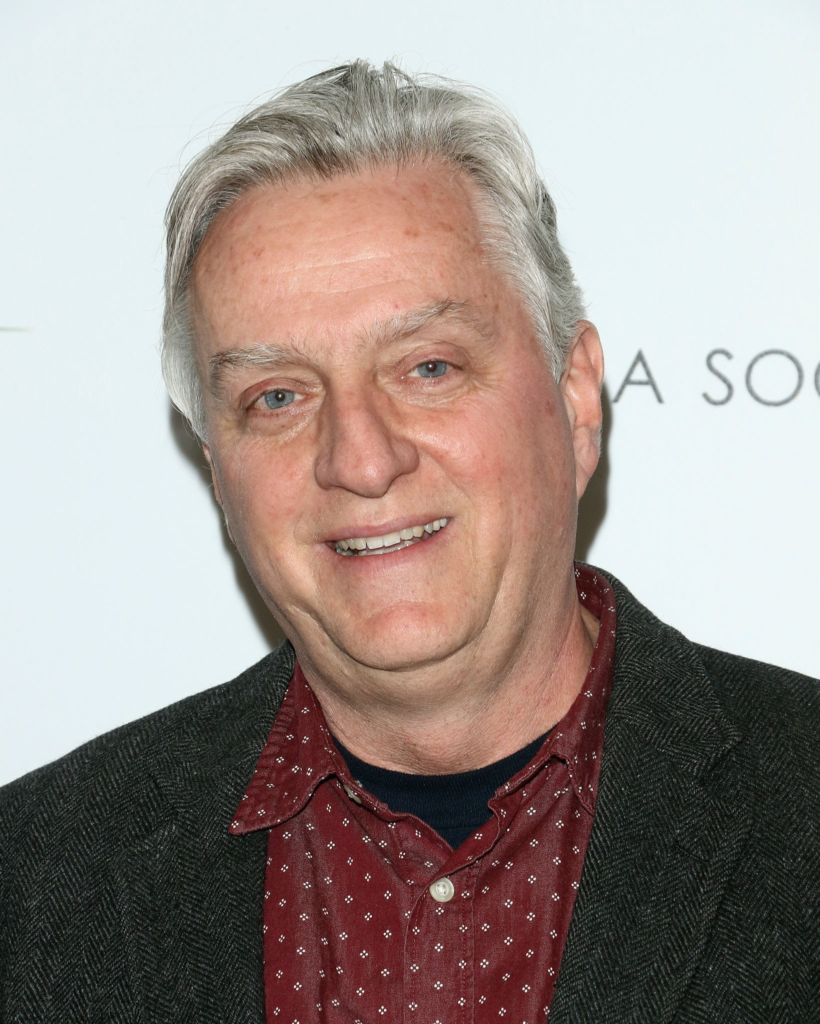
The guiding eye behind Hamilton was Director of Photography Declan Quinn. Quinn is no stranger to the unique friction between live performance and cinema, having a background that spans narrative features and documentaries. His collaboration with director Thomas Kail who also directed the stage version was critical here.
Kail’s vision for the stage was already revolutionary, but bringing that to a sensor required a DP who could respect the theatrical blocking while exploiting cinematic language. In behind-the-scenes discussions, Kail emphasized the need for the production to be “optimally filmed,” implying that the camera needed to be an extension of the choreography, not just an observer. It’s a difficult balance: the camera has to be present enough to capture the intimacy but invisible enough to let the theatrical performance breathe.
Inspiration Behind the Cinematography
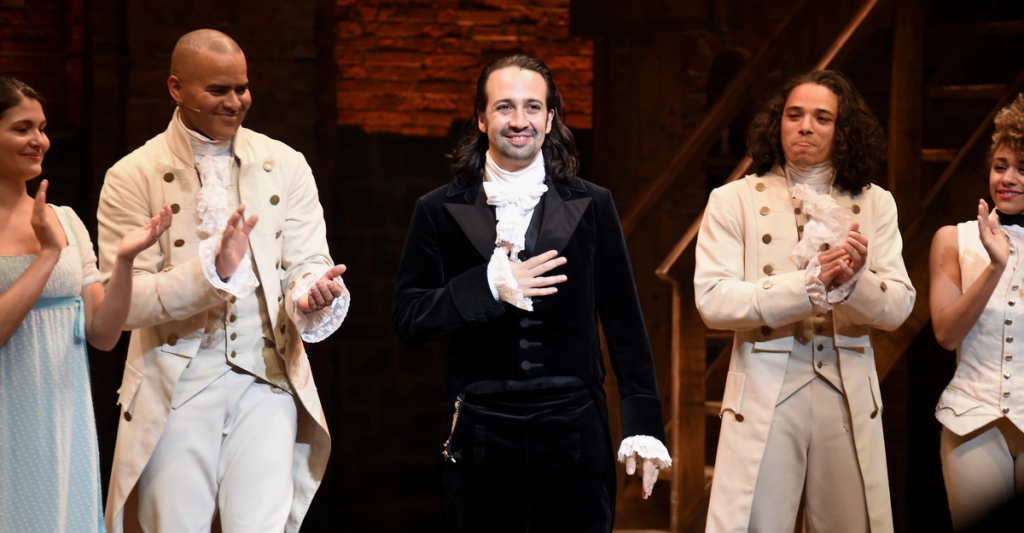
The primary directive here was accessibility and preservation. With tickets notoriously expensive and scarce, this film was the only way millions would ever see the show. The challenge was to package the kinetic energy of the choreography for home viewing without flattening the experience.
This meant avoiding the trap of the “wide shot safety net.” A typical archival recording sits in the back of the house, leaving the viewer feeling detached. Quinn had to be bolder. While some critics felt the reliance on wide shots occasionally distanced them, I’d argue those wides were necessary to establish the scale. However, the camera didn’t stay there. It tracked, pushed in, and pulled focus, making choices for the viewer. When you’re in a theater, your eye edits the scene; on screen, Quinn has to do that editing for you. The goal wasn’t just to show the stage, but to interpretit, giving us depth cues that transcend the flat proscenium.
Camera Movements
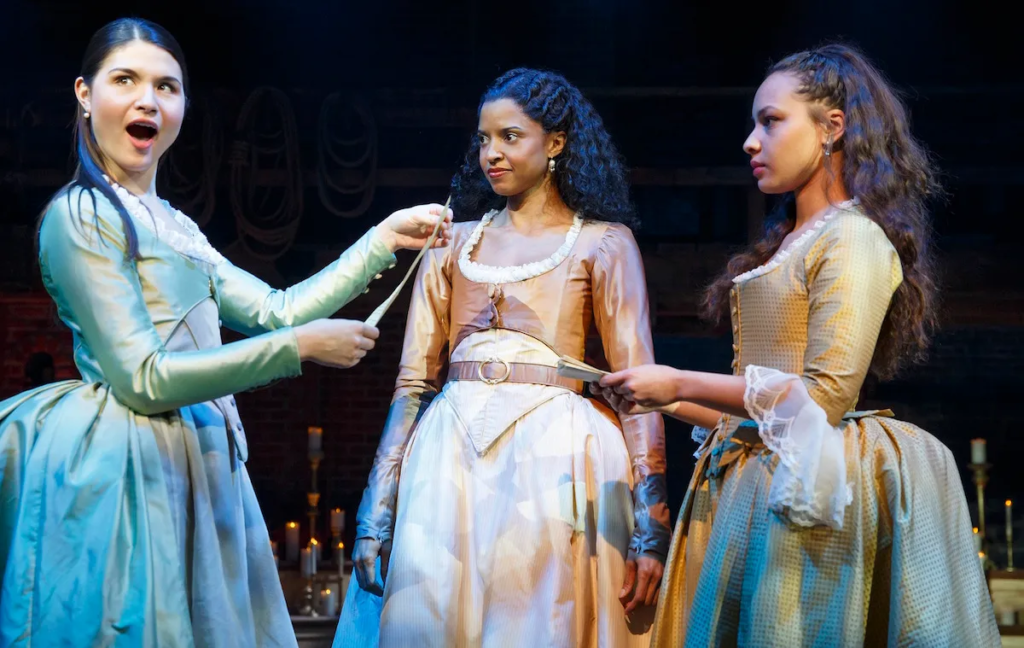
For a production defined by constant motion, the camera work had to be precise. The stage itself is a character, featuring a double turntable that allows for complex, cyclical movement. Quinn utilizes this mechanics brilliantly. There are shots where the camera locks onto a performer while the stage rotates beneath them, creating a “dolly zoom” effect without the lens actually zooming. It isolates the character in stillness while the world literally spins around them a perfect marriage of stage mechanics and camera operation.
You’ll notice significant use of the dolly here, but not just for style. These smooth glides are essential for maintaining the spatial integrity of the choreography. If the camera were handheld, the jitter might distract from the dancers’ precision. We also see crane work used effectively to establish the grand scale of the ensemble numbers, sweeping over the stage before dipping down to capture intimate group dynamics. It’s a masterclass in motivated movement every push and sweep feels driven by the beat of the music or the emotional arc of the scene.
Compositional Choices
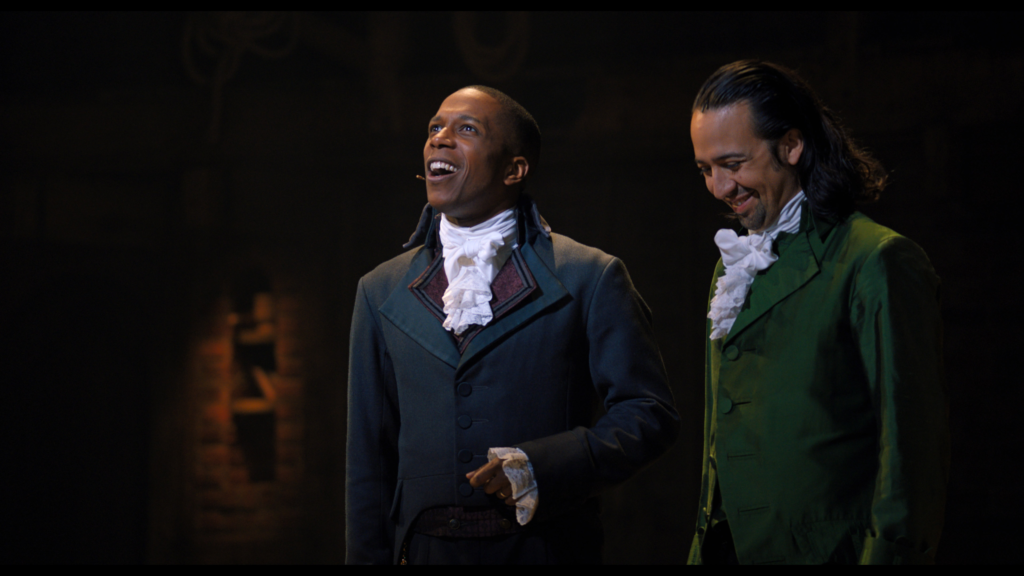
Composition in Hamilton fights the urge to show everything at once. While the wide master shots showcase the ensemble, Quinn and Kail knew that cinematic emotional connection happens in the close-up.
They frequently employ medium shots and medium close-ups (MCUs) to break the “fourth wall” feeling. A great example is the “Cabinet Battles.” On stage, this is a debate; on film, Quinn shoots it almost like a boxing match or a rap video, using over-the-shoulder angles that place the viewer directly in the crossfire between Hamilton and Jefferson. This creates an adversarial intimacy that a wide shot simply can’t convey. My initial worry was that a stage capture would feel static, but the use of depth helps. By shooting through foreground elements or framing actors against the depth of the rotating stage, they managed to give a three-dimensional feel to a confined space.
Lighting Style
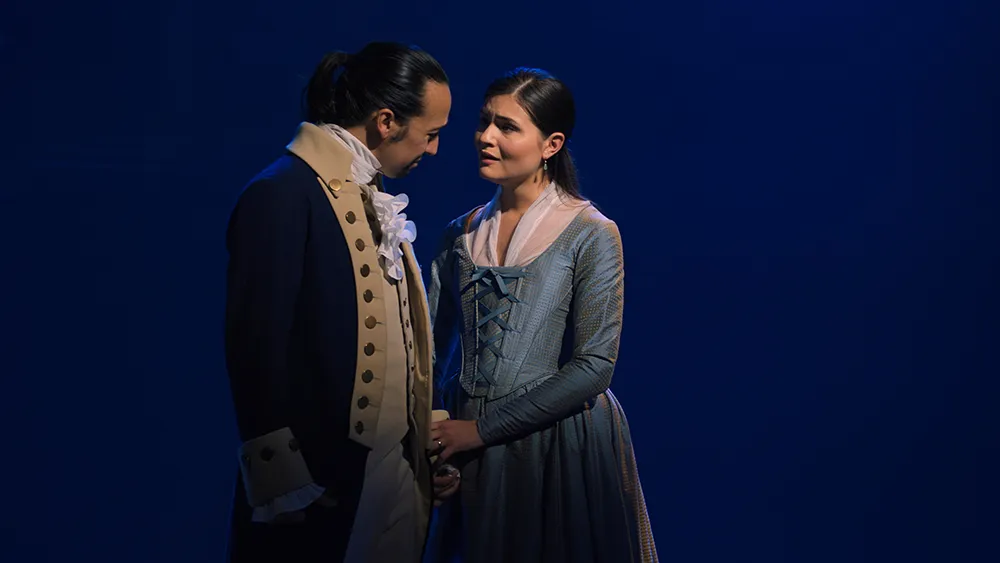
The lighting is where the collision of theater and film is most violent. Theatrical lighting is designed for the human eye, which has incredible dynamic range. A digital sensor does not. Declan Quinn’s task was to adapt high-intensity stage lighting colored washes, hard follow-spots, and deep shadows without blowing out the image.
The result is a lesson in managing dynamic range. We see motivated theatrical sources overhead spots and strong backlights that sculpt the performers. In a narrative film, you might soften these; here, Quinn leans into the harshness. The “HDR” look some viewers commented on is actually just excellent exposure management. The highlights are bright, bordering on clipping, but they roll off just enough to retain detail.
I also appreciated how the color temperature shifts were preserved. The move from cool, revolutionary blues to the warm, amber tones of the more intimate moments isn’t corrected out it’s embraced. The lighting isn’t “cinematic” in the traditional sense; it is theatrical lighting captured with cinematic precision.
Lensing and Blocking
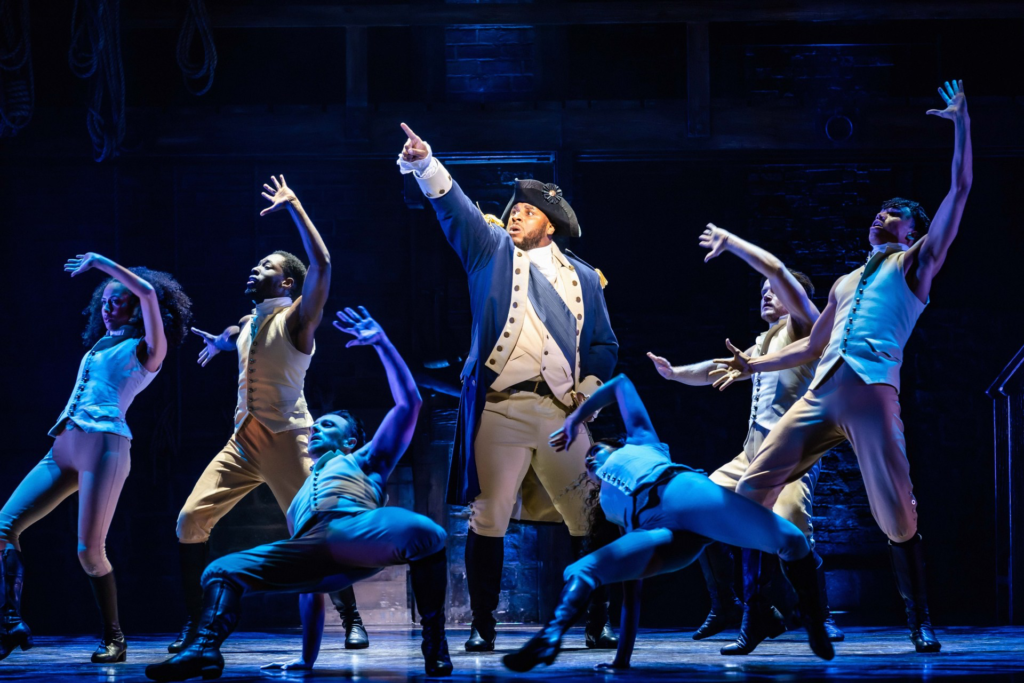
Lensing a live show is a strategic game. You can’t swap lenses between takes when the show is running. This production likely relied on a mix of sharp primes for key setups (to get that crisp, shallow depth of field) and high-quality cinema zooms to adapt on the fly. You can see the use of selective focus to isolate performers, mimicking the way our eyes naturally focus on a speaker in a crowded room.
The blocking is visually reinforced by the lens choices. When Lafayette or Jefferson makes a grand entrance, a wider focal length exaggerates their movement and swagger. Conversely, the more introspective moments, like Eliza’s solos, use longer focal lengths to compress the background and isolate her from the ensemble. It’s an elegant dance where the camera anticipates the actors’ movements rather than just reacting to them.
Color Grading Approach
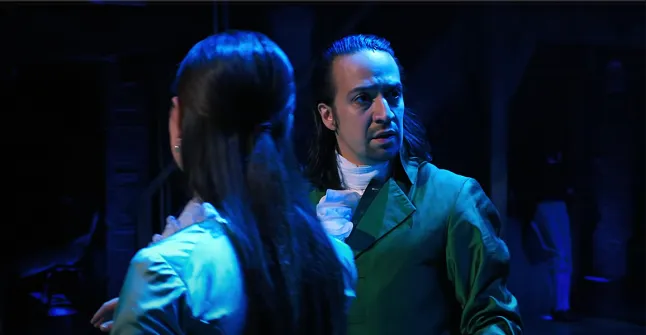
As a colorist, this is where the production really shines for me. The grade prioritizes preservation and continuity over stylized reinvention. Since this was stitched together from three different live performances, the colorist’s primary job was likely matching slight variances in stage lighting to create a seamless timeline.
The hue separation is excellent. The vivid blues, reds, and browns of the period costumes pop without looking like a saturated cartoon, which is a common risk with LED stage lighting. The skin tones remain natural despite the heavy colored washes hitting them.
Contrast shaping is the other heavy lifter here. Stage lighting is inherently high-contrast. A lazy grade would crush the blacks into an abyss or let the spotlights clip into white blobs. Instead, we see careful tonal sculpting. The mid-tones are dense and rich, preserving the “weight” of the stage, but there is enough latitude in the shadows to see the ensemble working in the background. The highlight roll-off is handled digitally but mimics the organic way light behaves, avoiding that harsh “video” look. It’s a clean, modern grade that doesn’t try to add fake film grain or vintage looks it simply polishes the reality of the stage.
Technical Aspects & Tools
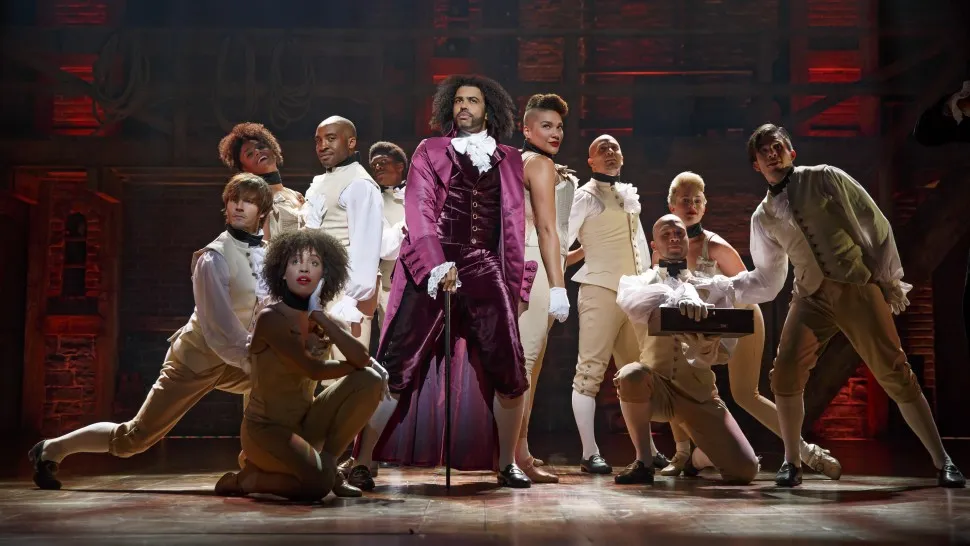
To capture this level of complexity, a multi-camera setup was mandatory. Filming across multiple live performances allowed them to get the “safety” wides in one pass and the risky, intimate close-ups in another. This isn’t just editing; it’s stitching time.
The image quality suggests high-end digital cinema cameras, likely ARRI Alexa or RED, chosen for their dynamic range latitude. You need a sensor that can handle a pitch-black stage and a blinding spotlight simultaneously without falling apart. The choice of codec would have been RAW or high-bitrate ProRes to give the post-production team maximum flexibility in the grade.
Audio synchronization is the unsung hero here. Merging direct feeds from body mics with the ambient room sound (to get the audience reactions and room tone) creates a soundscape that feels live but sounds studio-clean. It’s a massive technical achievement to make disparate performances look and sound like a single, cohesive night at the theater.
- Also read: THE KID (1921) – CINEMATOGRAPHY ANALYSIS
- Also read: RAN (1985) – CINEMATOGRAPHY ANALYSIS
Browse Our Cinematography Analysis Glossary
Explore directors, cinematographers, cameras, lenses, lighting styles, genres, and the visual techniques that shape iconic films.
Explore Glossary →