Rarely does a film pierce through the industry talk and technical jargon to hit me purely on an emotional level while simultaneously showcasing masterful, understated cinematography. Hachi: A Dog’s Tale (2009) is one of those outliers.
On the surface, it’s a “dog movie” or as Mark Kermode put it, “saccharine sweet” to some. But beneath that gentle exterior lies a profound tale of unwavering devotion that relies entirely on visual execution to land its blows. And believe me, it lands them. Kermode noted the film’s “two tragic denouements,” but the impact of those moments is magnified by how the filmmakers chose to capture Hachi’s world. It’s a film that demands attention not for flashy techniques, but for the quiet, devastating power of its images.
About the Cinematographer

The unsung hero of Hachi isn’t the dog trainer, but the cinematographer who meticulously sculpted its visual world: Ron Fortunato, ASC. Unlike the AI-generated summaries you might find online that miscredit this film, it was Fortunato (known for Before the Devil Knows You’re Dead and Basquiat) who brought a distinct, naturalistic sensibility to the project.
Fortunato is not a DP who imposes his ego on the image. A film centered on the steadfast loyalty of an Akita and his bond with Parker (Richard Gere) requires a cinematographer who prioritizes empathy over showmanship. Fortunato’s approach here is one of quiet observation. He doesn’t distract with “look at me” lighting; instead, he builds a visual intimacy that mirrors the connection between man and dog. It’s the kind of invisible cinematography that allows an audience to sink into the world, unaware they are being guided by a lens.
Inspiration Behind the Cinematography
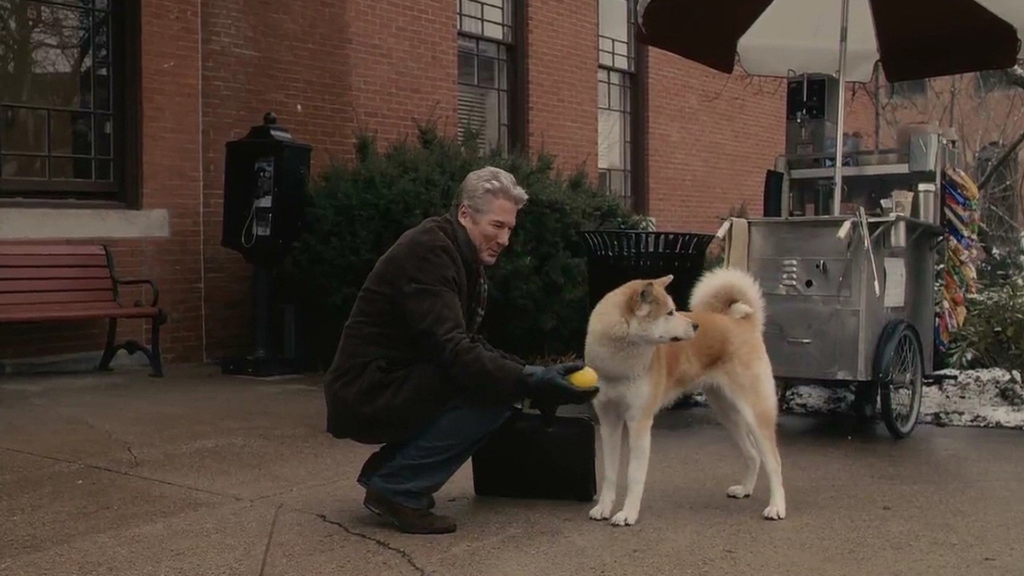
The visual language of Hachi isn’t drawn from high-octane thrillers; it’s a meditation on waiting. The camera had to embody patience. While the film is set in America, the visual approach respects the story’s Japanese origins, leaning into a philosophy of finding beauty in the mundane and the impermanent.
The film aims to make the viewer feel the physical weight of Hachi’s commitment. Consequently, the cinematography often drops to Hachi’s eye level. We aren’t just watching a dog; we are placed alongside him, staring at that train station door. This perspective shifts the emotional anchor. When we see the world from low to the ground, the arrival of Parker isn’t just a plot point; it’s an event. The visual choices evoke the idea of an “afterlife” or an eternal connection, suggesting that Hachi sees something the humans in the film and perhaps the audience miss.
Camera Movements
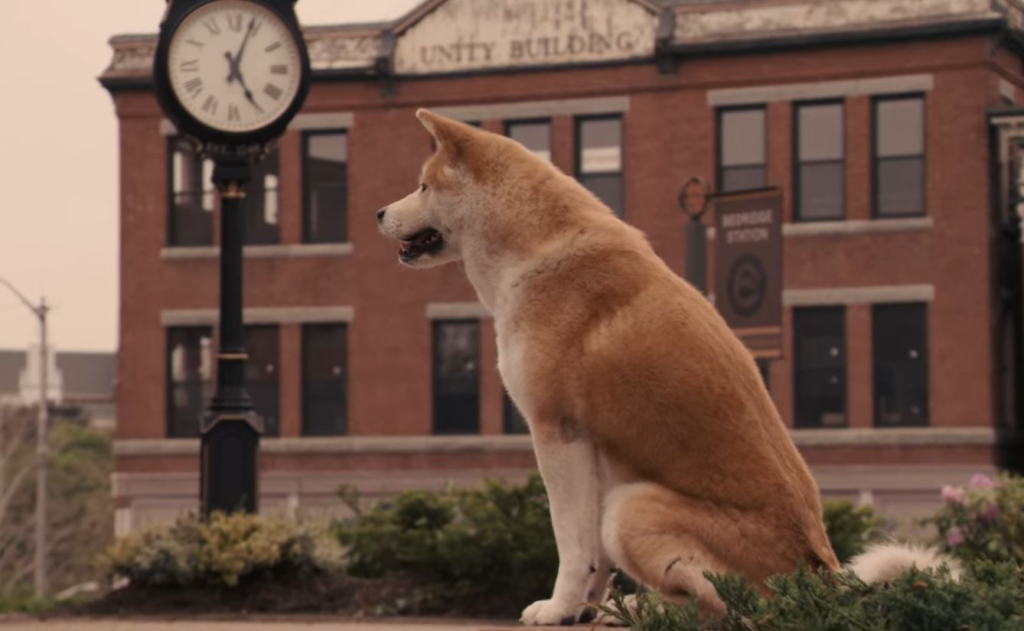
In an era where modern filmmaking is obsessed with gimbals and constant drone movement, Hachi stands out for its restraint. The camera movement echoes the nature of the dog: calm, steadfast, and waiting.
We frequently see static lock-offs. The camera holds on Hachi sitting at the station entrance, refusing to cut away. These still frames force us to dwell on his micro-expressions and the passing of time, highlighting his solitude amidst the commuter chaos. When the camera does move, it is usually a motivated, smooth dolly track following Parker and Hachi on their walks. It connects them to their environment without drawing attention to the machinery of filmmaking.
There is some subtle handheld work in the early scenes specifically when Parker first finds the puppy which adds a layer of raw immediacy to their bonding. But as Hachi ages and the waiting becomes a solemn ritual, the camera settles down. It becomes a silent witness. The choice to simply observe rather than dramatize is what makes the final act so potent.
Compositional Choices
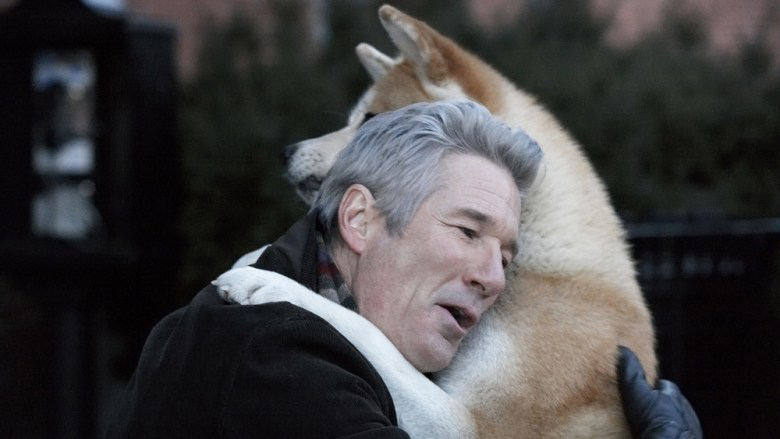
Composition in Hachi is a masterclass in using negative space. Fortunato frequently employs low-angle shots from Hachi’s POV. This not only immerses us in the canine world but physically elevates Parker in the frame, underscoring his monumental importance in the dog’s life.
The wide shots establish the isolation. The train station is often framed to make Hachi appear small against the architecture and the flow of people. After Parker’s death, this blocking becomes critical: Hachi is a fixed point in a moving world. Conversely, the close-ups on Hachi’s face are frequent and intimate. The camera trusts the audience to read emotion in the dog’s eyes without needing dialogue to explain it. The recurring frame of the station entrance becomes an iconic image a stage for nine years of loyalty. By keeping the composition identical over the years, the changes in seasons and Hachi’s aging become heartbreakingly apparent.
Lighting Style
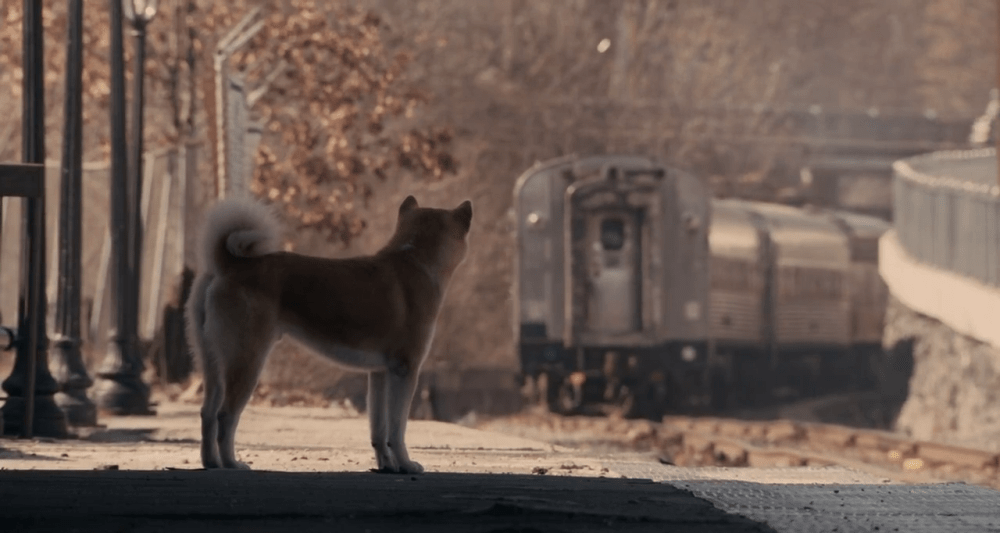
The lighting leans heavily towards naturalism, but as a colorist, I can see the careful work in the ratios. Fortunato prioritizes a soft, motivated approach. The “home” scenes are bathed in warm, tungsten-balanced light, likely utilizing practicals and dimmed sources to create a sense of safety and comfort. It feels lived-in.
This is contrasted sharply with the train station, especially in the later years. The lighting there shifts to cooler, harsher daylight tones. The winter scenes are particularly effective; the light is flat and diffuse, mimicking the overcast sky of a snowy day. There is no artificial “rim light” separating Hachi from the background in these moments he is allowed to blend into the grey, cold world, which reinforces his loneliness.
Fortunato also demonstrates a keen understanding of highlight roll-off. The outdoor scenes, particularly in the snow, manage to keep detail in the brightest whites. This prevents the imagery from feeling sterile or digital, maintaining a painterly, soft quality that supports the film’s sentimental tone without letting it feel cheap.
Lensing and Blocking
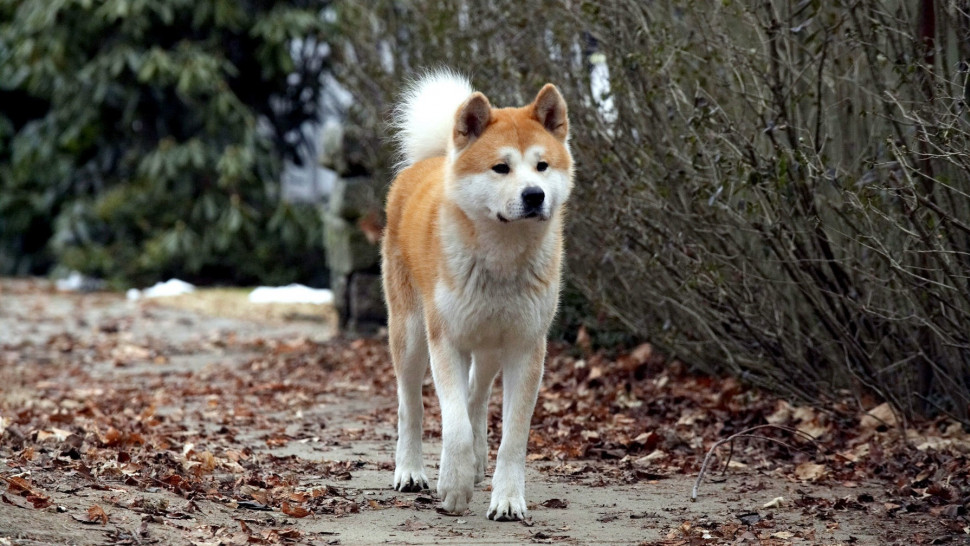
The lens choices guide the emotional distance. The film seems to rely on standard focal lengths likely 35mm and 50mm—for the interactions between Parker and Hachi, mimicking a natural human field of view. It feels unobtrusive.
However, during the waiting sequences, I sense the use of longer lenses (telephoto). This compression isolates Hachi against the background bokeh of the busy station. It creates a visual separation between the dog and the rest of the world. We are watching him from a distance, much like the station vendors who witness his daily vigil.
Blocking a dog is a nightmare for any crew, but here it is used narratively. Initially, Parker and Hachi are blocked closely together, sharing the frame. After Parker is gone, Hachi is blocked in isolation. The film resists the urge to fill the empty space next to him, letting the void speak for itself.
Color Grading Approach

As a colorist, this is where I really inspect the image. The grade in Hachi is beautifully subtle, eschewing the “teal and orange” blockbusters of the late 2000s for something timeless. The palette is strictly controlled: warm, earthy tones for the past and the home, transitioning to desaturated, cooler tones for the present and the loss.
What stands out to me is the density of the blacks. They aren’t crushed to a digital zero; they have that “milky,” lifted quality characteristic of print film emulation. The shadows hold texture you can see the detail in Hachi’s dark fur even in dim interiors, which is technically difficult to balance. The highlight rolloff is creamy, not clipped.
As the narrative progresses and Hachi ages, the saturation is dialed back. It’s a subtractive color process stripping away the vibrancy of life just as Hachi loses his master. This shift isn’t jarring; it’s a gradual bleed of color that mirrors the passage of time. It’s an effective example of how color grading works best when it hits you subconsciously.
Technical Aspects & Tools
While many assume modern films are digital, Hachi: A Dog’s Tale was shot on 35mm film. The texture is unmistakable. You can see the organic grain structure, particularly in the lower-light scenes at the station. This was likely shot on Kodak Vision2 or early Vision3 stock, which contributes massively to the emotional weight of the image.
Film has a way of handling skin tones and natural light that early digital cameras (like the RED One available at the time) struggled to replicate. The softness of the image isn’t a lack of focus; it’s the chemical reaction of light on emulsion. This organic texture grounds the story in reality. If this had been shot on sharp, sterile digital video, the “saccharine” nature of the story might have felt artificial. The grain gives it a nostalgic, storybook quality that digital filters today still try to emulate.
- Also read: BEFORE SUNRISE (1995) – CINEMATOGRAPHY ANALYSIS
- Also read: THE DEER HUNTER (1978) – CINEMATOGRAPHY ANALYSIS
Browse Our Cinematography Analysis Glossary
Explore directors, cinematographers, cameras, lenses, lighting styles, genres, and the visual techniques that shape iconic films.
Explore Glossary →