Fantastic Mr. Fox (2009) is that film for me. It’s a masterpiece I return to constantly, not just for the whimsical charm, but for its utterly unique approach to cinematography that anchors its paradoxical soul.
It’s essentially a children’s film about a midlife crisis a fox stealing for thrills while his family faces existential dread. On paper, that’s a harrowing domestic drama. Yet, the execution is so light-hearted and upbeat. This tension between heavy themes and “dollhouse” visuals is what makes the film brilliant. It feels both meticulously handcrafted and breathtakingly alive, leaving me with “a lot to chew on” every time I hit play.
About the Cinematographer
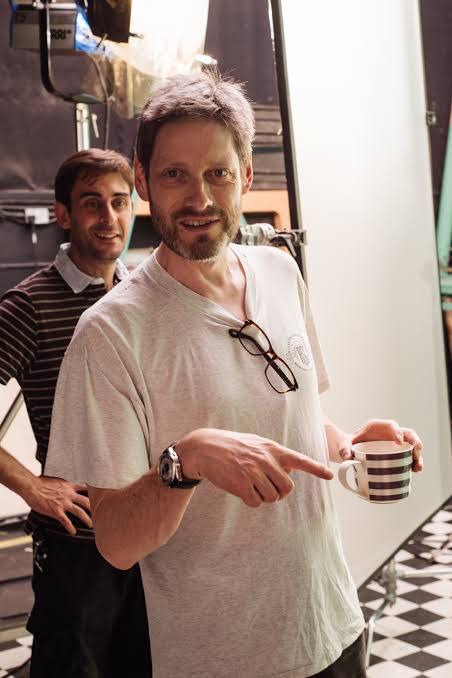
You can’t talk about the look of this film without mentioning Tristan Oliver. Working as a DP on a stop-motion feature of this scale is a completely different beast than live-action. Oliver, who also shot ParaNorman and Chicken Run, has this incredible eye for the “micro.”
His collaboration with Wes Anderson is evident in every single frame. Anderson has such a rigid, distinctive visual style, and Oliver was the one tasked with translating that into a three-dimensional, miniature world. This wasn’t just about “setting up lights”; it was a slow-motion ballet of tiny adjustments, often one frame at a time. The result is a world that feels coherent and stylized, yet remains organic. It’s the work of a DP who understands that in stop-motion, the puppets and sets are just as much “actors” as the voices behind them.
Inspiration Behind the Cinematography
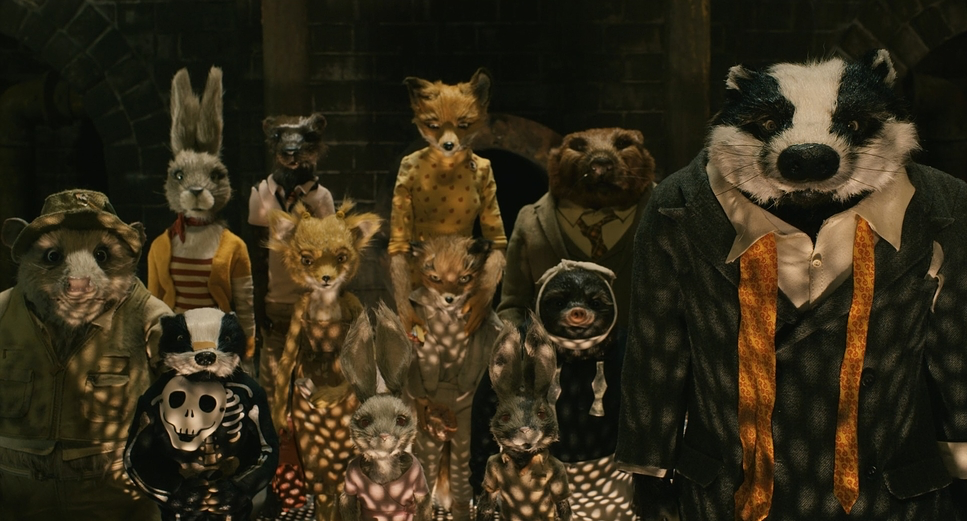
Beyond the original Roald Dahl book, the primary driver here is Wes Anderson’s obsession with the “dollhouse” aesthetic. This isn’t just a fun observation; it’s the foundational design principle. The cinematography treats the world like a stage play. Every single thing in the frame from the “painstakingly painted” plates in the Fox kitchen to the individual “granules of sand” on a mat was “created and put there purposefully.”
What’s wild is that this deliberate artificiality is exactly what makes it feel authentic. Behind-the-scenes footage shows a process that is “almost an exact science,” yet it preserves those beautiful human imperfections. We aren’t supposed to forget it’s stop-motion. The texture of the fur and the tangible nature of the sets are depth cues that remind us of the immense human effort involved. It grounds an absurd story in a reality you feel like you could actually reach out and touch.
Lensing and Blocking
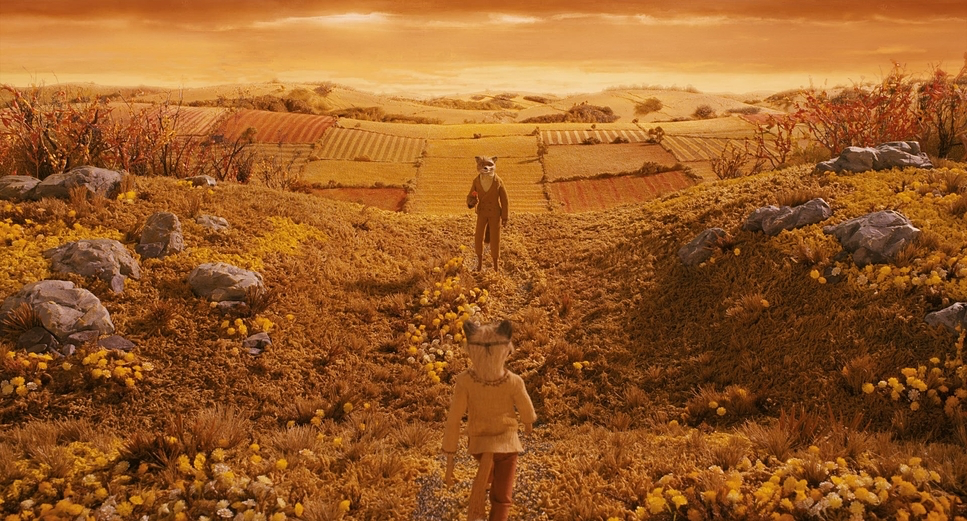
The lens choices here are fundamental to that “storybook” feel. Anderson and Oliver leaned heavily on Cooke Varotal lenses. Using wider glass is crucial because it helps maintain a deep depth of field. In this dollhouse world, you want the background detail to be just as sharp as the foreground. These lenses also provide a very slight distortion at the edges that enhances the whimsy without ever feeling like a cartoon.
The blocking is where things get really “Anderson.” It’s pure choreography. Characters move “square with the frame” rather than in dynamic, diagonal lines. Whether it’s a heist or a dinner scene, there’s an order to the chaos. This methodical positioning reinforces the “civility” the animals are trying so hard to maintain. It’s a conscious choice that highlights the artifice, but honestly, it makes the emotional beats feel more potent because the presentation is so focused.
Lighting Style
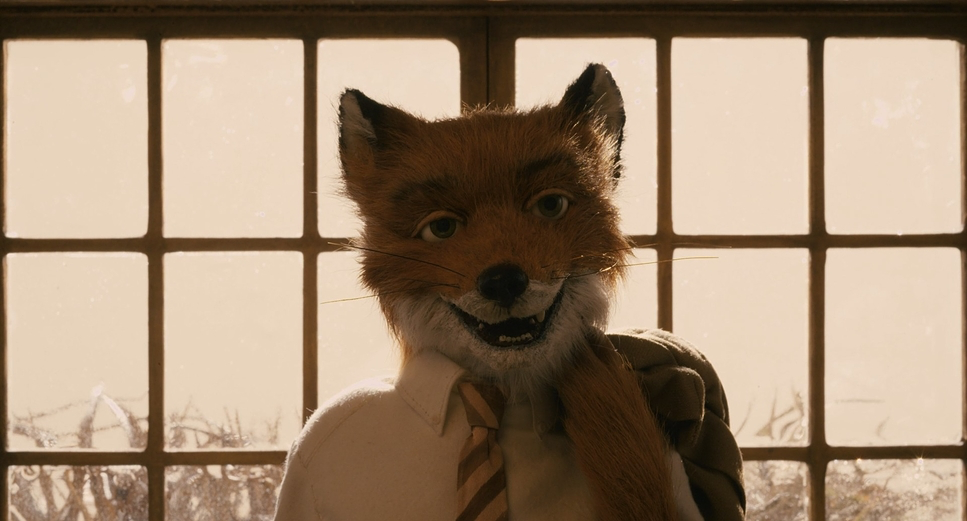
The lighting in Fantastic Mr. Fox is both functional and, frankly, quite dramatic. Much of it feels motivated by practical sources, which gives the miniature sets a sense of naturalism. It’s often soft and diffused, which is great for showing off the textures of the puppets’ fur.
But then, they hit you with something specific. Look at the cider cellar scene. The goal was to have the only illumination coming from “behind the cider,” giving off a literal glow. As a colorist, I’m obsessed with this. This backlighting carves out the silhouettes of Rat, Mr. Fox, and Kristofferson against the dark background. It’s almost noir-ish. It’s a prime example of how lighting doesn’t just “show” the scene; it shapes our perception of the stakes.
Color Grading Approach
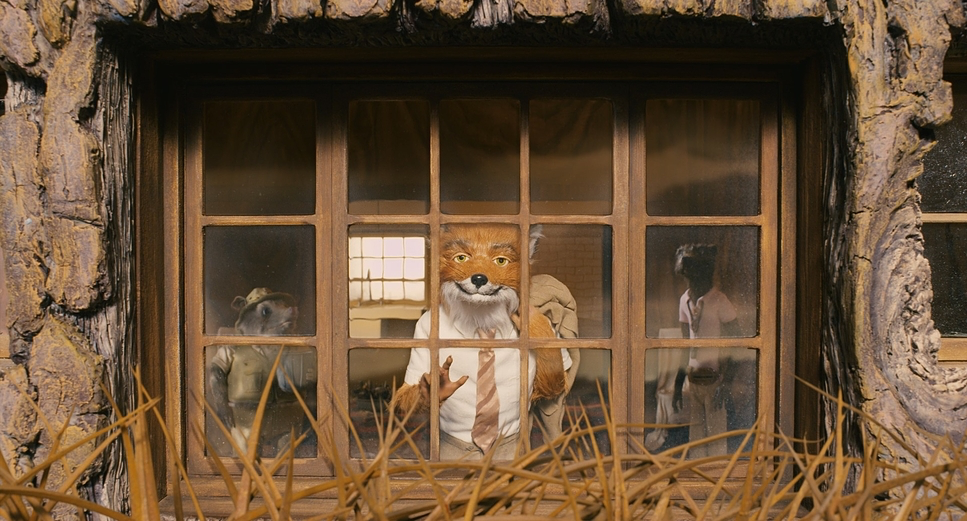
This is where I really nerd out. The grading in this film is a masterclass in purposeful aesthetic. It’s a warm, autumnal palette that feels nostalgic burnt oranges, deep reds, and golden yellows that perfectly fit the English countryside setting.
While I was tagging thousands of film stills for my database, I noticed how consistent the contrast shaping is here. They aren’t crushing the blacks for a “gritty” look. Instead, the contrast is managed to give the puppets a tactile dimension. The shadows keep their detail, allowing the fur texture to breathe, while the highlights have that gentle highlight roll-off I’m always chasing in my own sessions. It’s got “print-film sensibilities” written all over it. The hue separation is also expertly handled; even in a world of orange and brown, the blue of Mrs. Fox’s dress pops with perfect clarity. It’s a cohesive, emotionally resonant grade that makes the artificial feel profoundly real.
Camera Movements
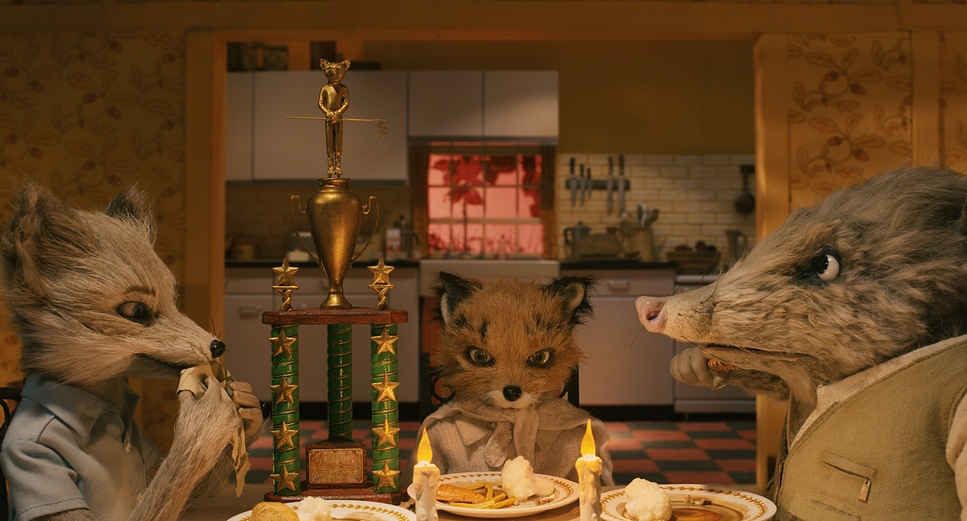
Wes Anderson’s camera moves are iconic, and they are on full display here. We get those smooth lateral and vertical pans that stay perfectly “square” with the frame. In stop-motion, these are an absolute nightmare to pull off.
Think about the “parallel uncut tracking shots.” The sheer effort to move the camera, the puppets, and the lights in micro-increments while keeping everything in focus is astronomical. These tracks aren’t just following the action; they’re revealing the world. We see Badger’s secretary typing or taking inventory in the background—details we’d miss if the camera was just handheld and shaky. Often, the camera moves in time with the music, turning the whole film into a rhythmic dance. It’s less about being “in the moment” and more about observing an elegant, precise world.
Compositional Choices
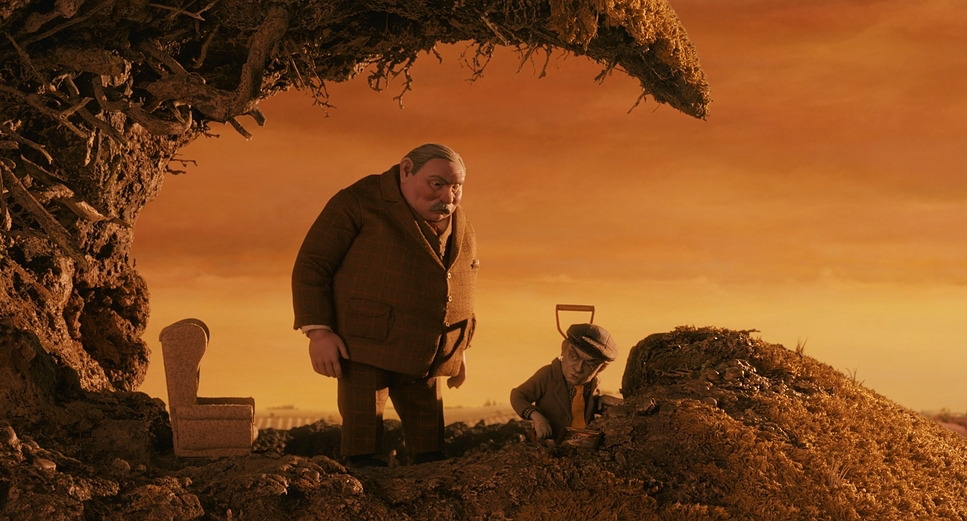
Compositionally, the film is “controlled chaos.” Anderson’s penchant for “painfully symmetrical wide shots” is the star of the show. Placing characters dead-center or perfectly balanced within a tableau evokes that dollhouse feel. It’s not just for aesthetics; it highlights the animals’ aspiration to be “human” and orderly.
But because they used deep focus, there is an incredible amount of info in every frame. “Everything you see was created by hand,” and the composition makes sure you see it. Characters are often framed within frames. doorways or windows which isolates them while showing their place in the environment. It’s a style that invites you to squint at the screen and rewards you for it. Every re-watch reveals a new layer of visual storytelling that you missed the first time.
Technical Aspects & Tools
Fantastic Mr. Fox (2009) | Technical Specifications
| Genre | Adventure, Animation, Book Adaptation, Comedy, Family, Heist, Stop-Motion Animation, Crime, Thriller, Puppetry, Claymation |
| Director | Wes Anderson |
| Cinematographer | Tristan Oliver |
| Production Designer | Nelson Lowry |
| Editor | Stephen Perkins, Ralph Foster |
| Colorist | Max Horton |
| Time Period | 2000s |
| Color | Warm, Saturated, Orange |
| Aspect Ratio | 1.85 – Spherical |
| Format | Digital |
| Lighting | Soft light |
| Lighting Type | Daylight |
| VFX | Stop Motion |
| Story Location | North America > United States of America |
| Filming Location | Europe > England |
| Camera | Nikon D3 |
| Lens | Cooke Varotal Lenses |
The technical side of this movie is actually mind-boggling. I mentioned the Nikon D3 it’s wild to think this entire world was captured on what was essentially a high-end stills camera. Stop-motion is an “exact science” where you’re capturing 24 individual photos for every second of film. One 18-second clip reportedly took eight days to finish. That’s pure dedication.
The “movie magic” here comes from using simple things in genius ways. Fire and smoke aren’t CGI; they’re made of cotton balls and carved soap. These physical, handcrafted elements offer a dynamic range that digital just can’t mimic. As a colorist, working with footage like this is the dream. You aren’t fighting to add “fake” texture; you’re just enhancing the beautiful, analog craftsmanship that’s already there.
- Also read: BOOGIE NIGHTS (1997) – CINEMATOGRAPHY ANALYSIS
- Also read: ALMOST FAMOUS (2000) – CINEMATOGRAPHY ANALYSIS
Browse Our Cinematography Analysis Glossary
Explore directors, cinematographers, cameras, lenses, lighting styles, genres, and the visual techniques that shape iconic films.
Explore Glossary →