Watching Dersu Uzala isn’t a passive experience; for me, it’s a raw immersion into a landscape that feels like it’s trying to swallow the characters whole. I don’t just see Kurosawa’s 1975 masterpiece as a tale of friendship. I see it as a visceral act of survival. Coming after his suicide attempt and the commercial failure of Dodes’ka-den, this film feels like Kurosawa’s own “rebirth” captured on 70mm celluloid. It’s a masterclass in visual storytelling where the environment isn’t a backdrop it’s the protagonist.
About the Cinematographer (and the Visionary)
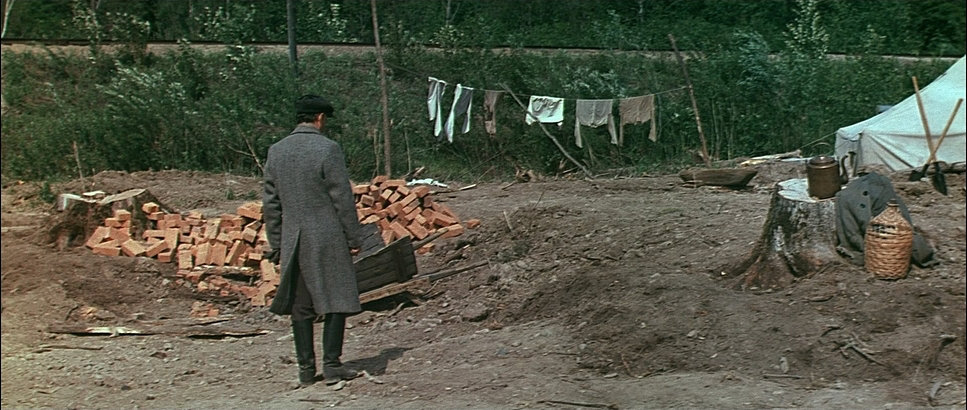
Whenever we discuss the “DP” on a Kurosawa set, we’re really talking about Kurosawa’s own unrelenting eye. While Fyodor Dobronravov, Yuriy Gantman, and Asakazu Nakai are the credited cinematographers, they were essentially operating within Kurosawa’s rigid visual architecture.
In the early ’70s, Kurosawa was at a breaking point. The Japanese industry his “river,” as he called it had run dry for him. When Mosfilm offered him creative control, it wasn’t just a job; it was a lifeline. He famously said he wanted to “climb a Soviet river and give birth to some caviar.” That poetic defiance is baked into the texture of this film. His insistence on shooting in the actual Ussuri region of Siberia, rather than a studio or a more convenient location, gave his DPs a sacred mandate: capture the unvarnished, brutal reality of the world Arsenyev actually walked through.
Camera Movements

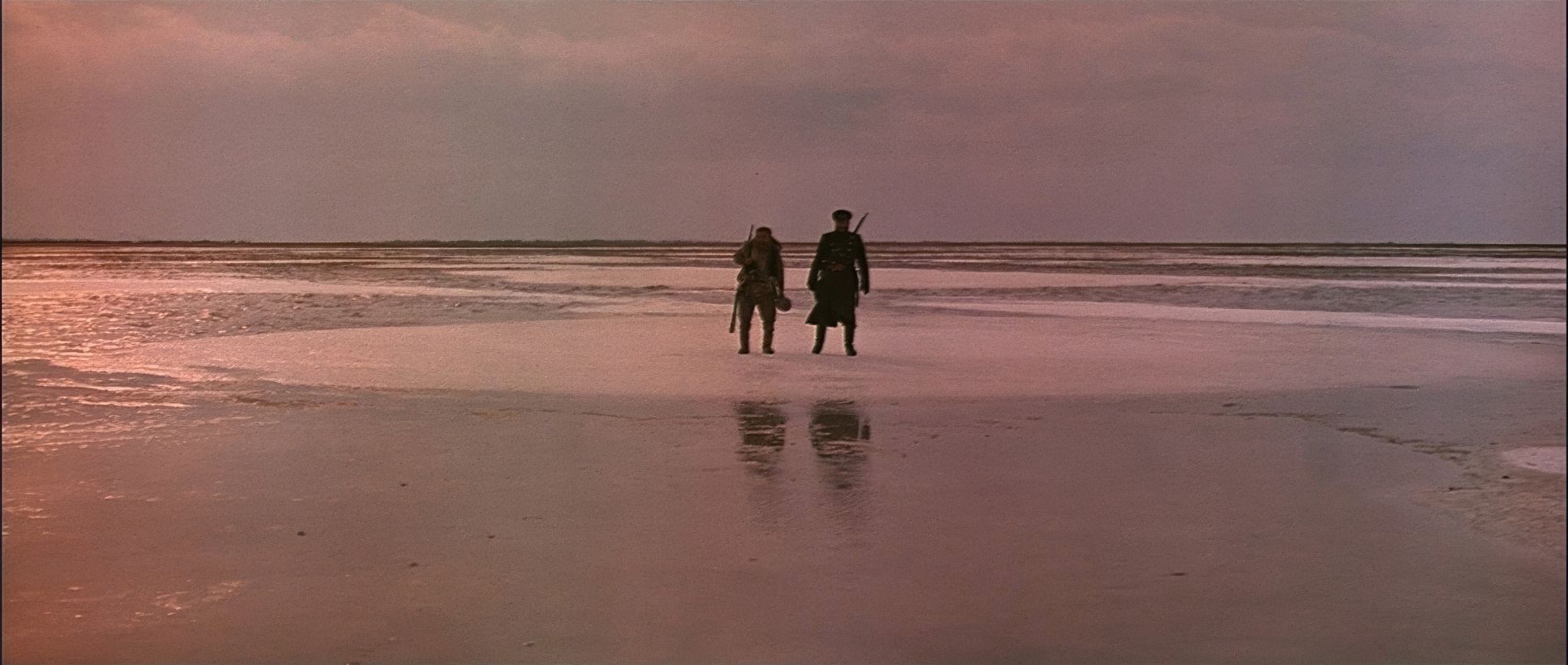
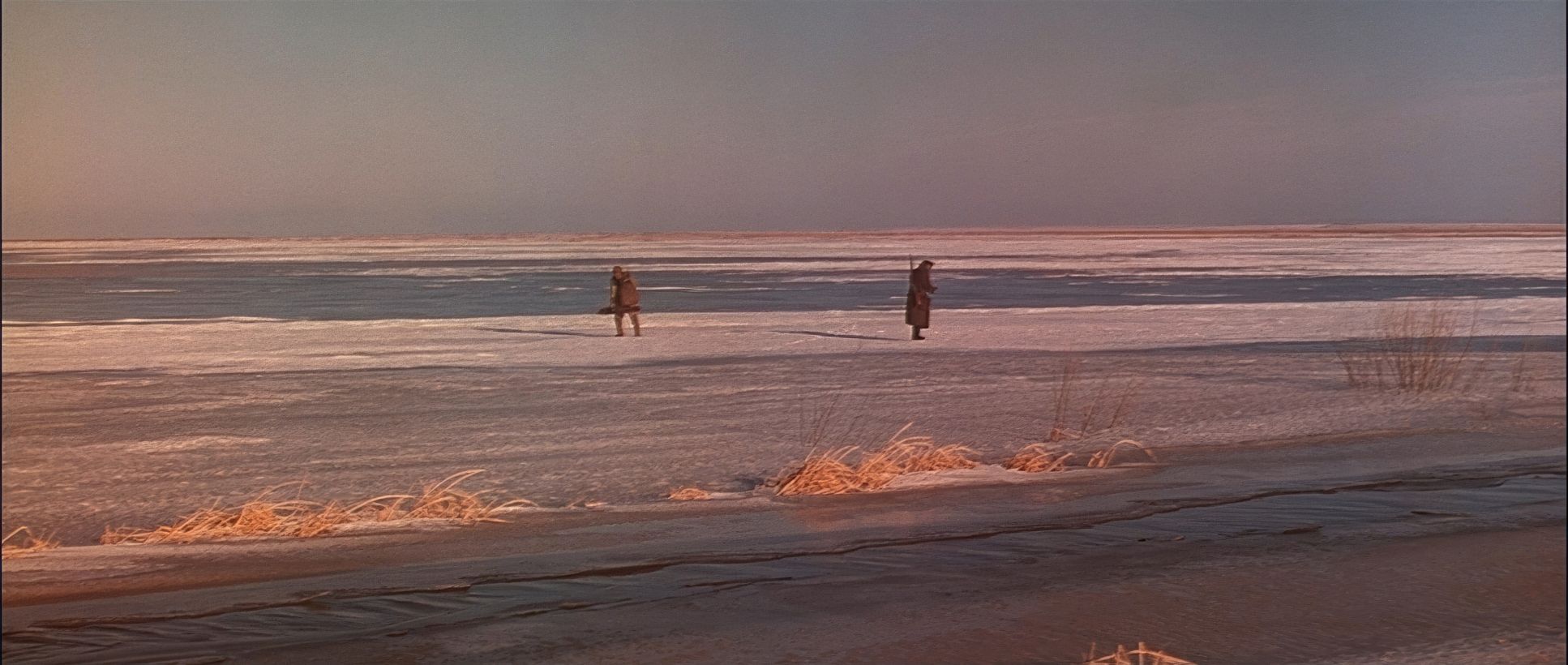
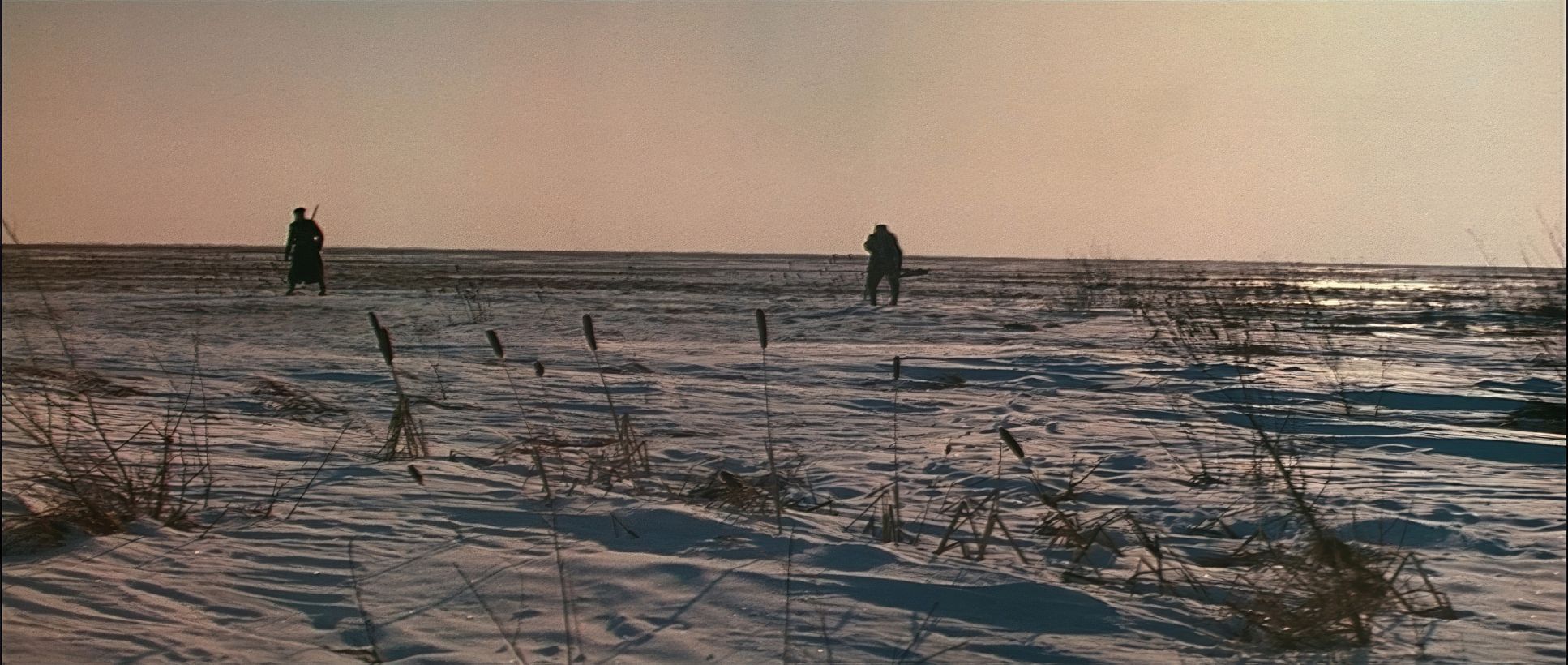
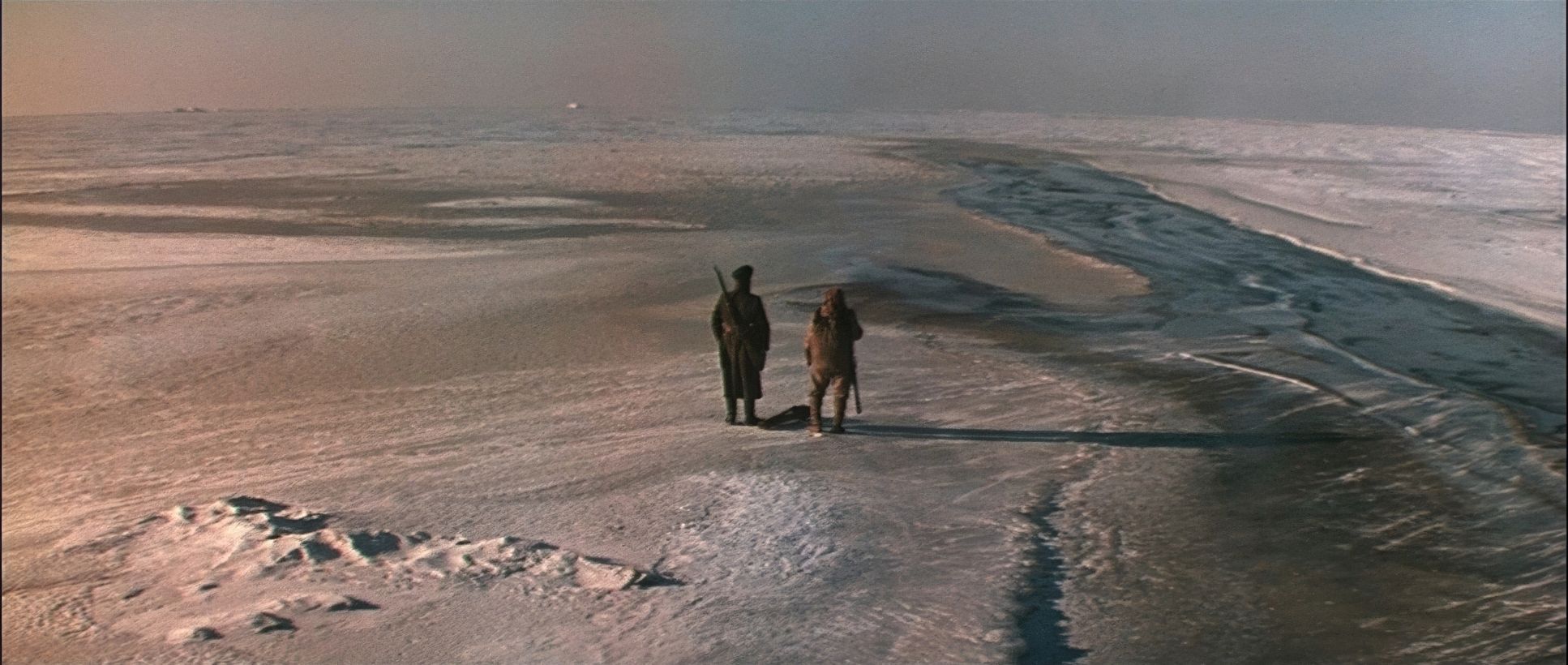
In Dersu Uzala, the camera doesn’t perform; it witnesses. There’s a deliberate, almost geological slowness to the pans. When you’re shooting on a KSK-70 a massive, heavy 70mm Soviet camera you don’t move it lightly. These slow pans across the wilderness emphasize the “sheer scale” of Siberia, making the human characters look like mere specs of dust.
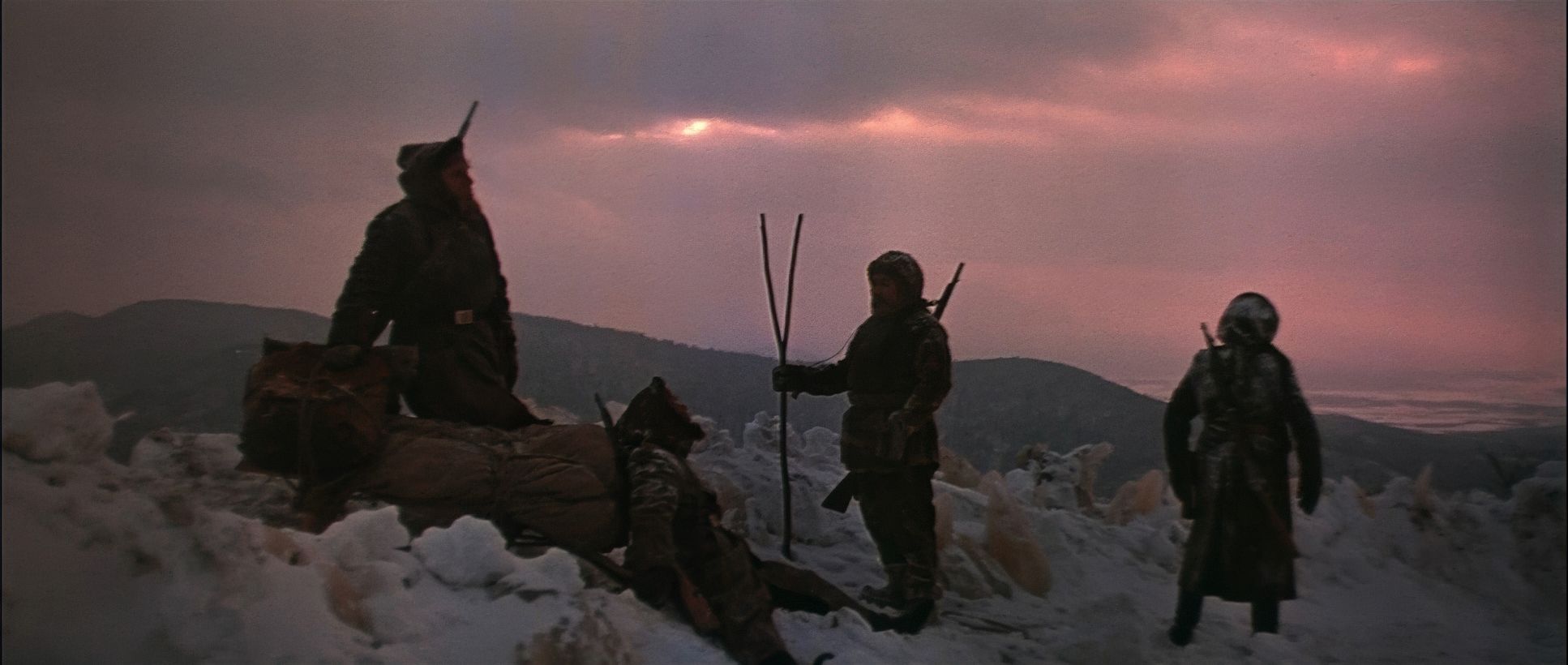
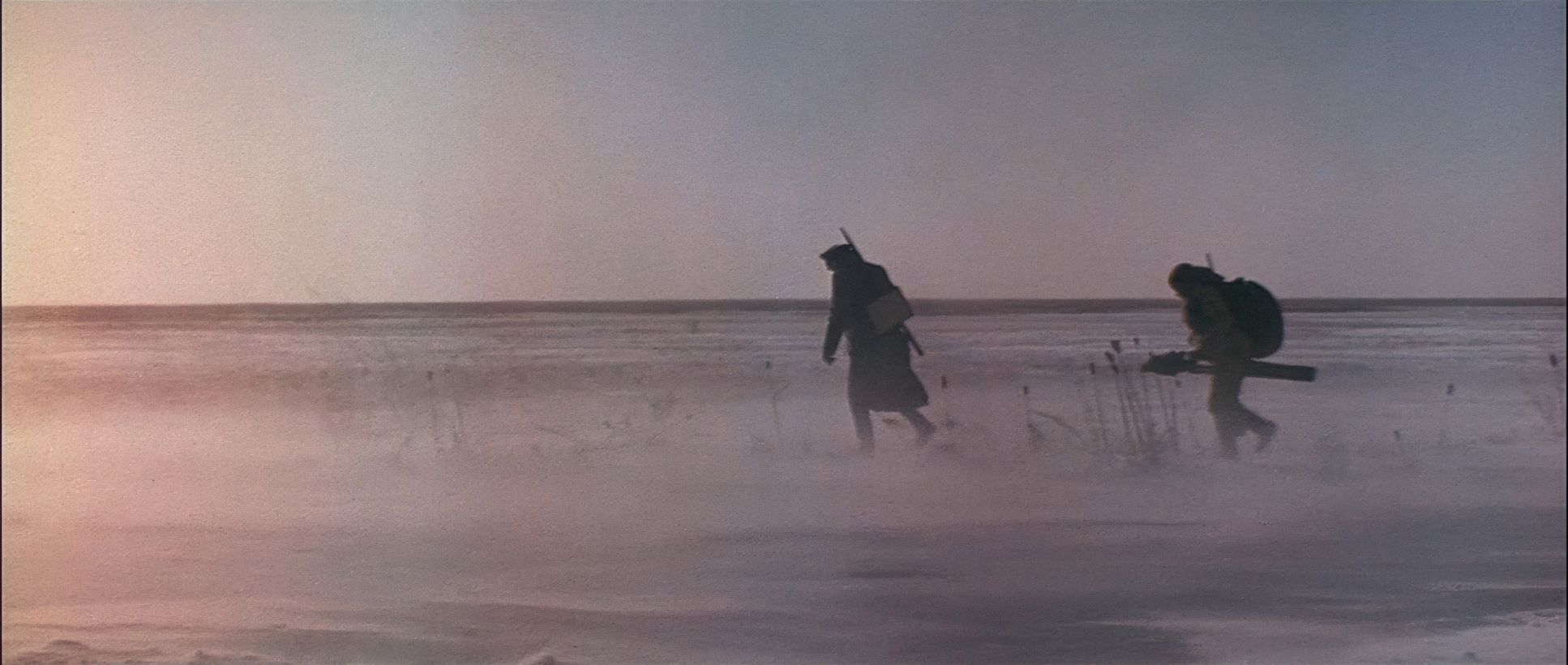
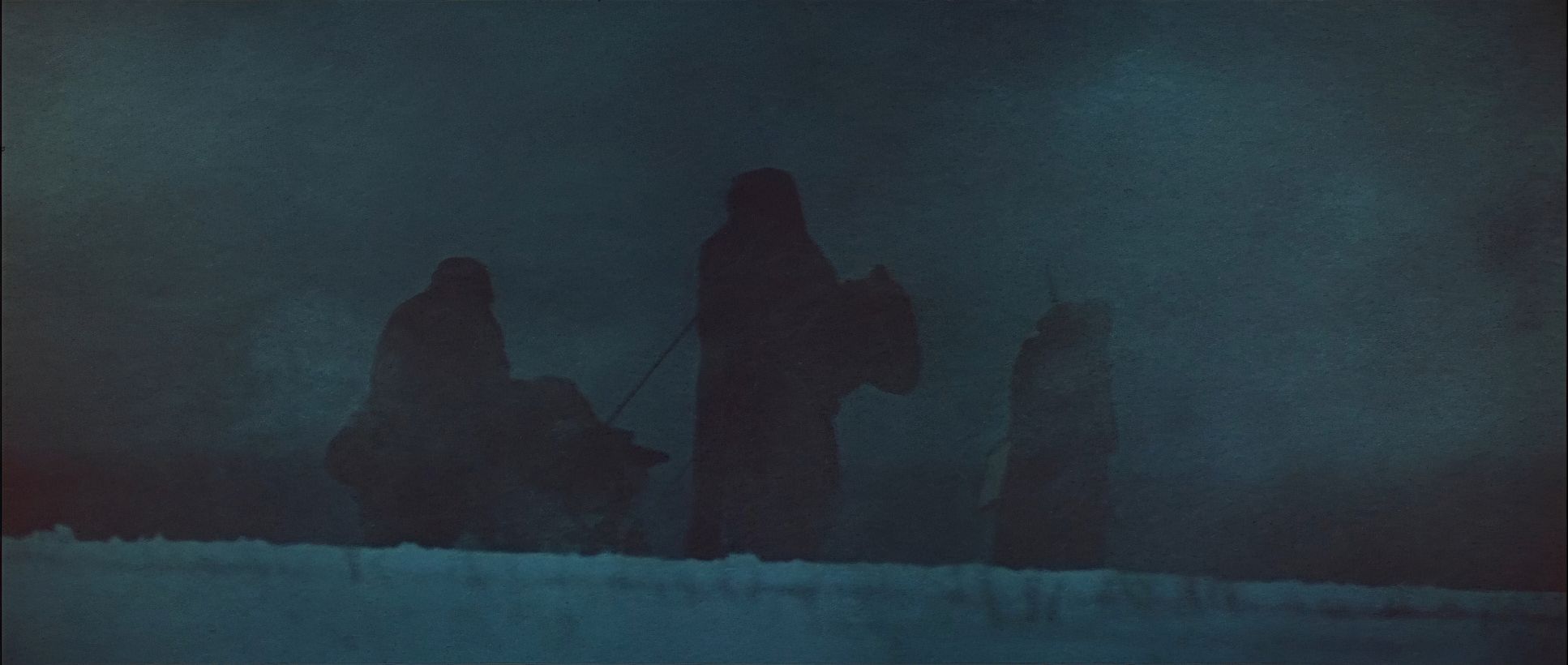
The tracking shots are rarely flashy. Instead, they feel grounded, often using a lower angle to emphasize the physical weight of trekking through deep snow or dense forest. In the blizzard scenes, the camera struggles alongside the cast. When the wind blows so hard that the frame becomes a white-out, the camera holds steady, occasionally jostled, creating a documentary-like verisimilitude. It’s a quiet, restrained approach that reinforces the film’s commitment to the natural world.
Inspiration Behind the Cinematography

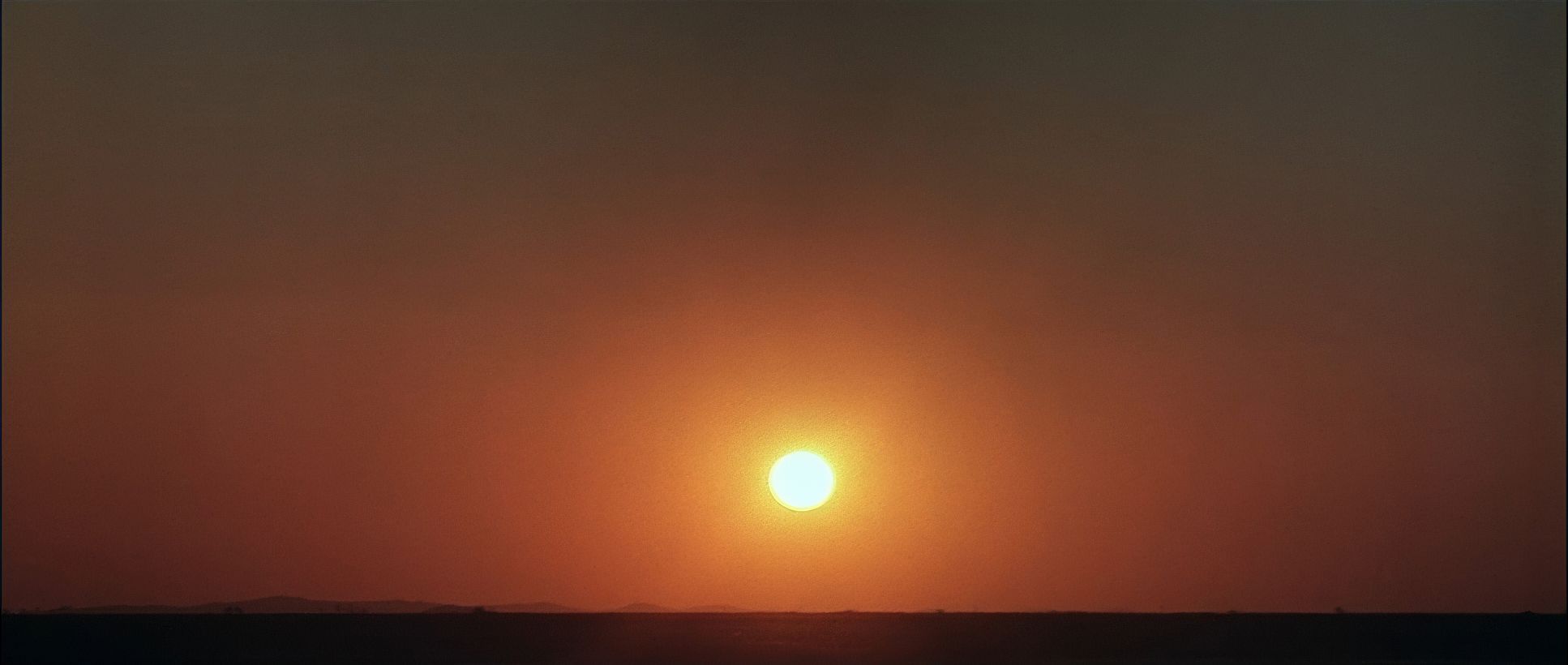
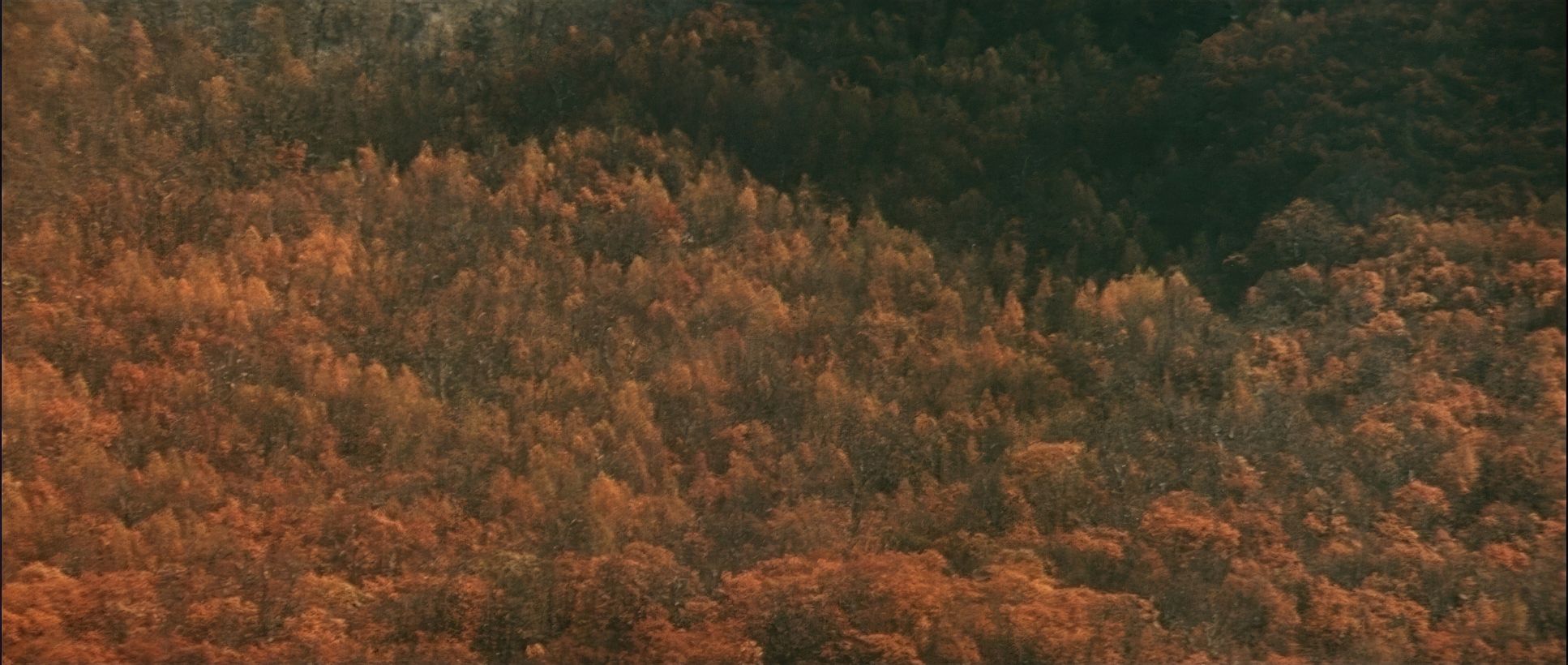
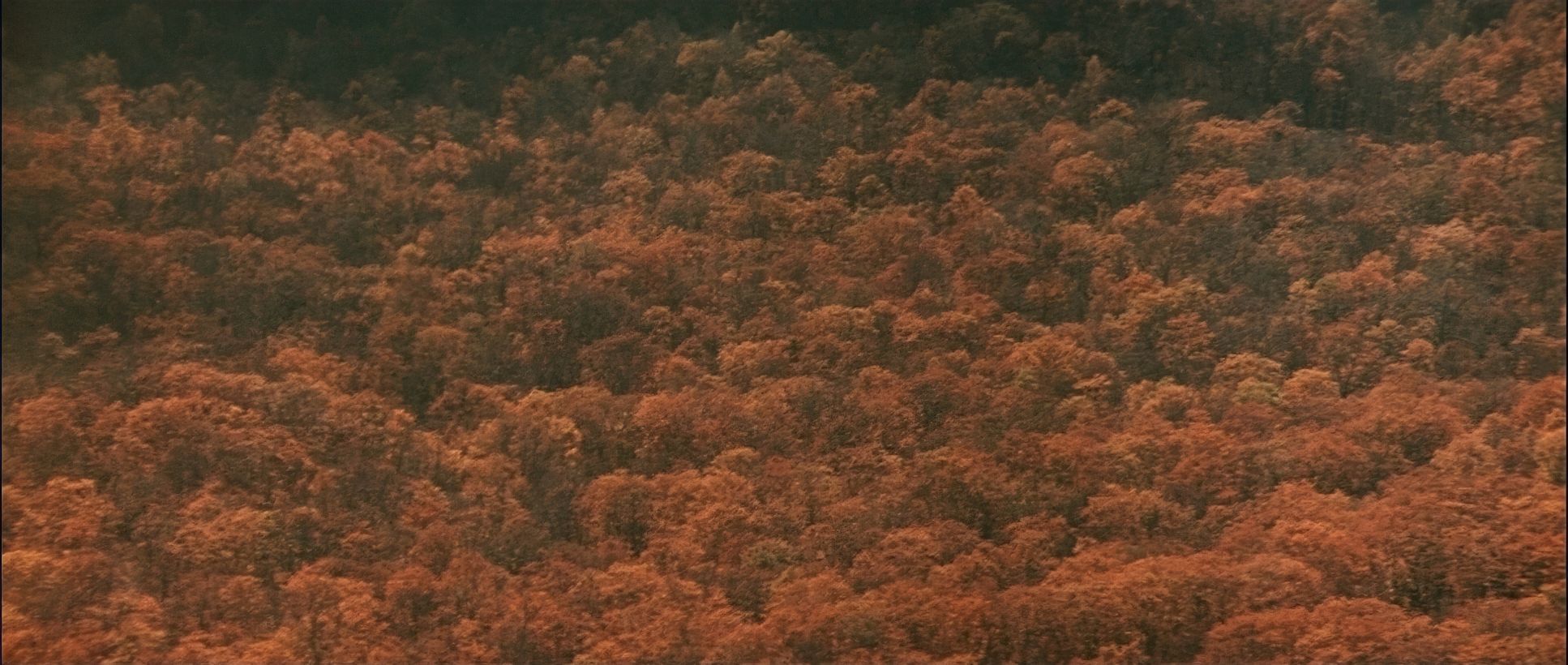
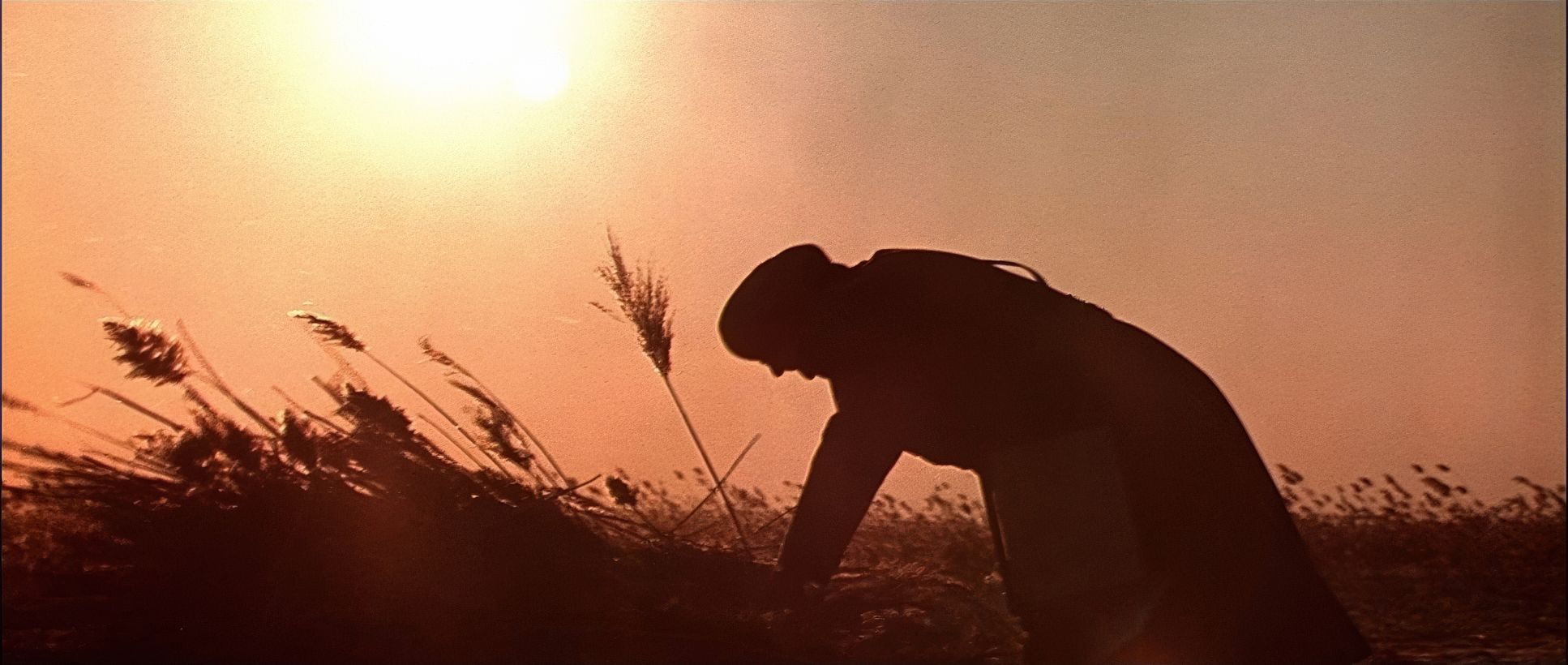
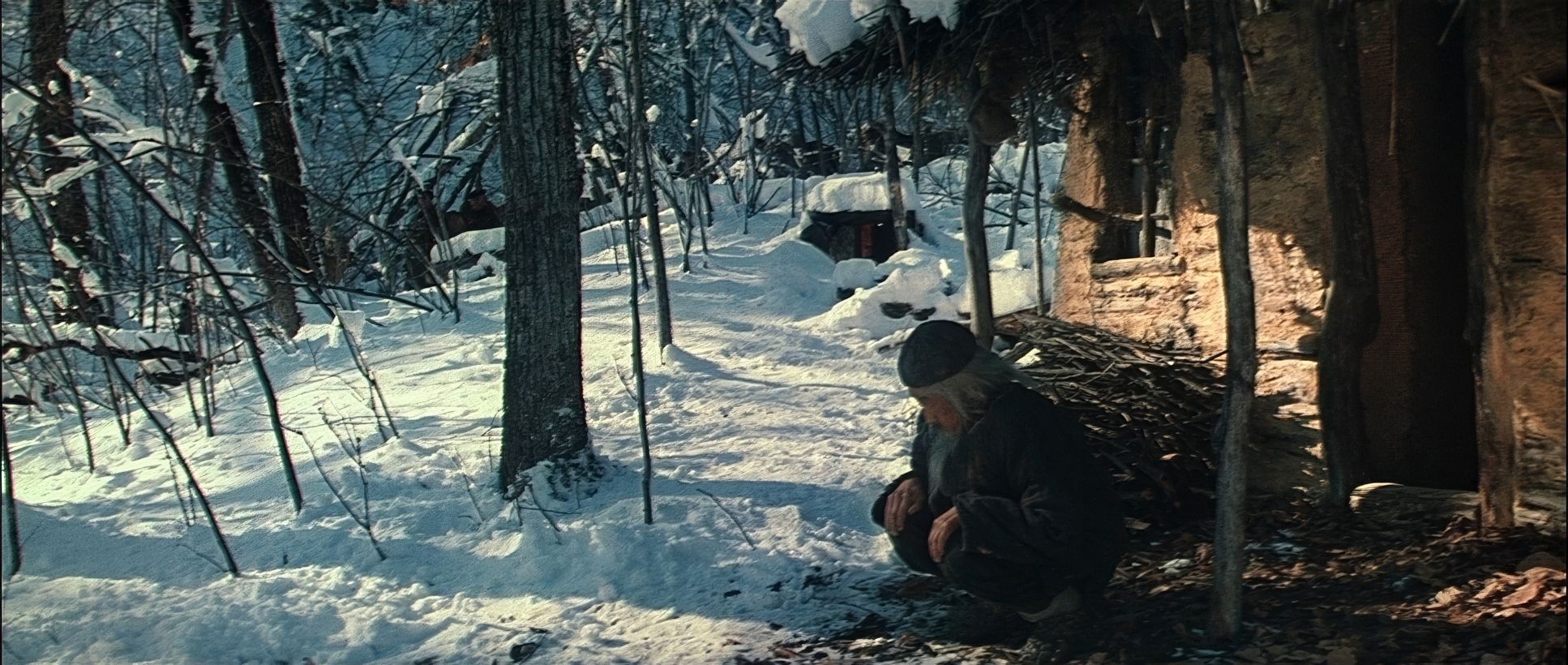
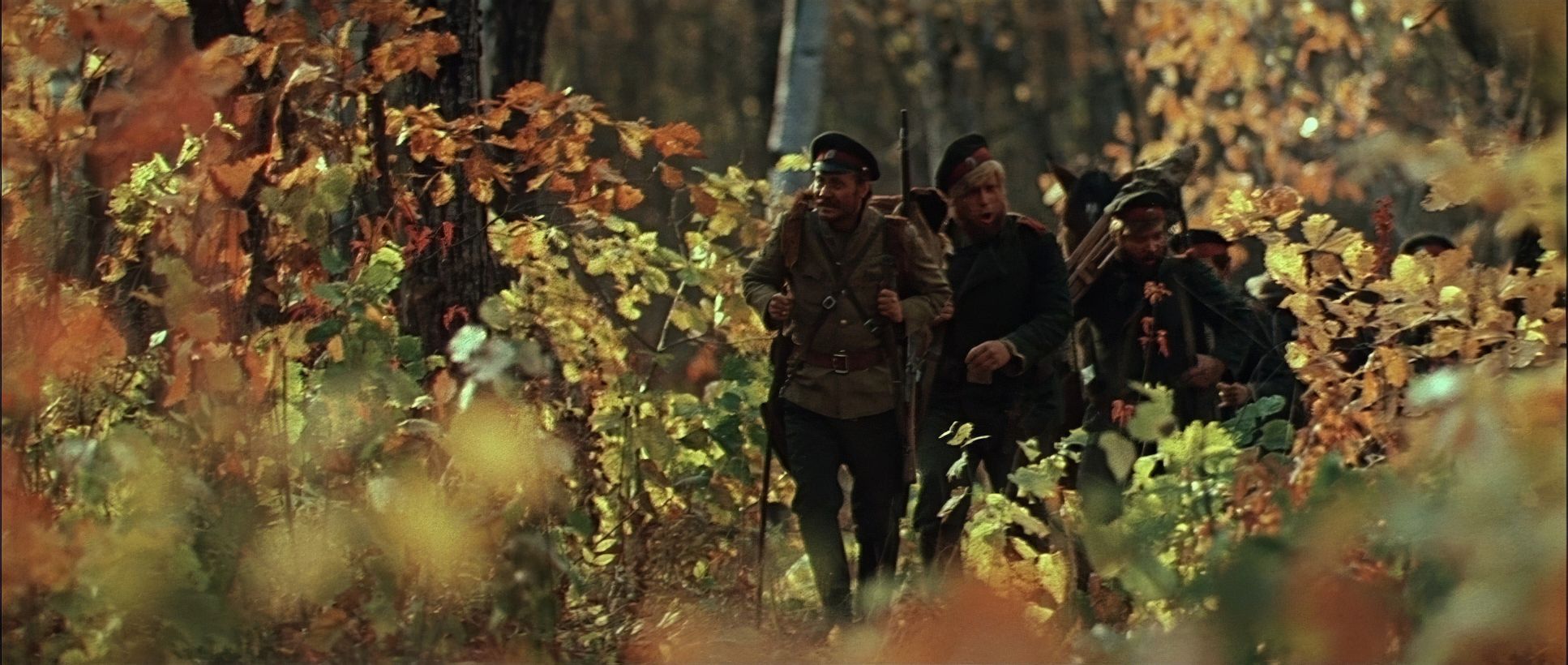
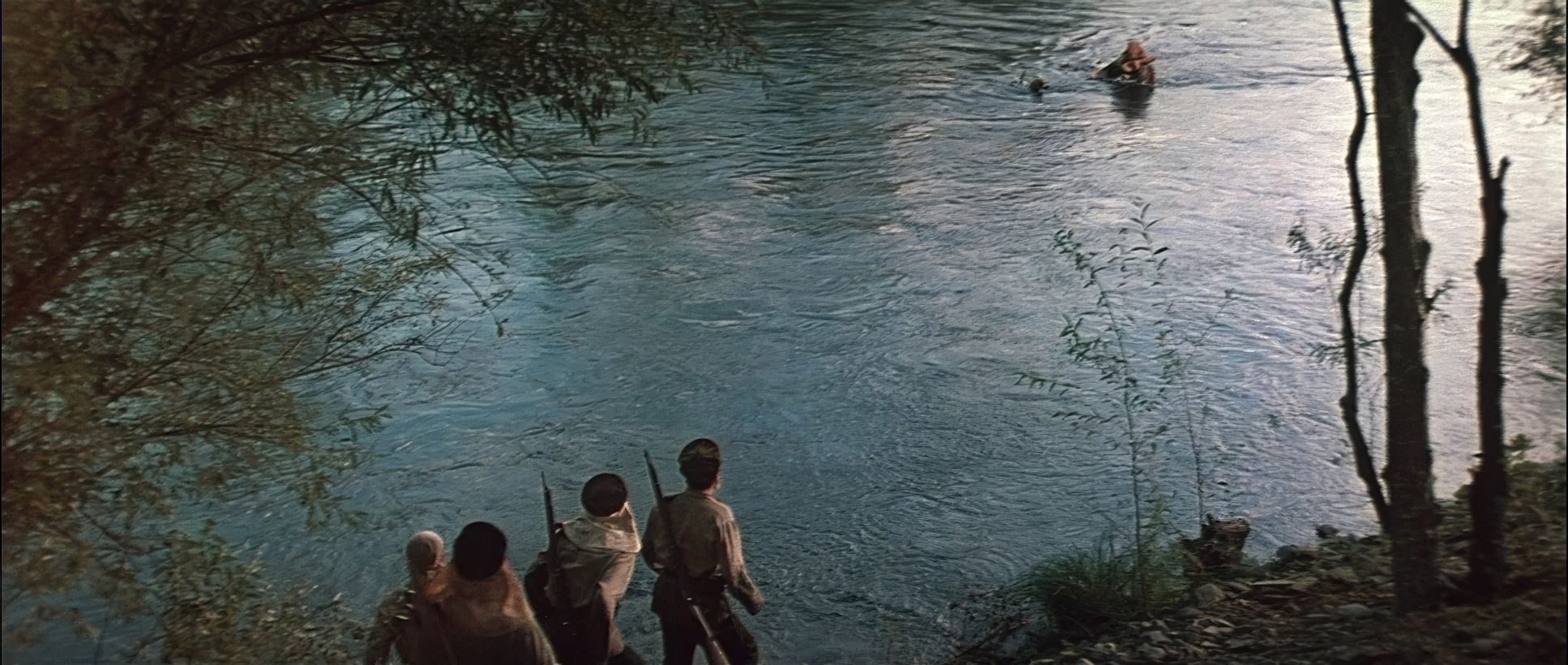
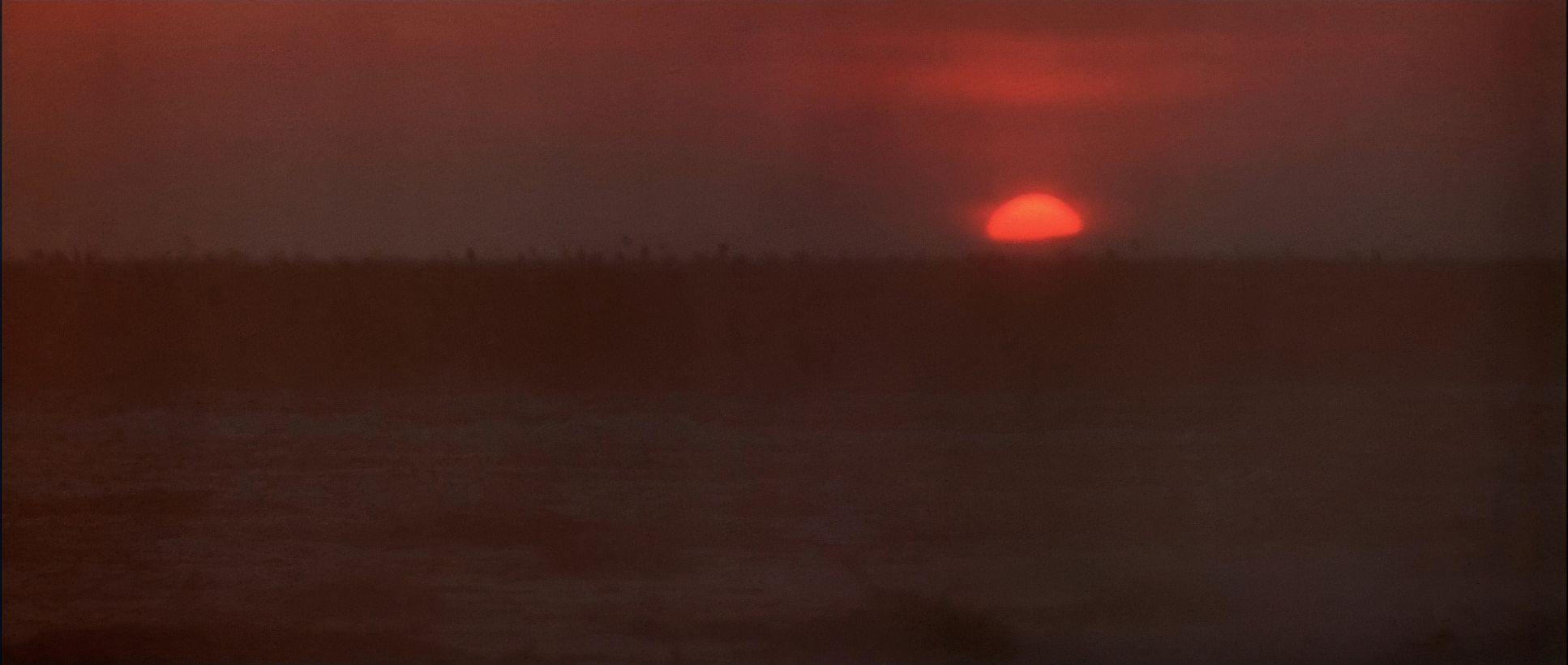
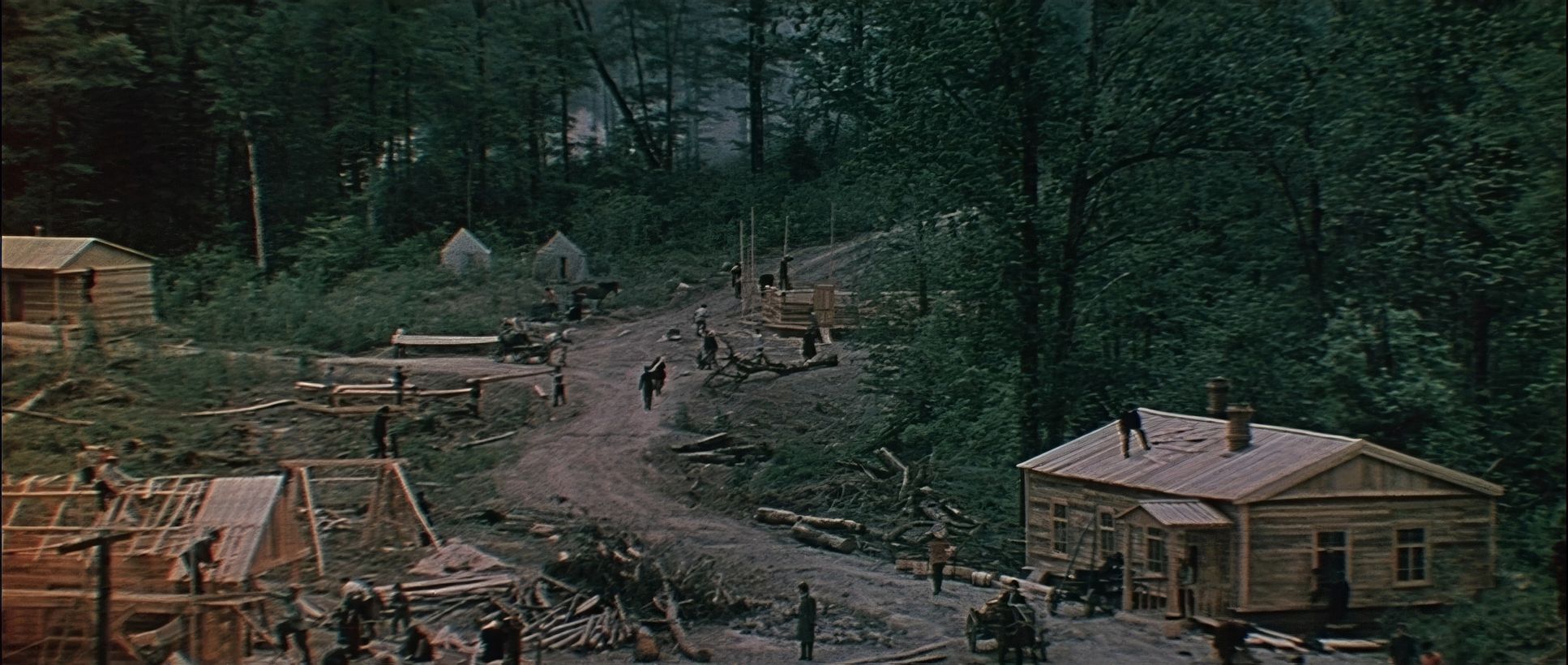
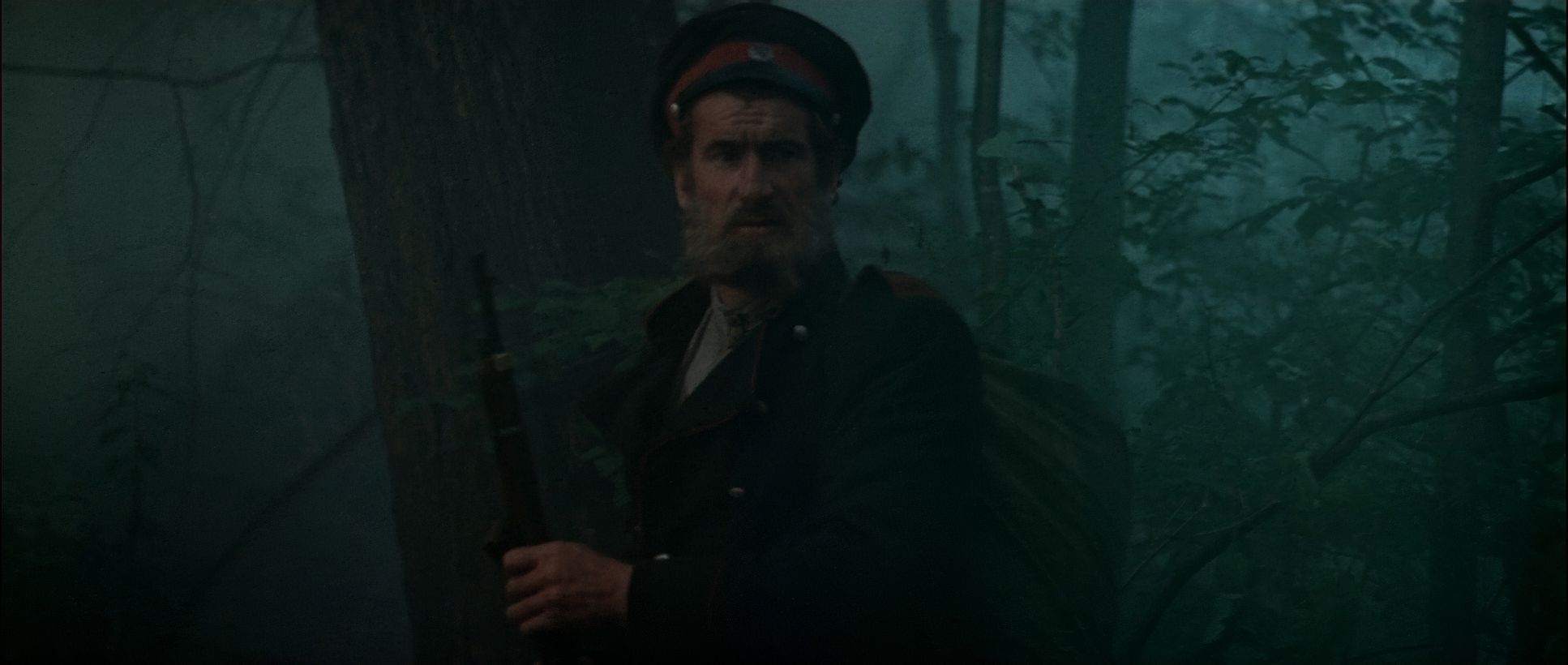
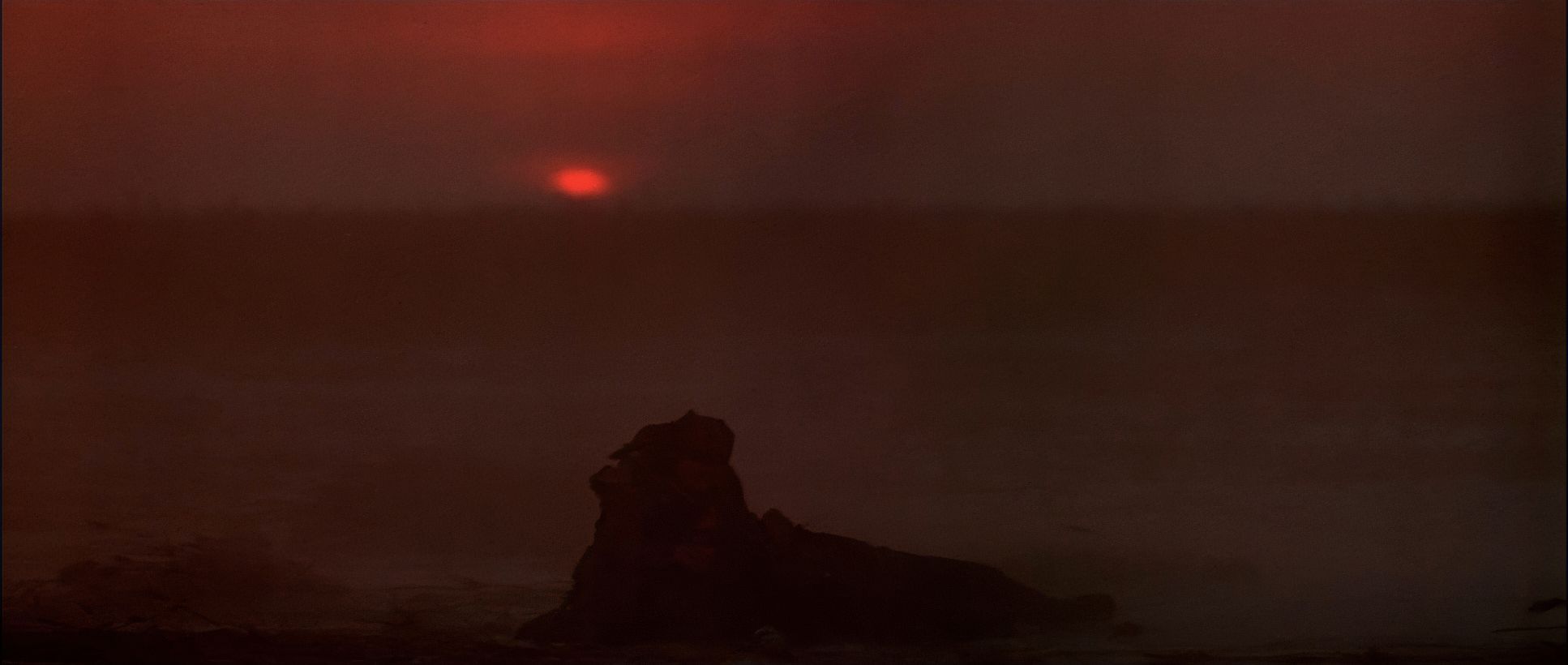
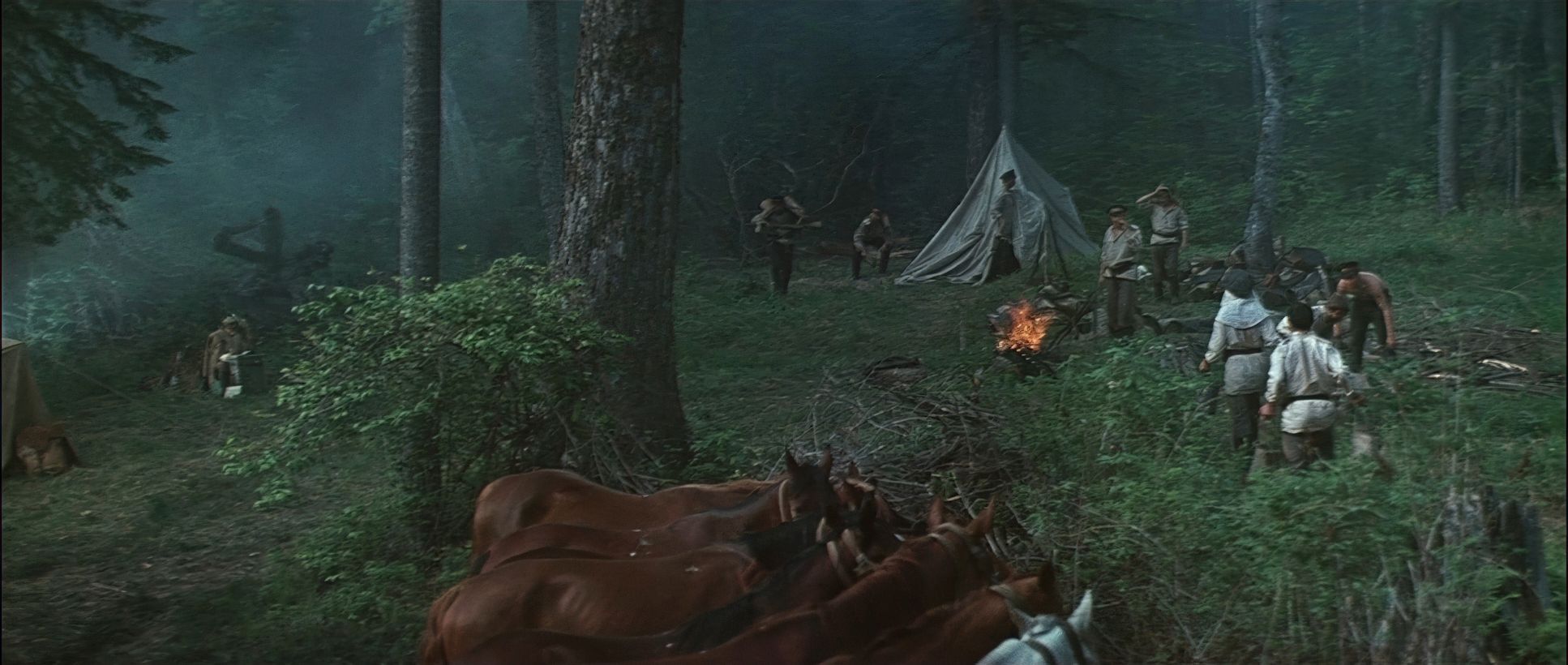
The primary inspiration here was nature, stripped of any Hollywood beautification. Kurosawa wanted all four seasons, which meant a grueling year of shooting. We see misty forests that feel genuinely lonely, and sunsets that feel earned.
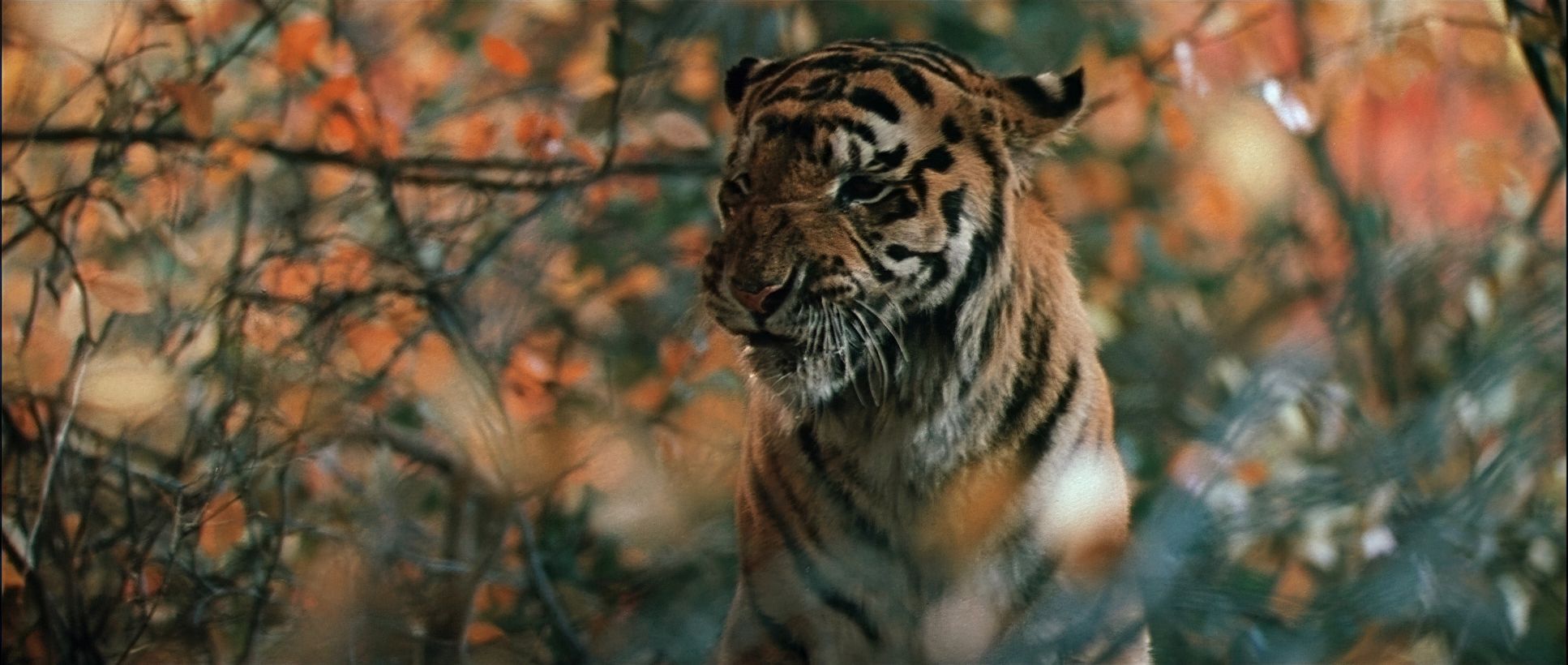
The transcripts mention that “crazy weather isn’t the only real thing in this film… it’s a real life, wild tiger.” As a filmmaker, that kind of authenticity makes my hair stand up. In an age where we’d just “fix it in post” or use a CG tiger, Dersu Uzala stands as a testament to the power of the real. The crunch of the snow and the howl of the Siberian wind add a level of meaning that no digital effect could replicate. Kurosawa, having felt the harshness of life himself, chose to embody that struggle in the film’s aesthetic.
Compositional Choices

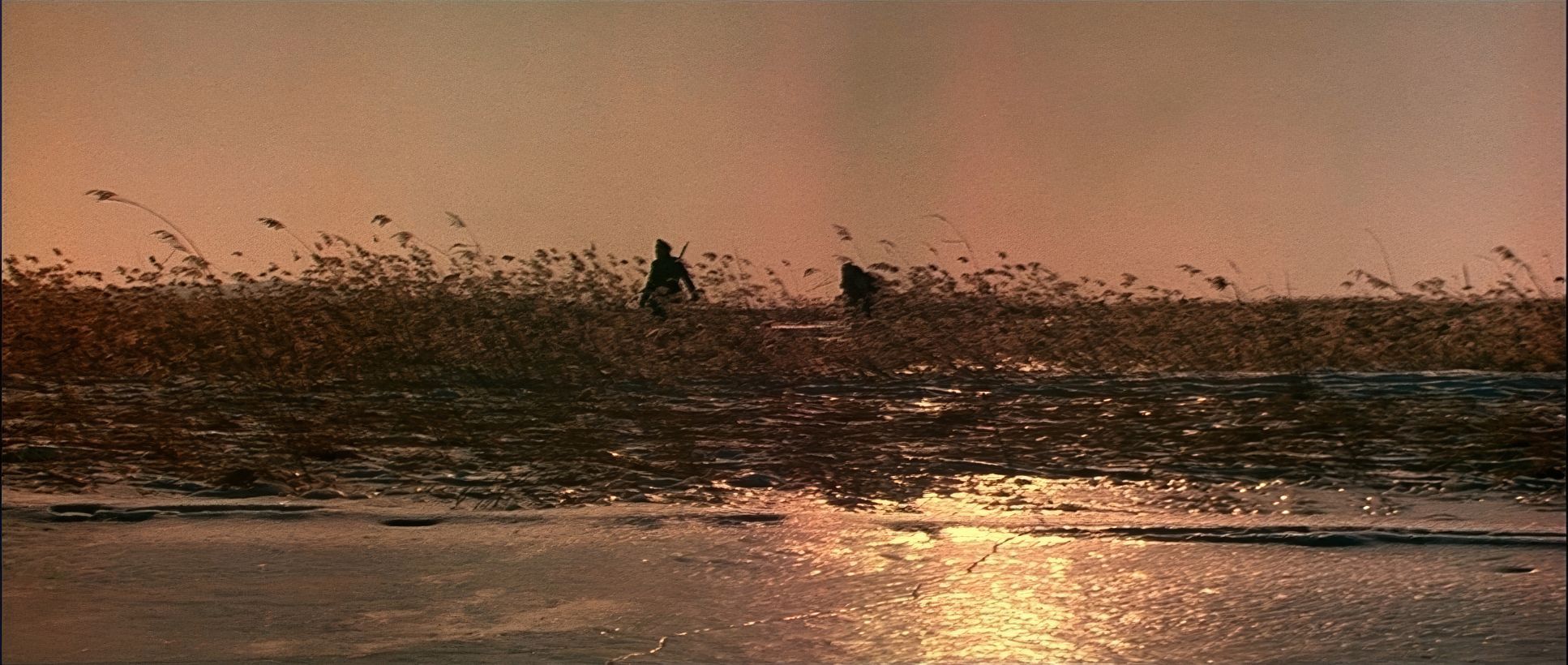
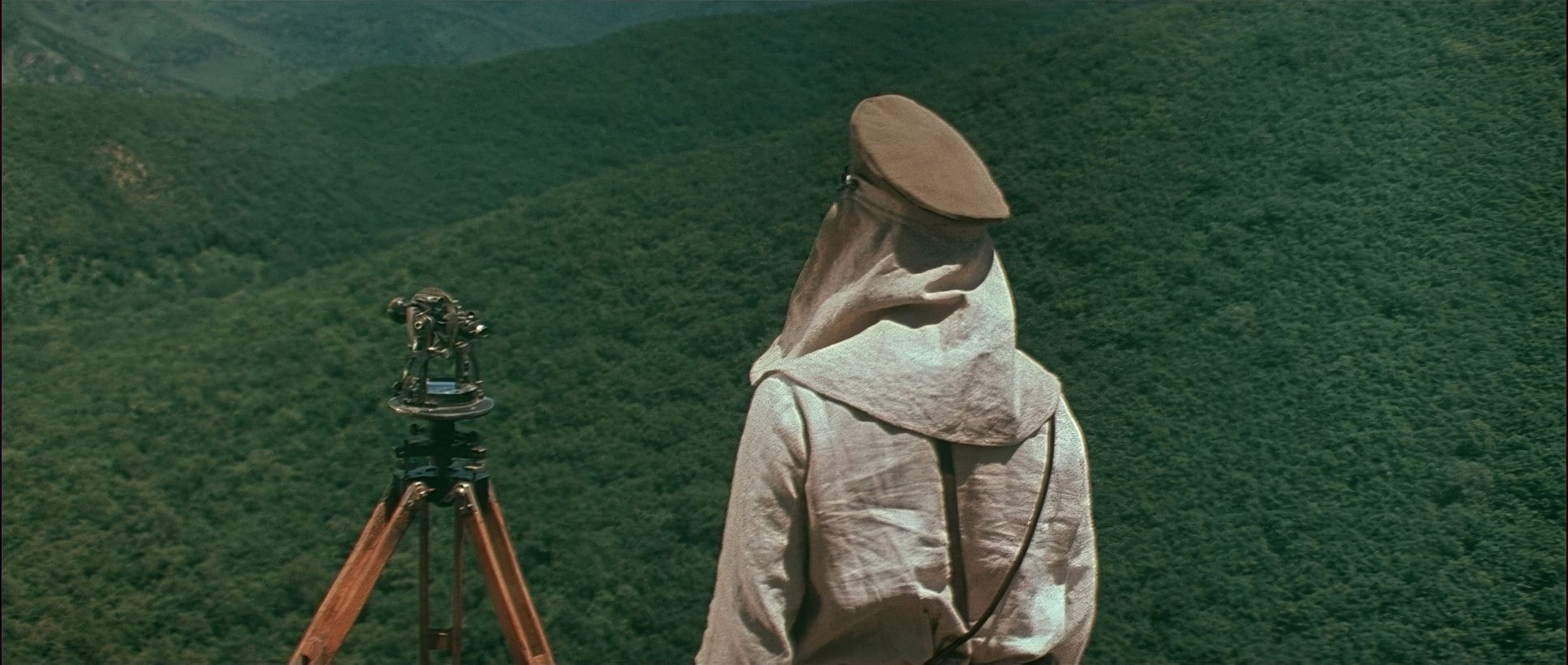
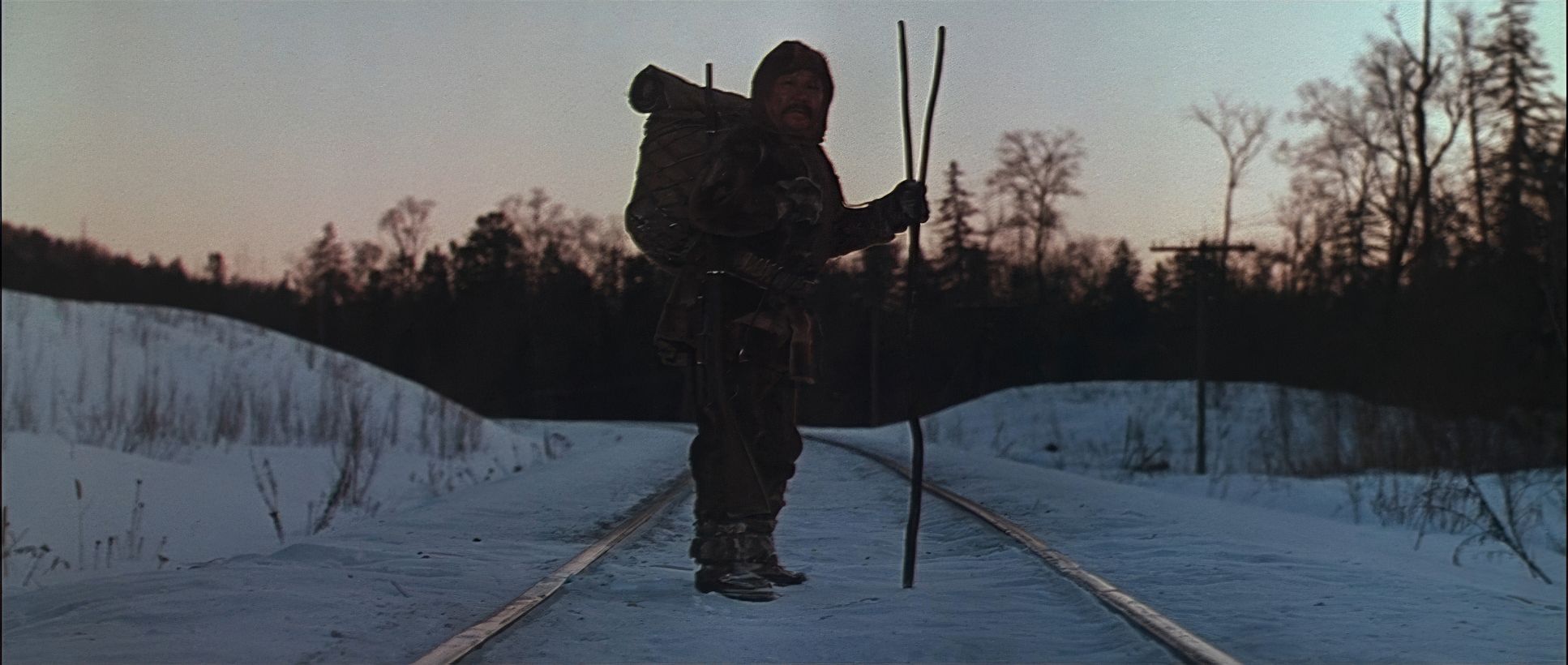
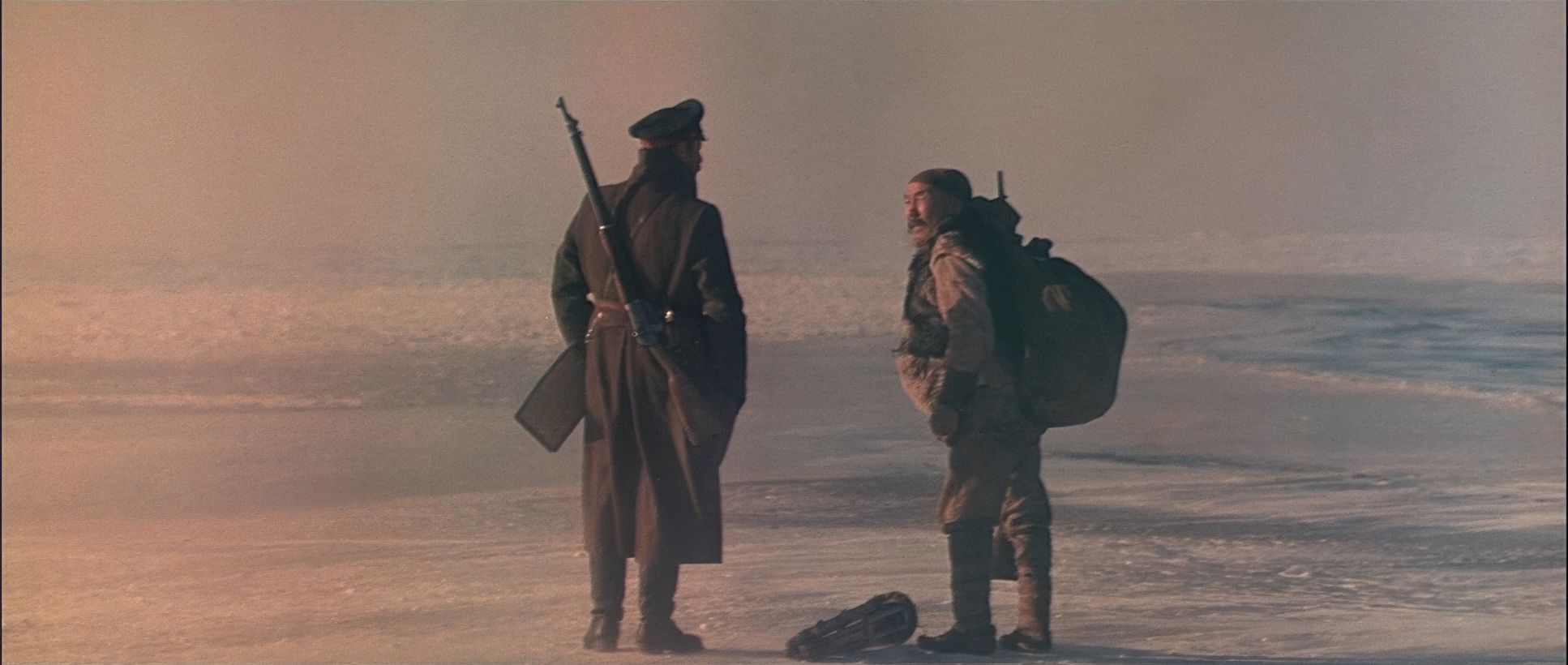
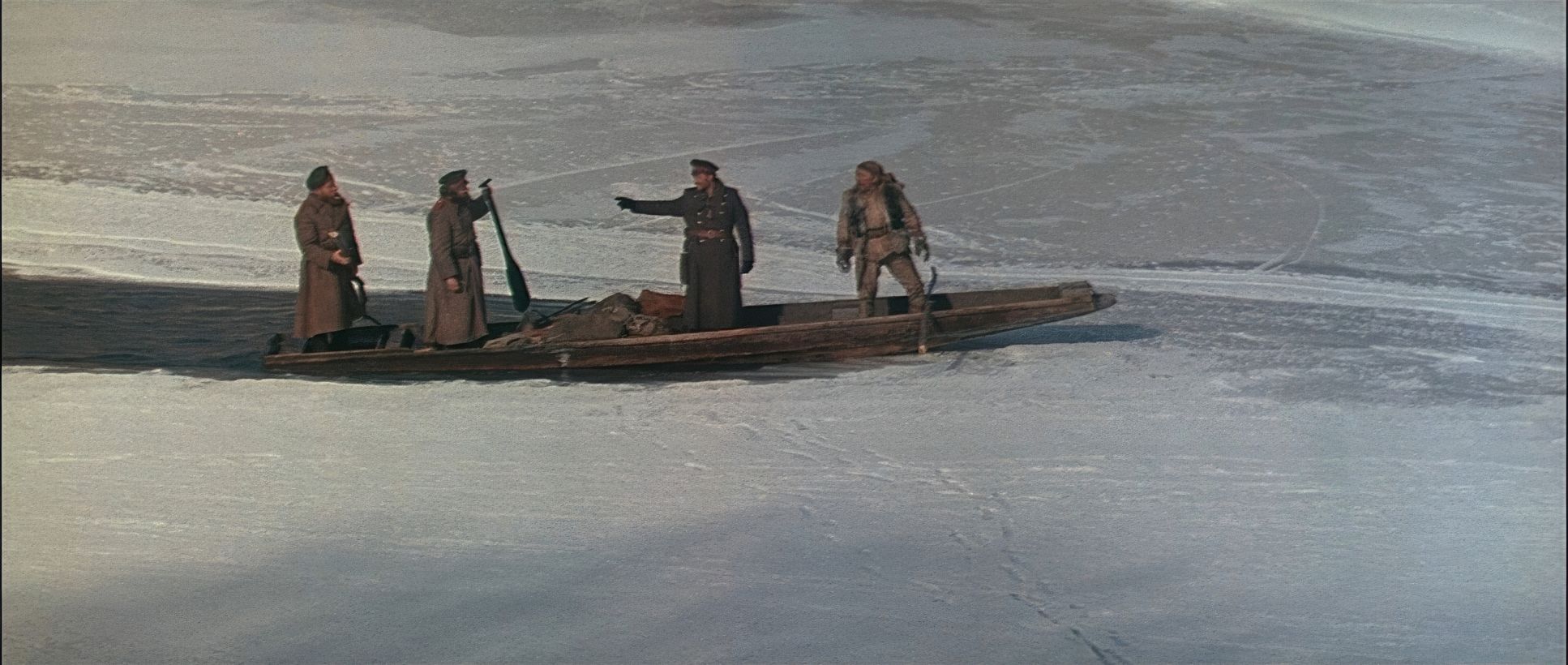
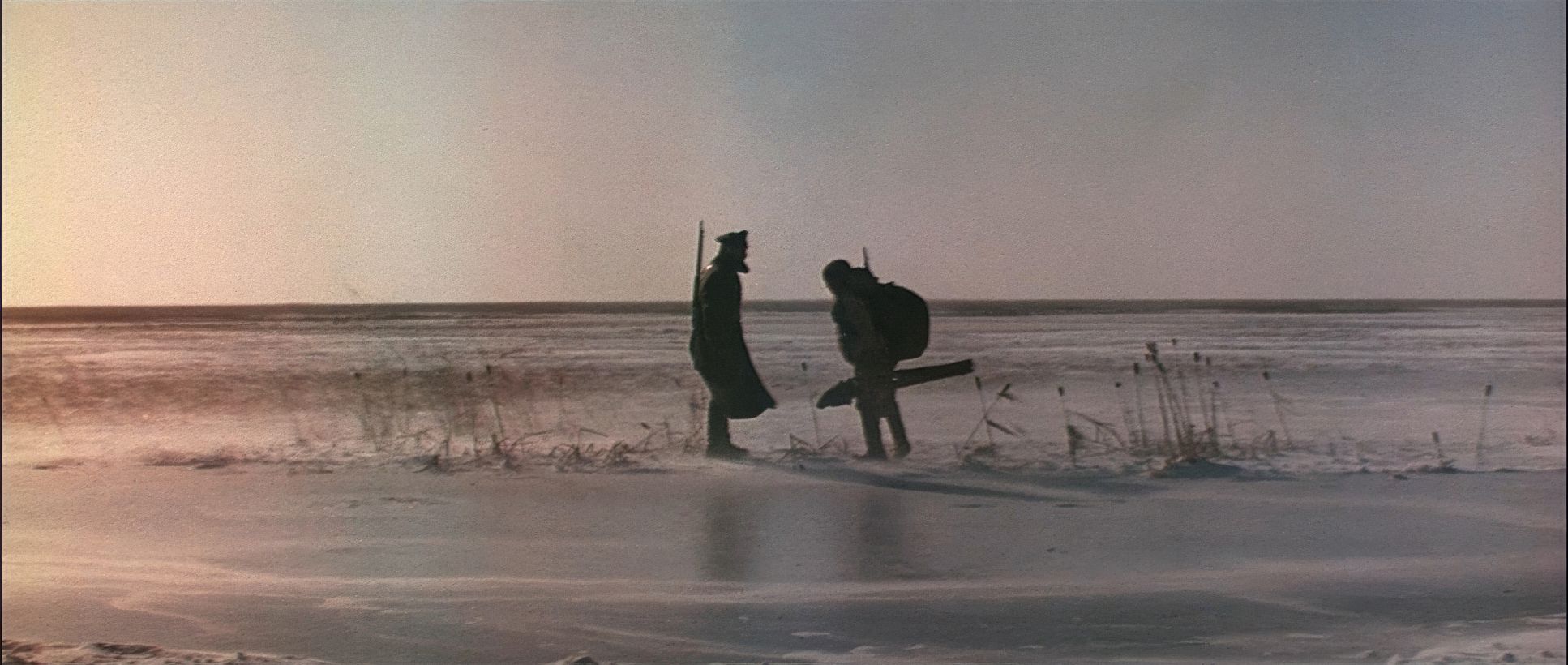
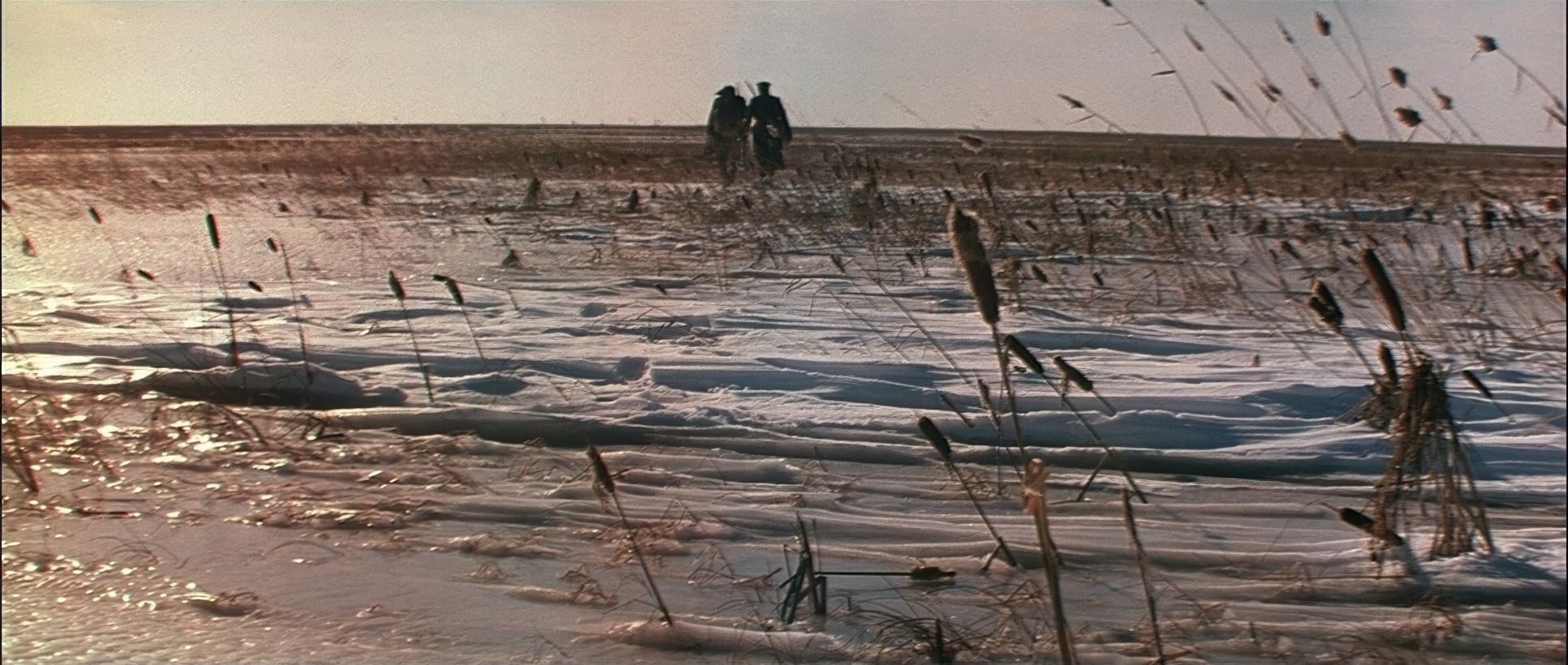
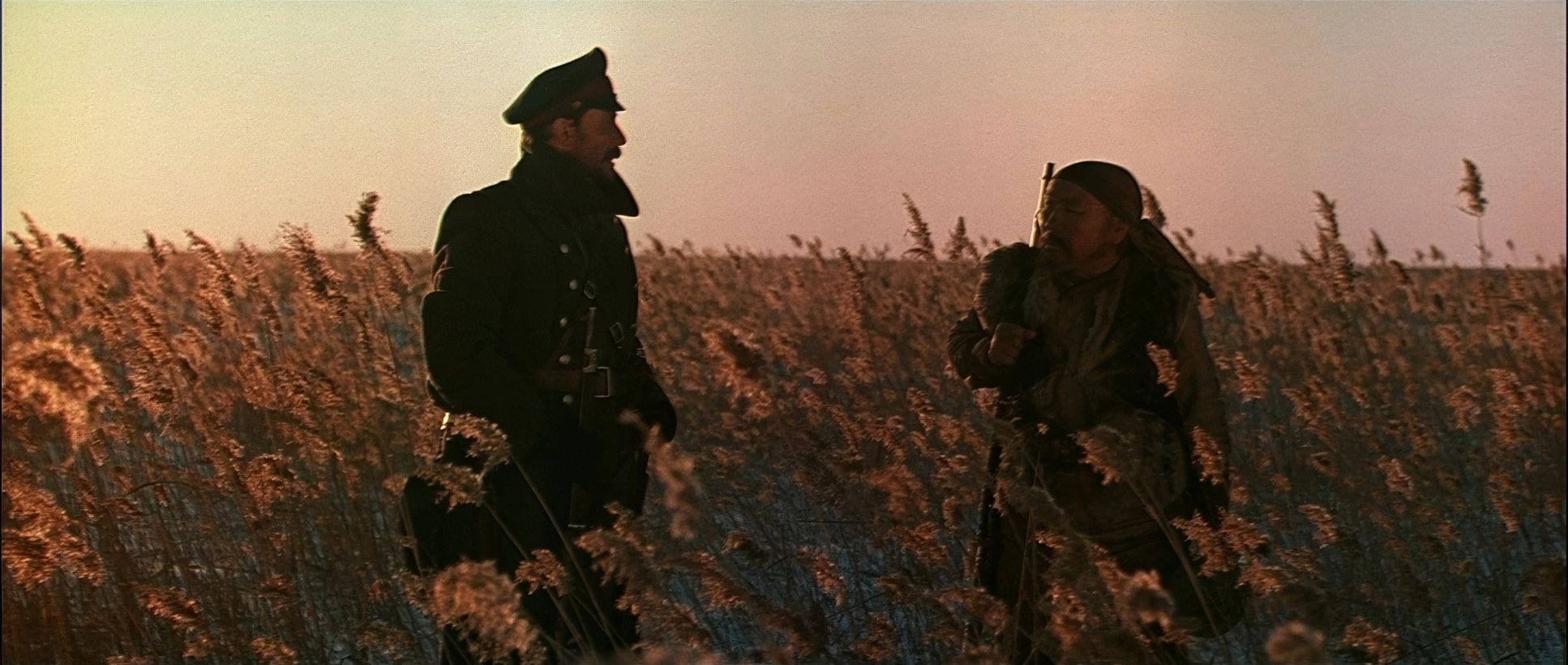
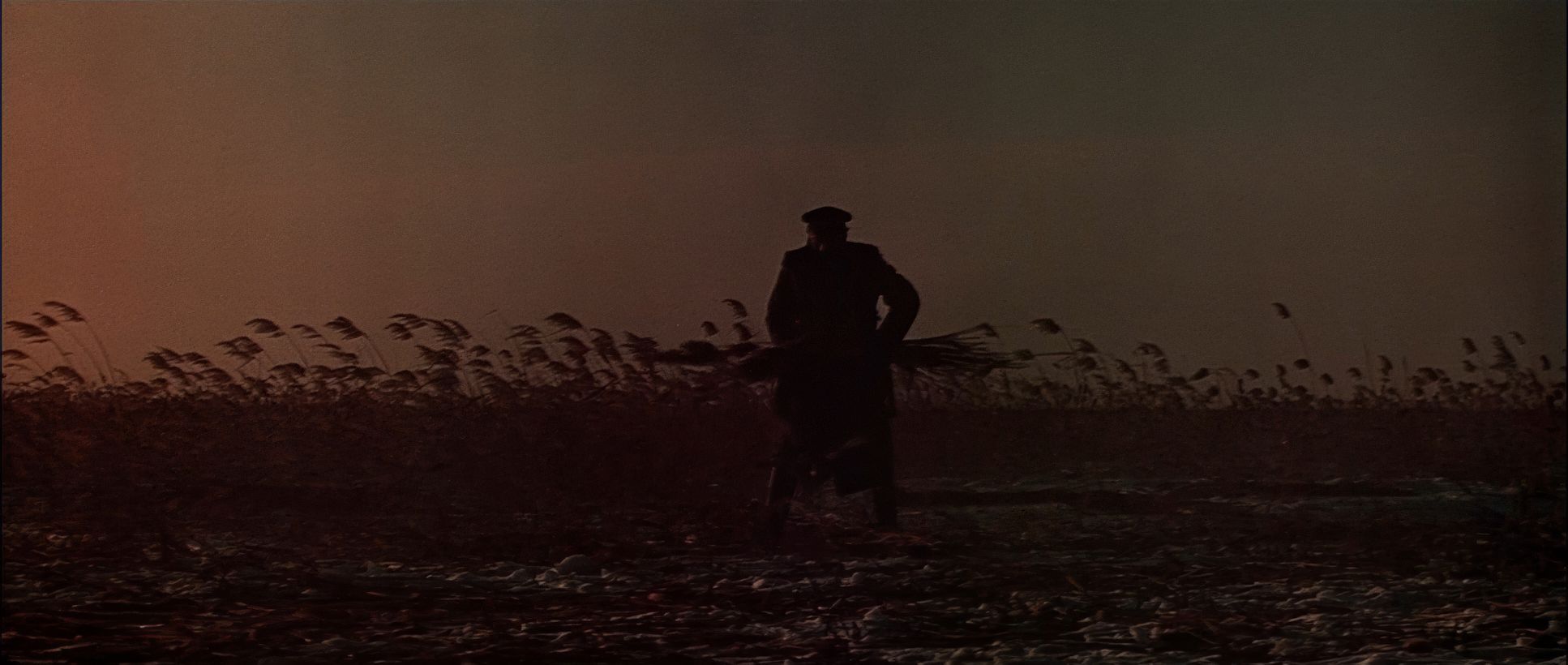
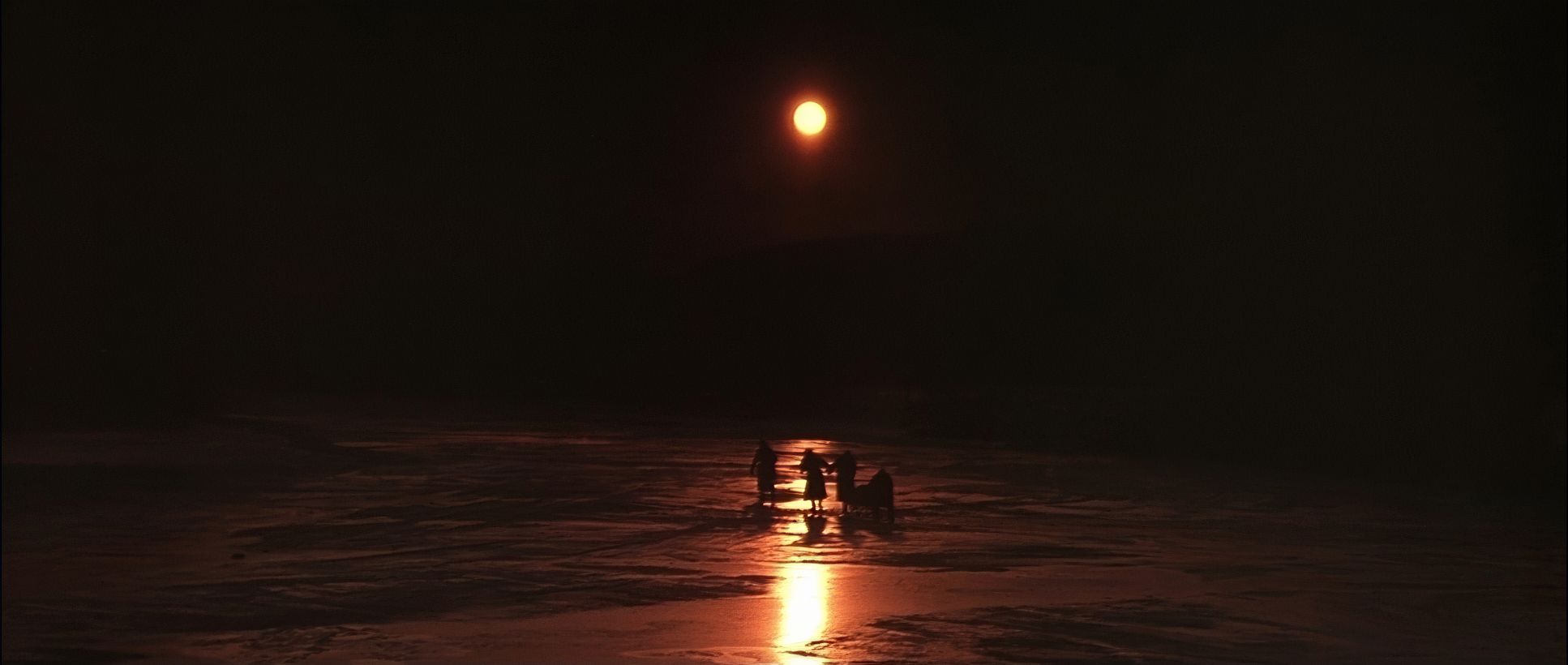
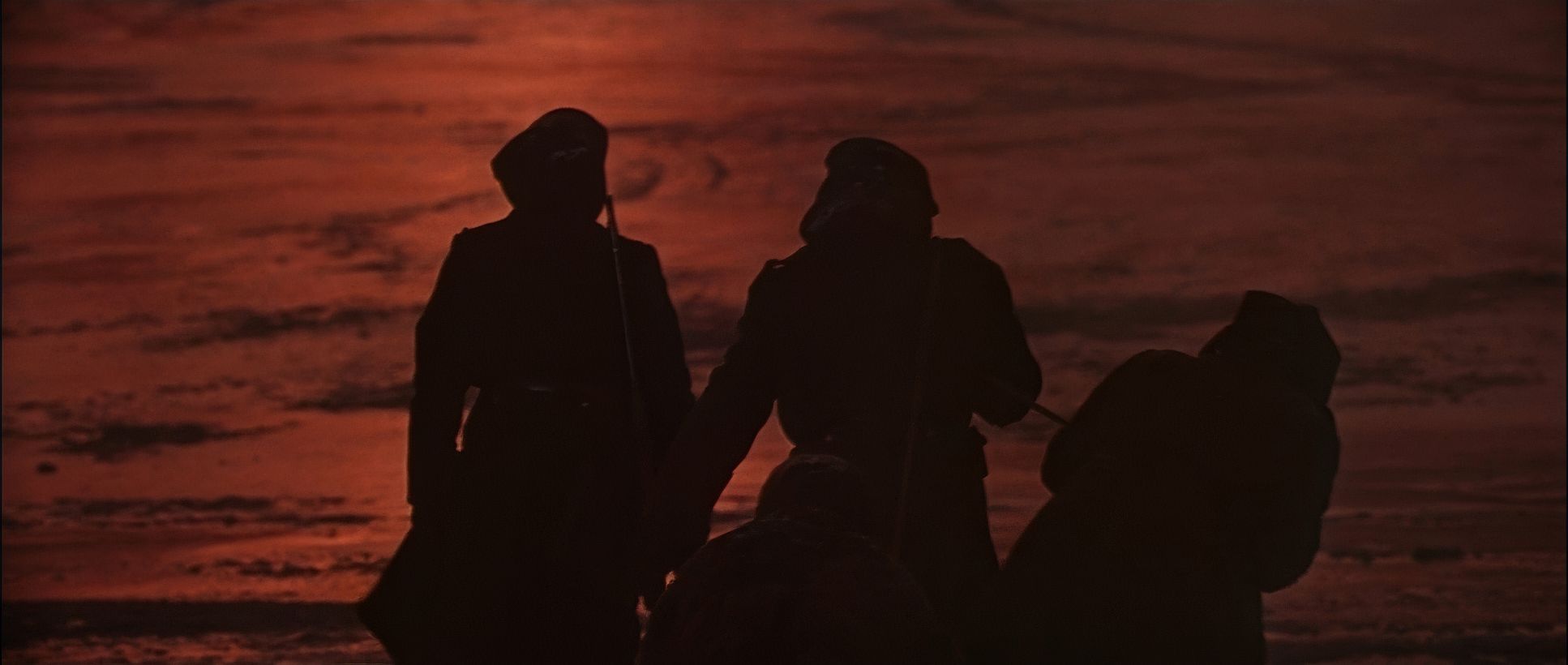
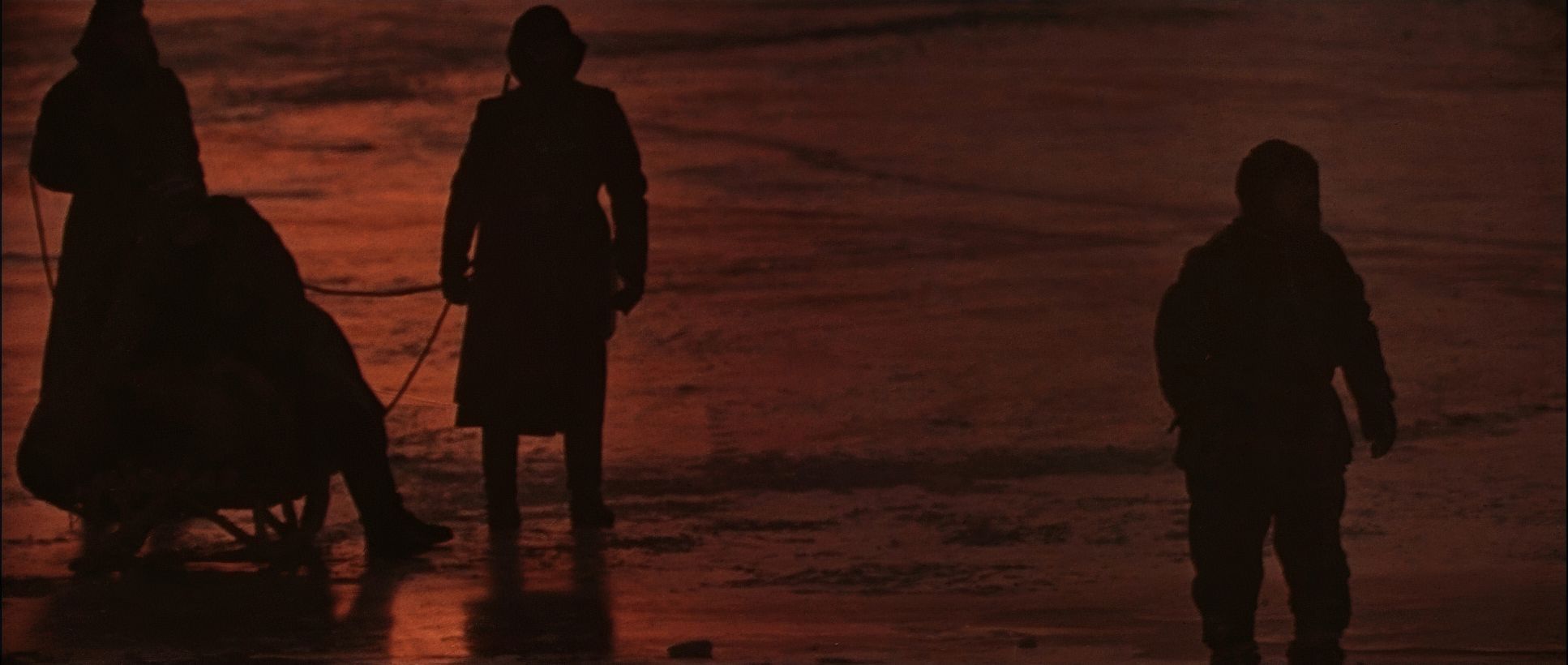
Kurosawa’s use of the 2.35:1 anamorphic frame is breathtaking. He masterfully utilizes negative space to hammer home the “man vs. wild” theme. You’ll see a tiny 2-shot of Dersu and Arsenyev dwarfed by a towering tundra. These aren’t just pretty frames; they are philosophical statements on human insignificance.
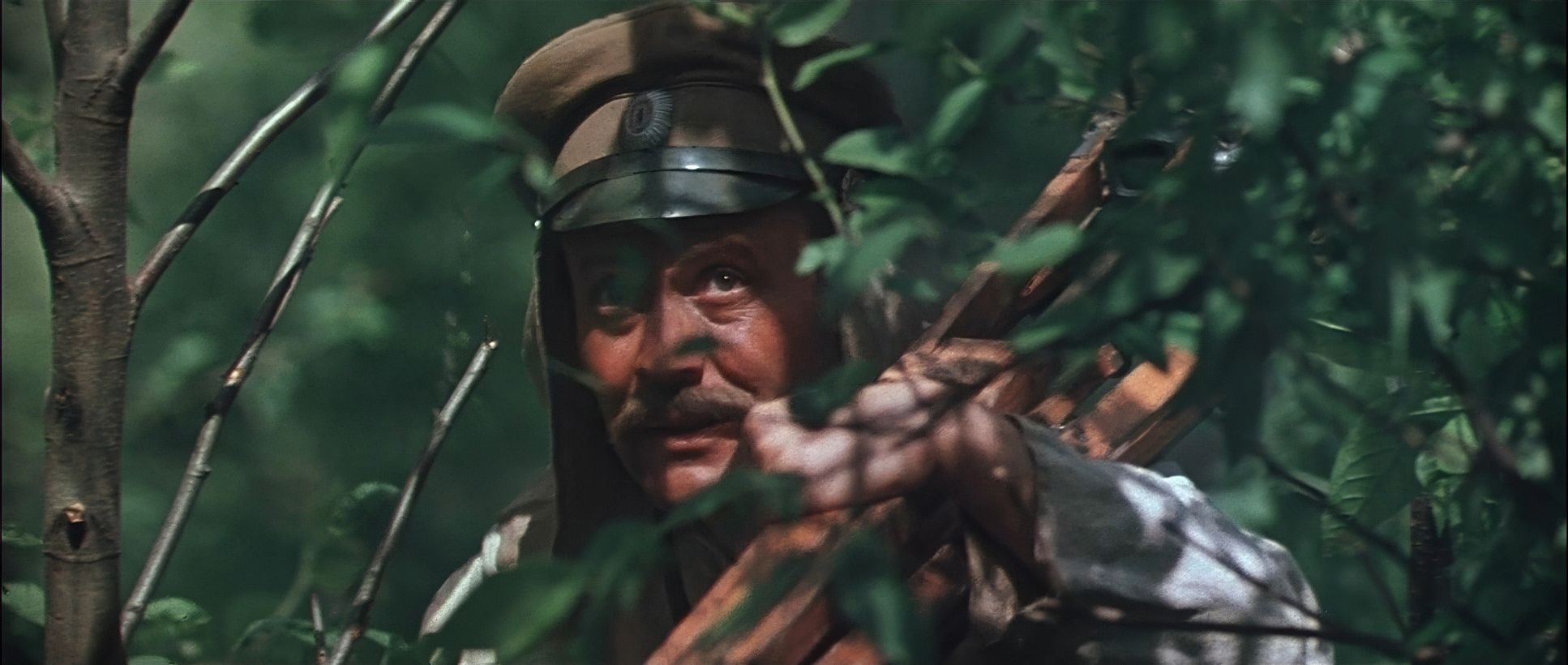
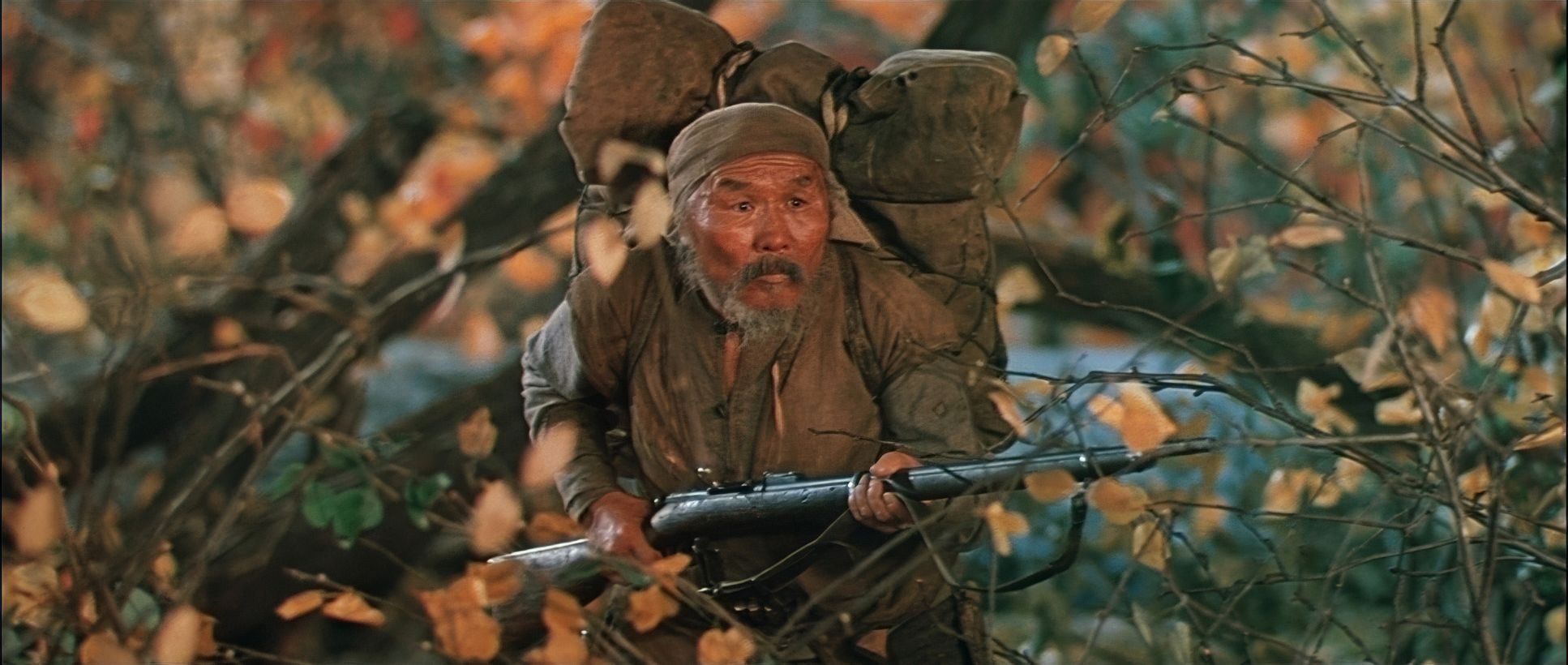
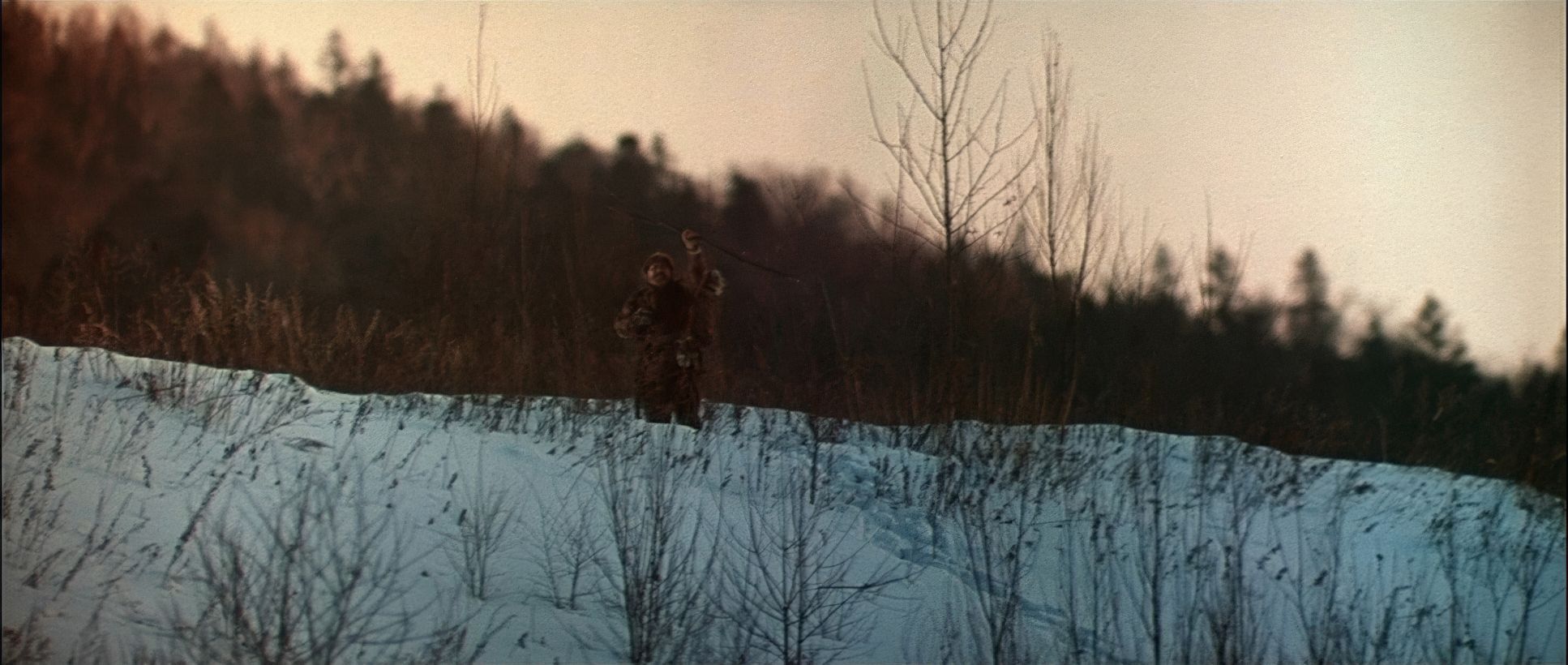
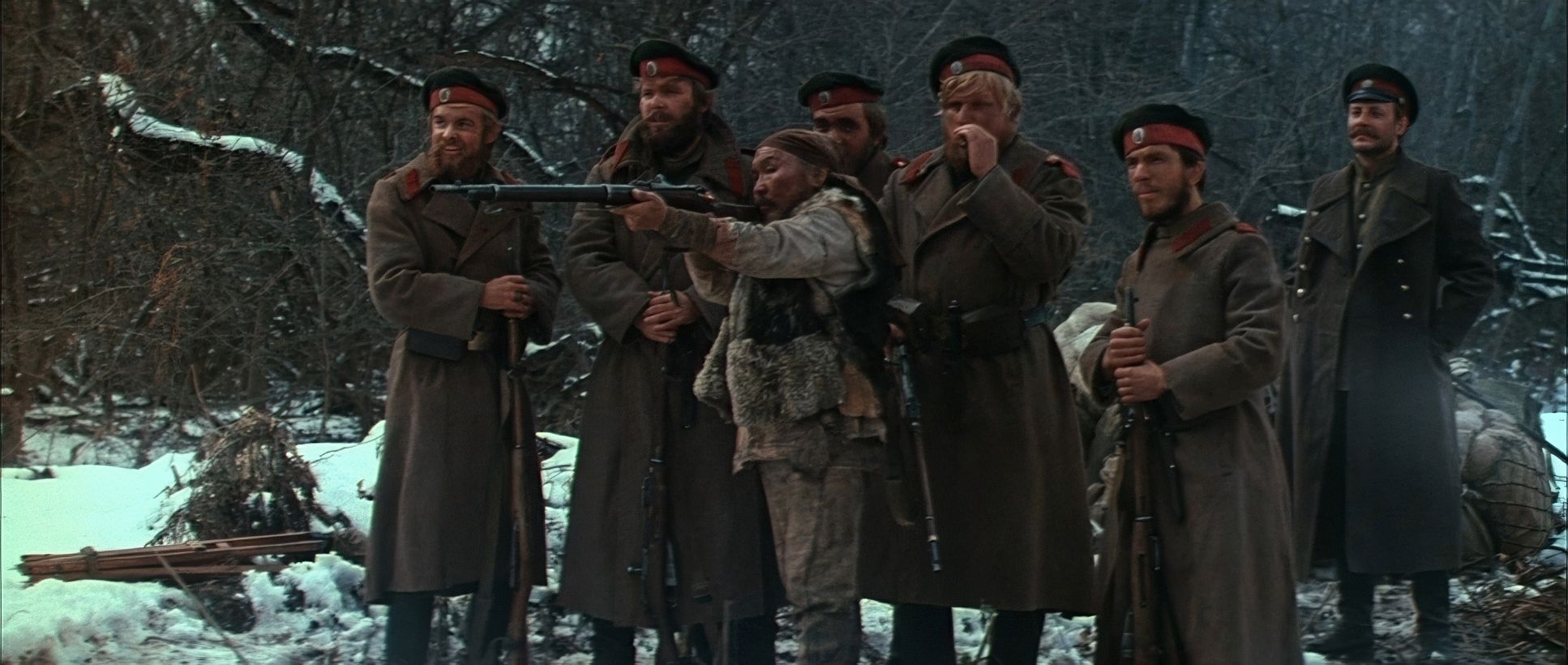
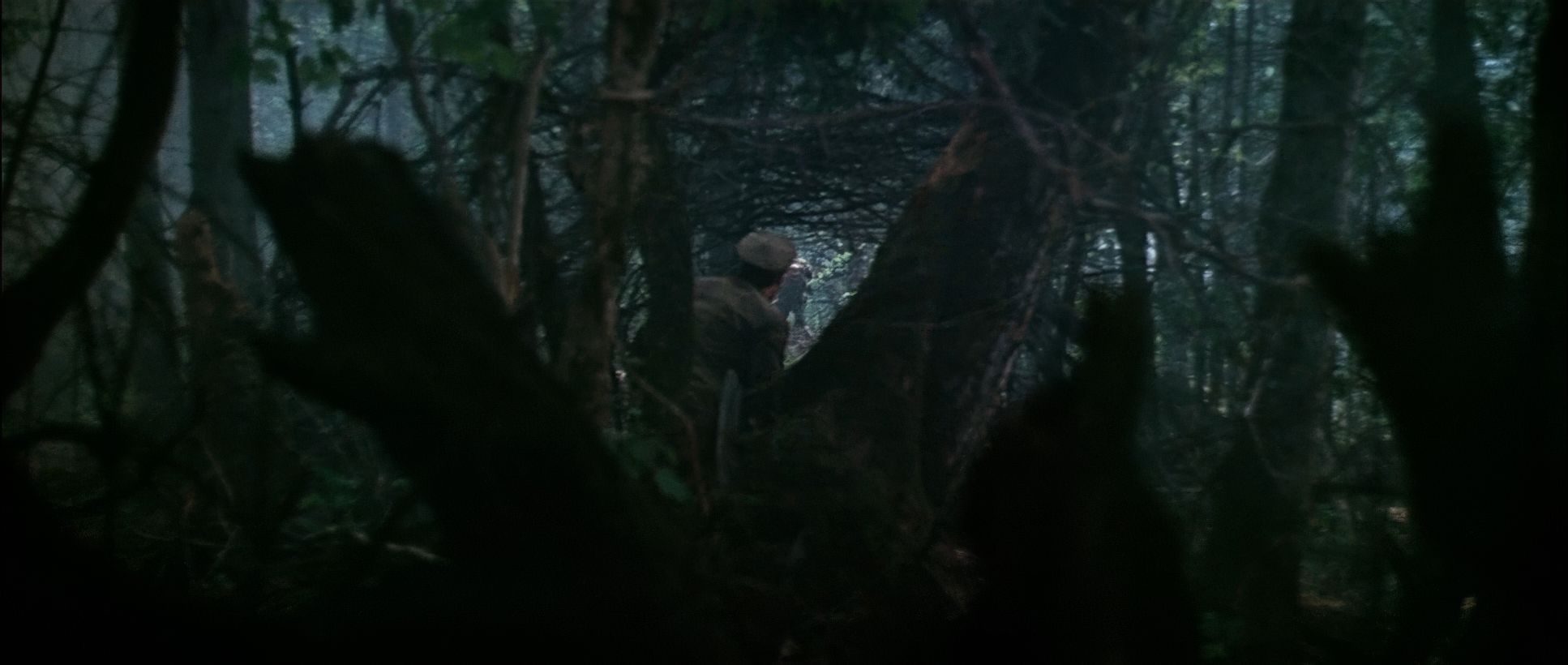
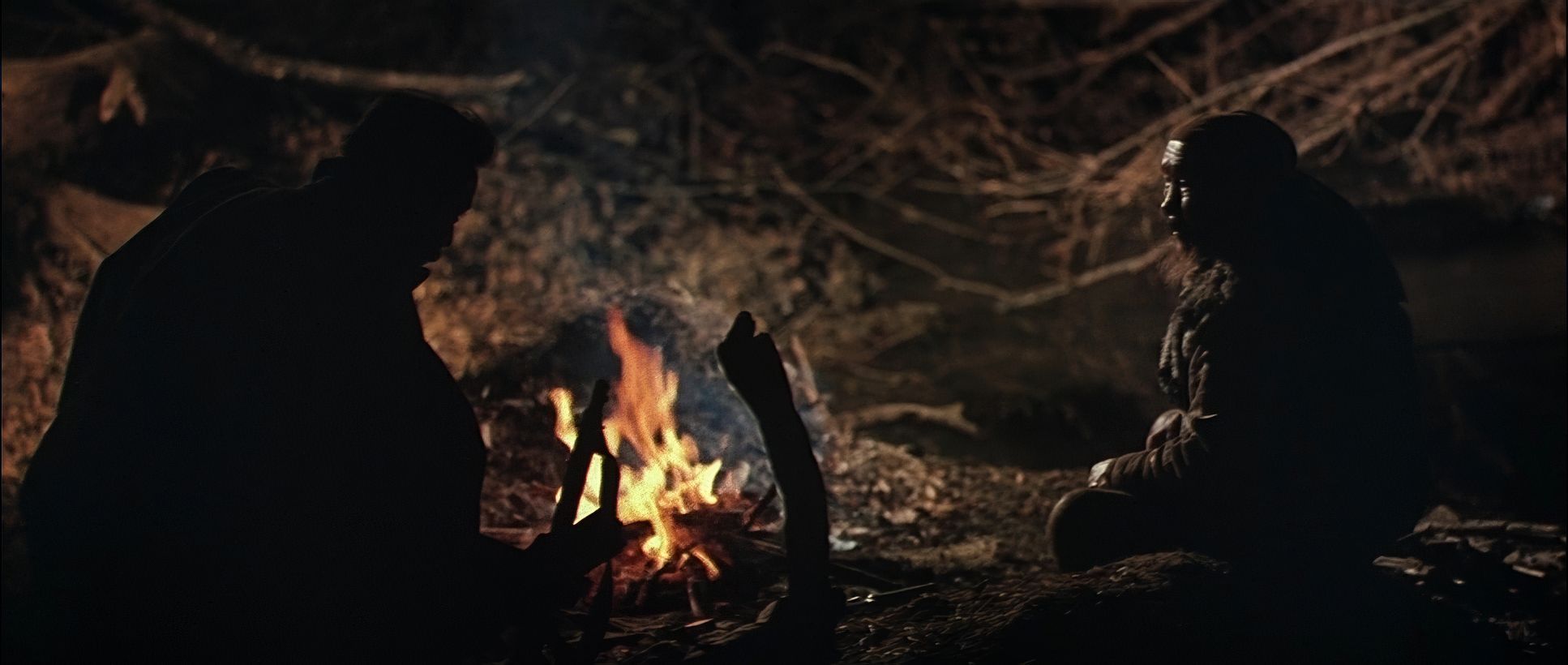
He often uses “frames-within-frames” branches, fog, or snowdrifts to make us feel embedded in the forest. As the bond between the two men grows, the blocking shifts. We move from those distant, isolated frames to more intimate medium shots during the campfire scenes. Some critics argue that certain shots feel “flat” or “lifeless” due to the static camera, but I disagree. As a colorist, I see those static frames as a choice to let the 70mm negative breathe, allowing the viewer to simply be in the environment without the distraction of unnecessary movement.
Lighting Style
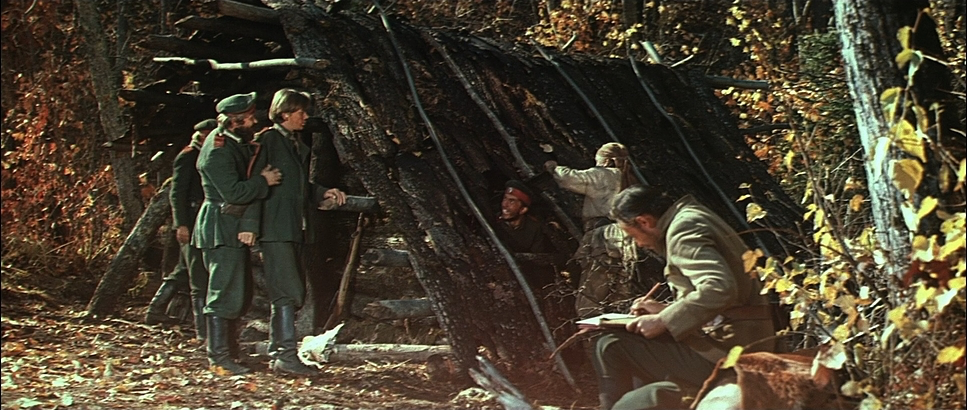
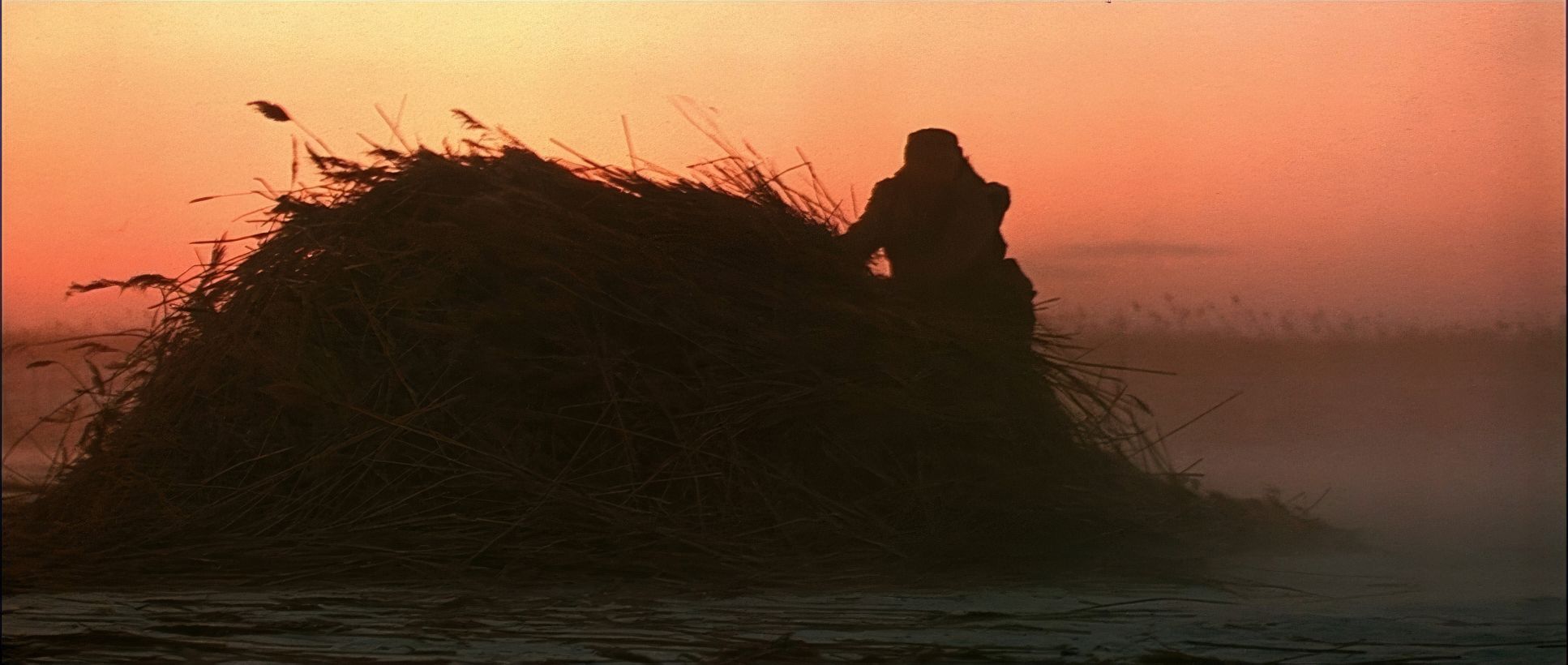
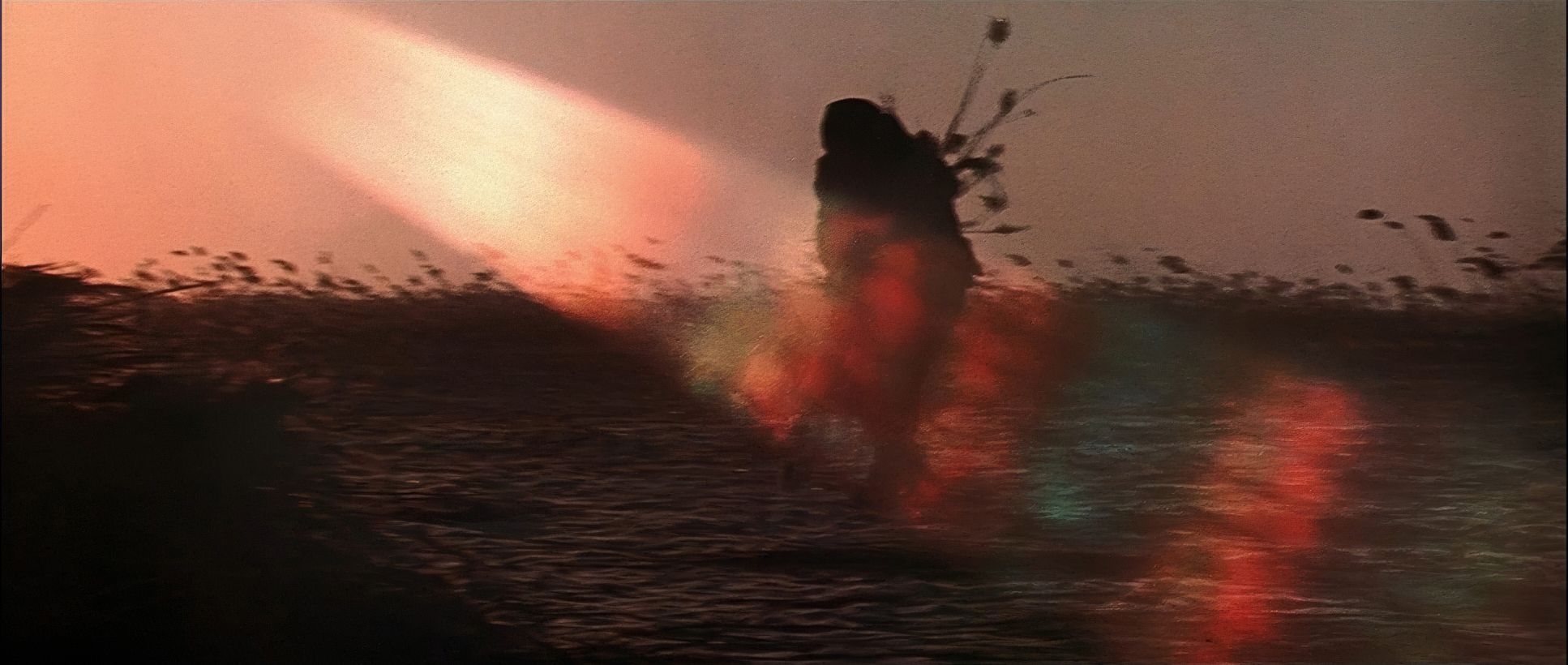
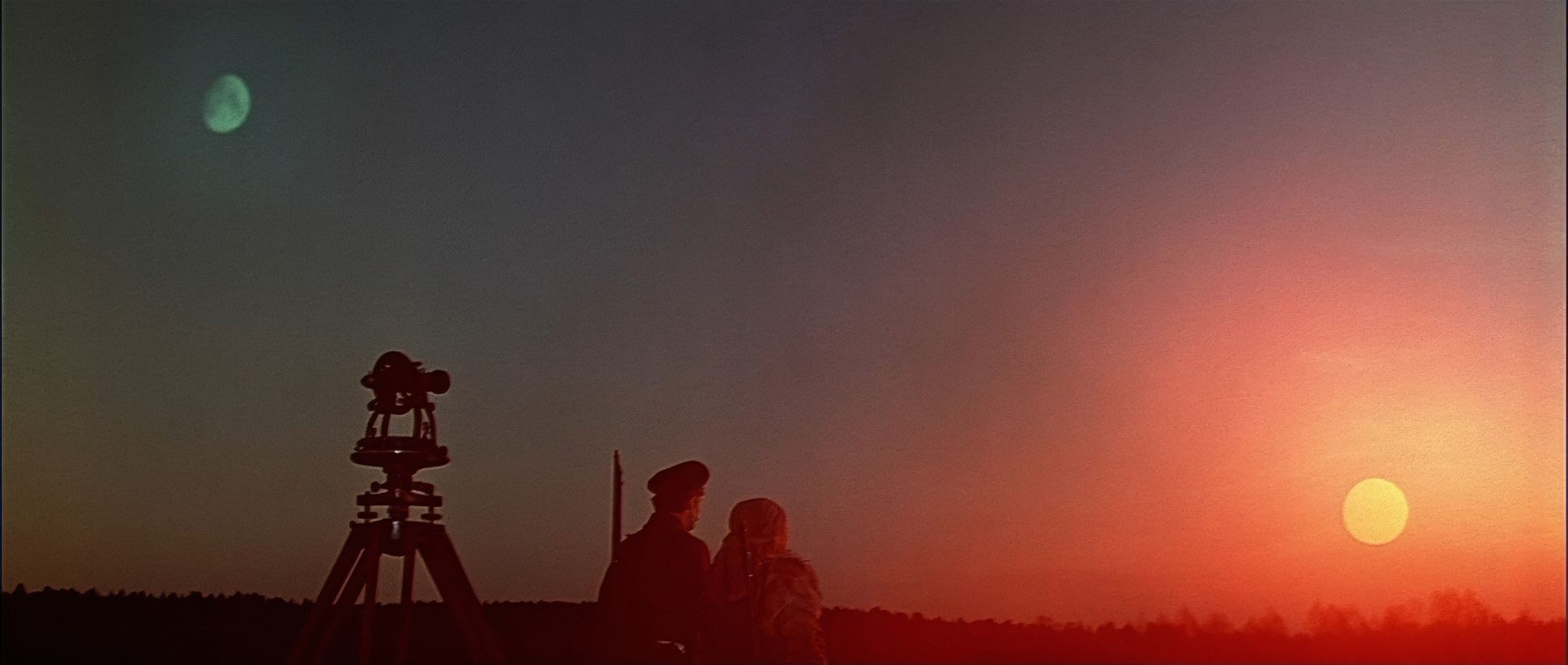
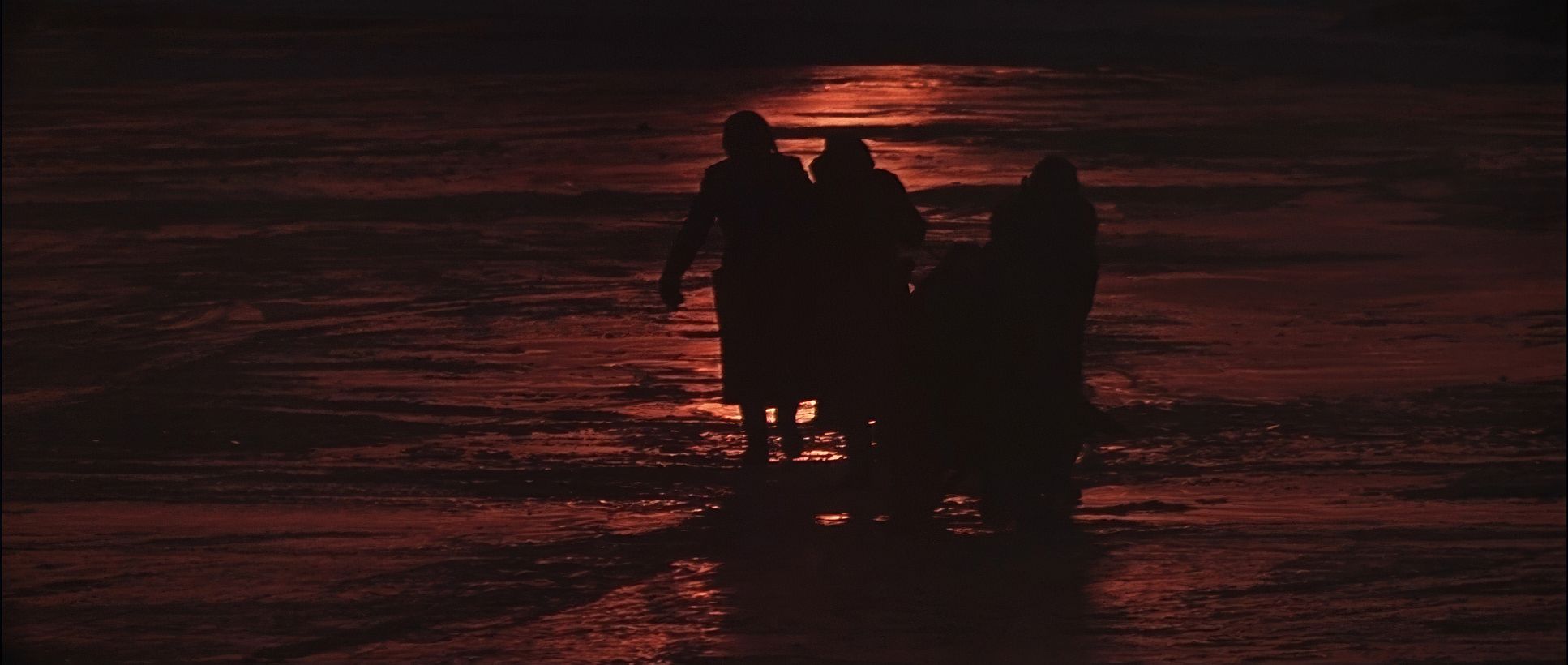
The lighting is a masterclass in motivated naturalism. When you’re at the mercy of the Siberian sun, you don’t fight it you use it. Kurosawa used the “edge light” of the sun and the flat, diffuse light of overcast winters to enhance the eerie feeling of isolation.
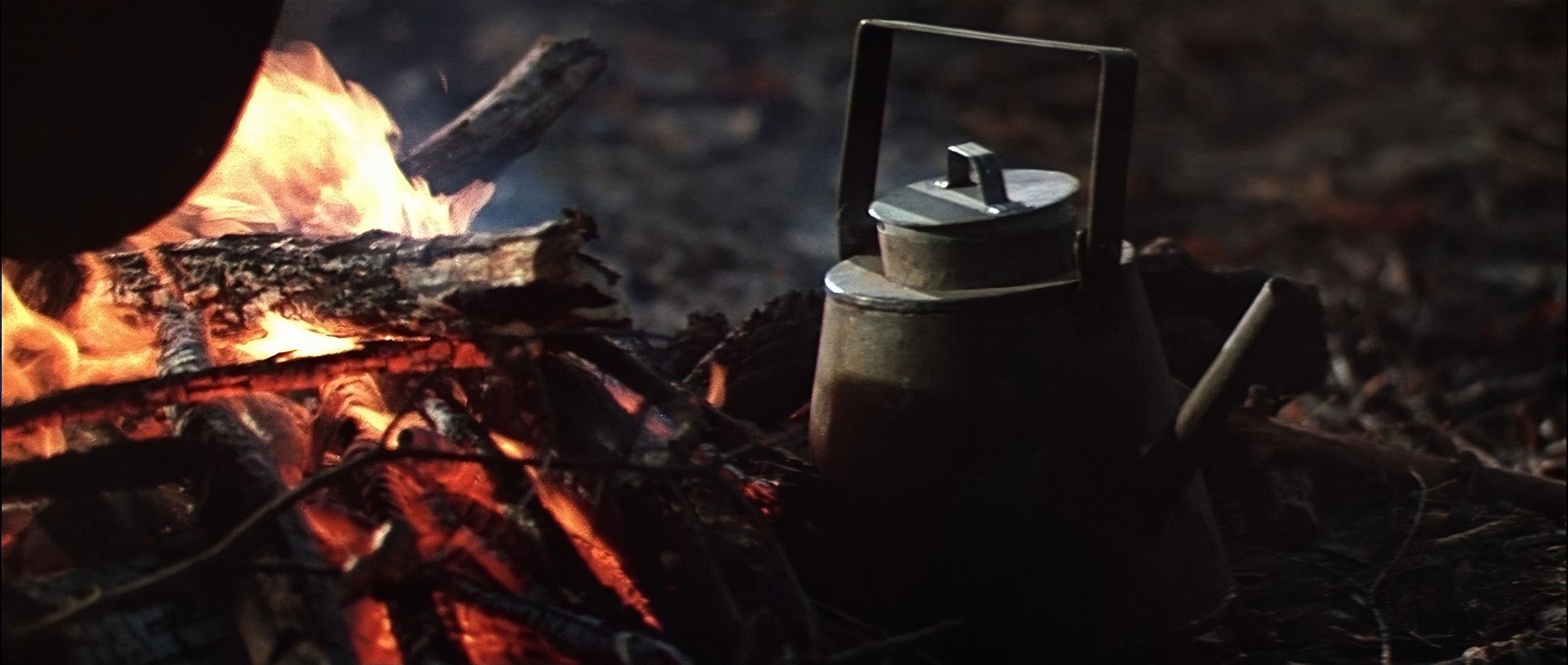
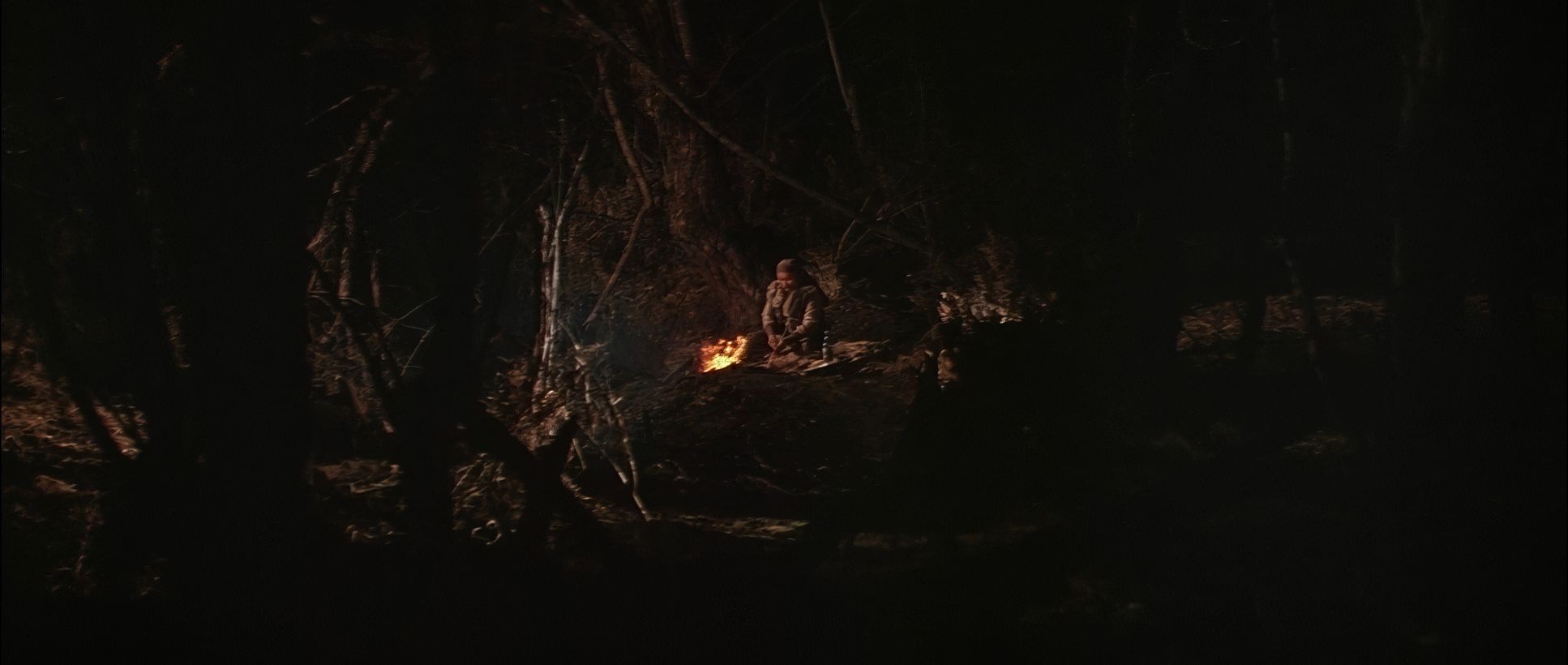
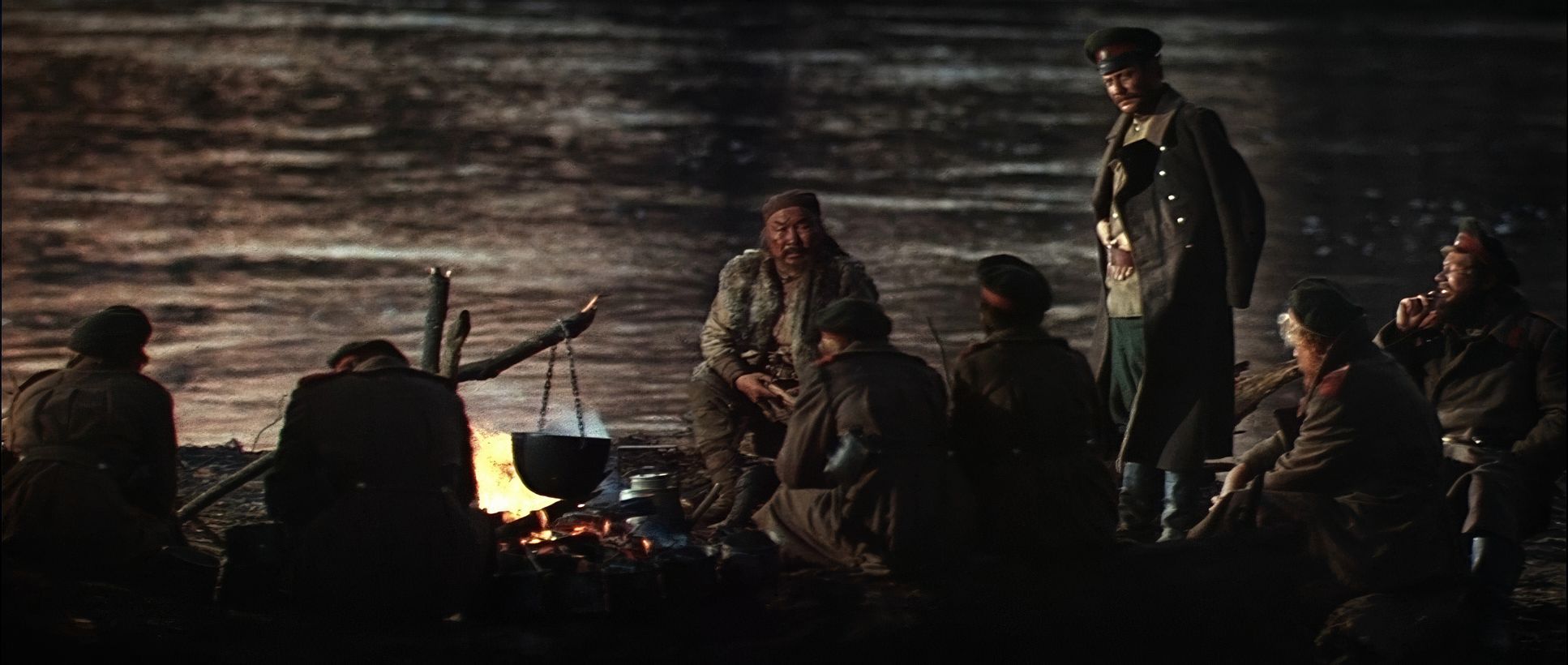
The campfire scenes are particularly striking. The flickering warmth of the firelight against the oppressive dark of the night serves as a visual metaphor for human connection. Then you have the blizzard, where the low visibility and real swirling snow create a terrifyingly authentic atmosphere. The absence of artificial “Hollywood” lighting makes the elements feel more formidable. You aren’t just watching a storm; you’re feeling the lack of light and the presence of the cold.
Lensing and Blocking

To capture the epic scope of the 70mm format, Kurosawa and his DPs relied heavily on wide-angle lenses for the environmental shots. These lenses provided the deep focus needed to keep the characters integrated into the vast landscape.
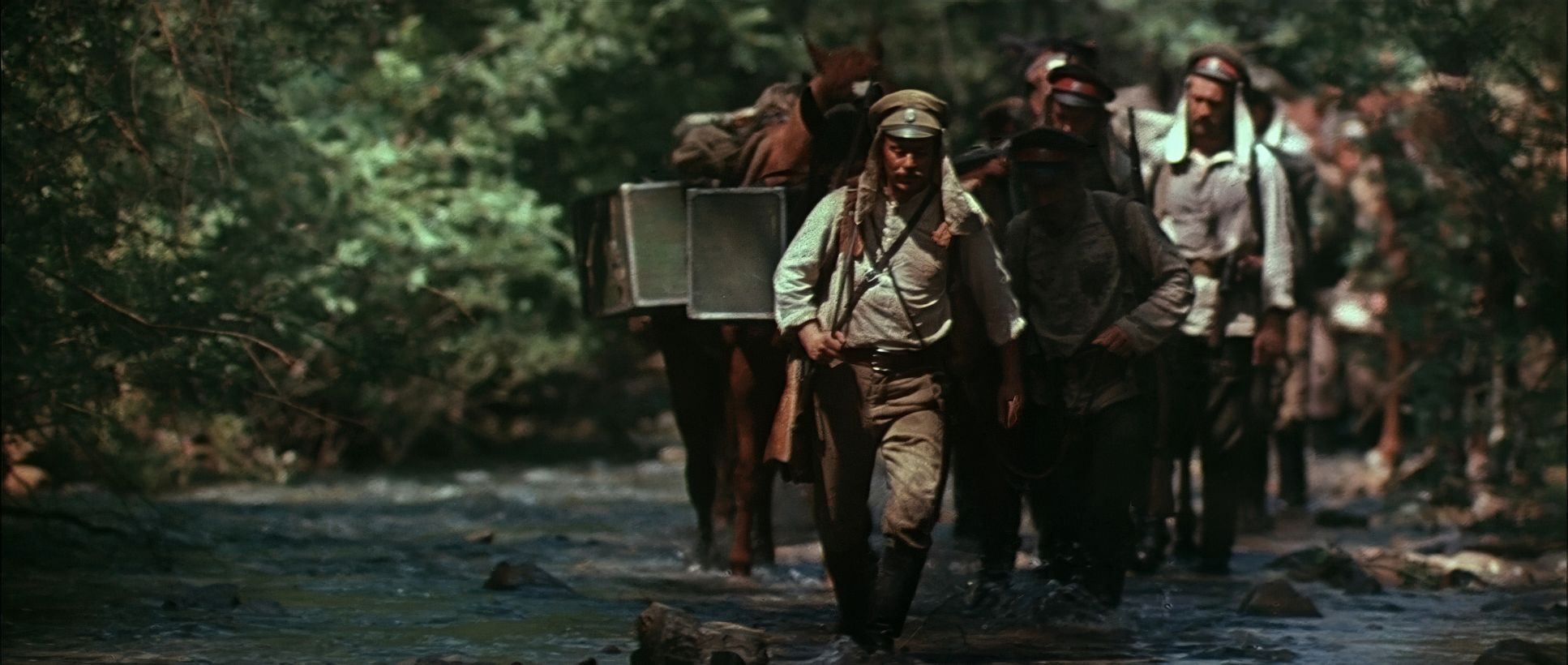
Conversely, for the moments of connection, they likely moved to longer lenses. Long lenses compress the space, which, interestingly, can make the forest feel even more dense and claustrophobic around the characters. The blocking was often dictated by the terrain itself. Moving an expedition through a frozen river isn’t just an artistic choice; it’s a logistical one. This practical constraint enhances the realism every step the actors take feels heavy because it is heavy.
Color Grading Approach
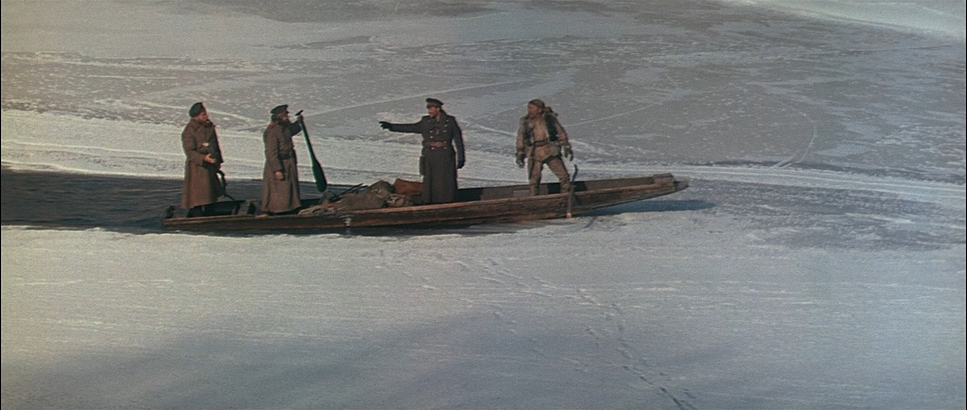
As a colorist, the “Soviet film stock” issue is where this gets fascinating. The Mosfilm stock was notoriously “washed out” compared to Kodak or Fuji, but that limitation is part of the film’s DNA. If I were sitting at my desk with this footage in DaVinci Resolve today, I wouldn’t try to make it look like a modern Marvel movie.
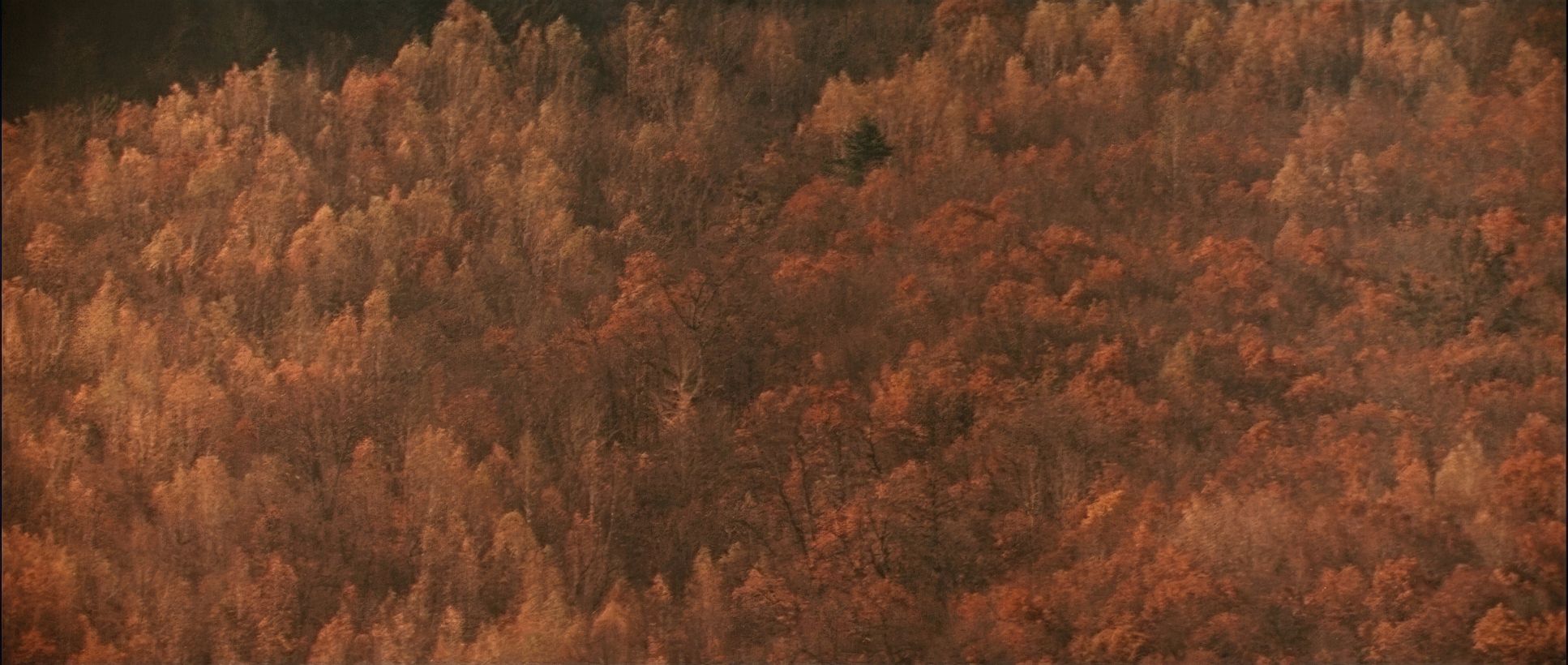
My approach would be tonal sculpting. I’d work to recover the dynamic range hidden in those highlights making sure the glint of the ice doesn’t clip while keeping the shadows rich and “inky.” I’d use hue separation to coax out the subtle warmth in the autumn leaves and the biting cyans in the winter snow. The goal wouldn’t be to “fix” the colors, but to find the print-film sensibility Kurosawa intended. I’d focus on the highlight roll-off and the organic grain of the 70mm negative to ensure the grade feels like it belongs in 1975, not 2025.
Technical Aspects & Tools
Dersu Uzala 70mm Anamorphic
| Genre | Adventure, Drama, Action, Nature, Survival |
| Director | Akira Kurosawa |
| Cinematographer | Asakazu Nakai, Fyodor Dobronravov, Yuriy Gantman |
| Production Designer | Yuriy Raksha |
| Costume Designer | Tatyana Lichmanova |
| Editor | Valentina Stepanova |
| Color Palette | Warm, Green |
| Aspect Ratio | 2.35 – Anamorphic |
| Format | Film – 65mm / 70mm |
| Lighting | Hard light, Edge light |
| Lighting Type | Daylight, Sunny |
| Story Location | Russia > Korfovskaya |
| Filming Location | Russia |
| Camera | KSK-70 |
The technical reality of Dersu Uzala is staggering. Shooting on three cameras simultaneously allowed Kurosawa to capture multiple angles of unpredictable elements like weather or live animals. Using the KSK-70 camera on location in Siberia is an act of madness that resulted in genius.
The decision to prioritize the raw sound of nature over a distracting musical score is a technical choice that perfectly complements the visuals. When you hear the wind “punching through,” it validates everything you see on screen. There’s no CGI safety net here. Every frame is the result of patience, logistics, and a year of braving the elements.
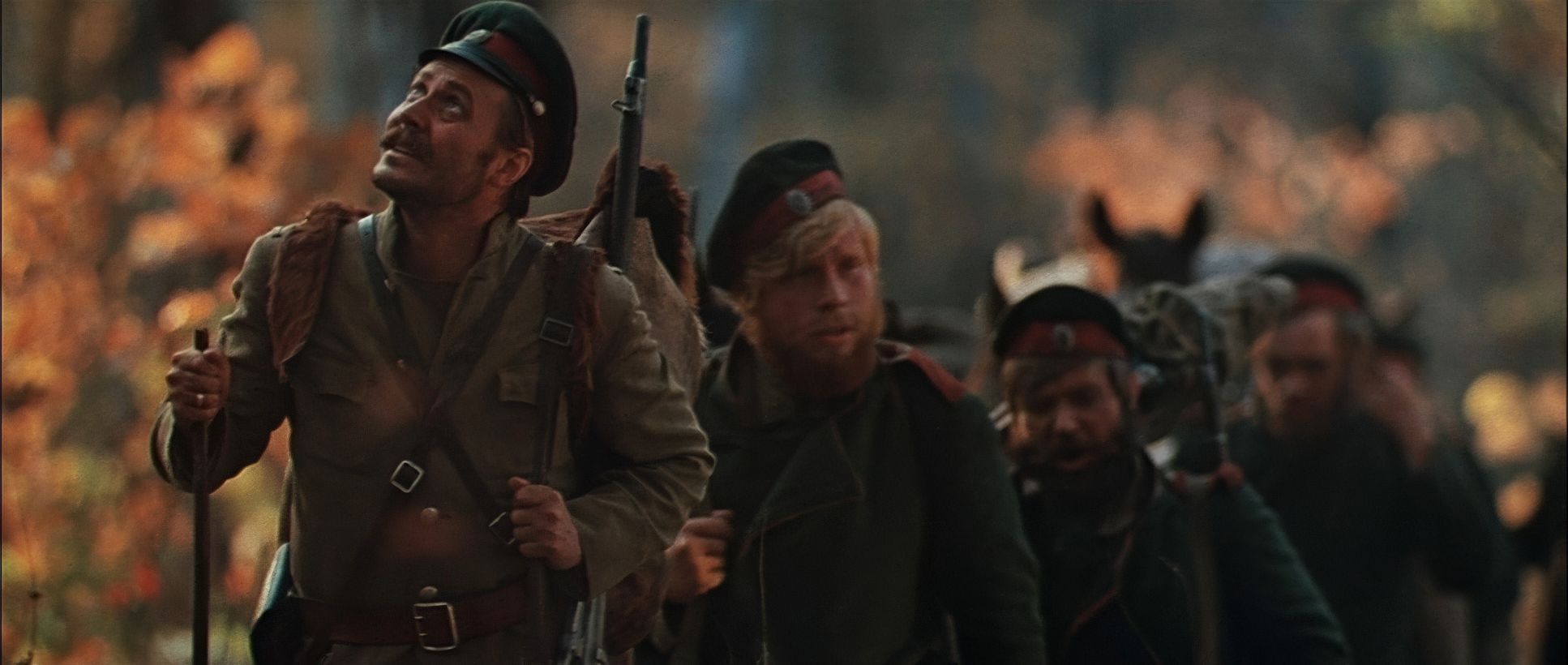
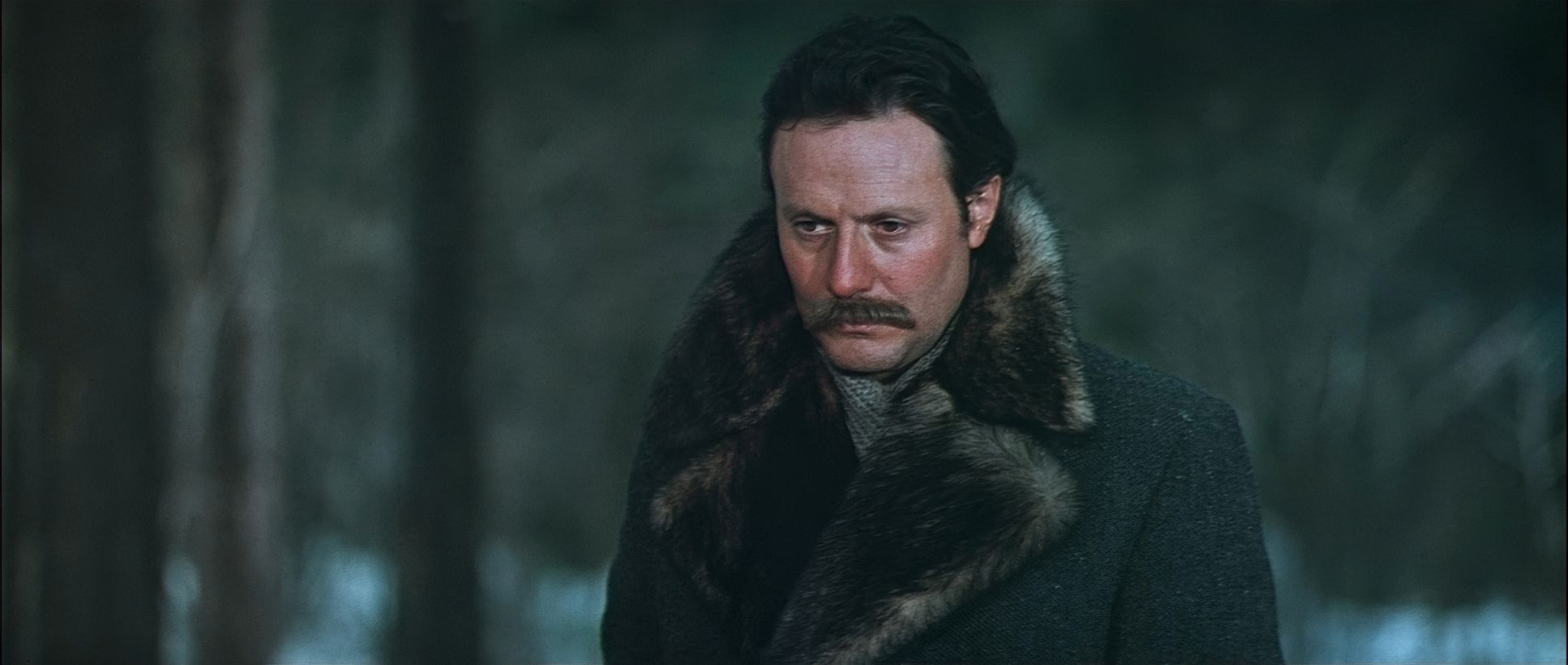
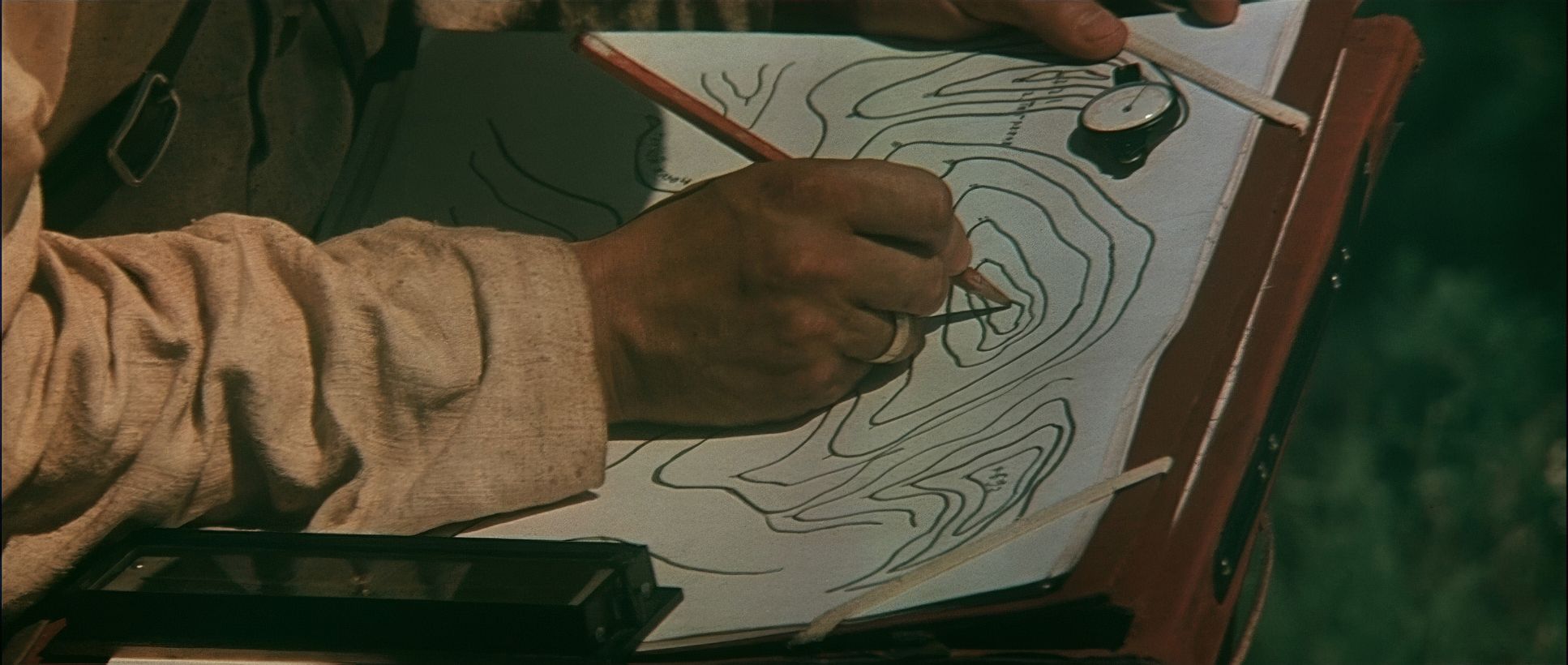
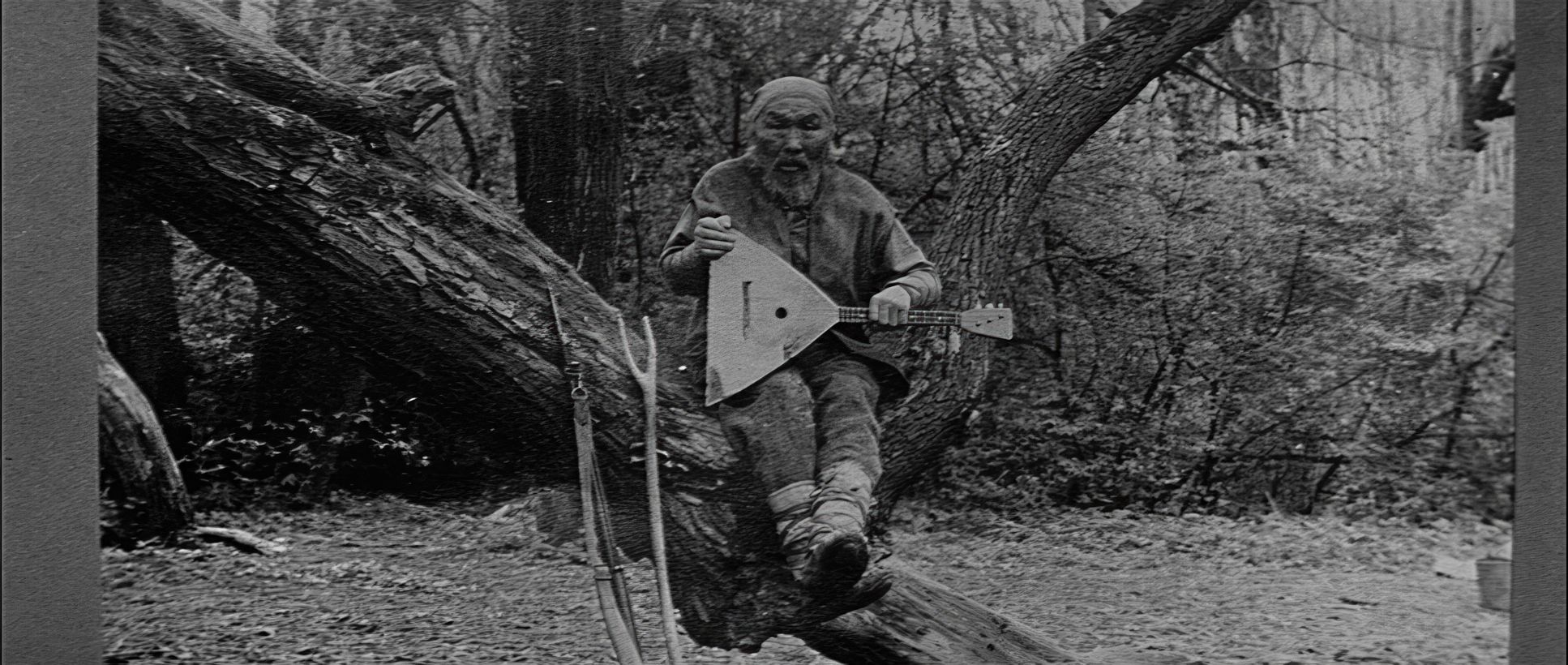
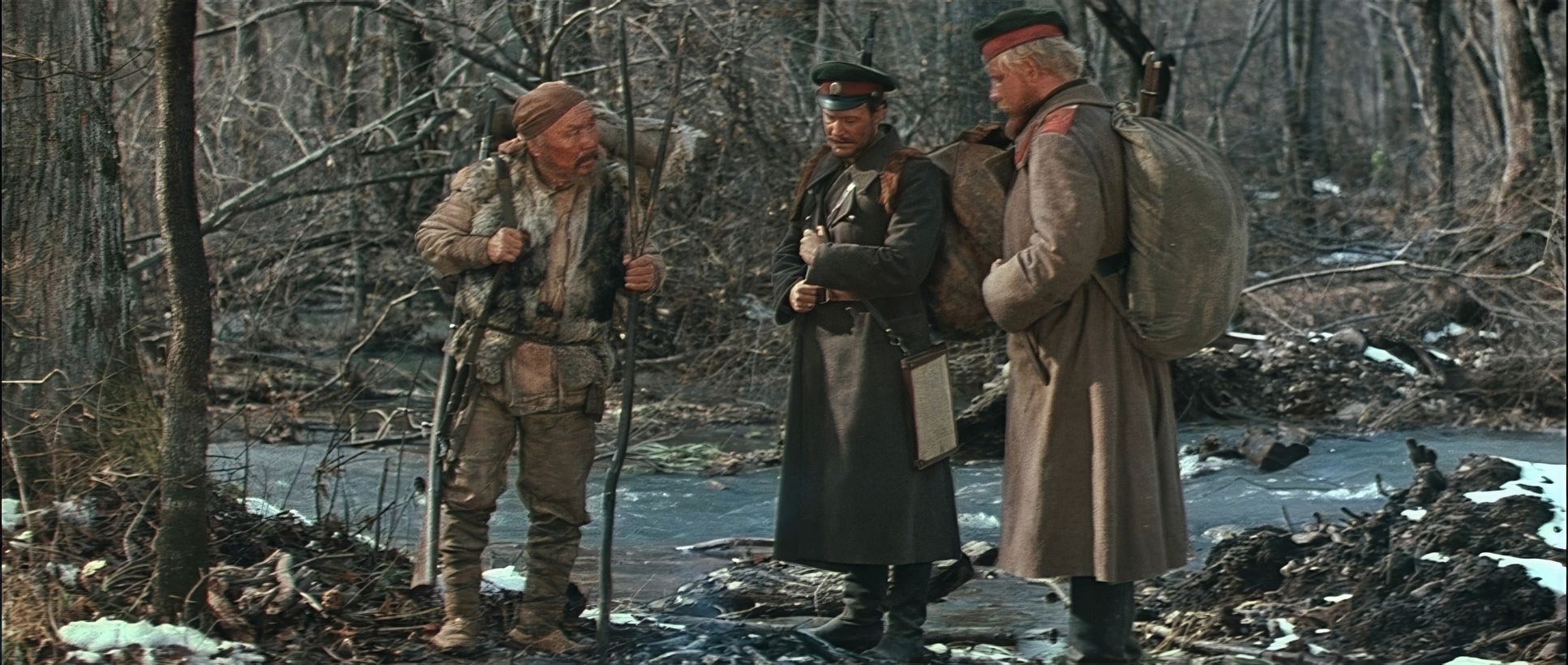
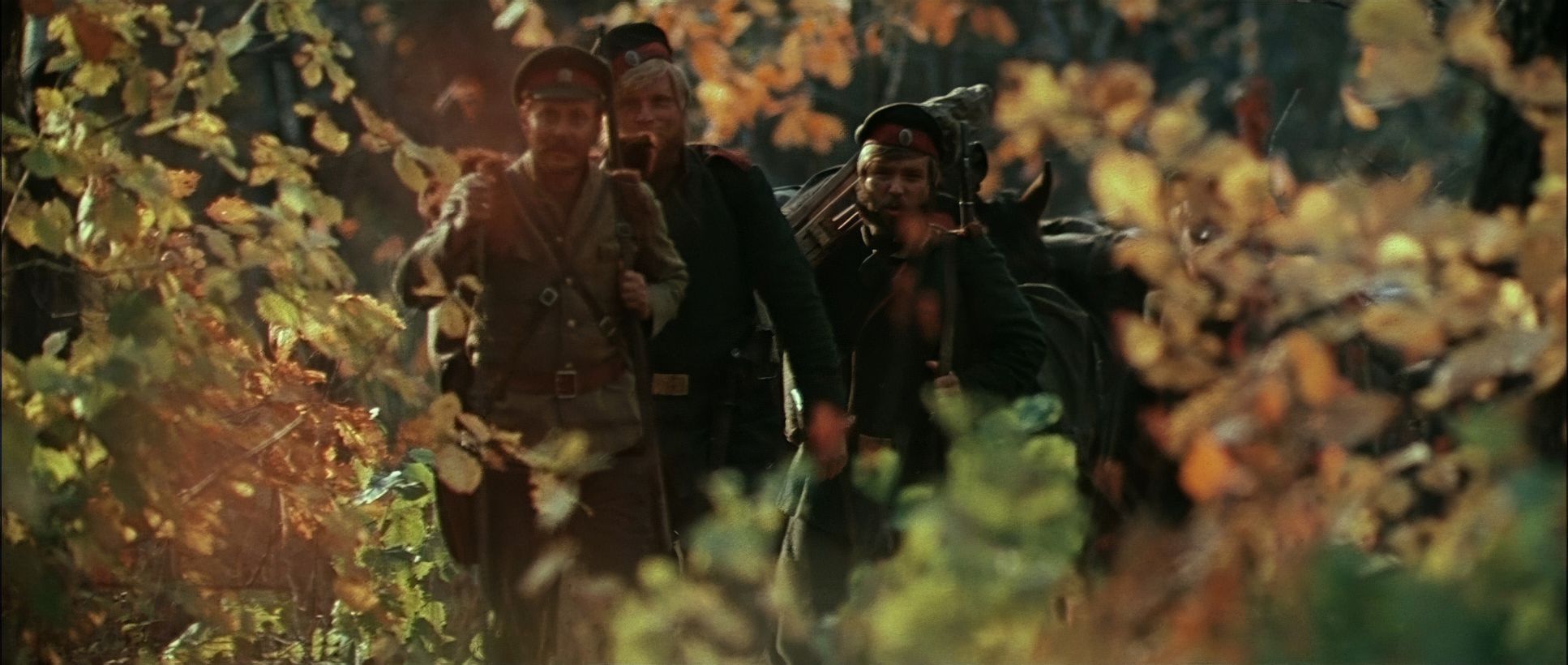
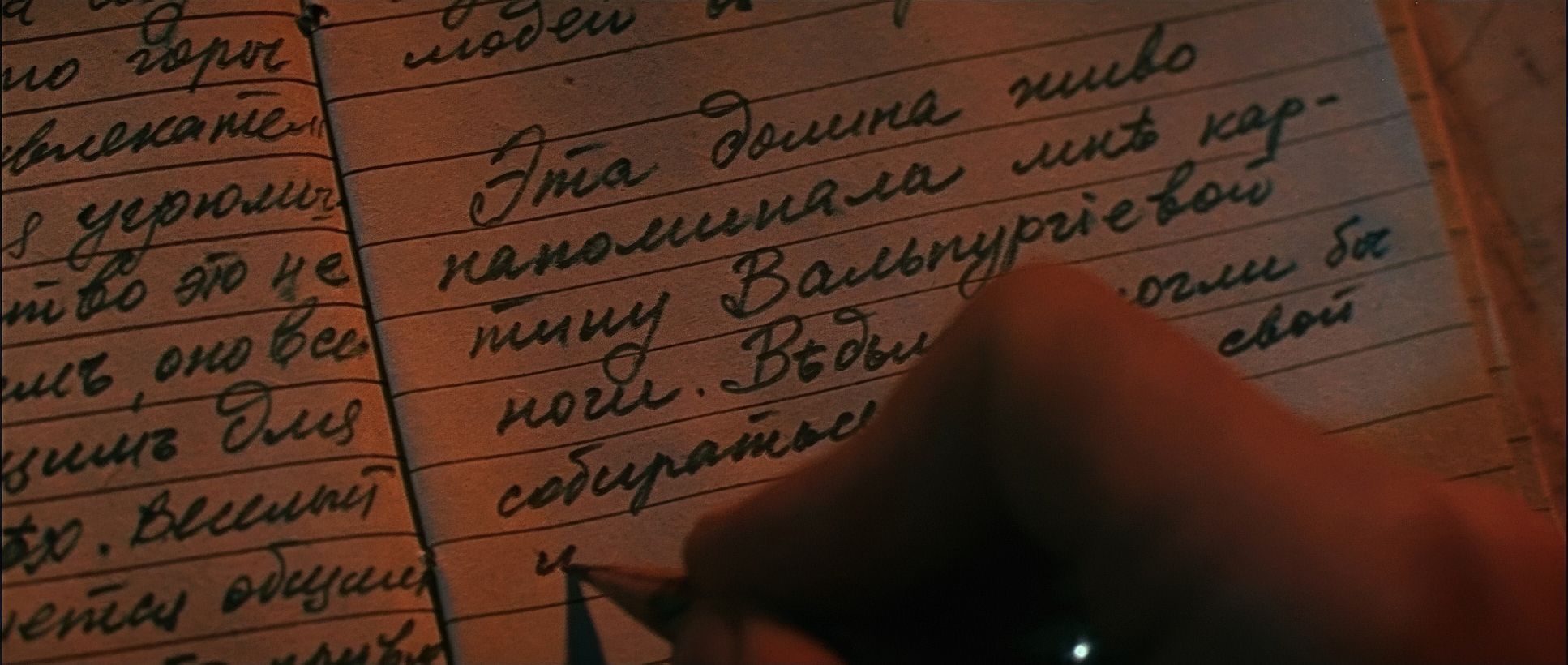
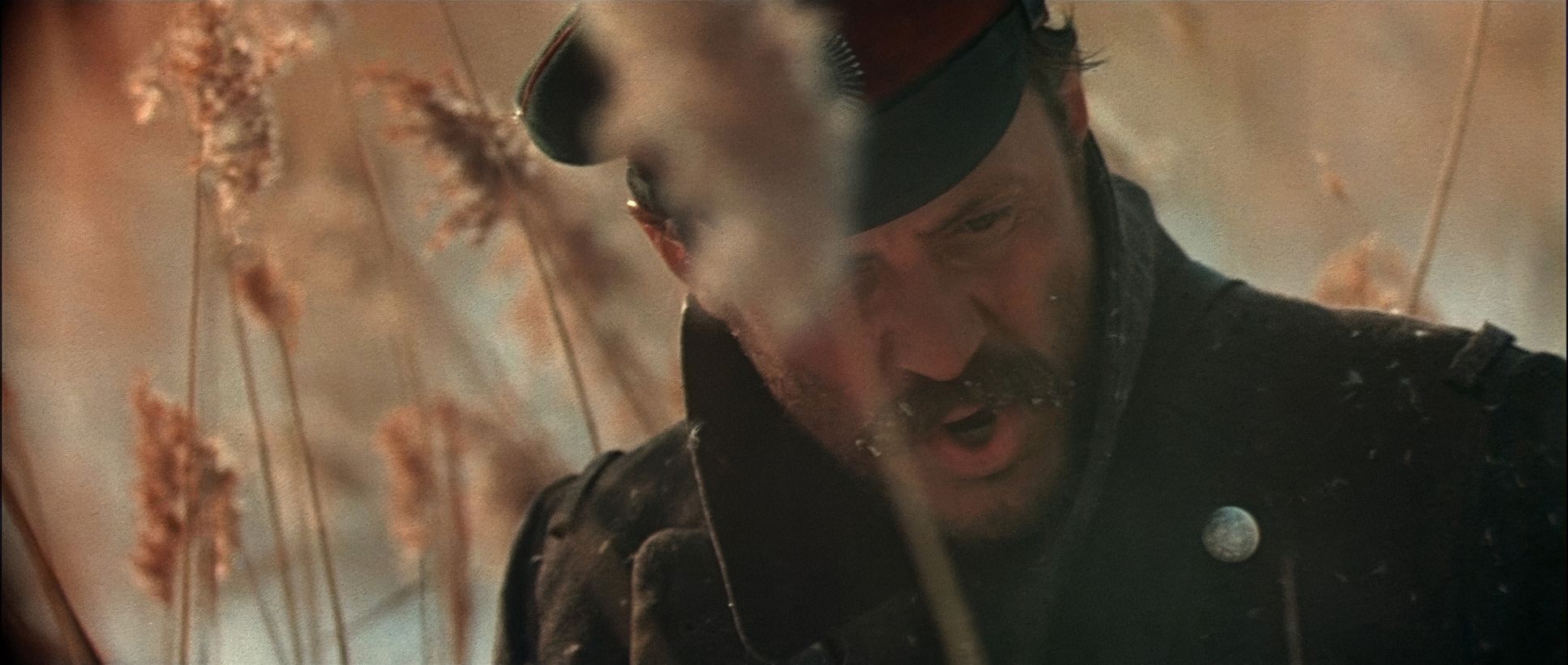
Dersu Uzala (1975) Film Stills
A curated reference archive of cinematography stills from Dersu Uzala (1975). Study the lighting, color grading, and composition.
















- Also read: TEMPLE GRANDIN (2010) – CINEMATOGRAPHY ANALYSIS
- Also read: RIFIFI (1955) – CINEMATOGRAPHY ANALYSIS
Browse Our Cinematography Analysis Glossary
Explore directors, cinematographers, cameras, lenses, lighting styles, genres, and the visual techniques that shape iconic films.
Explore Glossary →