When I finally sat down with Dara of Jasenovac, I knew I wasn’t in for a light evening. It’s a brutal film. Set in the Jasenovac concentration camps during WWII, it follows 10-year-old Dara as she tries to protect her infant brother. It’s a difficult watch, but from a technical standpoint, the visual language is an incredible study in restraint.
About the Cinematographer
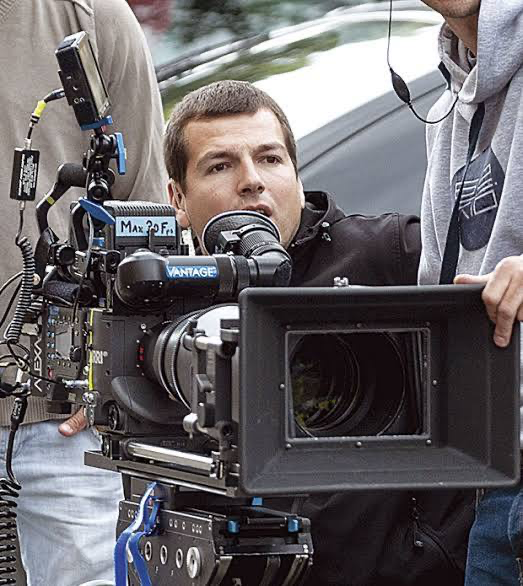
The look of the film was crafted by Miloš Kodemo. Kodemo is an interesting case he’s a long-time camera operator who has spent years perfecting the physical craft of cinematography before fully stepping into the Director of Photography chair. You can feel that experience in this film. His work on Dara of Jasenovac is exceptionally disciplined.He utilizes a mostly classical style but isn’t afraid to toss in modern flourishes when the narrative demands it. He clearly decided to let the raw truth of the camps lead the way, avoiding any flashy camera tricks that would have pulled the viewer out of the moment. It’s the kind of cinematography that stays out of its own way so the story can breathe.
Inspiration Behind the Cinematography
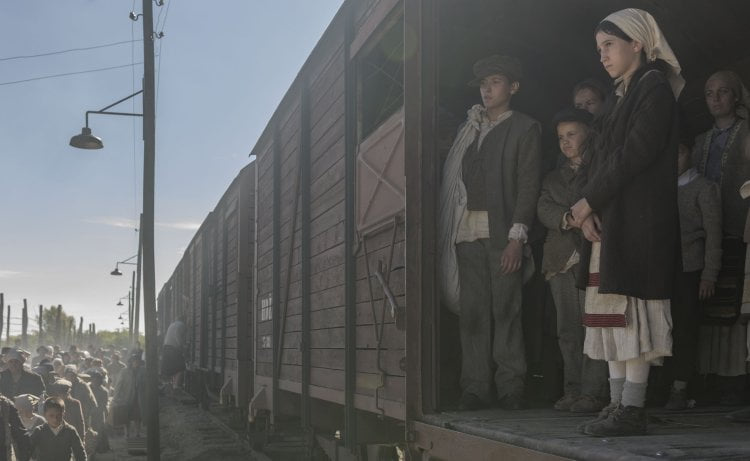
When you’re dealing with a tragedy of this scale, your primary inspiration has to be historical truth. I suspect Kodemo and the director looked at period photography and survivor testimonies rather than other movies. The visual language needed to match the transcript the separation of families, the casual violence of the guards, the “games” they played for entertainment.
The goal wasn’t “cinematic beauty.” It was immersion. The filmmakers wanted us to see what Dara saw. This meant avoiding heavy stylization that creates a “movie-like” distance between the audience and the screen. Instead, they opted for a journalistic immediacy, shooting in locations like Kolut and Bela Crkva to ground the story in a physical reality. It feels like we are standing in the mud with the prisoners, forced to bear witness to things we’d rather look away from.
Camera Movements
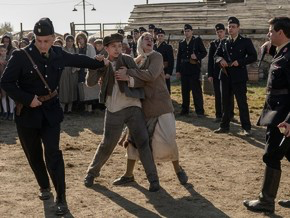
There’s a very specific logic to how the camera moves in this film. During the opening scenes of forced displacement, the camera is handheld. It’s shaky, urgent, and disorienting. It places you right in the middle of the panic as Dara and her family are pushed toward the camp. It feels unstable because her world is falling apart.
Once they get inside the camp walls, the movement changes. It becomes static. Heavy. We see more slow dollies and subtle pans. This shift creates a sense of crushing stasis the chaos of the journey is replaced by the dread of the destination. When the camera does move in, like the slow push-ins on Dara’s face when she loses her family, it’s not intrusive. It’s observational. There are moments where the camera breaks this rule like Dara’s desperate run behind the bus. There, Kodemo allows the movement to become fluid and active again, capturing her agency and her protective love in a sudden burst of energy.
Compositional Choices
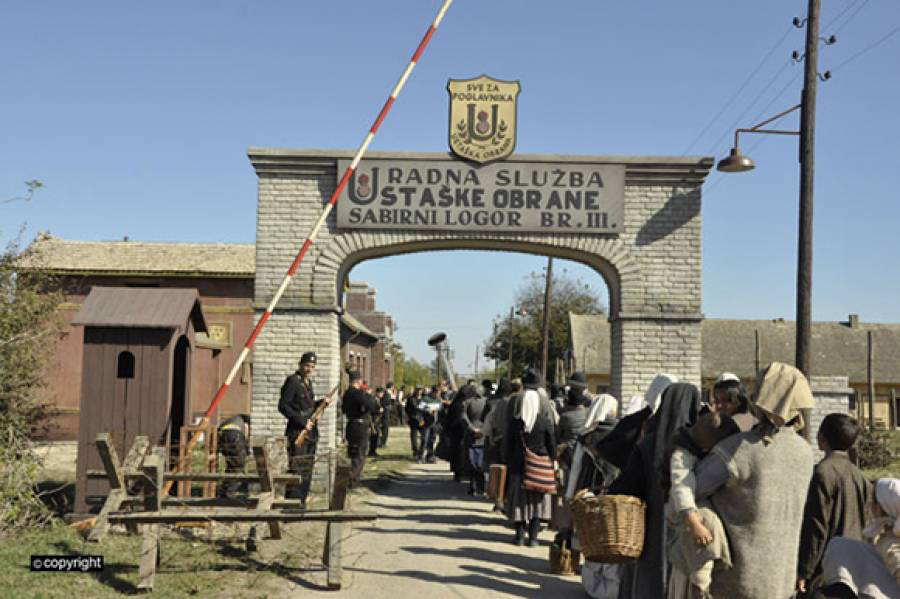
Kodemo uses the frame as a tool of oppression. Throughout the film, we see wide shots that dwarf the prisoners against the bleak architecture of the camp. This use of negative space makes Dara look tiny and insignificant against the machinery of the state.
Close-ups are handled with care. Dara’s face is our primary guide; her reactions tell us how to feel when we see the atrocities unfold. I also noticed a lot of “framing within frames” looking through bars, doorways, or windows. It’s a classic technique, but here it serves as a constant reminder of confinement. The blocking is equally intentional. The officers are almost always positioned in a way that dominates the frame standing tall or looking down while the prisoners are huddled together, stripped of their individuality.
Lensing and Blocking
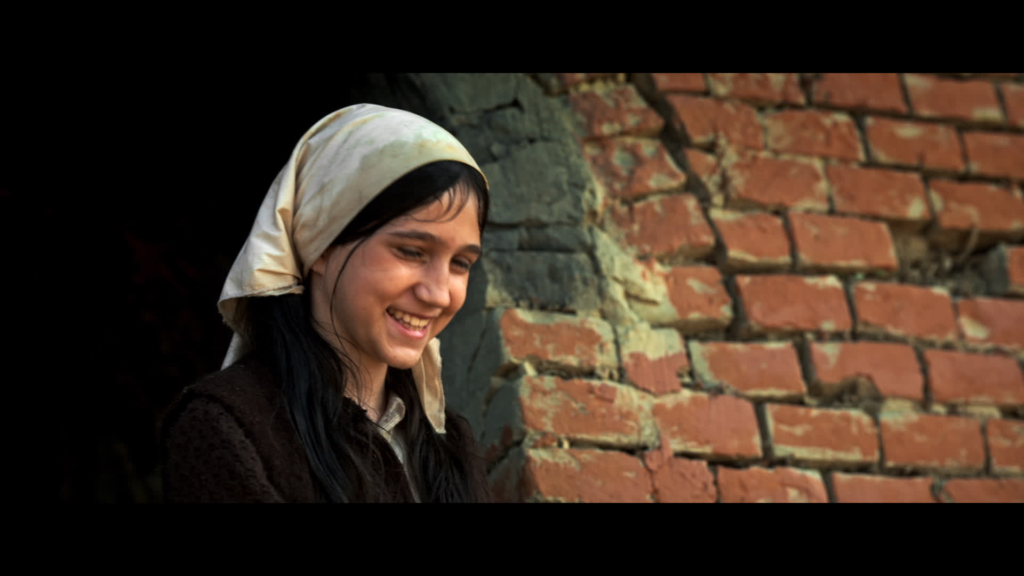
For the most part, the film stays on wider spherical lenses. This maintains a sense of honesty. There’s no anamorphic distortion to remind you that you’re watching a “film.” It feels like a window into a real space. The wider perspective also lets us see the scale of the horror it’s not just Dara’s story; there are hundreds of others in the background.
However, they do use longer lenses when they need to pull us into a character’s internal state. When Dara is watching something horrific from across the yard, or when Mile is observed burying bodies, a telephoto lens compresses the space. It isolates them from the surrounding noise. The blocking is where the emotion really lives, though. Think about the way Dara physically shields her brother, or how her mother stands as a literal wall between her son and the guards. These aren’t just movements; they are visual declarations of love in a place that has none.
Lighting Style
The lighting is a masterclass in motivated realism. It’s mostly low-key, relying on what looks like natural or practical sources. Inside the barracks, the light is dim and grimy, often just a single weak light source struggling to cut through the shadows. The shadows here feel heavy they don’t just hide things; they add to the sense of claustrophobia.
Outside, the daylight is usually flat and overcast. There’s no “golden hour” here. Even the sun feels cold. If I have one critique, it’s the “white fog” used during the death of Malila. While it’s a striking visual metaphor, it felt a bit “stylized” compared to the gritty realism of the rest of the film. It’s a beautiful transition, but it’s one of the few times I felt the presence of the filmmakers’ hand.
Color Grading Approach
This is my territory. As a colorist, I can see the deliberate effort to strip the life out of these frames. The grade isn’t just “desaturated” it’s drained. We’re looking at a world of bruised browns, cold grays, and muted greens.
Technically, I noticed the blacks are often slightly lifted. They aren’t “crushed” into a high-contrast, modern look. By lifting the blacks, you get this dusty, worn-out texture that feels more like an old film print. It adds historical weight. The highlight roll-off is also very soft; nothing feels “digital” or sharp. The real challenge in a grade like this is the skin tones. You want them to look sickly and pale, but you have to keep them “human” enough so the audience stays connected. I’d bet there was a lot of secondary work done to keep a hint of organic warmth in Dara’s face while pushing everything else toward a cold, indifferent blue or gray.
Technical Aspects & Tools
Based on the highlight retention and the way it handles those dim barracks, I’d guess this was shot on an ARRI Alexa. It has that organic texture that digital cameras usually struggle with. They clearly needed a sensor with high dynamic range to catch the detail in the shadows without blowing out the overcast skies.
The lenses likely a set of high-end spherical primes are sharp but not clinical. In a few scenes, like the “smoke bomb” sequence, you can see how much they relied on atmospheric effects to create depth. It’s a very “practical” film. Even though they used high-end tools, Kodemo used them to achieve a look that feels low-tech and grounded.
- Also read: WHO’S AFRAID OF VIRGINIA WOOLF? (1966) – CINEMATOGRAPHY ANALYSIS
- Also read: PINK FLOYD: THE WALL (1982) – CINEMATOGRAPHY ANALYSIS
Browse Our Cinematography Analysis Glossary
Explore directors, cinematographers, cameras, lenses, lighting styles, genres, and the visual techniques that shape iconic films.
Explore Glossary →