Hi everyone, Salik Waquas here. If you know me, you know I’m not just an enthusiast; I’m the guy obsessively tweaking curves and lift-gamma-gain controls at my grading service, Color Culture. I spend my days staring at waveforms, trying to make images sing. But every now and then, a movie comes along that makes you want to step away from the DaVinci Resolve panel and just marvel at the sheer scale of the craft.
We have to talk about The Lord of the Rings: The Fellowship of the Ring. And I know what you’re thinking—”Salik, isn’t that just the fantasy movie with the wizards?” No. This isn’t just a trilogy; it is an experience. It’s the kind of film where you sit down with the Extended Editions, lose 12 hours of your life, and you’re happy about it.
As a colorist, I look for visual cohesion, and as a filmmaker, I look for ambition. This film changed the way movies were made, specifically regarding mainstream fantasy epics. It captures the depth and layers of J.R.R. Tolkien’s world in a way that feels historical rather than theatrical. So, let’s look at the visual language of Middle-earth.
About the Cinematographer
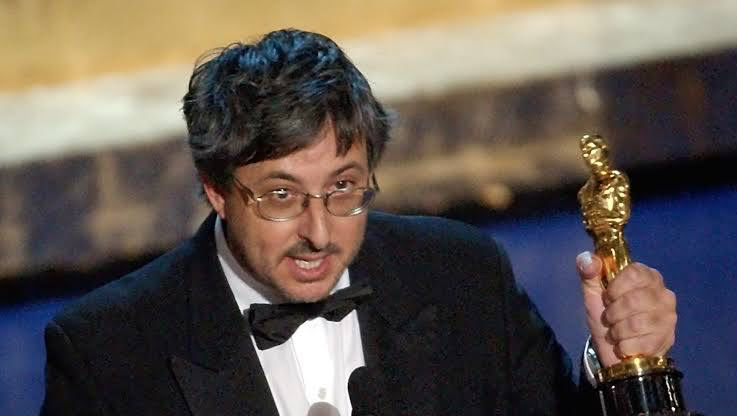
The visual architect behind this undertaking was the late Andrew Lesnie, working alongside director Peter Jackson. While Jackson was the mastermind punching through pages of mythology to tell a coherent story, Lesnie’s cinematography had to bridge the gap between a grounded reality and high fantasy.
Shooting this film was a massive gamble. You have to realize that in the late 90s, fantasy was considered a box-office wasteland. Lesnie had the monumental task of capturing New Zealand’s landscape in a way that felt “otherworldly” yet tangible. He and Jackson didn’t just point cameras at mountains; they essentially carbon-copied the painterly designs of artists Alan Lee and John Howe. They created a cohesive “Image System”—a visual structure where every frame adds narrative meaning. They captured a look that, while occasionally showing its age now, felt like “lightning in a bottle” when it dropped in 2001.
Inspiration for the cinematography
Peter Jackson didn’t come from a background of polished period dramas. He was a self-taught director from New Zealand known for low-budget, cheesy B-horror films like Braindead and Bad Taste. And if you look closely, you can absolutely see that DNA in the cinematography of The Lord of the Rings: The Fellowship of the Ring.
Jackson’s past style—the over-the-top, exaggerated camera angles—leaks into this film, especially when we’re dealing with the creatures. Look at the way the camera treats the Uruk-hai or the sheer grotesquerie of Lurtz; that’s pure horror filmmaking. There is a “camp factor” and a cartoonish energy that Jackson amps up, which gives the film a unique tonal identity compared to the stuffy, sterile fantasy films of the past.
This inspiration creates a fascinating tension. On one hand, you have “Golden Age of Hollywood” ambition, reminding you of epics like Lawrence of Arabia. On the other, you have a director infatuated with “gross-out imagery.” It’s this blend of high art and B-movie grit that keeps the cinematography grounded in mud, blood, and fear.
Camera Movements
When we talk about camera movement in Fellowship, we are talking about the “swooping shot.” You know the ones—the helicopter flies over a mountain ridge to reveal the Fellowship trekking through the snow. Back when this movie came out, long before the age of ubiquitous drones, those shots hit the screen with a vengeance.
These massive aerial crane shots were used to establish the vast geography of the location. However, the film balances these epic moves with handheld dynamics. When the The Lord of the Rings: The Fellowship of the Ring is running through the crumbling stairs of Moria, the camera isn’t gliding smoothly; it’s reactive.
We also see the use of aggressive tracking shots, where the camera follows a subject to signal their journey is narratively important. Think of the urgency when the Hobbits are running from the Nazgûl. The movement isn’t just about showing the action; it’s about “upping the ante.” The battle sequences introduced a level of kinetic energy that we hadn’t really seen in fantasy before, using movement to convey chaos rather than just choreography.
Compositions
Compositionally, Fellowship is a masterclass in scale. The film heavily utilizes the Extreme Long Shot to emphasize the discrepancy in size between a character and their location. When you see the Fellowship crossing the snowy passes, they are tiny specks against massive mountains. This isn’t just a pretty picture; it visualizes their vulnerability against the malice of the world.
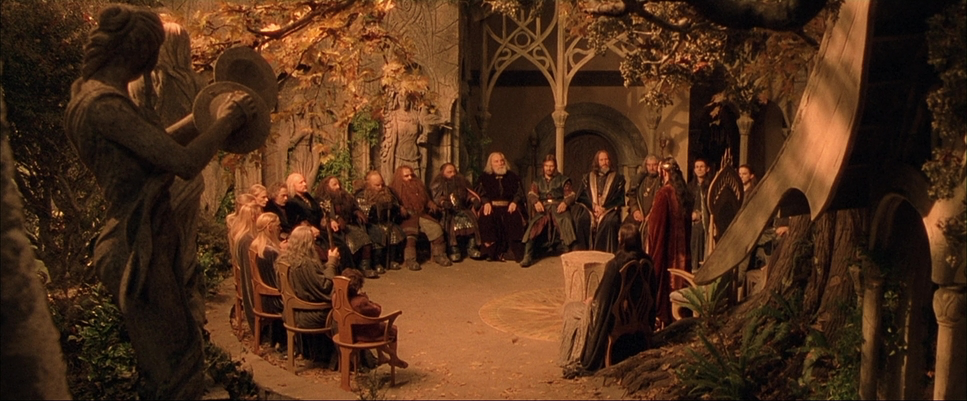
Jackson also uses framing to establish power dynamics. Consider the Over-the-Shoulder (OTS) shots during the Council of Elrond. An OTS shot usually connects characters emotionally, but here, it serves to show the disparity of the races coming together—Dwarves, Elves, and Men all occupy different vertical spaces in the frame.
We also have to talk about the “seductive” nature of the Ring. When characters interact with it, the composition often isolates them. But Jackson knows when to restrain himself. When Boromir picks up the ring on the mountain, instead of a crazy, slanted “Dutch angle” to show madness, Jackson holds on a medium close-up, allowing Sean Bean’s performance to do the heavy lifting. It’s a brilliant choice that makes the corruption feel human, not cartoonish.
Lighting Style
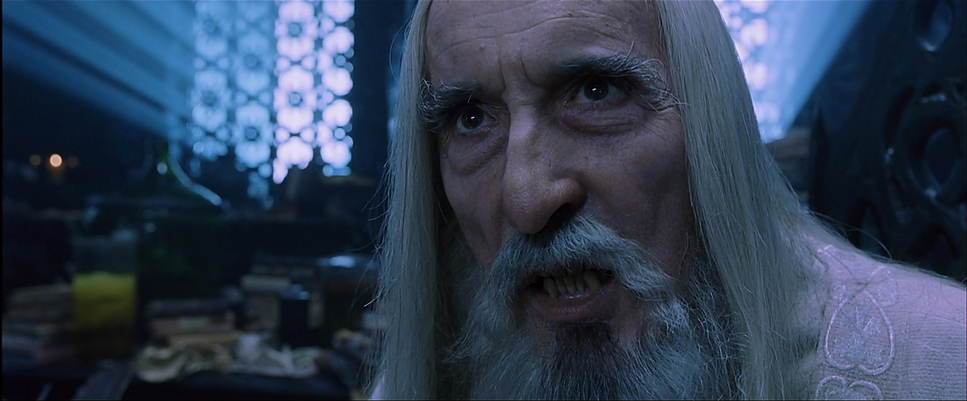
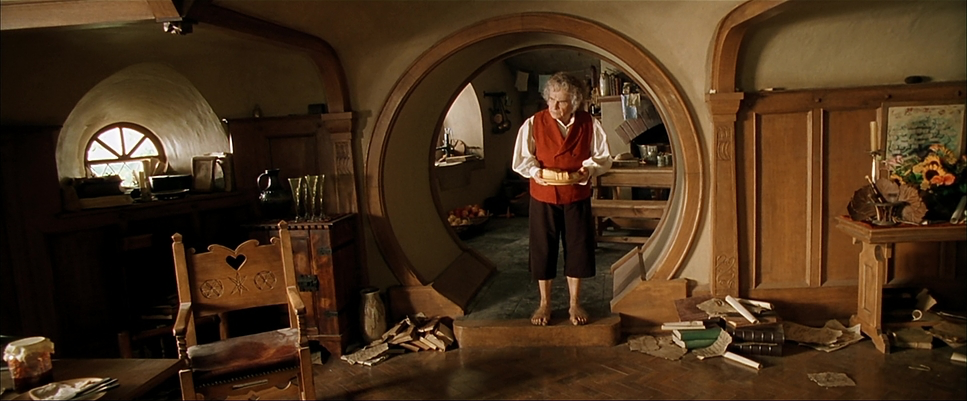
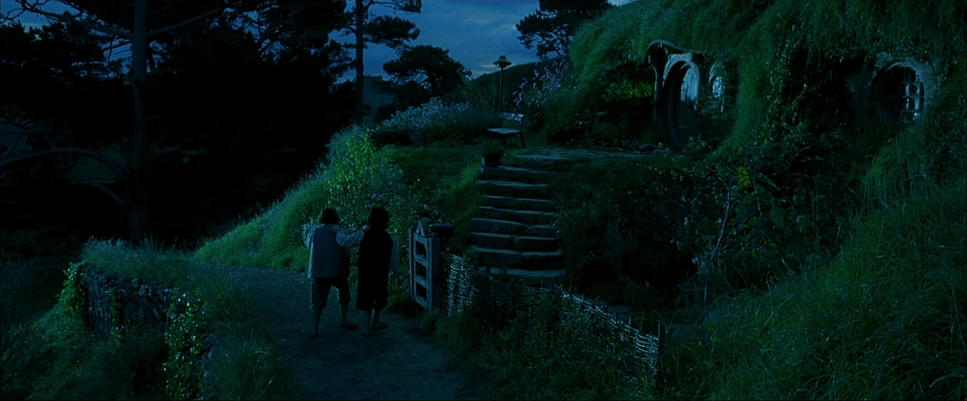
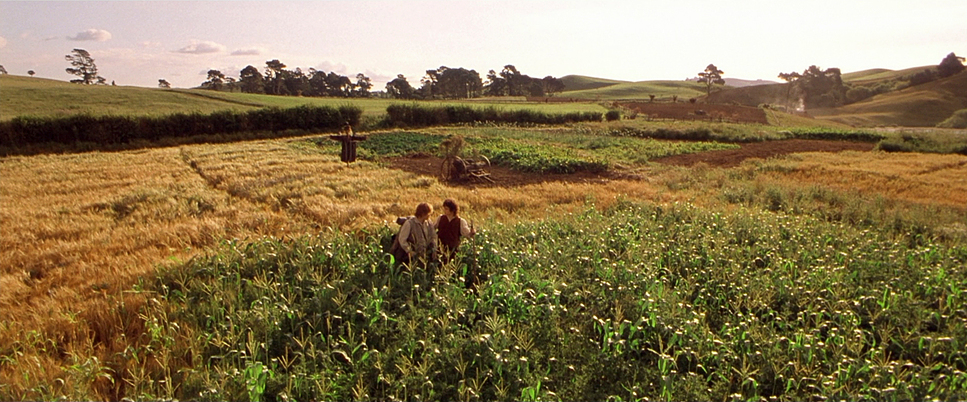
As a colorist, lighting is where I start getting nitpicky. Fellowship generally balances naturalistic motivation with theatrical mood. In the Shire, we see what appears to be natural light—a lush, happy environment. It feels like a high-budget tourism ad for New Zealand.
However, the film shifts into high-contrast, low-key lighting once the danger starts. The lighting in the Mines of Moria is iconic. When Gandalf faces the Balrog, we are dealing with deep shadows and rim lighting. The Balrog is essentially a “big flaming demon,” so the light from its fire interacts with the environment authentically.
There are moments, however, where the lighting feels a bit “studio.” As the YouTube analysis channel Deep Focus Lensnoted, Rivendell is sometimes “way too bright,” washing out the skin tones. From a technical standpoint, it feels like they pushed the exposure to suggest an ethereal quality but ended up clipping the highlights on the actors’ faces. Contrast that with the woods of Lothlórien, which has an “exaggerated quality” that works perfectly to create mystique. It’s a fine line between “magical” and “overlit sitcom,” and mostly, Lesnie stays on the right side of it.
Lensing and Blocking
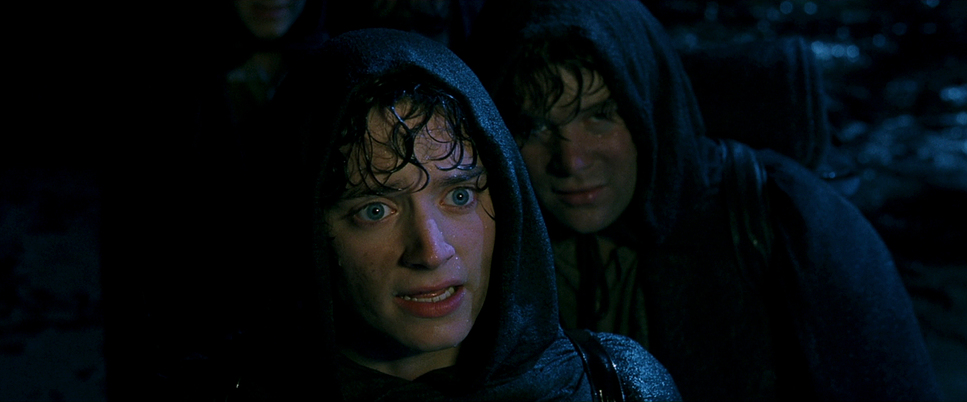
This is where the magic happens. You can’t talk about LOTR without talking about forced perspective. Jackson meticulously planned shots to sell the height difference between Hobbits and Men.
But they didn’t just use static tricks; they pioneered “Moving Forced Perspective.” By placing Frodo (Elijah Wood) further back in the z-axis and Gandalf (Ian McKellen) closer to the lens, and mounting the set on a motion control rig that moved in sync with the camera, they created the illusion of size difference even during camera moves. It uses depth cues to manipulate how we perceive space without relying entirely on green screens.
Jackson frames scenes so we forget this trickery is happening, ensuring the “coolness of the effects never got in the way of the drama.” We also see the use of wide-angle lenses to capture the environments, expanding the perspective, and telephoto lenses during intimate dialogue to compress the background and isolate the faces.
Color grading
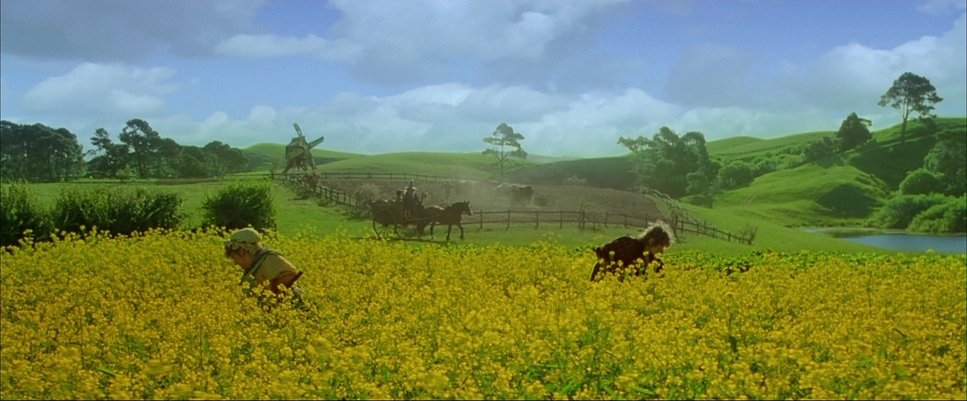
Alright, let’s crack open the node tree. If I were grading this in DaVinci Resolve today, I’d be looking at distinct palettes for each location. The film was one of the pioneers of the “Digital Intermediate” (DI) workflow, allowing them to grade the entire film digitally—a rarity in 2001.
In Hobbiton, we have a lush, realistic palette—saturated greens, earthy browns, warm skin tones. It creates a sense of safety. However, I have to agree with some modern critiques that the grading can be “a tad on the nose” at times. Rivendell has this heavy, desaturated, almost blooming highlight look that dates the film slightly. It’s meant to look heavenly, but if I were grading this now, I’d probably use a Halation node or some soft clip to roll off those highlights smoother, avoiding that “electronic” look on the skin.
But then you get to Mordor and the prologue. The blacks are crushed, the reds are vibrant—it’s the malice poured into the Ring visualized. The color grading acts as a narrative device. When the Ring takes hold of someone, the world becomes shadowy and blurred, shifting the palette entirely. It effectively communicates that the Ring is an entity that is alive.
Technical aspect
The Lord of the Rings: The Fellowship of the Ring (2001) — Technical Specifications
| Genre | Action, Adventure, Fantasy, Drama, Epic, High Fantasy |
| Director | Peter Jackson |
| Cinematographer | Andrew Lesnie |
| Production Designer | Grant Major |
| Costume Designer | Ngila Dickson, Richard Taylor |
| Editor | John Gilbert |
| Colorist | Peter Doyle |
| Time Period | Medieval: 500-1400 |
| Aspect Ratio | 2.39 – Spherical |
| Format | Film – 35mm |
| Lighting | Hard light, High contrast |
| Lighting Type | Artificial light |
| Story Location | Middle Earth |
| Filming Location | Oceania > New Zealand |
| Camera | Arri 2c (IIc), Arri 3 (III) (IIIc), Arri 535 / 535B, Arricam ST, Arriflex 435, Moviecam Compact, Moviecam SL |
| Lens | Angenieux Optimo Zooms, Zeiss Ultra Prime |
| Film Stock / Resolution | 5274/7274 Vision 200T, 5279/7279 Vision 500T, 5293/7293 EXR 200T |
s We have to wrap this up by acknowledging the technical revolution this film represented. It blends practical effects, miniatures (or “bigatures”), and digital effects seamlessly.
The “Sequence Shot” concept—where complex moves cover extended action—is mimicked here in the digital realm. The prologue is crafted like the opening of a Bond film, throwing us into an action sequence that hooks us immediately.
But perhaps the most revolutionary aspect was the software developed to handle the massive armies (aptly named Massive). When we see those swooping shots of soldiers going down hills, we are seeing a digital crowd where every agent has its own “brain” and makes its own decisions. And let’s not forget the Balrog. Gandalf standing toe-to-toe with that “shadow and flame” required a perfect integration of interactive lighting and CGI. It creates a sense of scale and terror that makes you think, “Holy hell, old dude, you’re more badass than anything I’ve ever seen.”
In the end, despite some dated grading choices or pacing issues, the technical craft of Fellowship created a world you want to live in. It invites you to engage, relate, and imagine. And as a filmmaker, that’s the ultimate goal.
Also Read: FRANKENSTEIN: A CINEMATOGRAPHY ANALYSIS
Also Read: CINEMATOGRAPHY ANALYSIS OF THE BRUTALIST (IN DEPTH)
Browse Our Cinematography Analysis Glossary
Explore directors, cinematographers, cameras, lenses, lighting styles, genres, and the visual techniques that shape iconic films.
Explore Glossary →