I’m naturally drawn to stories about the indomitable human spirit, and Cinderella Man (2005) is for my money, one of the best examples of visual storytelling meeting raw emotional stakes. It isn’t just a boxing movie; it’s a masterclass in using a camera to explore dignity, sacrifice, and the sheer grit required to survive the 1930s. When I watch it, I’m not just looking at “nice shots” I’m looking at a meticulously crafted visual tapestry that weaves hope into some of the bleakest frames ever put to film.
About the Cinematographer
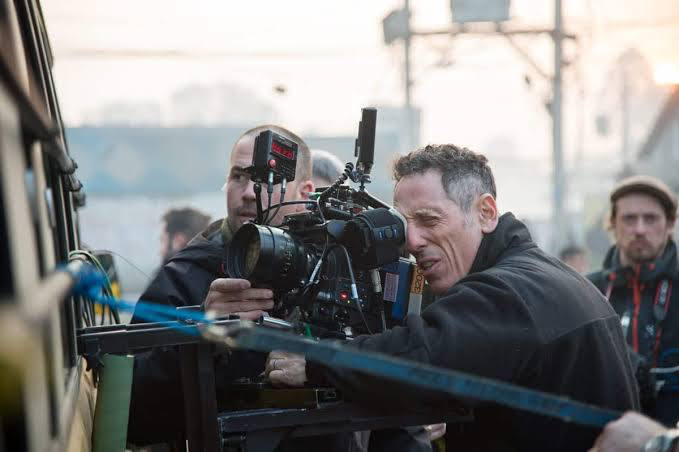
The look of Cinderella Man came from the mind of Salvatore Totino. If you know his work with Ron Howard things like The Da Vinci Code or Frost/Nixon you know he’s got this knack for “gritty elegance.” Totino’s style is grounded and lived-in. He doesn’t go for the “pretty” shot if it doesn’t serve the gut-punch of the scene.
For this film, he stayed away from flashy, “look-at-me” cinematography. Instead, he went for an observational, almost documentary-like texture. He isn’t afraid of “ugly” light or letting a subject fall into deep, messy shadows. To me, that’s where the magic happens. It’s a philosophy I try to bring to my own grading suite: the visual choices should amplify the heartbeat of the story, not drown it out.
Inspiration Behind the Cinematography
The aesthetic is purely born from the Great Depression. This wasn’t just about getting the period costumes right; it was about capturing the literal dust, the faded dreams, and the quiet resilience of James J. Braddock. I can almost see Totino and Howard pouring over old archival stills soaking in the texture of breadlines and the flat, oppressive light of the docks.
The title itself coined by Damon Runyon tells you exactly what the visuals need to do. It’s a “rise from the ashes” story. To make that work, the cinematography had to be brutally honest about the suffering. You see a lot of desaturated tones and somber, heavy compositions early on. But you also have to leave room for the “Cinderella” part the warmth of a crowded kitchen or the explosive, high-contrast energy of Madison Square Garden. It’s a visual tightrope walk between bleakness and buoyancy.
Camera Movements
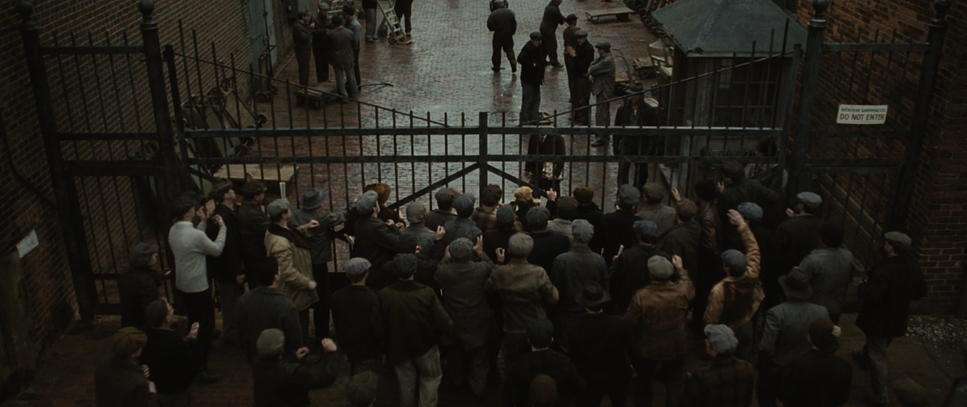
The camera work here is a lesson in purposeful movement. In the early acts, the camera feels heavy burdened, just like Braddock. You see these slow, deliberate dolly shots or subtle handheld drifts that make his isolation feel tangible. At the docks, the camera takes on a journalistic quality, sweeping across the sea of desperate faces to show the sheer scale of the crisis. It’s a smart depth cue that makes the economic collapse feel omnipresent.
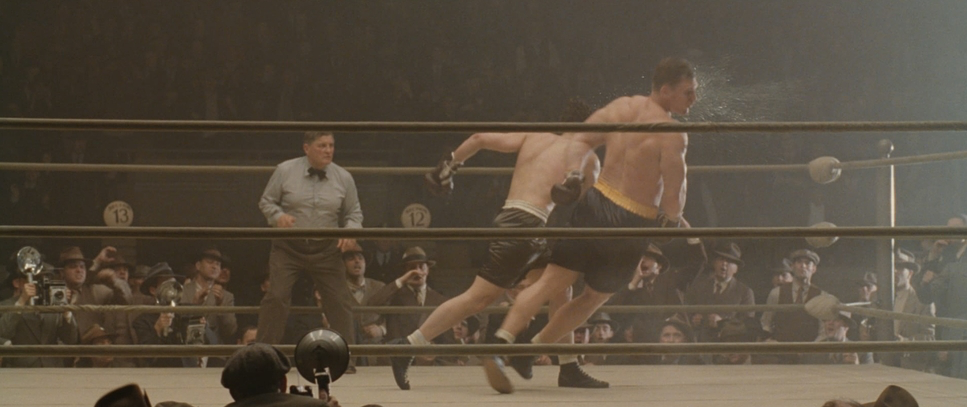
But once Braddock starts his comeback, the energy shifts. The boxing sequences are kinetic and aggressive. Russell Crowe actually got into the ring with pros, and you can feel that authenticity because the camera is agile enough to catch it. It’s a mix of sharp, jagged cuts and orbiting Steadicam work that puts you right in the pocket with the fighters. It’s not “showy” for the sake of it; the camera is a participant in Braddock’s fight.
Compositional Choices
Totino leans heavily on deep focus to ground Braddock in his environment. Whether it’s the peeling wallpaper of his squalid apartment or the vastness of the arena, you see the context. We aren’t just looking at a man; we’re looking at his world.
I love how he uses negative space to hammer home hopelessness. When Braddock is at the docks, he’s framed small a tiny figure against imposing ships and rows of men. It makes him look vulnerable, almost swallowed by the system. But in the ring? The compositions turn heroic. The camera shoots up at him, restoring his stature.
And then there are the hands. The film is obsessed with them: Braddock’s injured hand, his hands reaching for scraps, his hands in gloves. Those close-ups are visual shorthand for his entire journey from brokenness to redemption.
Lighting Style
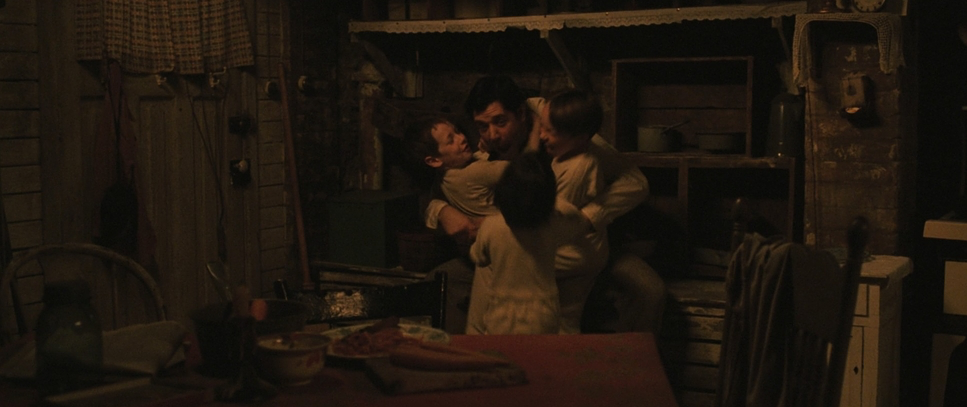
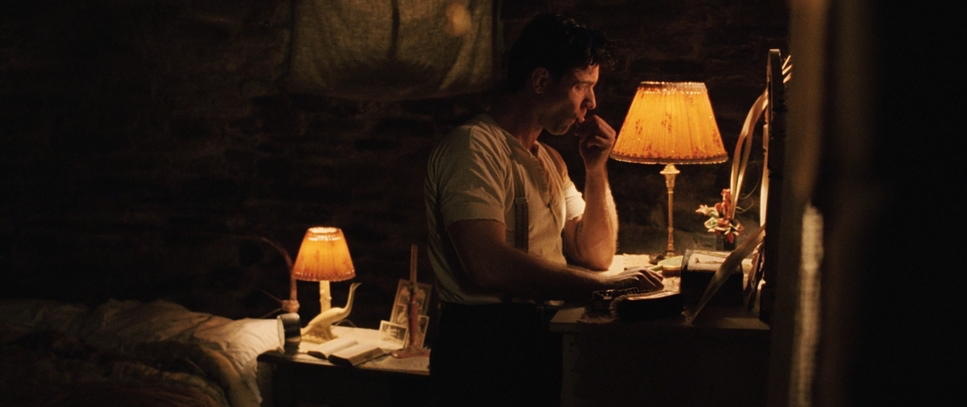
This is where the film really sings. In the struggle years, the lighting is low-key and motivated by whatever “poor” light sources they had bare bulbs, candles, or that dim, gray light filtering through dirty glass. The scene where they have to burn fences for heat is a visual gut-punch; the darkness feels like it’s physically closing in on them.
As a colorist, I’m always looking at the “toe” of the image the shadows. Here, they use a beautiful chiaroscuro that feels like a painting. Faces are often half-lit, suggesting that internal resolve.
Interestingly, once we hit the boxing ring, the lighting flips. It becomes hard, high-contrast, and theatrical. We’re talking big, artificial backlights and heavy shadows. Yet, Totino never lets it look clinical or “digital.” There’s always a pocket of darkness somewhere to remind us of the stakes.
Lensing and Blocking
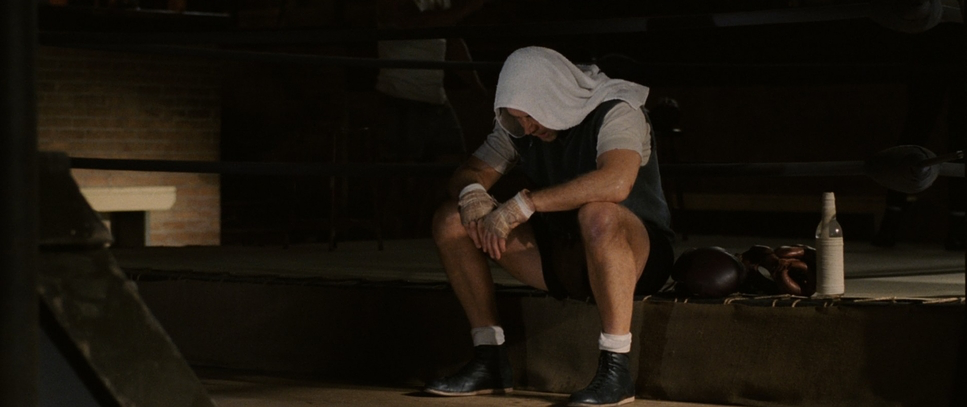
The lens choices are surprisingly intimate. Totino uses wider lenses in the apartment, which sounds counter-intuitive, but it actually makes the space feel more cramped and oppressive. You see the kids in the background of almost every shot a constant reminder of why Braddock is doing this.
For the emotional heavy lifting, they switch to longer lenses. It compresses the perspective and isolates Braddock’s face. When he’s at the relief office, that long lens makes him feel totally detached from the world around him, heightening the humiliation.
The blocking is just as tight. Russell Crowe’s “little foot flick” boxing stance is a great character detail, and Howard shots it in a way that makes his style feel distinct and “scrappy.” As he becomes the “Bulldog,” the blocking becomes more assertive he stops being pushed around the frame and starts owning the center of it.
Color Grading Approach
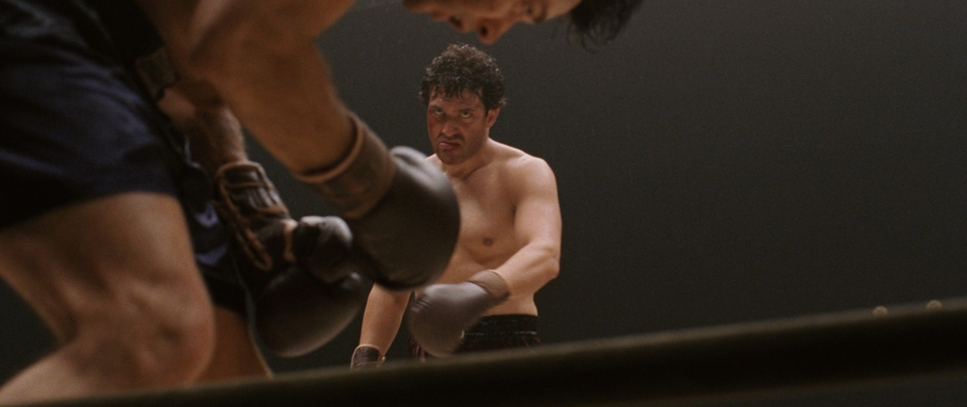
From my desk at the grading panel, this film is a masterclass in tonal sculpting. The palette is intentionally restrained lots of “tobacco” browns, muted greens, and faded blues.
The highlight roll-off is what really kills me. It’s got that thick, milky density that you only get from 35mm film. The highlights never blow out into that nasty digital white; they stay soft and gentle, giving the whole thing a classic, painterly feel.
I suspect they pushed the greens in the “suffering” scenes to make things look a bit more sickly and worn, then introduced warmer, richer skin tones during the family moments to give the audience a bit of relief. It’s a very nuanced way of using hue separation to anchor the eye without breaking the period-accurate look. It feels like a photochemical process rich, but never garish.
Technical Aspects & Tools
Cinderella Man (2005)
Technical Specifications & Metadata
| Genre | Biopic, Drama, History, Romance, Action, Sports |
| Director | Ron Howard |
| Cinematographer | Salvatore Totino |
| Production Designer | Wynn Thomas |
| Costume Designer | Daniel Orlandi |
| Editor | Daniel P. Hanley, Mike Hill |
| Colorist | Steve Bowen, Jim Passon |
| Time Period | 1920s |
| Color | Warm |
| Aspect Ratio | 2.39 – Spherical |
| Format | Film – 35mm |
| Lighting | Hard light, High contrast, Backlight |
| Lighting Type | Artificial light, Practical light |
| Story Location | New York City > Madison Square Garden |
| Filming Location | Toronto > Maple Leaf Gardens – 50 Carlton St. |
| Camera | Arricam LT, Arricam ST, Arriflex 35 IIC, Arriflex 435 |
| Lens | Angenieux Optimo, Cooke S4/ i |
| Film Stock / Resolution | 5222/7222 Kodak Double X, 5229/7229 Vision 2 500T Expression, 5248/7248 EXR 100T, 5293/7293 EXR 200T, 7239 Color Reversal 160D |
Shooting on 35mm (Arricam ST/LT and Arriflex 435) was the best decision they could have made. That organic grain structure and the way film handles dynamic range is exactly why this movie still looks incredible twenty years later.
Crowe’s “real” fighting meant the gear had to be rugged. You can’t do that kind of visceral work with a delicate setup. They had to be flexible switching between Steadicam for fluidity and handheld for the raw impact of a punch. The fact that they had to work around Crowe’s actual injuries and reschedule the boxing days shows how much the camera team had to pivot on the fly. You need a crew that can react as fast as a middleweight to pull that off.
- Also read: PLANET OF THE APES (1968) – CINEMATOGRAPHY ANALYSIS
- Also read: SCENT OF A WOMAN (1992) – CINEMATOGRAPHY ANALYSIS
Browse Our Cinematography Analysis Glossary
Explore directors, cinematographers, cameras, lenses, lighting styles, genres, and the visual techniques that shape iconic films.
Explore Glossary →