I often find myself revisiting films that don’t just tell a story but embody it in their visual texture. Blood Diamond(2006) is one of those benchmarks. Edward Zwick’s brutal political thriller, set against the backdrop of Sierra Leone’s civil war in 1999, isn’t just a narrative it’s a reference grade for how cinematography can elevate a story from mere events to visceral truth.
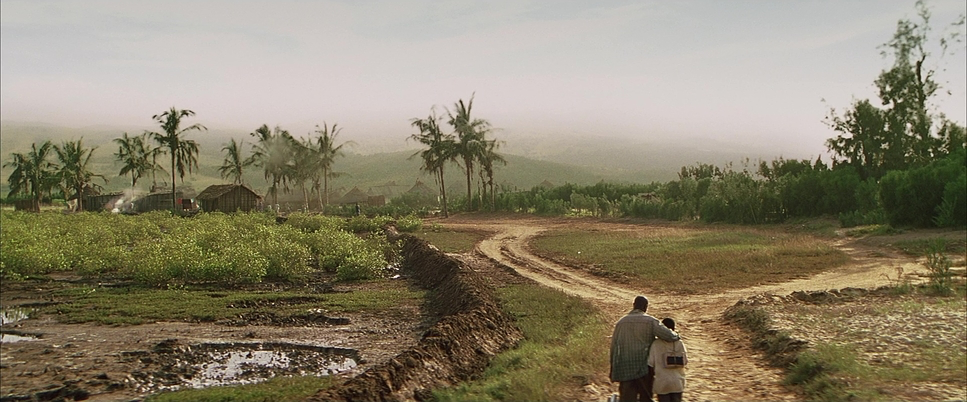
From the opening frames, with Solomon Vandy walking with his son Dia before their village is decimated by RUF rebels, you aren’t just watching a movie; you are thrust into a world of chaos. The film’s ability to balance the horrific realities of conflict with the stunning, natural landscapes of Africa is a masterclass in visual contrast. It forces you to question the cost of luxury, asking if we’d still buy that diamond ring if we saw the specific, gritty reality of the hand that mined it.
About the Cinematographer
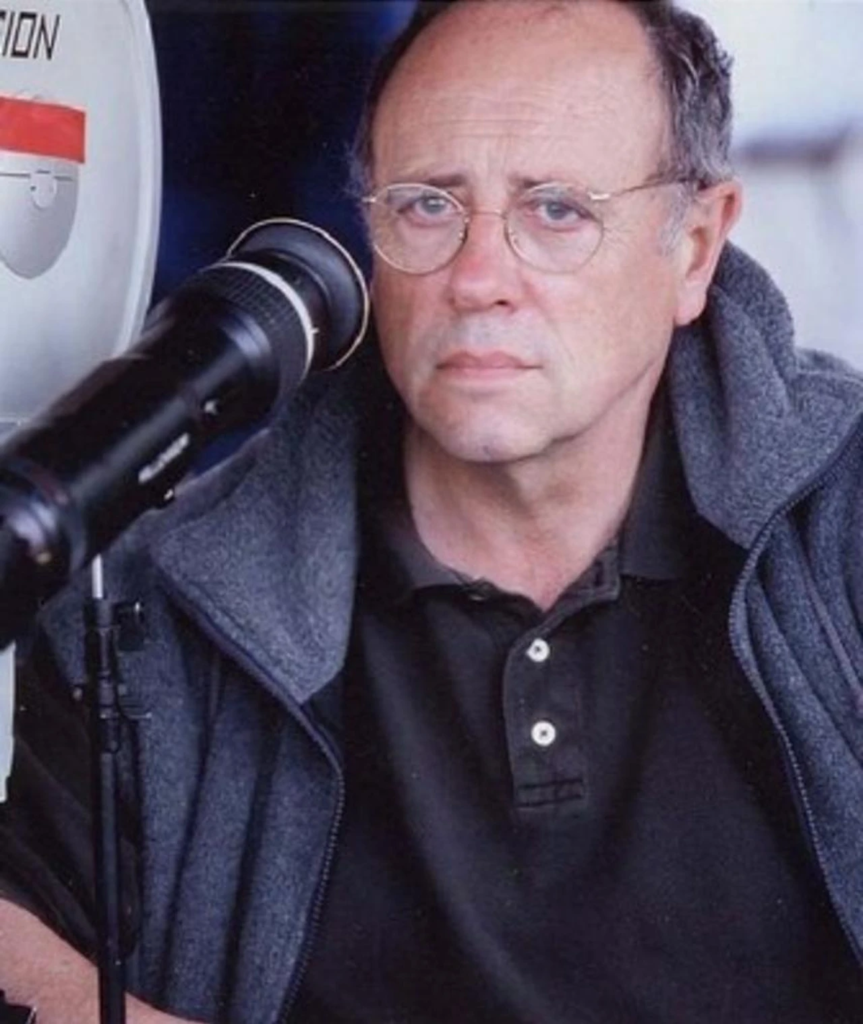
The eye behind Blood Diamond was Eduardo Serra, a Portuguese cinematographer who knows how to craft images that are stunning without being “cosmetic.” Serra isn’t a showman who calls attention to the camera; he is a servant to the story. While his work on films like Girl with a Pearl Earring showcases a delicate, painterly quality, here he pivots to capture a raw, kinetic energy.
What I admire about Serra’s approach is his commitment to narrative honesty. He doesn’t shy away from ugliness. His collaboration with Zwick feels incredibly cohesive, treating the camera as a war correspondent observing, reacting, and bearing witness. He has a knack for making even the most harrowing scenes feel authentic, leaning into a “docudrama” aesthetic rather than a staged Hollywood spectacle.
Inspiration Behind the Cinematography
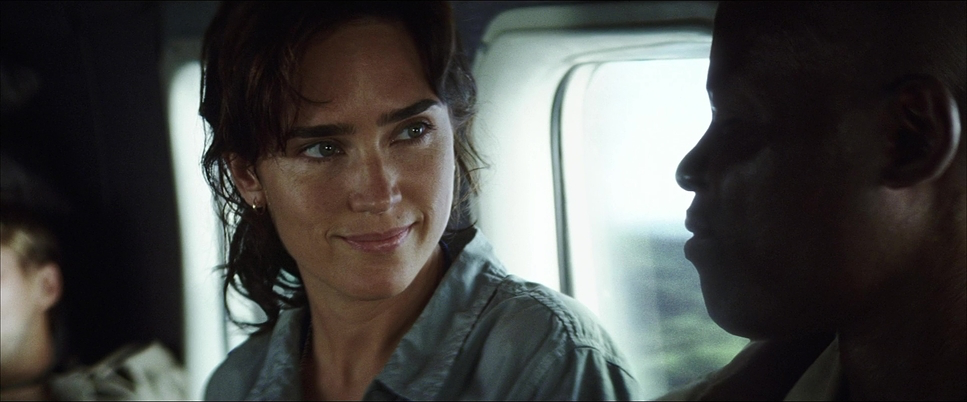
For Blood Diamond, the visual inspiration clearly stems from the grim reality it depicts. The setting war-torn Sierra Leone could not be a passive backdrop; it had to be a character. The conflict, the resource curse, and the tragedy of child soldiers demand a visual language that is unflinching.
This is where I find myself reflecting on my own role as a filmmaker. When dealing with such heavy subject matter, there’s a responsibility to get it right. It’s not about making “pretty pictures”; it’s about constructing a visual truth. When you watch the sequences of the RUF rebels attacking or the men being rounded up for the mines, it doesn’t feel like an action set piece it feels like an invasion. These aren’t abstract concepts; they are painful realities that Serra’s cinematography brings to life.
My take is that Serra and Zwick were aiming for a “heightened photojournalism.” They wanted the grounding of documentary realism but with the dramatic weight of a feature. The goal wasn’t to glamorize the violence but to immerse the audience in the moral ambiguity. The sun-drenched landscapes contrasted with the visceral violence create a deliberate unease. The beauty of the African continent is undeniable, but the film effectively uses that beauty to highlight the horrors festering beneath.
Camera Movements
The camera language in Blood Diamond is a dynamic dance between controlled observation and chaotic energy. During the intense RUF attacks and street battles when all hell breaks loose the cinematography adopts a highly kinetic, handheld style. This isn’t just “shaky cam” for the sake of it; it plunges the viewer into the combat. The jerky movements convey the panic and disorientation Danny and Solomon face as they run for their lives. It breaks down the fourth wall, pulling us right into the fray.
Conversely, for moments of introspection or establishing the geography, Serra shifts gears. He employs deliberate, fluid movements. Wide, sweeping shots (likely on a crane or Steadicam) reveal the scale of the refugee camps or the immense terrain Danny and Solomon traverse. These shots offer a crucial breath, allowing the audience to process the scope of the tragedy. Even during conversations, subtle dolly moves heighten the emotional impact, drawing us closer to Maddie Bowen as she grapples with the intel Danny provides. It’s a thoughtful interplay: handheld chaos for the physical struggle, and stable, considered movements for the emotional journey.
Compositional Choices
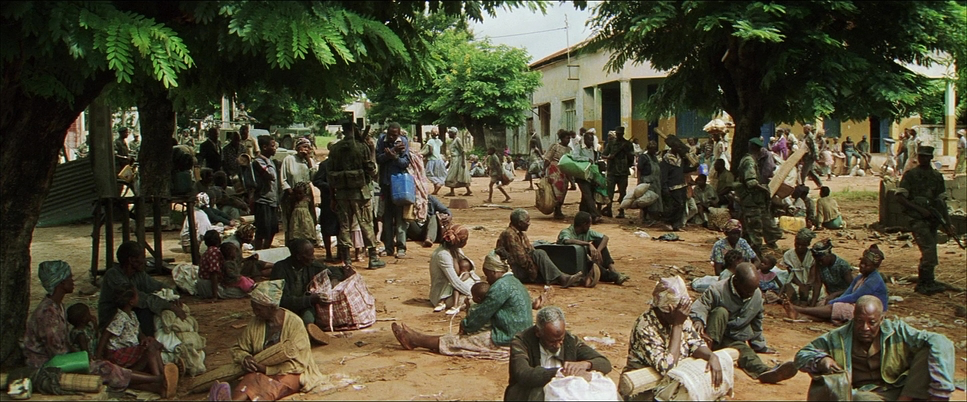
Serra’s composition is instrumental in defining the power dynamics of the film. He frequently employs wide shots that place characters within immense, often unforgiving landscapes. This isn’t just for establishing the setting; it highlights the characters’ insignificance against the backdrop of war and nature. When you see Solomon Vandy in the diamond mines, he is just a small figure among countless others, toiling under the brutal eye of Captain Poison.
For intimate or tense interactions, Serra uses tighter framing to isolate emotional states. The scene in the prison, where Danny overhears the interrogation about the “pink diamond,” uses blocking and depth of field to focus our attention on Danny’s calculating expression. The blocking is meticulous; figures of authority like Colonel Coetzee often loom over others in the frame, visually asserting dominance, while Solomon and Danny are frequently framed together their shared plight forging an unlikely bond. Whether it’s a tight close-up of a fearful child soldier or a vast panorama, the composition always serves the narrative beat.
Lighting Style
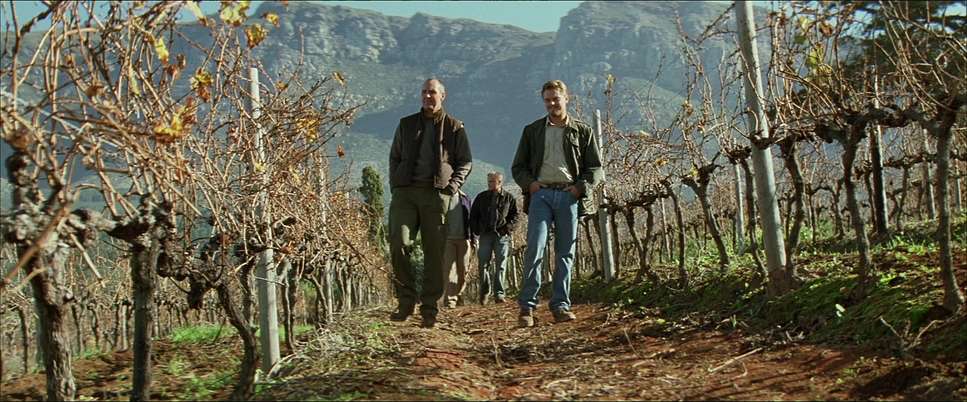
The lighting in Blood Diamond relies heavily on the harsh, naturalistic properties of the African sun. Serra utilizes motivated lighting to create a high-contrast look during the day scenes. You get deep, defined shadows and brightly exposed highlights that you can almost feel radiating heat. It suggests the relentlessness of the environment the sun beating down on Solomon in the mines or Danny navigating the dusty streets.
For interiors or night scenes, the film shifts to low-key lighting, often motivated by practical sources like lanterns, car headlights, or fires. This shrouds the scene in shadow, creating pockets of illumination that guide the eye. It heightens the tension, especially during the RUF attacks where the city burns in the background. The interplay of light and silhouette becomes a metaphor for the moral murkiness of the conflict. Crucially, there is a beautiful highlight roll-off in these scenes; the bright points of light don’t clip into a digital white but retain detail, maintaining that rich filmic texture.
Lensing and Blocking
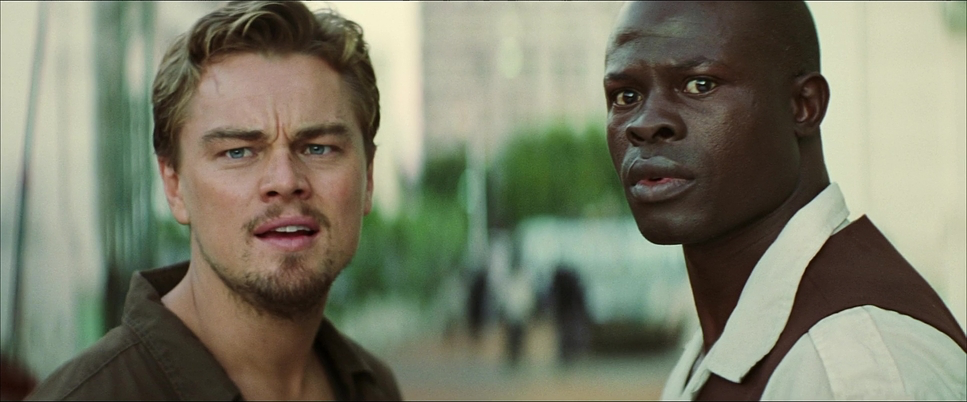
This is where the technical choices really shine. While many war films opt for spherical lenses to keep the image sharp and clinical, Serra shot Blood Diamond using Hawk C-Series and V-Series Anamorphics. This was a bold choice. Anamorphic lenses provide that cinematic 2.39:1 aspect ratio, but they also introduce distinct flares and a unique fall-off in focus that separates the movie from a standard newsreel.
For the expansive shots of the mining operations or refugee camps, the wider focal lengths on these anamorphic lenses allow for a deep sense of scale, making the background distinct enough to contribute to the story. Conversely, when the narrative demands psychological intimacy, the longer focal lengths compress the background, isolating the characters. The blocking works hand-in-glove with this glass. When Captain Poison holds a knife to Dia’s neck, the staging places Dia in a vulnerable position, while the anamorphic depth of field keeps our focus razor-sharp on the threat.
Color Grading Approach
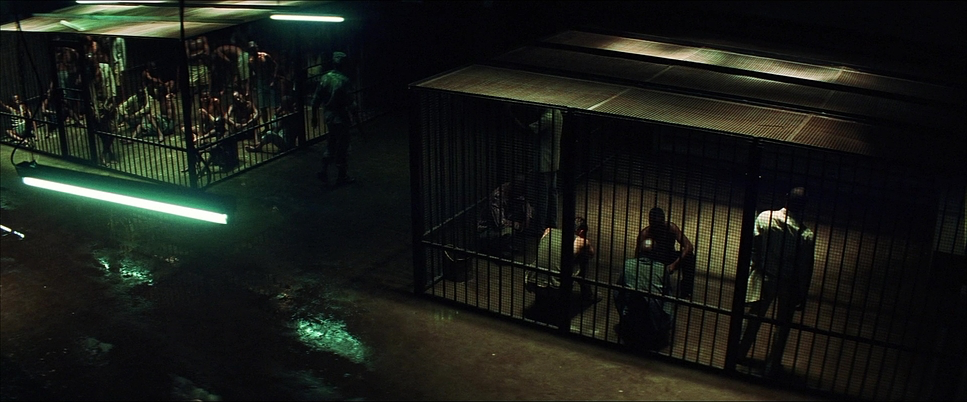
As a colorist, this is the part of the film that I geek out on. The grade (credited to colorist Steve Bowen) is crucial in establishing the “Warm, Desaturated” palette that defines the film. The mid-tones are often desaturated to strip away any sense of glamour, leaving an earthiness lots of browns, muted greens, and sun-baked yellows. It creates a dusty, lived-in atmosphere that screams “heat.”
However, it’s not a monochrome wash. Skin tones are protected; they retain a natural warmth that keeps the characters human amidst the desaturated chaos. The contrast is dense the blacks in the shadows are crushed, especially in night scenes, enhancing the feeling of danger. Yet, the highlight roll-off is smooth, handling the intense African daylight without blowing out the information.
And then there’s the specific hue of the “pink diamond.” In a world of muted earth tones, the diamond’s pink hue is separated and saturated just enough to stand out as a beacon of both value and evil. It’s a precise qualification in the grade. The overall look feels like a high-end film emulation rich, textured, and gritty, avoiding the pristine, clean look of modern digital cinema in favor of something that feels like it has weight.
Technical Aspects & Tools
Blood Diamond – Technical Specs
| Genre | Action, Adventure, Crime, Docudrama, Drama, Family, Fatherhood, History, Military, Political, Thriller, War |
|---|---|
| Director | Edward Zwick |
| Cinematographer | Eduardo Serra |
| Production Designer | Dan Weil |
| Costume Designer | Ngila Dickson |
| Editor | Steven Rosenblum |
| Colorist | Steve Bowen |
| Time Period | 1990s |
| Color | Warm, Desaturated |
| Aspect Ratio | 2.39 – Anamorphic, Spherical |
| Format | Film – 35mm |
| Lighting | Soft light, High contrast, Silhouette, Backlight |
| Lighting Type | Daylight, Sunny |
| Story Location | Earth > Africa |
| Filming Location | Earth > Africa |
| Camera | Arricam LT, Arricam ST |
| Lens | Hawk C-series Anamorphics, Hawk V-series Anamorphics |
| Film Stock / Resolution | 5218/7218 Vision 2 500T, 5274/7274 Vision 200T, 5279/7279 Vision 500T |
Blood Diamond was released in 2006, right at the peak of the photochemical era transitioning into the Digital Intermediate (DI) workflow. It was shot on 35mm film using Arricam LT and ST cameras. The choice of film stock—specifically Kodak Vision2 500T (5218) for low light and Vision2 200T (5274) for day exteriors provided the foundation for the image. The 500T, in particular, offers a grain structure that adds a layer of “noise” and texture, reinforcing the gritty reality of the subject matter.
The combination of these stocks with the Hawk Anamorphic lenses is what gives the film its unique visual signature sharp, but with character. The transition to a DI allowed the colorist to sculpt the image digitally, refining that specific “blood diamond” palette, separating the hues, and shaping the contrast curves to match the emotional intensity of the story. These weren’t just technical decisions; they were storytelling tools used to create an immersive, unvarnished portrayal of a brutal reality.
- Also read: 12 MONKEYS (1995) – CINEMATOGRAPHY ANALYSIS
- Also read: THE BOURNE ULTIMATUM (2007) – CINEMATOGRAPHY ANALYSIS
Browse Our Cinematography Analysis Glossary
Explore directors, cinematographers, cameras, lenses, lighting styles, genres, and the visual techniques that shape iconic films.
Explore Glossary →