Apocalypto (2006) is the latter a cinematic gut punch. It’s a raw, primal epic that manages to feel ancient and immediate all at once.
Mel Gibson’s vision was ambitious: plunge a modern audience into a pre-Columbian Mayan world via a relentless chase narrative. It’s a film that strips away cultural familiarity to immerse you in a terrifying reality. From the opening frame, it’s an all-out sprint. As a colorist, when I watch this, my brain doesn’t just see a “movie” it starts breaking down the specific choices in the pipeline that contribute to that visceral impact. This isn’t just a chase film; it’s a masterclass in using cinematography to build a world that feels dangerously real.
Technical Aspects & Tools
Apocalypto (2006) | Technical Specifications
| Genre | Action, Adventure, Drama, Thriller, Survival, Pre-Industrial Wars, War, Epic |
| Director | Mel Gibson |
| Cinematographer | Dean Semler |
| Production Designer | Thomas E. Sanders |
| Costume Designer | Mayes C. Rubeo |
| Editor | John Wright |
| Colorist | Fergus Hally, Bobby Hatfield, Jim Passon |
| Time Period | Renaissance: 1400-1700 |
| Aspect Ratio | 1.85 – Spherical |
| Format | Digital |
| Lighting | Hard light, Top light |
| Lighting Type | Daylight, Sunny |
| Story Location | North America > Central America |
| Filming Location | Mexico > Veracruz |
| Camera | Arri 2c (IIc), Arri 435 / 435ES, Panavision Genesis, Aaton Aminima, Ikonoskop | a-cam | SP16 |
| Lens | Panavision Primo Primes |
| Film Stock / Resolution | 5201/7201 Vision 2 50D, 5218/7218 Vision 2 500T |
To understand the look of Apocalypto, we have to talk about a major technical pivot. Despite its organic, “filmic” texture, this was actually a landmark moment for digital cinematography. It was shot primarily on the Panavision Genesis system. At a time when digital was still “thin” and clinical, Dean Semler used it to capture the low-light density of the Mexican rainforest.
The Genesis allowed for longer takes during those grueling chases, but it also presented a challenge: making early digital look like the 35mm epic Gibson envisioned. They paired the cameras with Panavision Primo Primes, and the result after a heavy Digital Intermediate (DI) process is stunning. The latitude they pulled from those early sensors, especially in the highlights, is a testament to the skill of the colorists like Fergus Hally and the late Jim Passon. It has the grit of a 35mm print, but the clarity needed for such high-speed action.
About the Cinematographer
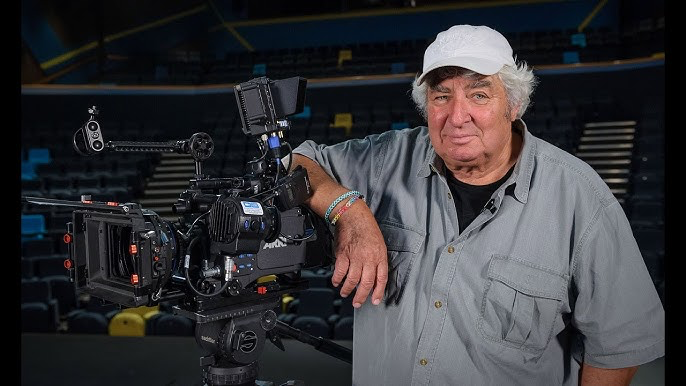
The man behind the lens was the legendary Dean Semler, ASC, ACS. If you know Semler’s work on Dances with Wolves or the Mad Max films, you know he’s a specialist in rugged, epic storytelling. He has this incredible ability to make natural light “sing” while keeping the energy grounded. Semler’s signature style a blend of documentary-style grit with massive, blockbuster scale was the perfect match for Gibson’s jungle odyssey. He brought a sense of “planned chaos” to the frame that makes the horrifying events of the film feel like they were captured by a witness, not just a crew.
Inspiration Behind the Cinematography
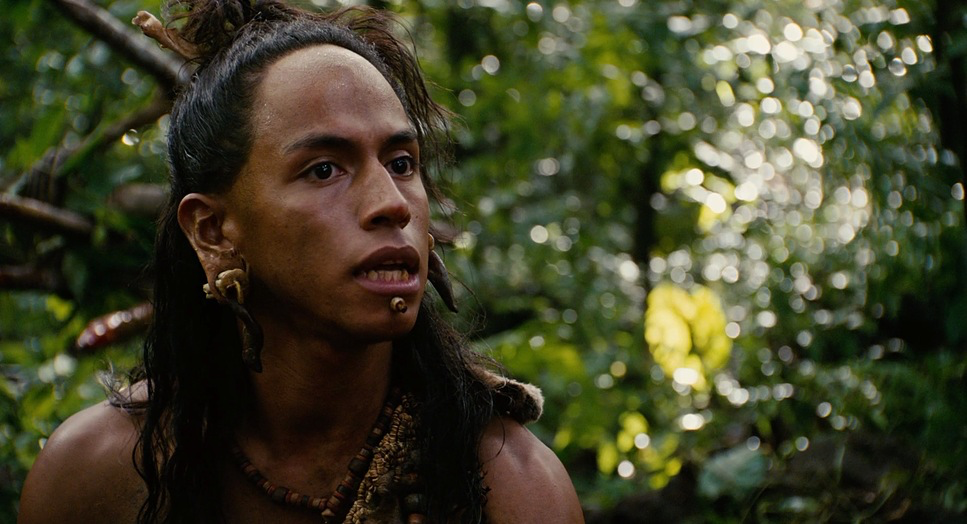
Gibson famously told Joe Rogan that he wanted to “direct a foot chase like it’s a car chase.” This foundational idea the unrelenting, high-velocity pursuit dictated every visual choice. Semler had to translate that “car chase” energy into a jungle environment.
Beyond the kinetic energy, the film is an exploration of societal collapse, inspired by the likes of Jared Diamond. The cinematography had to bridge a massive narrative chasm: the vibrant, sustainable life of Jaguar Paw’s forest tribe versus the opulent, diseased, and environmentally ravaged Mayan city. This contrast is the visual heartbeat of the film.
Camera Movements

To get that “foot chase” feel, the camera is a relentless participant. Semler relied heavily on the Panapep (a proprietary handheld rig) and Steadicam to throw the viewer into the mud and brush alongside the characters. The camera doesn’t just watch Jaguar Paw; it breathes and stumbles with him.
We see aggressive whip pans during the village raid that mirror the panic of the tribe. The tracking shots through the jungle are incredibly immersive; you can practically feel the humidity and the foliage brushing the lens. There’s a constant sense of forward momentum a kinetic energy that only pauses for brief, pregnant moments of tension before exploding again. It’s hard to imagine the film working with a static approach; the camera had to be alive.
Lensing and Blocking
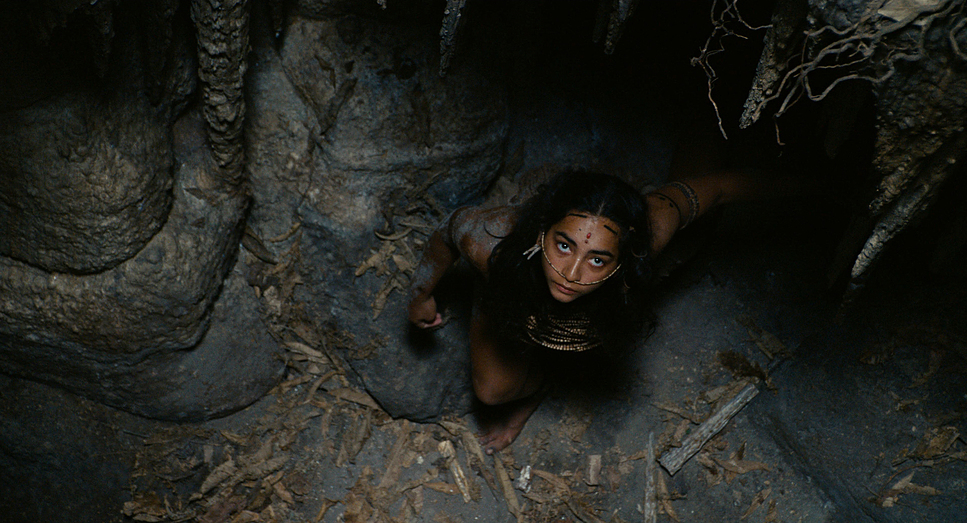
The lensing strategy in Apocalypto is brilliantly varied. Wide-angle Primos are used to establish the overwhelming scale of the jungle, but they also serve a secondary purpose: they exaggerate the speed of the chase, making every lunging step feel more explosive.
Conversely, the long-lens close-ups are where the emotional heavy lifting happens. Since the dialogue is in Yucatec Maya, the “language” of the film is written on the actors’ faces. Semler’s blocking the way he layers characters behind branches or shadows creates a sense of deep perspective. It makes the jungle feel dense and labyrinthine, where danger can emerge from any layer of the frame.
Lighting Style
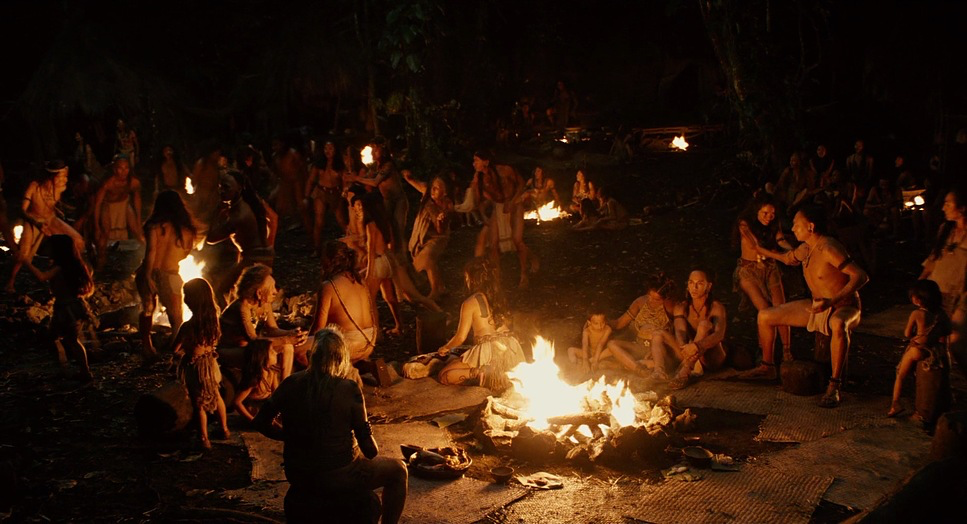
The lighting here is a masterclass in motivated naturalism. In the jungle, Semler lets the canopy dictate the look. We see high-contrast, dappled light bright shafts cutting through deep, verdant “toes” in the shadows. This creates a living, breathing texture. The night scenes, lit primarily by firelight, offer a warm, flickering glow that feels historically authentic and intimate.
As the story moves to the Mayan city, the light becomes punishing. The limestone quarries are bathed in a blinding, top-down sun that feels sterile and oppressive. Semler uses silhouettes against the vast, hot sky to make the Mayan captors look monolithic and faceless. This shift from the “living” light of the forest to the “dead” light of the city is a powerful tool for visual storytelling.
Compositional Choices

Semler’s compositions reinforce the theme of “The Individual vs. The Machine.” Early on, he frames Jaguar Paw in small pockets of the vast jungle to emphasize his vulnerability. But in the village, the compositions are connected and balanced, showing a community in harmony.
Once we hit the Mayan city, the framing shifts to emphasize verticality and power. The pyramids are shot from low angles to look looming and oppressive. There is a frequent use of negative space in the aftermath shots of the village frames that look like classical paintings of tragedy which gives the viewer room to feel the weight of the loss.
Color Grading Approach
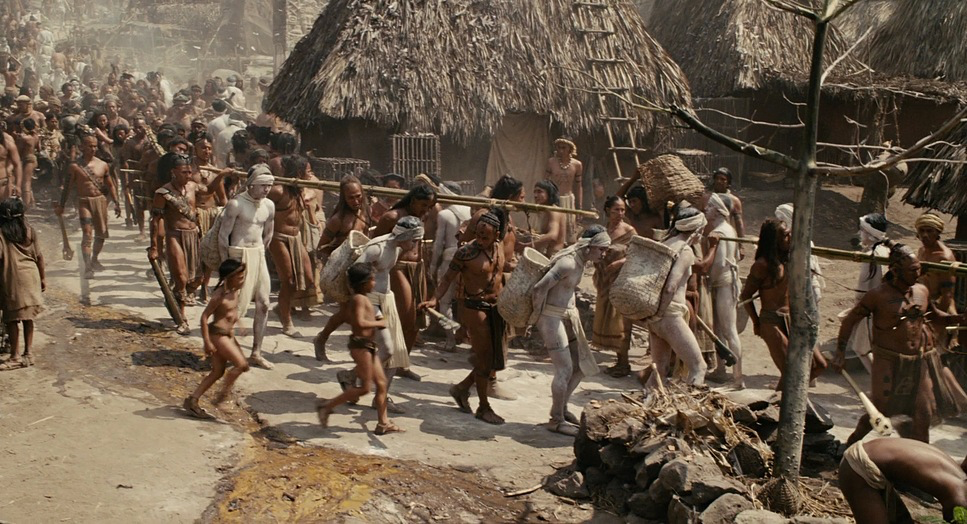
This is my favorite part of the film to analyze. From a colorist’s perspective, the tonal sculpting in Apocalypto is incredibly bold. The film starts with a rich, “healthy” palette. The greens are deep and saturated, the earthen browns are warm, and the skin tones are robust. There is a beautiful hue separation between the foliage and the characters that makes the world feel lush and vibrant.
However, once we reach the city, the “earth” is literally sapped of its color. The city is a masterpiece of desaturation. It’s almost monochromatic a world of limestone dust, ash, and muted greys. This makes the remaining colors pop with symbolic violence: the deep, saturated red of coughed-up blood and the jarring orange of sacrifice fires.
As a colorist, I admire how they handled the highlight roll-off in these desaturated scenes. Even with the harsh sunlight of the quarries, the image never feels “clipped” or digitally thin; it retains a thick, filmic density that makes the suffering feel grounded and real. The contrast between the two worlds isn’t just an aesthetic choice; it’s a narrative one that tells the story of environmental and moral decay.
- Also read: PRIDE & PREJUDICE (2005) – CINEMATOGRAPHY ANALYSIS
- Also read: MOON (2009) – CINEMATOGRAPHY ANALYSIS
Browse Our Cinematography Analysis Glossary
Explore directors, cinematographers, cameras, lenses, lighting styles, genres, and the visual techniques that shape iconic films.
Explore Glossary →