Alan J. Pakula’s All the President’s Men. This film? It’s a masterclass in making the slow, meticulous grind of investigative journalism utterly gripping. It proves you don’t need explosions or car chases to generate tension. Sometimes, the subtle click of a typewriter or the hushed urgency of a phone call is all it takes.
This isn’t just a historical document about Watergate; it’s a deeply cinematic exploration of truth, power, and personal responsibility. The way it visually communicates a growing sense of paranoia and the labyrinthine nature of a conspiracy all while rooted in an almost obsessive realism is just phenomenal. From the meticulously crafted sets to the deliberate camera choices, All the President’s Men doesn’t just show you a story; it pulls you into the very fabric of the investigation.
About the Cinematographer
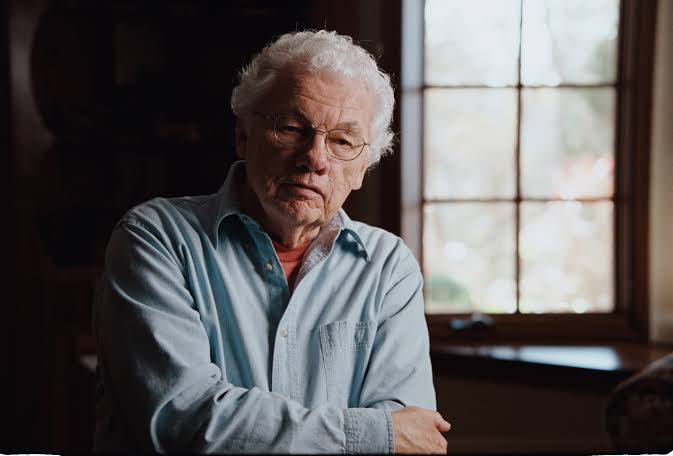
When we talk about the look and feel of this film, we have to talk about Gordon Willis. Any filmmaker worth their salt knows that Willis, Pakula’s frequent collaborator, was the genius behind the lens. He’s often called the “Prince of Darkness,” and for good reason. Willis understood shadow not as an absence of light, but as a compositional element a character in itself.
His work here, much like in The Godfather or Klute, isn’t about flashy moves. It’s about precision, mood, and using light and shadow to articulate a theme. Willis was a master of shaping environments and making spaces feel lived-in but also somehow choreographed. He wasn’t just lighting actors; he was lighting entire worlds, revealing and concealing with equal artistry. His collaboration with Pakula was a true meeting of minds, resulting in a cinematic language that feels both naturalistic and incredibly stylized.
Inspiration Behind the Cinematography

The core inspiration for the cinematography stems from an unwavering commitment to authenticity. This wasn’t just about telling a story; it was about recreating an era and a process with almost documentary-like fidelity. The production went to extraordinary lengths, famously spending $450,000 to construct an exact reproduction of the Washington Postnewsroom. That’s not just a set. That’s a statement. The environment itself was going to be a key player.
The narrative demanded a style that could elevate the “monotony and bureaucracy” of journalism into something suspenseful. The film needed to show how phone calls and flipping through directories could be as tense as a physical confrontation. It’s a slow burn a gradual descent into a “disease at the very heart of the American political system.” This meant creating a sharp visual contrast between the well-lit offices of the Post a realm of transparency and the “dark world” where the conspiracy festered. It’s a classic visual metaphor for the battle between truth and deception.
Lighting Style
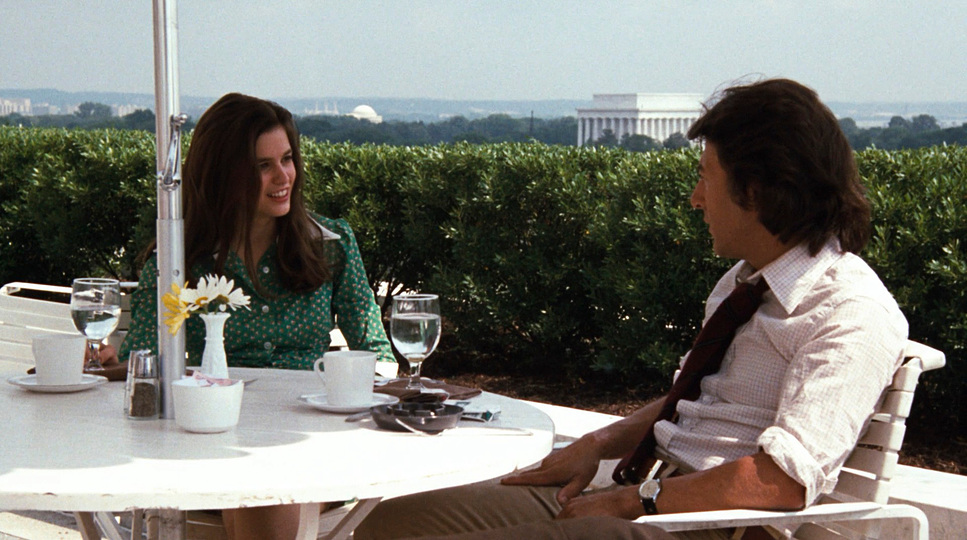
This is where Willis truly earns his “Prince of Darkness” moniker. For the newsroom, we get a “world without shadows.” It’s brightly lit, almost clinically so, conveying the pursuit of facts in the open. But don’t mistake “brightly lit” for flat. As a colorist, I look at how Willis still sculpts this light, giving the massive set a sense of depth. You can almost feel the hum of the fluorescent fixtures, creating a cool, sterile atmosphere that feels alive with urgent activity.
Then, we transition to the secret world: the “impenetrable darkness” of the car park and dimly lit apartments. Here, Willis plunges us into low-key, high-contrast lighting. The shadows are deep and rich. From a technical standpoint, the dynamic range decisions are impeccable; he managed to keep inky blacks without “crushing” the detail, and controlled highlights that never blow out. It gives the film a visual texture that feels grounded in a stark, uncompromising reality.
Compositional Choices
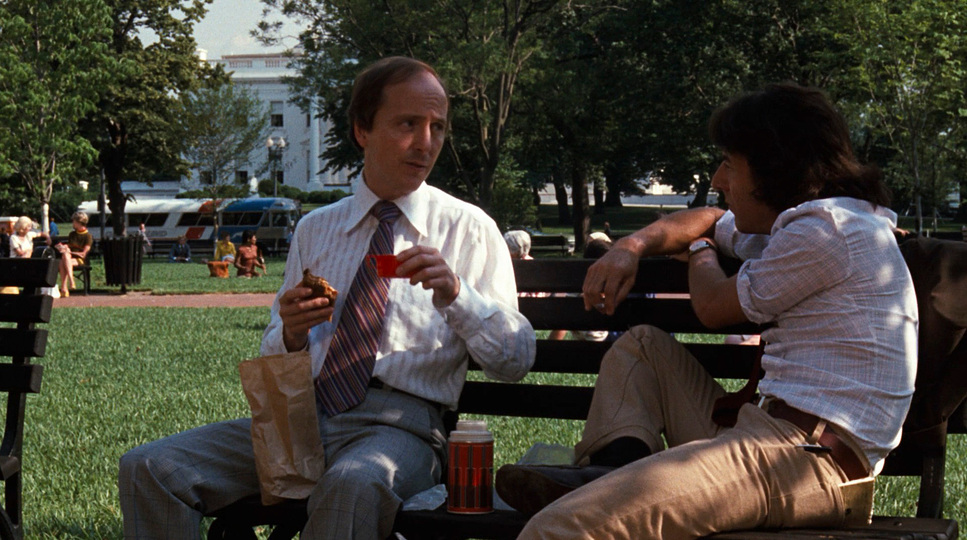
Willis’s “attachment to realism” is most evident in his compositions. He believed that backgrounds were just as important as foregrounds. Instead of flat framing, he uses layered compositions that feel full of life. You’ll constantly see background elements other journalists, overflowing desks, ringing phones that speak volumes about the chaotic environment.
A perfect example is the courtroom scene early in the film (00:11:23). The composition is balanced and symmetrical, but the lighting is hard top-light. It feels exposed, like the characters are under a microscope. By keeping multiple planes of action sharp, the film reinforces the complexity of the investigation. Every corner of the frame feels alive, contributing to a sense of overwhelming detail.
Camera Movements
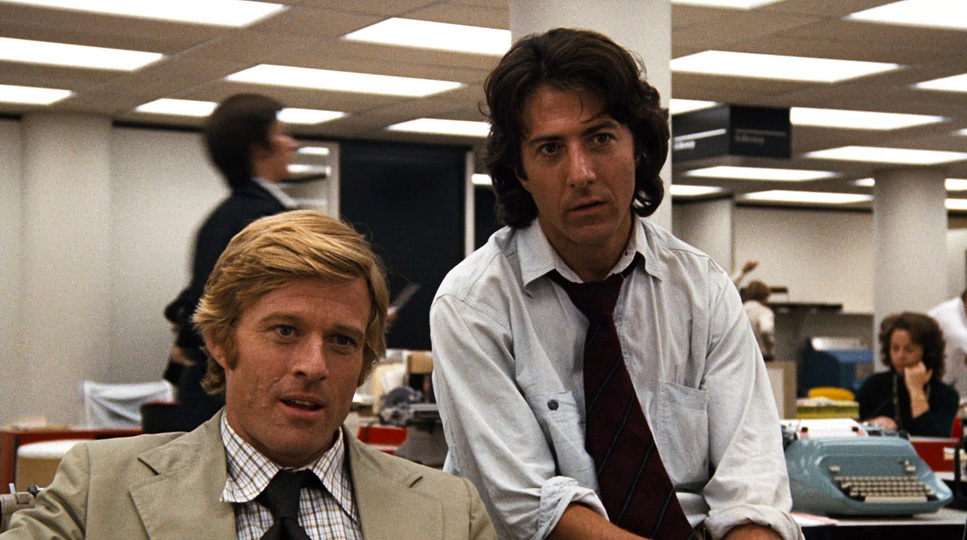
The camera movements here are subtle, deliberate, and observational. They don’t draw attention to themselves, which is a hallmark of effective realism. You’ll notice a lot of steady, precise tracking shots following Woodward and Bernstein through the newsroom. These movements underscore the journalists’ relentless pursuit.
There is also a legendary six-minute long take that absolutely floors me every time I watch it. These sustained shots trust the performances and the blocking to carry the weight. There’s no quick cutting to amp up artificial drama; the tension builds organically. It’s like a quiet dance, where the camera moves just enough to guide your eye without ever breaking the spell of the reality it’s capturing.
Lensing and Blocking
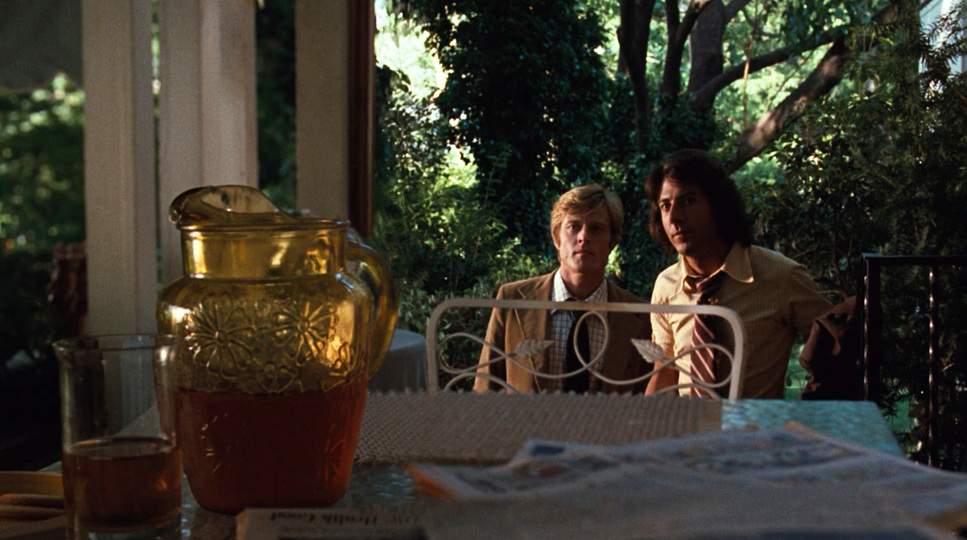
The lensing choices were largely dictated by the desire for deep, layered compositions. Willis favored wider lenses to ensure the expansive newsroom set could breathe. These wider focal lengths, combined with meticulous blocking, enable multiple elements within the frame to convey information simultaneously. You’re not just watching the leads; you’re observing an entire ecosystem.
The blocking is equally thoughtful. Woodward and Bernstein aren’t just placed in front of a backdrop; they are positioned within the environment, often physically separated by desks or pillars. This subtly comments on their differing personalities and how they eventually come together as a team. When they’re in the “dark world,” the blocking changes, often placing them in isolation to emphasize the overwhelming forces they’re up against.
Color Grading Approach
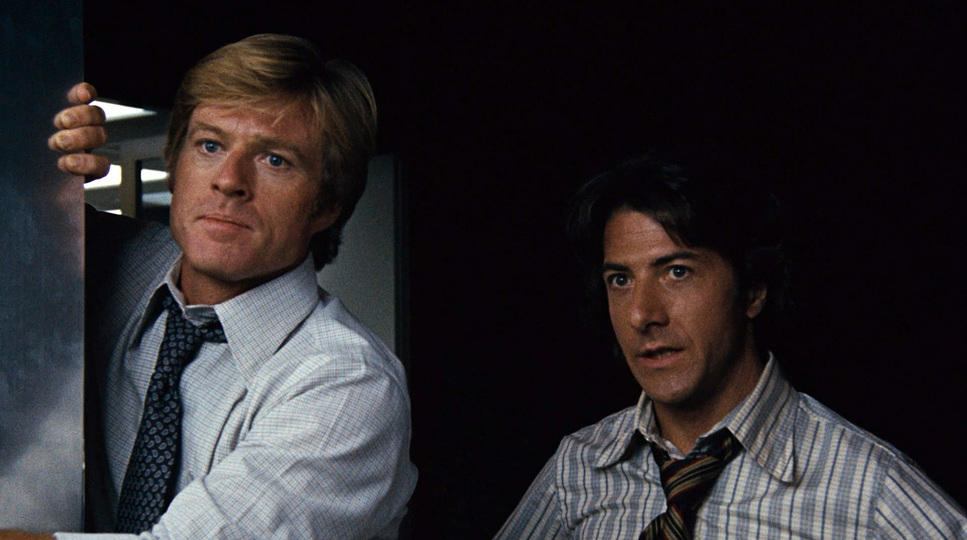
Now, looking at this through my colorist lens: it’s important to remember this was 1976 photochemical timing, not digital grading. But the intent is what matters. The film has a very distinct, muted, yet purposeful palette.
I’m particularly struck by how specific colors “pop” against the sterile environment specifically the orange tones and those yellow chairs. In a modern workflow, I’d be looking at these as specific secondaries to pull out. These flashes of color act as visual punctuation. The tonal sculpting is key; in the newsroom, we see rich, well-separated mid-tones. In the “dark world,” we get deep, saturated blacks that still hold texture, characteristic of the Kodak film stocks of that era. The highlight roll-off the way the brightest parts of the image transition is beautifully organic. It’s a masterclass in how a restrained use of color can reinforce heavy storytelling.
Technical Aspects & Tools
The technical foundation is rooted in the best tools of the mid-70s. Shooting on 35mm film with Panavision gear gave Willis the exposure latitude he needed to push and pull the image, creating those signature shadows.
But beyond the gear, it’s the application. That $450,000 newsroom set provided a fully controllable stage where the “integral” relationship between actors and their surroundings could be realized. The lack of digital tech in the story also impacts the cinematography. It means more physical movement, more phone cords, and more face-to-face interactions. Every typed word and shuffled paper is a distinct, physical action, and the camera captures that tangible, analogue process with absolute precision.
- Also read: STRANGERS ON A TRAIN (1951) – CINEMATOGRAPHY ANALYSIS
- Also read: SPARTACUS (1960) – CINEMATOGRAPHY ANALYSIS
Browse Our Cinematography Analysis Glossary
Explore directors, cinematographers, cameras, lenses, lighting styles, genres, and the visual techniques that shape iconic films.
Explore Glossary →