Captain Phillips (2013) is the kind of movie that makes me forget the technicalities and just feel the adrenaline. It’s raw. It’s immediate. It doesn’t feel like a “movie” in the traditional sense; it feels like you’re a stowaway on that ship, tasting the salt spray and feeling your stomach drop as those skiffs approach. It’s a masterclass in how deliberate cinematography and a restrained grade can elevate a harrowing true story into something that feels dangerously real.
About the Cinematographer
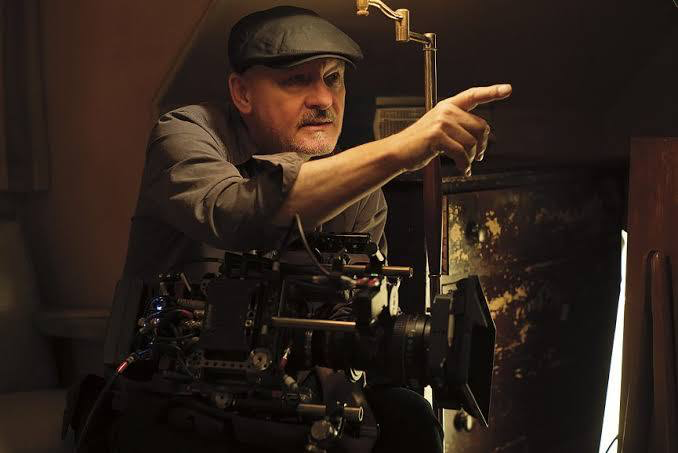
You can’t talk about this film’s look without talking about Barry Ackroyd, BSC. If you’re looking for someone to capture “controlled chaos,” Ackroyd is the guy. He’s been Greengrass’s secret weapon on United 93 and Green Zone, and he brings a very specific “verité” background to the table.
Mark Kermode calls their style “docusy drama,” and he’s spot on. Ackroyd doesn’t care about “pretty” shots or perfect symmetry. He cares about the camera breathing with the characters. His style is about kinetic energy the camera isn’t an observer; it’s a participant that just happened to show up while the world was falling apart. For a DP, that takes an incredible amount of restraint. It’s easy to make a shot look “cinematic,” but it’s much harder to make it look unmediated and honest.
Lensing and Blocking

This is where the film’s “organic” feel starts. Ackroyd leaned heavily into wider glass, even for close-ups. As many of you know, shooting wide and getting close physically changes the perspective it anchors the character in their environment rather than isolating them against a creamy, blurred-out background. You see the sweat on Tom Hanks’s face, but you also see the claustrophobic walls of the bridge closing in.
The blocking is equally reactive. It doesn’t feel like actors hitting marks. It feels like the camera is chasing the performance. As a colorist, I see the result of these choices the moment the raw footage hits my suite. The way a lens flares or how the edges of the frame distort when you’re shooting wide and handheld those aren’t “errors.” They are emotional signatures. When the camera follows an actor’s spontaneous movement, it creates a visual grammar that screams “this is happening now.” It makes the performances from Hanks and Barkhad Abdi feel less like acting and more like survival.
Camera Movements
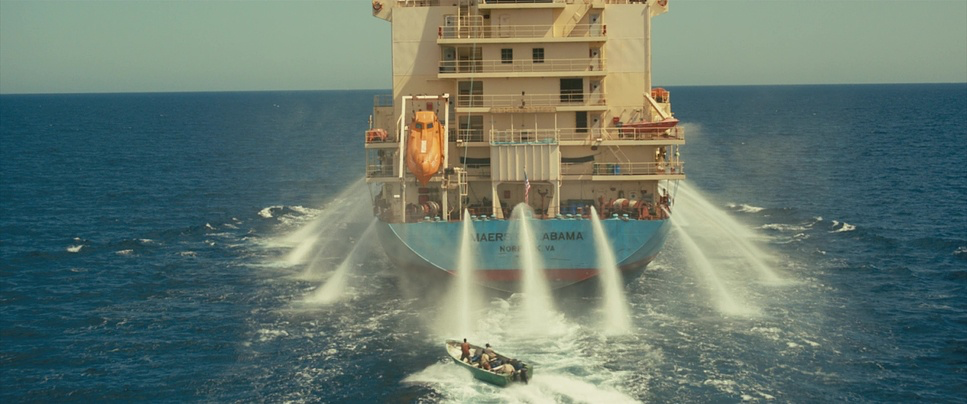
Let’s be clear: this isn’t just “shaky cam.” It’s meticulously controlled handheld work. In the hands of a lesser crew, this would be a headache, but Ackroyd uses it to put you “right there in the huddle.”
When the pirates attack, the camera isn’t just shaking for effect; it’s running with the crew. It’s jolting because the operator is navigating narrow corridors. In the quiet, tense moments, the camera has this subtle, undulating movement that mimics human breathing. It creates a sense of intimacy that is almost uncomfortable. You aren’t watching a hijacking from a safe distance; you’re trapped in the lifeboat with them, feeling every bump of the waves. It’s a deliberate choice to eliminate the “passive observer” status of the audience.
Compositional Choices
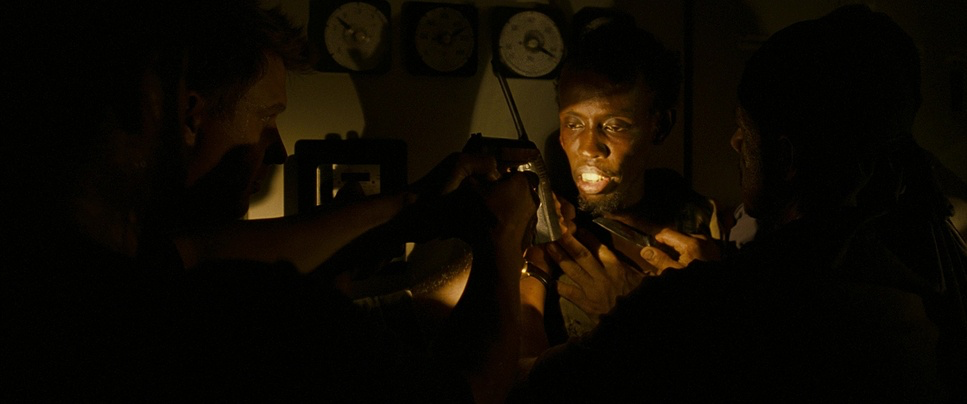
Despite the frantic movement, the composition is incredibly deliberate. Ackroyd tosses the “Rule of Thirds” out the window in favor of “found” compositions.
Early on, we see the scale of the Maersk Alabama huge, industrial, and isolated against the ocean. But once the pirates board, the frames get tighter and more disorienting. Characters are often framed off-center or partially obscured by ship architecture doorways, pipes, or railings. This use of “negative space” and natural framing boxes the characters in. It visually reinforces the feeling of being hunted. It’s not about creating a beautiful frame; it’s about creating a resonant one that makes you feel the dread and the claustrophobia of being cornered.
Lighting Style
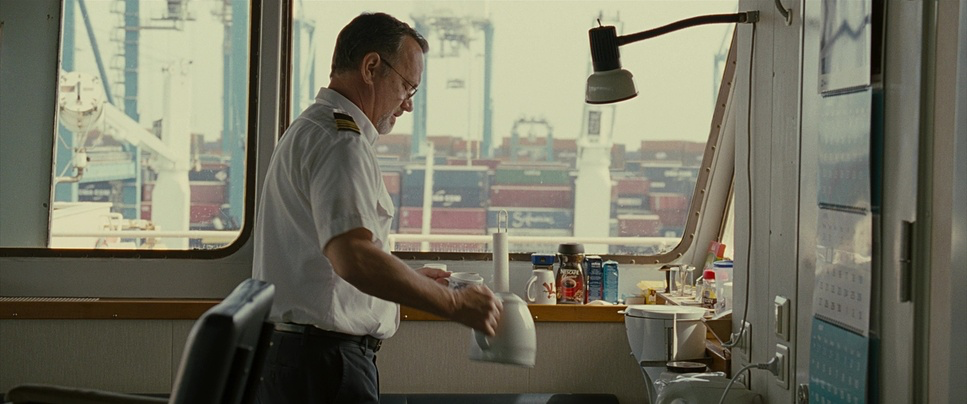
The lighting here is a lesson in motivated naturalism. Anything “Hollywood” would have killed the vibe instantly. On the open sea, the sun is your key light, and it’s brutal. We’re talking high contrast, harsh highlights, and deep shadows.
For the interiors, Ackroyd mimics the ship’s utilitarian fixtures. There’s a soft, ambient fill that looks like it’s just bouncing off the bulkheads. You can almost feel the equatorial heat and the sweat just by looking at the screen. Even the night sequences in the lifeboat feel genuine lit by the moon or tactical flashlights. It’s lighting that serves the narrative by being invisible. It pulls you deeper into the reality of the situation rather than showing off the lighting package.
Color Grading Approach
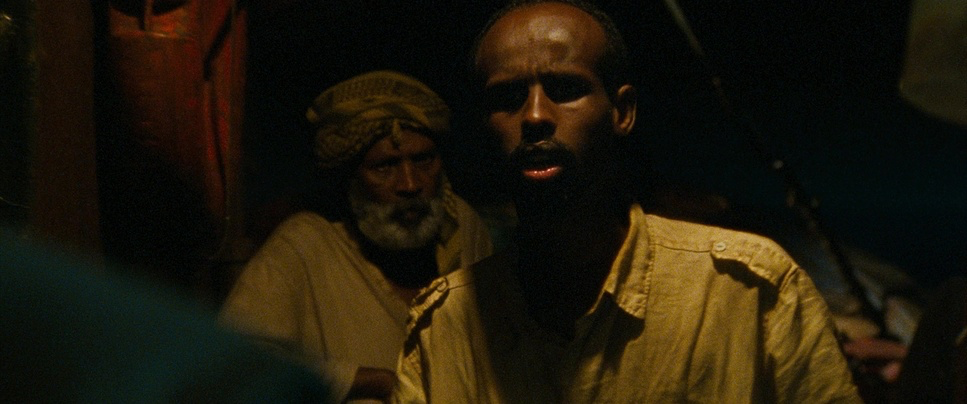
From my chair in the grading suite, I see the restraint in this film as its greatest strength. It would have been so easy to go with a heavy, stylized “action movie” look, but the grade here stays grounded.
The focus is on authentic skin tones showing the grime, the sunburn, and the pallor of fear. The contrast management is the real hero here. Handling the dynamic range of bright sun on water while keeping detail in the dark ship interiors is a tightrope walk. We want the highlights to roll off naturally without clipping, and we want the shadows to have texture without feeling “milky.” There’s a subtle density to the image that reminds me of a film print it has weight and grit. The color doesn’t draw attention to itself; it just builds the world.
Technical Aspects & Tools
Captain Phillips | Technical Specifications
| Genre | Thriller, Action, Drama, Survival, History, Documentary, Docudrama |
| Director | Paul Greengrass |
| Cinematographer | Barry Ackroyd |
| Production Designer | Paul Kirby |
| Costume Designer | Mark Bridges |
| Editor | Christopher Rouse |
| Time Period | 2000s |
| Color | Desaturated |
| Aspect Ratio | 2.39 – Anamorphic, Vista Vision |
| Format | Digital |
| Lighting | Soft light, Underlight, Side light |
| Lighting Type | Daylight, Sunny |
| Story Location | United States > Vermont |
| Filming Location | United States > Massachusetts |
| Camera | Arriflex 435, Arri 235, Arricam LT, Aaton Penelope, ARRI ALEXA M, Canon C300, GoPro, Aaton XTR Prod 16mm |
| Lens | Zeiss Super Speed, Leitz SUMMILUX-C, Canon Cinema Primes, Angenieux Optimo Zooms |
| Film Stock / Resolution | 8563/8663 Eterna 250D, 8573/8673 Eterna 500T, 2.8K / 2.8K ArriRaw, 4K |
Now, let’s talk shop. While there’s a lot of talk about the digital tools used, Captain Phillips was actually a massive hybrid undertaking. They shot on a mix of 35mm (Arricam LT, Arriflex 435/235) and 16mm (Aaton XTR), alongside the ARRI Alexa and Canon C300.
You’re taking the organic grain of the Eterna 250D and 500T film stocks and trying to match that “soul” to the 2.8K ArriRaw and C300 footage. The Alexa was used for its incredible dynamic range, while the C300 and smaller film cameras allowed the crew to get into those impossibly tight spaces on the ship. Using Zeiss Super Speeds and Angenieux zooms gave them that sharp but characterful look. It proves that it’s not about “Film vs. Digital” it’s about using the right tool for the specific shot to maintain that “gritty verite” aesthetic.
- Also read: THE GIRL WITH THE DRAGON TATTOO (2011) – CINEMATOGRAPHY ANALYSIS
- Also read: THE BIG SHORT (2015) – CINEMATOGRAPHY ANALYSIS
Browse Our Cinematography Analysis Glossary
Explore directors, cinematographers, cameras, lenses, lighting styles, genres, and the visual techniques that shape iconic films.
Explore Glossary →