The Curious Case of Benjamin Button (2008), I’ll be honest the first time I sat through it, I was overwhelmed by the sheer scale of it. It’s often dismissed as “Fincher’s Forrest Gump” because they share Eric Roth as a screenwriter, but to me, the two couldn’t be more different visually. While Gump feels like a postcard of Americana, Benjamin Button is a moody, existential, and at times, unsettling meditation on what it means to lose everything while everyone else is just getting started. It’s “once-a-decade” filmmaking that dares to ask how we ground a fantastical, backward-aging Brad Pitt in a reality that feels achingly human.
About the Cinematographer
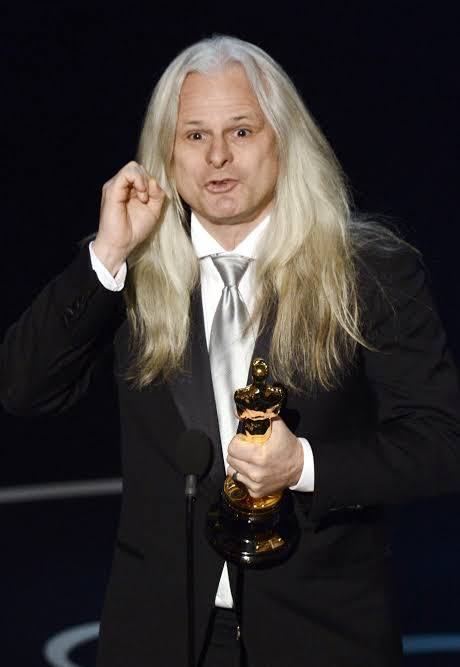
You can’t talk about The Curious Case of Benjamin Button without talking about Claudio Miranda. In my opinion, Miranda is the DP who truly “unlocked” Fincher’s digital obsession. They’d already experimented with Zodiac, but Benjamin Button was where they proved that digital cameras could handle the nuance of a sprawling period epic. What I admire most about Miranda is that he isn’t just “painting with light” he’s building a visual strategy. He treats the frame like a surgeon, shaping shadows not just for aesthetics, but to tell us exactly how a character is feeling before they even speak a line of dialogue.
Inspiration Behind the Cinematography
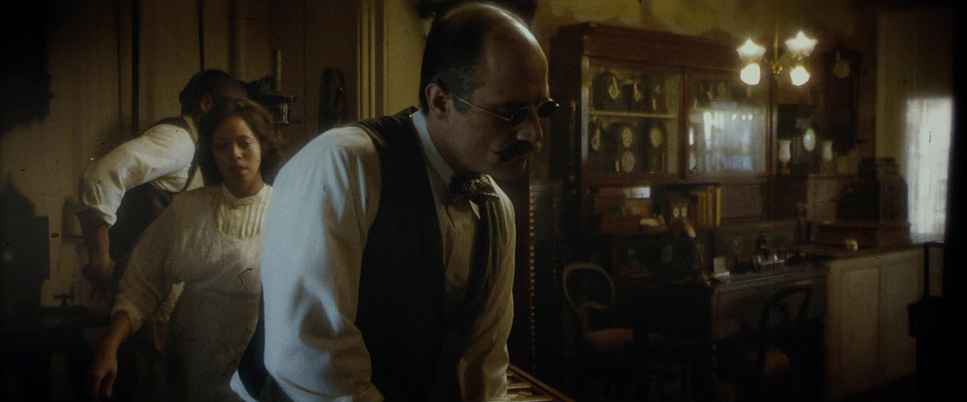
The core visual driver here is the paradox of Benjamin himself: an old soul trapped in a decaying infant body, eventually becoming a youthful spirit in a failing, elderly frame. This required an incredibly adaptable visual language.
Miranda had to bridge the gap between 1918 New Orleans and the modern day, all while maintaining a “melancholic undertone.” There’s a specific review I remember that mentioned the film’s “sad message” that we all end up back in “pants” (facing our mortality). You can see that philosophy in every frame. The inspiration seems to come from the idea of “meaning in arbitrary objects.” The cinematography treats a button, a clock, or a taxi cab with the same reverence as the actors, creating a world where destiny and coincidence are constantly blurring into one another.
Camera Movements
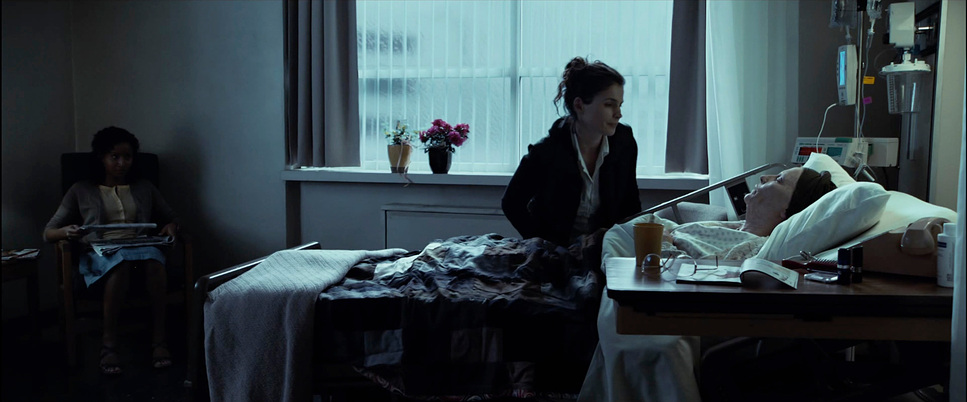
If you’re a fan of Fincher, you know he hates “unmotivated” camera moves. In Benjamin Button, the camera often feels like a silent, omniscient ghost. You won’t find shaky, handheld chaos here. Instead, it’s all about the elegant dolly and the precise crane move.
Look at the sequences where Benjamin is confined to the nursing home. The camera is often static or moves with a slow, observational grace, mirroring his isolation as he watches the “utter world through the windows.” As he joins Captain Mike and heads out to sea, the “gimbal” of his life shifts; the movements become more fluid and adventurous. But even in the chaos of a “heart-per-ranging” revelation like Daisy’s taxi accident the camera remains chillingly controlled. It doesn’t rush to show the impact; it reveals the inevitability of the moment through a series of “inter-webbed” mundane tasks, making the eventual tragedy feel like clockwork.
Lighting Style
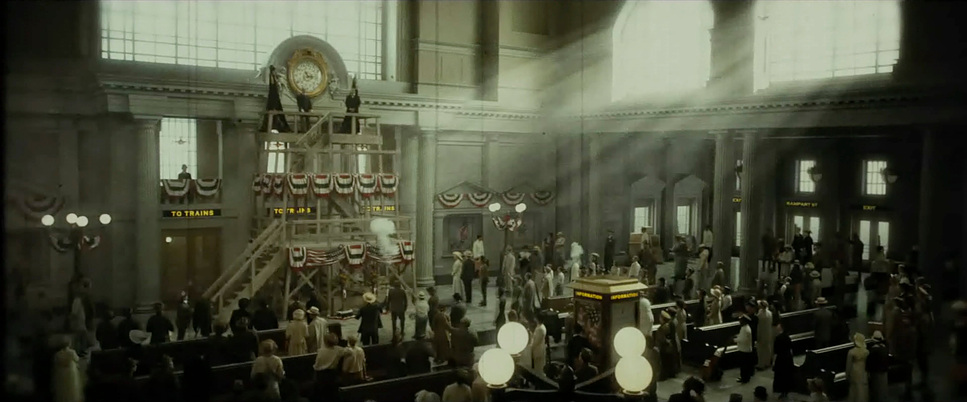
Now, this is where it gets interesting for those of us who live for the “look.” The lighting in this film is a masterclass in motivated light sources. In the early nursing home years, the light feels dusty and heavy like the air itself is aging.
Miranda leans heavily into soft, low-contrast daylight pouring through large windows. It’s beautiful, but it’s also “muted” and “slightly desaturated.” It feels like a place where “earliest memories were that of death.” Contrast this with the scenes of Daisy in her prime; she’s often bathed in a romantic, almost ethereal glow that makes her “look 19” and untouchable. As the timeline shifts, the lighting evolves from that sepia-toned history into something sharper and more clinical, tracking the world’s transition into the 21st century.
Compositional Choices
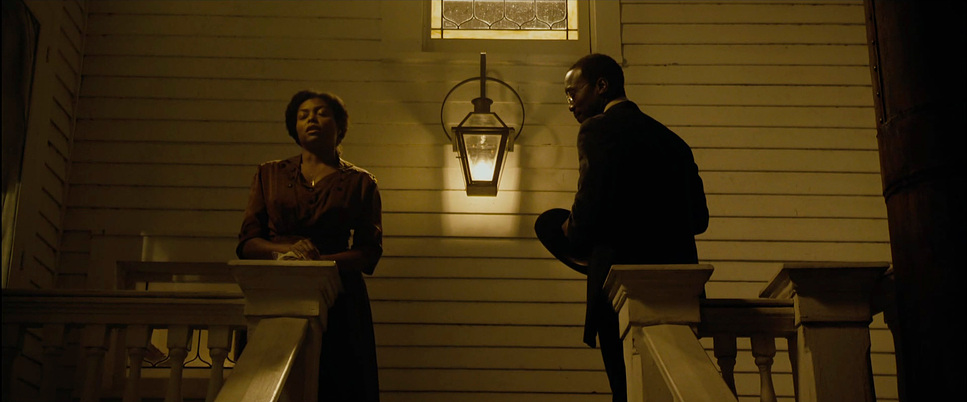
Miranda’s compositions are all about “the outsider.” Throughout The Curious Case of Benjamin Button, Benjamin is frequently framed within doorways, window frames, or reflected in mirrors visual barriers that emphasize his “blurred identity.”
He’s often at the edge of the frame, looking in on a world he doesn’t quite belong to. When he and Daisy finally “meet in the middle” of their ages, the compositions become more intimate and centered. They finally share the frame in a way that feels balanced, but the audience knows it’s temporary. The visual language is constantly whispering that their alignment is a fluke of time, and the framing reflects that tragic divergence before it even happens.
Lensing and Blocking
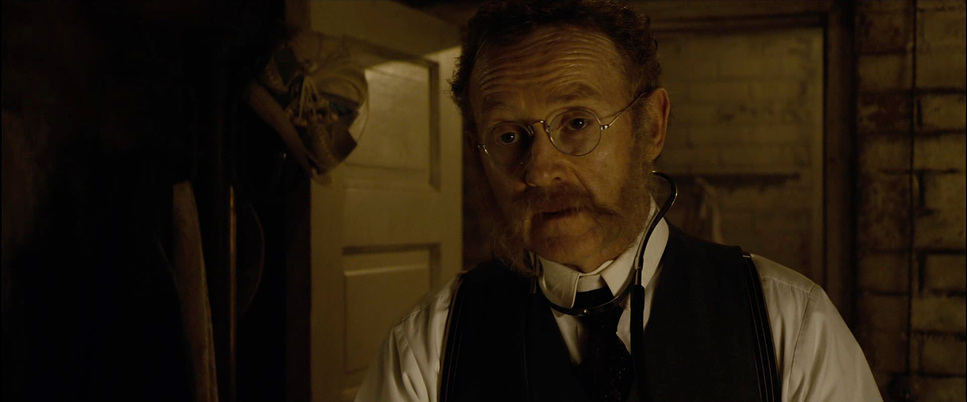
The blocking here was a technical nightmare that Miranda made look effortless. Because they were often compositing Brad Pitt’s head onto different bodies, the lensing had to be “surgical.” You can’t just slap a 50mm on and hope for the best when you’re doing that much VFX work.
They used specific focal lengths to maintain consistent eye lines and depth of field, ensuring the digital integration felt “seamless” rather than “obvious.” When Benjamin is “old,” the lenses often keep a respectful distance, emphasizing his fragility. As he becomes the “prime” Brad Pitt we all recognize, the camera gets closer, more personal, and more subjective. It’s a brilliant way of using glass to dictate our emotional proximity to a character that is literally changing shape.
Color Grading Approach: The Colorist’s Perspective
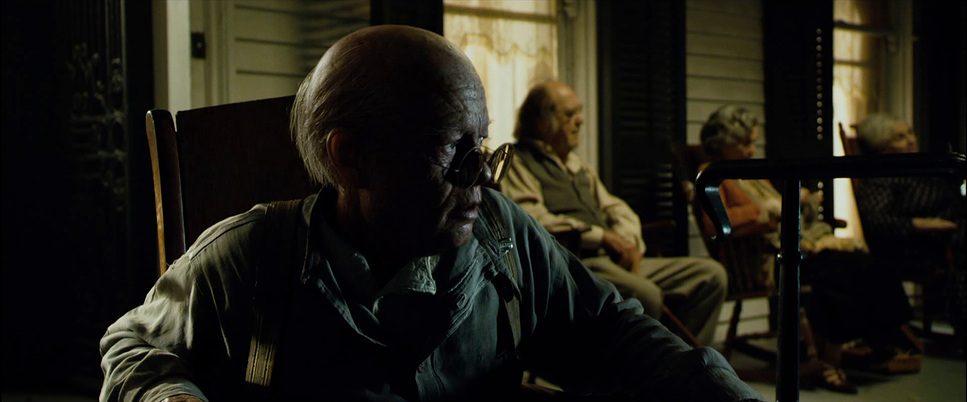
Okay, let’s nerd out for a second. As a colorist, the grade on Benjamin Button is one of my ultimate North Stars. David Orr (the colorist on the film) and Miranda achieved something here that was very difficult in 2008: a digital film that felt like a “print-film” masterpiece.
The highlights have this incredible, soft roll-off, and the shadows are deep without ever feeling “crushed” or “muddy.” There’s a sophisticated “hue separation” at play look at the way the warm skin tones of the characters pop against the desaturated, cool greens and blues of the New Orleans shadows.
What really impresses me is the consistency. Handling skin tones for a character who is 80% CGI in some scenes is a minefield. If the grade is off by even a fraction, the “uncanny valley” effect kicks in and the illusion is ruined. But here, the “tonal sculpting” is so precise that you never question the reality of Benjamin’s face. It’s a masterclass in “dynamic range decisions” knowing when to let a scene breathe in the shadows and when to push the “golden hour” warmth to hit that nostalgic chord.
Technical Aspects & Tools
The Curious Case of Benjamin Button — Technical Specifications
| Genre | Drama, Fantasy, Mystery, Romance, Thriller, Magical Realism, Low Fantasy |
| Director | David Fincher |
| Cinematographer | Claudio Miranda |
| Production Designer | Donald Graham Burt |
| Costume Designer | Jacqueline West |
| Editor | Kirk Baxter, Angus Wall |
| Colorist | David Orr |
| Color | Desaturated |
| Aspect Ratio | 2.39 – Spherical |
| Format | Digital |
| Lighting | Soft light, Low contrast |
| Lighting Type | Daylight, Sunny |
| Story Location | Louisiana > New Orleans |
| Filming Location | Canada > Quebec |
| Camera | Arri 435 / 435ES, Sony F23 CineAlta, Thompson Viper FilmStream |
| Film Stock / Resolution | 5201/7201 Vision 2 50D, 5219/7219 Vision 3 500T, HD / 1080p |
To clear up a common misconception: Benjamin Button wasn’t just a “film” shoot. It was actually a pioneer in the hybrid world. While they used Arri 435s for the high-speed and traditional film sequences (shooting on Kodak Vision2 and Vision3 stocks), Fincher also used the Sony F23 and the Thompson Viper FilmStream for a lot of the digital work.
This was 2008 digital was still the “new kid,” but Fincher used it because he needed the data-heavy “FilmStream” output to make the VFX work. This allowed the team to capture Brad Pitt’s performance and composite it onto other actors with a level of precision that 35mm film grain sometimes made difficult. The result is a “seamless” blend of 35mm organic texture and cutting-edge digital clarity. It’s the best of both worlds, and it set the template for how we’ve been making movies for the last 15 years.
- Also read: ROGUE ONE: A STAR WARS STORY (2016) – CINEMATOGRAPHY ANALYSIS
- Also read: THE HOBBIT: THE DESOLATION OF SMAUG (2013) – CINEMATOGRAPHY ANALYSIS
Browse Our Cinematography Analysis Glossary
Explore directors, cinematographers, cameras, lenses, lighting styles, genres, and the visual techniques that shape iconic films.
Explore Glossary →