The Invisible Guest (Contratiempo), Oriol Paulo’s 2016 Spanish thriller. As someone who spends most of my waking hours either on set or staring at DaVinci Resolve scopes at Color Culture, it takes a lot to get a visceral reaction out of me these days. But this film caught me off guard. It’s one of those titles that YouTube essayists love to call “criminally overlooked,” and for once, they’re right. You know the drill: you’re scrolling through Netflix, dodging the algorithm’s generic suggestions, and suddenly you land on something that actually respects the craft.
From the opening sequence, The Invisible Guest establishes that it isn’t trying to be an action blockbuster. It’s a “small world” psychological thriller intimate, claustrophobic, and visually engineered to mess with your head. For a colorist, peeling back the layers of this look is a fascinating exercise. It’s a masterclass in how intentionality from the lighting ratios to the grading curve can build a sense of unease without saying a word.
About the Cinematographer
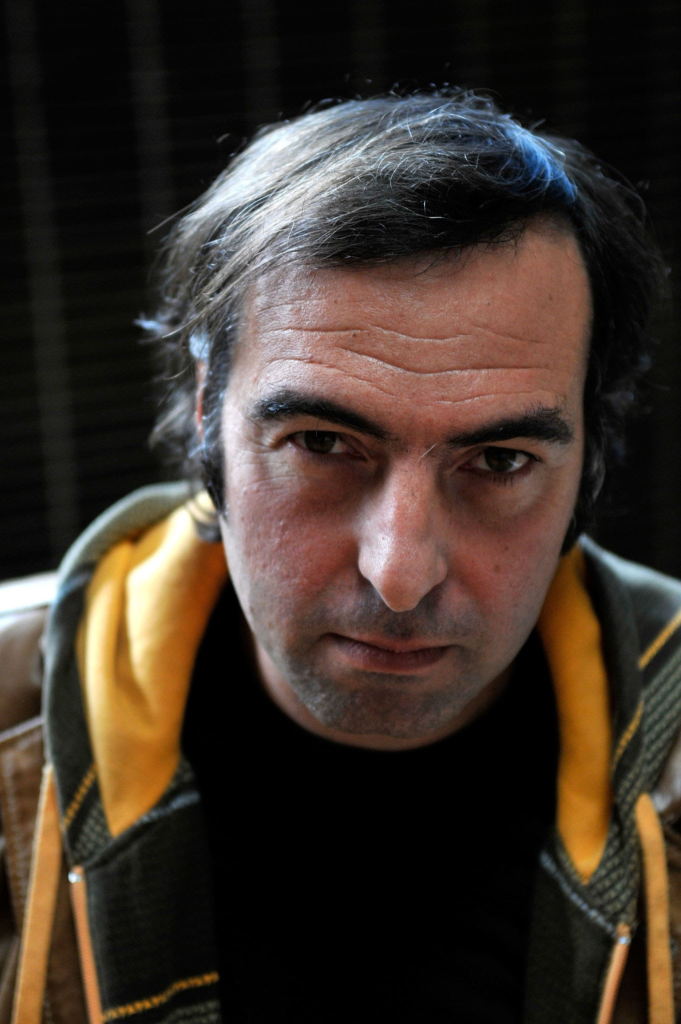
The visual architect behind this is Xavi Giménez. If you know his work specifically on The Machinist or Agora you know he doesn’t just light a scene; he excavates it. Giménez understands that in a thriller, the camera isn’t just recording a performance; it’s an active participant in the lie.
In The Invisible Guest, his work is incredibly disciplined. He resists the urge to show off with flashy motivated camera moves. Instead, he uses precise, calculated visual cues that slowly chip away at your perception of truth. For a film that relies entirely on an unreliable narrator and shifting timelines, the cinematographer’s job is to anchor the viewer just enough to keep them watching, while simultaneously destabilizing them. It’s a tightrope walk, and Giménez balances the intricate plot without the visuals ever feeling “bland” or purely functional. There is style here, but it serves the substance.
Inspiration Behind the Cinematography
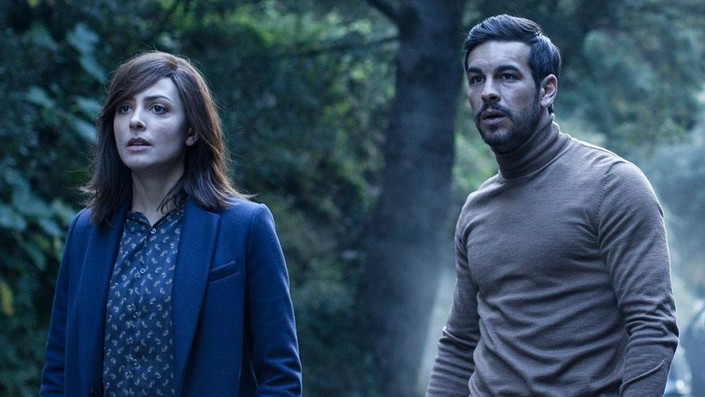
The visual inspiration is undeniably Hitchcockian, specifically regarding the theme of a man trapped by his own spiraling narrative. But visually, this translates to containment. We aren’t dealing with sprawling landscapes; we are dealing with internal turmoil projected onto tight spaces hotel rooms, car interiors, and the lawyer’s office.
This “small world” atmosphere demands a lighting and blocking style that mirrors that entrapment. The goal was clearly to make the audience feel as physically confined as Adrian, the protagonist. While the score does a lot of heavy lifting, it’s the visuals that really sell the claustrophobia. Bosch and Paulo created a visual language that feels immediate but unreliable. It’s not just about looking “cinematic”; it’s about using the lens to obscure the truth just as much as it reveals it.
Camera Movements
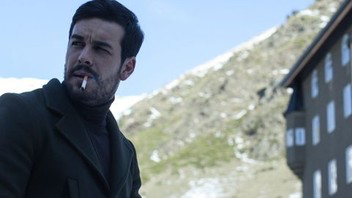
In a script where “the audience doesn’t know what’s true and what isn’t,” camera movement becomes the director’s way of guiding or misguiding the eye. The Invisible Guest avoids the shaky-cam trend typical of modern thrillers. Instead, it favors a restrained, deliberate approach. We see a lot of slow, measured pushes (dolly-ins) that isolate characters in the frame, or subtle tracking shots that change the background relationship as a conversation evolves.
When Adrian is recounting his past, the camera often feels observational, almost voyeuristic like a detached witness. But in the present-day scenes in the apartment with Virginia Goodman, the camera becomes more reactive. It might execute a subtle parallax move to emphasize a realization or a slow creep in to catch a micro-expression. These shifts between the “kinetic energy” of the flashbacks and the static tension of the interrogation help the viewer unconsciously distinguish between the “story” being told and the reality unfolding in the room.
Compositional Choices
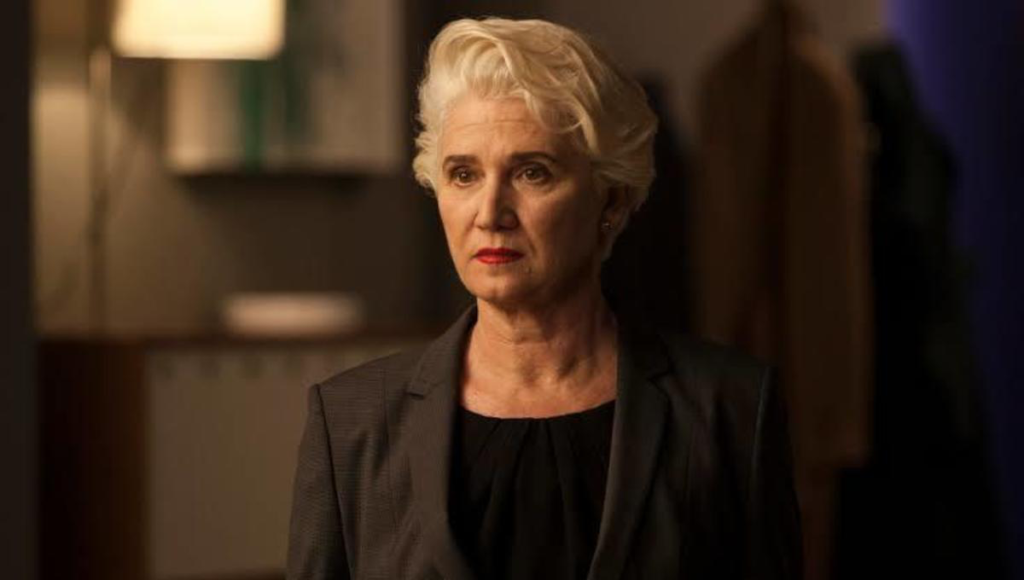
The framing here is all about power dynamics. Since so much of the film happens in one room, Bosch relies heavily on “short-siding” characters placing them close to the edge of the frame with their gaze looking toward the nearest frame line. It creates an immediate subconscious sense of being trapped or having “nowhere to go.”
We also see a lot of dirty frames shooting through doorways, past lamps, or using reflections in glass. This isn’t just aesthetic; it suggests surveillance. It implies that there is always something between us and the full truth. Depth is managed carefully; while the flashbacks sometimes feature wider, deeper compositions to sell the “freedom” of the past, the present-day scenes flatten the space. Adrian and Goodman are often compressed together by the lens, emphasizing their intellectual combat. The composition constantly forces you to question who holds the power in the scene.
Lighting Style
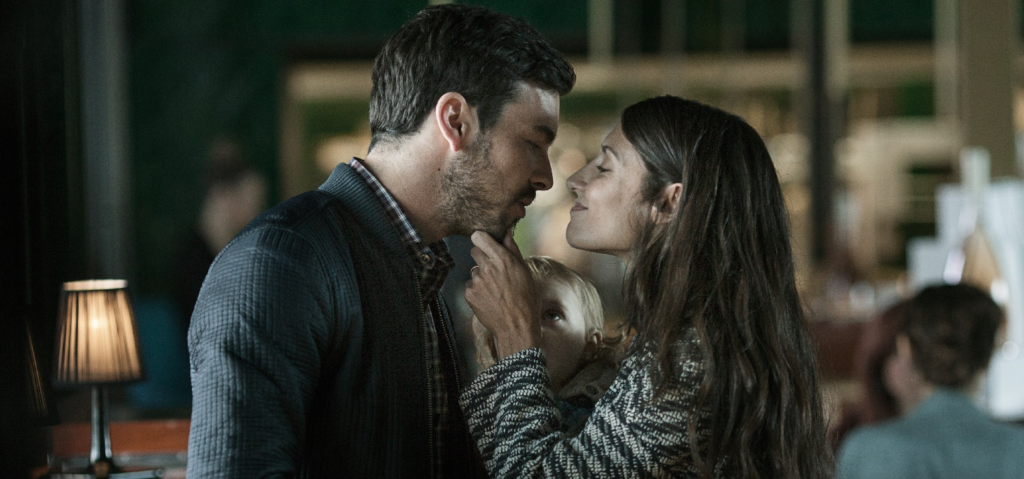
Lighting in a noir-adjacent thriller isn’t about illumination; it’s about excavation. In The Invisible Guest, the lighting is predominantly low-key, utilizing high contrast ratios. This is classic chiaroscuro, where the shadow is just as important as the light.
In the apartment scenes, the lighting is motivated by practical sources (lamps, windows), but Bosch pushes the negative fill. He allows the shadow side of the face to fall into near-total darkness. This isn’t an accident. Hard light cuts across faces, highlighting textures of stress and desperation while leaving the eyes in shadow a classic trope to make a character seem untrustworthy.
Interestingly, the flashbacks often start with softer, more naturalistic lighting. But notice how, as the “accident” occurs and the cover-up begins, the lighting in the past starts to mimic the harsh, high-contrast look of the present. The visual language shifts to match the moral decay of the characters. It’s a subtle evolution that ensures the “mood” isn’t just a filter, but a narrative device.
Lensing and Blocking
To achieve this specific look, the technical choices had to be precise. The film avoids the distortion of anamorphic lenses, opting instead for spherical primes specifically Cooke S4s (more on that in the tech section). In the apartment, they favor normal-to-wide focal lengths. This includes enough of the background to make the room feel small, trapping the actors in their environment. Conversely, for moments of intense scrutiny, they switch to longer focal lengths, compressing the background and isolating the actor’s reaction.
The blocking is like a chess match. Watch the physical distance between Adrian and Virginia. Initially, Adrian often dominates the frame, standing while she sits. As Virginia begins to poke holes in his story, she invades his personal space. She moves into his key light; she blocks his path. The physical arrangement mirrors the shifting power dynamic. Even in the flashbacks, the blocking tells the story notice how the physical distance between the lovers grows after the accident. They stop sharing the same focal plane, visually representing their emotional separation.
Color Grading Approach
Now, this is where I geek out. As a colorist, I get requests for “thriller looks” all the time, and usually, clients just want me to desaturate everything. But The Invisible Guest does something much more sophisticated.
The grade sits heavily in the lower-mids. It’s not just “blue”; it’s a specific cyan-teal push in the shadows that we often see in European cinema. The colorist likely used a subtractive color model here pulling saturation out of the shadows to keep them dense and inky, while retaining separation in the mid-tones.
The palette is essentially a split-tone: cool, sterile cyans for the shadows and environment, contrasting against controlled skin tones. Crucially, the skin tones aren’t lively or pink; they are slightly muted, leaning towards a clay/bronze hue, which separates them from the cold background without making the characters look “healthy.”
When warmth is introduced usually in the flashbacks or firelight it’s a deep, amber warmth, not a sunny yellow. It feels dangerous. The contrast curve is aggressive, with a soft roll-off in the highlights (likely a film print emulation LUT) that prevents the digital footage from looking too sharp or “video-like.” It maintains that cinematic texture while crushing the blacks enough to hide the details Bosch doesn’t want us to see.
Technical Aspects & Tools
We don’t have to guess about the gear. The Invisible Guest was shot on the ARRI ALEXA XT Plus. This is the industry workhorse for a reason. The Alexa sensor has a specific way of handling highlight roll-off and dynamic range that allows for those deep, dark shadows without introducing ugly noise patterns essential for a low-key film like this.
Bosch paired the Alexa with Cooke S4 Prime lenses. You can tell it’s Cooke glass by the way it handles faces. Cookes are famous for the “Cooke Look” they are sharp, but they have a gentle warmth and a way of rendering skin that takes the harsh digital edge off the Alexa sensor. This combination creates a look that is technically pristine but still feels organic and filmic.
There’s a note in some transcripts about minor prop inconsistencies, but honestly, when the image looks this good, those continuity errors vanish. The specific pairing of the Alexa sensor’s latitude with the creamy fall-off of Cooke optics creates a texture that absorbs you completely.
- Also read: AKIRA (1988) – CINEMATOGRAPHY ANALYSIS
- Also read: BUTCH CASSIDY AND THE SUNDANCE KID (1969) – CINEMATOGRAPHY ANALYSIS
Browse Our Cinematography Analysis Glossary
Explore directors, cinematographers, cameras, lenses, lighting styles, genres, and the visual techniques that shape iconic films.
Explore Glossary →