Looking at the visual language of Marriage Story isn’t just about appreciating a sad movie; it’s about studying discipline. Noah Baumbach’s 2019 film, shot by Robbie Ryan, resists the urge to be flashy. Instead, it uses a specific, rigid visual grammar to trap you in the room with these characters. It’s a film that proves you don’t need crazy gimbal moves to create tension; sometimes you just need a 35mm camera and the confidence to not cut.
When Marriage Story released, the conversation was dominated by the acting and the script. But as a filmmaker and colorist, my eyes went straight to the edges of the frame. Baumbach and cinematographer Robbie Ryan made a bold choice right out of the gate: shooting in a 1.66:1 aspect ratio. This isn’t the standard widescreen we’re used to; it’s boxier, taller, and tighter. It immediately signals that this isn’t an epic it’s a portrait. The visuals don’t try to distract you with “cinematography” in the traditional sense. Instead, the film commits to a grounded realism that feels like a memory specifically, a memory you can’t quite escape. It’s a “slice of life” approach, but executed with such high-end technical precision that it elevates a domestic dispute into something operatic.
About the Cinematographer
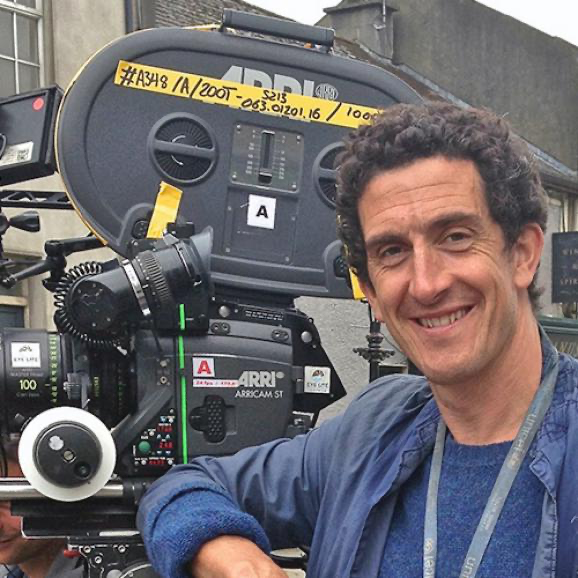
Robbie Ryan is an interesting choice for this. He’s often associated with the gritty, handheld, natural-light realism of Andrea Arnold’s films (American Honey, Fish Tank) or the wide-angle distortion of Yorgos Lanthimos (The Favourite). Here, he reigns it all in. He trades the shaky cam for a geared head and a tripod. This pivot is crucial. Ryan applies his documentary instincts his ability to capture reactive, honest moments but places them inside a formal, controlled structure. He isn’t imposing a style on the actors; he is building a container for them to break down inside of. It’s a masterclass in a DP checking their ego at the door to serve the narrative.
Inspiration Behind the Cinematography
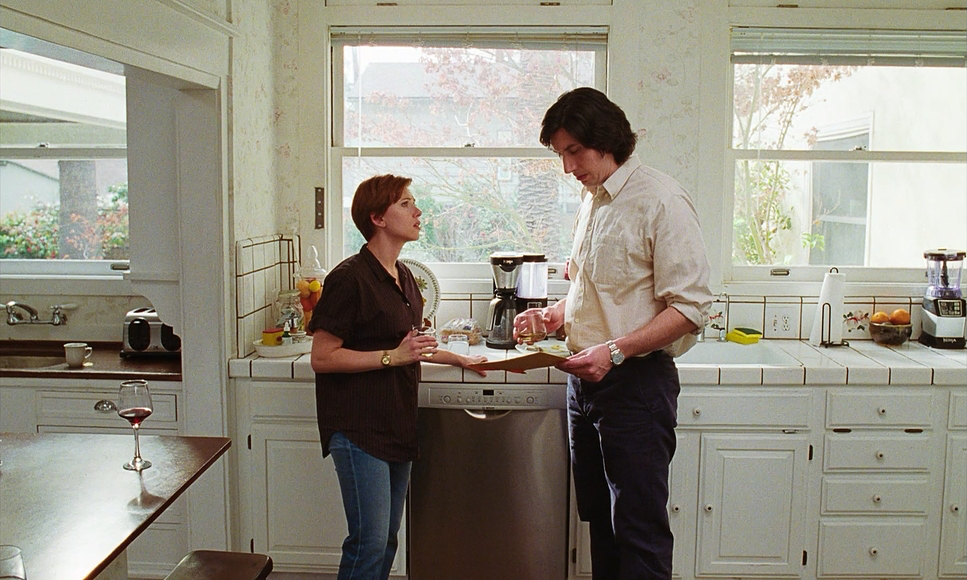
The visual DNA of Marriage Story feels like a nod to the 70s character dramas think Bergman or Cassavetes, but cleaner. The inspiration here is clearly “theatre on film.” Baumbach wanted the scenes to play out in real-time, uninterrupted. This requires a specific kind of lighting and framing philosophy: the camera has to be ready for anything, but it shouldn’t anticipate the action.
The inspiration wasn’t about creating a “look book” aesthetic, but rather creating a space where the “beginning of the end” could breathe. The film often feels like it’s documenting a play, where the geography of the apartment or the lawyer’s office becomes as important as the dialogue. The visual consistency allows us to forget the camera is there, fostering a sense of voyeurism. We aren’t watching a movie; we are witnessing a private collapse.
Camera Movements
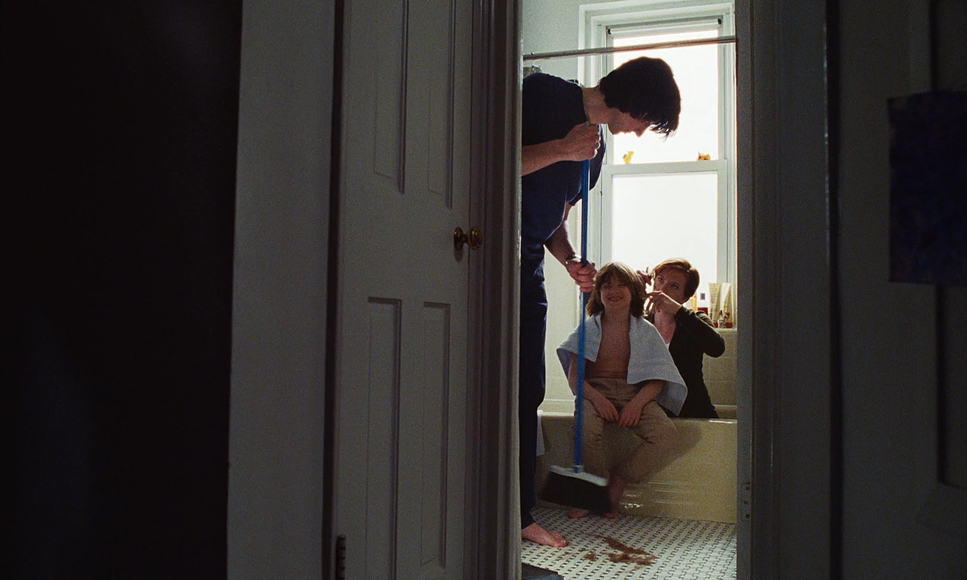
“Long continuous takes” are the heartbeat of this film. But let’s be clear: these aren’t “oners” designed to show off complex choreography. They are functional. They force the audience to sit in the discomfort. When you don’t cut, you don’t give the viewer a chance to look away or take a breath.
Ryan’s camera is largely observational. When it moves, it’s usually a slow, creeping push-in or a lateral track that follows the actors’ blocking. A perfect example is the slow zoom on Scarlett Johansson when she is in her lawyer’s office. It’s a four or five-minute take. The camera movement is barely perceptible, but by the end of the scene, the frame is significantly tighter than where it started. It isolates her, increasing the pressure of the moment without a jarring cut to a close-up. It’s the kind of move that requires a solid operator and likely a perfectly calibrated dolly track invisible mechanics creating tangible emotion.
Compositional Choices
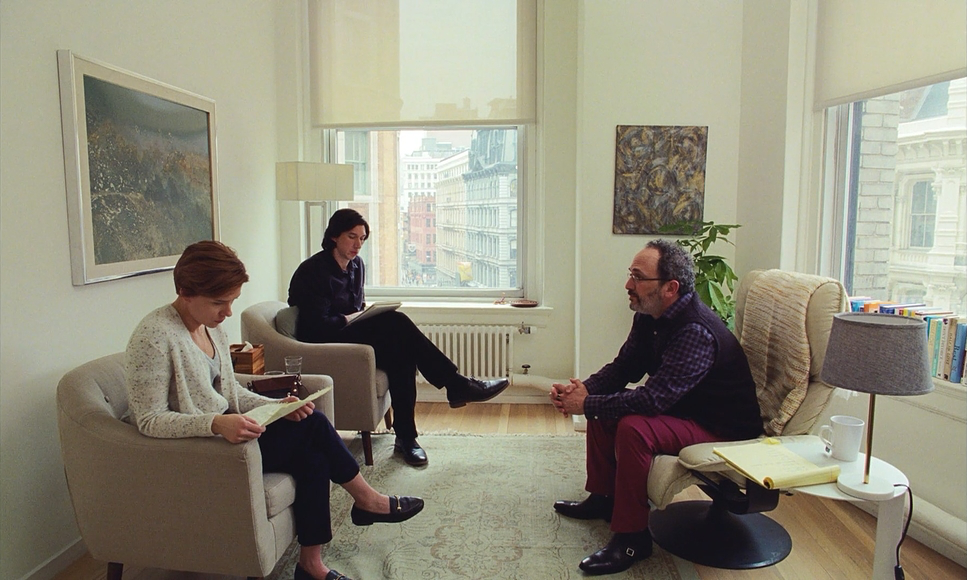
The 1.66:1 aspect ratio does a lot of the heavy lifting here. It’s a format that loves faces. The compositional choices lean into “clean singles” and medium shots that prioritize the actors. Because the frame is taller, body language becomes huge. You see the slump of a shoulder or the nervous tapping of a hand.
We see a lot of center-weighted framing, but as the divorce gets messy, the framing starts using negative space to emphasize distance. In the courtroom scenes or the sterile lawyer offices, the characters are often separated by physical objects tables, dividers, or just dead air. During the “argument scene,” the camera pushes into tight close-ups that feel almost claustrophobic. The compositions force us into the “middle man” position. We are stuck between two people who know exactly how to hurt each other, and the lens refuses to back down.
Lighting Style
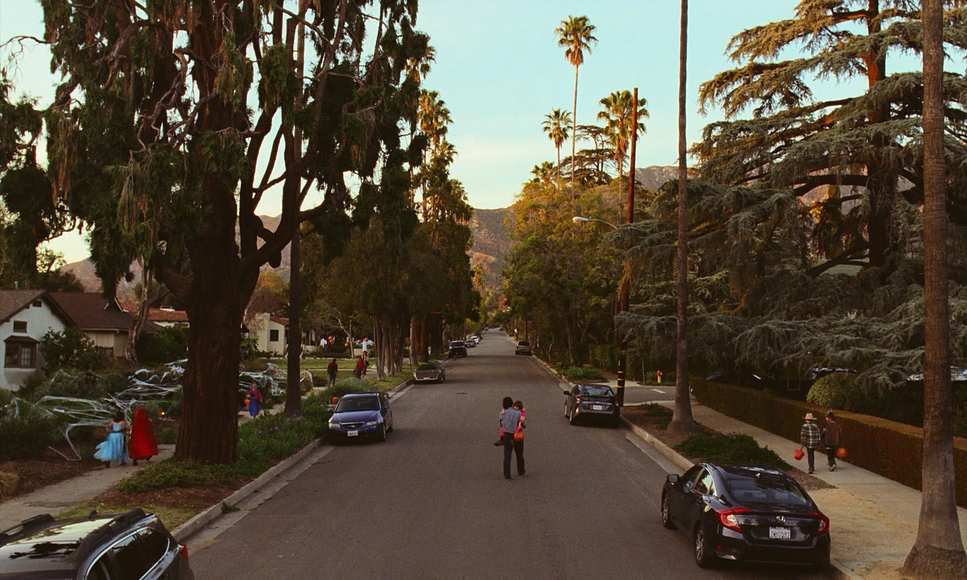
Contrary to the flat, soft lighting of many modern comedies, Marriage Story utilizes a mix of hard, tungsten sources and high-contrast ratios. This is a crucial distinction. While it feels natural, it’s actually quite stylized lighting designed to mimic reality.
They leaned heavily on tungsten lighting (artificial, warm light), which creates a specific color separation on film that LED lights often struggle to replicate. In the apartment scenes, you see practical lamps doing the work, creating pockets of light and shadow. It’s not a sitcom wash; there’s contrast here. The “top light” often used in the offices creates slight shadows in the eye sockets, making the characters look tired, worn down. It supports the narrative that this process is physically draining them. The lighting doesn’t fix them up; it exposes them.
Lensing and Blocking
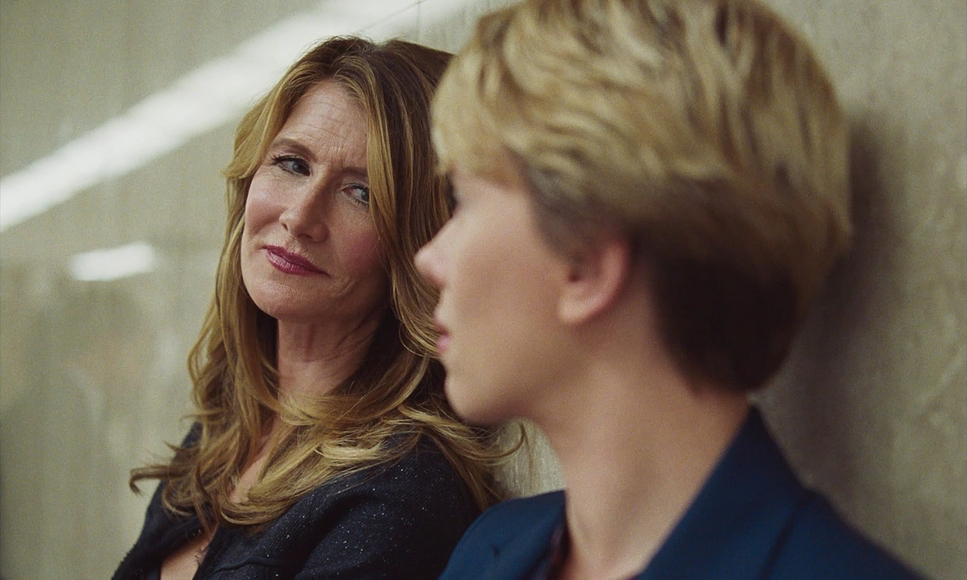
This is where the technical choices really shine. Ryan chose Panavision Primo Primes. These are legendary lenses sharp, but not clinically digital. They have a certain weight and presence. He largely stuck to medium focal lengths (likely 35mm to 50mm range), avoiding wide-angle distortion. This keeps the geometry of the rooms true to life.
The blocking is theatrical. Because they are shooting on film with limited mag loads (shooting time is roughly 11 minutes per roll on 35mm), the actors have to hit their marks perfectly. The camera often stays static while the actors move from a wide shot into a close-up, changing the frame size with their body movement rather than a lens zoom. In the argument scene, the actors are constantly closing the distance and retreating, using the apartment almost like a wrestling ring. The lens simply captures this dance without interfering.
Color Grading Approach
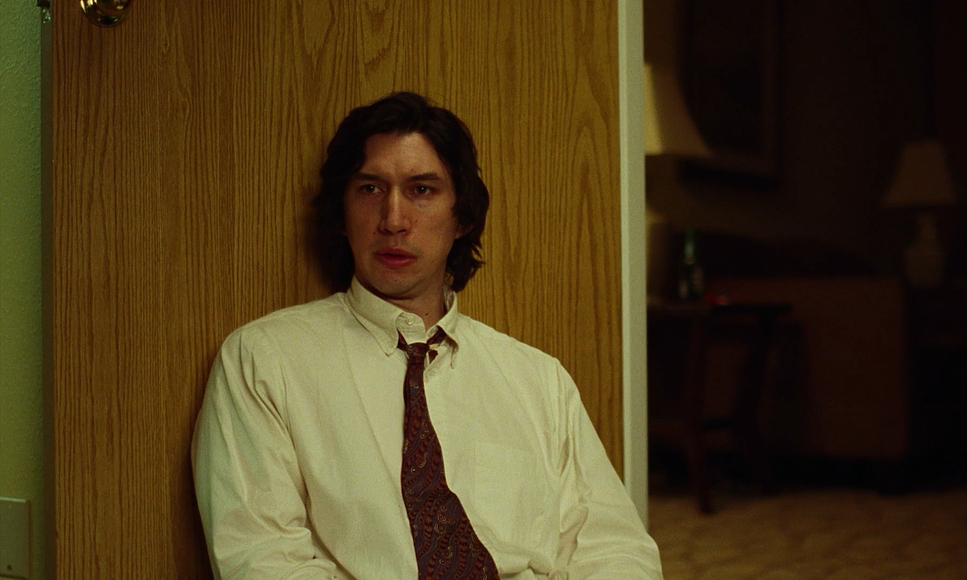
As a colorist, this is the part I love. The film has a distinct palette: Cool, Saturated, but anchored by Red. The skin tones are incredible something that is very hard to dial in this perfectly on digital without a lot of work. Because it was shot on Kodak Vision3 stock, the colors have a chemical density. The reds (Scarlett’s hair, sweaters, interiors) pop but don’t bleed.
The grade feels like a traditional photochemical finish. The highlight roll-off is creamy that classic film shoulder where bright windows don’t clip to white instantly but roll off gently. The shadows have a bit of a “cool” tint to them, likely a push in the low-mids, which contrasts beautifully with the warm, tungsten-lit skin tones. It’s a subtractive color model; the colors feel deep and rich, not slapped on top. It’s a look that feels “memory-like” saturated enough to feel alive, but grounded enough to feel real.
Technical Aspects & Tools
Marriage Story – Technical Specifications
| Genre | Drama, Courtroom Drama, Family, Romance, Melodrama, Marriage |
|---|---|
| Director | Noah Baumbach |
| Cinematographer | Robbie Ryan |
| Production Designer | Jade Healy |
| Costume Designer | Mark Bridges |
| Editor | Jennifer Lame |
| Colorist | Trae Austin Elliot, Marcy Robinson |
| Time Period | 2010s |
| Color | Cool, Saturated, Red |
| Aspect Ratio | 1.66 – Spherical |
| Format | Film – 35mm |
| Lighting | Hard light, High contrast, Top light |
| Lighting Type | Artificial light, Tungsten |
| Story Location | New York > New York City |
| Filming Location | New York > New York City |
| Camera | Arriflex 435, Arricam LT, Arricam ST |
| Lens | Panavision Primo Primes |
| Film Stock / Resolution | 5219/7219 Vision 3 500T, 5213/7213 Vision 3 200T |
Here is where the “AI” analysis usually gets it wrong. This film wasn’t shot on a digital ARRI Alexa. Baumbach and Ryan committed to 35mm film, specifically using Arricam LT and ST bodies. They shot on Kodak Vision3 500T (5219) for the interiors and night scenes, and likely 200T (5213) for the days.
Why does this matter? 500T is a high-speed tungsten stock. It has grain. It has texture. When you watch the darker scenes in the movie, that “fizz” you see in the shadows isn’t digital noise; it’s the physical silver halide crystals of the film. It gives the image a living, breathing quality that digital often feels too sterile to replicate. Pairing this stock with Panavision Primo Primes creates an image that is sharp but organic. It’s a high-fidelity analog workflow that prioritizes skin tone and texture above all else.
- Also read: BOYHOOD (2014) – CINEMATOGRAPHY ANALYSIS
- Also read: THE NIGHTMARE BEFORE CHRISTMAS (1993) – CINEMATOGRAPHY ANALYSIS
Browse Our Cinematography Analysis Glossary
Explore directors, cinematographers, cameras, lenses, lighting styles, genres, and the visual techniques that shape iconic films.
Explore Glossary →