There are films that resonate with you long after the credits roll, and then there are films that force you to re-examine the very craft of filmmaking. Juan José Campanella’s The Secret in Their Eyes (2009) is firmly the latter. It navigates themes of revenge, trauma, and the corrosive nature of unresolved obsessions by visually splitting two timelines the politically charged mid-1970s and the reflective late-90s. It exemplifies how cinematography isn’t just about making things look “good,” but about externalizing the internal struggles of the characters.
About the Cinematographer

To understand the visual language here, we have to look at the architect behind the lens: Félix Monti. Monti’s work on this film demonstrates a profound control over mood and texture. Collaborating with Campanella, he didn’t just capture scenes; he crafted a visual subtext that mirrors the complex emotional landscape of Argentina’s dirty war era. In post-production, we often talk about “fixing it in the grade,” but looking at the raw intent in Monti’s composition and lighting, it’s clear the vision was locked in before the camera even rolled. He provided a dense, intentional negative (or in this case, digital file) that serves the story first and the aesthetic second.
Inspiration Behind the Cinematography
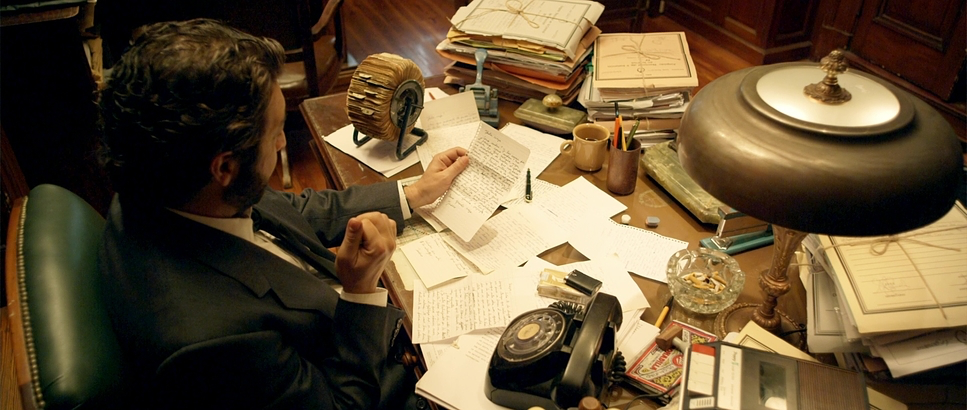
The cinematography is rooted entirely in the film’s non-linear structure. We are following Benjamin Esposito, a retired judiciary agent, whose memories of a brutal 1974 rape and murder case bleed into his 1999 reality. The visual style had to solve a specific problem: differentiate the timelines without making them feel like two different movies.
The inspiration comes from the nature of memory itself. The 1970s timeline feels immediate, visceral, and chaotic—mirroring the political instability and the “haze” of the dictatorship. In contrast, the 1999 scenes are quieter, softer, and burdened with the weight of 25 years of silence. The visual language anchors us in Benjamin’s obsession and Ricardo Morales’s simmering, static pain. It’s a delicate balance of making the past feel dangerous and the present feel melancholic.
Camera Movements
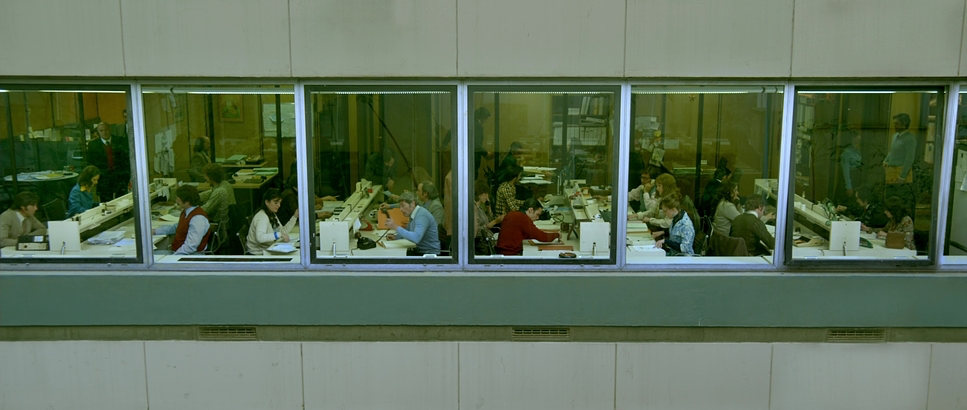
The camera work in The Secret in Their Eyes operates on a psychological level. The most famous example is, of course, the stadium sequence. It starts as a high, wide shot almost a God’s-eye view before diving down and tracking through the crowd in a seamless “plan sequence” to follow Esposito and Pablo pursuing Gomez. While many laud this as a technical flex, it serves a narrative function: it shifts us from an omniscient observer to a frantic participant, highlighting the needle-in-a-haystack nature of their manhunt.
But beyond the showstoppers, the static shots are where the film truly breathes. In the 1999 timeline, the camera is often locked off, emphasizing entrapment. Slow, deliberate dolly moves are used sparingly to reveal information or heighten tension. There is a groundedness to the operating; it never feels floaty or ostentatious. It guides the eye strictly to where the emotion lives.
Compositional Choices
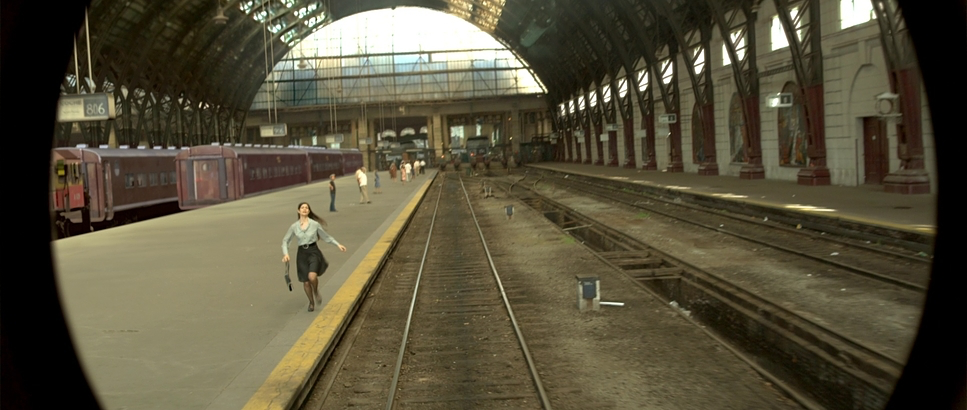
Campanella and Monti use composition to isolate characters and dictate power dynamics. In the 1970s office spaces, Benjamin and Irene are frequently framed against large windows or heavy institutional architecture. The frame itself feels like it’s crushing them, subtly implying the bureaucratic walls and political corruption obstructing their justice.
When we look at Ricardo Morales, particularly in the later timeline, the framing tightens. He is often centered, occupying a self-imposed prison of symmetry. Morales is a character defined by what he doesn’t say his quietness and soft-spoken demeanor and the composition reflects this. He is contained, static, and unmoving. The use of negative space is also telling; characters often feel small within the frame, overwhelmed by the vastness of the corruption surrounding them.
Lighting Style
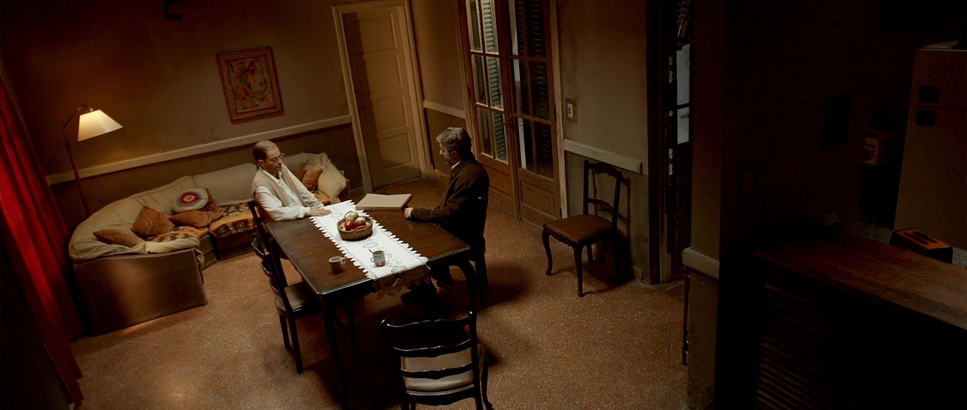
The lighting is motivated and naturalistic, but artfully sculpted to support the tone. For the 1970s, the light is starker. We see high contrast ratios, with shadows often consuming large parts of the frame a nod to film noir that suggests moral ambiguity and hidden truths. The offices are dim, the urban nights are gritty, and the light feels hard, emphasizing the harshness of the era.
In the 1999 timeline, the quality of light shifts. It becomes softer and more diffused, particularly in Benjamin’s apartment or Irene’s office. The highlights are controlled, and the roll-off is gentle. It feels like the sharp edges of the past have been worn down by time, leaving a warmer, slightly more melancholic glow. The dynamic range is managed beautifully, ensuring that even in the dark recesses of the image, there is texture and information.
Lensing and Blocking
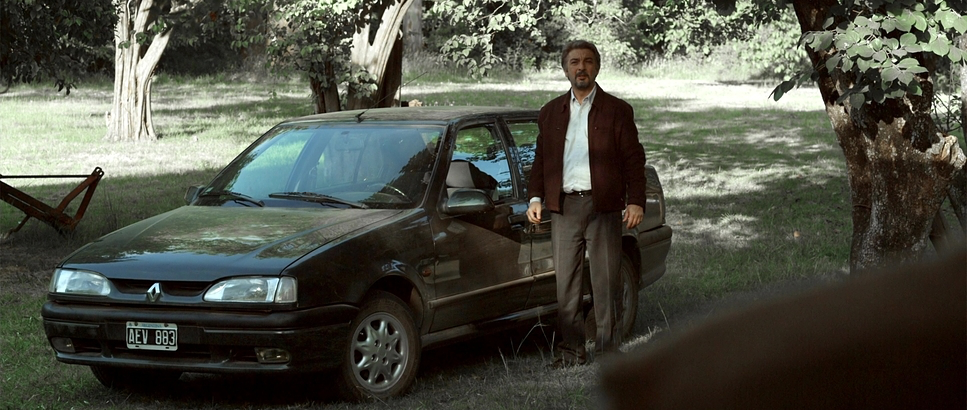
The lensing creates emotional distance. The filmmakers largely opted for spherical lenses with wider to medium focal lengths for conversational scenes, grounding the characters in a realistic space. This puts the burden on the blocking to tell the story.
Take the relationship between Benjamin and Irene. Their unrequited love is physicalized through blocking—they are often in the same room but separated by a desk, a doorframe, or a plane of focus. When the stakes rise, the lens choice shifts slightly tighter to compress the distance between them, forcing an intimacy they are trying to avoid. Conversely, slightly wider lenses are used on Gomez to subtly distort his features, making his obsession appear grotesque, while longer lenses isolate Morales in his grief.
Color Grading Approach
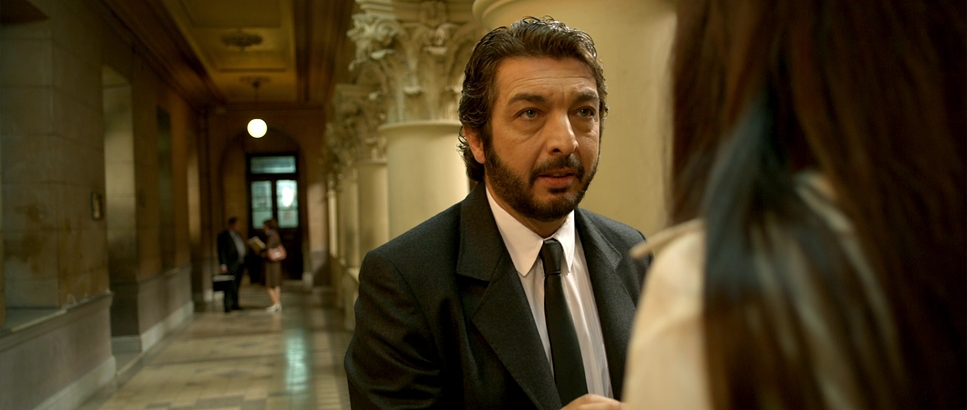
This is where the film pulls off its greatest trick. The color grading is the primary emotional signifier for the audience. The 1970s sequences are treated with a distinct look often desaturated with a specific manipulation of the greens and blues to feel colder, or “sickly.” It evokes the feeling of an old photograph or a bruised memory. When reds appear, like the blood at the crime scene, they pop with a visceral intensity against the muted palette.
For the 1999 timeline, the grade settles into something more natural but distinct. There is a subtle warmth introduced, and the skin tones are fuller. However, the overall contrast is softer, mimicking the haziness of nostalgia. It creates a “print film” aesthetic rich blacks but with a gentle toe, avoiding the harsh clipping of digital video. The grade unifies the film, ensuring that while the timelines look different, they belong to the same emotional universe.
Technical Aspects & Tools
The Secret in Their Eyes — Technical Specs
| Genre | Romance, Crime, Drama, Mystery, Courtroom Drama, Murder Mystery, Detective, Thriller |
| Director | Juan José Campanella |
| Cinematographer | Félix Monti |
| Production Designer | Marcelo Pont Vergés |
| Costume Designer | Cecilia Monti |
| Editor | Juan José Campanella |
| Colorist | Miguel P Gilaberte |
| Time Period | 1970s |
| Color | Warm, Saturated, Green |
| Aspect Ratio | 2.35 – Spherical |
| Format | Digital |
| Lighting | Soft light, Side light |
| Lighting Type | Daylight, Artificial light |
| Story Location | Argentina > Buenos Aires |
| Filming Location | Argentina > Buenos Aires |
| Camera | RED One / OneMX |
Here is the most surprising technical detail: despite the film’s rich, organic texture that screams “35mm,” The Secret in Their Eyes was actually shot on the RED One.
In 2009, digital cinema was still finding its footing, and many films shot on the RED One suffered from that distinct “video” look—poor highlight roll-off and plastic skin tones. Monti’s work here is a masterclass in overcoming those sensor limitations. By carefully controlling his lighting ratios and likely using vintage glass (the bokeh suggests older spherical lenses), he softened the digital image before it even hit the sensor.
The stadium shot, often assumed to be a single take, is a complex composite of aerial crane work, wire rigs, and handheld operating, all stitched together in post. But the fact that the entire film retains such a cinematic, filmic density on early RED sensors is a testament to the exposure strategy. They didn’t rely on the camera to make the image look good; they lit the set to force the camera to behave like film stock. It’s a technical achievement that holds up perfectly even by today’s standards.
- Also read: THE GREAT ESCAPE (1963) – CINEMATOGRAPHY ANALYSIS
- Also read: THE ELEPHANT MAN (1980) – CINEMATOGRAPHY ANALYSIS
Browse Our Cinematography Analysis Glossary
Explore directors, cinematographers, cameras, lenses, lighting styles, genres, and the visual techniques that shape iconic films.
Explore Glossary →