I’m used to comic book adaptations leaning on spectacle and saturation, but James Mangold and cinematographer John Mathieson went the opposite direction here. They crafted a film that is dusty, exhausted, and incredibly tactile.
From the opening shot of Logan waking up in the back of that limo, the visual language tells you exactly what this is: a western. The creative team made a choice to strip away the gloss. It’s not about saving the world; it’s about the physical toll of living in it. The cinematography doesn’t just record the action; it drags you into the mud with the character.
About the Cinematographer
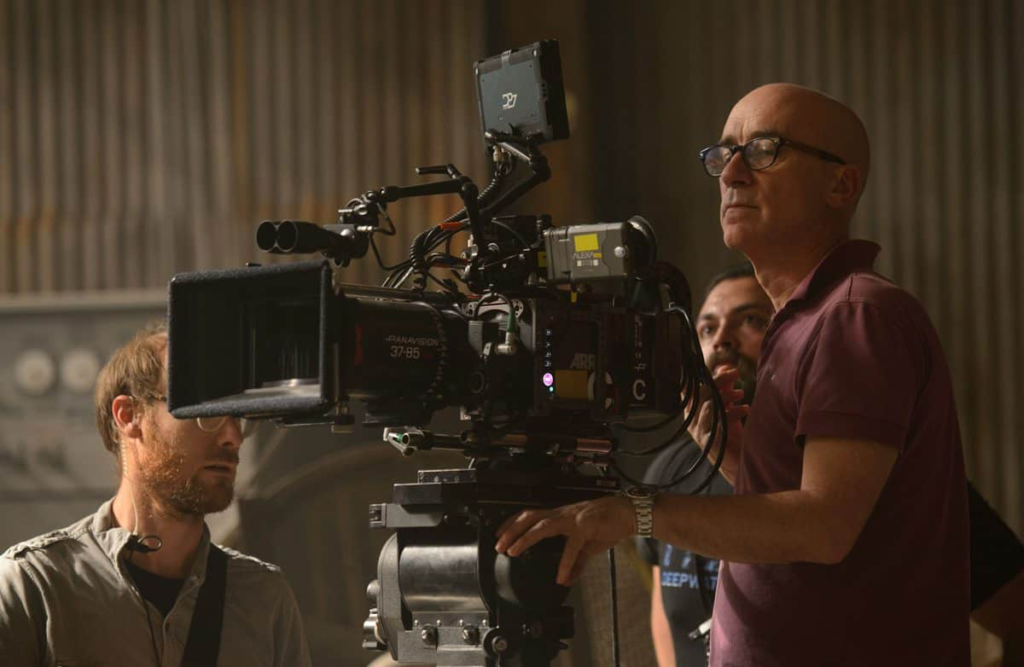
John Mathieson is a heavyweight, but not because he does flashy work. He’s a Ridley Scott regular, he shot Gladiatorand Kingdom of Heaven so he knows how to handle texture and grit. He understands that “epic” doesn’t mean “clean.”
For Logan, hiring Mathieson was a smart move. Mangold needed someone who could balance the scope of a road movie with the intimacy of a character drama. Mathieson has a classical background, but he isn’t afraid to get the camera dirty or rely on available light. His work here feels grounded. He treats the mutants not as gods, but as aging outlaws on the run.
Inspiration Behind the Cinematography
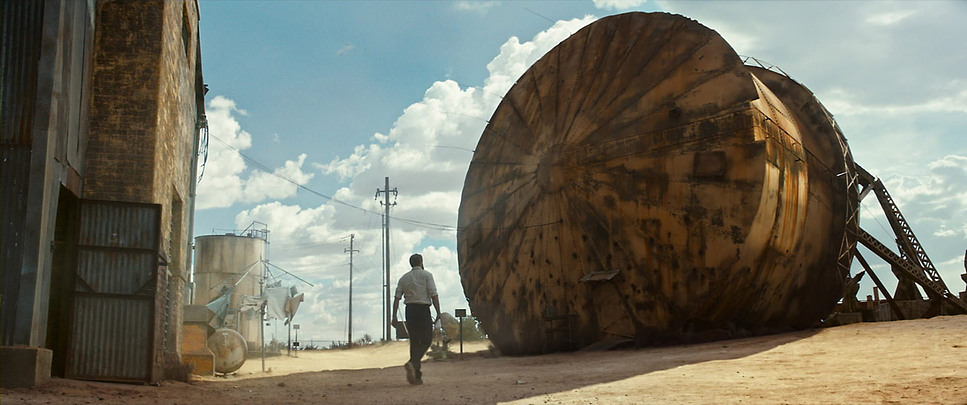
The influence of classic Westerns isn’t subtle here they literally watch Shane in a hotel room at one point. But visually, it goes deeper than just a reference. Mathieson lights and frames this film like a classic road movie.
The inspiration comes from the New Hollywood cinema of the 70s films like Paper Moon or The Gauntlet. It’s about the isolation of the American landscape. The film is set in 2029, but it looks like a ghost town. Mathieson uses wide shots to dwarf the characters against the horizon. There is a deliberate “de-glamorization” here. Hugh Jackman apparently took a pay cut to ensure the R-rating, and the camera respects that by refusing to look away from the violence or the decay.
Camera Movements
The camera work in Logan operates on two different speeds, mirroring Logan’s physical state.
First, you have the “road trip” camera. When they are driving or hiding out, the camera is often static or moves very slowly. It’s observational. It lets the weight of the moment sit on the audience.
Then, you have the violence. When the claws come out, the camera loses that restraint. It goes handheld and reactive. It’s not the smooth, choreographed “action cam” of the Avengers; it’s shaky and messy. The camera operators are often right in the thick of it, reacting to the hits rather than anticipating them. This makes the action feel dangerous and uncomfortably real. It forces you to feel the effort it takes for Logan to fight at his age.
Compositional Choices
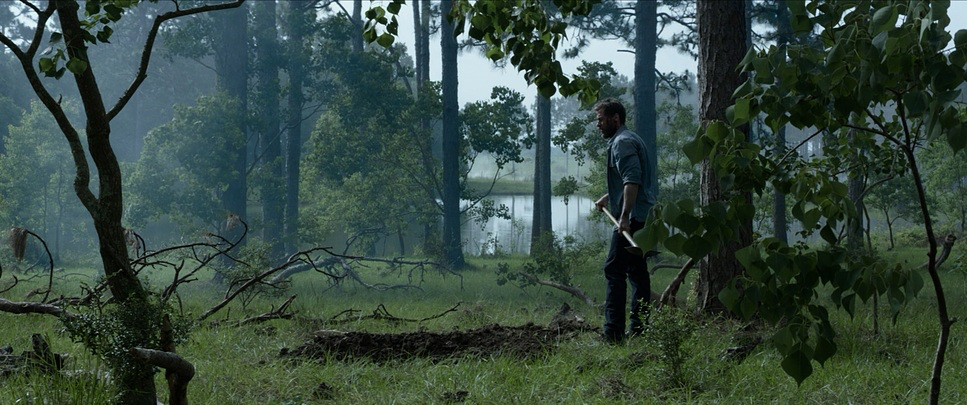
Mathieson’s framing tells the story of a man who is running out of space. He frequently uses wide anamorphic frames to emphasize the emptiness around Logan. In the desert scenes, Logan is often a small, dark silhouette against a massive, bright landscape. It emphasizes his vulnerability.
The use of negative space is huge here. Mathieson isn’t afraid of “dead air” in the frame. But when we move indoors, or into the limo, the framing tightens up. It becomes claustrophobic.
I also noticed how he uses focus to dictate relationships. In the scenes with Charles Xavier, the depth of field is often shallow, isolating them from the world. It turns those scenes into pure character studies. The visual contrast between the lonely wide shots and the suffocating close-ups creates a rhythm that keeps you on edge.
Lighting Style
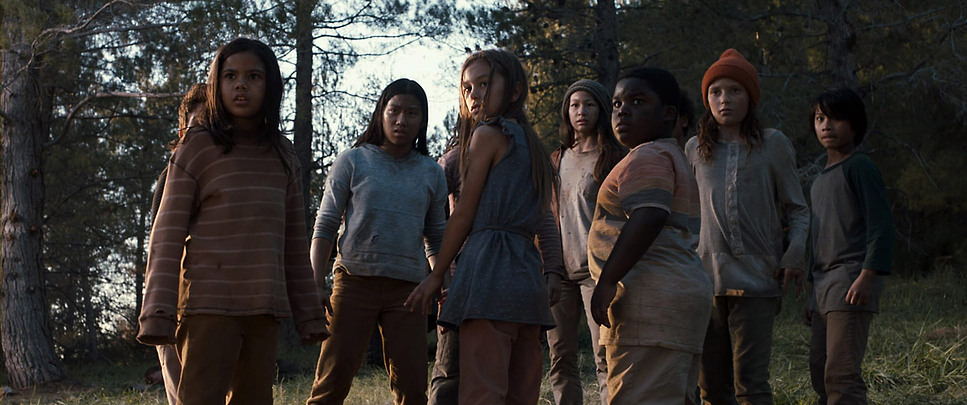
The lighting is aggressively naturalistic. Mathieson leans hard into the harsh, top-down sunlight of the desert locations. He isn’t trying to make Hugh Jackman look good; he’s letting the hard sun carve out the wrinkles and scars on his face.
In the exteriors, it’s mostly hard light. It creates deep, sharp shadows that feel hot and uncomfortable. In the interiors, the lighting is practical lamps, dashboard lights, windows. It feels lived-in.
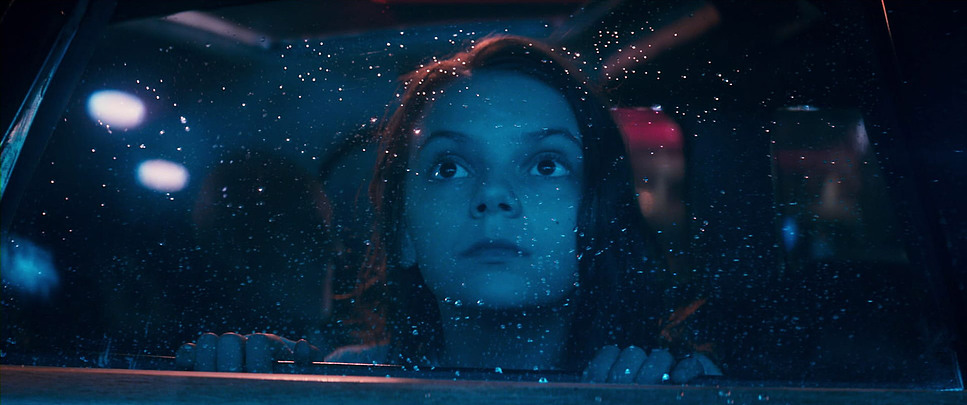
However, the night scenes are where the style shifts. Mathieson uses deep blacks and negative fill. He lets characters fall completely into shadow, which is something many modern blockbusters are too afraid to do. When Logan and Laura fight in the dark, they move in and out of pools of light. It gives the film a noir quality that separates it from the flat lighting typical of the genre.
Lensing and Blocking
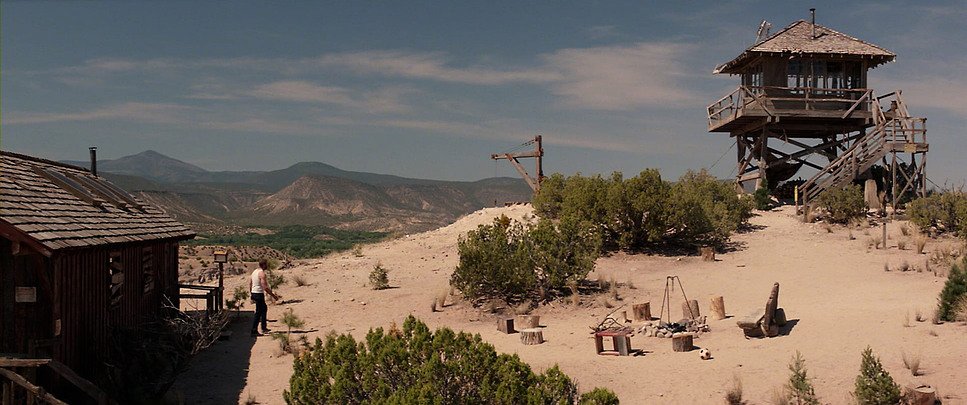
Mathieson shot Logan on anamorphic lenses, and you can feel it. Anamorphic glass gives you that cinematic widescreen aspect ratio (2.39:1), but it also adds specific optical imperfections the background blur (bokeh) is oval, and the edges of the frame have a slight distortion. It adds a layer of texture that spherical lenses just don’t have.
This choice helps the “Western” feel. Anamorphic lenses are great for capturing landscapes, making the horizon feel endless.
Blocking-wise, the film is rigorous. In the first act, Logan is almost always physically separated from others in the frame, or turned away. As the film progresses and he bonds with Laura, you start to see them sharing the frame more equally. The blocking visualizes his reluctance to be a father figure, and his eventual acceptance of it.
Color Grading Approach

As a colorist, this is the part of the film that I find most interesting. The grade by Skip Kimball is doing a lot of heavy lifting to sell the tone.
The first thing you notice is the desaturation. The production clearly pulled back the saturation, particularly in the greens and blues during the day scenes, to create that sodium-vapor, dust-bowl look. It’s not quite monochrome, but it’s close. It feels parched.
However, the grade isn’t just “brown.” The contrast curve is fascinating. They’ve likely used a print-film emulation to roll off the highlights. Even in the bright desert sun, the whites don’t clip harshly; they have a soft, creamy texture. The shadows are lifted slightly and warmed up, avoiding a sterile digital black.
It’s also worth noting the specific look referenced in the data below. While the day scenes are warm and desaturated, the night scenes (like the one detailed in the metadata) flip the script. They push heavy into cool cyans and deep blues, with high saturation in the artificial lights (like the neon signs or car headlights). This separation—hot/desaturated days vs. cool/saturated nights creates a strong visual passage of time and keeps the eye from getting bored.
Technical Aspects & Tools
Logan — Technical Specifications
| Genre | Action, Drama, Science Fiction, Road Trip |
|---|---|
| Director | James Mangold |
| Cinematographer | John Mathieson |
| Production Designer | François Audouy |
| Costume Designer | Daniel Orlandi |
| Editor | Michael McCusker, Dirk Westervelt |
| Colorist | Skip Kimball |
| Time Period | Future |
| Color | Cool, Saturated, Blue, Magenta |
| Aspect Ratio | 2.39 – Anamorphic |
| Format | Digital |
| Lighting | Side light |
| Lighting Type | Mixed light, HMI |
| Camera | ARRI ALEXA XT / XTplus, ARRI ALEXA Mini, Blackmagic Pocket Cinema Camera, Canon FS20, Sony A7s II |
| Lens | Cooke Varotel Zoom lenses, Panavision E series, Panavision T series, Optica Elite Lenses |
| Film Stock / Resolution | ARRIRAW (3.4k) |
They shot Logan on the ARRI ALEXA XT. While they were chasing a film look, digital was the right choice here. The Alexa sensor has incredible dynamic range, which is essential when you are shooting in the uncontrollable, high-contrast light of the New Mexico desert.
They combined the digital sensor with vintage or anamorphic glass (Panavision E and T series, among others). This is a classic combination: the reliability of a digital sensor with the “personality” of old glass. It prevents the image from looking too clinical.
The lack of heavy VFX also plays a role in the technical look. Because they weren’t relying on green screens for every shot, the lighting interacts with the actors’ faces properly. The camera moves are reactive because there are real stunts happening. It proves that you don’t need the most cutting-edge tech to make a great looking film; you just need a clear vision and the right glass.
- Also read: THE TERMINATOR (1984) – CINEMATOGRAPHY ANALYSIS
- Also read: HARRY POTTER AND THE DEATHLY HALLOWS: PART 2 (2011) – CINEMATOGRAPHY ANALYSIS
Browse Our Cinematography Analysis Glossary
Explore directors, cinematographers, cameras, lenses, lighting styles, genres, and the visual techniques that shape iconic films.
Explore Glossary →