Casino is an epic in the truest sense. It’s a sprawling saga set against the backdrop of 1970s and 80s Las Vegas—dazzling at first, then rapidly decaying. While often compared to Goodfellas, Casino pushes the visual language much further. Scorsese famously noted that this was “a movie without a plot, full of action and story,” which placed a massive burden on the visual spectacle to carry the narrative. And it does. The imagery doesn’t just support the story; it creates the anxiety.
About the Cinematographer
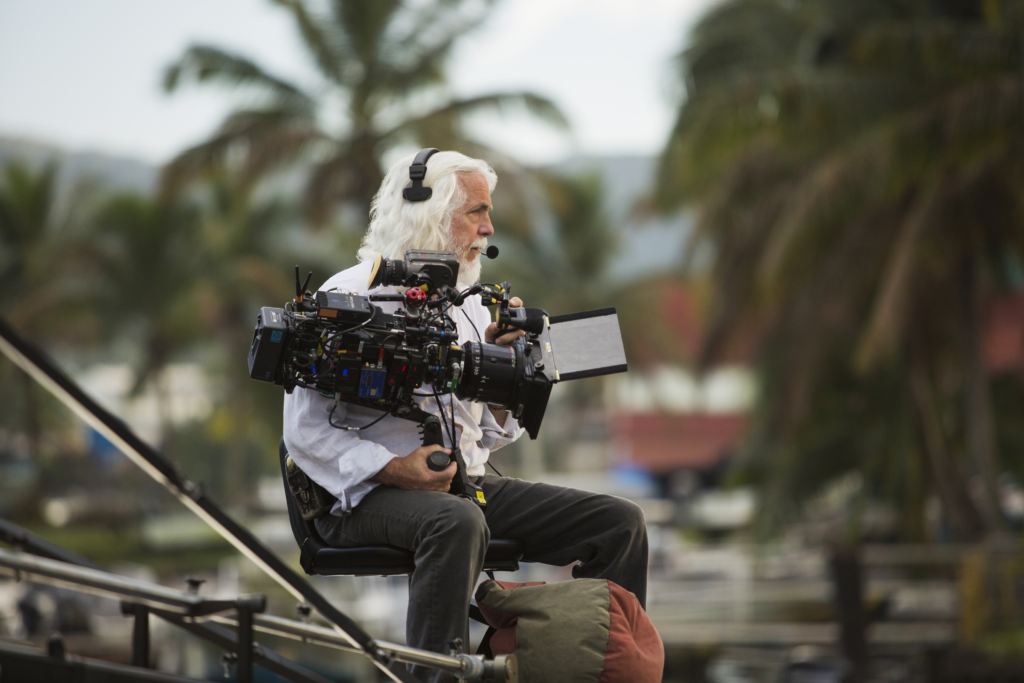
To understand the look of this film, you have to understand Robert Richardson. A three-time Academy Award winner, Richardson has a signature style that is impossible to miss: bold, high-contrast, and famously “hot” top-lighting.
Richardson captures visceral emotion by embracing heightened reality. He isn’t afraid to let highlights clip or to crush blacks if it serves the mood. He’s known for his affinity for wide-angle lenses and deep focus, creating images that feel sharp and immediate. In Casino, he takes these signatures and pushes them into a baroque sensibility. The camera here isn’t a passive observer; it’s an active participant, often reacting to the violence onscreen just as an audience member would.
Inspiration Behind the Cinematography
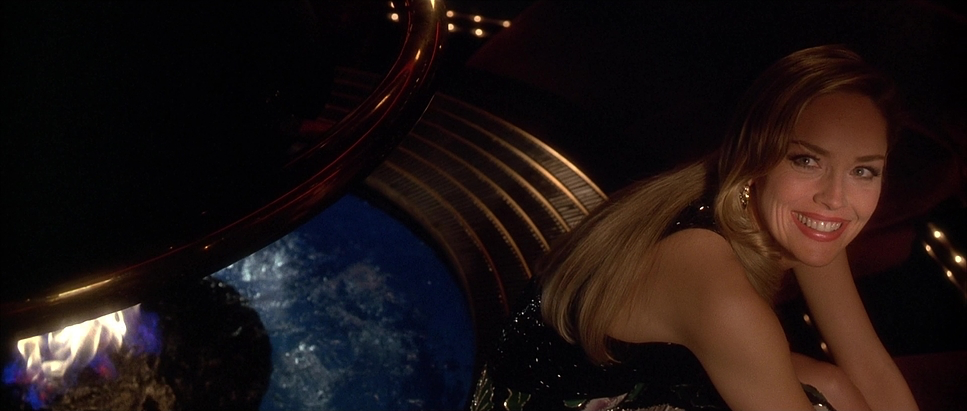
The visual strategy of Casino is rooted in a duality: the glittering illusion of the Tangiers Casino and the ugly reality of the mob running it. The story is adapted from Nicholas Pileggi’s book, based on real figures like Frank “Lefty” Rosenthal and Anthony Spilotro. This grounding in reality gave Richardson a specific sandbox to play in.
The cinematography starts by reveling in the opulence of the Tangiers (shot at the Riviera and Landmark Hotels). It’s a world of excess, where money flows and presentations are theatrical. But beneath the neon veneer, the darker machinations of the Chicago mob are constant. The visual language mirrors the “golden age” of Vegas mob rule unraveling. We start with a fantasy of power and slowly descend into a chaotic nightmare—a visual metaphor for the American dream twisted into something unrecognizable.
Camera Movements
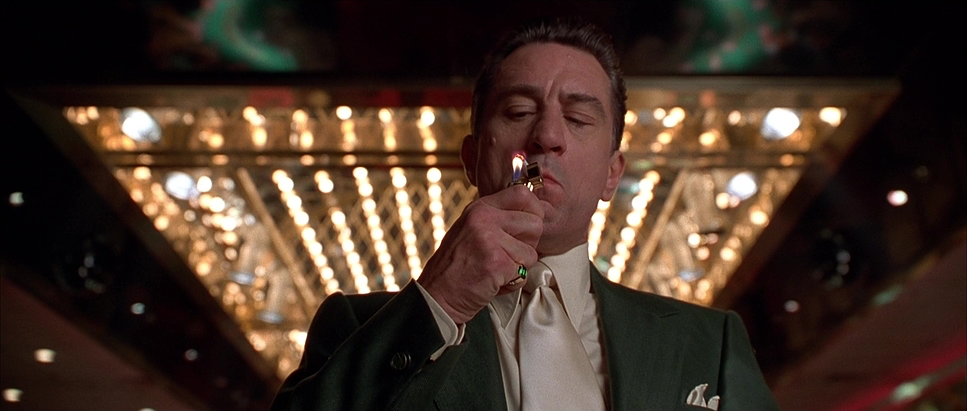
Scorsese and Richardson’s camera work in Casino is restless. It echoes the volatile energy of the characters, specifically the contrast between Ace Rothstein’s control and Nicky Santoro’s chaos.
I actually heard comedian Bill Burr breakdown the cinematography of Casino once, and he made a brilliant observation about the camera work around Nicky Santoro. He noted that when Nicky is on a rampage, the camera acts “terrified” of him floating untethered, struggling to keep pace, constantly wavering. It’s a subtle personification of the dread Nicky inspires; the camera operator seems physically afraid to get too close.
Conversely, for Ace Rothstein, the camera usually glides. It sweeps through the casino floors, showcasing the scale of his domain with confident tracking shots. Yet, even Ace’s scenes are punctuated by those trademark Scorsese “whip pans” and quick zooms, hinting that his control is an illusion. The long takes immerse us in the geography of the casino, maintaining a sense of uninterrupted reality even as the violence encroaches.
Compositional Choices
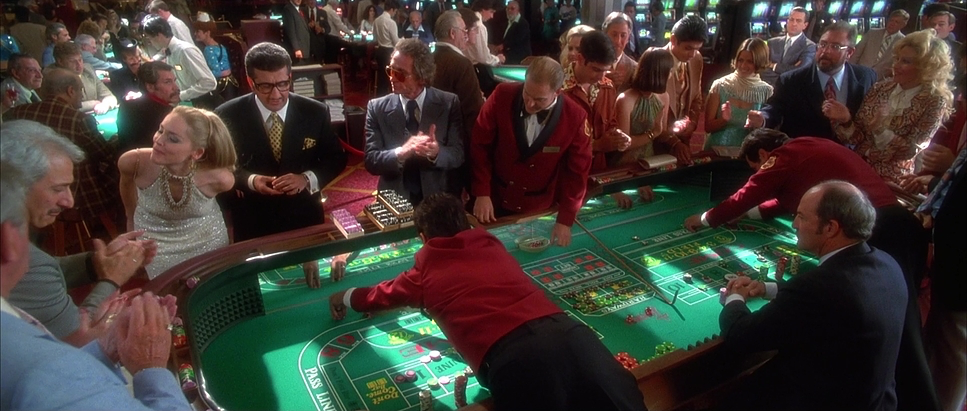
Compositionally, the film is a study in power dynamics. Richardson leans heavily on wide-angle lenses (likely Panavision Primes), often placing characters in expansive settings that emphasize both their grandeur and their isolation.
A perfect example is the meeting in the desert. In the “wide breadth of the desert,” the shouting match between Sam and Nicky feels strangely tight and cramped. By using a wide lens but blocking the actors close together, the composition creates a claustrophobic feeling within a vast landscape a “knife fight in a phone booth” effect.
There is also a recurring motif of reflective surfaces mirrors, glass, and eyewear. Sam’s oversized sunglasses become a canvas. In one iconic shot, Nicky’s car speeds toward Sam, and the reflection fills the entire lens. It’s a subjective depth cue that forces the audience into Sam’s perspective, making us feel the oncoming threat of Nicky’s rage purely through visual geometry.
Lighting Style
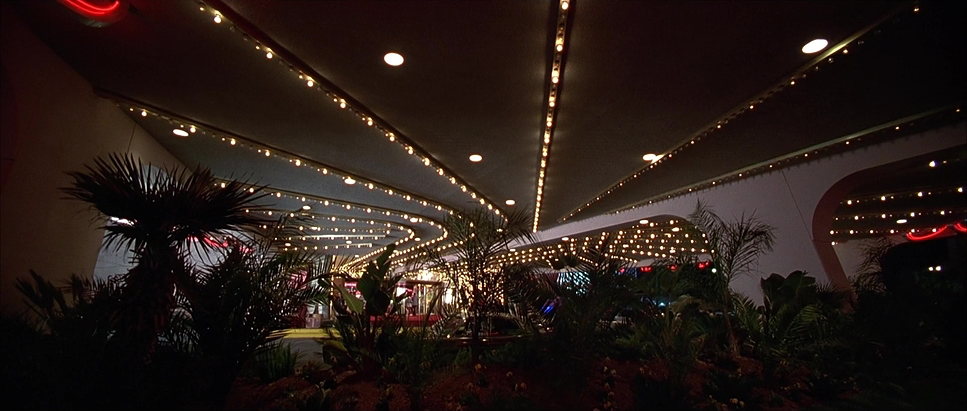
Richardson’s lighting in Casino is audacious. It evolves to match the narrative arc, moving from a warm, glamorous glow to something much harsher.
Initially, the casino interiors are bathed in motivated lighting from chandeliers and neon signs, creating a rich tapestry of practical sources. It’s the exaggerated glow of a fantasy land. However, Richardson is famous for his “top light” a technique Bill Burr described as “God looking down.” It’s a hard, theatrical spotlight that cuts characters out of the background. It isn’t naturalistic; it’s a stylized choice that frames characters as if they are under divine or infernal judgment.
As the story spirals, the lighting shifts. The night scenes become darker, with deeper shadows and a sicklier quality. The desert, initially sun-drenched, morphs into an oppressive landscape under a brutal sun. It’s a dynamic range decision, pushing the contrast ratio to extremes to sculpt faces and mood.
Lensing and Blocking
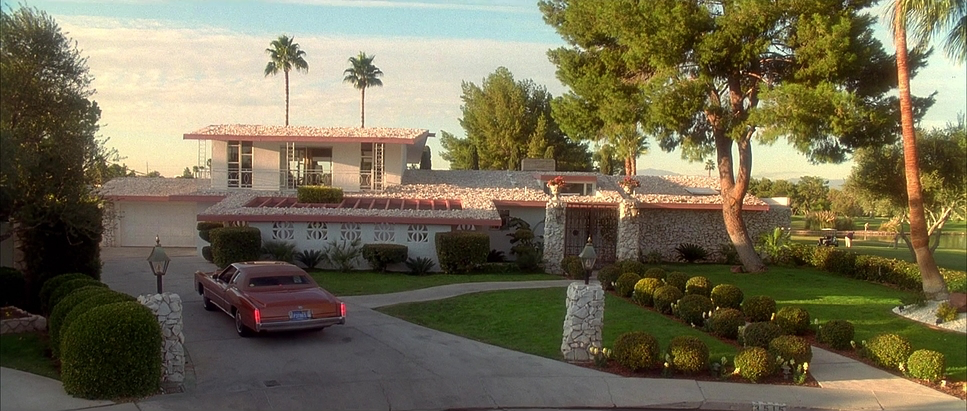
The lensing choices are fundamental to the film’s disorienting experience. Richardson frequently employs wide-angle lenses for dramatic scenes, which naturally distort perspective. This draws the viewer deeper into the frame, making the casino floors look endless and the faces look intense, almost bulging toward the audience.
This works in tandem with the blocking. In that desert confrontation, the wide lens makes the space feel enormous, yet the actors are staged almost nose-to-nose. It creates a psychological amplifier, making their verbal assault feel uncomfortably intimate. Richardson then switches to telephoto lenses for observational moments, creating a sense of surveillance or detachment. This shifting visual rhythm keeps the viewer on edge.
Color Grading Approach
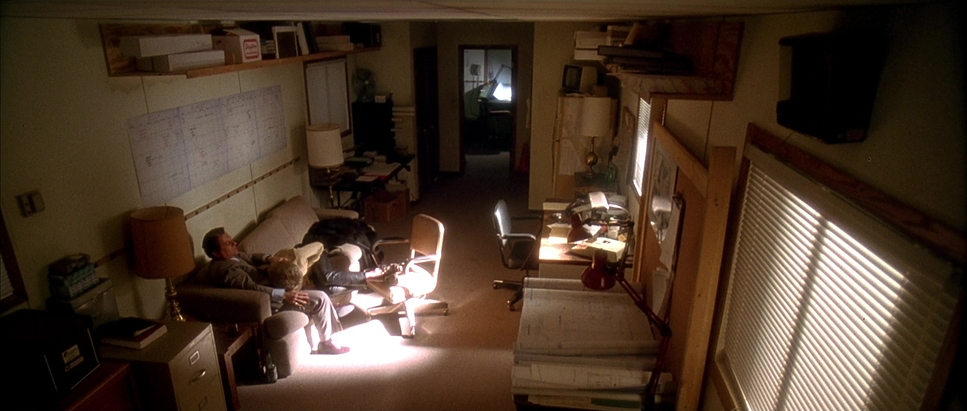
From a colorist’s perspective, Casino is a fascinating case study in analog manipulation. The grading isn’t just about “looks”; it’s about narrative progression.
The early sequences are graded with high saturation. We are looking at a palette of deep blues, luxurious golds, and opulent reds specifically the warm, saturated yellows associated with the 1980s setting. The highlight roll-off here is masterful. Because this was shot on film (likely the EXR stocks prevalent in the 90s), the bright neon lights bloom and taper off naturally rather than clipping digitally.
As the glamour fades, so does the color. The palette subtly shifts toward cooler, grittier tones. The vibrant reds become bloodier, the yellows turn sickly, and the blues desaturate into steely grays. By the time we reach the cornfield finale, the world feels cold and stripped of life. The blacks are kept rich and deep (a hallmark of the print stocks of that era), providing a solid foundation for the contrast without crushing the shadow detail.
Technical Aspects & Tools
Casino – Technical Specs
| Genre | Crime, Drama |
|---|---|
| Director | Martin Scorsese |
| Cinematographer | Robert Richardson |
| Production Designer | Dante Ferretti |
| Costume Designer | Rita Ryack, John Dunn |
| Editor | Thelma Schoonmaker |
| Time Period | 1970s |
| Color | Warm, Saturated |
| Aspect Ratio | 2.35 – Super 35 |
| Format | Film – 35mm |
| Lighting | Soft light |
| Lighting Type | Artificial light, Practical light, Mixed light, Tungsten, Fluorescent |
| Story Location | Nevada > Las Vegas |
| Filming Location | Las Vegas > Riviera Hotel |
| Camera | Panavision Panaflex, Panavision Panastar |
| Lens | Panavision Primo Primes |
| Film Stock / Resolution | 5248/7248 EXR 100T, 5293/7293 EXR 200T |
Casino was a 35mm production, utilizing the Super 35 format with a 2.35 aspect ratio. Richardson relied on Panavision Panaflex and Panastar cameras, paired with Panavision Primo Primes.
The choice of film stock was critical to the look. They utilized Kodak’s EXR series specifically 5248 (EXR 100T)and 5293 (EXR 200T). The 5293 was a workhorse stock of the 90s, offering a tight grain structure but enough latitude to handle the high-contrast lighting of the casino floor without falling apart in the shadows.
Lighting these massive locations required a blend of HMI lights for daylight simulation and tungsten units for the warm interiors. The mix of motivated practicals (neon, table lamps) with Richardson’s unmotivated, hard backlights created that unique, heightened reality. It’s a technical achievement that required an intricate dance of dolly tracks and crane arms to maintain the constant motion that defines the film’s pacing.
- Also read: L.A. CONFIDENTIAL (1997) – CINEMATOGRAPHY ANALYSIS
- Also read: GREEN BOOK (2018) – CINEMATOGRAPHY ANALYSIS
Browse Our Cinematography Analysis Glossary
Explore directors, cinematographers, cameras, lenses, lighting styles, genres, and the visual techniques that shape iconic films.
Explore Glossary →