Avengers: Endgame isn’t just a movie; it’s a stress test for modern digital cinematography. When you sit down to watch a three-hour finale that has to balance intimate grief with a CGI army of thousands, you stop looking at the plot and start looking at the pipeline. How do you maintain visual consistency when you’re jumping from a grim, naturalistic farmhouse to a purple alien planet? The answer lies in a rigid, almost scientific adherence to format. It’s a beast of a production, and while it sometimes feels more like engineering than art, the technical craft required to keep this ship afloat is undeniable.
Stepping into Endgame, the first thing that hit me wasn’t the fanfare, but the stillness. For a blockbuster, the opening act is daringly quiet—visually speaking. We aren’t greeted with the usual high-contrast, high-saturation superhero gloss. Instead, we get a murky, desaturated world that genuinely feels like a hangover from Infinity War. The challenge for the Russo Brothers and cinematographer Trent Opaloch wasn’t just “going big.” It was managing a tonal whiplash that few films survive. They had to grade a funeral, a heist movie, and a war film all in one timeline, and make it look like they belong in the same universe. It’s not perfect, but the fact that it works at all is a testament to strict color management and huge sensor sizes.
About the Cinematographer
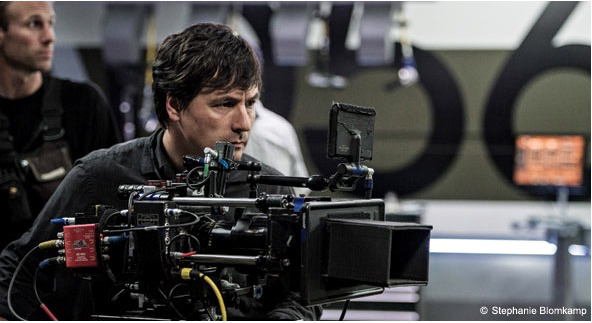
Trent Opaloch has been the visual architect for the Russos since Winter Soldier, and you can see his evolution here. In the Captain America days, his work was gritty, handheld, and reactive—very Bourne identity. But Endgame required him to abandon that shakiness for something much more stable and operatic. He’s no longer shooting a spy thriller; he’s shooting mythology. What impresses me is his restraint. With the entire MCU toy box at his disposal, he resists the urge to make every shot “epic.” He reserves the big moves for the third act, trusting the lighting and the actors to carry the first two hours.
Inspiration Behind the Cinematography
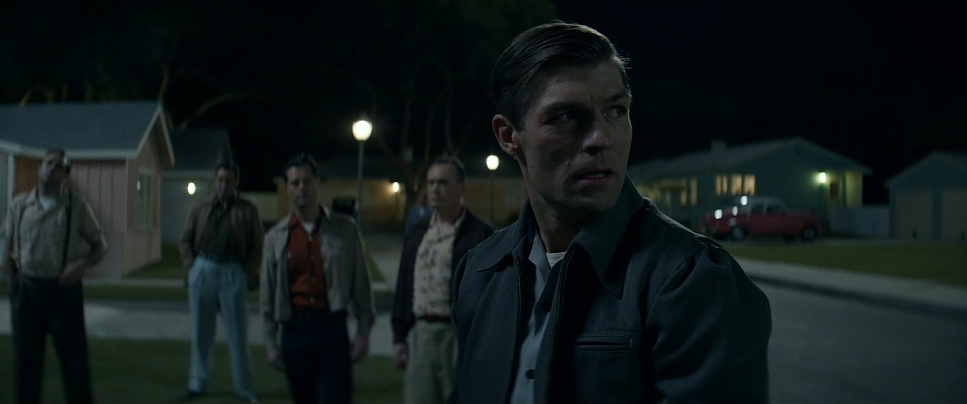
Structurally, this film is a nightmare to shoot because it’s essentially three different genres in a trench coat. The first act is a post-apocalyptic drama. The lighting is stripped back, leaning heavily on soft, directional sources that leave the characters falling into shadow. It’s muddy, cool, and depressive—a bold choice for a Disney tentpole.
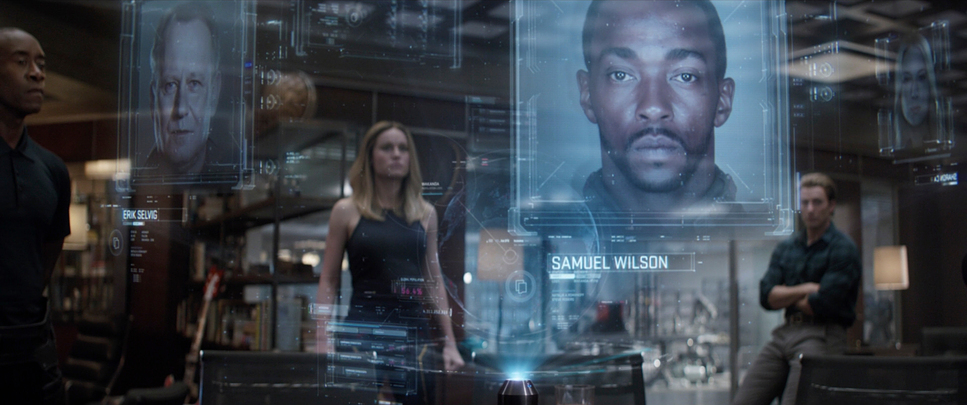
Then, we shift into the “Time Heist,” which feels cleaner, almost clinical. The interiors of the Avengers compound are lit with practical LEDs and fluorescents, giving us a neutral white balance that contrasts sharply with the gloom of the opening. Finally, the third act is pure comic book splash page. The inspiration here is clearly drawn from classic large-scale battle paintings—chaos, but organized chaos. The visual language shifts from intimate close-ups to massive wides that are designed solely for the IMAX canvas.
Camera Movements
In the early, somber sections, the camera is surprisingly lethargic. We see a lot of slow, creeping dollies and locked-off shots. This lack of kinetic energy does a great job of selling the team’s defeat. They aren’t moving fast because they have nowhere to go.
However, once the portal scene hits, Opaloch wakes up. The camera work in the final battle is a mix of sweeping crane moves (likely Technocrane) to establish geography, and snappy tracking shots that follow the “football”—the Infinity Gauntlet—from hero to hero. What’s interesting is the “floating” quality of the camera during the battle. Even amidst the CGI madness, the camera movement feels weighted, avoiding that floaty, virtual-camera feel that plagues many lesser VFX films. It grounds the spectacle, making the punches feel like they actually connect.
Compositional Choices
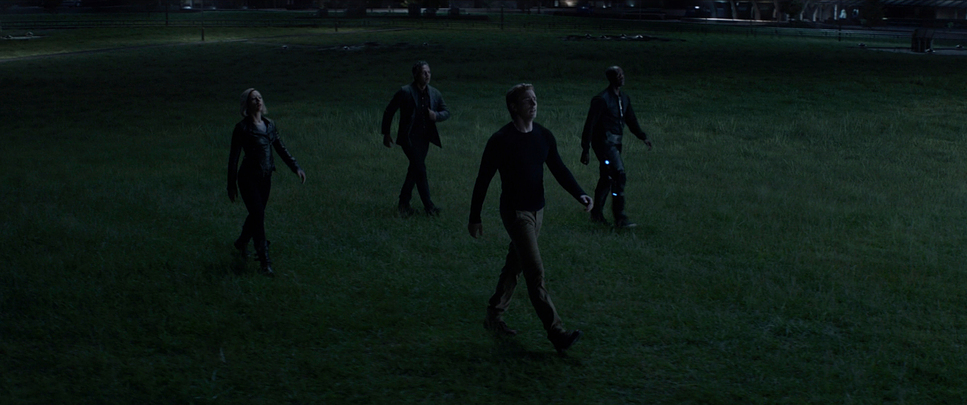
Compositionally, Endgame abuses the “clean single.” In the beginning, characters are constantly framed with massive amounts of negative space—Tony drifting in space, Natasha alone in the giant HQ. It emphasizes the void left by the Snap. They look small in the frame, overwhelmed by the empty sets.
But look at the shift in the third act. The frame density skyrockets. The “Avengers Assemble” moment is a wide shot that utilizes the full width of the 2.39 aspect ratio (and the full height in IMAX) to pack in information. Managing the eyelines here is tricky. You have characters flying, shrinking, and growing giant. Opaloch creates a hierarchy in the frame, usually centering the primary hero and letting the chaos fill the periphery. It’s a smart way to guide the audience’s eye when there are literally thousands of elements screaming for attention.
Lighting Style
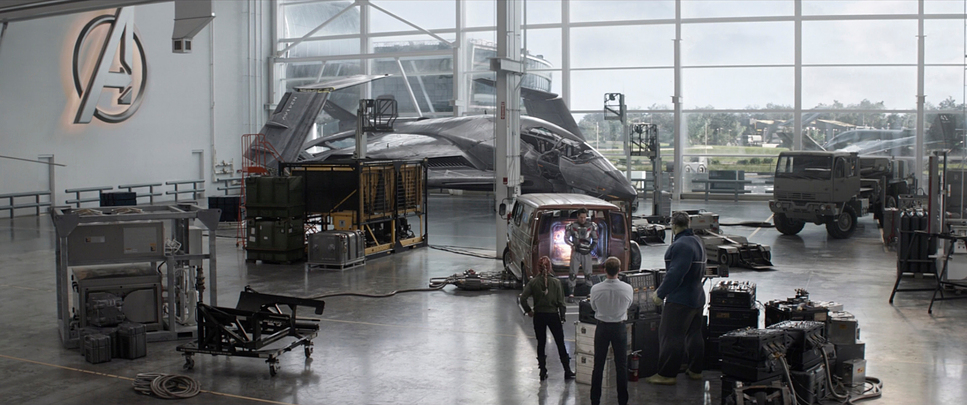
The lighting is where the emotional arc really lives. Act One is all about “dirty” light. Opaloch uses soft, naturalistic sources that feel unmotivated by “hero” lighting. The shadows aren’t crushed, but they are heavy, sitting in that lower mid-range that makes digital sensors work hard.
Contrast that with the finale. The lighting there is largely interactive. We’re talking about a scene lit by explosions, magic blasts, and glowing infinity stones. This creates a high-dynamic-range nightmare/dream for the colorist. You need deep blacks to sell the “night” look of the destroyed compound, but you need searing highlights for Captain Marvel’s photon blasts. They pushed the contrast ratios hard here, letting the highlights clip comfortably to sell the power of the weapons while keeping the ambient light low and moody.
Lensing and Blocking
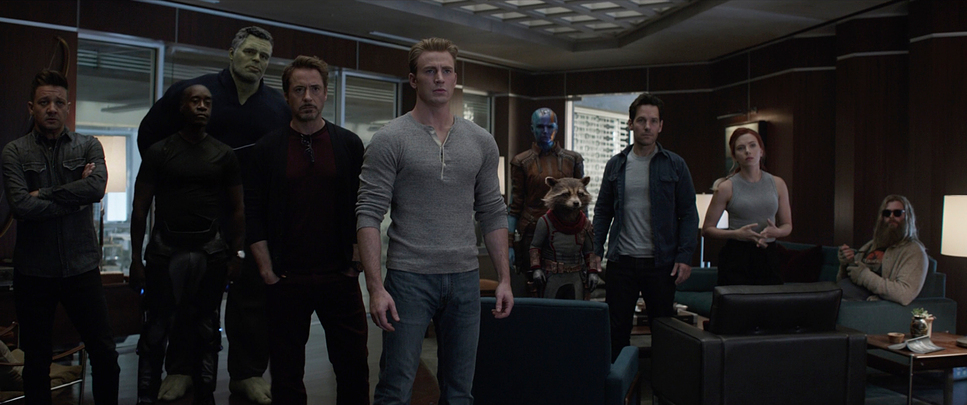
Here is where the technical specs matter. Opaloch shot this on the ARRI Alexa 65. This is a 65mm digital sensor—it’s massive. He paired it with Panavision Primo 70 and APO Panatar lenses. Why does this matter? Because of the depth of field. Even on wide shots, the large sensor creates a separation between the subject and the background that you just don’t get on Super 35mm. It gives the film a “portrait” feel even during action.
Blocking-wise, the “Portals” sequence is the standout. It’s a masterclass in staging. They manage to arrange dozens of A-list stars in a way that feels organic rather than like a class photo. They use depth cues—stacking heroes in the foreground, mid-ground, and background—to create a sense of scale that feels three-dimensional.
Color Grading Approach
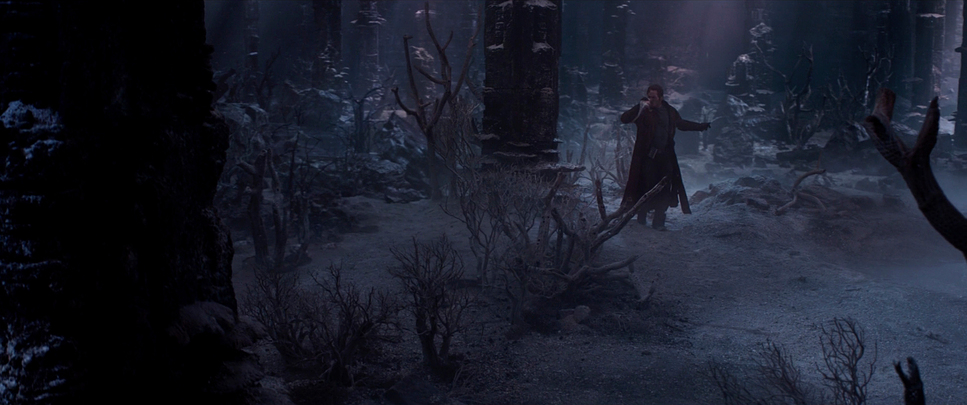
As a colorist, I have to tip my hat to Steve J. Scott at EFILM. Grading a movie with this much VFX is usually an exercise in damage control, but the look here is cohesive. The film starts with a distinct “Cool, Desaturated” palette. The blues are cyan-leaning, and the skin tones are stripped of their usual warmth—everyone looks a bit sick, which fits the narrative.
As we move to the time travel sequences, the saturation returns, specifically in the primaries—the red of the Pym particles, the blue of the Tesseract. But the third act is where the grade gets aggressive. The battlefield is dominated by a dusty, brown-grey palette (the wreckage), which allows the vibrant colors of the hero suits and magic effects to pop. Scott uses distinct hue separation to make sure that even in the brown dust, Iron Man’s red and gold or Hulk’s green cut through immediately. It’s a sharp, modern digital grade—clean, with no faux-film grain added. They embraced the digital nature of the Alexa 65 rather than trying to hide it.
Technical Aspects & Tools
Avengers: Endgame – Technical Specs
| Genre | Action, Adventure, Science Fiction, Superhero, Science-Fiction |
| Director | Anthony Russo, Joe Russo |
| Cinematographer | Trent Opaloch |
| Production Designer | Charles Wood |
| Costume Designer | Judianna Makovsky |
| Editor | Jeffrey Ford, Matthew Schmidt |
| Colorist | Steve J. Scott |
| Time Period | 2010s |
| Color | Cool, Desaturated |
| Aspect Ratio | 2.39 – Spherical, Anamorphic |
| Format | Digital |
| Lighting | Soft light |
| Lighting Type | HMI |
| VFX | CGI, Digital Composite |
| Story Location | … United States > New York |
| Filming Location | … Georgia > Atlanta |
| Camera | ARRI ALEXA 65 |
| Lens | Leica Summicron-C, Angenieux Optimo Zooms, Panavision Primo 70 Primes, Panavision APO Panatar |
| Film Stock / Resolution | Redcode RAW 8k, ARRIRAW (6.5K) |
Let’s correct the record on the gear, because it’s vital to the look. This wasn’t just “shot digitally.” The production relied on the ARRI Alexa 65 capturing in ARRIRAW (6.5K). For the VFX heavy plates, they likely utilized Redcode RAW 8K (via RED Monstro or Ranger) for flexibility in post.
Handling 6.5K and 8K source files is a storage and processing behemoth. We’re talking petabytes of data. The advantage of this massive resolution isn’t just sharpness; it’s the ability to punch in and reframe without losing quality, which is essential when you’re blending live-action with CGI characters like Thanos. The dynamic range of the Alexa sensor is the real MVP here, holding detail in the bright portal sparks while simultaneously resolving the dark textures of the rubble. It’s a high-fidelity image that holds up even on the biggest IMAX screens.
- Also read: THE CHAOS CLASS (1975) – CINEMATOGRAPHY ANALYSIS
- Also read: THE INTOUCHABLES (2011) – CINEMATOGRAPHY ANALYSIS
Browse Our Cinematography Analysis Glossary
Explore directors, cinematographers, cameras, lenses, lighting styles, genres, and the visual techniques that shape iconic films.
Explore Glossary →