I spend most of my days in a dark room at Color Culture, staring at DaVinci Resolve nodes and obsessing over skin tones. When you do this full-time, it takes a lot to impress you. But there are certain films that don’t just entertain; they serve as a reference manual. For me, Terminator 2: Judgment Day (1991) is one of those films. It’s a juggernaut that didn’t just redefine action; it fundamentally changed how we look at the future through a lens.
Forget the liquid metal CGI for a minute. Everyone talks about that. I want to look at the glass, the lights, and the film stock. T2 is a clinic in visual storytelling. It’s a film that, even today, makes me jealous as a colorist because the raw potential in every negative is just insane. So, let’s grab our metaphorical anamorphic lenses and break down why this movie still looks better than half the stuff coming out today.
About the Cinematographer: Adam Greenberg, The Visionary Behind the Lens
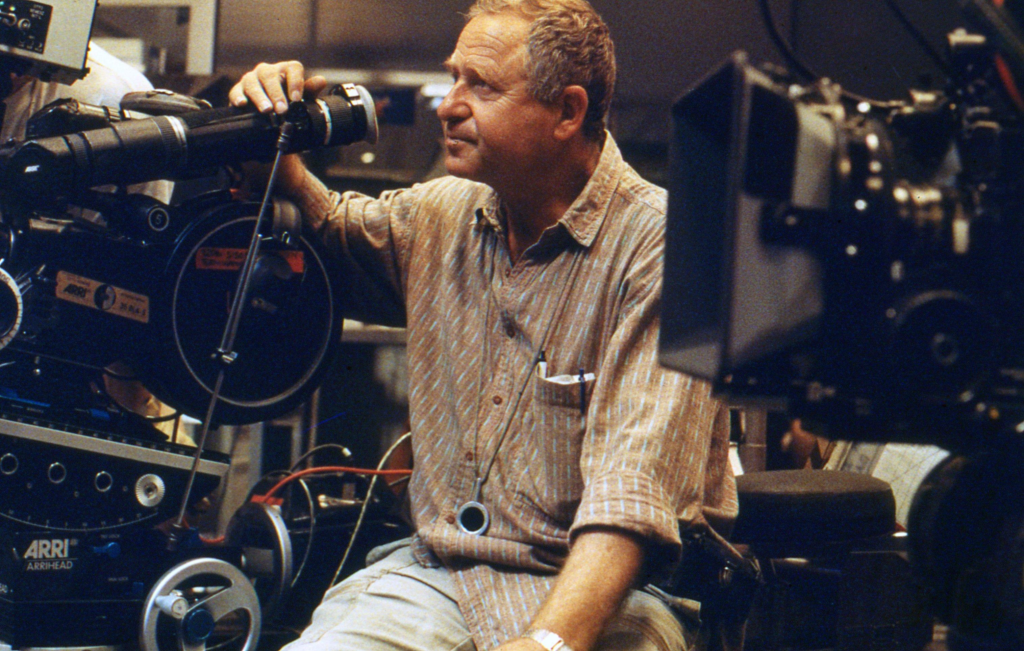
To understand the look of T2, you have to respect Adam Greenberg. He wasn’t just a “yes man” for James Cameron; he was a technician who knew how to abuse film stock to get a result. He had already worked with Cameron on the first Terminator and Rambo: First Blood Part II, so he knew the assignment: gritty, high-stakes, and physically exhausting.
Greenberg’s style is heavy. He loves high-contrast ratios and isn’t afraid of the dark. In modern cinema, we often over-light everything “just in case,” but Greenberg understood that fear lives in the shadows. What he brought to T2 was a grounding force. He took a script about time-traveling killer robots and lit it like a noir thriller. He made the impossible feel physical, ensuring that even when the T-1000 was morphing, the light hitting it felt motivated and real.
Inspiration for the Cinematography: A Leap into the Future
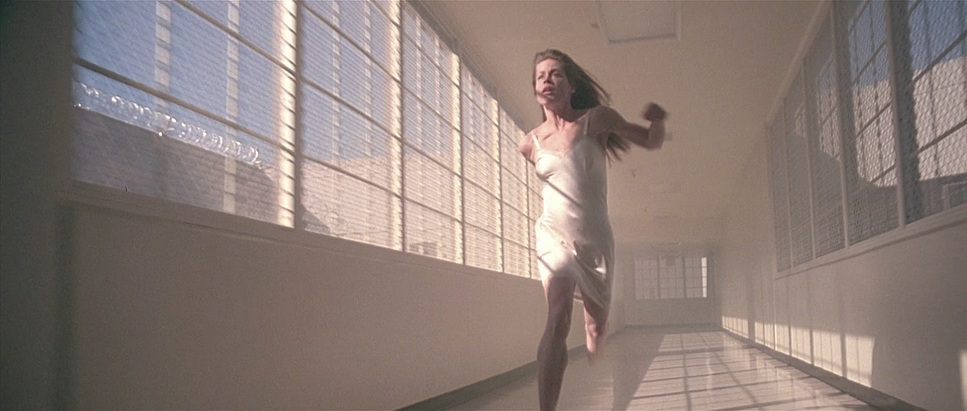
The jump from the first Terminator to the sequel is massive. The first movie was a guerilla-style indie horror flick—lots of handheld, low-light, stealing shots without permits. For T2, Cameron had the biggest budget in history (at the time). He didn’t just want it to look bigger; he wanted it to look sleek.
The visual inspiration here is “Cold Precision.” Cameron wanted the film to look expensive, but not soft. The cinematography had to bridge the gap between the dusty, warm roads of the present day and the cold, blue steel of the inevitable future. The brief wasn’t just “action movie”; it was “epic tragedy.” The camera needed to feel heavy and relentless, just like the machines hunting John Connor.
Camera Movements: The Dance of Destruction and Pursuit
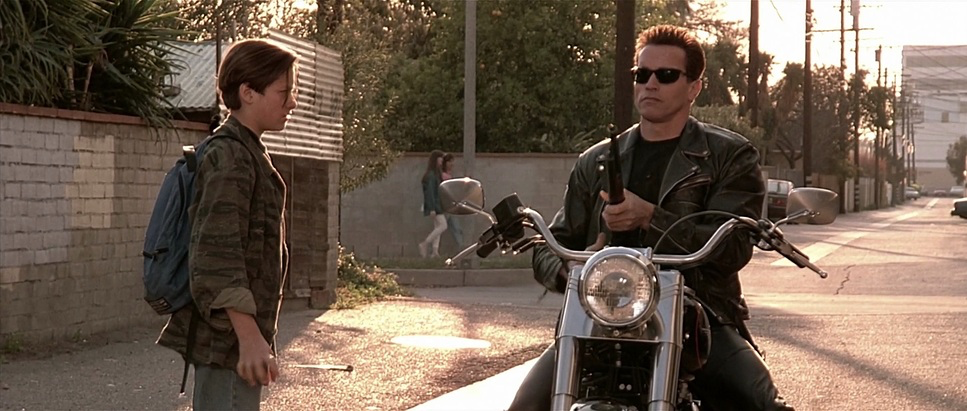
If the story is a chase, the camera is the engine. What I love about T2 is that the camera movement is rarely shaky just for the sake of “energy.” It’s precise. It’s stable.
From the opening future war sequence, the camera acts like a ghost drifting over the wreckage. It establishes scale without saying a word. But look at the canal chase. The camera isn’t just observing; it’s running alongside the bike. We get these low-angle tracking shots that make the truck look like a monster. It’s visceral, not because the camera is shaking, but because it’s placed dangerously close to the action.
And we have to mention the helicopter sequence. That isn’t CGI. That’s a real pilot flying under a real overpass, and the camera operator holding steady while risking their life. The movement flows—Steadicam work in the hospital corridors makes the T-1000 feel fluid and unstoppable, while rigid dolly moves on the T-800 make him feel like a tank. The movement dictates the character.
Compositions: Framing the Future and the Fight
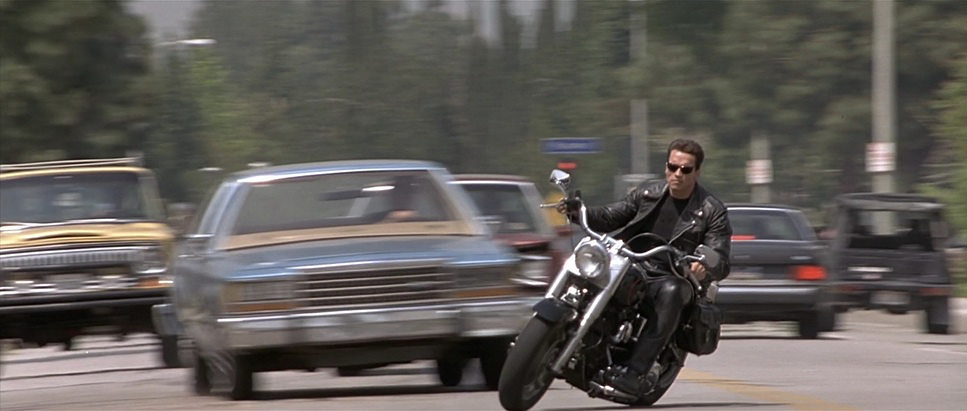
Greenberg shot this on Super 35 but composed for 2.35:1 widescreen, and he used every inch of that frame. This is a lesson in negative space.
The wide shots are lonely. Whether it’s the aqueduct or the desert, the characters are often small in the frame, surrounded by concrete or empty road. It emphasizes how vulnerable Sarah and John are. But what I really notice is the power dynamics in the framing. The T-1000 is almost always framed with center-weighted dominance or looming in the foreground.
There are shots here that are burned into my brain—like the T-800 on the Harley with the shotgun. It’s a perfect silhouette. Or the nuclear nightmare sequence. The composition is balanced, almost painterly, which makes the destruction feel even more disturbing. Nothing is accidental.
Lighting Style: Painting with Light, Shadow, and Steel
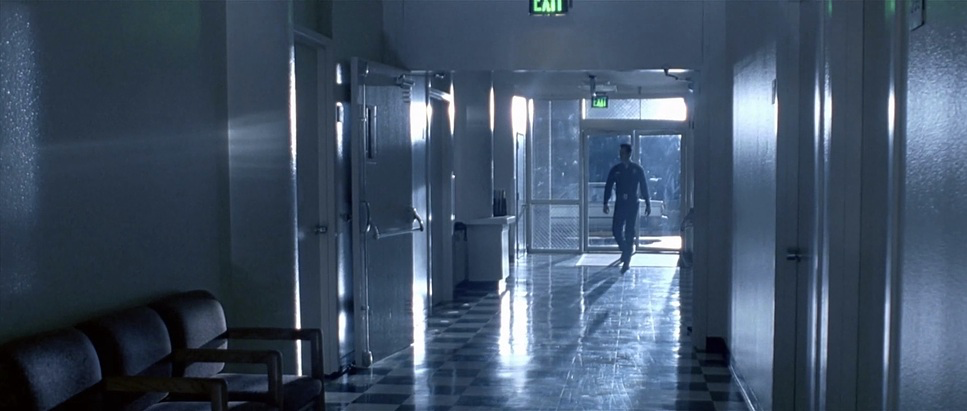
As a colorist, this is where I start geeking out. The lighting in T2 is all about mixed color temperatures, something we take for granted now but was hard to pull off on film stocks back then.
The film lives in the night. The exterior shots are famous for that “Cameron Blue”—a cool, moonlight rig that creates a monochromatic, metallic feel. It makes the Terminators’ skin look almost synthetic. It’s cold, unfeeling, and efficient.
But then you get to the steel mill, and the script flips. Suddenly, we are in a world of practicals. You have sparks, molten metal, and industrial fixtures blasting the sensor with hard, warm light. Greenberg didn’t fake this with softboxes; he used hard sources to create sweaty, oily skin textures. The contrast between the cold blue moonlight entering the mill and the warm orange fire inside isn’t just a look; it’s the story. It’s the cold machine entering the hot forge.
Lensing and Blocking: Anamorphic Grandeur and Choreographed Chaos
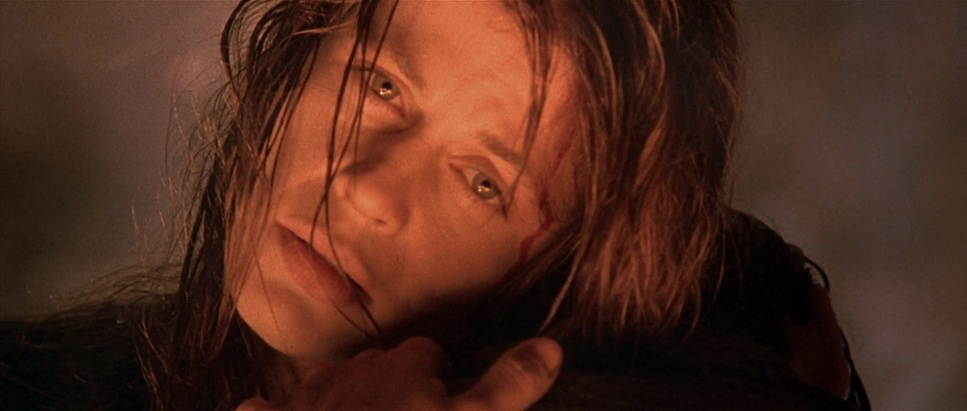
While Super 35 was the format, the feel is anamorphic. Greenberg used spherical lenses but matted for widescreen to get that epic scope without the distortion of vintage anamorphics, keeping the visual effects cleaner.
The depth of field management is huge here. Because they were shooting at night with slow film stocks, the focus puller had a nightmare of a job. But the shallow depth of field works for the story—it isolates the Connors from the world.
Blocking-wise, it’s a masterclass in multi-plane action. Look at the Cyberdyne lobby shootout. You have the T-800 in the foreground, police in the mid-ground, and SWAT in the background. The blocking is deep. It allows the editor to hold on shots longer because the action develops within the frame, rather than relying on a million cuts to make it exciting.
Color Grading: The Soul of Steel and Fire
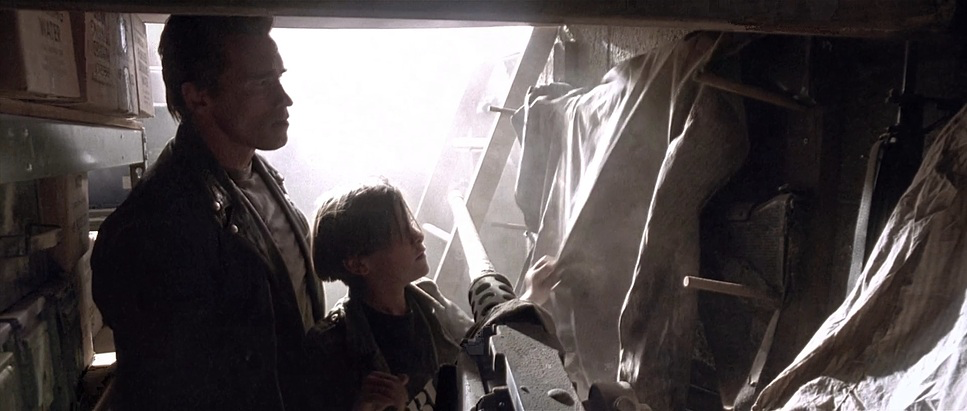
Okay, let’s talk grading. In 1991, this was done via photochemical timing—printer lights—not digital grading suites. That makes the consistency even more impressive.
The palette of T2 is arguably the grandfather of the “Teal and Orange” blockbuster look, but here it feels organic, not forced. The “Teal” isn’t a digital tint; it’s the color of the lighting gels and the atmosphere. If I were grading this today in Resolve, I wouldn’t just slap a LUT on it. I’d be looking at the separation. The shadows in the future war sequences are pushed toward cyan, which helps separate the skin tones (which are often desaturated and grimy) from the environment.
The highlights in the steel mill are fascinating. On a waveform, they are blown out, but they roll off beautifully because it’s film. The warmth is rich—heavy in the red/yellow channel. As a colorist, I love how the film handles mixed lighting. You have shots with cool fluorescent greens in the hospital clashing with warm tungsten. Today, we might try to “fix” that and make the white balance perfect. Greenberg left it dirty. That chromatic contrast adds so much texture to the image. It feels industrial and toxic.
Technical Aspects: Pushing the Boundaries of Cinema
TERMINATOR 2: JUDGMENT DAY (1991)
Technical Specifications
| Genre | Action, Cyberpunk, Science Fiction, Thriller, Time Travel, Satire, Technology, Artificial Intelligence, Political, Dystopian, Science-Fiction |
| Director | James Cameron |
| Cinematographer | Adam Greenberg |
| Production Designer | Joseph C. Nemec III |
| Costume Designer | Marlene Stewart |
| Editor | Mark Goldblatt, Richard A. Harris, Conrad Buff IV |
| Colorist | Skip Kimball |
| Time Period | Future |
| Aspect Ratio | 2.35 – Spherical, Super 35 |
| Format | Film – 35mm |
| Lighting | Hard light, Top light |
| Lighting Type | Artificial light |
| Story Location | … California > Los Angeles |
| Filming Location | … California > Los Angeles |
| Camera | Arriflex 35 IIIc, Arriflex BL4 |
| Lens | Cooke Varotal Lenses, Zeiss Super Speed |
| Film Stock / Resolution | 5245/7289 EXR 50D, 5296/7296 EXR 500T |
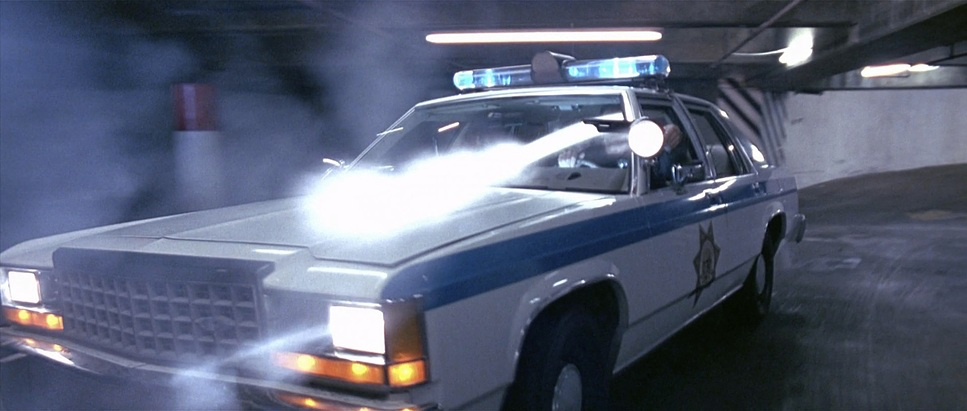
Terminator 2 is famous for CGI, but the cinematography is what sold the lie. Greenberg had to light empty plates for the T-1000 knowing exactly where the CGI reflection would be later. That requires insane foresight.
They used everything: elaborate crane rigs, motion control for the FX shots, and custom mounts for the car chases. But the real unsung hero is the rear-projection work. Some of the driving scenes use rear projection rather than green screen. It looks a bit dated now if you pause it, but the interactive lighting on the actors’ faces is real, which sells the shot better than a bad green screen key ever could. They matched the practical effects (miniatures of the nuclear blast) with the full-scale photography so seamlessly that you often can’t tell where the model ends and the set begins.
- Also Read: THE GREEN MILE – CINEMATOGRAPHY ANALYSIS & STILLS
- Also Read: CINEMATOGRAPHY ANALYSIS OF THE PIANIST & STILLS
Browse Our Cinematography Analysis Glossary
Explore directors, cinematographers, cameras, lenses, lighting styles, genres, and the visual techniques that shape iconic films.
Explore Glossary →