Hi, I’m Salik Waquas. If you’ve been following my work at Color Culture, you know I’m usually obsessing over nodes in DaVinci Resolve or arguing about why “teal and orange” needs to die. But today, I’m putting on my filmmaker hat to talk about a movie that essentially rewrote the book on historical trauma. I know what you’re thinking: “Salik, another Holocaust movie analysis? Really?” But stick with me.
When we talk about this genre, everyone immediately points to Schindler’s List. And don’t get me wrong, Spielberg’s documentary-style masterpiece is immersive and horrific. But Roman Polanski’s The Pianist (2002) is a different beast entirely. It isn’t an ensemble epic about a global catastrophe; it’s a singular, claustrophobic nightmare viewed through one set of eyes. As a colorist, I look for how visuals drive emotion, and frankly, The Pianist is a masterclass in restraint. It avoids the sweeping, heroic gestures of typical war epics to focus on the sheer dumb luck of survival. It is a film about desolation, isolation, and the terrifying reality of being a spectator to your own destruction. Let’s break down how the cinematography pulls this off.
About the Cinematographer
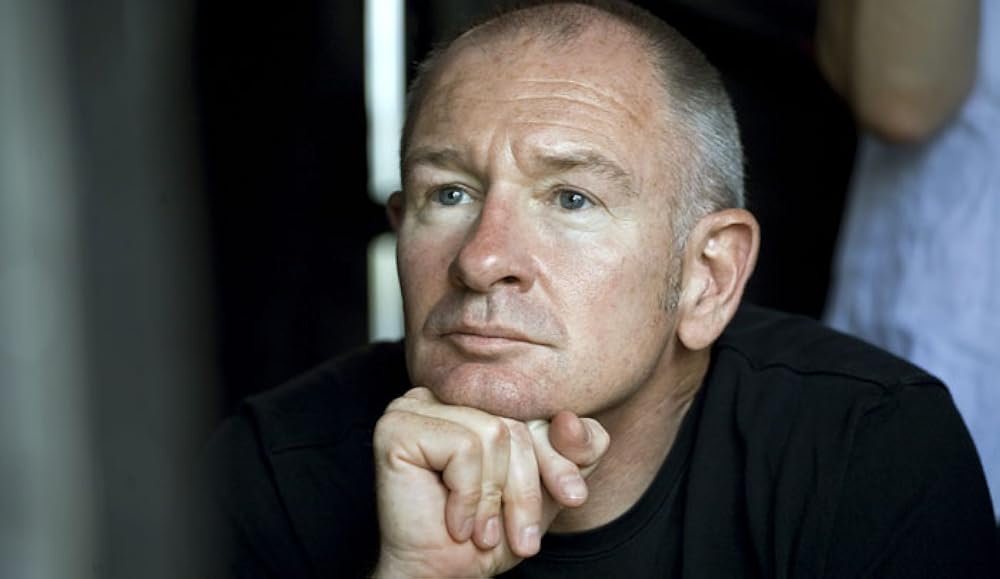
The man behind the lens here is Pawel Edelman. While Polanski steered the ship, Edelman was the one ensuring it looked appropriately terrifying as it sank. In our line of work, a DP’s job is usually to translate the director’s psychological state into light and shadow. Edelman had a massive challenge here: he had to shoot a film that slowly drains the life out of its own image—literally.
Edelman isn’t just capturing action; he is capturing a gradual desaturation of the picture to mirror the protagonist’s decay. It’s a bold move. Most cinematographers fight to keep the image popping (we colorists spend half our lives trying to fix flat images), but Edelman leans into the flatness. He creates a visual language that starts with the vibrancy of 1939 Warsaw and ends in a monochromatic hellscape. It’s a testament to his skill that the film remains visually arresting even as it becomes progressively dull and gray. He understands that sometimes, the most powerful choice a cinematographer can make is to strip away the beauty until only the raw, ugly truth remains.
Inspiration for the Cinematography
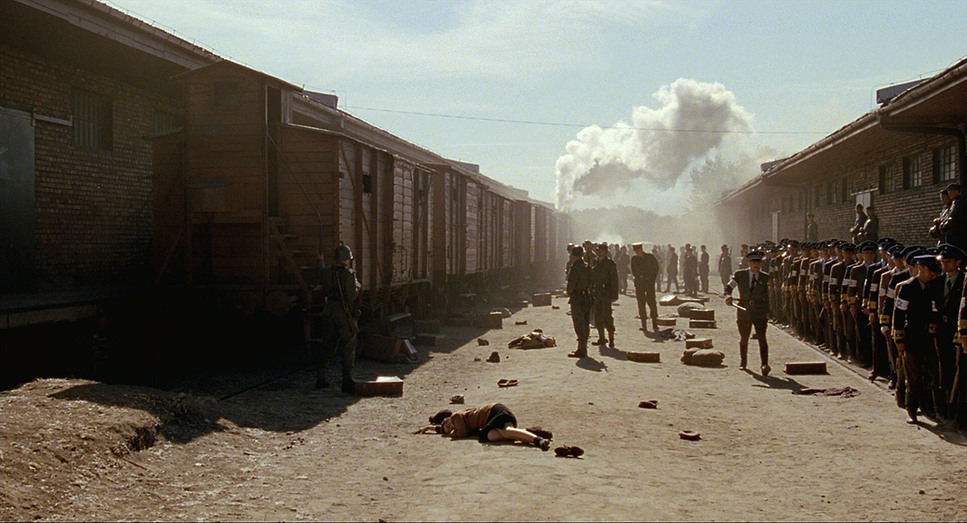
You can’t talk about the look of The Pianist without talking about Roman Polanski’s personal history. This isn’t just a director adapting a script; this is a man exorcising his demons. Polanski is a Holocaust survivor himself—a child survivor who lost his mother to Auschwitz. When you watch the film, you are literally seeing Polanski’s childhood memories projected onto the screen.
This personal trauma informs every frame. The desolation is portrayed with an accuracy that only someone who lived through it could achieve. Unlike Spielberg, who creates a broad, multi-perspective narrative, Polanski restricts the visual scope to Władysław Szpilman’s POV because that was his experience: narrow, confused, and terrified. The production design and the specific focus on the vulnerability of children—like the gut-punching scene of a boy dying while trying to crawl through a wall—are ripped straight from the director’s psyche. The inspiration here isn’t cinematic; it’s autobiographical. The camera doesn’t act like a movie camera; it acts like a traumatized memory.
Camera Movements used
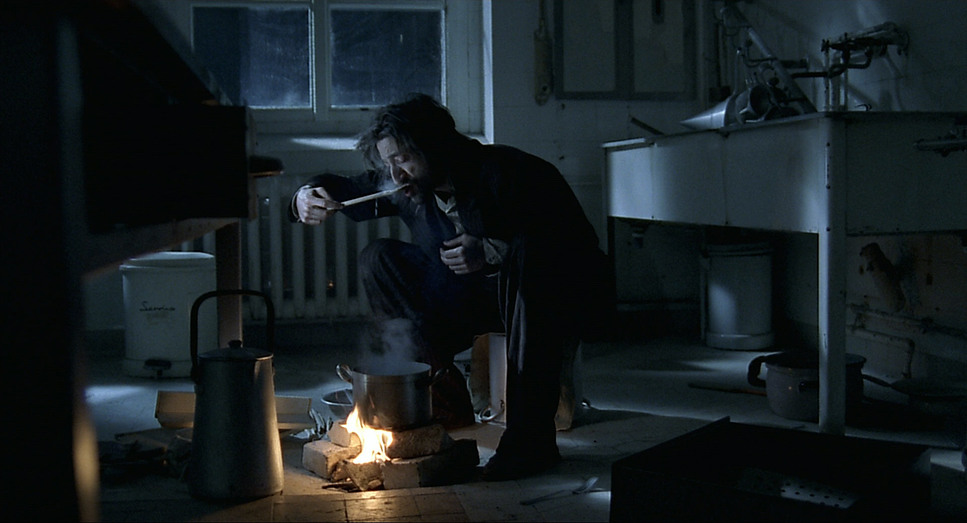
If you crack open The Filmmaker’s Eye, you’ll read about how camera movement establishes the relationship between the subject and the audience. In The Pianist, the camera movement is defined by passivity. Polanski effectively makes us a passenger in Szpilman’s personal journey. We aren’t leading the action; we are being dragged along with it.
The camera often adopts a fly-on-the-wall perspective. Instead of frantic handheld shakiness to simulate action (a la Saving Private Ryan), the camera often remains terrifyingly static or moves with a slow, creeping dread. It forces us to observe. When Szpilman looks out a window, the camera lingers. We become bystanders. This technique creates a crushing sense of helplessness. We see only a small sample of the chaos unfolding, just like Szpilman does. By restricting the camera’s knowledge to the protagonist’s limited view, the cinematography traps us. We are playing the longest and most dangerous game of hide-and-seek, and the camera movement—or lack thereof—ensures we feel every agonizing second of the wait.
Compositions
Compositionally, The Pianist relies heavily on the motif of the window. I’d argue the window frame is the most important compositional element in the movie. It serves as a visual metaphor for the isolation of the Jewish community. We constantly see Szpilman framed behind glass, watching atrocities—like a man in a wheelchair being thrown off a balcony—from a distance.
This framing does two things. First, it physically separates the protagonist from the world, emphasizing his loneliness. Second, it utilizes the concept of frames within frames, which guides the viewer’s eye and adds depth. But here, it adds psychological depth. We are trapped in the room with him. The composition often places Szpilman in the corner of the frame or dwarfed by his environment, utilizing visual hierarchy to show his powerlessness. By making him small, the film emphasizes his lack of power against the overwhelming force of the Nazi occupation. It’s a masterclass in using negative space to imply vulnerability.
Lighting Style
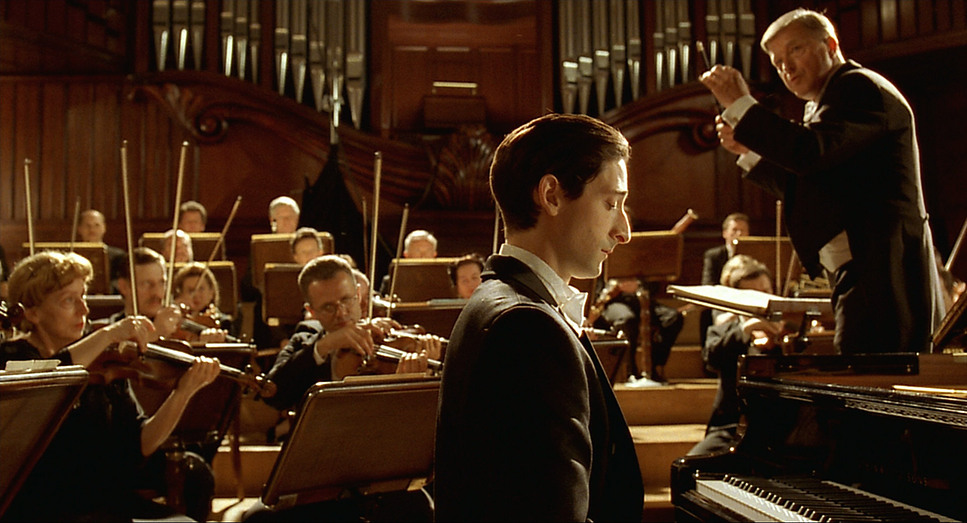
As a colorist, I’m obsessed with how light tells a story. The lighting in The Pianist evolves from the warm, practical glow of the pre-war apartment to the cold, harsh natural light of the ghetto. Edelman utilizes natural light to horrifying effect. There is no Hollywood glamor lighting here. When Szpilman is hiding in the ruins, the light is flat, dusty, and unforgiving.
The film operates in dark places. The lighting ratio often leaves Szpilman in the shadows, reflecting his need to remain unseen. But the brilliance lies in the contrast. Consider the scene with the German officer, Hosenfeld. The light in that abandoned house is pivotal. It cuts through the gloom, illuminating the dust motes and the piano, suggesting that humanity can be found even in the dark. The lighting doesn’t just illuminate the scene; it illuminates the subtext. It creates a mood of gloomy desperation, distinguishing the safety of the shadows from the danger of the light.
Lensing and Blocking
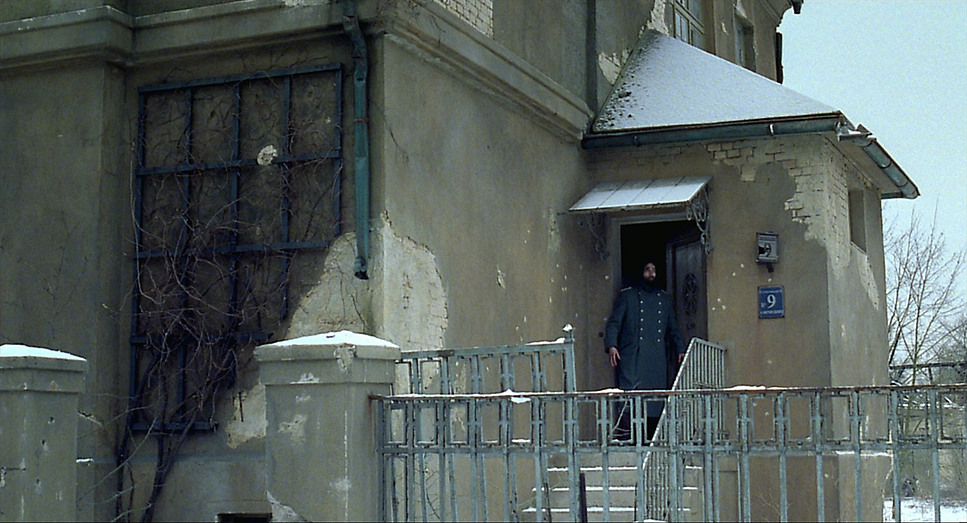
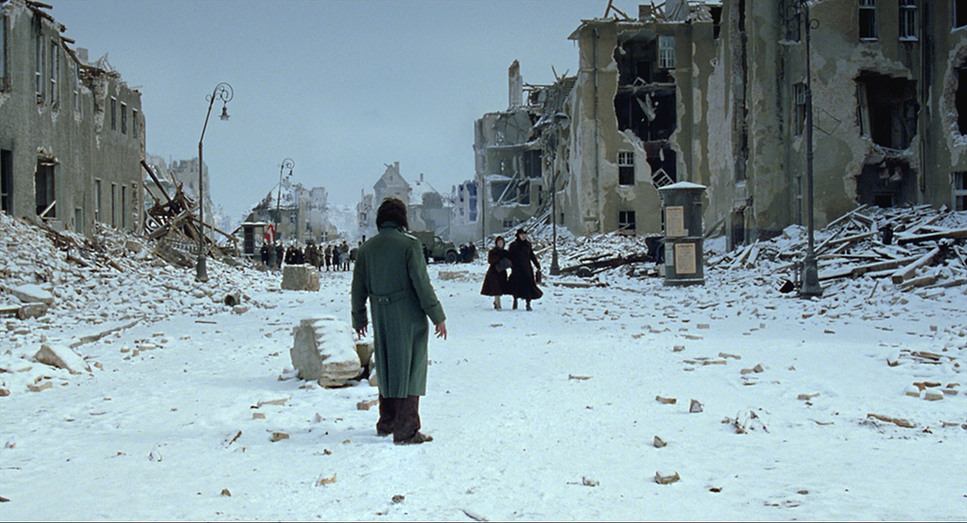
Blocking is where the director’s vision meets the lens. In The Pianist, the blocking emphasizes isolation. Szpilman is often the only moving object in a static frame of dead bodies or rubble. The lens choices complement this. We often see wide shots—extreme long shots—of the destroyed Warsaw ghetto.
Using a wide-angle lens expands the perspective along the z-axis, making the background appear to stretch out endlessly. This emphasizes the scale of the destruction and Szpilman’s insignificance within it. When we get to the medium close-ups, the blocking is intimate but uncomfortable. The camera gets close enough to see the fear in Adrien Brody’s eyes, utilizing a shallow depth of field to isolate him further from a world that wants him dead. The scene where he plays for Hosenfeld is a perfect example of blocking for power dynamics: the officer standing, Szpilman seated, yet the music bridges the gap between enemy and victim.
Color Grading
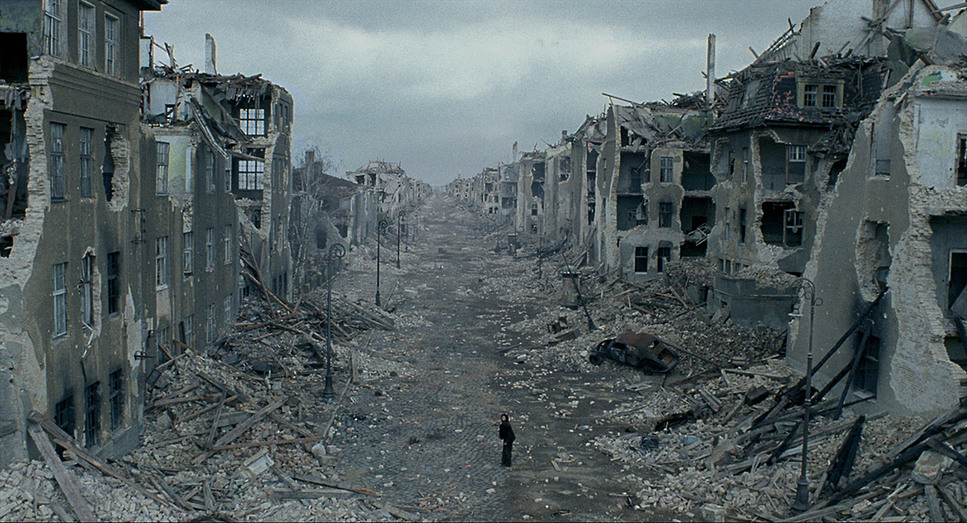
Okay, let’s talk shop. If I were grading this in DaVinci Resolve, I’d be looking at a timeline that slowly slides the saturation knob to zero. The film is famous for this technique. Edelman and Polanski decided to slowly drain the color out of the scenes as the film progresses.
We start with a relatively naturalistic palette in 1939. As the occupation takes hold and the ghetto walls go up, the colors become muted. By the time we reach the ruins of Warsaw, the film is practically monochromatic—a post-apocalyptic production design rendered in shades of gray and brown. This isn’t just an aesthetic choice; it’s a narrative one. It signifies the deterioration of the city and of Szpilman himself. As a colorist, I admire the discipline this takes. It’s tempting to keep skin tones healthy, but here, the desaturation reflects the life being drained from the world. It’s a visual representation of the “godlessness” Szpilman speaks of.
Technical Aspects
The Pianist (2002)
1.85:1 | 35mm Spherical | Moviecam Compact & SL
| Genre | Drama, War |
| Director | Roman Polanski |
| Cinematographer | Paweł Edelman |
| Production Designer | Allan Starski |
| Costume Designer | Anna B. Sheppard |
| Editor | Hervé de Luze |
| Time Period | 1940s |
| Color | Warm, Desaturated, Yellow |
| Aspect Ratio | 1.85 – Spherical |
| Format | Film – 35mm |
| Story Location | Poland > Warsaw |
| Filming Location | Earth > Europe |
| Camera | Moviecam Compact, Moviecam SL |
The technical prowess of The Pianist lies in its refusal to look away. It presents nightmare fuel with a steady hand. The visual effects (VFX) used to create the destroyed Warsaw are seamless, blending practical sets with digital matte paintings to create those haunting extreme long shots.
But the most revolutionary technical aspect is the film’s reliance on visual silence. There are moments where the sound drops, and the visual takes over completely—like the scene where the woman smothers her baby. We don’t need to see everything; the death rattle described in the dialogue combined with the stark framing is enough to destroy you. The film uses freeze frames or lingering shots on dead bodies treated like debris to desensitize the audience, just as the characters were desensitized. It’s a brutal, technical application of the camera as a witness to extermination. It doesn’t use shaky cam to create false energy; it uses stability to create undeniable truth.
- Also Read: CINEMATOGRAPHY ANALYSIS OF NOSFERATU (2024) & STILLS
- Also Read: CINEMATOGRAPHY ANALYSIS OF THE LORD OF THE RINGS: THE FELLOWSHIP OF THE RING
Browse Our Cinematography Analysis Glossary
Explore directors, cinematographers, cameras, lenses, lighting styles, genres, and the visual techniques that shape iconic films.
Explore Glossary →