The Lego Movie (2014) I’ll be honest, my initial reaction years ago was pure skepticism. A feature-length movie about plastic blocks? It smelled like a 100-minute commercial. Yet, my cynicism evaporated within the first act. It wasn’t just a “good” animated movie; it was a revelation. For someone who lives in the weeds of visual craft, this film is a masterclass in intentional aesthetic. It didn’t just tell a story; it built a world brick by meticulously rendered brick—that feels more “real” than many live-action blockbusters.
About the Cinematographer
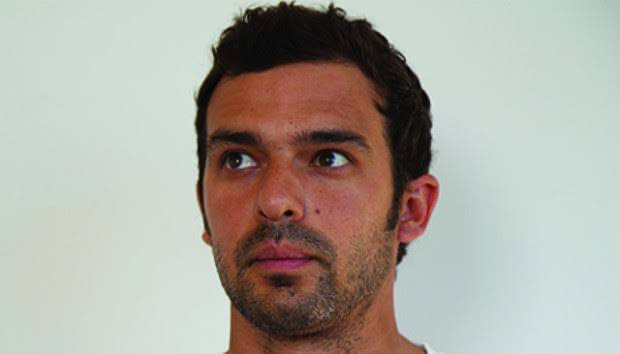
In live-action, we think of the DP as the person wrangling lights and lenses on a physical set. In animation, especially on a project this dense, the role is more like being a digital architect. While Phil Lord and Chris Miller provided the chaotic creative spark, Pablo Plaisted served as the Director of Photography. It’s important to note the collaborative nature here Chris McKay, the film’s co-director and editor, brought a rhythmic sensibility that defines the film’s pace.
Plaisted’s job wasn’t about pointing a camera; it was about inventing one. He had to define lens choices, light sources, and camera movement algorithms that obeyed the “physics” of a digital space while mimicking the imperfections of practical filmmaking. It’s a different beast than traditional DP work, requiring an intimate understanding of CGI pipelines while desperately trying to make the final image look like it wasn’t made by a computer.
Inspiration Behind the Cinematography

The core mission was audacious: make a fully CG film look indistinguishably like stop-motion animation shot in a basement. This wasn’t just a gimmick; it was the foundation of the film’s emotional weight.
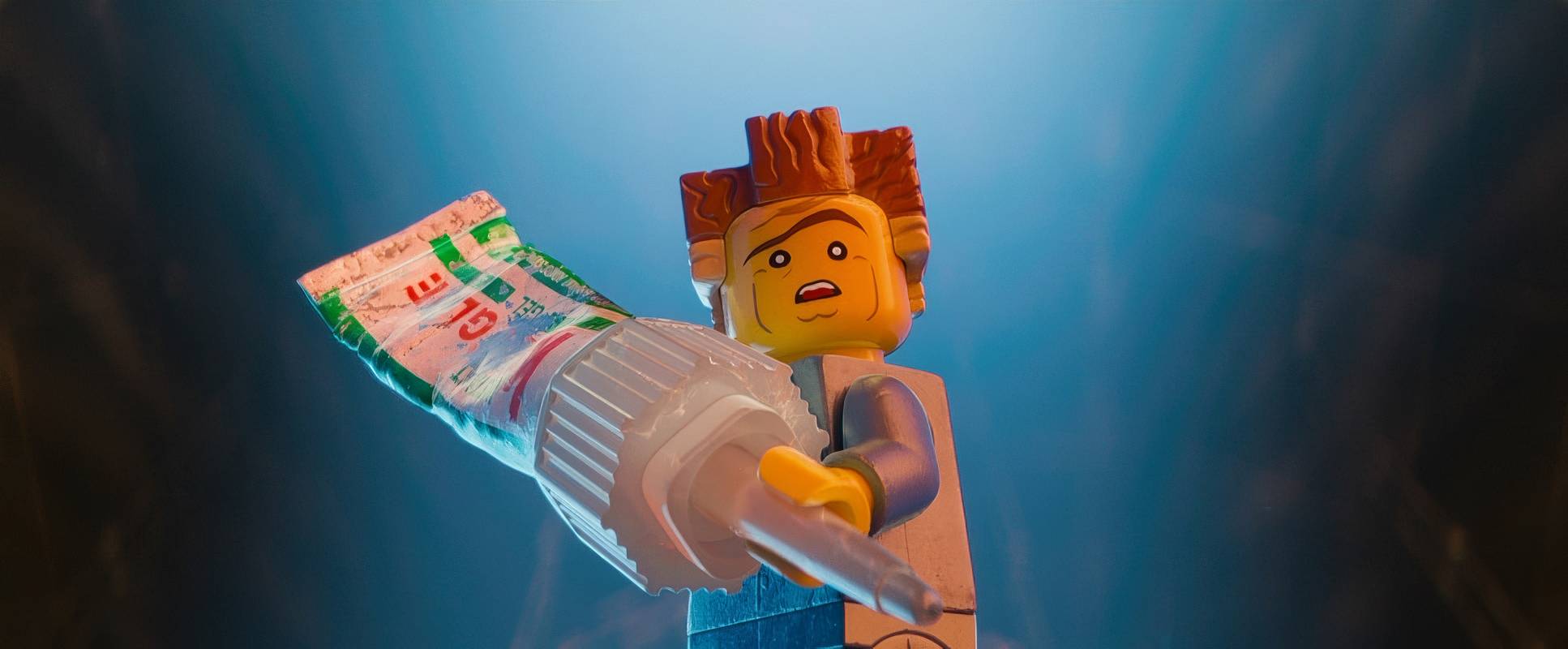
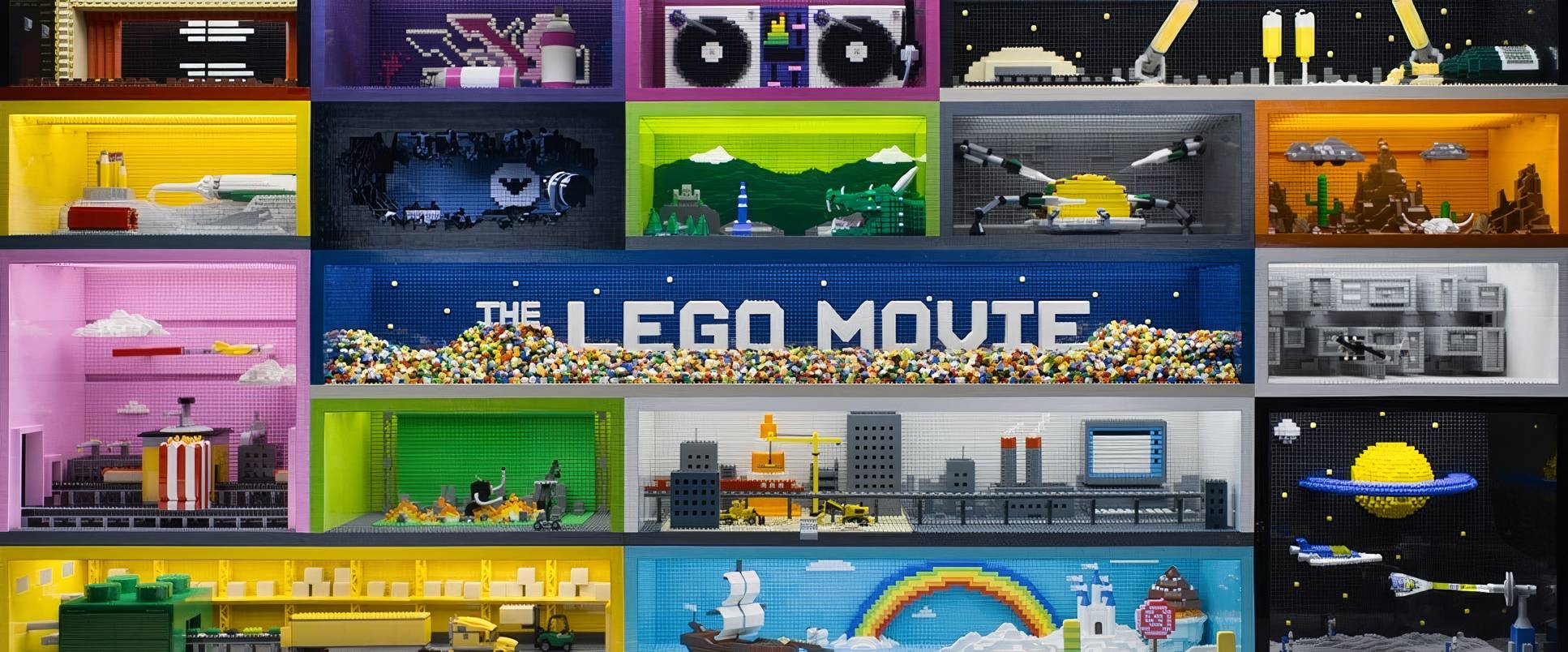
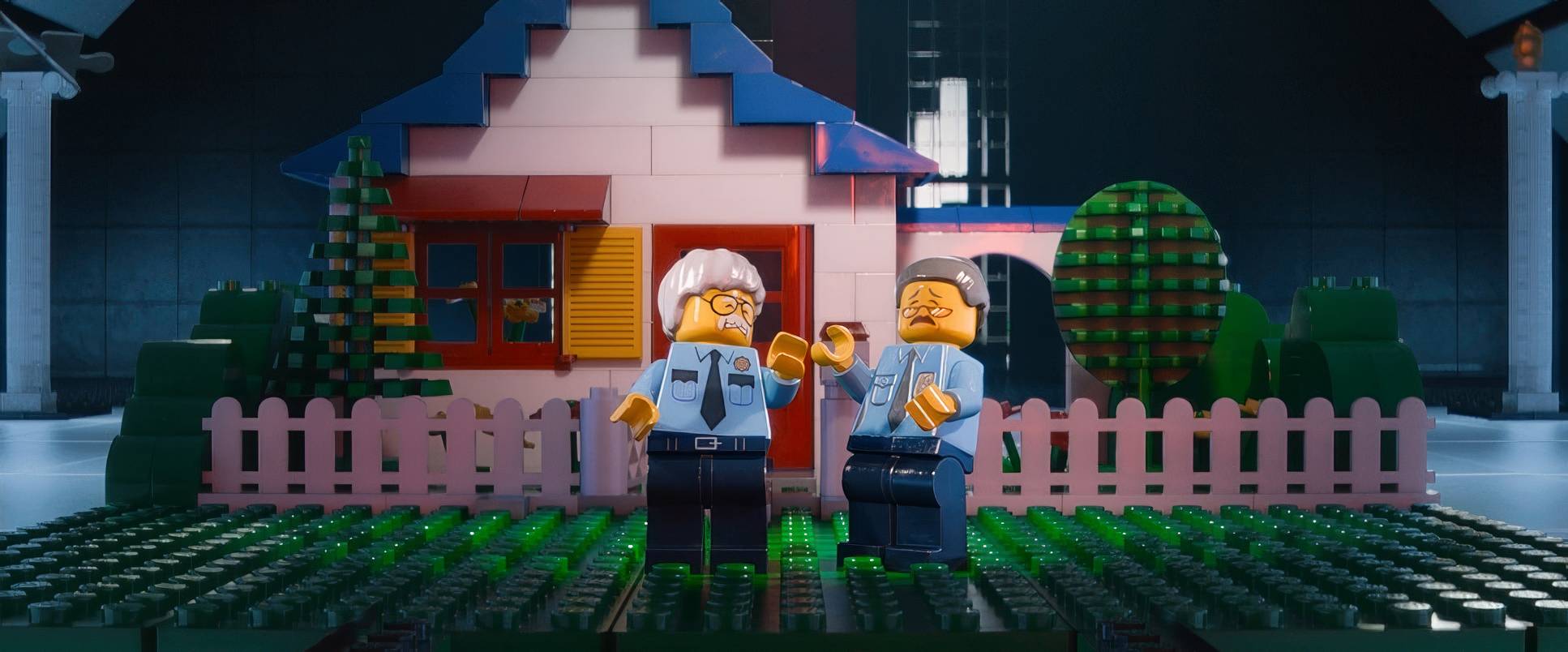
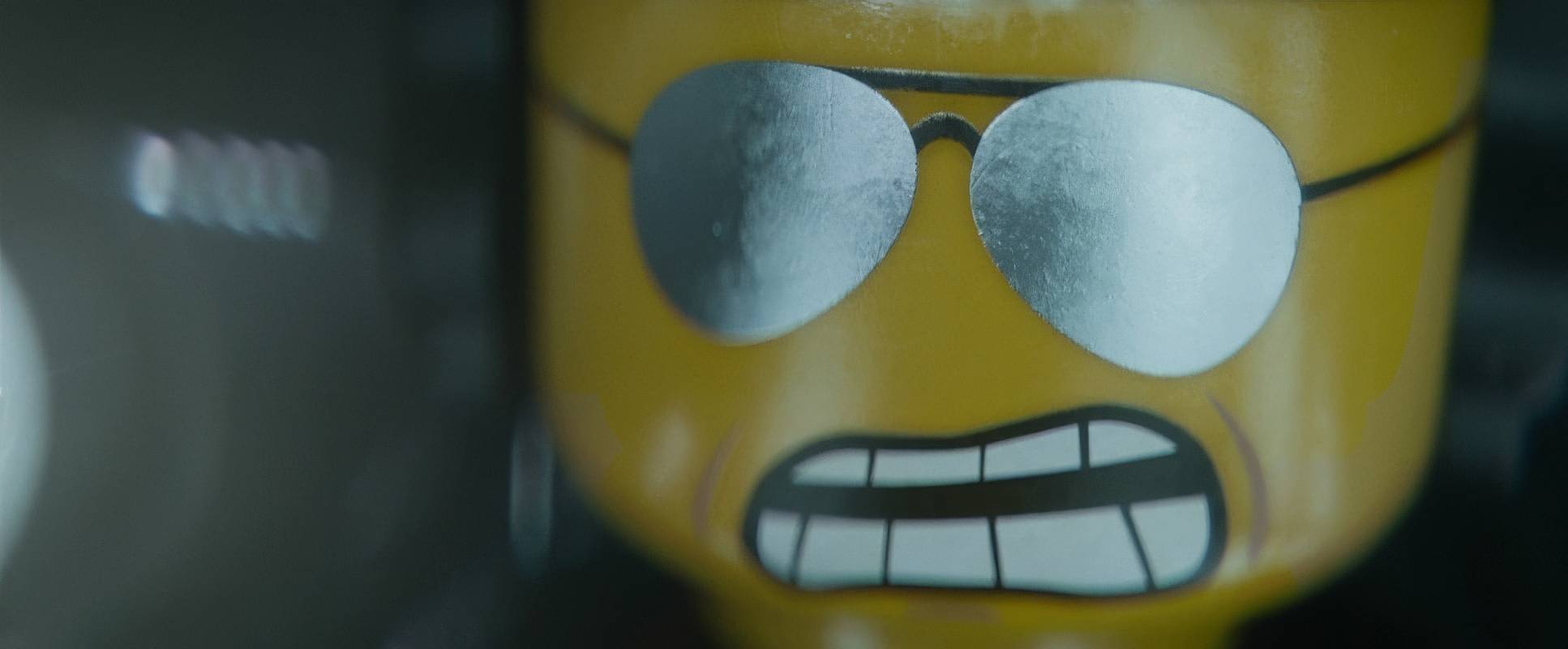
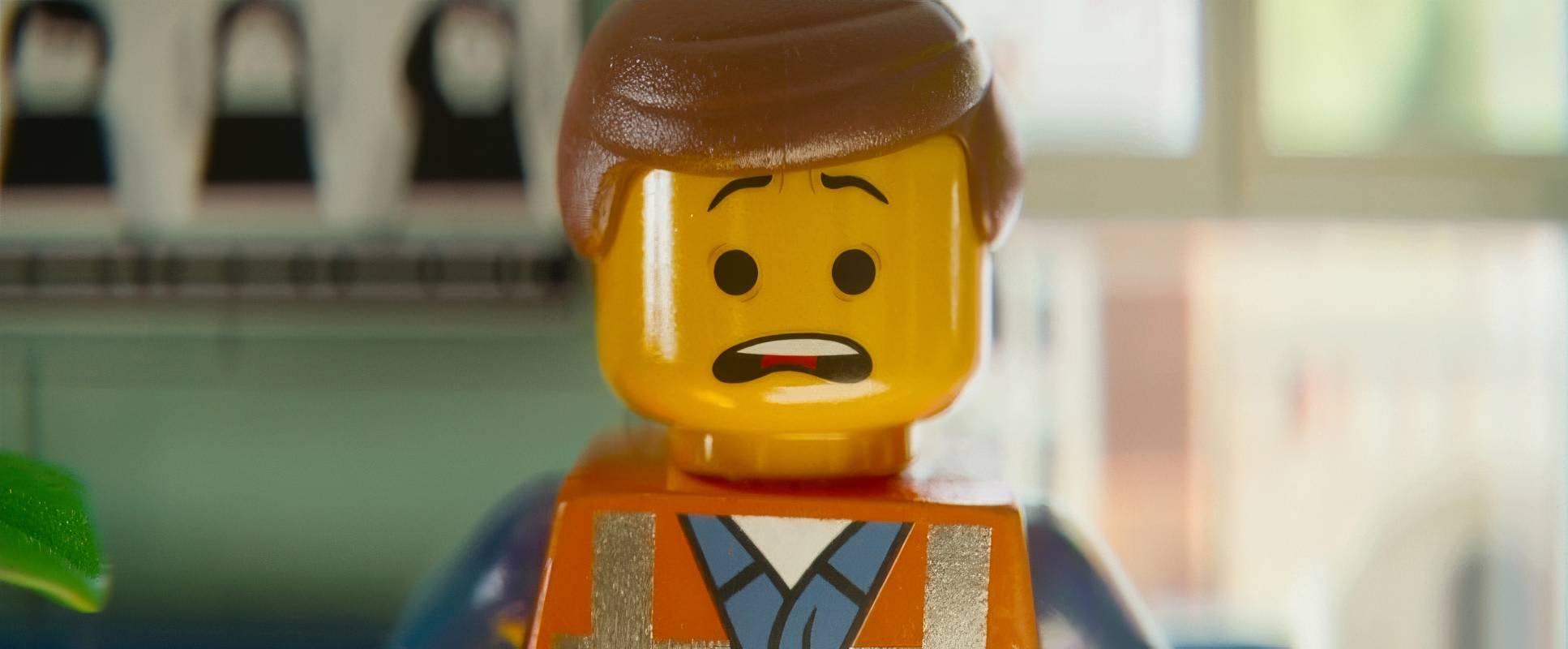
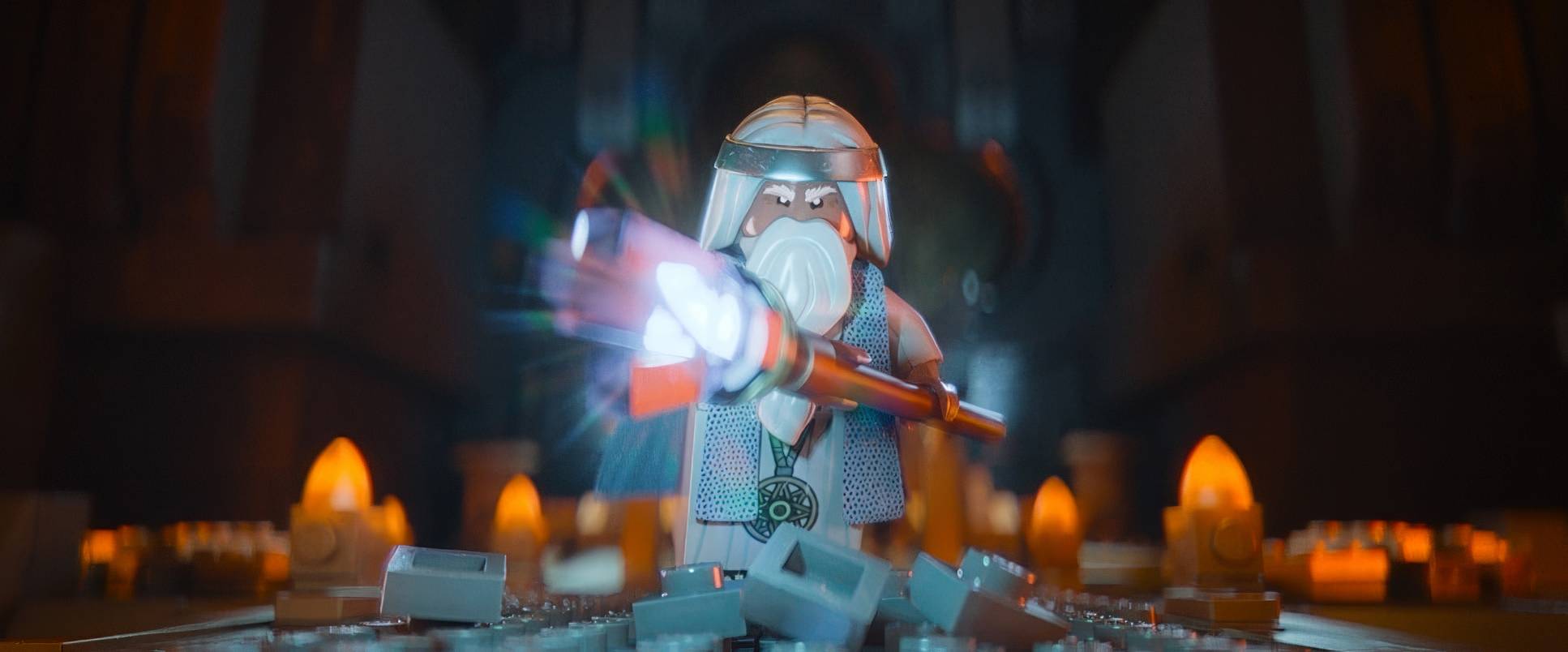
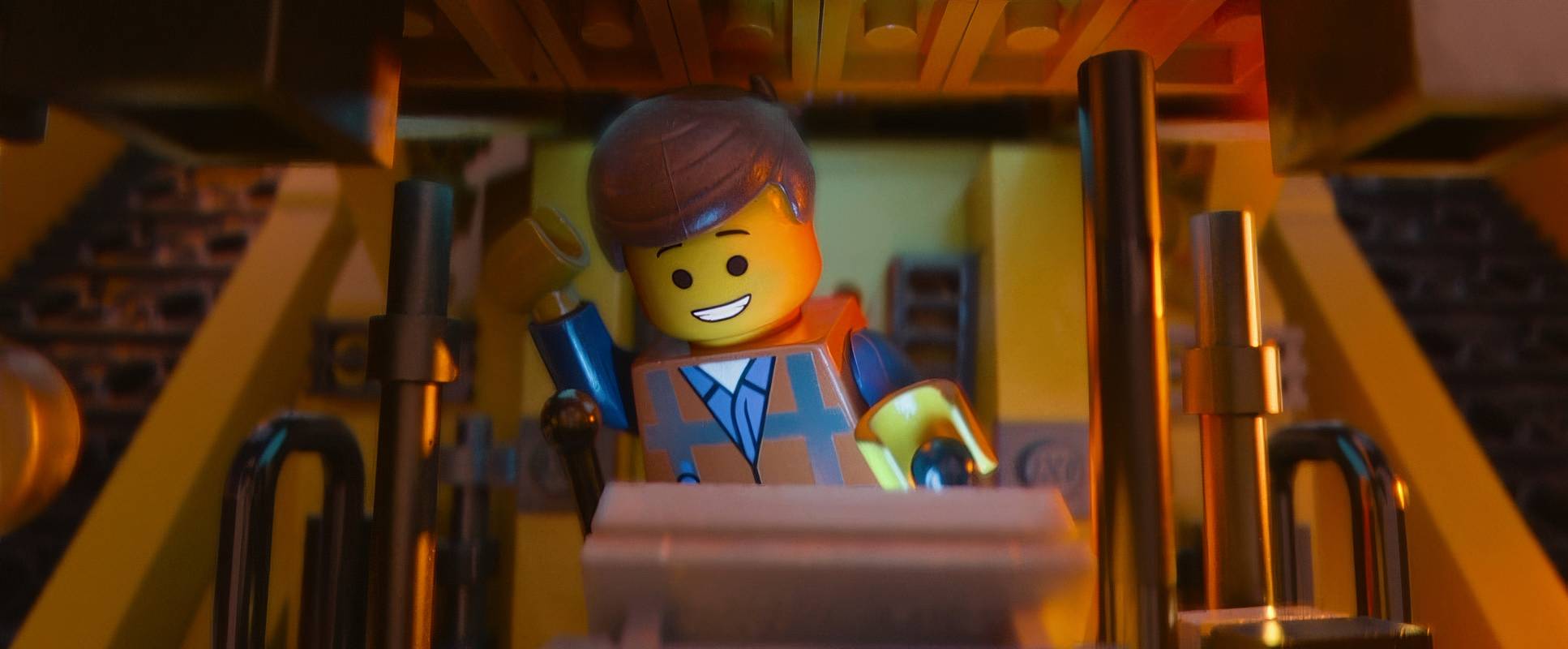
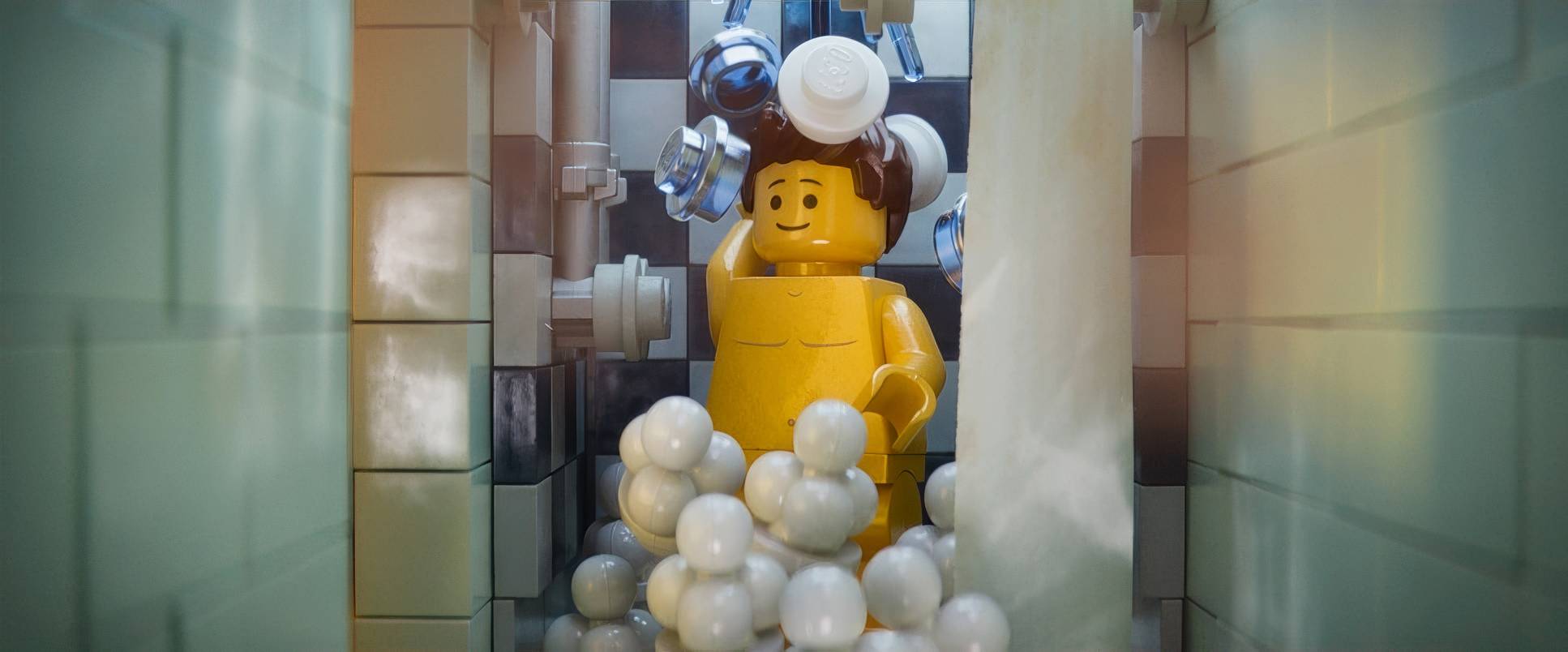
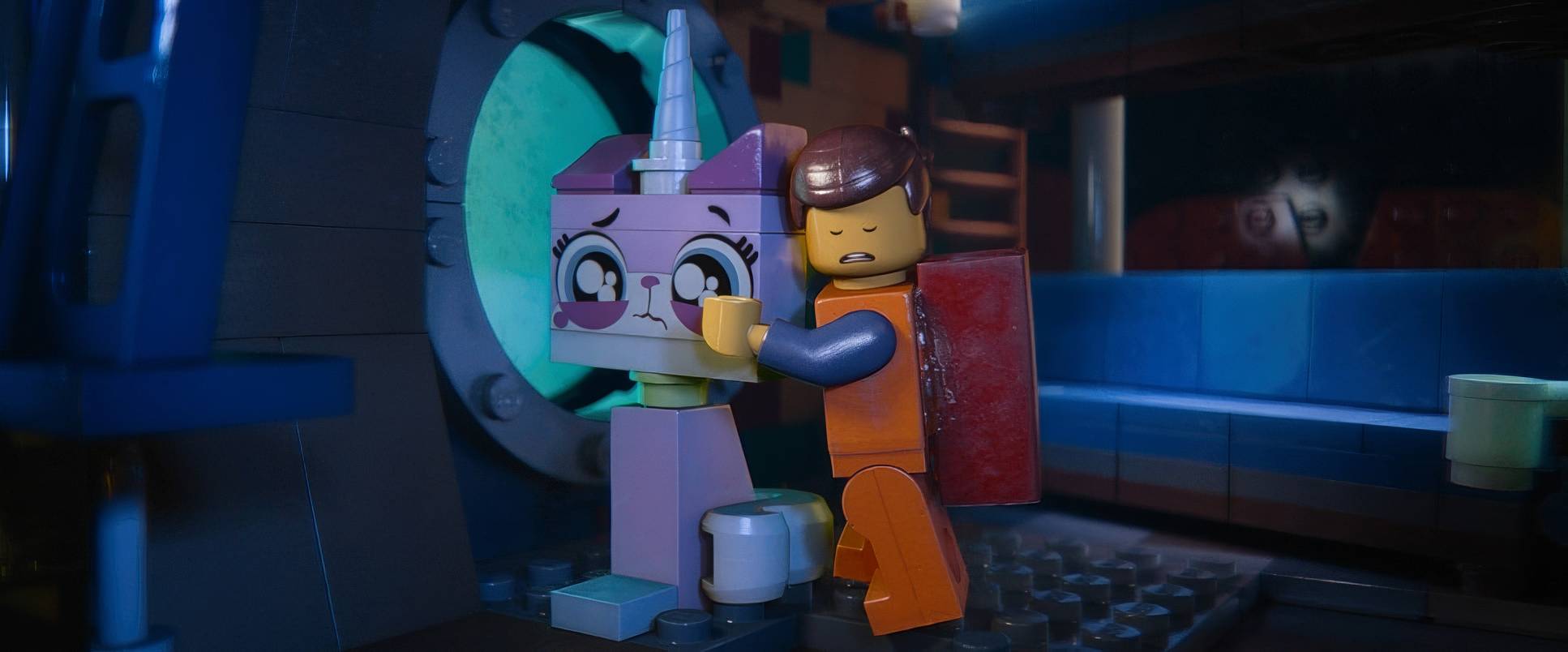
The production team famously put real LEGO bricks under microscopes to study how the material actually behaves. You can see the results of that forensic detail on screen the subtle thumbprints, the tiny scratches on the plastic, the “seam lines” from the molding process. This level of “analogue” detail in a digital medium grounds the fantastical journey. It evokes that tactile nostalgia of childhood, setting the stage for the film’s clever meta-narrative reveal later on.
Camera Movements
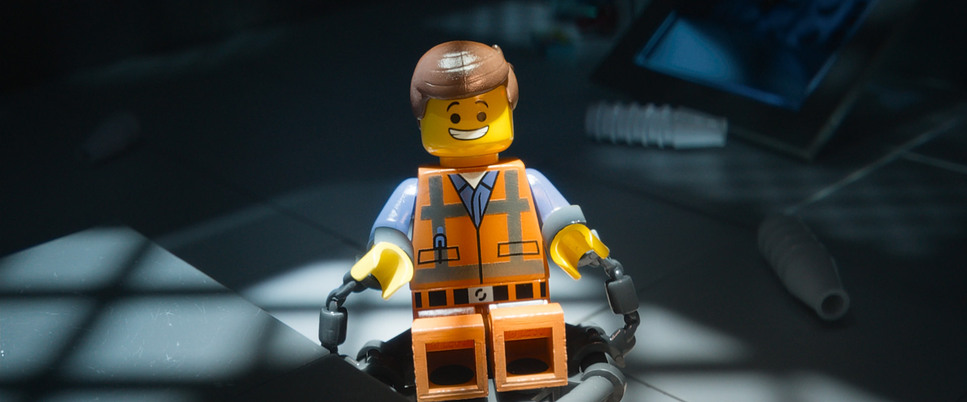
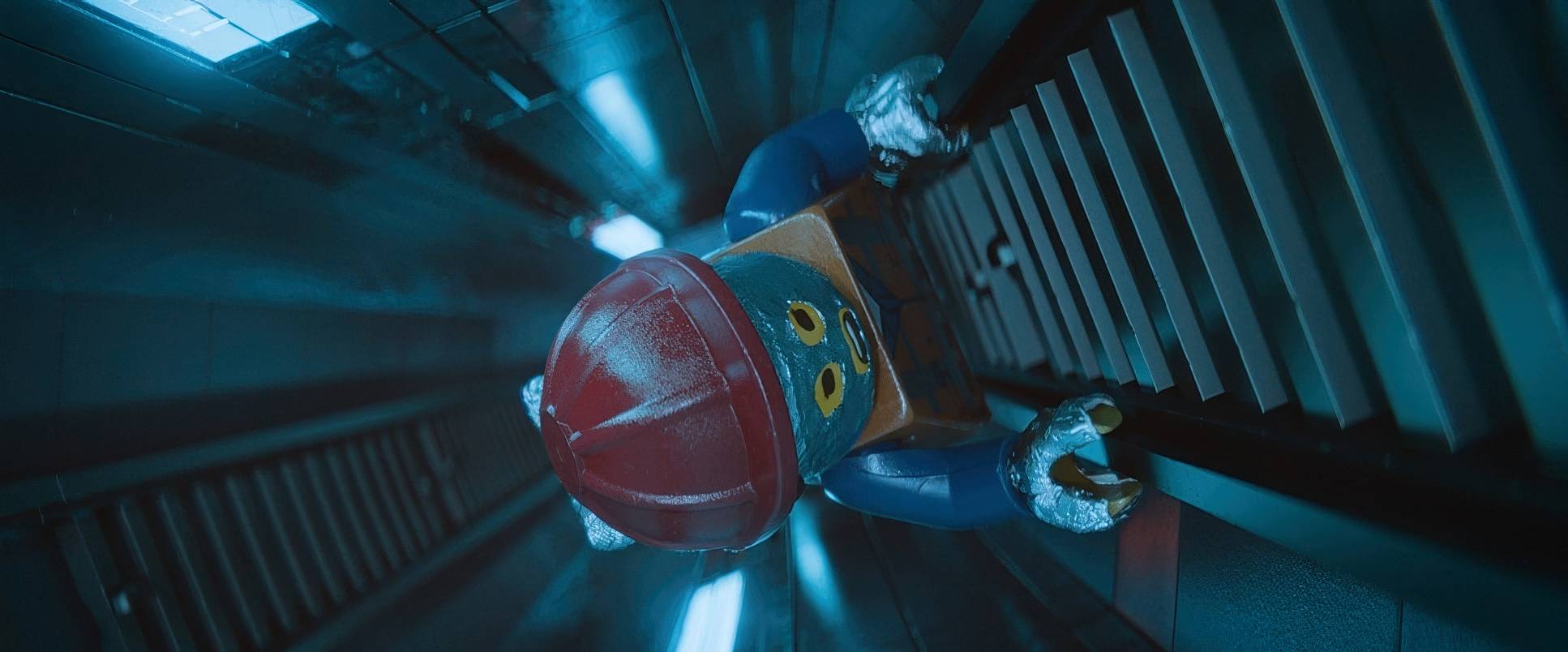
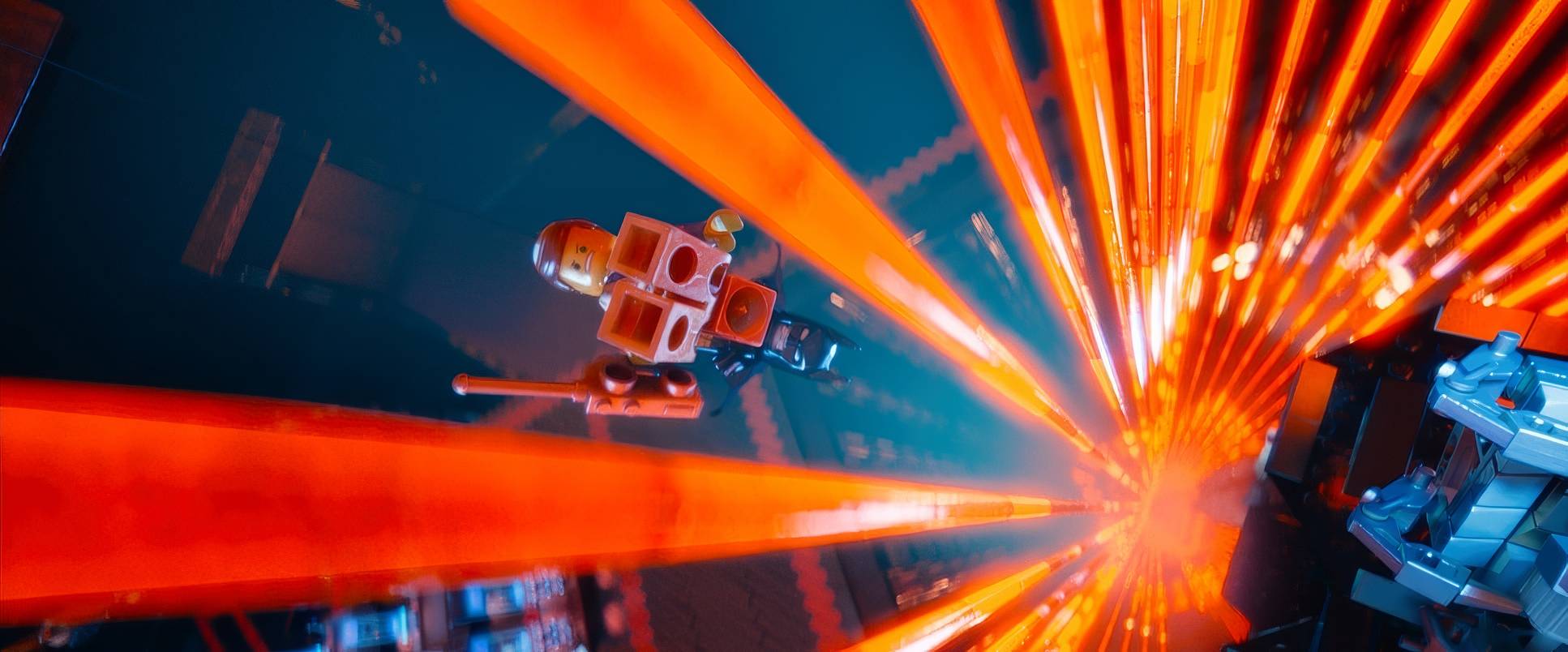
The illusion of a “human operator” is what really sells this movie. We’ve all seen CG films where the camera floats with frictionless, robotic perfection. The Lego Movie rejects that. Instead, there’s a kinetic energy that mimics a handheld rig or a dolly.
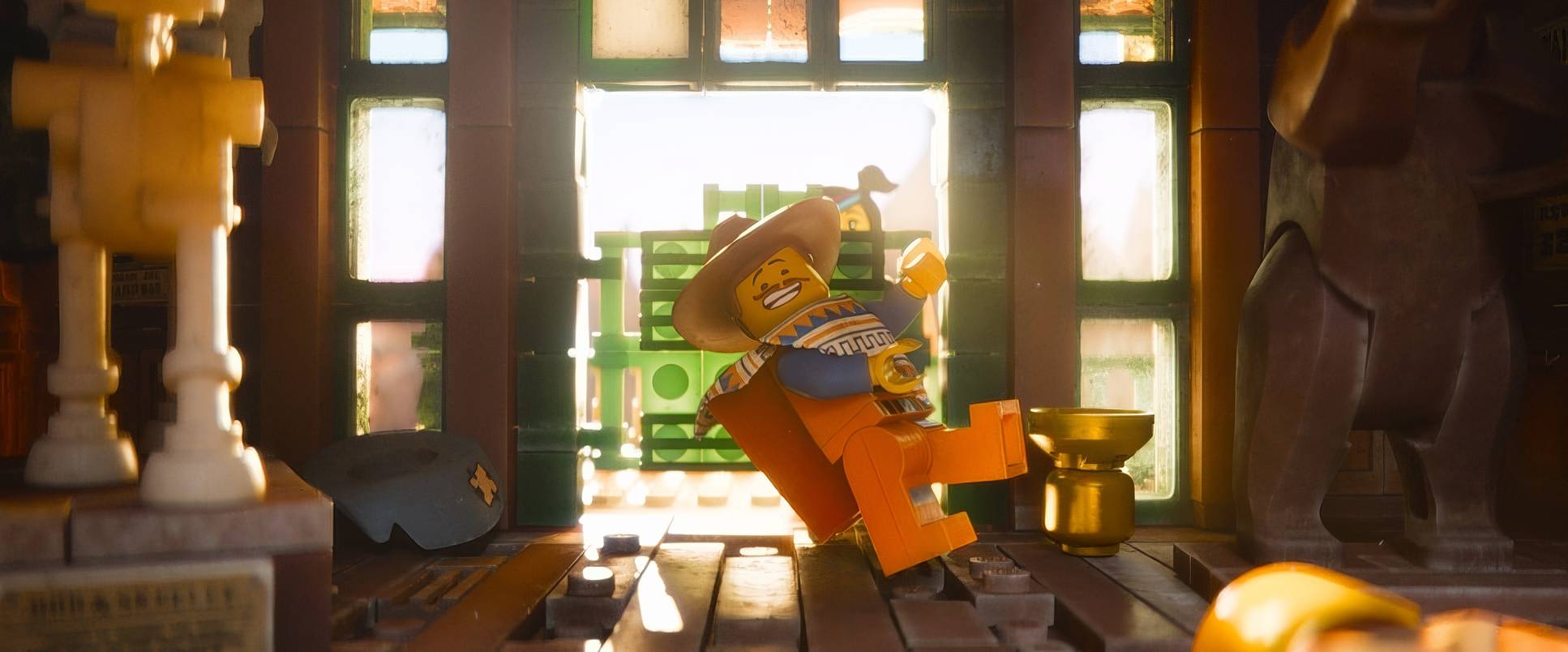
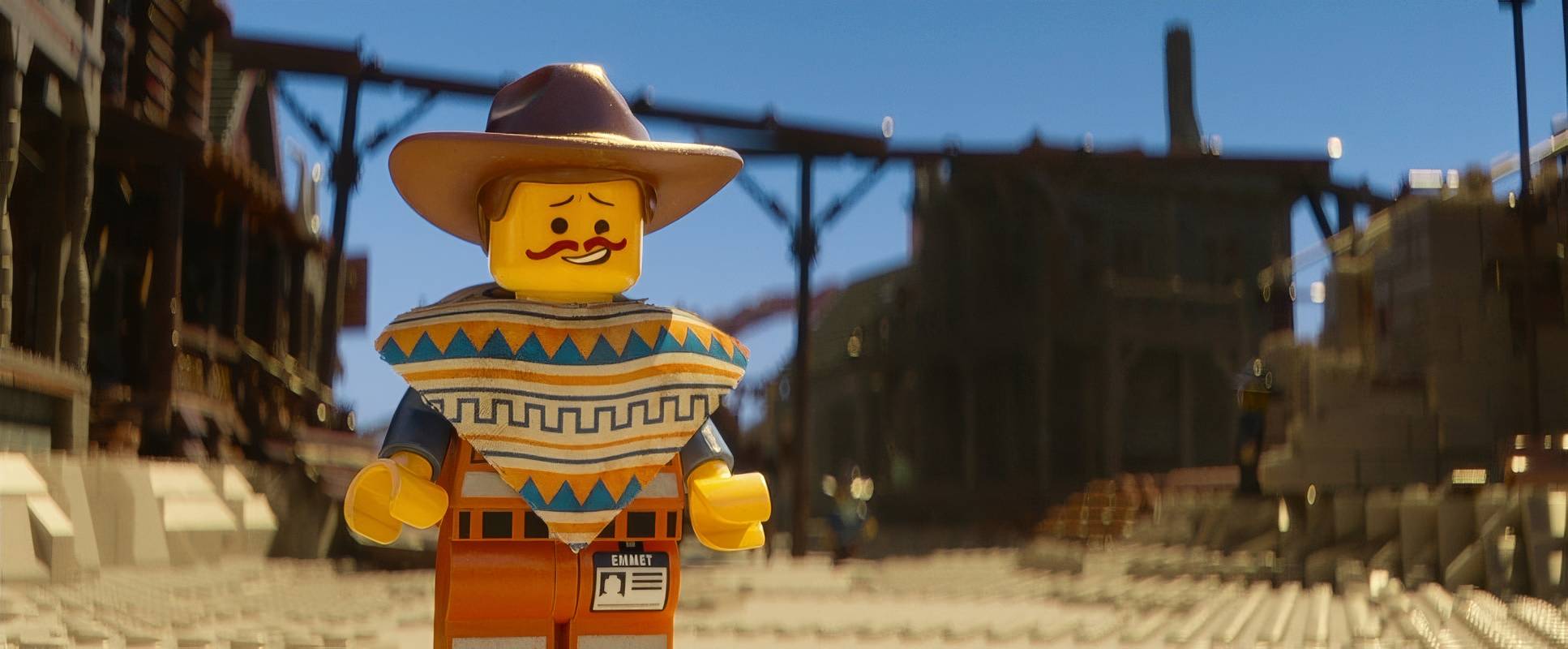
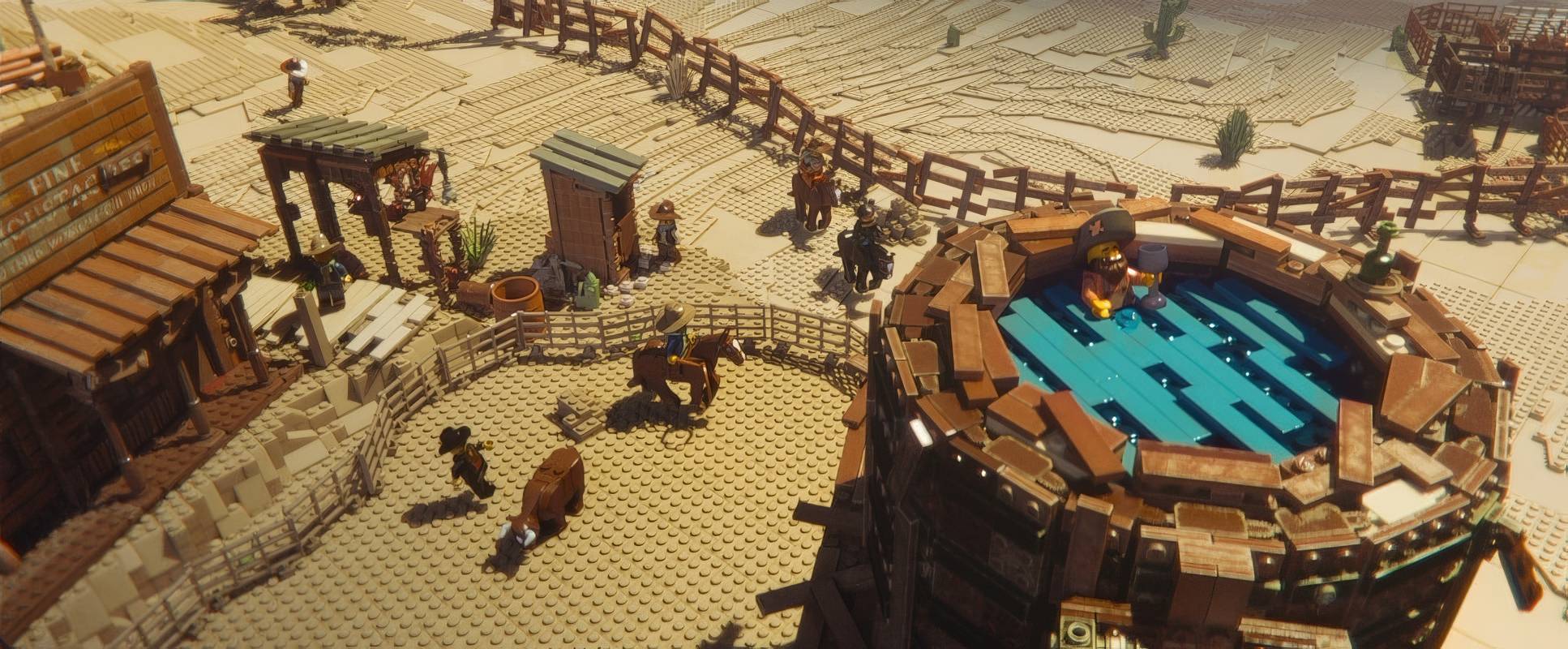
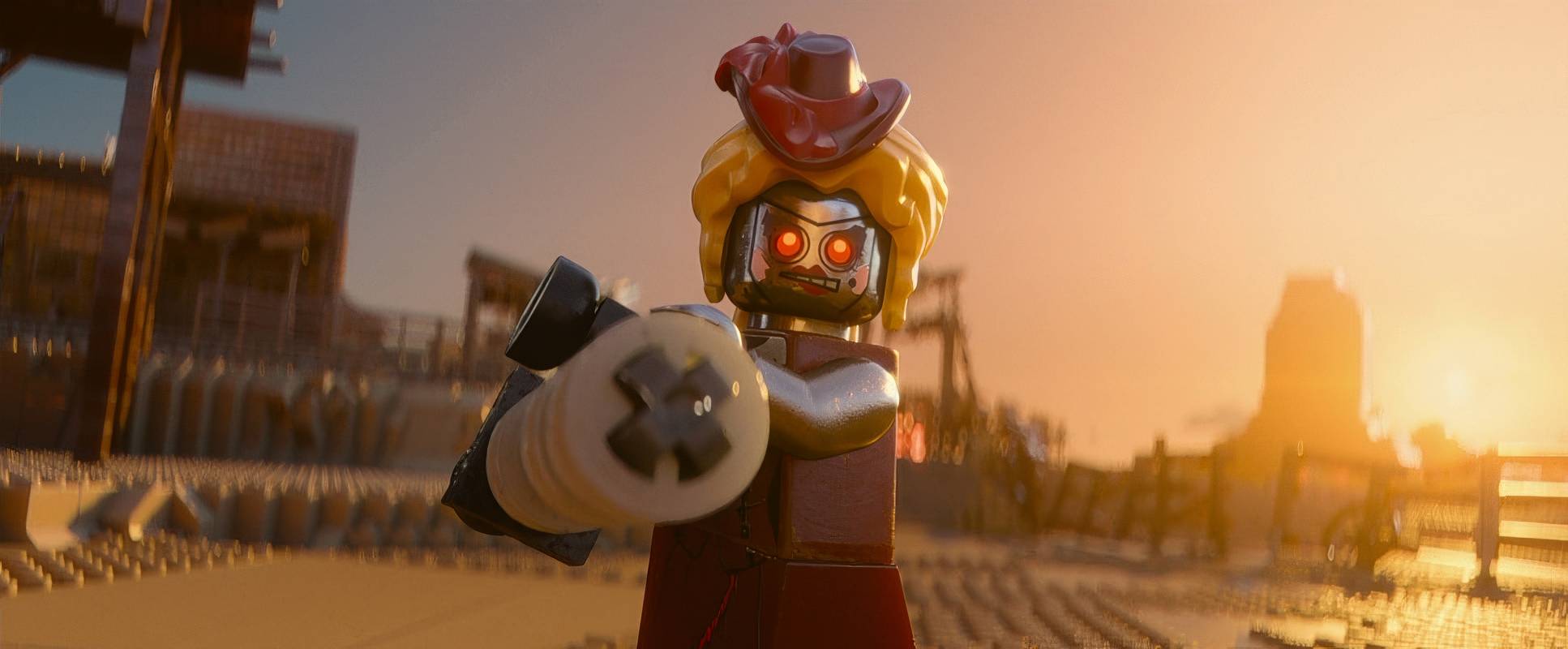
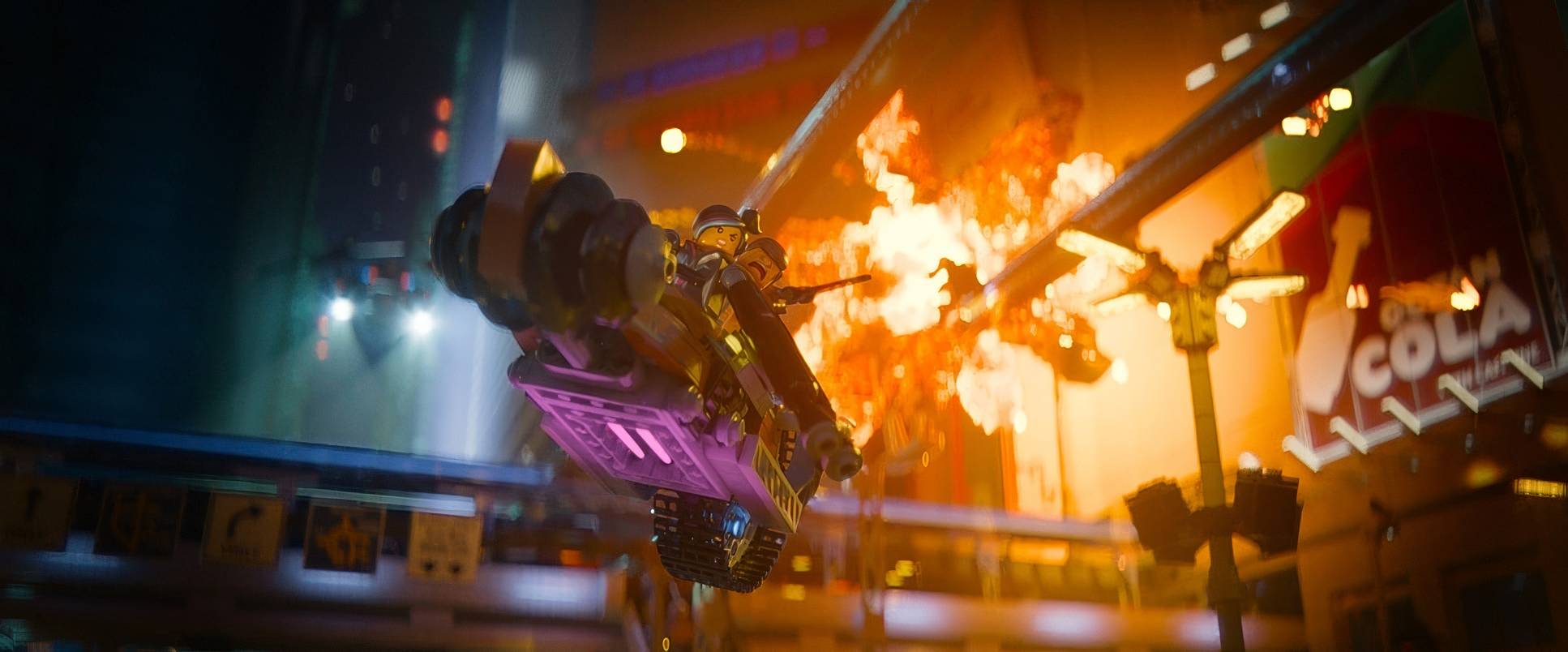
Take the saloon entry: the camera whips around, reacting to the chaos as if a real operator is trying to keep up. We see subtle shifts in perspective, brief moments of whip-pan blur, and intentional, slight imprecision. These aren’t “perfect” digital movements; they are choreographies designed to evoke the visceral experience of a live-action shoot. It feels like there’s a person behind the glass, and that makes the action feel dangerous and immediate.
Compositional Choices
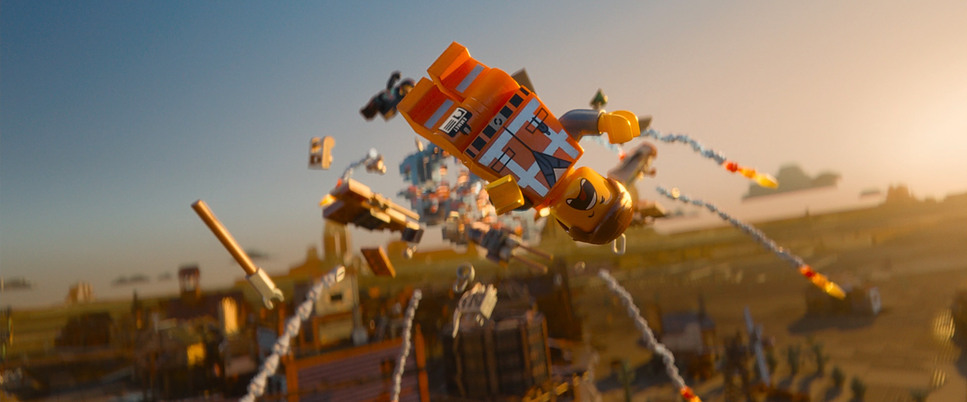
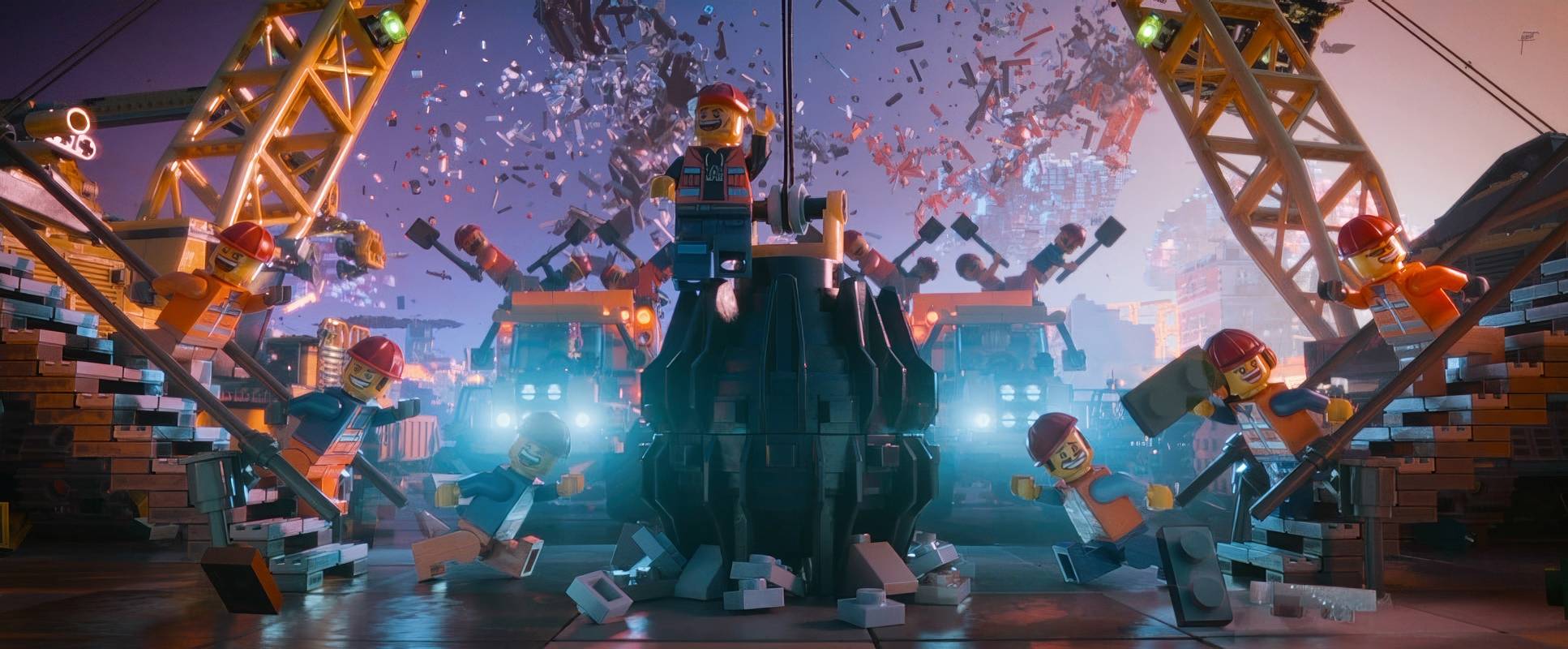
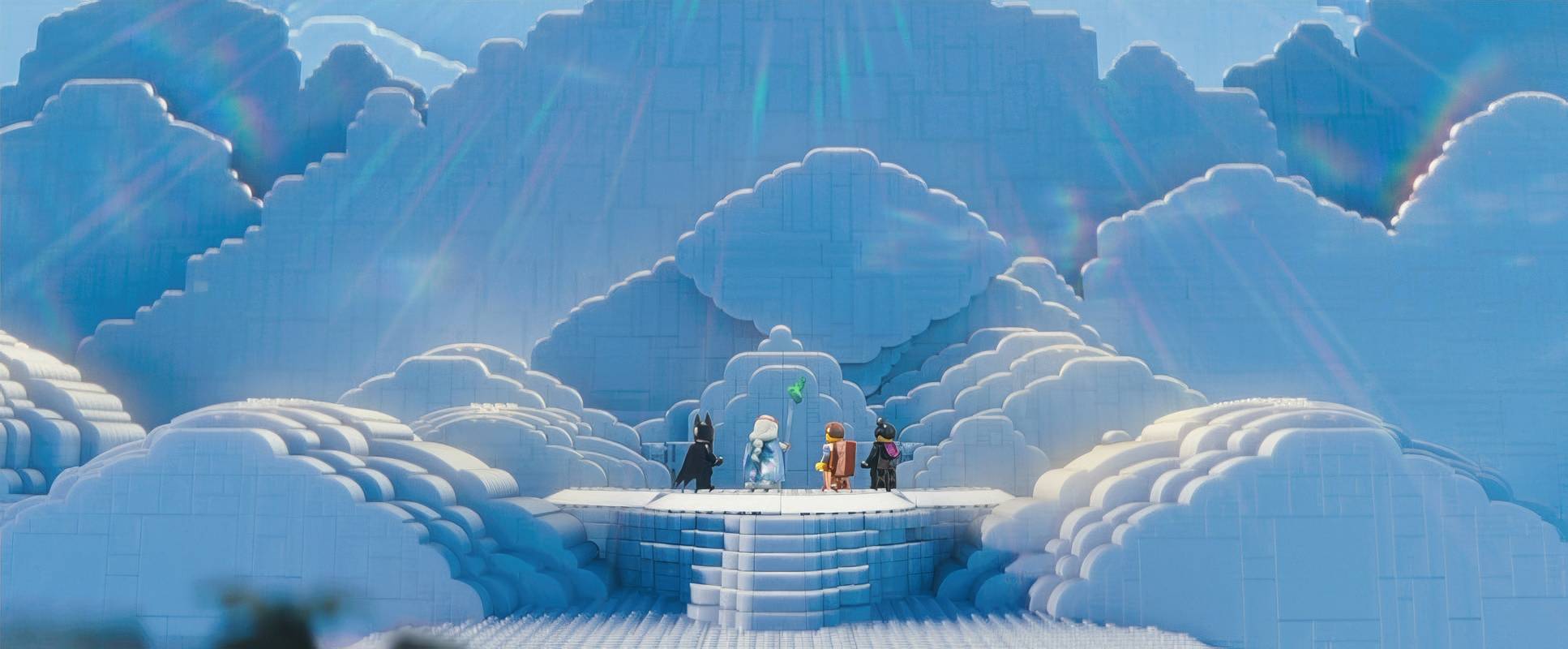
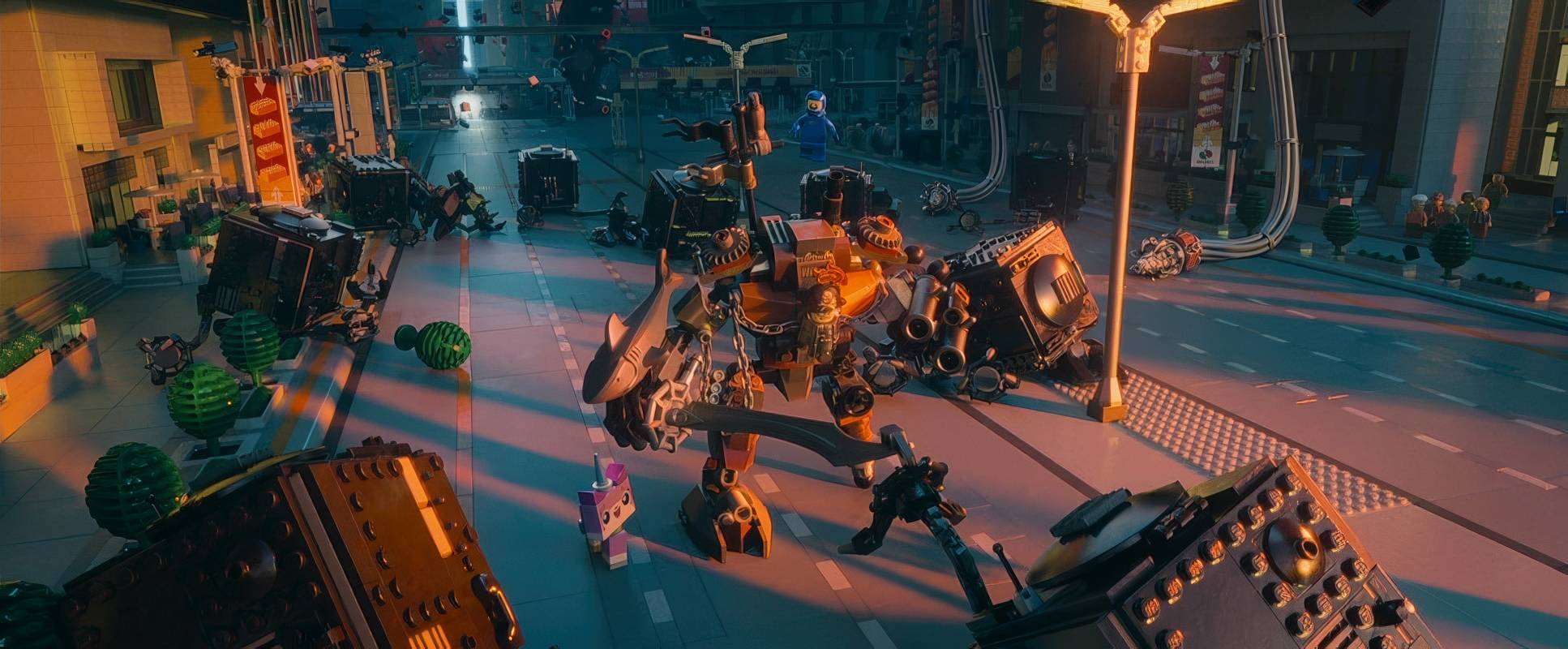
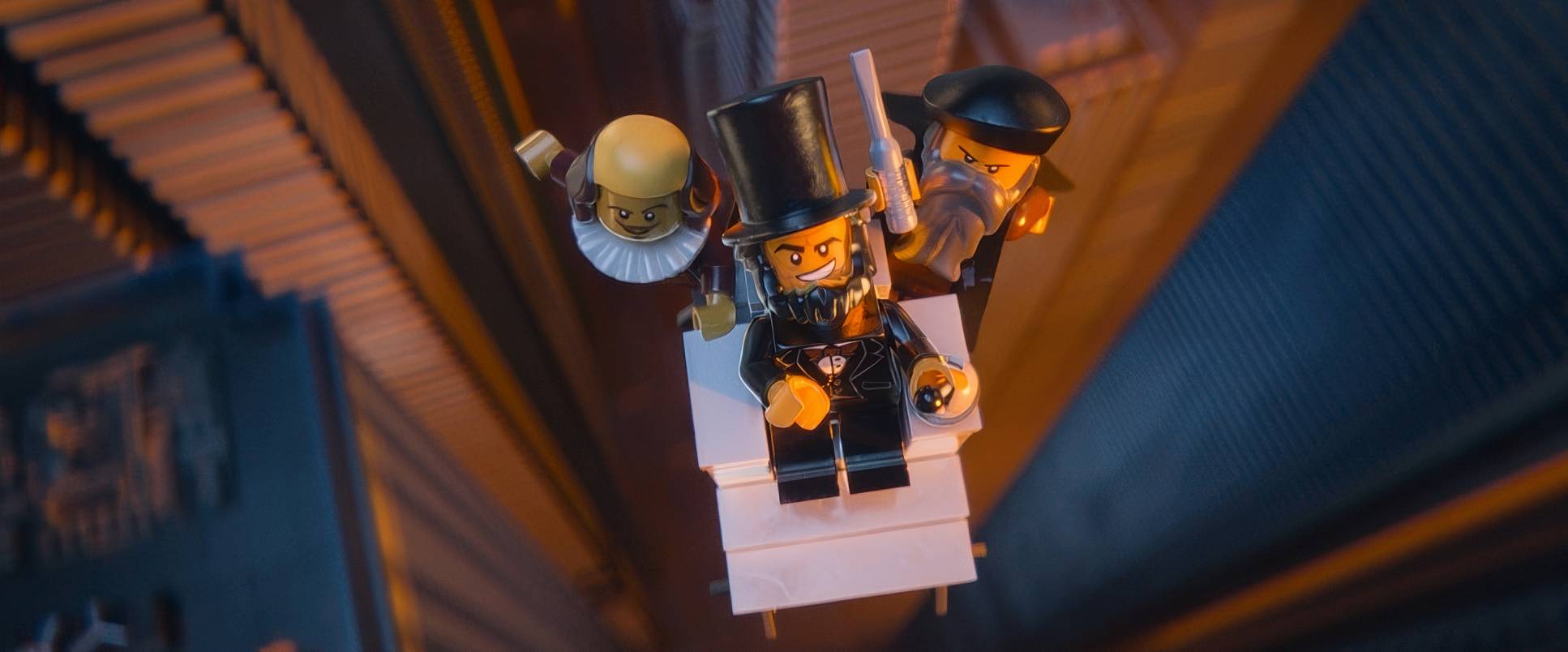
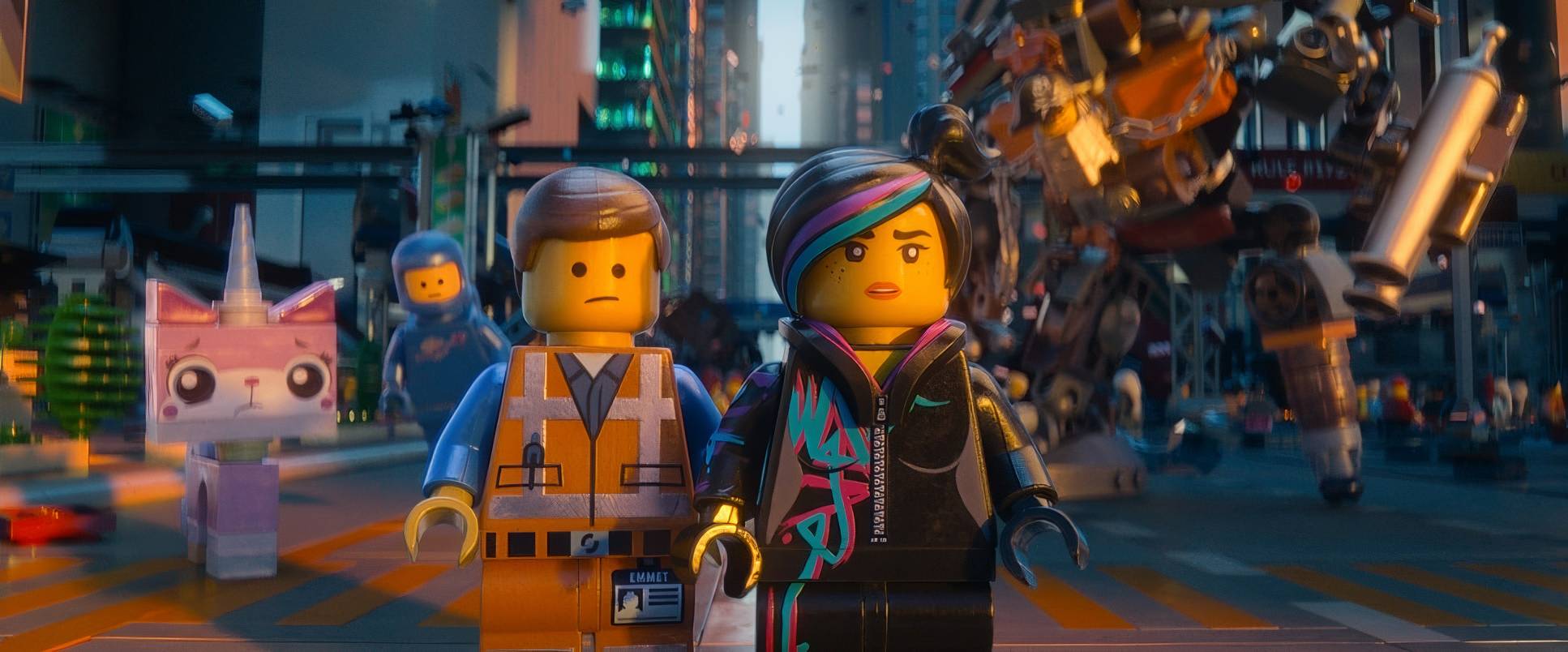
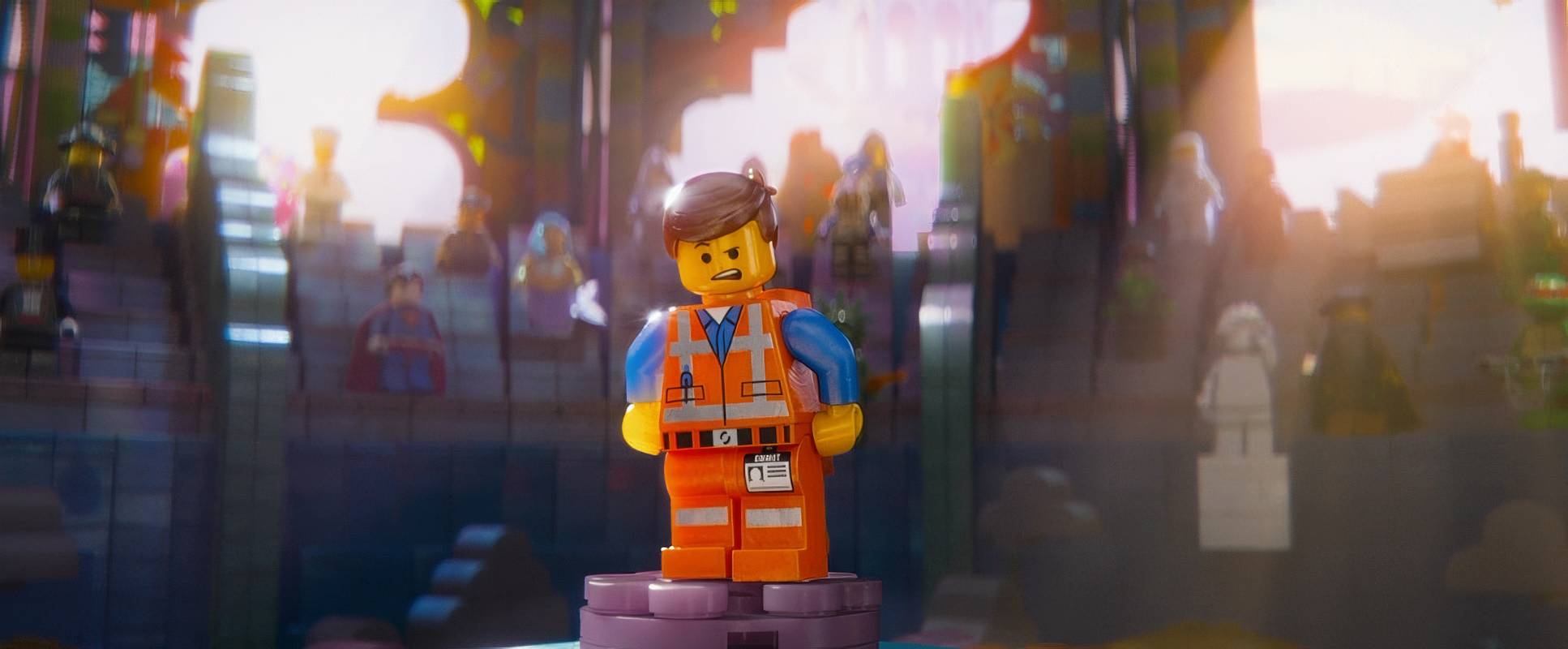
The compositions here are a brilliant marriage of classic cinema and toy-box logic. Every frame feels deliberately constructed, adhering to the rule of thirds and leading lines, but often using the brick-built architecture to guide the eye.
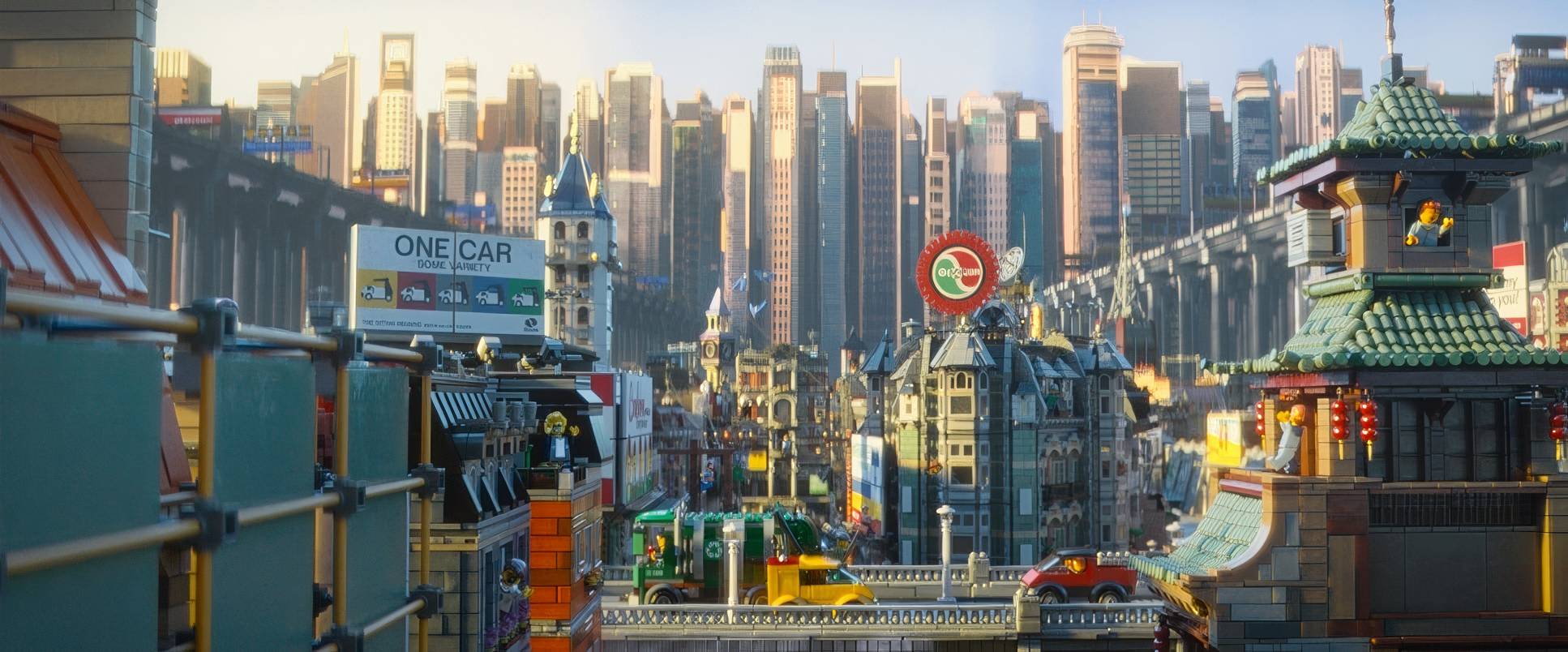
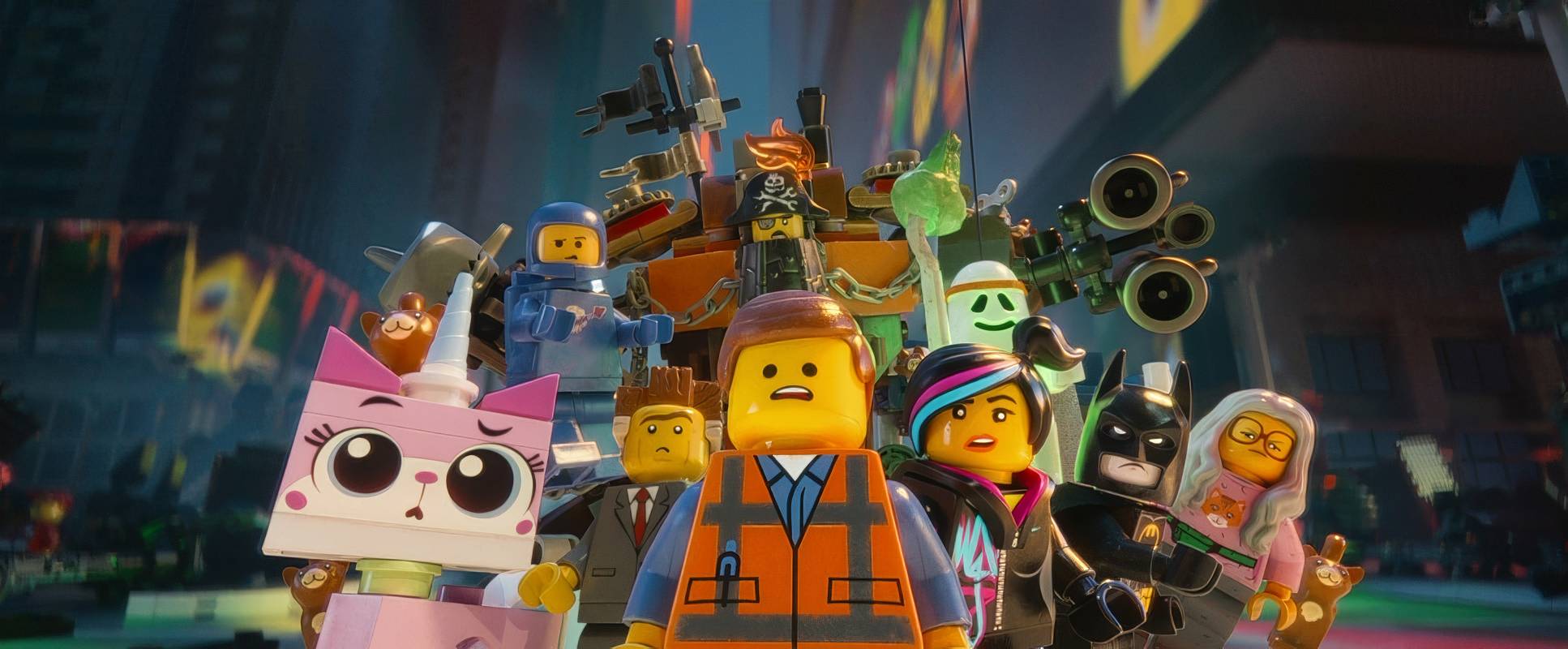
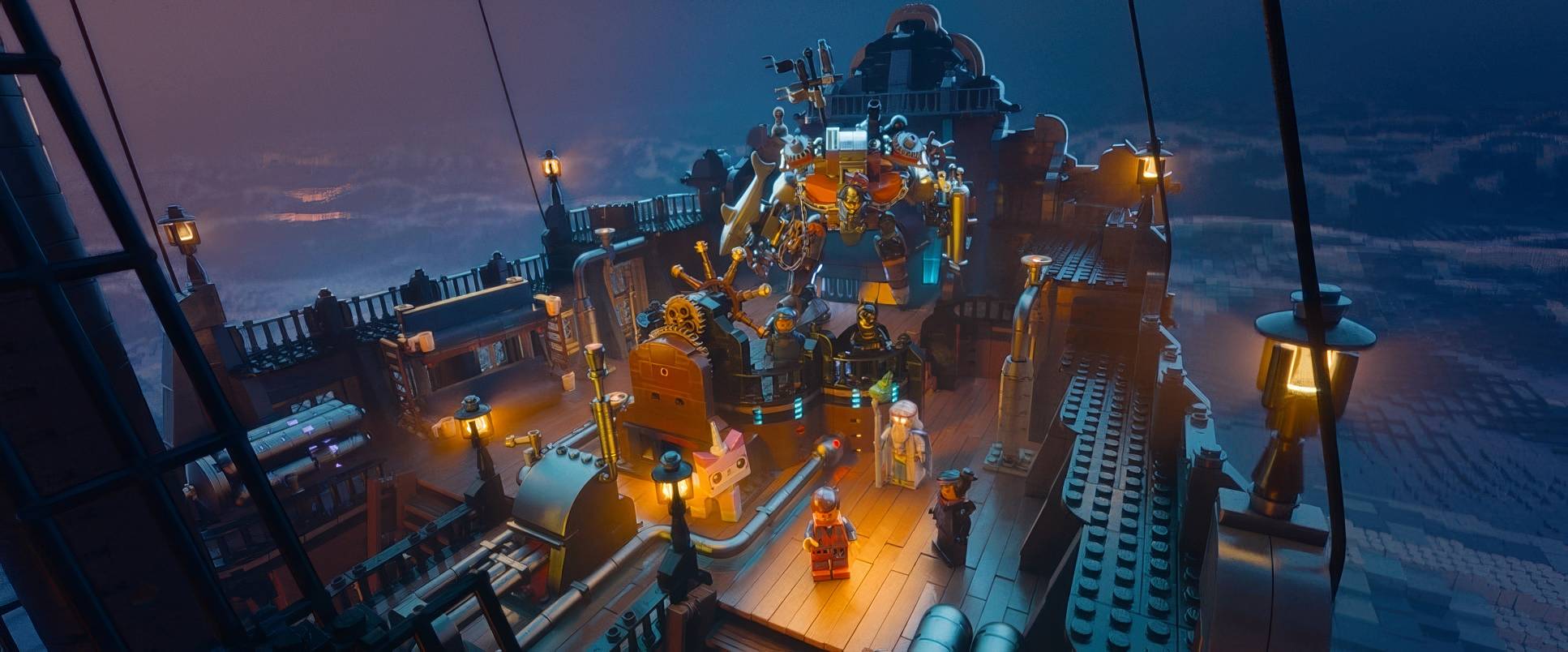
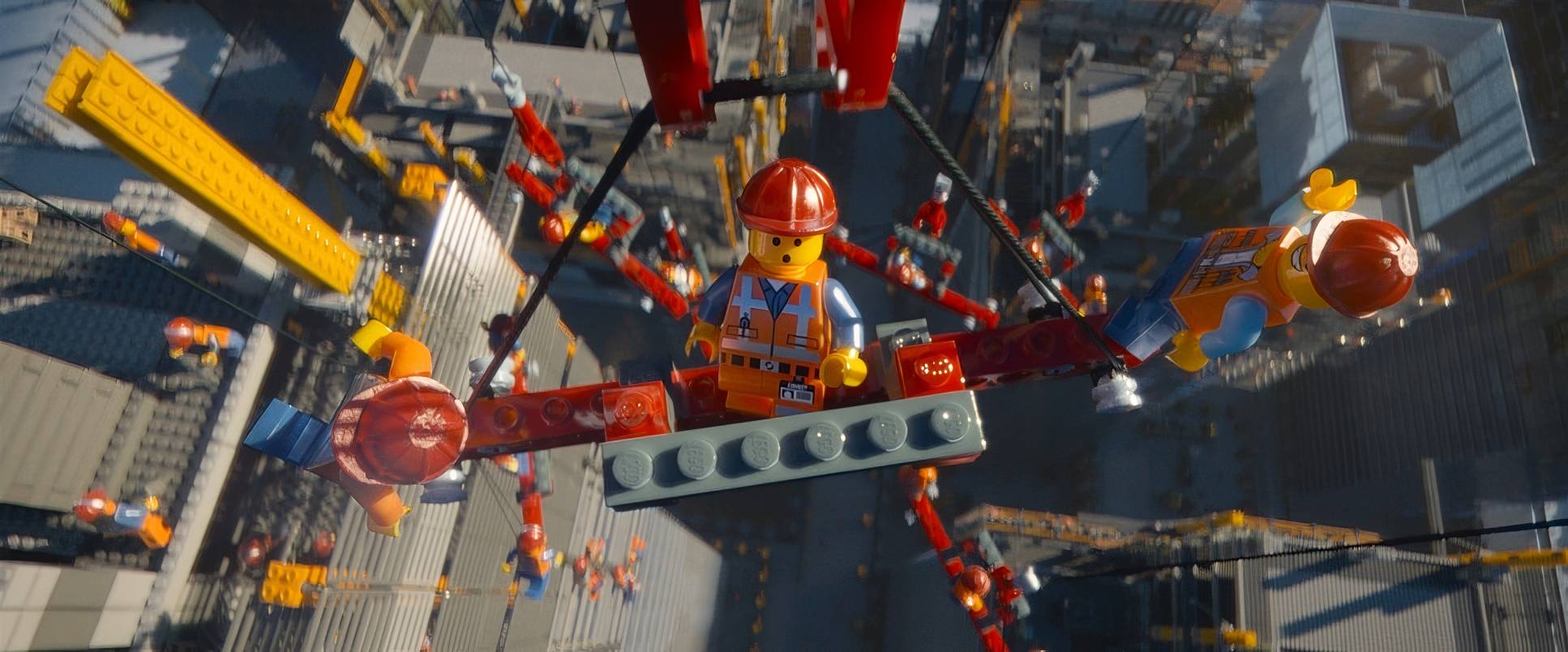
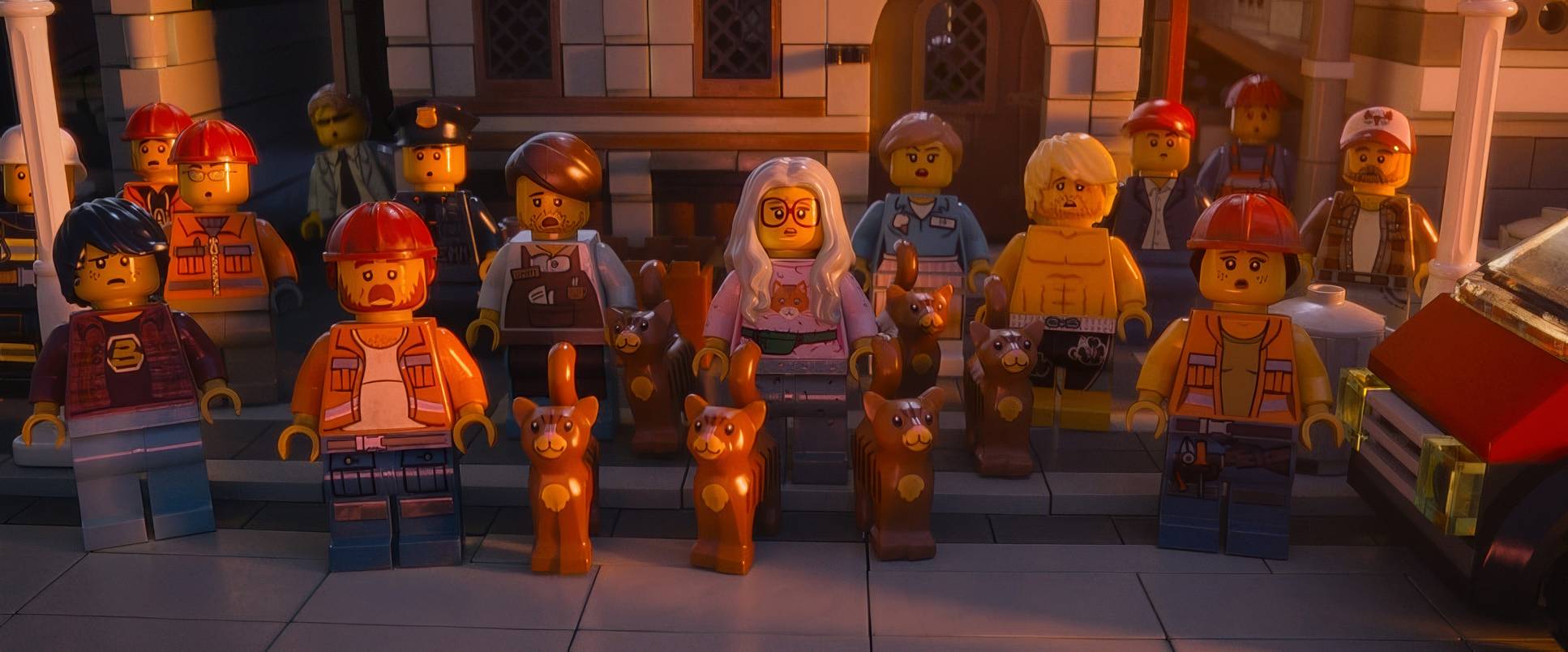
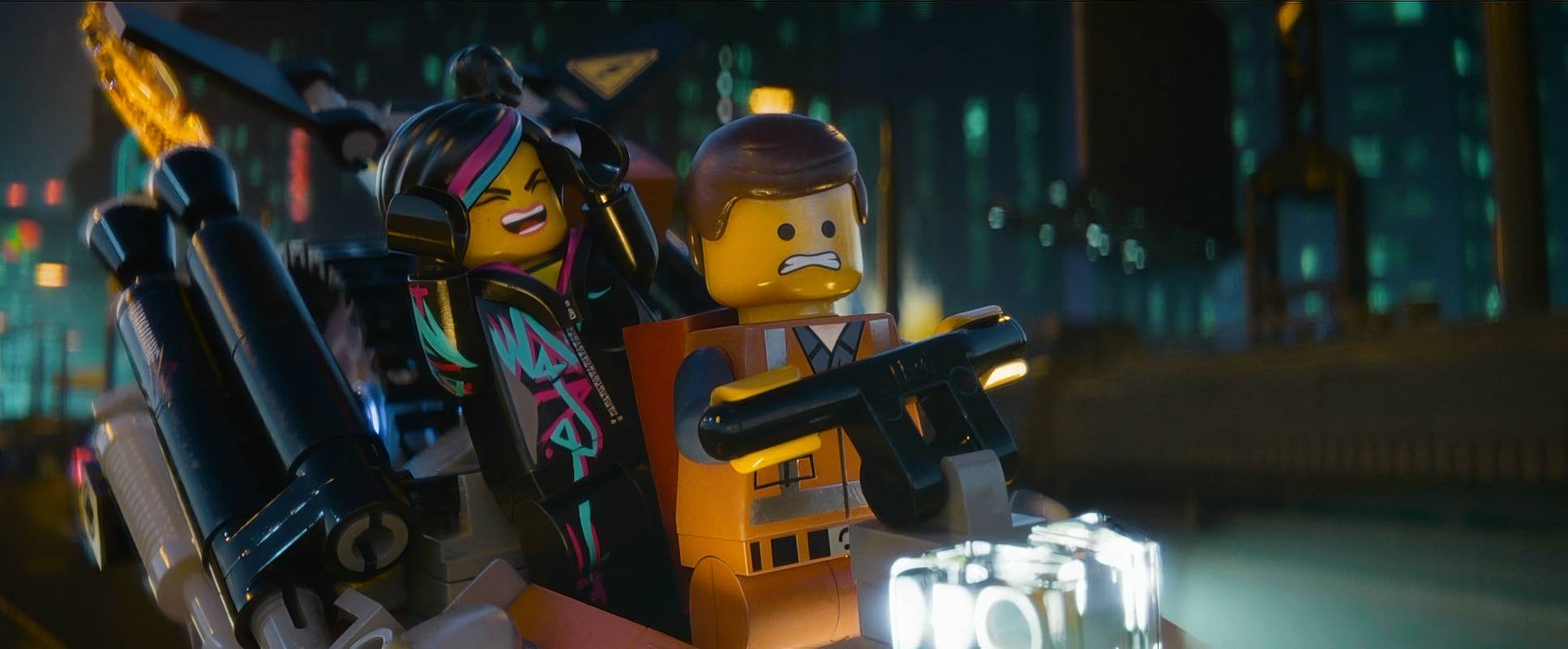
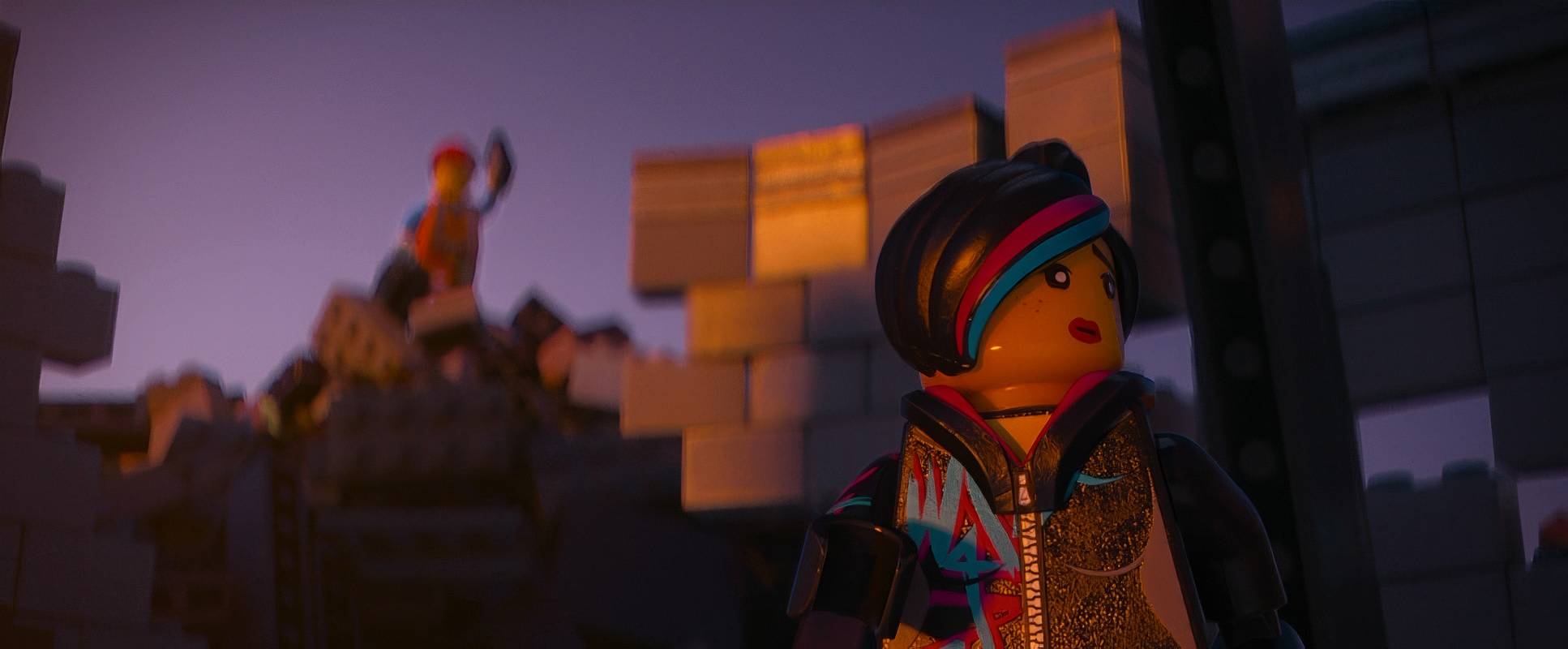
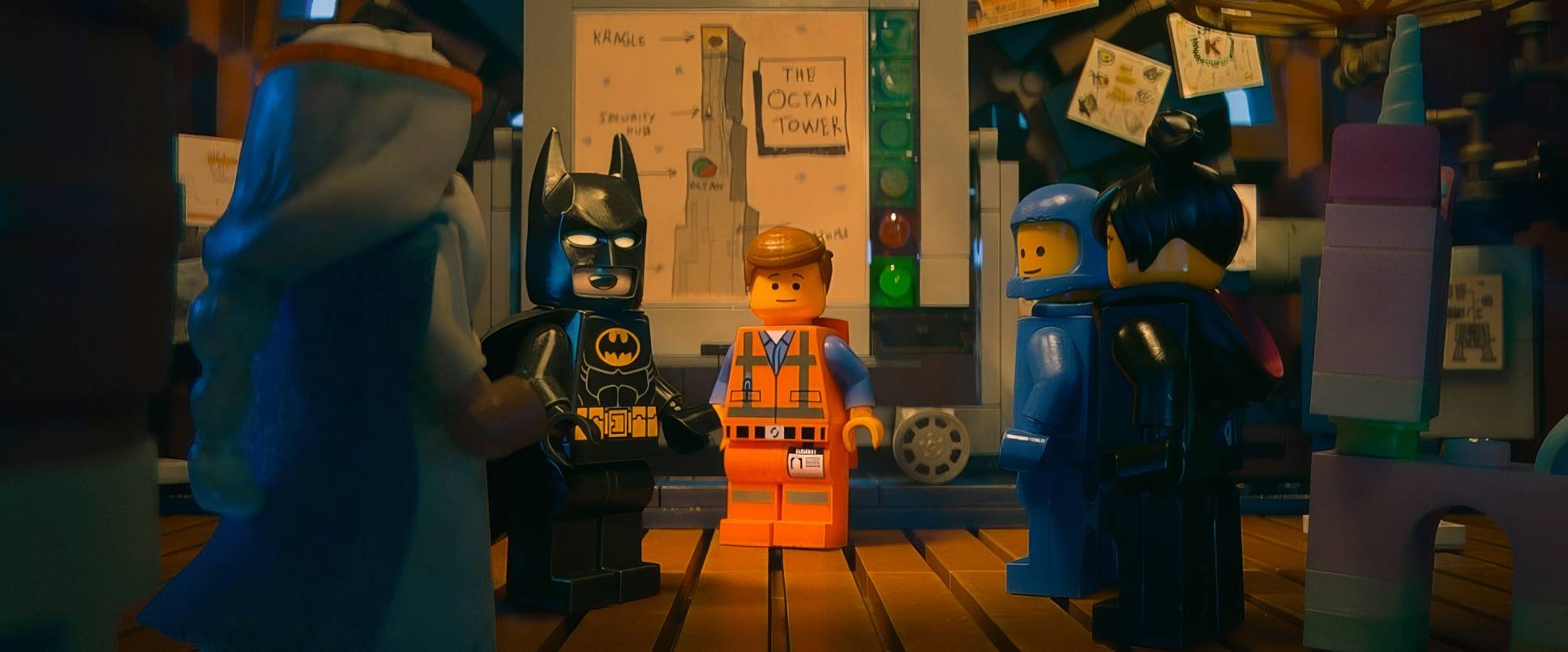
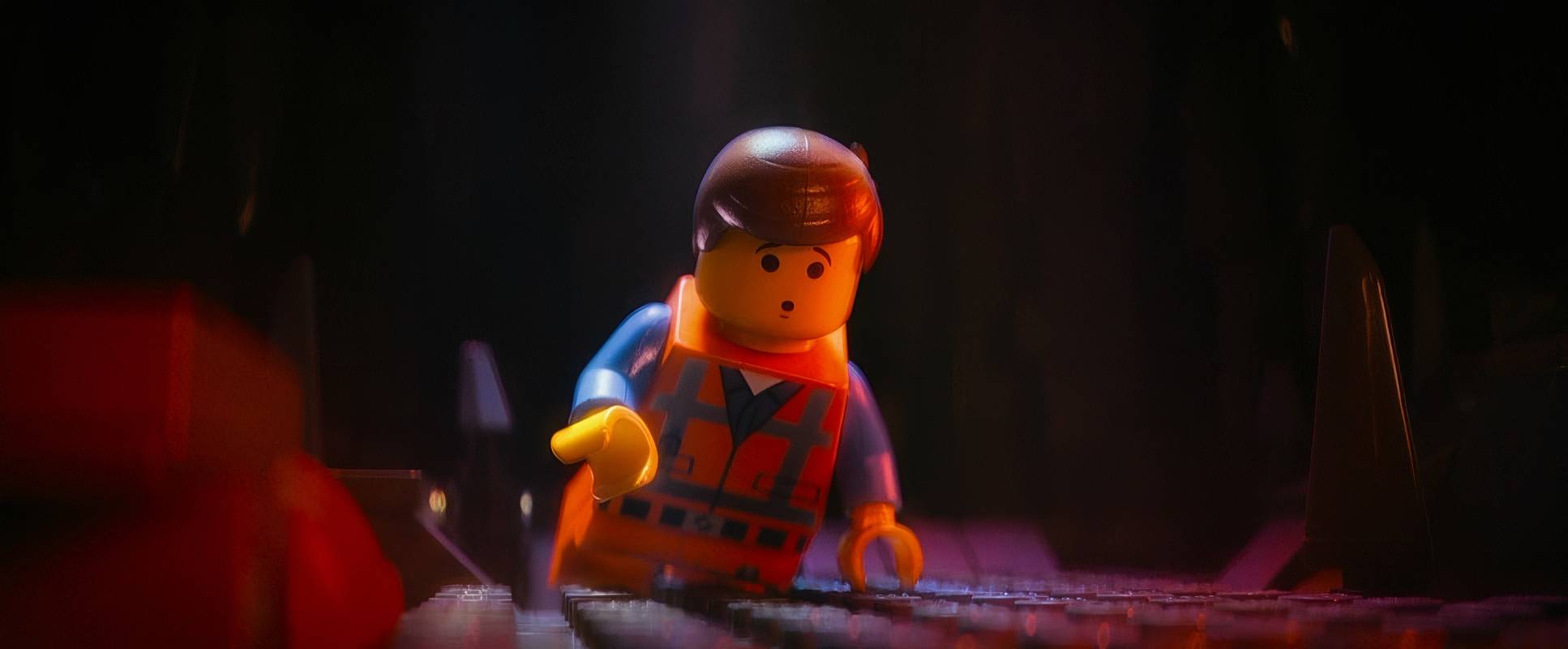
What fascinates me is the use of depth. By layering LEGO elements from foreground clutter to distant cityscapes they create a profound sense of scale. Look at the close-ups of Emmet; he’s often framed amidst a riot of background activity. It’s a visual metaphor for his “everyman” status in an over-structured world. The blocking feels organic, as if a director is guiding actors through a physical, cramped set rather than an infinite digital void.
Lighting Style

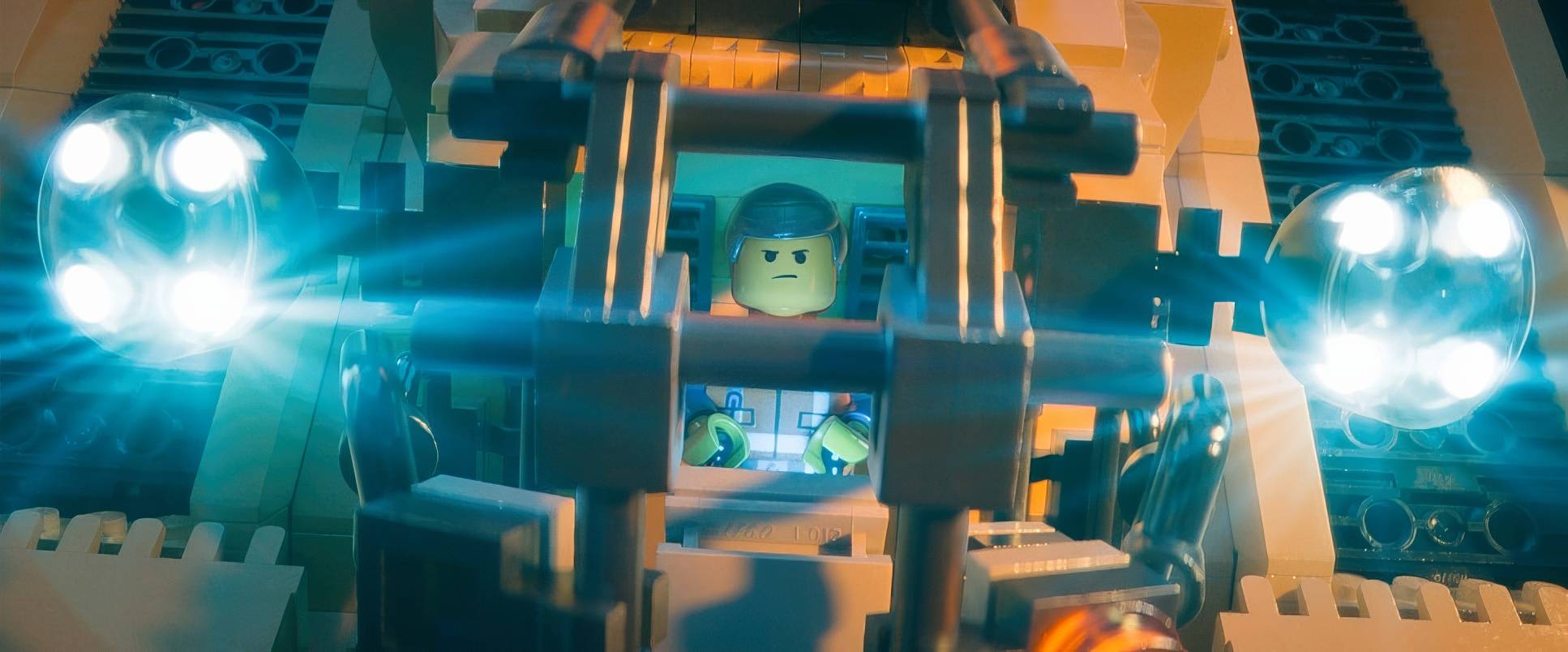
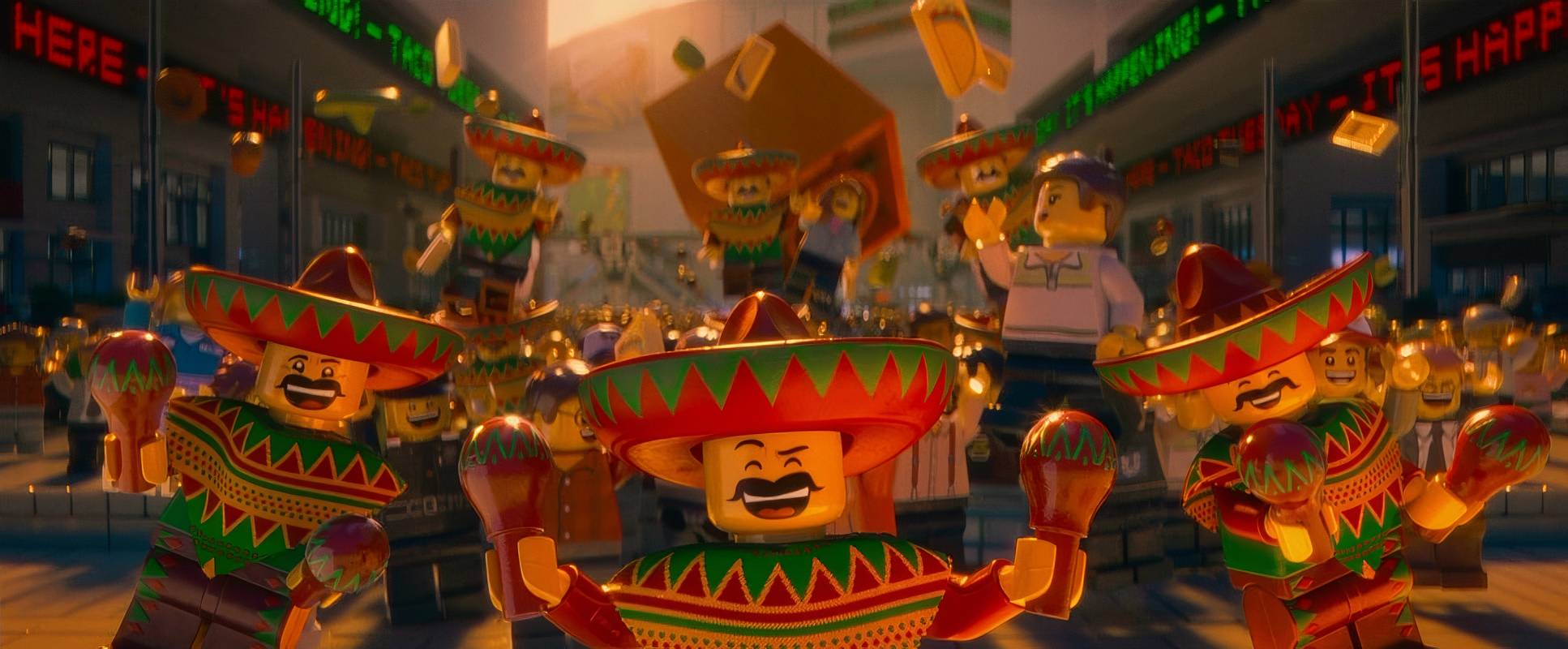
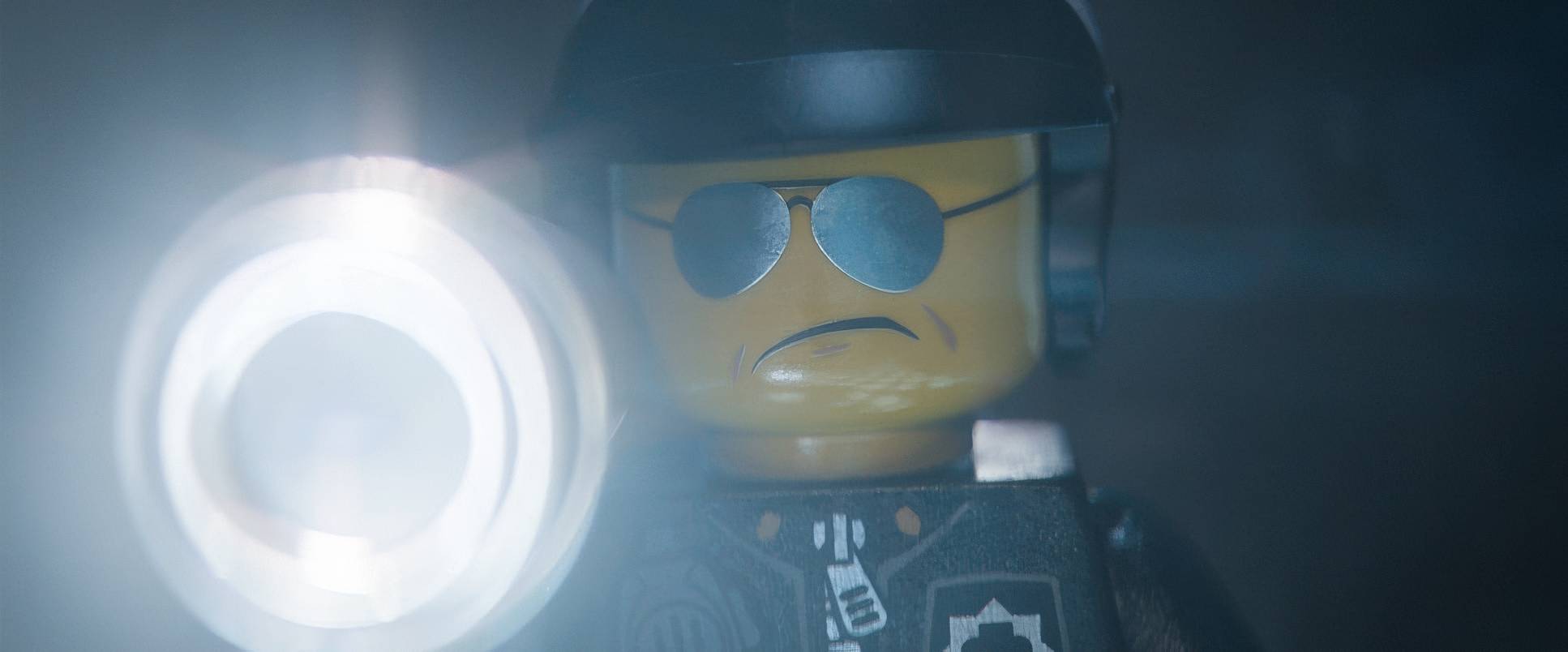
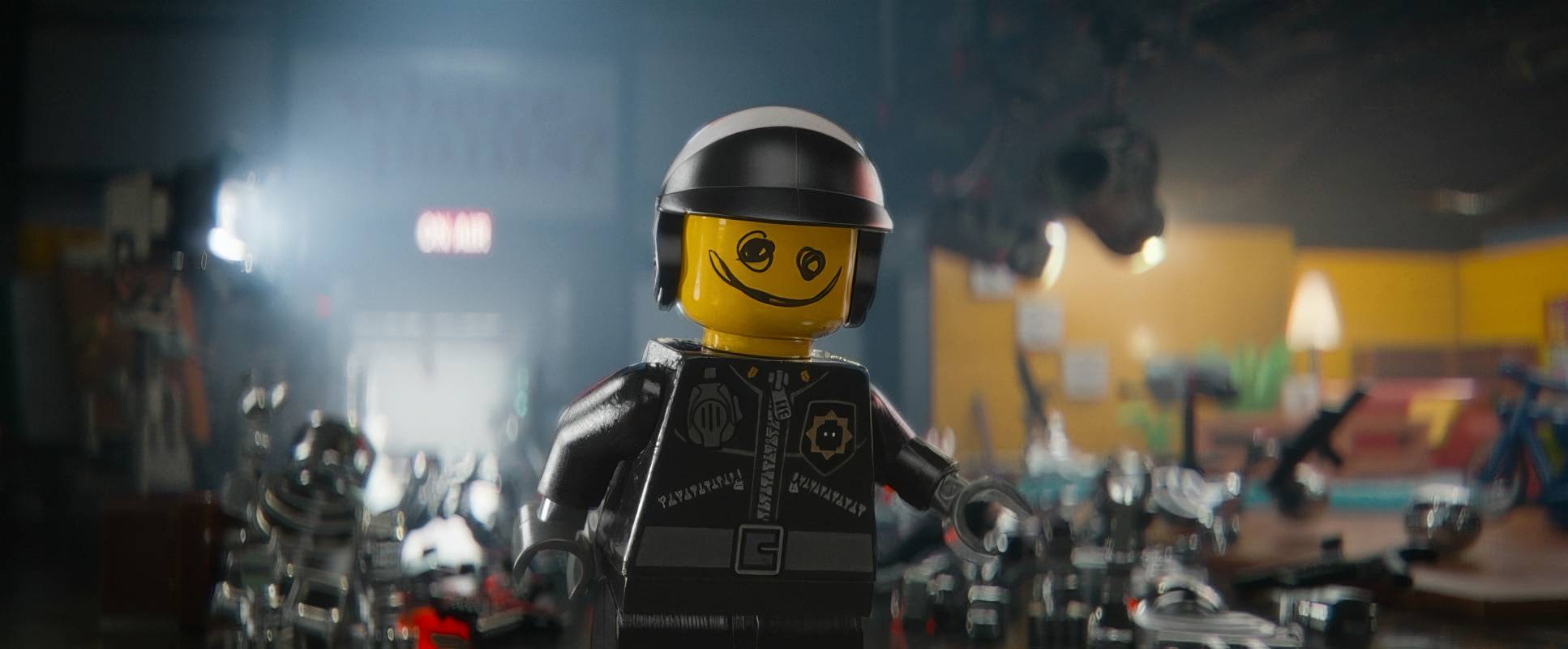
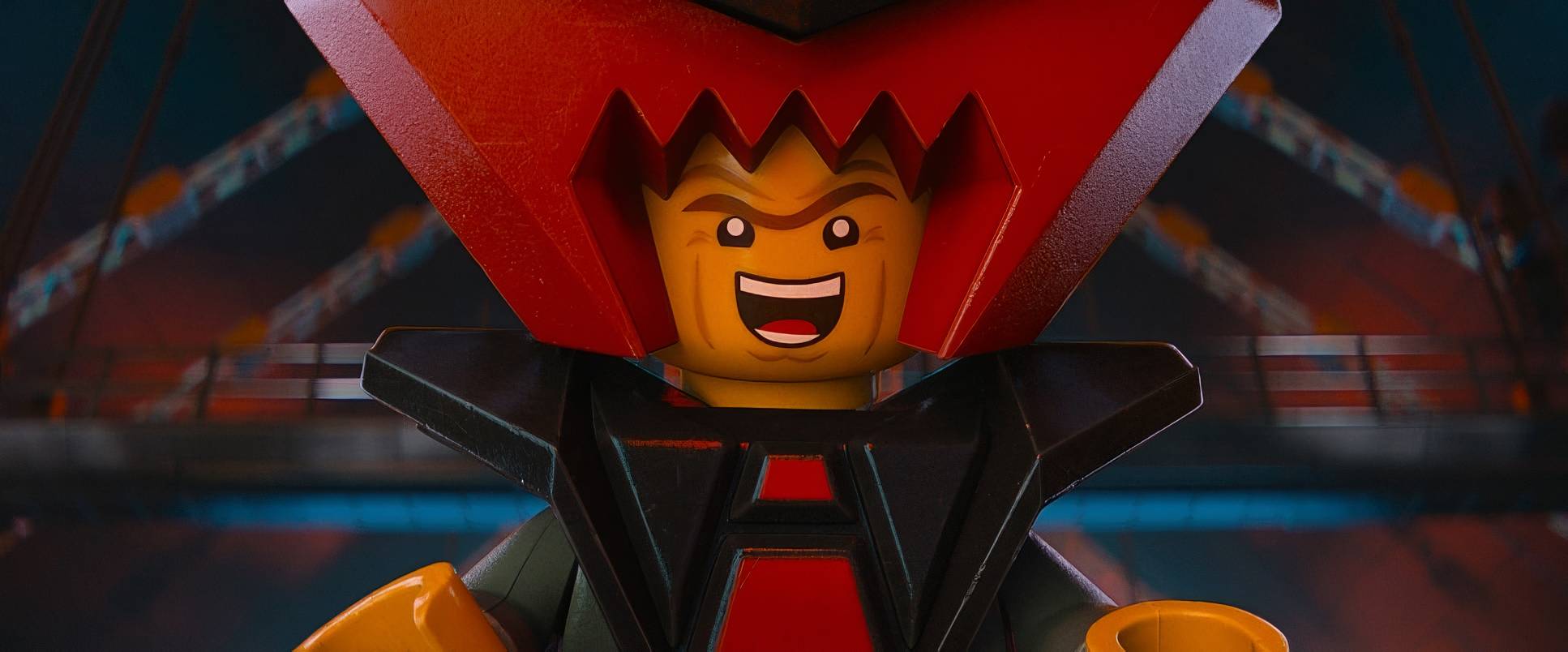
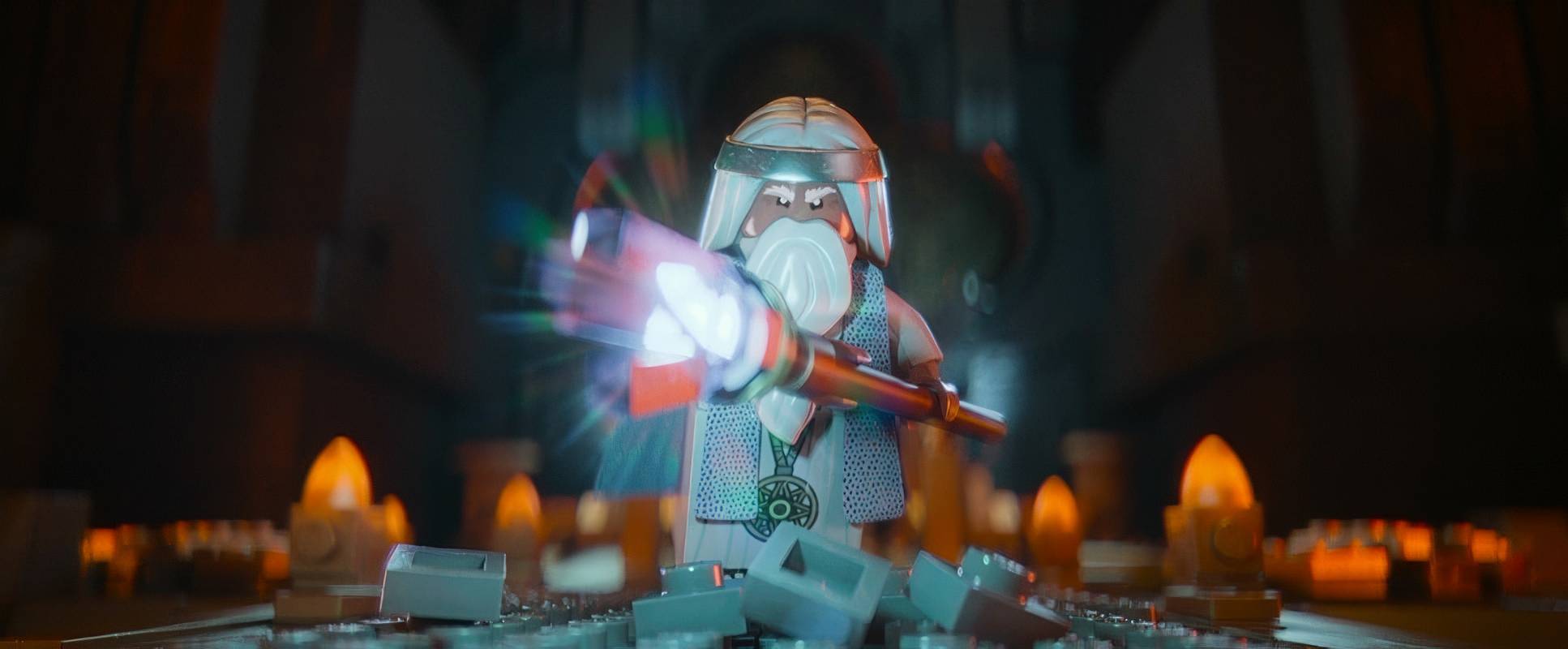
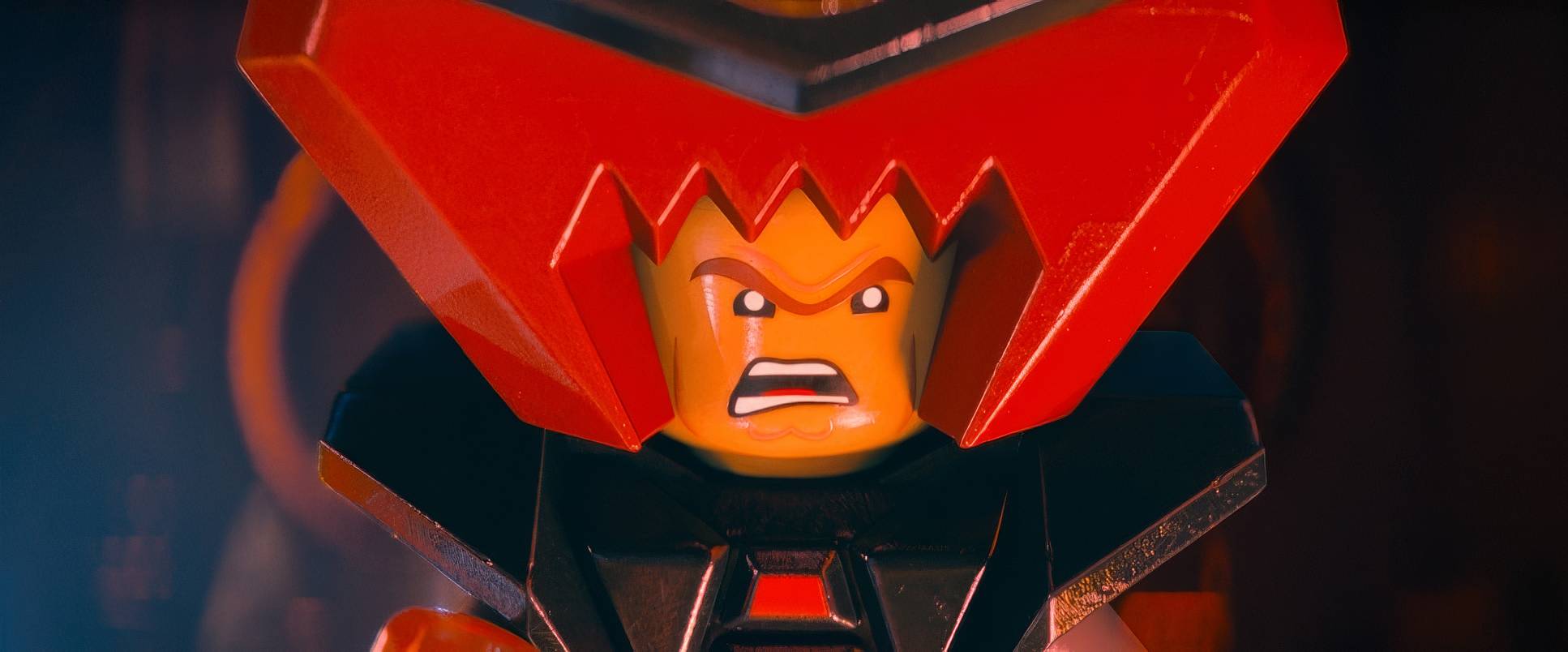
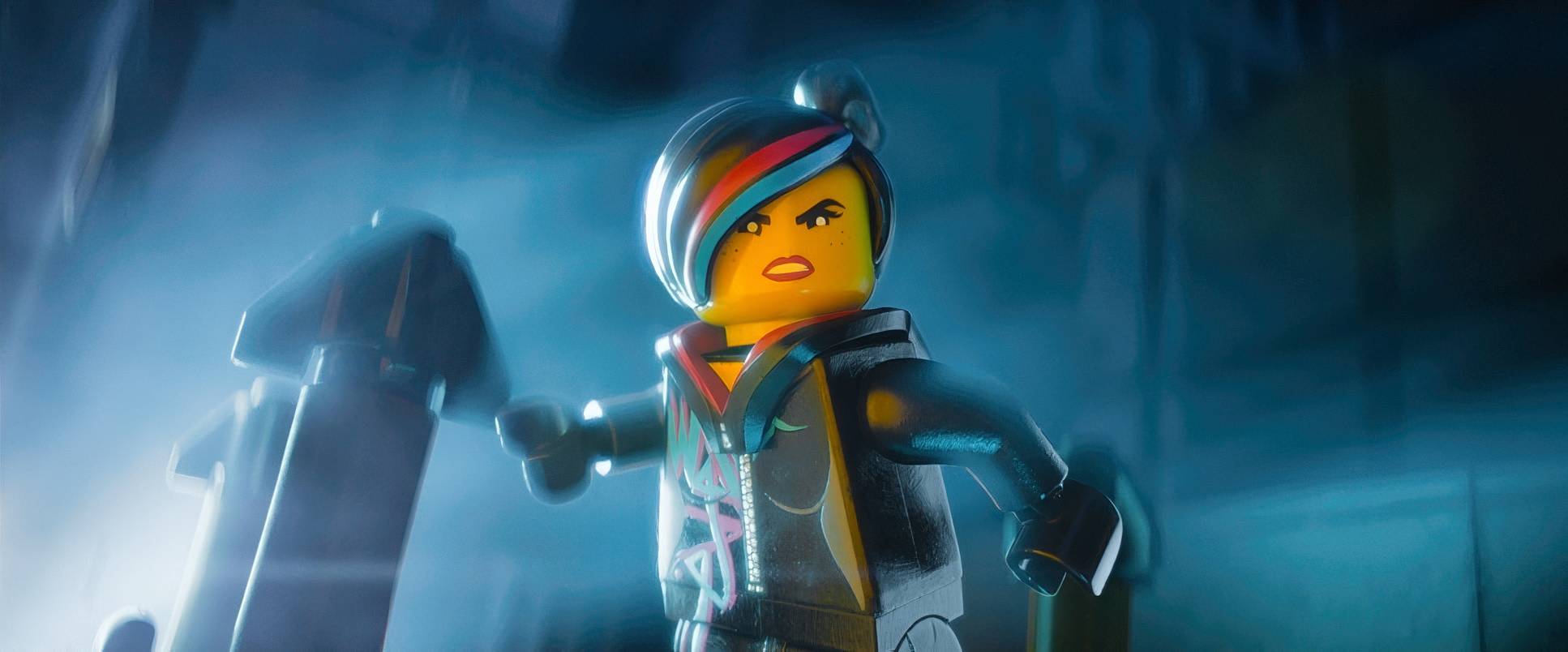
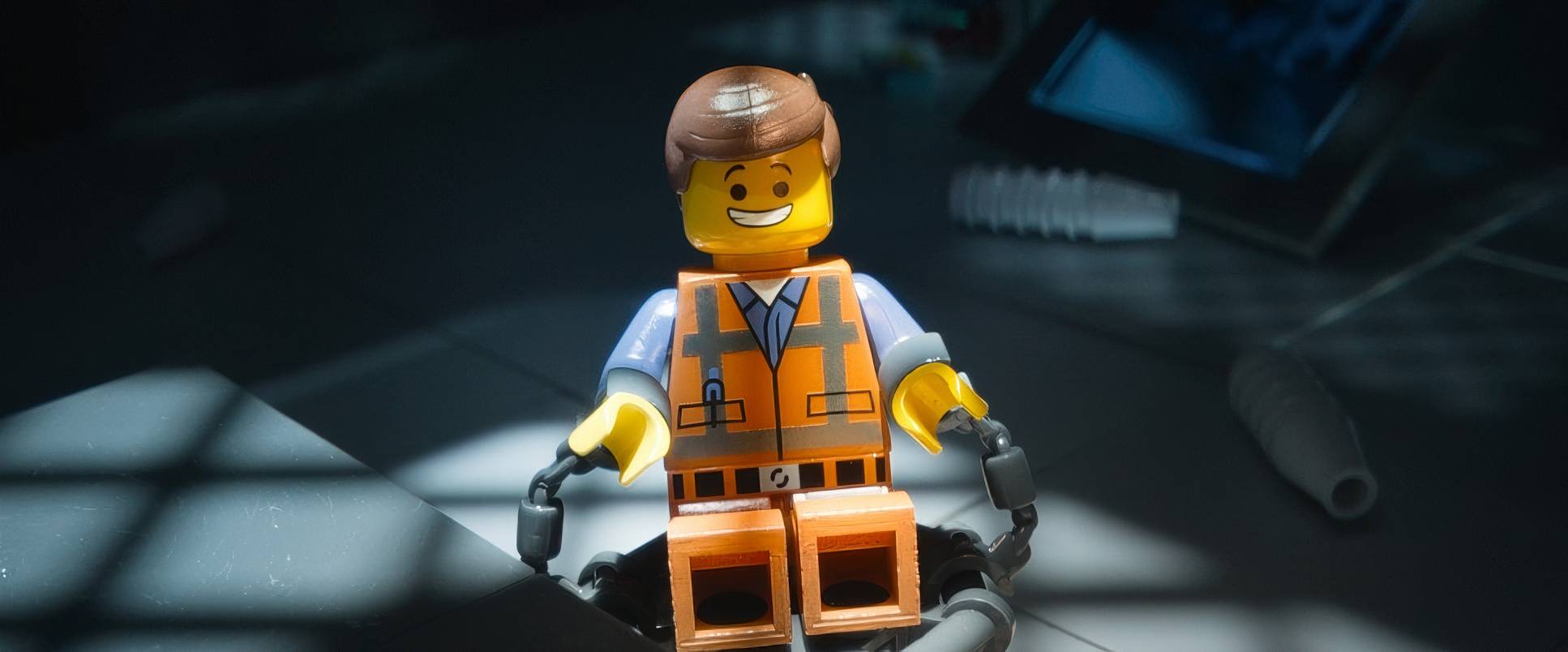
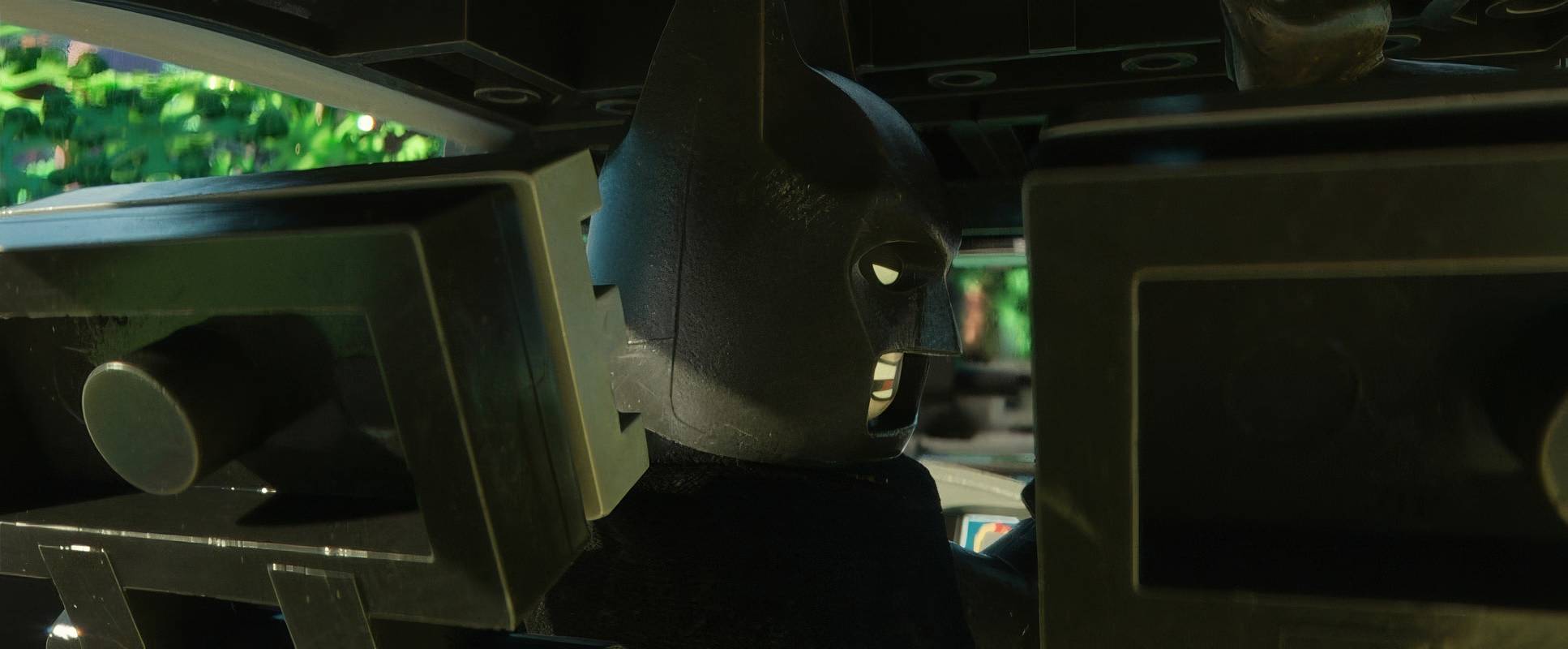
This is where the “realism of plastic” truly comes to life. This isn’t flat, “safe” animation lighting. It’s motivated, high-contrast work. As a colorist, I love how the team handled the specular highlights. You can see the way light catches the raised “LEGO” lettering on the studs and the nuanced shadow gradients that define the form of a minifigure’s head.
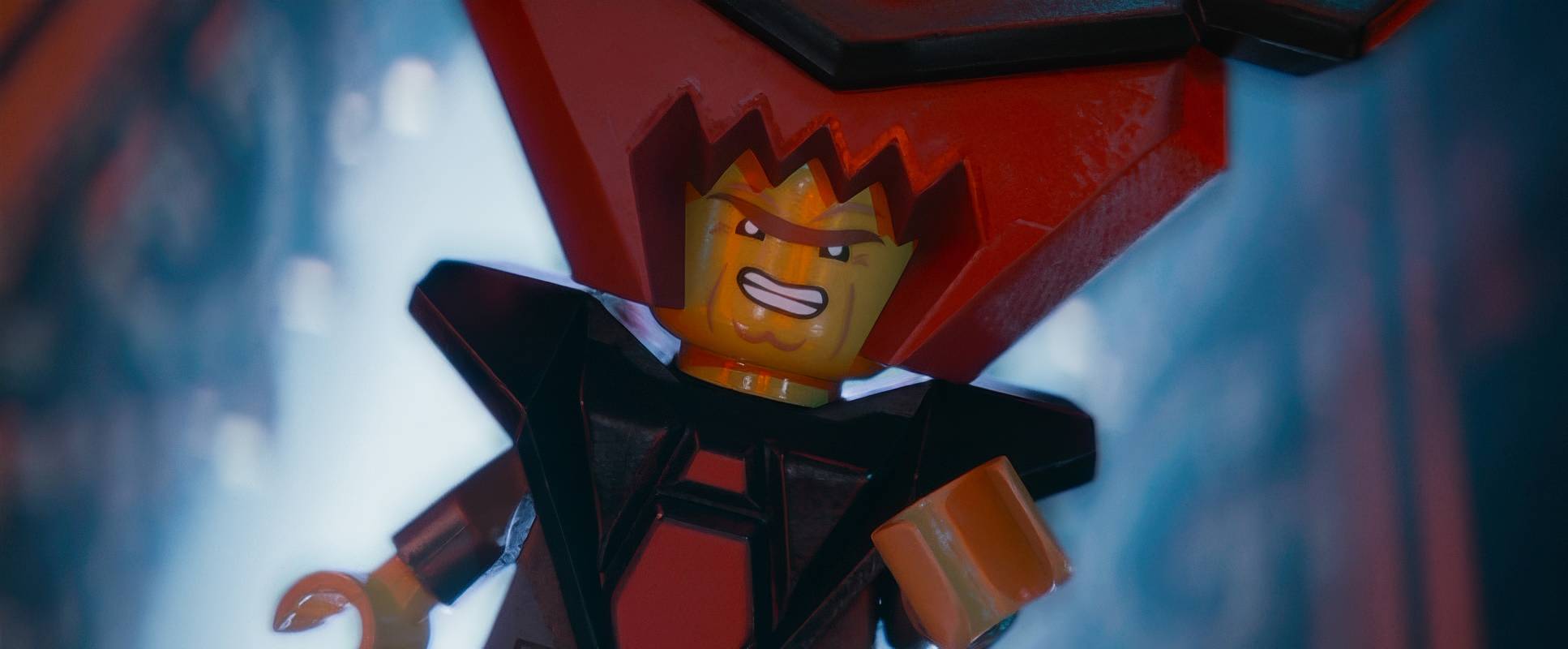
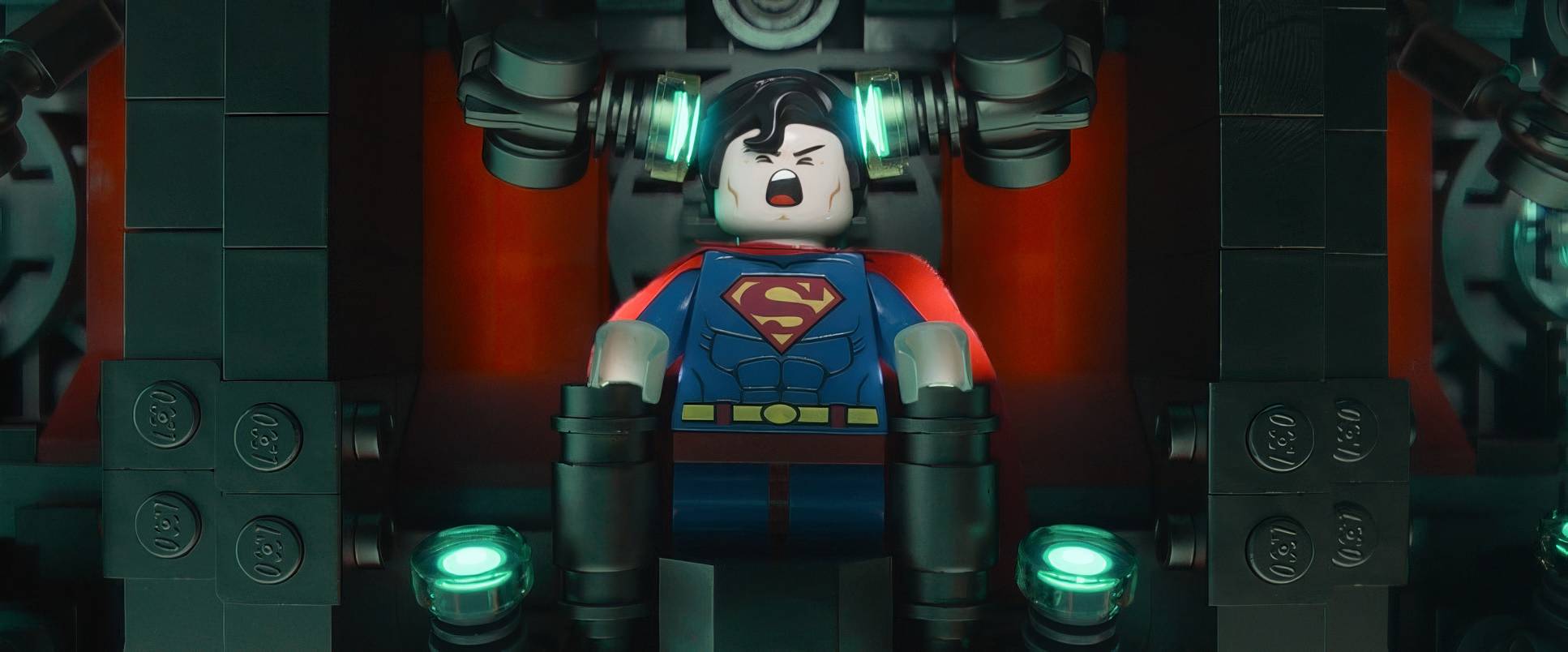
They understood how hard, soft, and diffused light reacts to various plastics. The interplay of key, fill, and rim lighting isn’t just for visibility; it’s for sculpting. They maintained a believable dynamic range, avoiding “digital harshness” in the highlights. The lighting sells the lie it makes you believe this world exists under real lamps and ambient reflections.
Lensing and Blocking
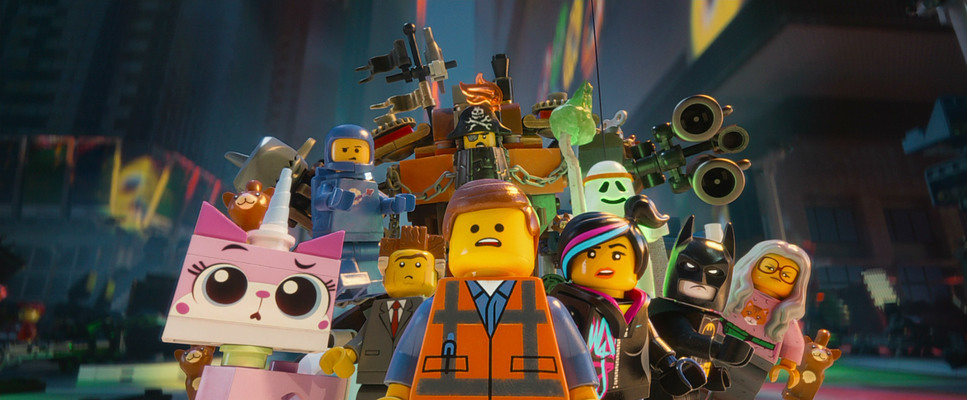
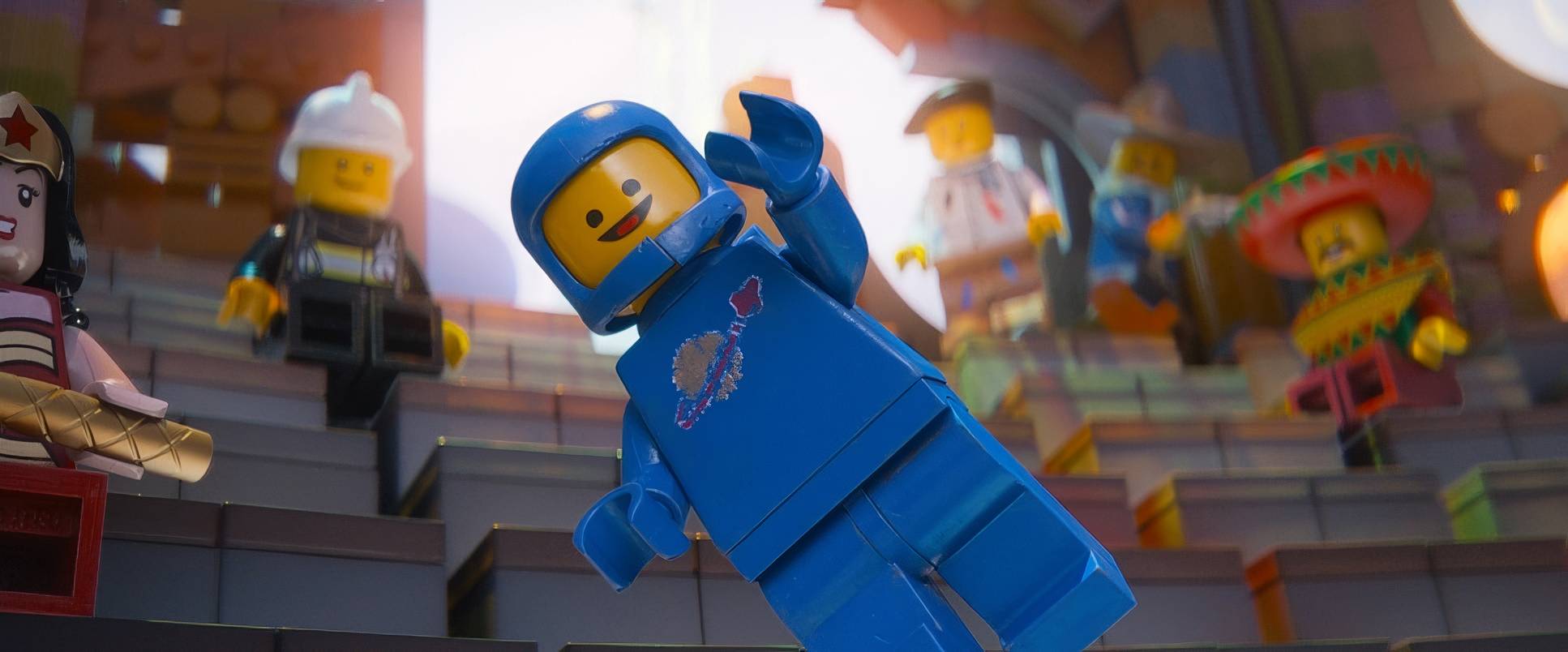
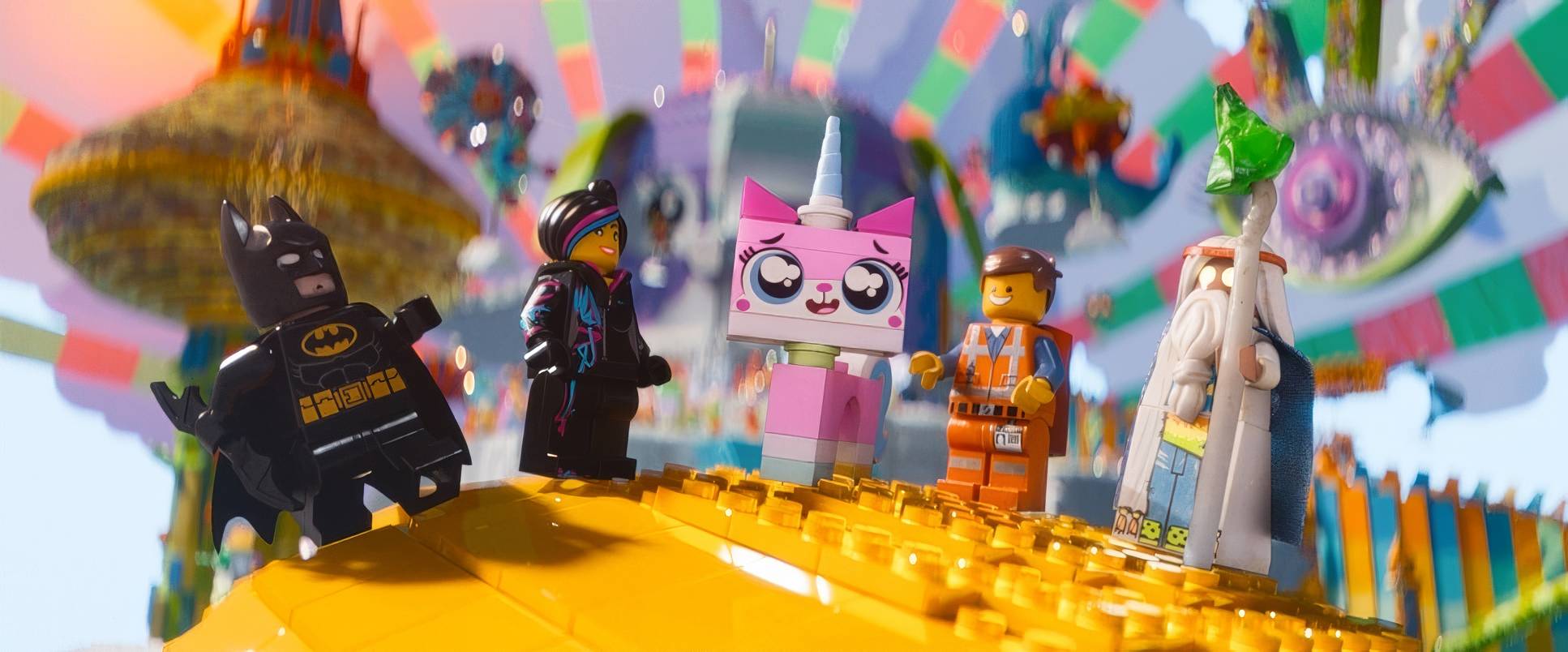
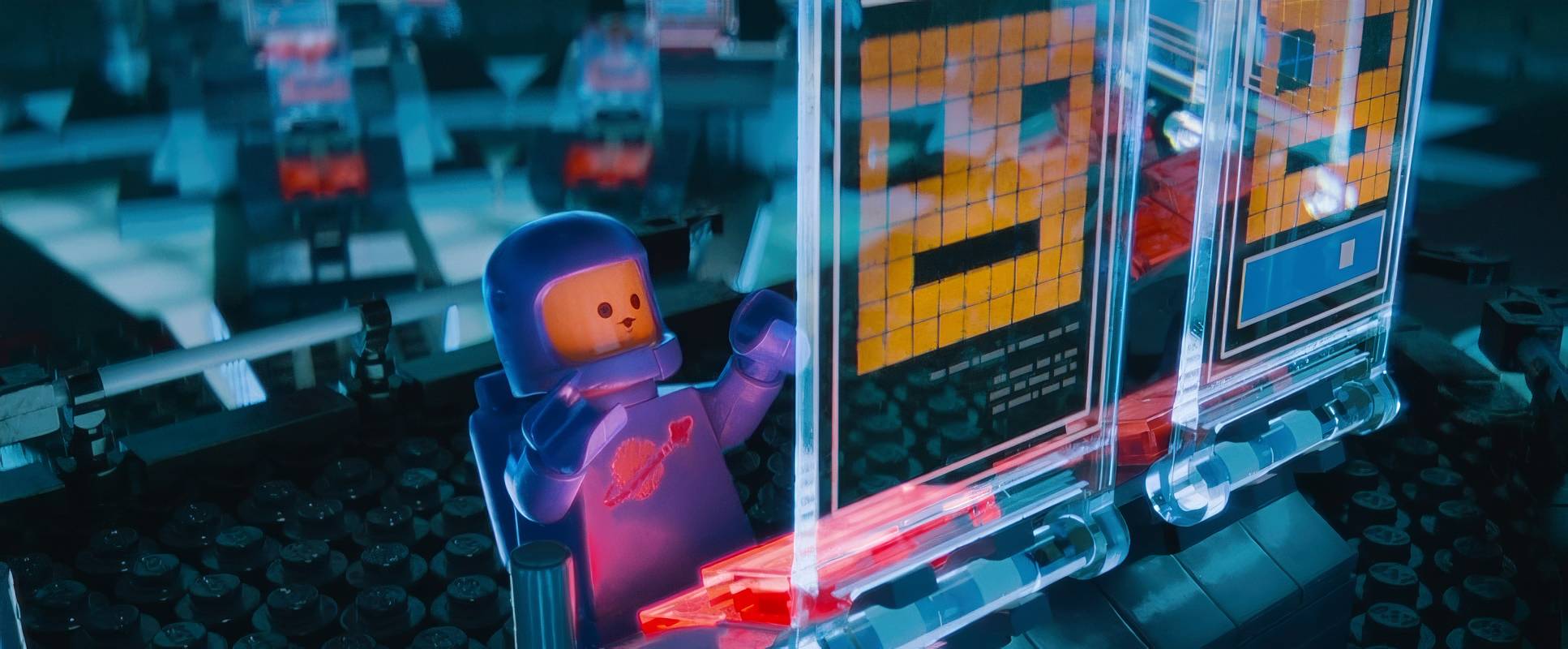
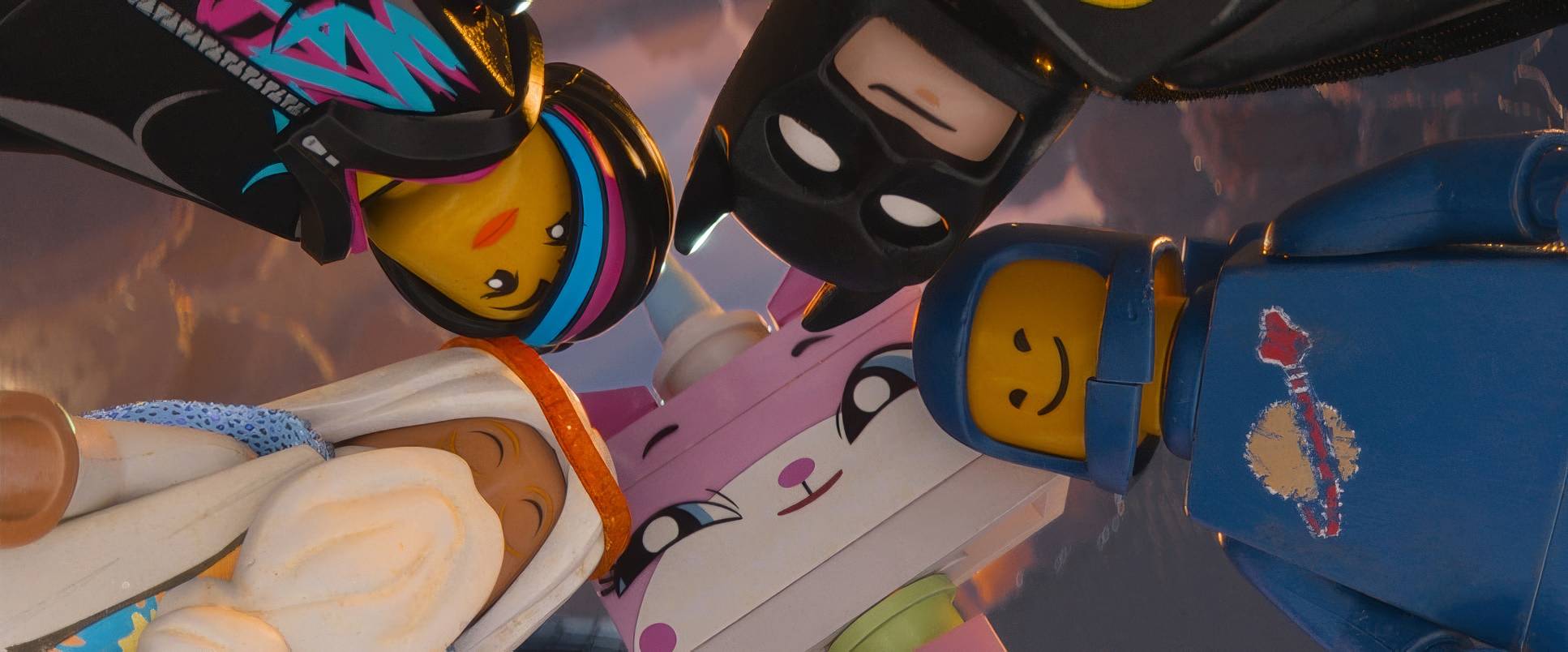
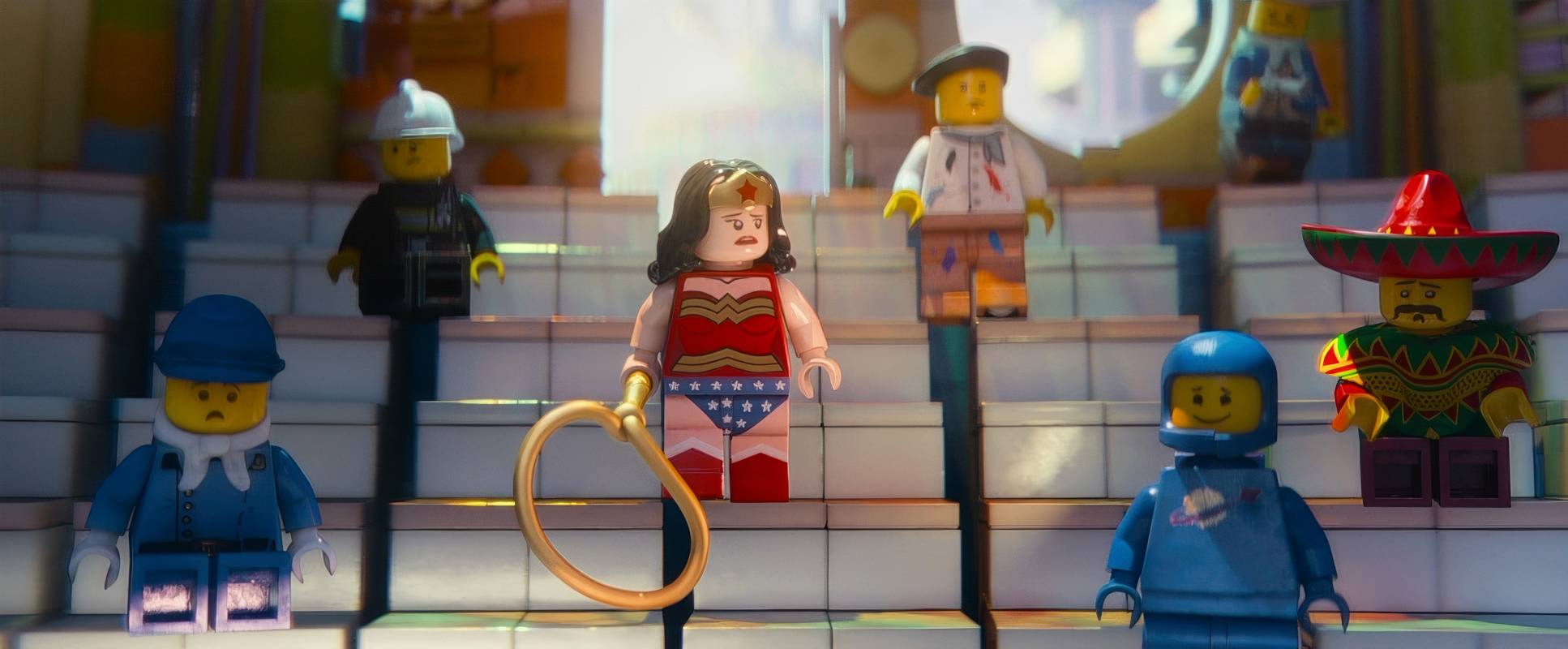
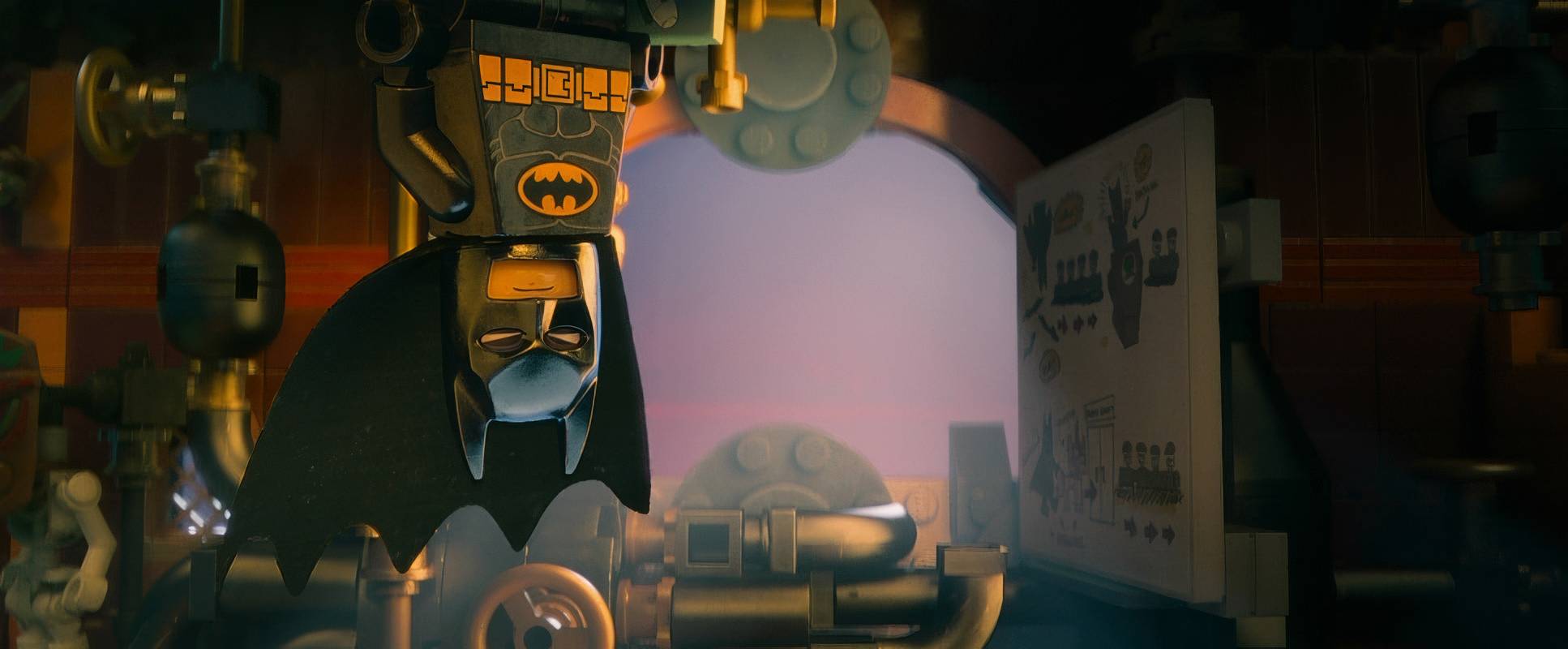
The lensing choices reinforce the “micro-focus” concept. We frequently see a very shallow depth of field, rendering backgrounds in a soft, creamy bokeh. In live-action, we use this to draw the eye or create intimacy; here, it makes the world feel miniature.
The use of rack focus shifting focus from one character to another is executed with a sense of “human error” that I find charming. It suggests a fixed observer with a specialized lens, rather than a digitally untethered viewpoint. The characters navigate their brick-built sets with a physical clunkiness that enhances the stop-motion illusion, making every movement feel earned.
Color Grading Approach
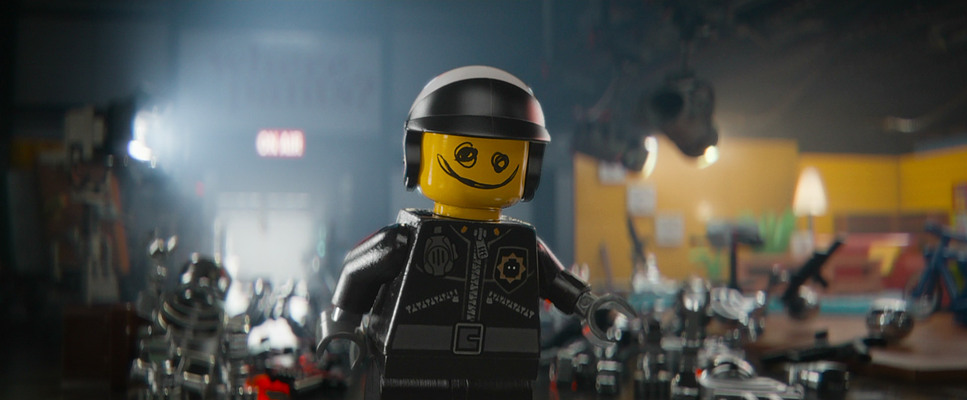
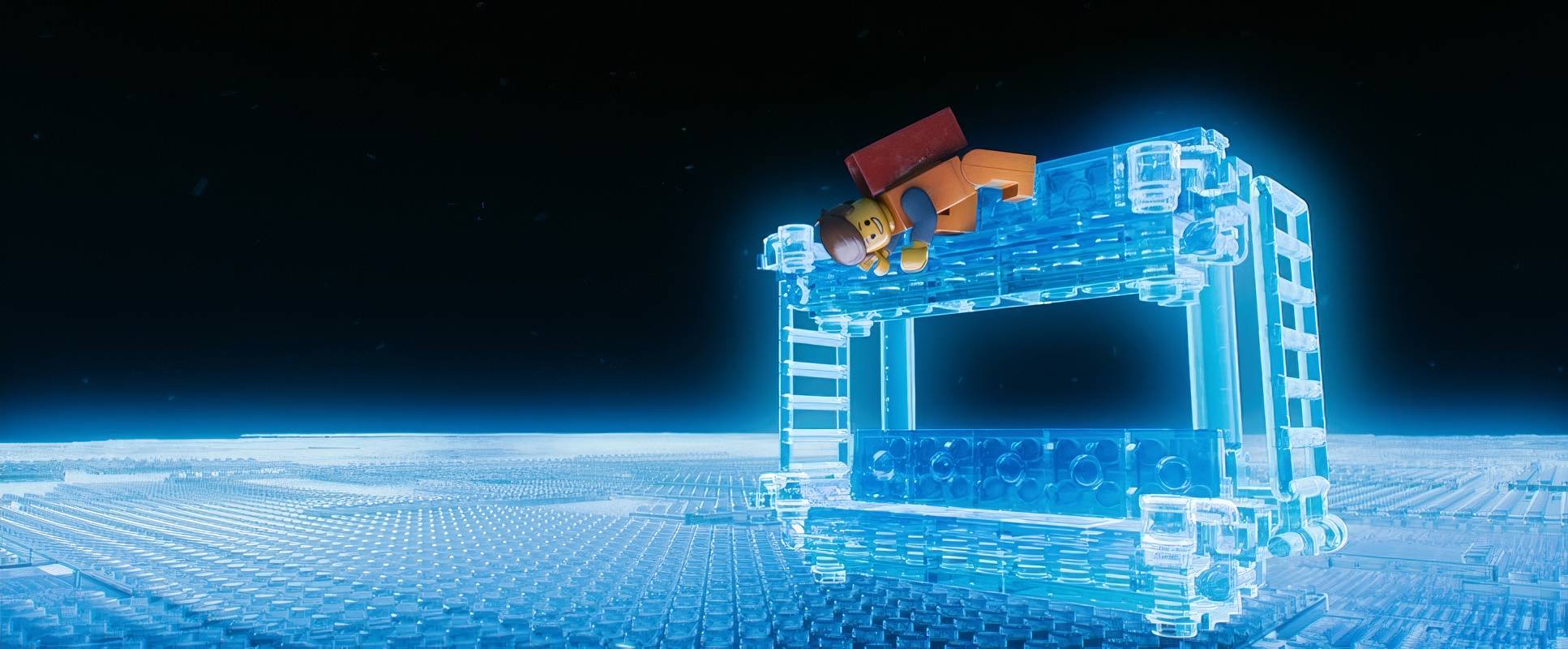
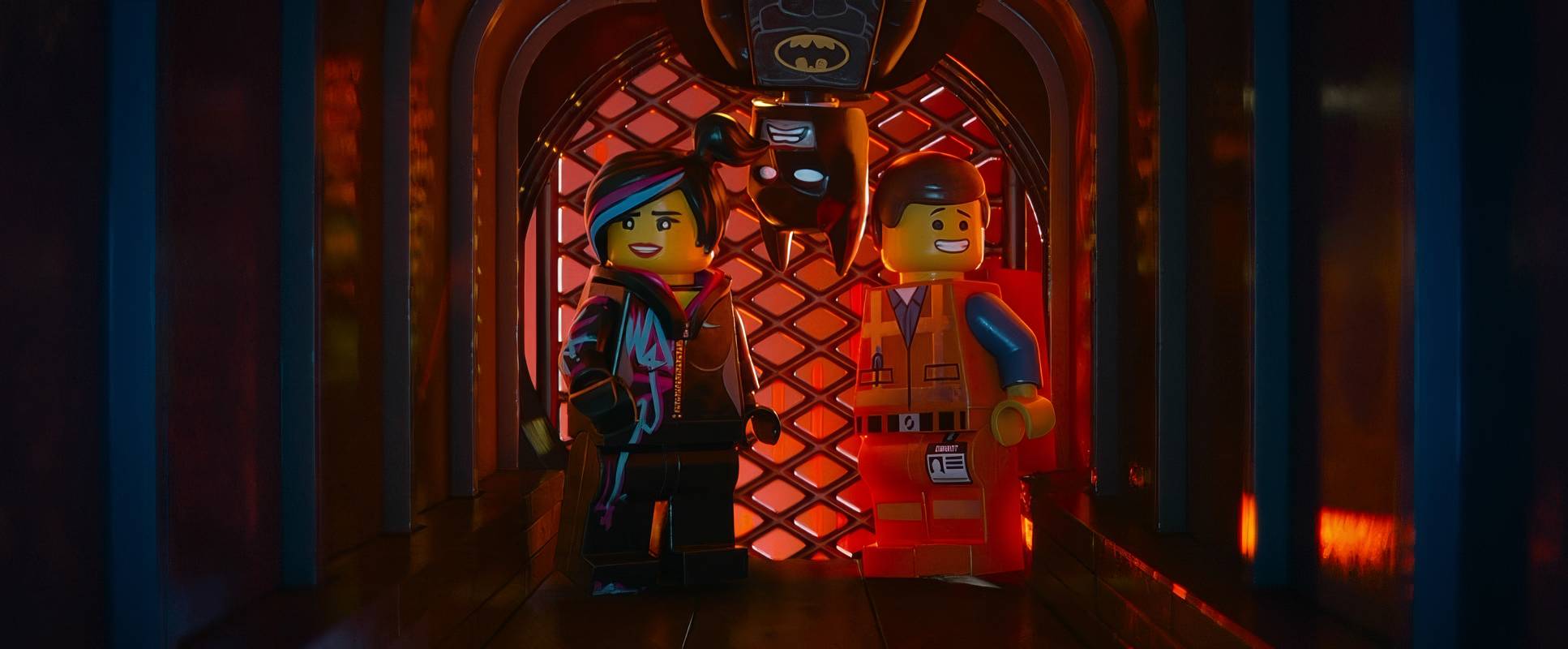
From my desk in the grading suite, The Lego Movie is a masterclass in controlled vibrancy. The palette is naturally diverse, but the grade unifies it so the colors pop without feeling “clippy” or garish.
There’s a thoughtful hue separation at play ensuring the reds, oranges, and yellows stay distinct even in high-action scenes. I also notice a “print-film” sensibility in the highlight rolloff. The bright pings of light on the plastic don’t just hit white; they roll off smoothly, giving the image a photochemical warmth.
The shift during the “real world” reveal is the ultimate payoff. The desaturated, grounded tones of the human basement contrast sharply with the saturated, idealized LEGO universe. It’s a perfect use of dynamic range mapping to underline the narrative conflict between imagination and rigid reality.
Technical Aspects & Tools
The Lego Movie (2014) | 2.39:1 Digital
| Genre | Action, Adventure, Animation, Comedy, Family, Fantasy |
| Director | Phil Lord, Christopher Miller |
| Cinematographer | Pablo Plaisted |
| Production Designer | Grant Freckelton |
| Costume Designer | Julie-Marie Robar |
| Editor | David Burrows, Chris McKay |
| Time Period | 2010s |
| Color | Mixed, Saturated, Orange, Cyan, Blue |
| Aspect Ratio | 2.39 |
| Format | Digital |
| Lighting | Soft light, Top light |
| Lighting Type | Mixed light |
| Story Location | Legoland |
| Filming Location | Los Angeles > Hollywood |
The technical achievement here is monumental. To simulate stop-motion via CG requires rendering every tiny stud, seam, and “accidental” thumbprint. The animators even limited character movements to what a physical minifigure could actually do no bending elbows or knees unless the “physics” allowed for it.
The tools sophisticated rendering engines pushed to their limits weren’t just used to make things look “cool.” They were used to simulate light transport and surface textures with terrifying accuracy. Even the “mishaps,” like a shot being slightly out of focus to suggest a cameraman’s mistake, were painstakingly programmed. It’s a lot of math used to create a soul.
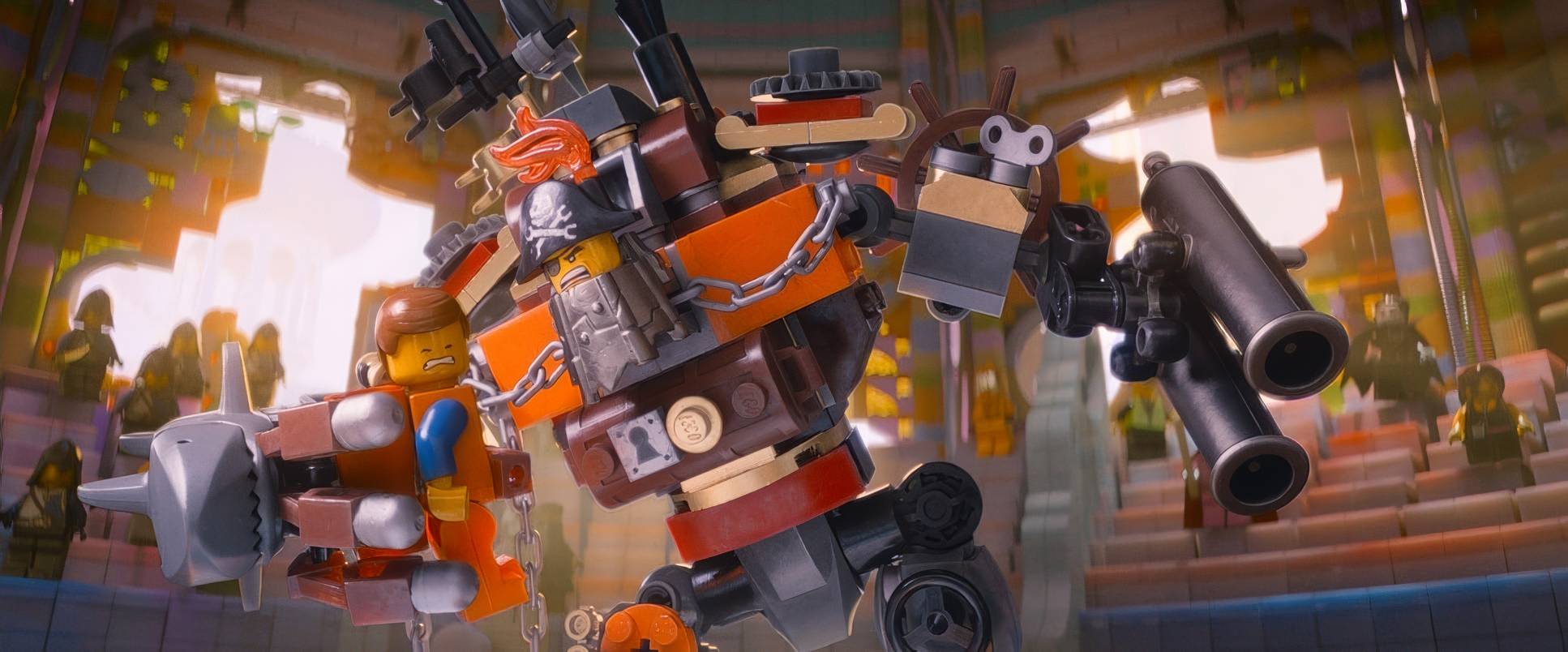
The Lego Movie (2014) Film Stills
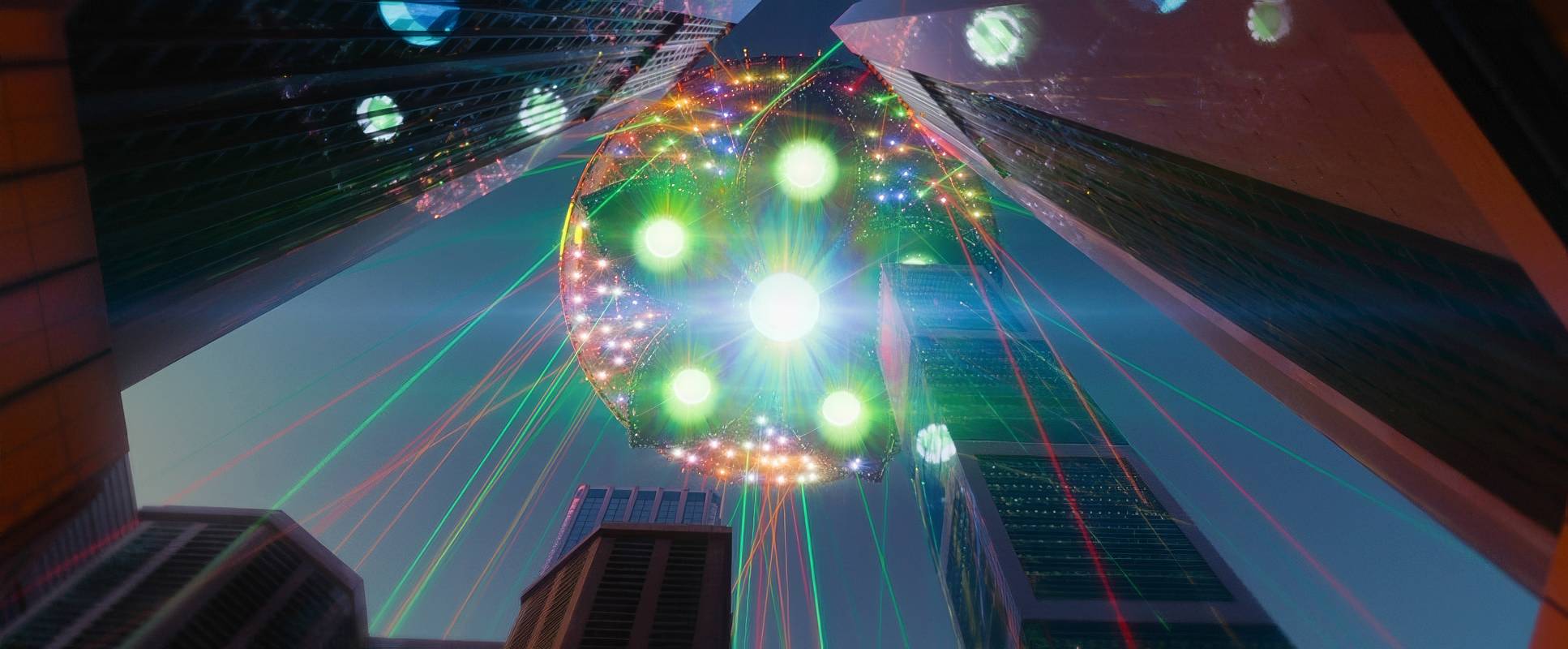
A curated reference archive of cinematography stills from The Lego Movie (2014). Study the lighting, color grading, and composition.













- Also read: BROKEBACK MOUNTAIN (2005) – CINEMATOGRAPHY ANALYSIS
- Also read: MAN ON FIRE (2004) – CINEMATOGRAPHY ANALYSIS
Browse Our Cinematography Analysis Glossary
Explore directors, cinematographers, cameras, lenses, lighting styles, genres, and the visual techniques that shape iconic films.
Explore Glossary →