Crouching Tiger, Hidden Dragon (2000) isn’t just a wuxia film; it’s a masterclass in cinematic artistry. It’s a film that continues to challenge my understanding of what happens when high-level craft meets a singular vision. Having spent a significant amount of time with the recent 4K Blu-ray release, I’m still floored by the deliberate aesthetic choices made by this creative team. Let’s unspool the layers of its cinematography.
About the Cinematographer

At the heart of the film’s visual language is the legendary Peter Pau. A Hong Kong-born artist, Pau brought a level of experience to this project that few could match. He understands the “spectacle” of Hong Kong action cinema, but he possesses the soul of a fine art painter.
What fascinates me about Pau’s approach is how he balances the grand, epic scale of the Chinese landscape with the fragile emotional nuances of the characters. He isn’t just documenting a fight; he’s translating internal turmoil into visual rhythm. His camera is both an observer and a participant gliding through complex choreography with a dancer’s grace before settling into quiet, contemplative close-ups. It’s a sensibility that speaks to a deep understanding of emotional cadence, which is essential for a film that weaves together high-flying martial arts and poignant drama.
Inspiration Behind the Cinematography
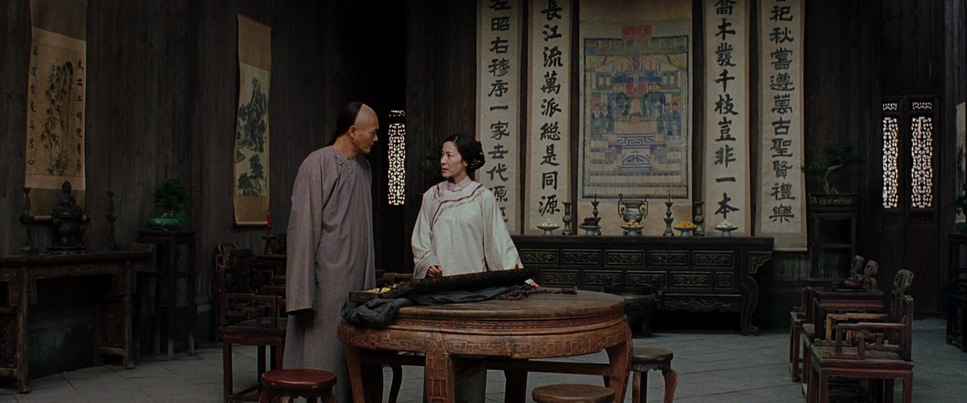
Ang Lee set out to craft a wuxia film that felt authentically Chinese yet universally resonant. You can see this reflected in the visual language, which draws heavily from classical Chinese painting and calligraphy. It’s not just about “pretty shots”; it’s about conveying the philosophical underpinnings of the genre honor, destiny, and the yearning for freedom.
The bamboo forest sequence is the perfect example. While many viewers simply see a “beautiful forest,” as a filmmaker, I see a living, breathing metaphor. The swaying bamboo emphasizes the characters’ agility, but also their connection to nature. There’s a calligraphic quality here lines and forms that are dynamic yet harmonious. From the vast, dusty desertscapes to the intricate, weighted feeling of the temple interiors, every frame feels meticulously composed, reflecting a painter’s eye for balance.
Camera Movements
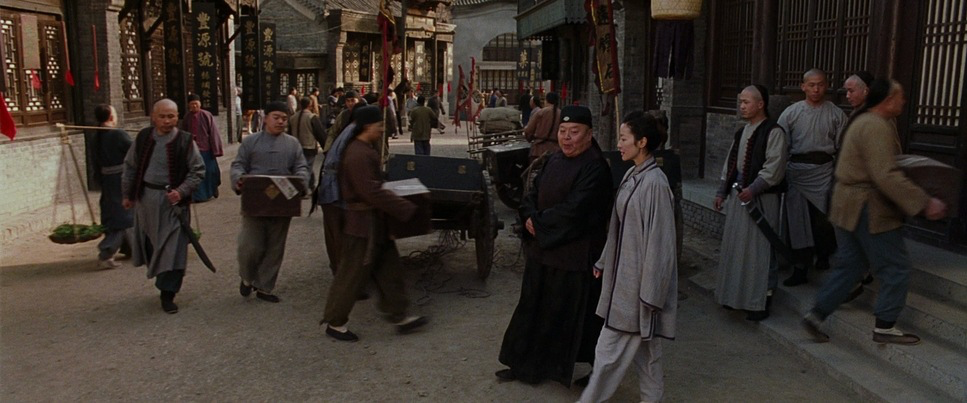
The camera work here is a masterclass in controlled elegance. Movements are rarely flashy for the sake of it; they are always motivated by the narrative. When Li Mu Bai and Jen Yu duel atop the bamboo, the camera performs fluid crane and dolly moves that emphasize their weightlessness. These aren’t just “cool shots” they are extensions of the characters’ inner states.
Contrast that with the grounded, visceral movements during the street brawls or the handheld moments that bring us into Jen Yu’s rebellious headspace. This dynamic interplay prevents visual monotony. Whether it’s a slow, deliberate push-in or a dizzying 360-degree pan, the camera is always telling the story. It’s a testament to the precision of Ang Lee and Peter Pau that these movements, even at their most fantastical, feel organically integrated into the film’s emotional logic.
Compositional Choices
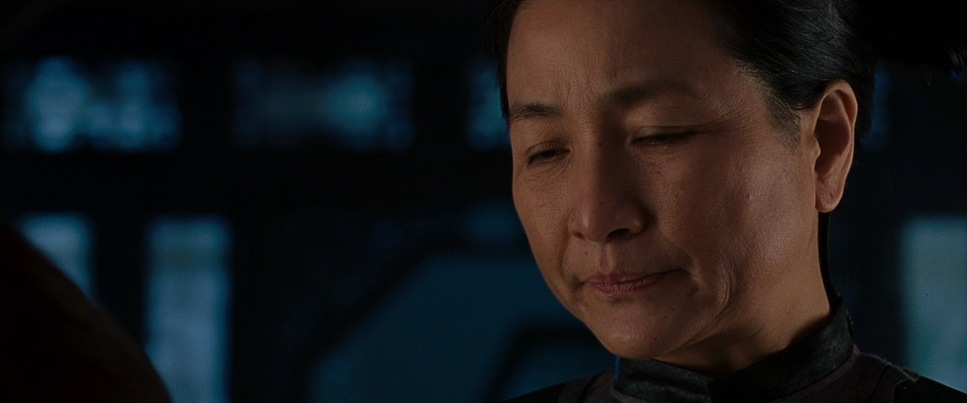
Pau’s compositions are exquisite, blending classical framing with a modern edge. He makes incredible use of depth, layering the foreground and background to create rich, spatial clarity. Utilizing the 2.39 aspect ratio was a brilliant move it provides the wide canvas necessary for both the epic landscapes and the expansive two-shots that define character relationships.
I noticed a recurring use of right-heavy composition and symmetry, which guides the eye perfectly. But Pau is also a master of breaking those rules. He’ll place a character off-center to emphasize isolation or unease. Whether it’s a wide shot of an empty desert or a medium close-up highlighting the intricate detail of a sword, every frame feels “heavy” with intent. There’s a constant balance between grand establishing shots that evoke awe and intimate compositions that anchor the drama.
Lighting Style
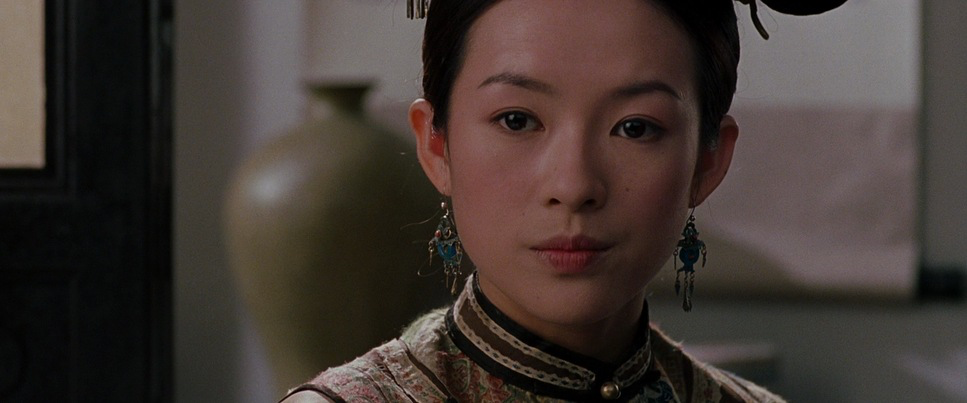
The lighting in Crouching Tiger is effectively a character in itself. Pau largely employs a motivated lighting style, drawing from naturalistic sources but giving them a heightened, cinematic flair. This isn’t just “available light”; it’s carefully sculpted light designed to feel organic.
The night sequences on the rooftops are where the technical mastery really shines. Even in the deepest shadows, there is a wealth of detail. In the 4K presentation, you can see how the highlights lanterns, moonlight, torches cut through the darkness without “crushing” the blacks. It’s a perfect example of how to use light to sculpt the frame and create mystery. As a colorist, I appreciate that these shadows aren’t just “dark” they are rich, textured areas that hide and reveal, maintaining a sense of dramatic tension throughout.
Lensing and Blocking
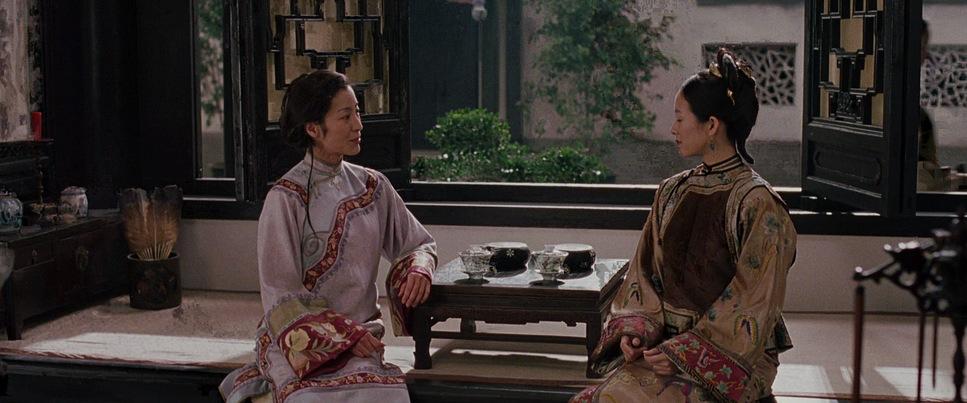
When it comes to glass, Pau leaned into the classic look of Zeiss lenses. You see wider glass for the immersive landscapes, but he strategically uses long lenses for those intimate Medium Close-Ups (MCUs) to subtly compress the background and keep the focus entirely on the actor’s performance.
The blocking works hand-in-hand with this. The film utilizes 3D space brilliantly characters don’t just move left-to-right; they move into and out of depth. Think about the fight choreography: characters are leaping and circling, and the blocking ensures we always understand where they are in relation to one another. There’s a heavy reliance on in-camera action here, which gives the film a tactile, “real” energy that digital-heavy films often lack.
Color Grading Approach: A Colorist’s Perspective
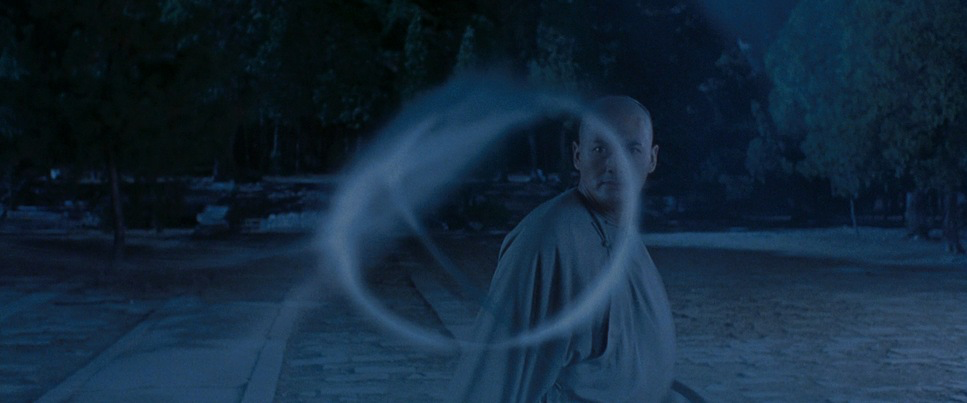
Now, we’re in my favorite territory. The color grading on Crouching Tiger is a study in restraint. On the 4K restoration, colorist Pankaj Bajpai did a phenomenal job honoring the original 35mm negative. The HDR10 grade doesn’t fundamentally change the palette; it simply gives it a natural, lush density.
My job as a colorist involves “tonal sculpting,” and that’s exactly what I see here. We’re looking at intelligent hue separation. The deep emeralds of the bamboo forest are distinct from the cool cyan of the moonlight, yet they feel part of the same world. The grade emphasizes skin textures and clothing without feeling oversaturated or artificial.
There’s a masterful approach to contrast the blacks are dense but hold information, while the highlights have a beautiful, filmic roll-off. The film thrives on the interplay between warmth (the sun-drenched desert) and coolness (the ethereal night fights). This isn’t just a technical exercise; it’s emotional. The grading brings the artistic vision to its fullest potential, making the colors feel both natural and exquisitely cinematic. It’s about elevating the source material, not overwriting it.
Technical Aspects & Tools
Crouching Tiger, Hidden Dragon (2000)
Technical Specs: 35mm Film | 2.39:1 Super 35
| Genre | Action, Adventure, Drama, Romance |
| Director | Ang Lee |
| Cinematographer | Peter Pau |
| Production Designer | Timmy Yip |
| Costume Designer | Tim Yip |
| Editor | Tim Squyres |
| Colorist | Pankaj Bajpai |
| Time Period | 1800s |
| Aspect Ratio | 2.39 – Super 35 |
| Format | Film – 35mm |
| Lighting | Soft light |
| Story Location | Asia > China |
| Filming Location | Asia > China |
| Camera | Arri 435 / 435ES, Moviecam Compact |
| Lens | Zeiss Lenses |
The technical foundation of this film is why it still looks better than most modern blockbusters. It was shot on 35mm film using the Arri 435 and Moviecam Compact. That inherent film grain gives the image a textural richness that digital sensors still struggle to replicate.
The native 4K scan of the original negative preserves every ounce of detail from the fine lines of an actor’s face to the intricate patterns on the costumes. Moving that into the HDR10 space allows for a wider color gamut and dynamic range, translating the full expressive potential of that original 35mm negative for modern displays. It’s about respecting the medium.
- Also read: CORALINE (2009) – CINEMATOGRAPHY ANALYSIS
- Also read: FANTASTIC MR. FOX (2009) – CINEMATOGRAPHY ANALYSIS
Browse Our Cinematography Analysis Glossary
Explore directors, cinematographers, cameras, lenses, lighting styles, genres, and the visual techniques that shape iconic films.
Explore Glossary →