Scorsese’s latest opus, shot by the legendary Rodrigo Prieto, is one of them. It’s not a film you just watch; it’s one you experience and then can’t stop dissecting. For me, it was a masterclass in how visual storytelling evolves with a director’s voice, turning familiar gangster tropes into something profoundly new and haunting.
Many casual viewers were caught off guard by the deliberate pace, expecting the flashy bravado of Goodfellas or Casino. Honestly, I get it. We’re all conditioned to expect a certain kind of “blockbuster” spectacle. But The Irishman is a somber, deeply human tale that demands engagement on a different level. It’s a marathon, not a sprint, designed for a cumulative effect that slowly, inexorably, settles into your bones. As someone who obsesses over every pixel and frame, this is the kind of film that makes my soul sing.
About the Cinematographer

When you hear Rodrigo Prieto’s name, you know you’re in for a visual treat. The man is a total chameleon. He serves the story with an incredible range while maintaining a distinct cinematic poetry. From the gritty realism of Amores Perros to the flamboyant chaos of The Wolf of Wall Street, Prieto understands how to translate a director’s vision into a cohesive visual language.
What makes Prieto such a fantastic fit for Scorsese especially here is his humility. He doesn’t bring a rigid “style” to the set; he adapts and listens. He’s not there to show off; he’s there to help tell the story in the most impactful way possible, even if that means stripping away the usual “glamour” associated with the genre. His eye for subtle nuance and his technical prowess, particularly with the complex digital-to-film hybrid workflow, made him the perfect partner for this reflective epic.
Technical Aspects & Tools
To understand the look of this film, we have to look at the gear, because this was a massive technical undertaking. Prieto didn’t just pick a camera; he built a “Three-Headed Monster.” Because of the extensive de-aging VFX, they used a specialized rig involving a RED Epic-W Helium for the primary capture, flanked by two witness cameras.
But here’s the kicker for the film purists: they also shot a significant portion on 35mm film (Kodak Vision3 500T 5219 and 250D 5207) using Arricam LT and ST cameras. As a colorist, I find this hybrid approach fascinating. You’re trying to marry the ultra-clean, high-resolution 8K RAW data from the RED Helium with the organic, textured grain of Kodak stock. It wasn’t just a pragmatic choice for VFX; it was a choice to keep the soul of the image grounded in the 1970s era where much of the story lives.
Lensing and Blocking
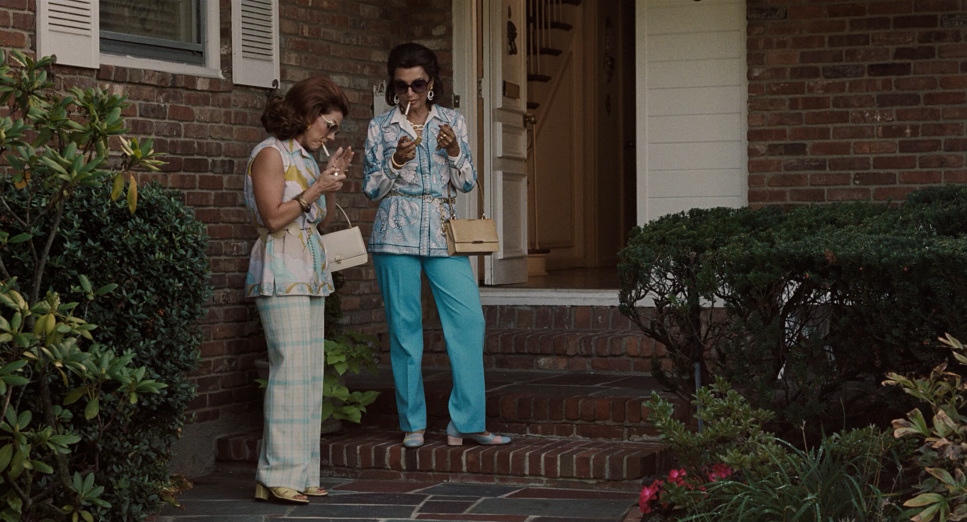
The lens choices here are equally deliberate. Prieto moved between Zeiss Ultra Primes and Cooke Panchro Classics. If you know the “Cooke Look,” you know it’s famous for that gentle, warm roll-off and beautiful skin tones which I suspect helped take some of the “digital edge” off the de-aging work. Generally, he leans toward mid-range focal lengths that mimic the human eye, avoiding extreme wide-angle distortions.
Blocking is where Prieto and Scorsese truly shine. Think about the “fish” conversation in the car. The tight, uncomfortable blocking of Frank, Chucky, and Sally Bugs within that cramped space makes you feel the “smell on his soul” metaphor. Throughout the film, the way characters are positioned Russell’s quiet authority versus Hoffa’s booming presence communicates power dynamics better than the dialogue ever could.
Lighting Style
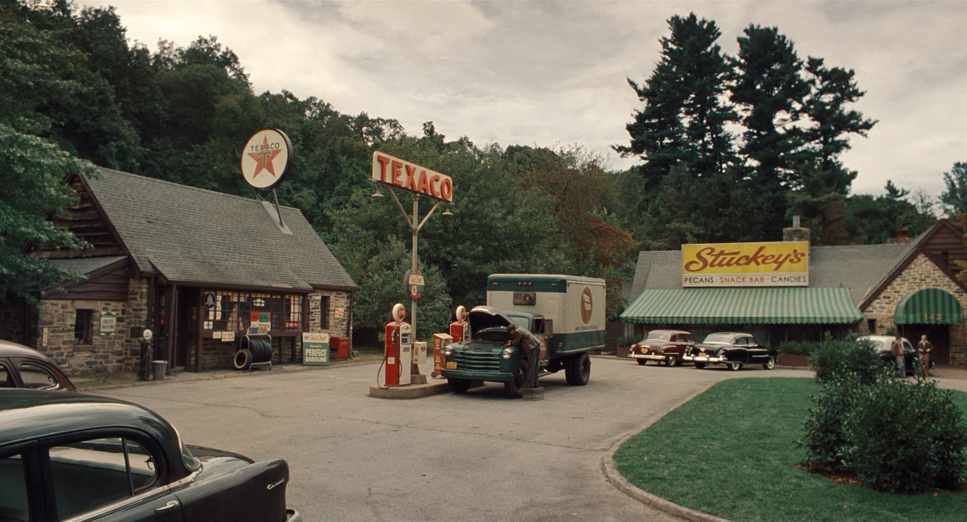
The lighting in The Irishman is refreshingly unglamorous. Prieto opts for a naturalistic, motivated style. In many of the house and kitchen sets (like the Philadelphia scenes), he uses a simple side light or daylight through windows that feels honest rather than “movie-lit.”
As the film progresses and Frank’s world narrows, the lighting becomes increasingly muted. By the time we reach the nursing home, we’re seeing a lot of soft, ambient light that emphasizes the sterile, isolating environment. There’s a beautiful desaturation here, where colors are pulled back, allowing the subtle shifts in light and shadow to dictate the mood. It contributes to the film’s somber, elegiac tone without resorting to overt dramatic flourishes.
Inspiration Behind the Cinematography
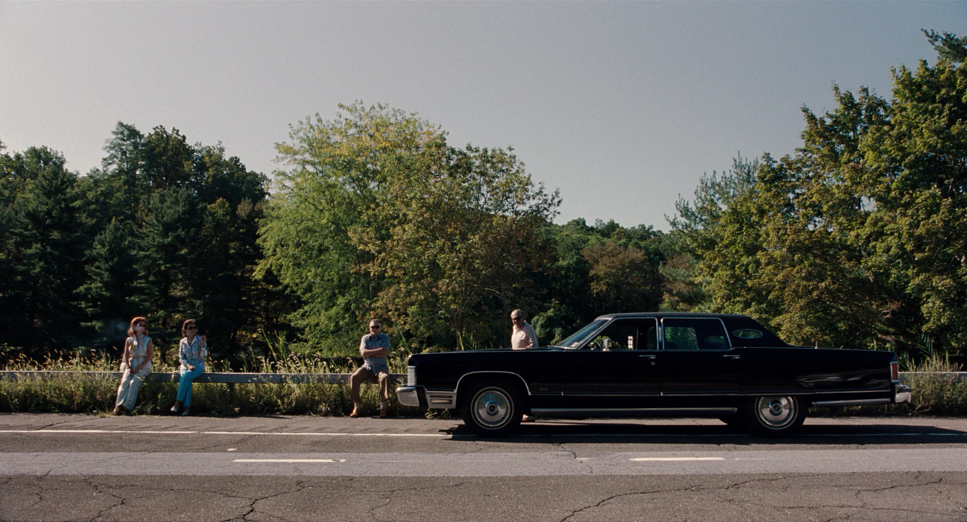
The cinematic inspiration felt like a conscious unburdening of the mob lifestyle. Scorsese wasn’t interested in glamorizing these guys anymore; he wanted to explore the crushing weight of consequences. The film needed to feel melancholic and heavy with the passage of time.
The de-aging technology wasn’t a gimmick; it was an artistic choice to keep De Niro, Pacino, and Pesci as themselvesthroughout the decades. The cinematography had to support this by providing a consistent visual framework that allowed these digital transformations to exist in a believable world. It’s a film about watching men dig their own graves, and the grim, inevitable trajectory of the camera reflects that.
Camera Movements
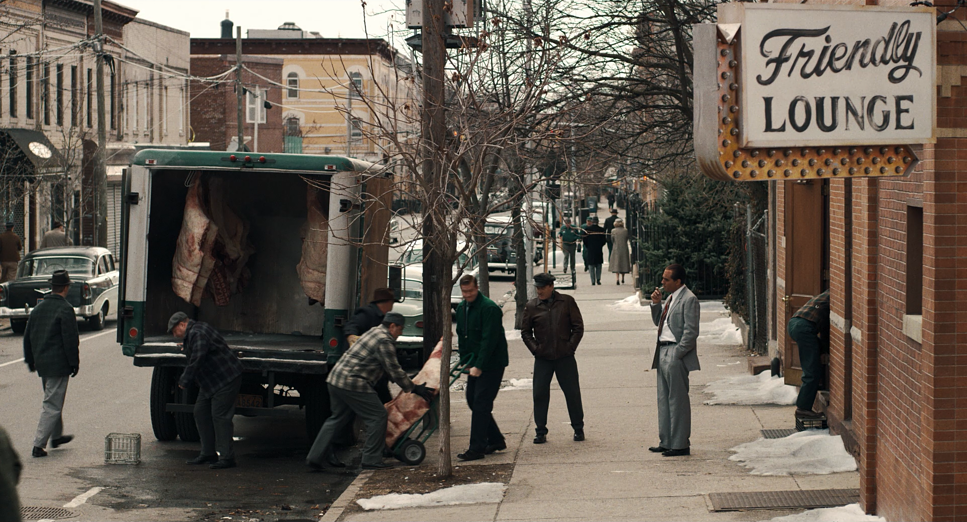
If Goodfellas was a breakneck roller coaster, The Irishman is a slow, deliberate train journey through a desolate landscape. The camera is often a silent observer, almost a ghost floating alongside Frank. Gone are the virtuosic Steadicam sequences. Here, the camera is restrained and mature.
We see a lot of slow, methodical dollies and subtle pans. The camera often holds on faces, allowing the performance to carry the emotional weight. When the camera does track, it’s not to create excitement; it’s to follow a character with a sense of quiet inevitability. It’s as if the camera itself is weary, having seen it all before.
Compositional Choices
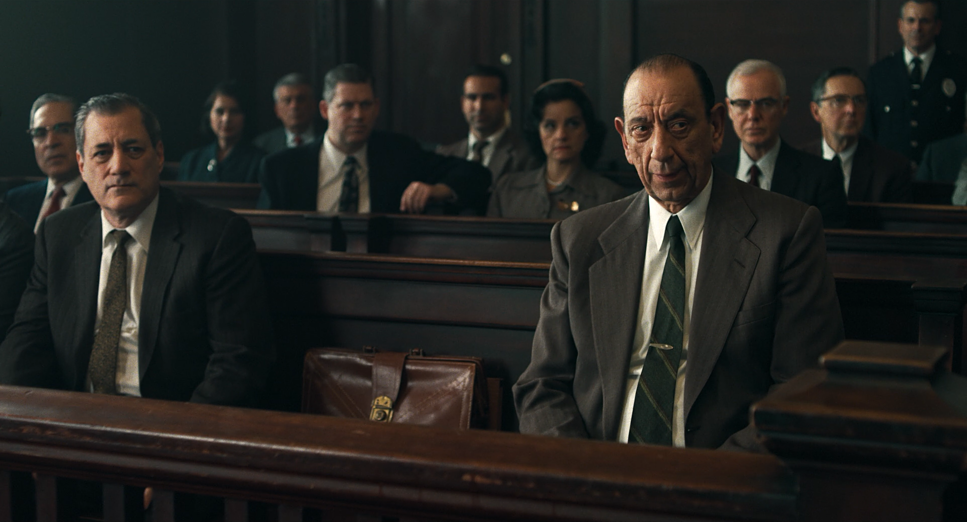
Prieto’s framing is a masterclass in conveying isolation. Characters are often framed with significant negative space, emphasizing their loneliness. We see figures dwarfed by sterile environments, echoing the theme that time renders all ambitions meaningless.
The framing of Peggy Sheeran is particularly impactful. She’s frequently at the periphery, her silent, judgmental gaze acting as a visual representation of Frank’s deteriorating conscience. Later, the famous “open door” motif both in Hoffa’s room and Frank’s final scene is meticulously composed. It transitions from a sign of power to a desperate plea for connection that ultimately goes unanswered.
Color Grading Approach
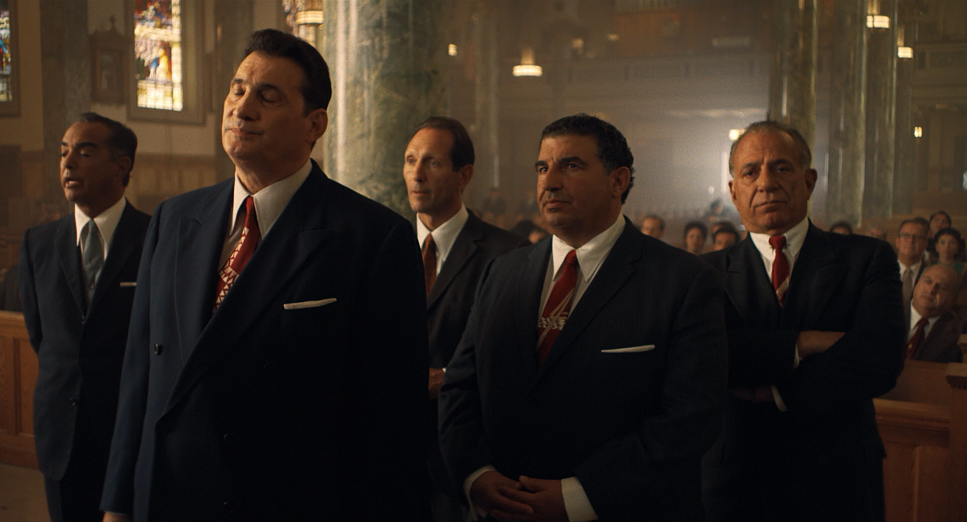
Now, let’s talk about the color the part I live for. The grade, handled by the legendary Yvan Lucas, is a masterclass in tonal sculpting. This isn’t just about making things look “old.” It’s about evoking the fading memories of a bygone era.
The palette is muted, leaning into cooler greens, blues, and grays. Even in the warmer early scenes, there’s a print-film sensibility that prevents the colors from feeling artificial. As a colorist, I love the highlight roll-off here; it’s gentle, avoiding any harsh digital clipping.
Contrast shaping is key. Early on, the image has a bit more “punch,” but as Frank ages, the shadows are lifted slightly. It prevents the image from feeling crushingly dark, opting instead for a somber, understated mood. This careful manipulation of dynamic range helps bridge the gap between the REDcode RAW 8K capture and the 35mm film stock, creating a cohesive, deeply emotional aesthetic that highlights the “mundane and small” nature of death in this world.
- Also read: THE BREAKFAST CLUB (1985) – CINEMATOGRAPHY ANALYSIS
- Also read: AMERICAN GANGSTER (2007) – CINEMATOGRAPHY ANALYSIS
Browse Our Cinematography Analysis Glossary
Explore directors, cinematographers, cameras, lenses, lighting styles, genres, and the visual techniques that shape iconic films.
Explore Glossary →