The Breakfast Club (1985) is one of those rare “lightning-in-a-bottle” moments in cinema. You take five kids from different social orbits, stick them in a Saturday detention, and somehow end up with a cultural touchstone. On paper, “five teenagers sitting in a library for eight hours” sounds like a recipe for a visual snooze-fest. But John Hughes had this uncanny eye for adolescent angst, and together with his crew, he crafted something that feels both expansive and deeply personal. It’s preserved in the Library of Congress for a reason. Rewatching it recently specifically through the lens of a colorist comparing its various masters I’m struck by how every visual choice reinforces the search for identity and connection.
About the Cinematographer
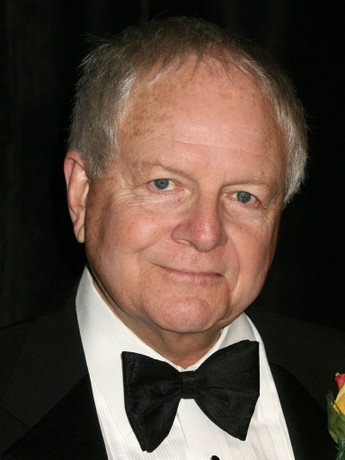
The man behind the lens was Thomas Del Ruth, ASC. If you know his work on Stand by Me or Ferris Bueller’s Day Off, you know he has a knack for capturing youth without being sentimental. What I love about his work here is the restraint. The Breakfast Club didn’t need flashy gimbal shots or avant-garde lighting. Del Ruth acted as an empathetic observer. His job was to stay out of the way and let this cast shine. Working with a measly $1 million budget, he had to be efficient. He made a single high school library feel dynamic for 100 minutes by simply understanding the emotional beats of the script. That’s the kind of discipline that separates the pros from the amateurs.
Inspiration Behind the Cinematography
The core DNA of the visuals flows directly from the script’s biggest challenge: turning a physical detention into a group therapy session. There are no grand vistas or high-speed chases here; the “action” is the messy emotional landscape of five high school archetypes. It’s a “single location” film where nothing “major” happens externally, so the camera had to amplify the internal journeys. We needed to be close enough to catch every hesitant glance and the slow collapse of their defenses. The camera feels like a silent therapist in a cinematic confessional. It’s all about the faces the reactions and the physical weight of their secrets.
Camera Movements
You’d expect a movie set in one room to feel static, almost like a filmed play. For a lot of the film, Del Ruth does lean into that: deliberate, unmoving frames that force you to sit with the characters in their raw state. But the movement, when it happens, is perfectly motivated.
Think about the initial wide shots. They emphasize how isolated these kids are, even when sitting just a few feet apart. As those walls crumble, the camera gets more intimate. We get these slow, observant pans that link them together or subtle dollies that push in during a moment of confession. It’s almost imperceptible it draws you in without screaming, “Look at the camera!” Then, contrast that with the moment they break out to go to Bender’s locker. Suddenly, the camera is kinetic, following them through the empty halls. That shift perfectly captures the thrill of their shared rebellion.
Compositional Choices

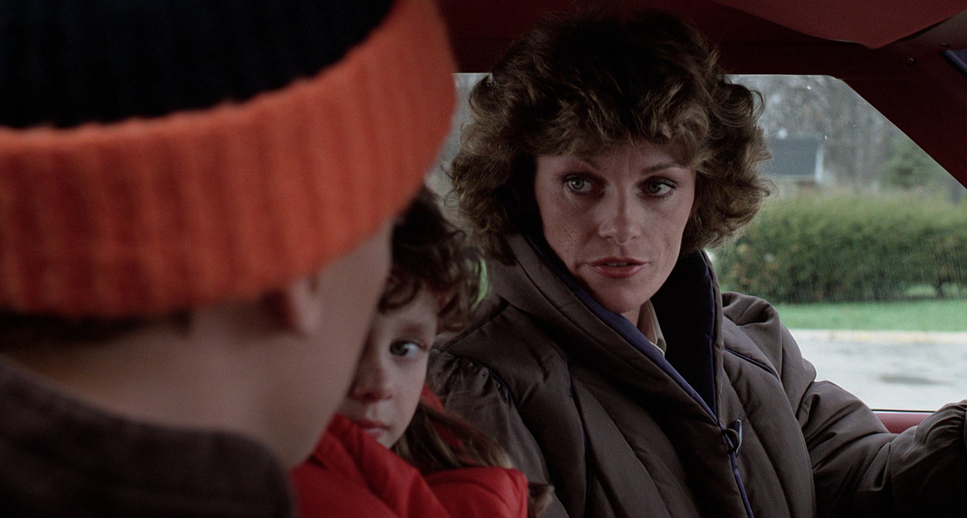
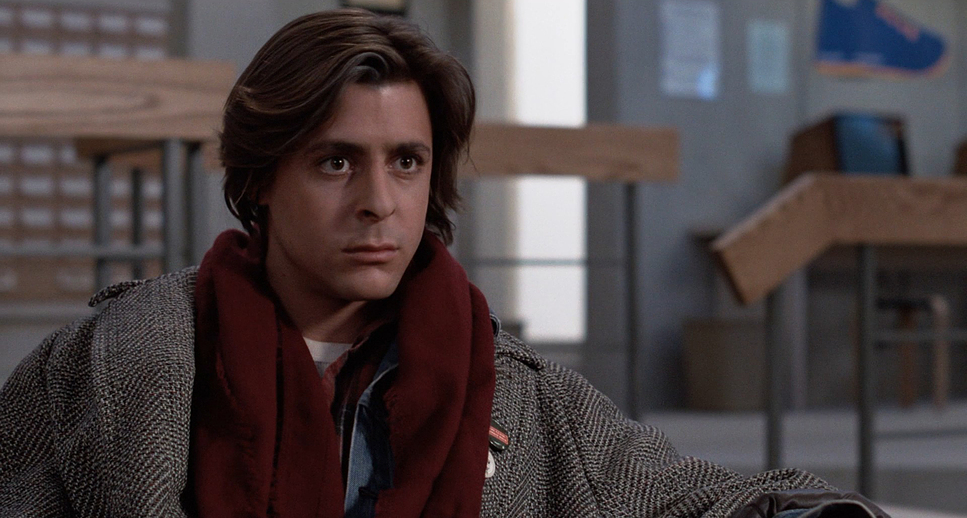
The composition here is incredibly telling. Early on, everyone is in their own “box.” You see it in the opening: Claire in the BMW, Brian under the academic pressure of his mother, Bender walking in alone. Inside the library, the framing keeps them separated by tables, aisles, or just empty negative space.
As the “therapy” starts to work, the visual boundaries dissolve. Del Ruth starts bringing them into the same frame. Over-the-shoulder shots create a sense of dialogue, and group shots get tighter as they share their secrets. There’s a bold choice when Bender is hiding under the table it’s an uncomfortable, physically intimate shot that uses foreground and background relationships to crank up the tension. By the end of the film, the compositions have evolved from five individuals into one cohesive group.
Lighting Style
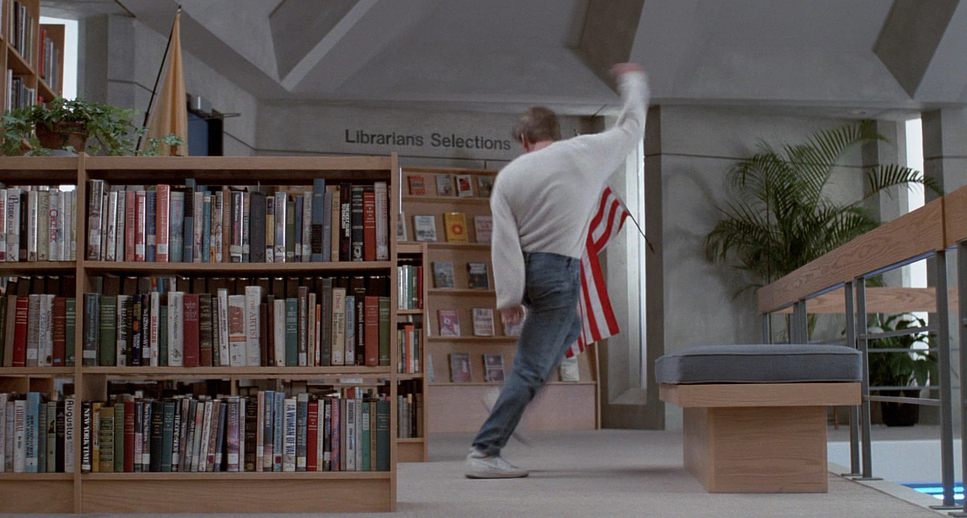
The lighting is naturalistic, leaning into the functional aesthetic of an Illinois school library. There’s a lot of debate among enthusiasts about the “gloomy” look of the newer 4K masters versus the “brighter” Blu-ray versions. From a professional standpoint, I see Del Ruth using motivated light from those massive windows. It feels soft and diffused like a gray, overcast day.
It’s an intentional simplicity. You won’t find dramatic chiaroscuro or high-contrast noir lighting here. It’s observational light. It puts you in the room with them, experiencing the confinement. This naturalistic approach isn’t “flashy,” but it’s perfect for a character drama. It lets the performances breathe without any visual distractions, making the whole experience feel unvarnished and authentic.
Lensing and Blocking
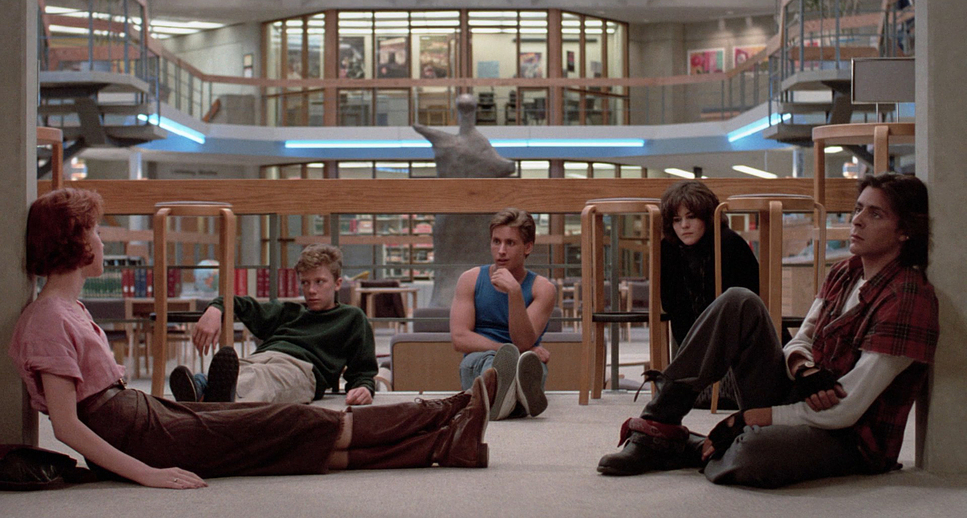
In a dialogue-heavy film like this, lensing is everything. Del Ruth stuck to standard focal lengths mostly 35mm and 50mm. This keeps the perspective “normal,” avoiding any weird distortion that would make the detention feel artificial. It keeps us grounded in reality.
But the blocking? That’s where the movie lives. With five actors in one room, their physical relationship tells the story. Initially, the blocking is pure social hierarchy: Bender is the disruptive central force, Claire and Andrew are paired by their status, and the “outsiders” are on the periphery. But as the chemistry grows, the blocking shifts. Characters stand up, sit down, and move closer in rhythm with their emotional breakthroughs. Think of the “lipstick” moment or Bender’s “one-man play” about his home life. He commands the entire space, forcing the others to react to him. The camera tracks these shifts, making the library feel alive rather than stagnant.
Color Grading Approach
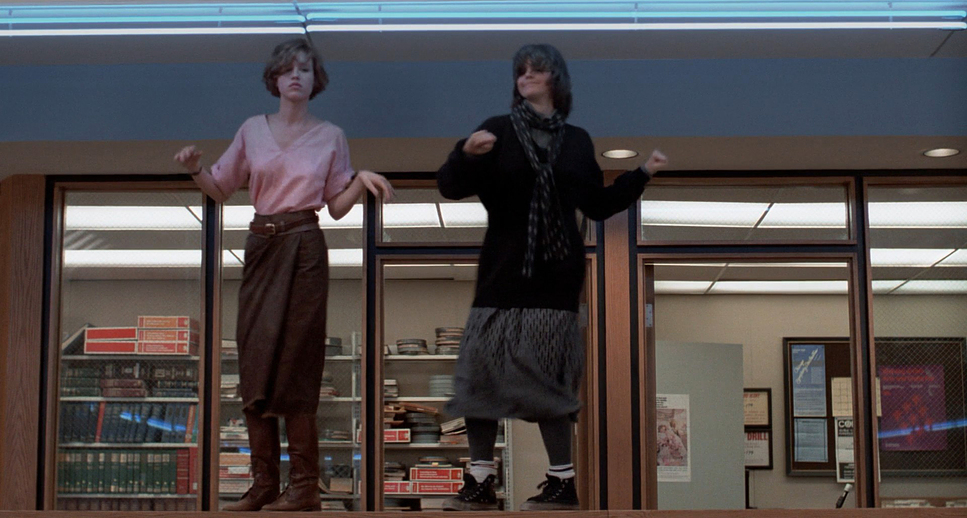
This is where my colorist brain really goes into overdrive. There is a fascinating divide between the Criterion 4K UHDand the older Blu-ray releases. Some reviewers find the 4K “too dark” or “gloomy,” preferring the brighter, more saturated look of the SDR Blu-ray.
As a colorist, I look at this through the lens of dynamic range. The 4K restoration, pulled from the original 35mm negative, is likely trying to restore the theatrical contrast that was lost in older home video transfers. HDR allows us to deepen the shadows and pull detail out of the highlights, which can subjectively feel “darker,” but it’s actually more textural and robust.
If I were in the suite grading this, my priority would be skin tone integrity. The human face is the canvas of this film. I’d want to maintain a neutral palette while using the tonal curve to enhance the isolation. Maybe that “gloom” isn’t a flaw; maybe it’s a deliberate choice to lean into the somber reality of detention. It’s about how much detail you allow to recede into the shadows to make the emotional moments pop.
Technical Aspects & Tools
| Genre | Comedy, Drama, High School/Teen |
| Director | John Hughes |
| Cinematographer | Thomas Del Ruth |
| Production Designer | John W. Corso |
| Costume Designer | Marilyn Vance |
| Editor | Dede Allen |
| Time Period | 1980s |
| Color | Green |
| Aspect Ratio | 1.85 – Spherical |
| Format | Film – 35mm |
| Lighting Type | Daylight, Overcast |
| Story Location | United States > Illinois |
| Filming Location | Illinois > Northbrook |
| Camera | Panavision Panaflex |
Shooting on 35mm gave this film an organic grain and a highlight roll-off that digital just can’t quite mimic. The recent 4K restoration is the ideal way to see it, capturing the fine detail and texture of that original film stock.
The $1 million budget meant they had to be smart. You don’t see expensive crane shots because they couldn’t afford them. Instead, they relied on practical lighting and brilliant set design. Even the sound, remastered from the original magnetic tracks, retains that punch especially when “Don’t You (Forget About Me)” kicks in. This film is proof that you don’t need a massive budget to create something timeless; you just need a strong vision and a camera that knows where to look.
- Also read: AMERICAN GANGSTER (2007) – CINEMATOGRAPHY ANALYSIS
- Also read: GHOSTBUSTERS (1984) – CINEMATOGRAPHY ANALYSIS
Browse Our Cinematography Analysis Glossary
Explore directors, cinematographers, cameras, lenses, lighting styles, genres, and the visual techniques that shape iconic films.
Explore Glossary →